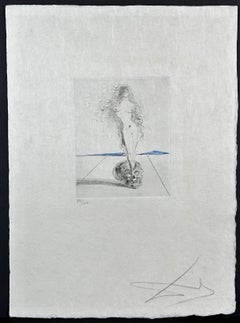
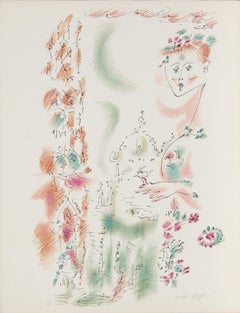
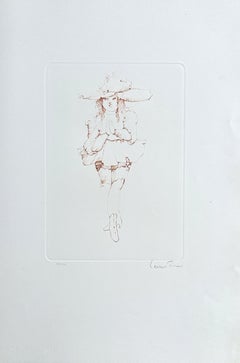
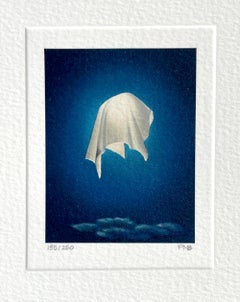
Surrealist Prints and Multiples

SURREALIST STYLE

In the wake of World War I’s ravaging of Europe, artists delved into the unconscious mind to confront and grapple with this reality. Poet and critic André Breton, a leader of the Surrealist movement who authored the 1924 Surrealist Manifesto, called this approach “a violent reaction against the impoverishment and sterility of thought processes that resulted from centuries of rationalism.” Surrealist art emerged in the 1920s with dreamlike and uncanny imagery guided by a variety of techniques such as automatic drawing, which can be likened to a stream of consciousness, to channel psychological experiences.

Although Surrealism was a groundbreaking approach for European art, its practitioners were inspired by Indigenous art and ancient mysticism for reenvisioning how sculptures, paintings, prints, performance art and more could respond to the unsettled world around them.

Surrealist artists were also informed by the Dada movement, which originated in 1916 Zurich and embraced absurdity over the logic that had propelled modernity into violence. Some of the Surrealists had witnessed this firsthand, such as Max Ernst, who served in the trenches during World War I, and Salvador Dalí, whose otherworldly paintings and other work responded to the dawning civil war in Spain.

Other key artists associated with the revolutionary art and literary movement included Man Ray, Joan Miró, René Magritte, Yves Tanguy, Frida Kahlo and Meret Oppenheim, all of whom had a distinct perspective on reimagining reality and freeing the unconscious mind from the conventions and restrictions of rational thought. Pablo Picasso showed some of his works in “La Peinture Surréaliste” — the first collective exhibition of Surrealist painting — which opened at Paris’s Galerie Pierre in November of 1925. (Although Magritte is best known as one of the visual Surrealist movement’s most talented practitioners, his famous 1943 painting, The Fifth Season, can be interpreted as a formal break from Surrealism.)

The outbreak of World War II led many in the movement to flee Europe for the Americas, further spreading Surrealism abroad. Generations of modern and contemporary artists were subsequently influenced by the richly symbolic and unearthly imagery of Surrealism, from Joseph Cornell to Arshile Gorky.

Find a collection of original Surrealist paintings, sculptures, prints and multiples and more art on 1stDibs.

to
1,481
2,347
1,040
1,343
363
122
Overall Width
to
Overall Height
to
21,143
18,506
10,668
6,315
2,716
1,558
1,450
1,386
893
877
433
345
199
756
401
326
187
161
17
19
4,633
547
2
9
26
77
116
440
1,330
1,626
339
127
15
3,844
1,167
180
2,192
1,456
1,307
761
629
612
504
328
169
139
128
121
107
103
99
81
68
64
62
59
2,423
1,548
521
328
284
610
2,074
2,815
2,104
Style: Surrealist
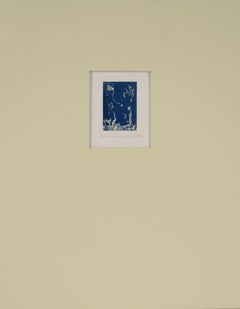
"Baby Dragon Dreams" - 1976 Surrealist Lithograph on Paper
Located in Soquel, CA
"Baby Dragon Dreams" - 1976 Surrealist Lithograph on Paper 1976 surrealist lithograph on paper depicting ascending figures by Jim Crabb (American, b. 1947). The figures are made up ...
Category

1970s Surrealist Prints and Multiples

Materials

Paper, Ink, Lithograph

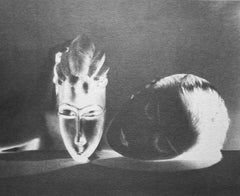
Man Ray, Composition, Man Ray (after)
Located in Southampton, NY
Lithograph on vélin paper. Inscription: unsigned and unnumbered, as issued. Good condition. Notes: From the folio, Man Ray, 1984. Published by Centre National des Arts Plastiques, Ni...
Category

1980s Surrealist Prints and Multiples

Materials

Lithograph

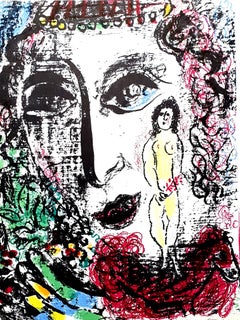
Marc Chagall - Original Lithograph
Located in Collonge Bellerive, Geneve, CH
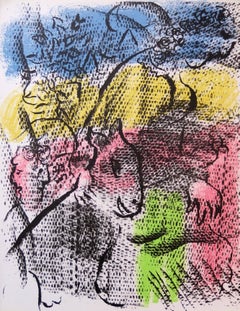
Marc Chagall Original Lithograph 1963 Dimensions: 32 x 24 cm Reference: Chagall Lithographe 1957-1962. VOLUME II. Condition : Excellent Marc Chagall (born in 1887) Marc Chagall was born in Belarus in 1887 and developed an early interest in art. After studying painting, in 1907 he left Russia for Paris, where he lived in an artist colony on the city’s outskirts. Fusing his own personal, dreamlike imagery with hints of the fauvism and cubism popular in France at the time, Chagall created his most lasting work—including I and the Village (1911)—some of which would be featured in the Salon des Indépendants exhibitions. After returning to Vitebsk for a visit in 1914, the outbreak of WWI trapped Chagall in Russia. He returned to France in 1923 but was forced to flee the country and Nazi persecution during WWII. Finding asylum in the U.S., Chagall became involved in set and costume design before returning to France in 1948. In his later years, he experimented with new art forms and was commissioned to produce numerous large-scale works. Chagall died in St.-Paul-de-Vence in 1985. The Village Marc Chagall was born in a small Hassidic community on the outskirts of Vitebsk, Belarus, on July 7, 1887. His father was a fishmonger, and his mother ran a small sundries shop in the village. As a child, Chagall attended the Jewish elementary school, where he studied Hebrew and the Bible, before later attending the Russian public school. He began to learn the fundamentals of drawing during this time, but perhaps more importantly, he absorbed the world around him, storing away the imagery and themes that would feature largely in most of his later work. At age 19 Chagall enrolled at a private, all-Jewish art school and began his formal education in painting, studying briefly with portrait artist Yehuda Pen. However, he left the school after several months, moving to St. Petersburg in 1907 to study at the Imperial Society for the Protection of Fine Arts. The following year, he enrolled at the Svanseva School, studying with set designer Léon Bakst, whose work had been featured in Sergei Diaghilev's Ballets Russes. This early experience would prove important to Chagall’s later career as well. Despite this formal instruction, and the widespread popularity of realism in Russia at the time, Chagall was already establishing his own personal style, which featured a more dreamlike unreality and the people, places and imagery that were close to his heart. Some examples from this period are his Window Vitebsk (1908) and My Fianceé with Black Gloves (1909), which pictured Bella Rosenfeld, to whom he had recently become engaged. The Beehive Despite his romance with Bella, in 1911 an allowance from Russian parliament member and art patron Maxim Binaver enabled Chagall to move to Paris, France. After settling briefly in the Montparnasse neighborhood, Chagall moved further afield to an artist colony known as La Ruche (“The Beehive”), where he began to work side by side with abstract painters such as Amedeo Modigliani and Fernand Léger as well as the avant-garde poet Guillaume Apollinaire. At their urging, and under the influence of the wildly popular fauvism and cubism, Chagall lightened his palette and pushed his style ever further from reality. I and the Village (1911) and Homage to Apollinaire (1912) are among his early Parisian works, widely considered to be his most successful and representative period. Though his work stood stylistically apart from his cubist contemporaries, from 1912 to 1914 Chagall exhibited several paintings at the annual Salon des Indépendants exhibition, where works by the likes of Juan Gris, Marcel Duchamp and Robert Delaunay were causing a stir in the Paris art world. Chagall’s popularity began to spread beyond La Ruche, and in May 1914 he traveled to Berlin to help organize his first solo exhibition, at Der Sturm Gallery. Chagall remained in the city until the highly acclaimed show opened that June. He then returned to Vitebsk, unaware of the fateful events to come. War, Peace and Revolution In August 1914 the outbreak of World War I precluded Chagall’s plans to return to Paris. The conflict did little to stem the flow of his creative output, however, instead merely giving him direct access to the childhood scenes so essential to his work, as seen in paintings such as Jew in Green (1914) and Over Vitebsk (1914). His paintings from this period also occasionally featured images of the war’s impact on the region, as with Wounded Soldier (1914) and Marching (1915). But despite the hardships of life during wartime, this would also prove to be a joyful period for Chagall. In July 1915 he married Bella, and she gave birth to a daughter, Ida, the following year. Their appearance in works such as Birthday (1915), Bella and Ida by the Window (1917) and several of his “Lovers” paintings give a glimpse of the island of domestic bliss that was Chagall’s amidst the chaos. To avoid military service and stay with his new family, Chagall took a position as a clerk in the Ministry of War Economy in St. Petersburg. While there he began work on his autobiography and also immersed himself in the local art scene, befriending novelist Boris Pasternak, among others. He also exhibited his work in the city and soon gained considerable recognition. That notoriety would prove important in the aftermath of the 1917 Russian Revolution when he was appointed as the Commissar of Fine Arts in Vitebsk. In his new post, Chagall undertook various projects in the region, including the 1919 founding of the Academy of the Arts. Despite these endeavors, differences among his colleagues eventually disillusioned Chagall. In 1920 he relinquished his position and moved his family to Moscow, the post-revolution capital of Russia. In Moscow, Chagall was soon commissioned to create sets and costumes for various productions at the Moscow State Yiddish Theater...
Category

1960s Surrealist Prints and Multiples

Materials

Lithograph

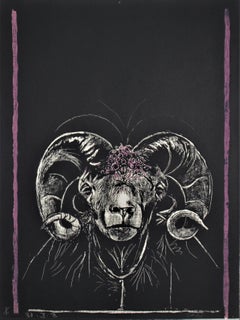
"Ram s Head, Full Face" from the suite "Bestiary and some Correspondences"
Located in San Francisco, CA
This artwork titled "Ram's Head, Full Face" from the suite "Bestiary and some Correspondences" 1968 is an original color lithograph on Arches paper by renown British artist Graham Vi...
Category

Mid-20th Century Surrealist Prints and Multiples

Materials

Lithograph

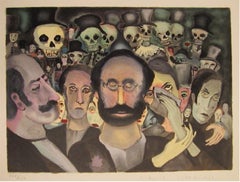
Gathering of Sad Clowns, Surrealist Lithograph by Marcel Marceau
Located in Long Island City, NY
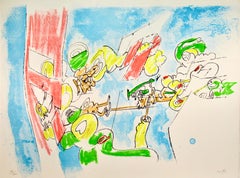
Marcel Marceau, French (1923 - 2007) - Gathering of Sad Clowns, Portfolio: Le Troisieme Oeil (The Third Eye), Year: 1981, Medium: Lithograph on Arches Paper, signed and numbered i...
Category

1980s Surrealist Prints and Multiples

Materials

Lithograph

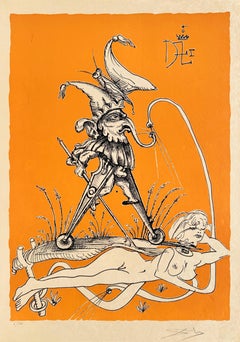
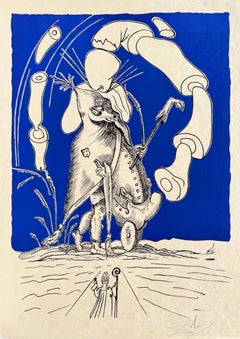
Les Songes Drôlatiques de Pantagruel, Planche VII
Located in OPOLE, PL
Salvador Dali (1904-1989) - Les Songes Drôlatiques de Pantagruel, Planche VII Lithograph from 1973. Edition 6/250 on Japon paper. Dimensions of work: 76 x 56 cm Publisher: Carpen...
Category

1970s Surrealist Prints and Multiples

Materials

Lithograph

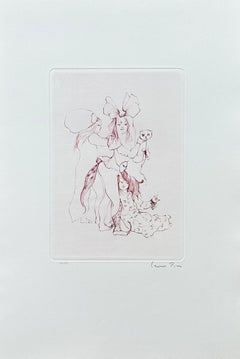
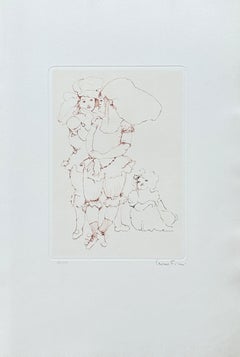
Three Sisters With a Cat - Original Etching Hand Signed Numbered
Located in Paris, IDF
Léonor FINI (1907-1996) Three sisters with a cat Original etching, 1973 Hand signed in pencil Numbered /275 copies On Arches vellum size 56 x 38 cm (c. 22 x 15 in) Very good condition
Category

1970s Surrealist Prints and Multiples

Materials

Etching

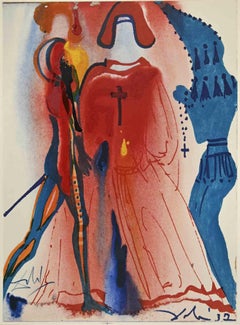
Act III, Scene I - From “Romeo and Juliet” - Lithograph - 1975
Located in Roma, IT
Act III, Scene I - From “Romeo and Juliet”  is an artwork realized in 1975. Mixed colored lithograph. Signed and dated in plate on the lower right  margin. Perfect conditions. P...
Category

1970s Surrealist Prints and Multiples

Materials

Lithograph

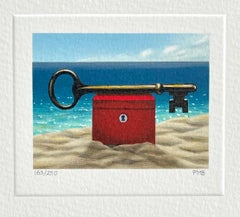
DAYTIME KEY Signed Lithograph, Mini Beachscape, Red Box, Sand, Sea, Blue Sky
Located in Union City, NJ
DAYTIME KEY is a rarely seen, hand drawn limited edition lithograph by the American surrealist artist Fanny Brennan, created using traditional hand lithography techniques printed on archival Arches paper, 100% acid-free. DAYTIME KEY is an engaging miniature beachscape scene depicting a sandy shoreline, blue sky, and vibrant red locking...
Category

1990s Surrealist Prints and Multiples

Materials

Lithograph

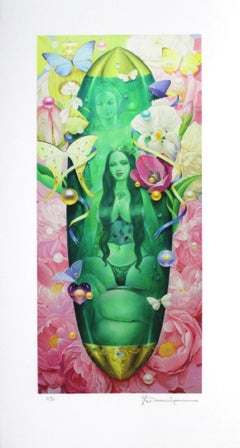
Rainer Stern - "Il Profumo" - giclée print - hand signed/numbered - edition: 30
By Rainer Stern
Located in Winterswijk, NL
Rainer Stern - "Il Profumo". Giclée print on heavy handmade cotton paper. Edition: 30. Hand signed and numbered. A beautiful artwork that looks good in every room and especially ...
Category

20th Century Surrealist Prints and Multiples

Materials

Handmade Paper, Giclée

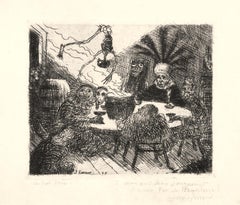
Le Roi Peste (The Plague Kings) - Etching by James Ensor - 1895
Located in Roma, IT
The Plague Kings is an original etching on the Japanese paper, realized by James Ensor in 1895, signed on the plate and dated, unique state, with the second signature on the reverse ...
Category

1890s Surrealist Prints and Multiples

Materials

Etching

Magritte, Composition, Les chants de Maldoror (after)
Located in Southampton, NY
Lithograph on vélin papier pur chiffon paper. Paper Size: 10 x 7.375 inches. Inscription: Unsigned and unnumbered, as issued. Notes: From the album, Les chants de Maldoror, illustrat...
Category

1940s Surrealist Prints and Multiples

Materials

Lithograph

The Angel of Mercy - Woodcut - 1963
Located in Roma, IT
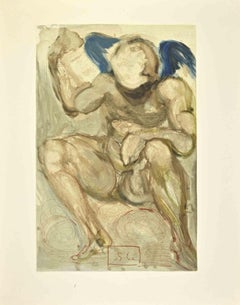
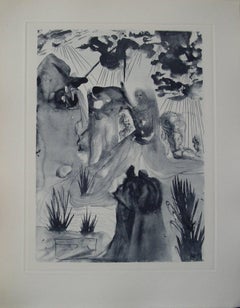
The Angel of Mercy - from the Series "The Divine Comedy" is a woodcut print realized in 1963 for a series illustrating the Medieval poem of the "Divine Comedy" by Dante Alighieri. No...
Category

1960s Surrealist Prints and Multiples

Materials

Woodcut

LA FOLLE AU PIMENT RAGEUR
Located in Aventura, FL
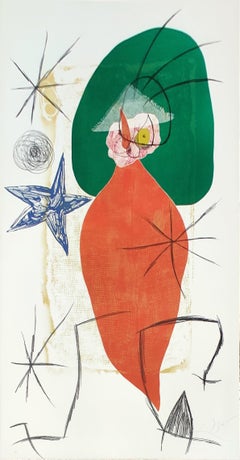
Hand signed and numbered lithograph in colors on Arches paper. Mourlot 1025. Published by Maeght Éditeur, Paris. Edition of 27/30. Artwork size 91.375 x 47.875 inches. Custom framed ...
Category

1970s Surrealist Prints and Multiples

Materials

Paper, Lithograph

Miró, Composition (Dupin 1290), Miró Graveur (after)
Located in Southampton, NY
Woodcut on vélin paper. Inscription: Unsigned and unnumbered, as issued. Good condition. Notes: From the volume, miró graveur 1. 1928- 1960, 1984. Published by Daniel Lelong, éditeur...
Category

1980s Surrealist Prints and Multiples

Materials

Woodcut

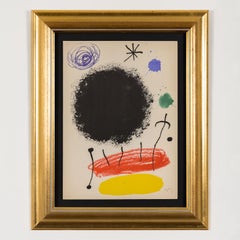
Lithograph I (1256), Surrealist Lithograph by Joan Miro
Located in Long Island City, NY
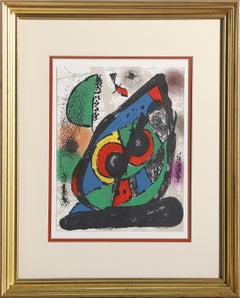
Joan Miro, Spanish (1893 - 1983) - Lithograph I (1256), Year: 1975, Medium: Lithograph, Size: 12 x 9.5 in. (30.48 x 24.13 cm), Frame Size: 22 x 18 inches, Printer: Mourlot, Pari...
Category

1970s Surrealist Prints and Multiples

Materials

Lithograph

Les Songes Drôlatiques de Pantagruel, Planche XVI
Located in OPOLE, PL
Salvador Dali (1904-1989) - Les Songes Drôlatiques de Pantagruel, Planche XVI Lithograph from 1973. Edition 6/250 on Japon paper. Dimensions of work: 76 x 56 cm Publisher: Carpen...
Category

1970s Surrealist Prints and Multiples

Materials

Lithograph

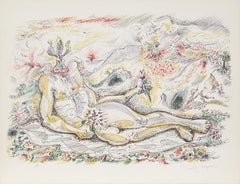
Le Prince Iris, Surrealist Lithograph by Andre Masson
Located in Long Island City, NY
Andre Masson, French (1896 - 1987) - Le Prince Iris from Je Reve Portfolio, Year: 1975, Medium: Lithograph on Arches, Signed and numbered in pencil, Edition: 93/125, Size: 20 in....
Category

1970s Surrealist Prints and Multiples

Materials

Lithograph

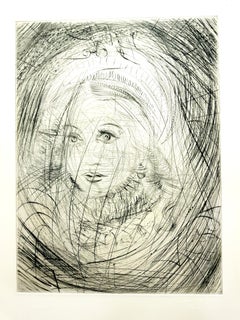
Salvador Dali - Marguerite - Original Etching
Located in Collonge Bellerive, Geneve, CH
Salvador Dali - Marguerite - Original Etching from "Faust" suite Stamped signature, as issued From the standard edition of 731 Edition number 7 Dimensions: 38,5 x 28,5 cm Edition Arg...
Category

1960s Surrealist Prints and Multiples

Materials

Etching

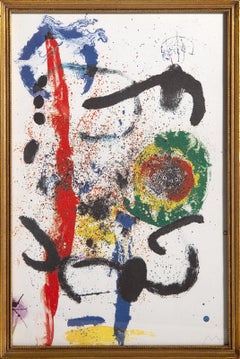
Obra Inèdita Recent I
Located in Toronto, Ontario
Joan Miró (1893-1983) is one of the greatest artists of the 20th century. He is renowned internationally as a painter, sculptor, printmaker, and ceramicist. Miró’s works, which wer...
Category

1960s Surrealist Prints and Multiples

Materials

Lithograph

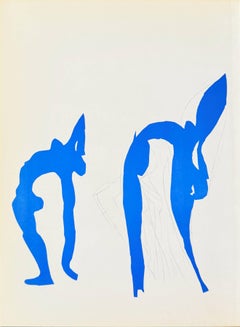
Acrobates
Located in OPOLE, PL
Henri Matisse (1869-1954) - Acrobates Lithograph from 1958. Dimensions of work: 35.5 x 26.4 cm Publisher: Tériade, Paris. First, original edition. The work is in Excellent condi...
Category

1950s Surrealist Prints and Multiples

Materials

Lithograph

Acrobates
Acrobates
$665 Sale Price
20% Off
The Cascade from Indelible Miro, Surrealist Offset Lithograph after Joan Miro
Located in Long Island City, NY
Joan Miro, After, Spanish (1893 - 1983) - The Cascade from Indelible Miro, Year: 1972, Medium: Offset Lithograph, signed in the plate, Size: 14 x 9.75 in. (35.56 x 24.77 cm), Fr...
Category

1970s Surrealist Prints and Multiples

Materials

Lithograph, Offset

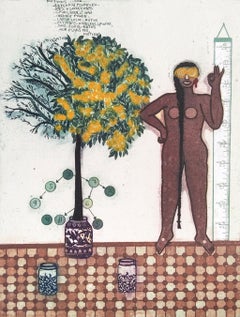
Surreal Pop Art Limited Edition Etching Indian Artist Woman Tree Hair Pots
Located in Norfolk, GB
From emerging Indian artist Sonal Varshneya Ojha are the last available works from her Limited Edition of 7 series Kissa Goi. Art 1821 is selling the last 14, different works, of th...
Category

2010s Surrealist Prints and Multiples

Materials

Archival Paper, Etching

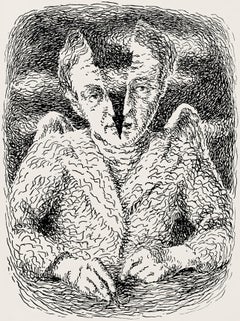
A Black Devil - Engraving - 150ex
Located in Paris, IDF
Salvador Dali A Black Devil (1960) Heliogravure reworked with drypoint Printed signature in the plate On BFK Rives Vellum paper Size 32.8 x 26.4 cm (c. 13 x 10") References: - Fie...
Category

1960s Surrealist Prints and Multiples

Materials

Etching

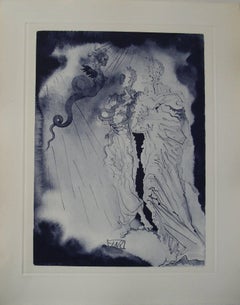
The Magicians Vanite
Located in Hollywood, FL
ARTIST: Salvador Dali TITLE: The Magicians Vanite MEDIUM: Etching SIGNED: Hand Signed PUBLISHER: Editions Argillet, Paris EDITION NUMBER: 39/100 MEASUREMENTS: Paper: 11.2" x 1...
Category

1960s Surrealist Prints and Multiples

Materials

Etching

Venise en Fleurs, Surrealist Lithograph by Andre Masson
Located in Long Island City, NY
Andre Masson, French (1896 - 1987) - Venise en Fleurs from Je Reve Portfolio, Year: 1975, Medium: Lithograph on Arches, Signed and numbered in pencil, Edition: 93/125, Size: 26 i...
Category

1970s Surrealist Prints and Multiples

Materials

Lithograph

Surrealist Lady - Original Etching Hand Signed Numbered
Located in Paris, IDF
Léonor FINI (1907-1996) Surrealist lady Original etching, 1973 Hand signed in pencil Numbered /275 copies On Arches vellum size 56 x 38 cm (c. 22 x 15 in) Very good condition
Category

1970s Surrealist Prints and Multiples

Materials

Etching

ECLIPSE Signed Lithograph, Celestial Portrait, Shrouded Moon, Midnight Blue Sky
Located in Union City, NJ
ECLIPSE is a rarely seen, hand drawn limited edition lithograph by the American surrealist artist Fanny Brennan, created using traditional hand lithography techniques printed on arch...
Category

1990s Surrealist Prints and Multiples

Materials

Lithograph

La divine forêt - Engraving - 150 copies
Located in Paris, IDF
Salvador Dali La divine forêt (1960) Heliogravure reworked with drypoint Signature printed in the plate On BFK Rives Vellum paper Size 32.8 x 26.4 cm (c. 1...
Category

1960s Surrealist Prints and Multiples

Materials

Etching

The Sodomites - Woodcut print - 1963
Located in Roma, IT
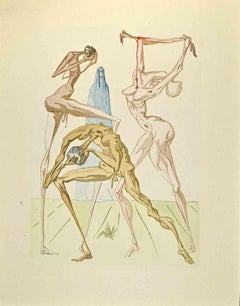
The Sodomites - Hell Plate 19 is a woodcut print realized in 1963 for a series illustrating the Medieval poem of the "Divine Comedy" by Dante Alighieri. Good conditions. Limited e...
Category

1960s Surrealist Prints and Multiples

Materials

Woodcut

Vintage Surreal Figurative Etching -- "Metamorphosis"
Located in Soquel, CA
Fantastical sepia etching titled "Metamorphosis" by Herbert L. Fink (American,1921 - 2006). Signed and dated 1982. Unframed. In mat. Image size: 13"H x 2...
Category

1980s Surrealist Prints and Multiples

Materials

Etching, Paper

Couple with a Goat - Original stone lithograph (Mourlot #608) - 1970
Located in Paris, IDF
Marc CHAGALL Couple with a goat Original stone lithograph (atelier Mourlot) Edition size: 3,000 (plus the signed and numbered edition of 50 with larger margins) Unsigned On light ve...
Category

1970s Surrealist Prints and Multiples

Materials

Lithograph

Exhibition at Galerie Lucie Weill, Surrealist Lithograph Poster by Andre Masson
Located in Long Island City, NY
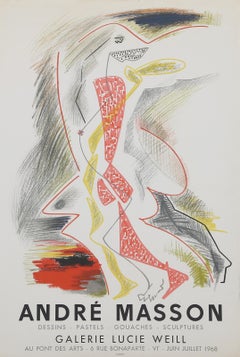
Andre Masson, French (1896 - 1987) - Exhibition at Galerie Lucie Weill, Year: 1968, Medium: Lithograph Poster, Size: 30 x 20.5 in. (76.2 x 52.07 cm), Printer: Mourlot, Paris, Des...
Category

1960s Surrealist Prints and Multiples

Materials

Lithograph

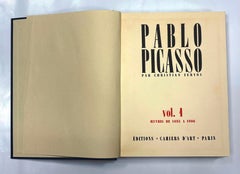
Pablo Picasso Christian Zervos 33 Volume Books
Located in Los Angeles, CA
Christian Zervos. Pablo Picasso. Œuvres de 1895 à [1972]. Paris: Éditions Cahiers d'Art, 1949-1986. 33 volumes in 34 (volume 2 in two parts), small folio (325 x 252 mm.), numerous p...
Category

1950s Surrealist Prints and Multiples

Materials

Offset

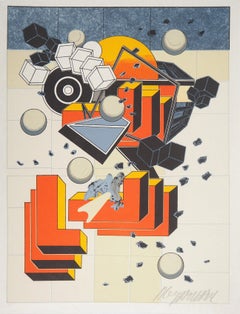
Construction - Handsigned Original Lithograph
Located in Paris, IDF
Alain LE YAOUANC Construction Original lithograph Handsigned in pencil On Japan paper, 40,5 x 31,5 cm (c. 15,9 x 12,4 inch) Excellent condition
Category

1970s Surrealist Prints and Multiples

Materials

Lithograph

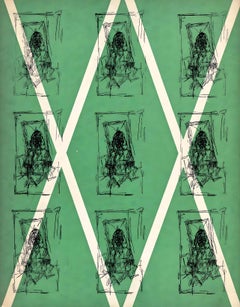
Alberto Giacometti, Untitled, from XXe Siecle, 1956 (after)
Located in Southampton, NY
This exquisite lithograph after Alberto Giacometti (1901–1966), titled Sans titre (Untitled), from the album XXe Siecle, Nouvelle serie N°7 (double) Juin 1956, originates from the 19...
Category

1950s Surrealist Prints and Multiples

Materials

Lithograph

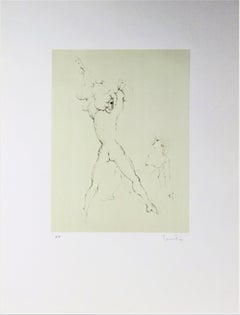
Femmes en Costumes II
Located in San Francisco, CA
Artist: Leonor Fini Title: Femmes en Costumes Year: c.1970 Medium: Original color engraving Edition: Inscribed E.A (Epreuve d'Artiste, Artist Proof) in pencil Paper: Arches paper Ima...
Category

1970s Surrealist Prints and Multiples

Materials

Engraving

Calder, Composition, A Bestiary (after)
Located in Southampton, NY
Letterpress printing on spécialement fabriqué Curtis Rag vélin paper. Paper Size: 12.5 x 9.1875 inches. Inscription: Unsigned and unnumbered, as issued. Notes: From the album, A Best...
Category

1950s Surrealist Prints and Multiples

Materials

Lithograph

Salvador Dalí (1904-1989) - Drypoint etching with stencil on Rives paper - 1971
Located in Varese, IT
Drypoint etching with stencil on Rives paper, edited in 1971. Limited edition in 150 copies. Numbered as EA (épreuve d'artiste) (artist's proof) in lower left corner. Hand-signed in ...
Category

1970s Surrealist Prints and Multiples

Materials

Paper, Etching

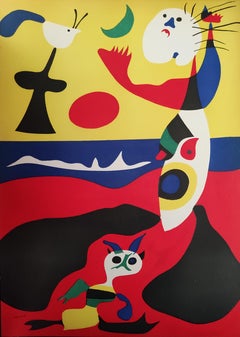
Summer
Located in OPOLE, PL
Joan Miro (1893-1983) - Summer Lithograph from 1938. Dimensions of work: 35 x 26 cm Publisher: Tériade, Paris. The work is in Excellent condition. Fast and secure shipment.
Category

1930s Surrealist Prints and Multiples

Materials

Lithograph

Summer
Summer
$951 Sale Price
20% Off
Family Portrait - Original Etching Hand Signed Numbered
Located in Paris, IDF
Léonor FINI (1907-1996) Family portrait Original etching, 1973 Hand signed in pencil Numbered /275 copies On Arches vellum size 56 x 38 cm (c. 22 x 15 in) Very good condition
Category

1970s Surrealist Prints and Multiples

Materials

Etching

Studied
Located in Columbia, MO
Leonor Fini (Argentine-French, 1907–1996) A fiercely spirited Surrealist unfettered by social mores, Leonor Fini defied convention with her haunting, dreamlike works that explore the...
Category

20th Century Surrealist Prints and Multiples

Materials

Paper, Screen

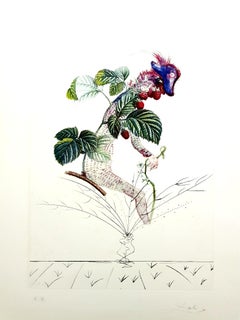
Salvador Dali - Raspberry - Original Hand-Signed Lithograph
Located in Collonge Bellerive, Geneve, CH
Salvador Dali - Raspberry - Original Hand-Signed Lithograph 1969 Dimensions: P. 57 x 37 cm Sheet: 75 x 56 cm Handsigned, EA (Epreuve d'Artiste) Excellent Condition Reference: Field...
Category

1960s Surrealist Prints and Multiples

Materials

Lithograph

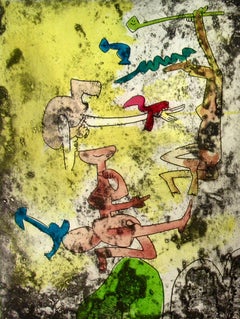
"Centre Noeuds" planche #9
Located in San Francisco, CA
This artwork titled "Centre Noeuds" plate #9, 1974, is an original color etching with aquatint on Japan nacre paper by renown Chilean artist Roberto Sebastian Matta, 1911-2002. It is...
Category

Mid-20th Century Surrealist Prints and Multiples

Materials

Aquatint

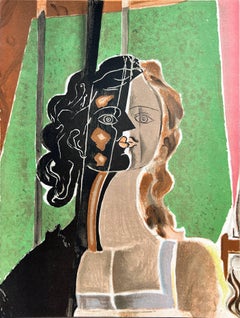
Cubist Portrait
Located in OPOLE, PL
Georges Braque (1882-1963) - Cubist Portrait Lithograph from 1939. Dimensions of work: 35 x 26 cm Publisher: Tériade, Paris. The work is in Excellent condition. Fast and secure ...
Category

1930s Surrealist Prints and Multiples

Materials

Lithograph

DISCOVERY (MIRO PICASSO)
Located in Aventura, FL
Lithograph in colors on paper. Hand signed and numbered AP on front by the artist. Artwork is in excellent condition. Certificate of authenticity included. All reasonable offers ...
Category

21st Century and Contemporary Surrealist Prints and Multiples

Materials

Paper, Lithograph

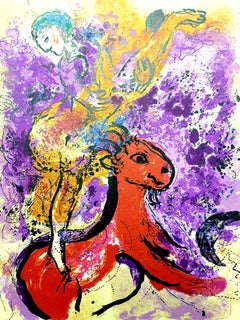
Marc Chagall - The Red Rider - Original Lithograph
Located in Collonge Bellerive, Geneve, CH
Marc Chagall - Original Lithograph The Red Rider From the unsigned, unnumbered lithograph printed in the literary review XXe Siecle 1957 See Mourlot 191 Dimensions: 32 x 24 cm Publisher: G. di San Lazzaro. Marc Chagall (born in 1887) Marc Chagall was born in Belarus in 1887 and developed an early interest in art. After studying painting, in 1907 he left Russia for Paris, where he lived in an artist colony on the city’s outskirts. Fusing his own personal, dreamlike imagery with hints of the fauvism and cubism popular in France at the time, Chagall created his most lasting work—including I and the Village (1911)—some of which would be featured in the Salon des Indépendants exhibitions. After returning to Vitebsk for a visit in 1914, the outbreak of WWI trapped Chagall in Russia. He returned to France in 1923 but was forced to flee the country and Nazi persecution during WWII. Finding asylum in the U.S., Chagall became involved in set and costume design before returning to France in 1948. In his later years, he experimented with new art forms and was commissioned to produce numerous large-scale works. Chagall died in St.-Paul-de-Vence in 1985. The Village Marc Chagall was born in a small Hassidic community on the outskirts of Vitebsk, Belarus, on July 7, 1887. His father was a fishmonger, and his mother ran a small sundries shop in the village. As a child, Chagall attended the Jewish elementary school, where he studied Hebrew and the Bible, before later attending the Russian public school. He began to learn the fundamentals of drawing during this time, but perhaps more importantly, he absorbed the world around him, storing away the imagery and themes that would feature largely in most of his later work. At age 19 Chagall enrolled at a private, all-Jewish art school and began his formal education in painting, studying briefly with portrait artist Yehuda Pen. However, he left the school after several months, moving to St. Petersburg in 1907 to study at the Imperial Society for the Protection of Fine Arts. The following year, he enrolled at the Svanseva School, studying with set designer Léon Bakst, whose work had been featured in Sergei Diaghilev's Ballets Russes. This early experience would prove important to Chagall’s later career as well. Despite this formal instruction, and the widespread popularity of realism in Russia at the time, Chagall was already establishing his own personal style, which featured a more dreamlike unreality and the people, places and imagery that were close to his heart. Some examples from this period are his Window Vitebsk (1908) and My Fianceé with Black Gloves (1909), which pictured Bella Rosenfeld, to whom he had recently become engaged. The Beehive Despite his romance with Bella, in 1911 an allowance from Russian parliament member and art patron Maxim Binaver enabled Chagall to move to Paris, France. After settling briefly in the Montparnasse neighborhood, Chagall moved further afield to an artist colony known as La Ruche (“The Beehive”), where he began to work side by side with abstract painters such as Amedeo Modigliani and Fernand Léger as well as the avant-garde poet Guillaume Apollinaire. At their urging, and under the influence of the wildly popular fauvism and cubism, Chagall lightened his palette and pushed his style ever further from reality. I and the Village (1911) and Homage to Apollinaire (1912) are among his early Parisian works, widely considered to be his most successful and representative period. Though his work stood stylistically apart from his cubist contemporaries, from 1912 to 1914 Chagall exhibited several paintings at the annual Salon des Indépendants exhibition, where works by the likes of Juan Gris, Marcel Duchamp and Robert Delaunay were causing a stir in the Paris art world. Chagall’s popularity began to spread beyond La Ruche, and in May 1914 he traveled to Berlin to help organize his first solo exhibition, at Der Sturm Gallery. Chagall remained in the city until the highly acclaimed show opened that June. He then returned to Vitebsk, unaware of the fateful events to come. War, Peace and Revolution In August 1914 the outbreak of World War I precluded Chagall’s plans to return to Paris. The conflict did little to stem the flow of his creative output, however, instead merely giving him direct access to the childhood scenes so essential to his work, as seen in paintings such as Jew in Green (1914) and Over Vitebsk (1914). His paintings from this period also occasionally featured images of the war’s impact on the region, as with Wounded Soldier (1914) and Marching (1915). But despite the hardships of life during wartime, this would also prove to be a joyful period for Chagall. In July 1915 he married Bella, and she gave birth to a daughter, Ida, the following year. Their appearance in works such as Birthday (1915), Bella and Ida by the Window (1917) and several of his “Lovers” paintings give a glimpse of the island of domestic bliss that was Chagall’s amidst the chaos. To avoid military service and stay with his new family, Chagall took a position as a clerk in the Ministry of War Economy in St. Petersburg. While there he began work on his autobiography and also immersed himself in the local art scene, befriending novelist Boris Pasternak, among others. He also exhibited his work in the city and soon gained considerable recognition. That notoriety would prove important in the aftermath of the 1917 Russian Revolution when he was appointed as the Commissar of Fine Arts in Vitebsk. In his new post, Chagall undertook various projects in the region, including the 1919 founding of the Academy of the Arts. Despite these endeavors, differences among his colleagues eventually disillusioned Chagall. In 1920 he relinquished his position and moved his family to Moscow, the post-revolution capital of Russia. In Moscow, Chagall was soon commissioned to create sets and costumes for various productions at the Moscow State Yiddish Theater, where he would paint a series of murals titled Introduction to the Jewish Theater as well. In 1921, Chagall also found work as a teacher at a school for war orphans. By 1922, however, Chagall found that his art had fallen out of favor, and seeking new horizons he left Russia for good. Flight After a brief stay in Berlin, where he unsuccessfully sought to recover the work exhibited at Der Sturm before the war, Chagall moved his family to Paris in September 1923. Shortly after their arrival, he was commissioned by art dealer and publisher Ambroise Vollard to produce a series of etchings for a new edition of Nikolai Gogol's 1842 novel Dead Souls. Two years later Chagall began work on an illustrated edition of Jean de la Fontaine’s Fables, and in 1930 he created etchings for an illustrated edition of the Old Testament, for which he traveled to Palestine to conduct research. Chagall’s work during this period brought him new success as an artist and enabled him to travel throughout Europe in the 1930s. He also published his autobiography, My Life (1931), and in 1933 received a retrospective at the Kunsthalle in Basel, Switzerland. But at the same time that Chagall’s popularity was spreading, so, too, was the threat of Fascism and Nazism. Singled out during the cultural "cleansing" undertaken by the Nazis in Germany, Chagall’s work was ordered removed from museums throughout the country. Several pieces were subsequently burned, and others were featured in a 1937 exhibition of “degenerate art” held in Munich. Chagall’s angst regarding these troubling events and the persecution of Jews in general can be seen in his 1938 painting White Crucifixion. With the eruption of World War II, Chagall and his family moved to the Loire region before moving farther south to Marseilles following the invasion of France. They found a more certain refuge when, in 1941, Chagall’s name was added by the director of the Museum of Modern Art (MOMA) in New York City to a list of artists and intellectuals deemed most at risk from the Nazis’ anti-Jewish campaign. Chagall and his family would be among the more than 2,000 who received visas and escaped this way. Haunted Harbors Arriving in New York City in June 1941, Chagall discovered that he was already a well-known artist there and, despite a language barrier, soon became a part of the exiled European artist community. The following year he was commissioned by choreographer Léonide Massine to design sets and costumes for the ballet Aleko, based on Alexander Pushkin’s “The Gypsies” and set to the music of Pyotr Ilyich Tchaikovsky. But even as he settled into the safety of his temporary home, Chagall’s thoughts were frequently consumed by the fate befalling the Jews of Europe and the destruction of Russia, as paintings such as The Yellow Crucifixion...
Category

1950s Surrealist Prints and Multiples

Materials

Lithograph

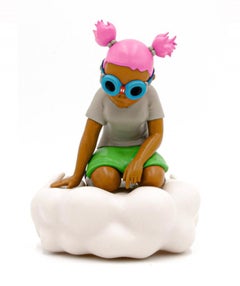
Hebru Brantley Gaia (Hebru Brantley Lil Mama as Gaia)
Located in NEW YORK, NY
Hebru Brantley GAIA (Hebru Brantley Lil Mama as Gaia): Hebru Brantley’s ethereal art toy features his much iconic, Lil Mama character as Gaia, the...
Category

21st Century and Contemporary Surrealist Prints and Multiples

Materials

Vinyl

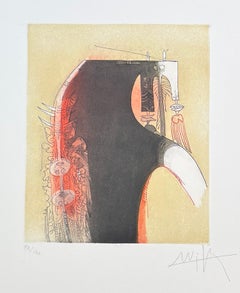
Wifredo Lam (1902-1982) - Coloured etching and aquatint - 1966
Located in Varese, IT
Coloured etching and aquatint, edited in 1979. Limited edition of 130 copies , numbered as 92/130 in lower left corner.
 Hand-signed in pencil by artist in lower right corner. Paper...
Category

1960s Surrealist Prints and Multiples

Materials

Paper, Etching

Hecatombe de Toros
Located in San Francisco, CA
This artwork titled "Hecatombe de Toros" 1971, is an original color lithograph on Arches paper by renown Chilean artist Roberto Sebastian Matta, 1911-2002. It is hand signed and numb...
Category

Mid-20th Century Surrealist Prints and Multiples

Materials

Lithograph

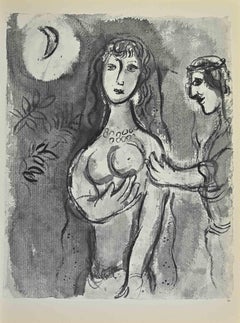
Rachel Goes Away with Jacob- Lithograph by Marc Chagall - 1960
Located in Roma, IT
Rachel Goes Away with Jacob is an artwork realized by March Chagall, 1960s. Lithograph on brown-toned paper, no signature. Lithograph on both sheets. Edition of 6500 unsigned lith...
Category

1960s Surrealist Prints and Multiples

Materials

Lithograph

Rene Magritte, The Beautiful Captive, 1968 (after)
Located in Southampton, NY
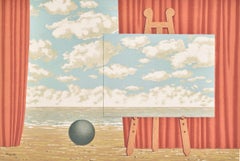
This exquisite lithograph after Rene Magritte (1898–1967), titled La Belle Captive (The Beautiful Captive), from the folio Les Enfants Trouves de Magritte (The Found Children of Magritte), 1968, originates from the edition published by A.C. Mazo et Cie, Paris, and printed by Mourlot Freres, Paris, on November 20, 1968. The work embodies Magrittes sustained inquiry into semiotics and visual epistemology, translating his characteristic strategies of displacement, symbolic inversion, and conceptual ambiguity into an image that operates as both a poetic metaphor and a philosophical proposition concerning the instability of meaning. Executed as a lithograph on grand velin dArches paper, this work measures 17.5 x 23.5 inches (44.5 x 59.7 cm). Signed in the plate by the artist; hand signed by Fernand Mourlot, Editeur. The edition exemplifies the technical mastery of the Mourlot atelier. Artwork Details: Artist: After Rene Magritte (1898–1967) Title: La Belle Captive (The Beautiful Captive), from the folio Les Enfants Trouves de Magritte (The Found Children of Magritte) Medium: Lithograph on grand velin dArches paper Dimensions: 17.5 x 23.5 inches (44.5 x 59.7 cm) Inscription: Signed in the plate by the artist; hand signed by Fernand Mourlot, Editeur Date: 1968 Publisher: A.C. Mazo et Cie, Paris Printer: Mourlot Freres, Paris Catalogue Raisonne: Magritte, Rene, et al. Rene Magritte: Catalogue Raisonne, Vol. 3. Menil Foundation; Philip Wilson Publishers; Distributed in the USA and Canada by Rizzoli International, 1992, nos. 791–792 and 1056; vol. 5, p. 218, Bibliography entry 68.28. Condition: Well preserved, consistent with age and medium Provenance: From the folio Les Enfants Trouves de Magritte, 1968 Notes: Excerpted from the folio (translated from French), Finished printing in Paris on November 20, 1968, on the presses of Mourlot, for the lithographs. The unpublished text by Louis Scutenaire was composed in Elzevir Casion corps 28 and printed by Fequet et Baudier, typographers. The unpublished compositions numbered from I to IV were specially made by Rene Magritte for this album. The compositions of the Enchanted Domain, are the renderings of the eight paintings of the mural of the Casino de Knokke. They were printed with the benevolent authorization of Mr. Gustave J. Nellens. Justification of the draw, this album was taken from CCCL examples on grand velin dArches numbered from I to CCCL, plus a few examples for collaborators and assistants. About the Publication: Les Enfants Trouves de Magritte (The Found Children of Magritte), published in 1968 by A.C. Mazo et Cie, Paris, represents one of the most significant late life print projects devoted to Rene Magrittes work. Conceived as both a literary and visual tribute, the folio pairs texts by the Belgian writer Louis Scutenaire, Magrittes close friend and fellow Surrealist, with lithographic interpretations produced at the Mourlot atelier, the premier lithographic workshop of twentieth century France. The album includes compositions by Magritte alongside lithographic renderings of the celebrated Enchanted Domain mural from the Casino de Knokke, printed with the authorization of Gustave J. Nellens, who commissioned the original mural. Issued in a single edition of CCCL examples on grand velin dArches, the folio stands as a testament to the collaboration between artist, writer, publisher, and master printer, and remains one of the most culturally important Surrealist print albums of the post war era. About the Artist: Rene Magritte (1898–1967) was a Belgian Surrealist painter whose visionary, intellectual, and poetic imagery redefined twentieth century art and forever changed how the world perceives reality and illusion. Celebrated for his calm precision and thought provoking juxtapositions of ordinary objects in extraordinary contexts, Magritte used painting as a philosophical tool, transforming the everyday into visual paradoxes that challenged the boundaries between what is seen and what is known. Born in Lessines, Belgium, and trained at the Academie Royale des Beaux Arts in Brussels, he absorbed early influences from Cubism, Futurism, and Symbolism before embracing Surrealism, where he found his true voice. In Paris, he became part of the avant garde circle that included Pablo Picasso, Alexander Calder, Alberto Giacometti, Salvador Dali, Joan Miro, Wassily Kandinsky, Marcel Duchamp, and Man Ray—all artists whose radical ideas helped him forge his distinctive synthesis of logic and mystery. Unlike Dalis dream...
Category

1960s Surrealist Prints and Multiples

Materials

Lithograph

Composition (Spies/Leppien 218), La Ballade du Soldat, Max Ernst
Located in Southampton, NY
Lithograph on vélin d'Arches paper. Unsigned and unnumbered, as issued. Good condition. Notes: From the folio, La Ballade du Soldat, 34 Lithographies Originales de Max Ernst, 1972. P...
Category

1970s Surrealist Prints and Multiples

Materials

Lithograph

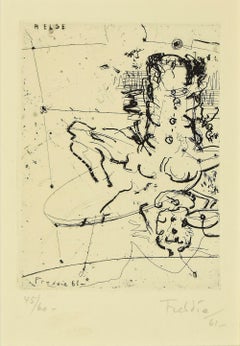
Composition - Etching by W. Freddie - 1961
Located in Roma, IT
Composition is an original black and white etching on paper, realized by Wilhelm Freddie (born Christian Frederik Wilhelm Carlsen Carlsen), a danish abstract and Surrealistic Artist,...
Category

1960s Surrealist Prints and Multiples

Materials

Etching

Calder, Composition, A Bestiary (after)
Located in Southampton, NY
Letterpress printing on spécialement fabriqué Curtis Rag vélin paper. Paper Size: 12.5 x 9.1875 inches. Inscription: Unsigned and unnumbered, as issued. Notes: From the album, A Best...
Category

1950s Surrealist Prints and Multiples

Materials

Lithograph

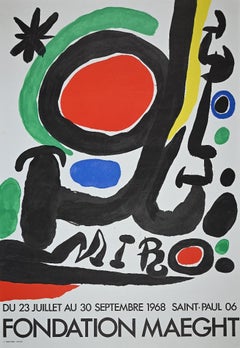
Vintage Exhibition Poster at Galerie Maeght - Offset and Lithograph - 1968
Located in Roma, IT
Mirò - Fondation Maeght is an original artwork realized after Joan Miró. Offset and Lithograph. The artwork was realized in the occasion of the exhibition dedicated to the graphic ...
Category

1960s Surrealist Prints and Multiples

Materials

Lithograph, Offset

Joan Miro, The Bird Takes Flight, from Derriere le miroir, 1971
Located in Southampton, NY
This exquisite lithograph by Joan Miro (1893–1983), titled L'Oiseau s'envole (The Bird Takes Flight), from the folio Derriere le miroir, No. 193-194, originates from the 1971 edition...
Category

1970s Surrealist Prints and Multiples

Materials

Lithograph

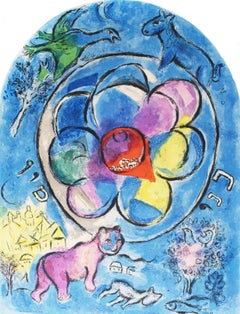
The Tribe of Benjamin, from: The Jerusalem Windows - Stained Glass Jewish Tribes
Located in London, GB
This lithograph is hand signed in pencil by the artist "Marc Chagall" in the lower right margin It is also hand numbered in pencil from the edition of 150, at the lower left margin. ...
Category

1960s Surrealist Prints and Multiples

Materials

Lithograph

Unknown
Located in San Francisco, CA
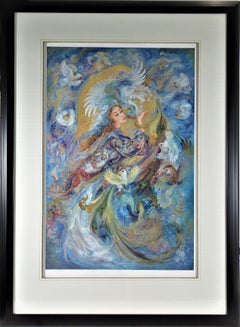
This artwork "Untitled" is a color lithograph by acclaimed Iranian artist Mahmoud Farshchian, born 1930. It is hand signed and numbered 217/250 in p...
Category

Late 20th Century Surrealist Prints and Multiples

Materials

Lithograph

MOUNTAIN LIFT Signed Lithograph, Surreal Mini Landscape, Lasso Rope, Blue Sky
Located in Union City, NJ
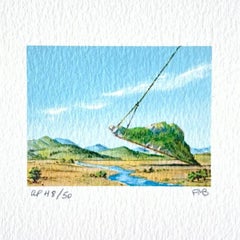
MOUNTAIN LIFT is a hand drawn, limited edition lithograph by the American surrealist artist Fanny Brennan created using traditional hand lithography techniques printed on archival A...
Category

1990s Surrealist Prints and Multiples

Materials

Lithograph

Surrealist prints and multiples for sale on 1stDibs.

Find a wide variety of authentic Surrealist prints and multiples available for sale on 1stDibs. Works in this style were very popular during the 21st Century and Contemporary, but contemporary artists have continued to produce works inspired by this movement. If you’re looking to add prints and multiples created in this style to introduce contrast in an otherwise neutral space in your home, the works available on 1stDibs include elements of blue, orange, purple, red and other colors. Many Pop art paintings were created by popular artists on 1stDibs, including Salvador Dalí, Marc Chagall, Joan Miró, and Leonor Fini. Frequently made by artists working with Lithograph, and Etching and other materials, all of these pieces for sale are unique and have attracted attention over the years. Not every interior allows for large Surrealist prints and multiples, so small editions measuring 1 inches across are also available. Prices for prints and multiples made by famous or emerging artists can differ depending on medium, time period and other attributes. On 1stDibs, the price for these items starts at $48 and tops out at $1,450,000, while the average work sells for $916.

Recently Viewed

View All