Bride Prints and Multiples

to
1,251
5,201
1,707
1,360
548
339
Overall Width
to
Overall Height
to
3,013
1,248
761
677
198
196
168
151
117
65
30
12
7
1
353
137
125
78
73
1,033
1,865
5,508
810
153
211
380
325
289
536
835
1,059
425
207
841
6,263
2,673
207
39,685
20,800
14,046
12,867
11,375
9,216
8,080
5,952
4,424
3,908
3,731
3,639
3,594
3,566
3,305
3,257
2,857
2,785
2,657
2,480
3,434
3,377
1,258
655
470
777
4,745
4,324
3,344
Art Subject: Bride
Le Satyre et le Passant - Etching by Marc Chagall - 1927/30
Located in Roma, IT
Etching and drypoint on Montreal paper, belonging to the suite "Les Fables de La Fontaine" (table n.57). Published in 1952. Edition of 200, m...
Category

1950s Surrealist Animal Prints

Materials

Etching

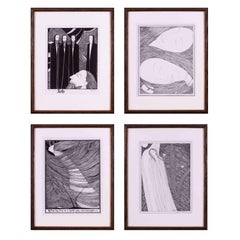
Set of 4 art nouveau lithographs by Scottish female artist Hannah Frank
Located in Petworth, West Sussex
A very nice set of four art nouveau lithographs by the Scottish female artist Hannah Frank. Hannah Frank was born in Glasgow to Jewish Russian immigran...
Category

20th Century Art Nouveau Figurative Prints

Materials

Lithograph

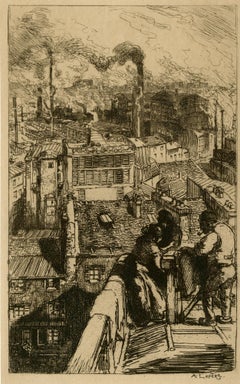
Les Quartier des Gobelins
Located in Middletown, NY
Paris: Gazette des Beaux Arts, 1896. Etching with aquatint on cream laid paper, 7 7/8 x 4 7/8 (200 x 125 mm), full margins. Edition of roughly 750. In good condition with uniform ton...
Category

Late 19th Century French School Landscape Prints

Materials

Laid Paper, Etching, Aquatint

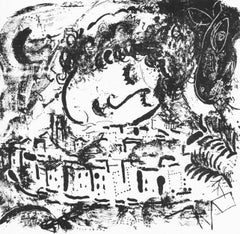
Marc Chagall, The Village, from Chagall, 1957
Located in Southampton, NY
This exquisite lithograph by Marc Chagall (1887–1985), titled Le Village (The Village), from the album Chagall, originates from the 1957 edition published by Maeght Editeur, Paris, a...
Category

1950s Expressionist Figurative Prints

Materials

Lithograph

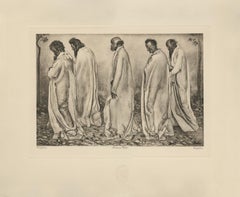
"Eurhythmie" Copper Plate Heliogravure
Located in Palm Beach, FL
2018 marks the centenary anniversary of Ferdinand Hodler’s death. In that 100 years time, the art world’s esteem of this important artist has proved fickle. It has shifted from extolling his artistic merits during his lifetime to showing something of a feigned disdain- more reflective of the world political order than a true change of heart for Hodler’s work. After years of Hodler being all but a footnote in the annals of art history and generally ignored, finally, the pendulum has righted itself once again. Recent retrospective exhibitions in Europe and the United States have indicated not only a joyful rediscovery of Hodler’s art but a firm conviction that his work and world view hold particular relevance today. DAS WERK FERDINAND HODLERS is not only a collection of printed work reflecting the best of all of his painted work created up to 1914 just before the outbreak of World War I, the portfolio itself is an encapsulation of Hodler’s ethos, Parallelisme. Hodler developed his philosophy of Parallelisme as a unifying approach to art which strips away detail in search of harmony. By means of abstraction, symmetry and repetition, Hodler sought ways to depict Nature’s essence and her fundamental, universal order. He believed these universal laws governing the natural, observable world extend to the spiritual realm. Symbolist in nature with Romantic undertones, his works are equally portraits of these universal concepts and feelings governing all life as they are a visual portrait in the formal sense. Whether his subject is a solitary tree, a moment in battle, mortal fear, despair, the awe inspired by a vast mountain range, a tender moment or even the collective conviction in a belief, Hodler unveils this guiding principle of Parallelisme. Several aspects of Hodler’s portfolio reinforce his tenets of Parallelisme. The Table of Contents clearly preferences a harmonious design over detail. The two columns, consisting of twenty lines each, list the images by order of appearance using their German titles. The abbreviated titles are somewhat cryptic in that they obscure the identities of the sitters. Like the image Hodler presents, they are distillations of the sitter without any extraneous details. This shortening was also done in an effort to maintain a harmonious symmetry of the Table of Contents, themselves, and keep titles to a one-line limit. The twenty-fourth title: “Bildnis des Schweizerischen Gesandten C.” was so long, even with abbreviation, that it required two lines; so, for the sake of maintaining symmetry, the fortieth title: “Bauernmadchen” was omitted from the list. This explains why the images are not numbered. Hodler’s reasoning is not purely esoteric. Symmetry and pattern reach beyond mere formal design principles. Finding sameness and imposing it over disorder goes to the root of Hodler’s identity and his art. A Swiss native, Hodler was bi-lingual and spoke German and French. Each printed image, even number forty, have titles in both of Hodler’s languages. Certainly, there was a market for Hodler’s work among francophones and this inclusion may have been a polite gesture to that end; however, this is the only place in the portfolio which includes French. With German titles at the lower left of each image, Hodler’s name at bottom center and corresponding French titles at the lower right of each image, there is a harmony and symmetry woven into all aspects of the portfolio. This holds true for the page design, as it applies to each printed image and as it describes the Swiss artist himself. Seen in this light, Hodler’s portfolio of printed work is the epitome of Hodler’s Parallelisme. DAS WERK FERDINAND HODLERS is also one of the most significant documents to best tell the story of how Hodler, from Switzerland, became caught between political cross-hairs and how the changing tides of nations directly impacted the artist during his lifetime as well as the accessibility of his art for generations to come. The Munich-based publisher of the portfolio, R. Piper & Co., Verlag, plays a crucial role in this story. Publishing on a wide range of subjects from philosophy and world religion to music, literature and the visual arts; the publisher’s breadth of inquiry within any one genre was equal in scope. Their marketing strategy to publish multiple works on Hodler offers great insight as to what a hot commodity Hodler was at that time. R.Piper & Co.’s Almanach, which they published in 1914 in commemoration of their first ten years in business, clearly illustrates the rapid succession- strategically calculated for achieving the deepest and broadest impact - in which they released three works on Hodler to hit the market by the close of 1914. DAS WERK FERDINAND HODLERS was their premier publication. It preceded C.A. Loosli’s Die Zeichnungen Ferdinand Hodlers, a print portfolio after 50 drawings by Hodler which was released in Autumn of 1914 at the mid-level price-point of 75-150 Marks; and a third less expensive collection of prints after original works by Hodler, which had not been included in either of the first two portfolios, was released at the end of that year entitled Ferdinand Hodler by Dr. Ewald Bender. The title and timing of DAS WERK FERDINAND HODLERS' debut leaves little doubt as to the connection it has with another avant-garde portfolio of art prints, Das Werk Gustav Klimts, released in 5 installments from 1908 -1914 by Galerie Miethke in Vienna. Hodler, himself, was involved in Klimt’s ground-breaking project. As the owner of Klimt’s 1901 painting, “Judith with the Head of Holifernes” which appears as the ninth collotype print in the second installment of Das Werk Gustav Klimts, Hodler was obliged to grant access of the painting to the art printers in Vienna for them to create the collotype sometime before 1908. Hodler had been previously invited in 1904 to take part in what would be the last exhibition of the Vienna Secession before Klimt and others associated with Galerie Miethke broke away. In an interview that same year, Hodler indicated that he respected and was impressed by Klimt. Hodler’s esteem for Klimt went beyond the art itself; he emulated Klimt’s method aimed at increasing his market reach and appeal to a wider audience by creating a print portfolio of his painted work. By 1914, Hodler and his publisher had the benefit of hindsight to learn from Klimt’s Das Werk publication. Responding to the sluggish sales of Klimt’s expensive endeavor, Hodler’s publisher devised the same diversified 1-2-3 strategy for selling Hodler’s Das Werk portfolio as they did with regards to all three works on Hodler they published that year. For their premium tier of DAS WERKS FERDINAND HODLERS, R. Piper & Co. issued an exclusive Museum quality edition of 15 examples on which Hodler signed each page. At a cost of 600 Marks, this was generally on par with Klimt’s asking price of 600 Kronen for his Das Werk portfolio. A middle-tiered Preferred edition of 30, costing somewhat less and with Hodler’s signature only on the Title Page, was also available. The General edition, targeting the largest audience with its much more affordable price of 150 Marks, is distinguishable by its smaller size. Rather than use the subscription format Miethke had chosen for Klimt’s portfolios which proved to have had its challenges, R. Piper & Co. employed a different strategy. In addition to instantly gratifying the buyer with all 40 of the prints comprising DAS WERK FERDINAND HODLERS and the choice among three price points, they advertised in German journals a fourth possibility of ordering single prints from them directly. These printed images are easily discernible from the three complete folio editions. The paper size of the single purchased images is of the larger format like the Museum and Preferred editions, measuring 65 h x 50 w cm; however, the paper itself is the same copper print paper used in the General edition and then mounted on poster board. The publishing house positioned itself to be a direct retailer of Hodler’s art. They astutely recognized the potential for profitability and the importance, therefore, of having proprietary control over his graphic works. R. Piper & Co. owned the exclusive printing rights to Hodler’s best work found in their three publications dating from 1914. That same year, a competing publication out of Weimar entitled Ferdinand Hodler: Ein Deutungsversuch von Hans Muhlestein appeared. Its author, a young scholar, expressed his frustration with the limited availability of printable work by Hodler. In his Author’s Note on page 19, dated Easter, 1914, Muhlestein confirms that the publisher of Hodler’s three works from that same year owned the exclusive reproductive rights to Hodler’s printed original work. He goes further to explain that even after offering to pay to use certain of those images in his book, the publisher refused. Clearly, a lot of jockeying for position in what was perceived as a hot market was occurring in 1914. Instead, their timing couldn’t have been more ill-fated, and what began with such high hopes suddenly found a much different market amid a hostile climate. The onset of WWI directly impacted sales. Many, including Ferdinand Hodler, publicly protested the September invasion by Germany of France in which the Reims Cathedral, re-built in the 13th century, was shelled, destroying priceless stained glass and statuary and burning off the iron roof and badly damaging its wooden interior. Thomas Gaehtgens, Director of the Getty Research Institute describes how the bombing of Reims Cathedral triggered blindingly powerful and deeply-felt ultra-nationalistic responses: “The event profoundly shocked French intellectuals, who for the most part had an intense admiration for German literature, music and art. By relying on press accounts and abstracting from the visual propagandistic content, they were unable to interpret the siege of Reims without turning away from German culture in disgust. Similarly, the German intelligentsia and bourgeoisie were also shocked to find themselves described as vandals and barbarians. Ninety-three writers, scientists, university professors, and artists signed a protest, directed against the French insults, that defended the actions of the German army.” In similar fashion, a flurry of open letters published in German newspapers and journals as well as telegrams and postcards sent directly to Hodler following his outcry in support of Reims reflected the collectively critical reaction to Hodler’s position. Loosli documents that among the list of telegrams Hodler received was one from none other than his publisher in Germany, R.Piper & Co. Allegiances were questioned. The market for Hodler in Germany immediately softened. Matters worsened for the publisher beyond the German backlash to Hodler and his loss of appeal in the home market; with the war in full swing until 1918, there was little chance a German publisher would have much interest coming from outside of Germany and Austria. Following the war and Hodler’s death in 1918, the economy in Germany continued to spiral out and just 5 years later, hyper-inflation had rendered its currency worthless vis-a-vis its value in the pre-war years. Like the economy, Hodler’s reputation was slow to find currency in these difficult times. Even many French art fans had turned sour on Hodler as they considered his long-standing relationship in German and Austrian art circles. Thus, the portfolio’s rarity in Hodler’s lifetime and, consequently, the availability of these printed images from DAS WERK FERDINAND HODLERS since his death has been scarce. In many ways, Hodler and his portfolios were casualties of war. Thwarted from their intended purpose of reaching a wide audience and show-casing Parallelisme, Hodler’s unique approach to art, this important, undated work has been both elusive and shrouded in mystery. Perhaps DAS WERK FERDINAND HODLERS was left undated as a means of affirming the timelessness of Hodler’s art. Digging back into the past, Hodler’s contemporaries, like R. Piper, C.A. Loosli and Hans Muhlestein, indeed provide the keys to unequivocally clarify what has largely been mired in obscurity. Just after Hodler’s death, the May, 1918 issue of the Burlington Review ran a small column which opined hope for better access to R.Piper & Co.’s DAS WERK FERDINAND HODLERS; 100 years later, it is finally possible. Hodler’s voice rings out through these printed works. Once more, his modern approach to depicting portraits, landscapes and grand scale scenes of Swiss history speak to us of what is universal. Engaging with any one of these images is the chance to connect to Hodler’s vision and his world view- weltanschauung in German, vision du monde in French- however one expresses these concepts through language, its message embedded in his work is the same: “We differ from one another, but we are like each other even more. What unifies us is greater and more powerful than what divides us.” Today, Hodler’s art couldn’t be more timely. FERDINAND HODLER (SWISS, 1853-1918) explored Parallelisme through figurative poses evocative of music, dance and ritual. His images of sex, night, desertion and death as well as his many landscapes exploring the universal longing for harmony with Nature are unique and important works embodying a Symbolist paradigm. Truly a Modern Master, Hodler’s influence can be felt in the work of Gustav Klimt and Kolomon Moser...
Category

1910s Symbolist Figurative Prints

Materials

Paper

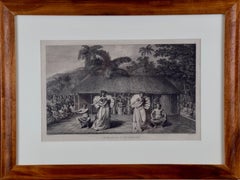
"A Dance in Otaheite" (Tahiti), Engraving from Captain Cook s 3rd Voyage
Located in Alamo, CA
"A Dance in Otaheite" (Tahiti) is an engraving created by William Sharp (1749-1824), from a drawing by John Webber (1752-1793), who was the artist on Captain James Cook's 3rd and final voyage of discovery. It is a plate in the atlas of "A Voyage to the Pacific Ocean Undertaken by the Command of His Majesty, for Making Discoveries in the Northern Hemisphere", the official British Admirality sanctioned journal published upon completion of the voyage in London in 1784 by Strahan & Cadell. Two women and two men wearing ceremonial costumes, performing a dance outdoors standing on a mat. Three men are playing the drums in the background, in front of a thatched roof building. An audience of men are sitting on both sides of the stage. By the time Webber arrived in Tahiti, 'south sea' imagery had become familiar. Webber gave concentrated attention to dance. He had the opportunity to distinguish the Tahitian dance from the more formalized dancing of Tonga. Whereas they seem to have called to mind the more formal dances of antiquity, the Tahitian dancing aroused memories of peasant and folk dancing. This engraving is professionally framed in Koa wood. Koa wood is legendary in Hawaii. Not only is this amazing wood native to Hawaii, but it is known for the deep rich colors and varied grain pattern. Koa has an honored heritage in Hawaii and is highly revered and sacred. The word “koa” means “warrior” in Hawaiian. The warriors of King Kamehameha the Great, created canoes and weapons from a wood plentiful on the Big Island of Hawaii. This wood became synonymous with the warriors themselves, and it became known as koa. The print is in excellent condition. There are three other engravings listed from the official journal of Captain Cook's 3rd voyage available that are presented in identical Koa wood frames and double mats (LU117324682432, LU117324684052, LU117324684062). They would make a wonderful grouping for a display of 2, 3 or 4 prints. A discount is available for a grouping depending on the number of items included. Hawaii was discovered by Captain Cook during this voyage. Hawaii was originally called The Sandwich Islands in honor of The Earl of Sandwich...
Category

1780s Realist Landscape Prints

Materials

Engraving

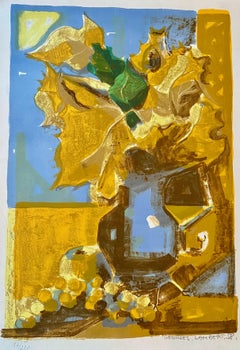
Bouquet
Located in Belgrade, MT
This lithograph is part of my private collection since the 1970's and is in very good condition. Georges Lambert was a French artist 1919-1998. He was a painter and lithographer who ...
Category

20th Century French School Still-life Prints

Materials

Lithograph

Bouquet
$240 Sale Price
20% Off
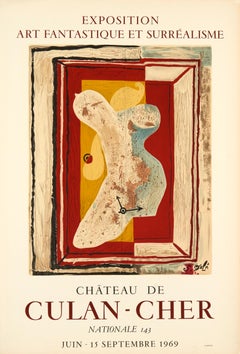
Chateau de Culan - Cher (after) Salvador Dali, 1969
Located in New York, NY
Artist: Salvador Dali Medium: Lithographic Poster, 1969 Dimensions: 30.75 x 20.75 in, 78.1 x 52.7 cm Arches Poster Paper - Condition A+ This lithographic poster was created after...
Category

1960s Prints and Multiples

Materials

Lithograph

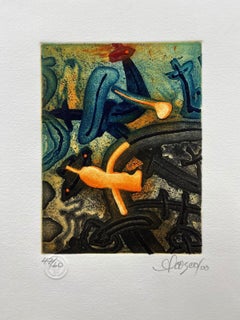
Raimundo Orozco Cuban Artist Original Hand Signed engraving 2000
Located in Miami, FL
Raimundo Orozco (Cuba, 1949) 'Untitled', 2000 engraving on paper Guarro Biblos 250g. 10.1 x 6.6 in. (25.6 x 16.6 cm.) Edition of 60 ID: ORO-313-047 Hand-signed by author
Category

Early 2000s Contemporary Prints and Multiples

Materials

Paper, Aquatint, Screen, Engraving

La Source - Engraving - 150 copies
Located in Paris, IDF
Salvador Dali La Source (1960) Heliogravure reworked with drypoint Peinted signature in the plate On BFK Rives Vellum paper Size 32.8 x 26.4 cm (c. 13 x 10"...
Category

1960s Surrealist Figurative Prints

Materials

Etching

Count Joseph Boruwlaski - The celebrated Polish Dwarf
Located in Bournemouth, Dorset
The sitter was born of humble origin near Chaliez in Polish Russia in November 1739. He was one of a family of six children, three of whom were of normal stature. He was brought into...
Category

19th Century Figurative Prints

Materials

Engraving

Holy Family with Two Saints, after Parmigianino
By Antonio Da Trento
Located in Middletown, NY
Chiaroscuro woodcut on cream laid paper with a partial anchor in a circle watermark, printed from two blocks in black and olive-green, 10 3/4 x 8 3...
Category

16th Century Old Masters Figurative Prints

Materials

Ink, Laid Paper, Woodcut

Exquisite 1973 poster Château Mouton Rothschild collaboration with Pablo Picasso
Located in PARIS, FR
This exquisite 1973 original poster was created to commemorate the legendary collaboration between Château Mouton Rothschild and the world of...
Category

1970s Prints and Multiples

Materials

Paper, Lithograph

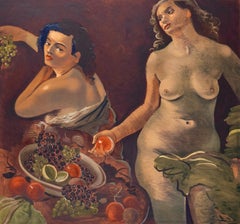
Derain, Deux femmes nues et nature morte, Collection Pierre Lévy (after)
Located in Fairfield, CT
Medium: Lithograph on vélin d'Arches paper Year: 1970 Paper Size: 20 x 26 inches Inscription: Signed in the plate and unnumbered, as issued Notes: From the folio, André Derain entre ...
Category

1970s Modern Landscape Prints

Materials

Lithograph

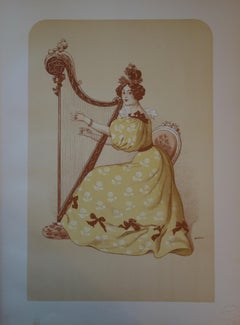
Romance, Woman with a Harp - Original lithograph - 1898
Located in Paris, IDF
Auguste ROEDEL (1859-1900) Romance, Woman with a Harp, 1898 Original lithograph (Champenois workshop) Printed signature in the plate On vellum, 40 x 31 cm (c. 16 x 12 in) INFORMATI...
Category

1890s Art Nouveau Figurative Prints

Materials

Lithograph

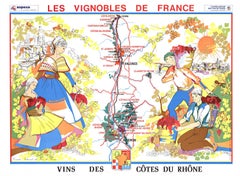
Original Vins Des Côtes du Rhône, French Wine Map vintage poster
Located in Spokane, WA
Original Les Vignobles de France - Cote du Rhone vintage wine map poster. Horizontal. Size 36.5" x 27". Archival linen backed and ready to fram...
Category

Late 20th Century American Modern Landscape Prints

Materials

Lithograph

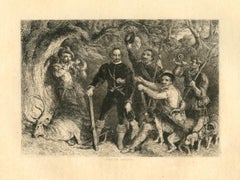
"The Forester s Song" original etching
Located in Henderson, NV
Medium: original etching. This impression on laid paper was printed in London in 1868 for the rare first volume of Philip Gilbert Hamerton's "Etching and Etchers". Image size: 3 1/2 ...
Category

1860s Prints and Multiples

Materials

Etching

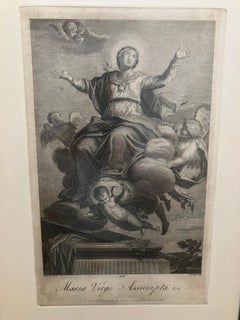
Carlo Maratti “Mary Virgin Assumed”
By Carlo Maratti
Located in San Francisco, CA
Carlo Maratti: 1625-1713. Very well listed 17 century Italian master. He has had Auction results over $1 million for a painting and over $4000 for an etching. He often printed etchin...
Category

17th Century Italian School Figurative Prints

Materials

Etching

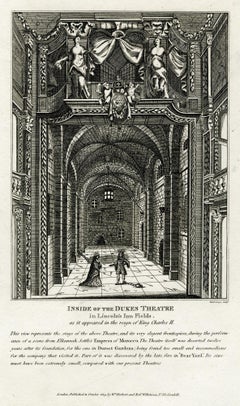
Inside of the Duke s Theater in Lincoln s Inn Fields as it appeared...Charles II
Located in Middletown, NY
London: William Herbert & Robert Wilkinson, 1809 Engraving on buff wove paper, 12 1/4 x 8 1/4 inches (310 x 208 mm), full margins. In good condition with some scattered surface soiling, and edge wear along the top sheet edge, well outside of the image area. From a series of three views of the Duke's Theater. An impression of this work may be viewed in the permanant collection of the Royal Collection...
Category

Early 19th Century English School Landscape Prints

Materials

Engraving, Handmade Paper

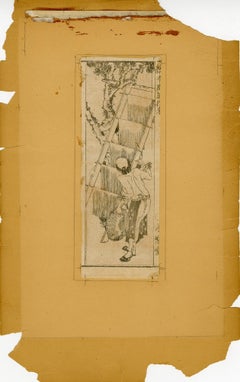
Drying Paper
Located in Middletown, NY
Woodcut on cream laid paper, 7 1/4 x 2 1/2 inches (182 x 63 mm), narrow margins. Laid down to non-archival board with scattered soiling and some adhesive staining. Okumura Masanobu (Japanese 1686 – 13 March 1764) was a Japanese print designer, book publisher, and painter. He also illustrated novelettes and in his early years wrote some fiction. At first his work adhered to the Torii school, but later drifted beyond that. He is a figure in the formative era of ukiyo-e doing early works on actors and bijin-ga ("pictures of beautiful women"). While Masanobu's early life is largely undocumented, he is believed to have been born about 1686, possibly in Edo (modern Tokyo). Edo was a small fishing village when Tokugawa Ieyasu chose it as his administrative capital of the Tokugawa shogunate, and by the early 17th century the city had prospered and its population had grown to half a million. Masanobu appears to have been self-taught painter (though he did study poetry under Tachiba Fukaku); he is not known to have belonged to any artistic school. His early work shows the influence of the Torii school of ukiyo-e painting...
Category

Early 18th Century Edo Figurative Prints

Materials

Handmade Paper, Woodcut

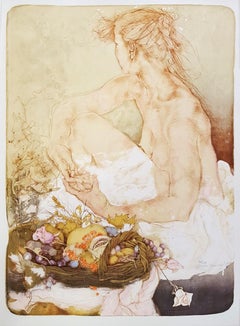
Earth /// Contemporary Female Artist Nude Woman Figurative Lithograph Modern Art
Located in Saint Augustine, FL
Artist: Dagmar Mezricky (Czech, 1944-) Title: "Earth" *Signed, numbered, and dated by Mezricky in pencil lower right Year: 1989 Medium: Original Lithograph on Rives BFK paper Limite...
Category

1980s Contemporary Nude Prints

Materials

Lithograph

North Sea
Located in Dallas, TX
from the Padoli Monotypes III
Category

1970s Modern Figurative Drawings and Watercolors

Materials

Monotype

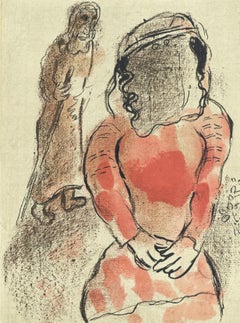
Marc Chagall, Tamar, Daughter-in-Law of Judah, from Drawings for the Bible, 1956
Located in Southampton, NY
This exquisite lithograph by Marc Chagall (1887–1985), titled Tamar Belle-Fille de Judas (Tamar, Daughter-in-Law of Judah), from Marc Chagall, Dessins Pour La Bible (Drawings for the Bible), Verve: Revue Artistique et Litteraire, Vol. VIII, No. 33–34, originates from the September 1956 issue published by Editions de la revue Verve, Paris, under the direction of Teriade, Editeur, Paris, and printed by Mourlot Freres, Paris, 1956. This emotionally charged and symbolically rich composition depicts the story of Tamar, daughter-in-law of Judah, who secures her justice through faith and courage. Chagall’s lyrical interpretation infuses the biblical episode with empathy and transcendence, portraying Tamar not merely as a figure of defiance, but as an embodiment of dignity, destiny, and divine justice. The fluidity of his line and ethereal use of light convey the spiritual depth that defines Chagall’s biblical imagery, uniting the moral and the mystical. The piece forms part of Chagall’s celebrated series of lithographs and drawings created for Dessins Pour La Bible, a monumental project uniting art, scripture, and mysticism in one of the artist’s most important achievements. Executed as a lithograph on velin du Marais paper, this work measures 14 x 10.5 inches (35.56 x 26.67 cm). Unsigned and unnumbered as issued. The edition exemplifies the superb craftsmanship of the Mourlot Freres atelier, renowned for its collaborations with the greatest modern masters of the 20th century. Artwork Details: Artist: Marc Chagall (1887–1985) Title: Tamar Belle-Fille de Judas (Tamar, Daughter-in-Law of Judah), from Marc Chagall, Dessins Pour La Bible (Drawings for the Bible), Verve: Revue Artistique et Litteraire, Vol. VIII, No. 33–34, September 1956 Medium: Lithograph on velin du Marais paper Dimensions: 14 x 10.5 inches (35.56 x 26.67 cm) Inscription: Unsigned and unnumbered as issued Date: 1956 Publisher: Editions de la revue Verve, Paris, under the direction of Teriade, Editeur, Paris Printer: Mourlot Freres, Paris Catalogue raisonne references: Cain, Julien, and Fernand Mourlot. Chagall Lithographe. Andre Sauret, Editeur, 1960, illustrations 117–46. Cramer, Patrick, and Meret Meyer. Marc Chagall: Catalogue Raisonne Des Livres Illustrés. P. Cramer ed., 1995, illustration 25. Condition: Well preserved, consistent with age and medium Provenance: From Marc Chagall, Dessins Pour La Bible (Drawings for the Bible), Verve: Revue Artistique et Litteraire, Vol. VIII, No. 33–34, published by Editions de la revue Verve, Paris, 1956 Notes: Excerpted from the album (translated from French), This double issue of Verve is dedicated to the full reproduction in heliogravure of the one hundred-five plates etched by Marc Chagall, between 1930 and 1955, for the illustration of the Bible. The artist composed especially for the present work, sixteen lithographs in color and twelve in black, as well as the cover and the title page. This volume was completed and printed on September 10, 1956, by the Master Printers Draeger Freres for heliogravure, and by Mourlot Freres for lithography. About the Publication: Marc Chagall, Dessins Pour La Bible (Drawings for the Bible), published as Verve Vol. VIII, No. 33–34 in September 1956, represents one of the crowning achievements of Chagall’s lifelong dialogue with the sacred. Conceived and directed by the visionary publisher Teriade and printed by the master lithographers Mourlot Freres, the issue features thirty-four color lithographs and numerous black-and-white drawings inspired by biblical figures and stories. Chagall’s works for this edition unite text and image in a luminous meditation on divine creation, moral struggle, and spiritual renewal, imbued with his signature dreamlike symbolism and radiant color. Produced in postwar Paris, this landmark publication reaffirmed the enduring union of art and faith, establishing Dessins Pour La Bible as one of the most important illustrated works of the 20th century. About the Artist: Marc Chagall (1887–1985) was a Belarus-born French painter, printmaker, and designer whose visionary imagination, radiant color, and deeply poetic symbolism made him one of the most beloved and influential artists of the 20th century. Rooted in the imagery of his Jewish heritage and the memories of his childhood in Vitebsk, Chagall’s art wove together themes of faith, love, folklore, and fantasy with a dreamlike modern sensibility. His unique style—merging elements of Cubism, Fauvism, Expressionism, and Surrealism—defied categorization, transforming ordinary scenes into lyrical meditations on memory and emotion. Influenced by Russian icon painting, medieval religious art, and the modern innovations of artists such as Pablo Picasso, Henri Matisse, and Georges Braque, Chagall developed a profoundly personal visual language filled with floating figures, vibrant animals, musicians, and lovers that symbolized the transcendent power of imagination and love. During his early years in Paris, he became an integral part of the Ecole de Paris circle, forming friendships with Amedeo Modigliani, Fernand Leger, and Sonia Delaunay, and his creative spirit resonated with that of his peers and successors—Alexander Calder, Alberto Giacometti, Salvador Dali, Joan Miro, Wassily Kandinsky, Marcel Duchamp, and Man Ray—artists who, like Chagall, sought to push the boundaries of perception, emotion, and form. Over a prolific career that spanned painting, printmaking, stained glass, ceramics, and stage design, Chagall brought an unparalleled poetic sensibility to modern art, infusing even the most abstract subjects with human warmth and spiritual depth. His works are held in the most prestigious museums around the world, including the Museum of Modern Art, the Centre Pompidou, the Tate, and the Guggenheim, where they continue to inspire generations of artists and collectors. The highest price ever paid for a Marc Chagall artwork is approximately $28.5 million USD, achieved in 2017 at Sotheby’s New York for Les Amoureux (1928). Marc Chagall Tamar...
Category

1950s Expressionist Figurative Prints

Materials

Lithograph

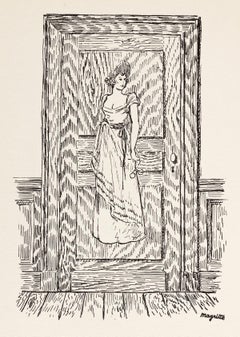
Rene Magritte, Untitled, from Poems 1923-1958, 1959 (after)
Located in Southampton, NY
This exquisite lithograph after Rene Magritte (1898–1967), titled Sans titre (Untitled), from the album Poems 1923-1958, Dix dessins de Rene Magritte (Ten Drawings by Rene Magritte),...
Category

1950s Surrealist Figurative Prints

Materials

Lithograph

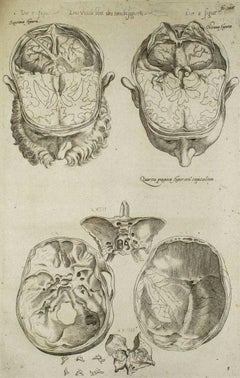
The Brain - De Humani Corporis Fabrica Tav. 42 - Original Etching - 1642
Located in Roma, IT
The Brain is an original etching realized for the 1642 edition of the "De Humani Corporis Fabrica" by the italian anatomist Andrea Vesalio. It shows the human brain from different p...
Category

1640s Modern Figurative Prints

Materials

Etching

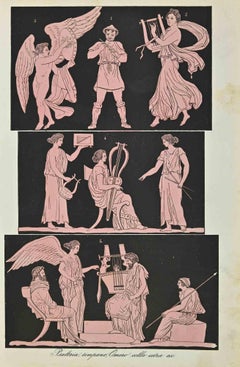
Lyre - Lithograph - 1862
Located in Roma, IT
Lyre is a lithograph on paper realized in 1862. The artwork belongs to the Suite Uses and customs of all the peoples of the universe: " History of the government, of the laws, of th...
Category

1860s Modern Figurative Prints

Materials

Lithograph

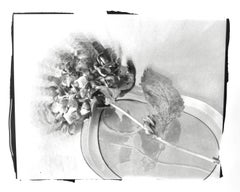
"Hydrangea/Remembrance", Contemporary, Botanical, Black and White Photograph
Located in Franklin, MA
Vicki McKenna’s “Hydrangea/Remembrance” is a 8 x 10 inches (image size), 14 x 16 inches (matted size), handcrafted, platinum/palladium, photographic print. The contemporary black an...
Category

2010s Contemporary Black and White Photography

Materials

Rag Paper, Black and White

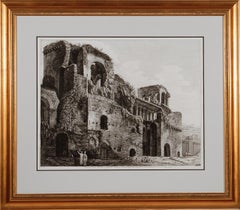
Ruins of the Roman Baths of Belisarius: A 19th C. Etching by Luigi Rossini
Located in Alamo, CA
This early 19th century etching entitled "Veduta degl' Avanzi delle Torri di Belisario Dalla parte che guarda l' Interno della Città, vicino a Porta S. Giovanni, A. Mura Aureliane" (...
Category

1820s Old Masters Landscape Prints

Materials

Etching

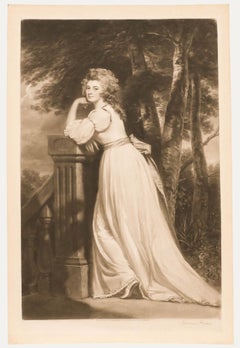
Norman Hirst After George Romney - 1911 Mezzotint, Lady Catherine Rouse Boughton
By Norman Hirst
Located in Corsham, GB
A large mezzotint print by Norman Hirst (1862-1956) depicting Lady Catherine Rouse Boughton after a painting by George Romney (1734-1802). The original po...
Category

Early 20th Century Portrait Prints

Materials

Mezzotint

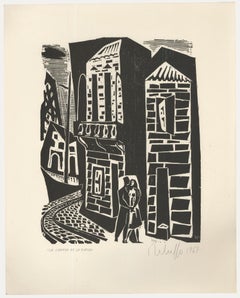
Victor Rebuffo (1903-1983) - Mid 20th Century Woodcut, La Cortada De La Ribera
Located in Corsham, GB
An original woodcut print by the listed Italian-Argentinian artist Victor Luciano Rebuffo (1903-1983). Entitled 'La Cortada De La Ribera' The Riverbank Cut. Monogrammed within the pr...
Category

20th Century Landscape Prints

Materials

Woodcut

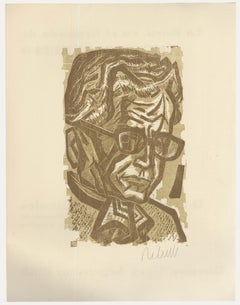
Victor Rebuffo (1903-1983) - Mid 20th Century Woodcut, Autorretrato
Located in Corsham, GB
An original woodcut print by the listed Italian-Argentinian artist Victor Luciano Rebuffo (1903-1983). Self Portrait. Monogrammed within the print to the lower left. Pencil signed to...
Category

20th Century Portrait Prints

Materials

Woodcut

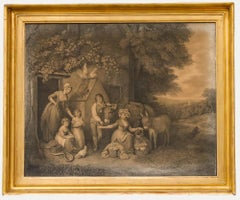
William Nutter after W.R. Bigg - Stipple Engraving, Favourite Chickens
Located in Corsham, GB
Two young children bid farewell to chickens destined for market in this charming rural scene by William Nutter (1759-1802) after William Redmore Bigg RA (1755-1828). Well presented i...
Category

Early 18th Century Figurative Prints

Materials

Engraving

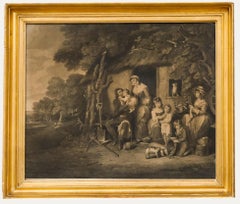
William Nutter after William Redmore Bigg - Stipple Engraving, Saturday Evening
Located in Corsham, GB
A father greets his family after a day of labour in this charming rural scene by William Nutter (1759-1802) after William Redmore Bigg RA (1755-1828). Well presented in a gilt-effect...
Category

Early 18th Century Figurative Prints

Materials

Engraving

Sir William Nicholson (1872-1949) - Lithograph, Coster (Hammersmith)
Located in Corsham, GB
A striking lithograph after an original woodcut by Sir William Nicholson (1872-1949), depicting a costermonger or 'coster' (a street vendor) from his 1898 publication London Types. T...
Category

Early 20th Century Portrait Prints

Materials

Lithograph

Thomas Rowlandson after George Morland - 19th Century Etching, Snipe Shooting
Located in Corsham, GB
A charming 19th century etching with aquatint by Thomas Rowlandson (1757-1827) after George Morland (1763-1804). Unsigned. Part of a series of four. Well presented in a lacquered fra...
Category

19th Century Landscape Prints

Materials

Etching

Composition, Arbres et Voiles, Édouard Pignon
Located in Southampton, NY
Lithograph and stencil on grand Velin d'Arches paper. Inscription: signed in the plate and unnumbered, as issued. Good condition. Notes: from the folio, Édouard Pignon, Arbres et Voi...
Category

1950s Modern Landscape Prints

Materials

Lithograph, Stencil

La. Benediction de l Aieul - Etching by Edouard Moyse - 1860s
Located in Roma, IT
La. Benediction de l'Aieul is a black and White etching realized by Edouard Moyse in the 1860s.  Titled in the lower. Image size:23x31. Very good impression with wide margins and ...
Category

1860s Modern Figurative Prints

Materials

Etching

Pandora s Box, Folk Art Etching by Charles Bragg
Located in Long Island City, NY
Charles Bragg, American (1931 - 2017) - Pandora's Box, Year: circa 1970, Medium: Etching, signed, numbered, and titled in pencil, Edition: 300, Image Size: 6 x 9 inches, Size: 10 x...
Category

1970s Folk Art Figurative Prints

Materials

Etching

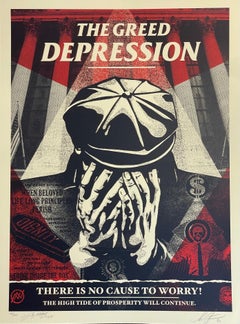
Shepard Fairey "THE GREED DEPRESSION" 2020 Silkscreen Print Edition of 300
Located in Draper, UT
THE GREED DEPRESSION 18 inches by 24 inches Edition of 15/300 Silkscreen print Signed and Numbered by the artist in pencil, Shepard Fairey.
Category

2010s Street Art Figurative Prints

Materials

Screen

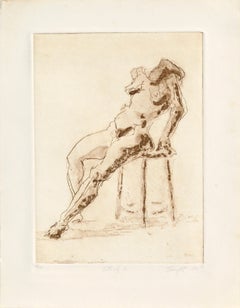
"Study 2", Seated Figure Lithograph
Located in Soquel, CA
Beautiful nude figurative lithograph by Jim Smyth (American, b. 1938). Numbered, titled, signed and dated "8/12", "Study 2", "Smyth 75” along the bottom edge. Unframed. Jim Smyth has studied at the Academia de Belle Arti in Fiorenza, Italy, Ecole des BeauxArts in Geneva, New York Academy, and the Art Students League. He is also a graduate of UC Berkeley with a degree in Fine Art. Although academically trained, Smyth practices and teaches a more impressionistic style of painting, focusing on the Alla Prima technique. He is particularly knowledgeable about drawing, perspective, color theory and the human figure, his passion. Smyth, with extensive academic knowledge, has a profound love of all human representations as illustrated by his humorous quick sketches from life. He also practices and teaches oil painting and pastels. When not in Provence, or Southeastern France, Smyth teaches intensely in art schools, art centers and several colleges in the Bay Area. He is a beloved instructor and his classes fill in quickly as he is very knowledgeable. On his return to the United States, he began studying with Mr. Alanson Appleton at the College of San Mateo, San Mateo, California. Smyth was a founding member of the Appletree Etchers, Inc., an etching print shop organized by Mr. Appleton and his students to develop and promote color intaglio. Smyth served as Master Printer at the studio for many years perfecting the techniques of intaglio and developing the color theories of Mr. Appleton as applied to the deeply etched plate. Smyth received his degree from the University of California, Berkeley, in 1972 and holds the California Community College Certificate and an Adult Education Certificate. Smyth was invited to teach "Anatomy for Artists" at Foothill College, Los Altos Hills, California, as a result of his many years of dissection of the cadaver and developed the course of study of Perspective for the college. During this period, he began teaching Life Drawing at the Pacific Art League of Palo Alto, Palo Alto, California. During the following thirty years Smyth has taught an average of twelve classes per week at the Pacific Art League of Palo Alto, the Palo Alto Art Center and the Burlingame Recreation Department among others in all phases of drawing and painting. He has conducted many workshops for the California Academy of Painters in many aspects of drawing and painting. Currently, he is an Adjunct Professor of Drawing at the College of San Mateo, San Mateo, California. He is an authority on the materials of painting and drawing, techniques of traditional drawing and painting, color theory, perspective and anatomy for artists. In his career in Life Drawing, Smyth has made over two hundred thousand drawings from the model. In addition to studies at Berkeley, Smyth has studied at the College of San Mateo, Foothill College, De Anza College, Mission College, and West Valley College, all in California. One of the pivotal points in his career was studying with Mr. Maynard Dixon Stewart at the University of San Jose, California. He spent a year at the New York Academy of Art where he was offered a full scholarship and at the Art Students League of New York. He concurrently attended classes at the National Academy of Design in New York. Among others, Smyth studied with M. Andrejivec, Ted Schmidt, Elliot Goldfinger, Gary Fagin, Ted Jacobs, Leo Neufeld, David Leffel, Jack Ferragasso, Jim Childs and Everett Raymond Kinstler and Kim English. Smyth has also studied with the noted painter and colorist, Ovanes Berberian. In 2002 Jim was invited to study at the Academy of Art in St. Petersburg, Russia, where he worked in Life Drawing and Life Painting. Smyth is a popular lecturer, a sought after demonstrator and juror. He is the recipient of many awards for both his painting and his teaching. In 1988 and again in 2003, he received the Kenneth Washburn...
Category

1970s American Impressionist Figurative Prints

Materials

Paper, Etching

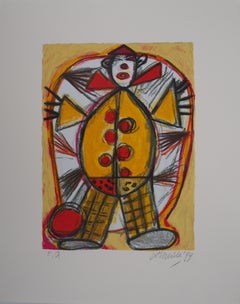
Little Clown in Red and Yellow - Original handsigned lithograph - 200 ex
Located in Paris, IDF
Corneille Little Clown in Red and Yellow Original lithograph Handsigned Justified EA On vellum 40 x 31.5 cm (c. 16 x 12.5 inch) Excellent condition
Category

1990s Surrealist Figurative Prints

Materials

Lithograph

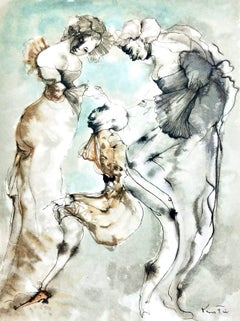
Les deux maitresses, Vingt fables de La fontaine, Léonor Fini
Located in Southampton, NY
Woodcut on vélin d'Arches paper. Inscription: signed in the plate and unnumbered, as issued. Good condition. Notes: from the folio, Vingt fables de La fontaine, 1961. Published by Éd...
Category

1960s Modern Landscape Prints

Materials

Woodcut

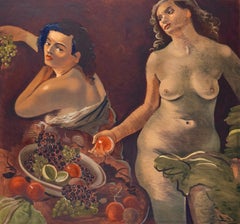
Andre Derain, Two Nude Women and Still Life, 1970 (after)
Located in Southampton, NY
This exquisite lithograph after Andre Derain (1880–1954), titled Deux femmes nues et nature morte (Two Nude Women and Still Life), from the folio Andre Derain entre 1935 et 1949, V (...
Category

1970s Fauvist Still-life Prints

Materials

Lithograph

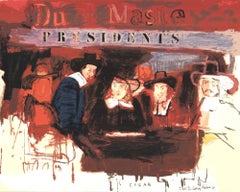
LARRY RIVERS Dutch Masters, 1991 - Signed Pop Art
Located in Brooklyn, NY
The artwork described is an offset lithograph and screenprint in colors on wove paper by Larry Rivers. Hand-signed and numbered "H.C. 9/12," indicating it as one of twelve hors comme...
Category

1990s Pop Art Prints and Multiples

Materials

Mixed Media

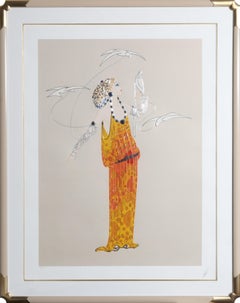
Aphrodite, Framed Art Deco Foil and Screenprint by Erte
Located in Long Island City, NY
Artist: Erté Title: Aphrodite Year: 1985 Medium: Embossed Serigraph with foil stamping, signed and numbered in pencil Edition: 185/300 Image Size: 32 x 22.5 inches Size: 35.5 x 25.5 ...
Category

1980s Art Deco Figurative Prints

Materials

Foil

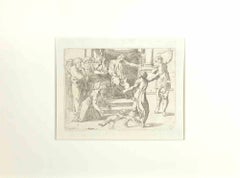
Old Testament Story - Etching by Giovanni Lanfranco - 1607s
Located in Roma, IT
Old Testament Story is an Etching print realized by the artist Giovanni Lanfranco after Agostino Carracci About The Old Testament Story, 1607 ca. ...
Category

Early 1600s Old Masters Figurative Prints

Materials

Etching

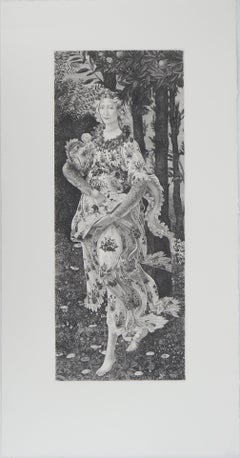
Spring - Etching from Louvre Museum
By Sandro Botticelli
Located in Paris, IDF
Sandro BOTTICELLI Spring Etching Not signed On vellum 76 x 39.5 cm (c. 29.93 x 15.56 inch) INFORMATION : Published by the Chalcographie du Louvre and authenticated by the studio's ...
Category

Mid-20th Century Italian School Portrait Prints

Materials

Etching

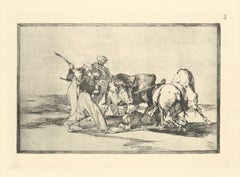
Tauromaquia - Plate 3
Located in Henderson, NV
Medium: heliogravure (after the etching from Goya's Tauromaquia series). Printed in 1947 in a limited edition of 500 on Guarro laid paper, and published in Barcelona by Ediciones Ome...
Category

1940s Prints and Multiples

Materials

Photogravure

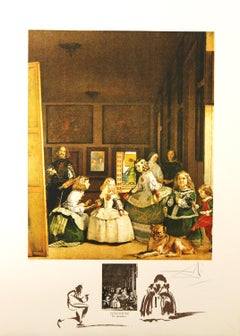
Velasquez Les Menines by Salvador Dali 1974 Lithograph
Located in Paonia, CO
Velasquez Les Menines is one of six graphics from the series Changes in Great Masterpieces published by Sidney Lucas, 1974. Master Dali has given us a...
Category

1970s Surrealist Figurative Prints

Materials

Lithograph

Salvador Dali "The Fiancee of King of Garbe"
Located in Boston, MA
Artist: Dali, Salvador Title: The Fiancee of King of Garbe Series: Le Decameron Date: 1972 Medium: drypoint printed in color Unframed Dimensions: 17.72" x 12.2" Framed Dimension...
Category

1970s Surrealist Prints and Multiples

Materials

Drypoint

The Pig Killers, by David Deuchar after Ostade
Located in Middletown, NY
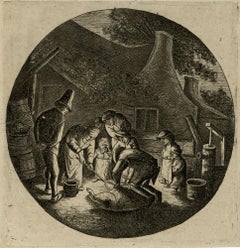
Deuchar, David (after van Ostade). Les paysans tuant un porc. Edinburgh: c1800. Etching on thin cream laid paper, 4 11/16 x 4 11/16 inches (117 x 117 mm), narrow margins. Horizontal edge tear extending approximately 1-inch into the image area at the center left sheet edge. Skinning at the bottom-center sheet edge, verso, and adhesive residue at the top two corners, verso. Etched by David Deuchar after van Ostade, from A Collection of Etchings After the Most Eminent Masters of the Dutch and Flemish Schools particularly Rembrandt, Ostade, Cornelius Bega and Van Vliet, Edinburgh: 22 December, 1803. "The pig killers is one of van Ostade’s most striking, both for its circular format and unusual lighting. Pictorial representations of pig slaughtering were known in medieval book illumination where they were incorporated into depictions of activities relating to the month of November or December. In this intimate, nocturnal scene, illuminated by torchlight, van Ostade combines coarse, barnyard realism with tender observation as a peasant family gathers round to witness the slaughter of a pig, which presumably will feed the large family during the long winter months. As the eldest son kneels on the animal, the farmer’s wife collects the blood in her long handled pan...
Category

19th Century Old Masters Figurative Prints

Materials

Handmade Paper, Laid Paper, Etching

Figure - Lithograph on Paper - 1950s
Located in Roma, IT
Figures 1950s is a black lithography realized by an unknown artist The artwork is in good condition, except for worn paper on the margins. Without any signature of the artist.
Category

1950s Modern Figurative Prints

Materials

Lithograph

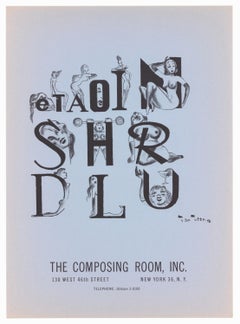
original lithograph
Located in Henderson, NV
Medium: original lithograph. This lithograph was printed in 1958 for the "Improvisations" portfolio, published by the Artists Equity Association of New York on the occasion of the 19...
Category

1950s Prints and Multiples

Materials

Lithograph

"The Banquet" (Das Gastmahl) original lithograph
Located in Henderson, NV
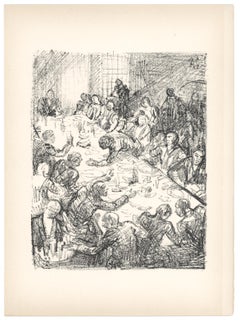
Medium: original lithograph. Printed in 1920 on smooth wove paper for the Deutsche Graphiker der Gegenwart portfolio, and published in Leipzig by Klinkhardt & Biermann in an edition ...
Category

1920s Expressionist Prints and Multiples

Materials

Lithograph

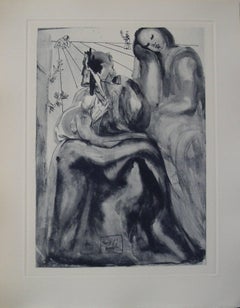
La Confession de Dante - Engraving - 150 copies
Located in Paris, IDF
Salvador Dali La Confession de Dante (1960) Heliogravure reworked with drypoint Signature printed in the plate On BFK Rives Vellum paper Size 32.8 x 26.4 cm (c. 13 x 10") Reference...
Category

1960s Surrealist Figurative Prints

Materials

Etching

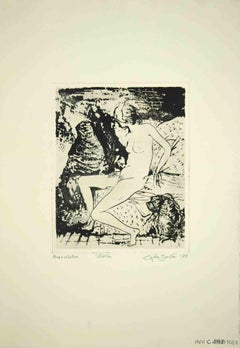
Sybil - Original Etching by Leo Guida - 1971
Located in Roma, IT
Sybil is an original artwork realized in 1971 by the Italian Contemporary artist Leo Guida (1992 - 2017). Original etching on ivory-colored paper. Hand-signed on the lower right ...
Category

1970s Contemporary Figurative Prints

Materials

Etching

original lithograph
Located in Henderson, NV
Medium: original lithograph. This lithograph was printed in 1956 for the "Improvisations" portfolio, published by the Artists Equity Association of New York on the occasion of the 19...
Category

1950s Prints and Multiples

Materials

Lithograph

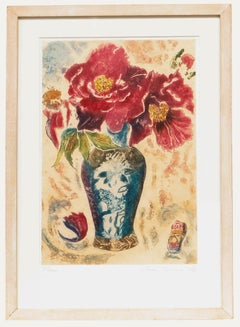
Jenny Devereux (b.1945) - 20th Century Etching, Peony
Located in Corsham, GB
A vibrant 20th-century etching with hand colouring of a vase of peonies by the printmaker and painter Jenny Devereaux. She etches directly onto copper plates and prints onto fine Jap...
Category

20th Century Still-life Prints

Materials

Etching

Untitled, XIV Winter Olympics Games - Vintage Poster by Mimmo Paladino - 1983
Located in Roma, IT
Untitled, XIV Winter Olympics games is a vintage poster realized by the artist Mimmo Paladino, in occasion of the XIV Winter Olympics games in Sarajevo, in 1984. Very good condition...
Category

1980s Contemporary Figurative Prints

Materials

Offset

Frontispiece with stepped fountain.
Located in Middletown, NY
Dujardin, Karel. Frontispiece with stepped fountain; a stone wall with water spout pouring water into a rectilinear basin, from which a second spout pour...
Category

Mid-17th Century Old Masters Landscape Prints

Materials

Handmade Paper, Etching, Laid Paper

Still Thinking About These?

All Recently Viewed