Want more images or videos?
Request additional images or videos from the seller
1 of 16
Glen MichaelsGlen Michaels "Winter Wind", Pentaptych Mosaic Stone1970s
1970s
Price:$28,170
$45,000List Price
About the Item
- Creator:Glen Michaels
- Creation Year:1970s
- Dimensions:Height: 50 in (127 cm)Width: 66 in (167.64 cm)
- Medium:
- Movement Style:
- Period:
- Condition:
- Gallery Location:Detroit, MI
- Reference Number:1stDibs: LU128617839202
About the Seller
5.0
Vetted Professional Seller
Every seller passes strict standards for authenticity and reliability
Established in 2014
1stDibs seller since 2019
111 sales on 1stDibs
Typical response time: 1 hour
Authenticity Guarantee
In the unlikely event there’s an issue with an item’s authenticity, contact us within 1 year for a full refund. DetailsMoney-Back Guarantee
If your item is not as described, is damaged in transit, or does not arrive, contact us within 7 days for a full refund. Details24-Hour Cancellation
You have a 24-hour grace period in which to reconsider your purchase, with no questions asked.Vetted Professional Sellers
Our world-class sellers must adhere to strict standards for service and quality, maintaining the integrity of our listings.Price-Match Guarantee
If you find that a seller listed the same item for a lower price elsewhere, we’ll match it.Trusted Global Delivery
Our best-in-class carrier network provides specialized shipping options worldwide, including custom delivery.You May Also Like
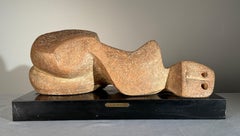
"Reclining Figure" Louise Nevelson, Modernist, Human Form, Abstracted Body
By Louise Nevelson
Located in New York, NY
Louise Nevelson
Reclining Figure, circa 1943
Tattistone
8 inches high x 21 inches wide x 9 inches deep
With base 10 inches high x 21 3/4 inches wide x 9 1/2 inches deep
Provenance
T...
Category
1940s American Modern Abstract Sculptures
Materials
Cast Stone
$30,000
H 8 in W 21 in D 8 in
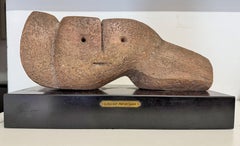
"Abstract Figure with Face" Louise Nevelson, American Female, Anthropomorphic
By Louise Nevelson
Located in New York, NY
Louise Nevelson
Abstract Figure with Face, circa 1945
Incised "LN" on the reverse
Tattistone
6 inches high x 14 inches wide x 5 1/4 inches deep
Provenance
The artist
The artist's ni...
Category
1940s American Modern Abstract Sculptures
Materials
Cast Stone
On Hold
$24,000
H 6 in W 14 in D 5.25 in
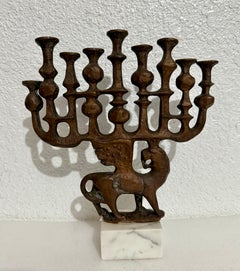
Milton Hebald Mid Century Bronze Menorah Sculpture WPA Artist Modernist Judaica
Located in Surfside, FL
Milton Hebald (American, 1917-2015)
Lion of Judah menorah
bronze on a white marble plinth base
signed in bronze
12" H x 10.5" W x 2.5" D
Milton Elting Hebald (1917 – 2015) was a s...
Category
1960s American Modern Figurative Sculptures
Materials
Marble, Bronze
$6,500
H 12 in W 10.5 in D 2.5 in
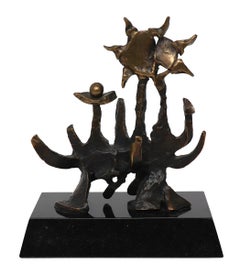
Modern Abstract Bronze Sculpture by Edward Chavez, Mounted on Granite Base
By Edward Arcenio Chavez
Located in Denver, CO
This captivating mid-20th-century abstract bronze sculpture by Edward (Eduardo) Arcenio Chavez (1917–1995) beautifully exemplifies his dynamic sculptural style. Cast in bronze and mo...
Category
20th Century American Modern Abstract Sculptures
Materials
Granite, Bronze
$4,250
H 6.25 in W 6 in D 2 in
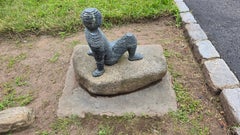
"Zofar" Boaz Vaadia, Human Body, Bronze and Stone, Anthropomorphic Sculpture
By Boaz Vaadia
Located in New York, NY
Boaz Vaadia
Zofar, 1997
Bronze, bluestone, and boulder
Overall 20 x 29 x 27 inches
From the edition of 7
Provenance
Elaine Baker Gallery, Boca Raton, Florida
Boaz Vaadia is the in...
Category
1990s American Modern Figurative Sculptures
Materials
Stone, Bluestone, Bronze
$40,000
H 20 in W 29 in D 27 in
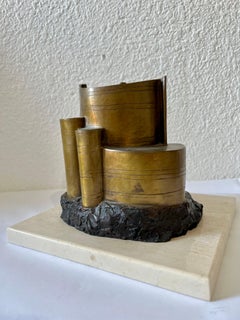
Bronze Abstract Space Age Book Sculpture LA California Modernist Charna Rickey
By Charna Rickey
Located in Surfside, FL
Charna Rickey 1923 - 2000 Mexican-American Jewish Woman artist.
Signed Bronze House of Books, Architecture Bronze sculpture, signed Charna Rickey and on the front "House of the book." It depicts an open Torah. Original patina.
Approx. dimensions: 7 in. H x 9 in. W x 8.5 in. D. Weight: 13.1 lbs.
Modernist Judaica Sculpture
Born Charna Barsky (Charna Ysabel or Isabel Rickey Barsky) in Chihuahua, Mexico, the future artist lived in Hermosillo and immigrated to Los Angeles when she was 11. She was educated at UCLA and Cal State L.A., she married furniture retailer David Rickey and explored art while raising their three daughters. Moving through phases in terra cotta, bronze, marble and aluminum, she found success later in life. Rickey became one of the original art teachers at Everywoman's Village, a pioneering learning center for women established by three housewives in Van Nuys in 1963. She also taught sculpture at the University of Judaism from 1965 to 1981.
As Rickey became more successful, her sculptures were exhibited in such venues as Artspace Gallery in Woodland Hills and the Courtyard of Century Plaza Towers as part of a 1989 Sculpture Walk produced by the Los Angeles Arts Council. Her sculptures have also found their way into the private collections of such celebrities as Sharon Stone.
Another of Rickey's international creations originally stood at Santa Monica College. In 1985, her 12-foot-high musical sculpture shaped like the Hebrew letter "shin" was moved to the Rubin Academy of Music and Dance at Hebrew University in Jerusalem. The free standing architectural Judaic aluminum work has strings that vibrate in the wind to produce sounds. Rickey also created art pieces for the city of Brea. They commissioned some amazing art pieces by Laddie John Dill, Walter Dusenbery...
Category
20th Century American Modern Abstract Sculptures
Materials
Marble, Bronze
$2,200
H 7 in W 9 in D 8.5 in
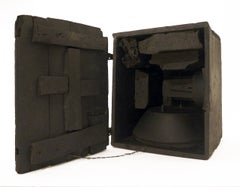
SKY CASE XII
By Louise Nevelson
Located in New York, NY
wooden sculpture of found objects painted black. case with lid and hinges.
Category
1970s American Modern Abstract Sculptures
Materials
Wood
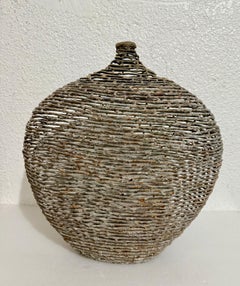
American Craft Studio Handmade Sculpture Welded Bronze Kinetic Vessel Op Art
Located in Surfside, FL
Great studio piece. It does not appear to be signed.
Welded bronze
an openwork vessel or vase
Verdigris patina, might be suitable for outdoors
Dimensions: 18 X 16 X 9 inches
Provena...
Category
20th Century American Modern Abstract Sculptures
Materials
Bronze
$1,500
H 18 in W 16 in D 9 in
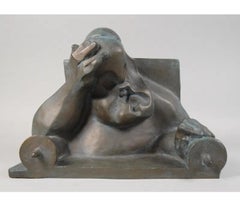
Ted Egri Taos Modernist Judaica Cubist Bronze Sculpture Rabbi
Torah WPA Artist
Located in Surfside, FL
Ted Egri (American, 1913-2010)
Bronze sculpture
Rabbi
Signed Egri and numbered 4/30 on side.
Dimensions: 12"L x 8.5"H x 6.75" D
Born in New York city in 1913 to a Hungarian Jewish emigre family (both of his parents were born in Hungary), Egri was first exposed to music later dropping that for art. He studied with Howard Giles at the Master Institute of the Roerich Museum in New York where he was introduced to Oriental arts, Chinese and Japanese art forms, and later with Hans Hofmann. He worked for the Federal Arts Project, the WPA, making mural paintings and silkscreen prints as well as easel painting. Once WWII began, Egri signed up to serve as a map maker for the Navy, and was witness to some of the fiercest battles in the Pacific. As an artist, he painted many important depictions of his wartime experiences and these works have all be donated to the U.S. Naval Museum.
Already a practicing painter and instructor at the Kansas City Art Institute, Ted Egri came to Taos, New Mexico with his wife Kit in 1950 to continue his study of painting at Ribak's Taos Valley Art School on the GI Bill. Louis Ribak quickly introduced Egri to Eulalia Emetaz, the owner of La Galleria Escondida, who gave him his first one-person show in 1951.
A prolific and versatile artist, as well as arts organizer and advocate, Egri's contributions to underserved African American, Native American, Hispanic and women were honored by two Taos mayors, with no less than two Ted Egri days during his 50-year art career in Taos. Egri remained in Taos. He became widely known for his sculpture, influenced by cubism and painting, with his style ranging from abstract to realistic. Egri had incredible draftsmanship - charcoal, pencil, pastel, watercolor, oils, mixed media, pen and ink, acrylic, gouache Over time his work gradually shifted from its focus on human struggle to an exploration of natural elements and the changes that come about as a result of living in a physical environment like Taos. "The impact of the majestic Sangre de Cristo Mountain Range and the vast spaces of the mesas directed me toward space and form. I moved into sculpture," Egri said in a 1987 interview with ARTSPACE magazine. He was included in a show at Stables Gallery along with Emil Bisttram, Louis Catusco, Edward Corbett, Lawrence Calcagno, Keith Crown, Andrew Dasburg, John De...
Category
Mid-20th Century American Modern Figurative Sculptures
Materials
Bronze
$3,600
H 12 in W 8.5 in D 6.75 in
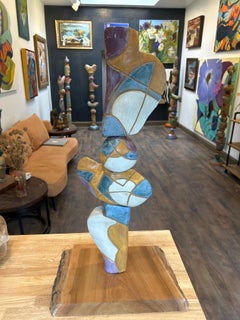
Modern Totem 
By Marc Zimmerman
Located in Carmel, CA
Mid fire ceramic totem designed for an interior desktop. The style is mid-century modern with line and color shapes. Featured colors are white ,blue ,pumpkin and purple. The base is ...
Category
Mid-20th Century American Modern Abstract Sculptures
Materials
Ceramic
More From This Seller
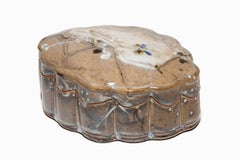
View AllMagnificent John Glick Plum Street Pottery "Scalloped Box" Glazed Stoneware
Located in Detroit, MI
This magnificent "Scalloped Box" is a stoneware piece with decorative layers of rich toned glazes and markings that John was so well-known for. He was, also, known for the undulating lip lines on his exquisite boxes that fit together like a puzzle. Each piece that John produced was unique. He was seduced by the effects of the reduction kiln, which decreased the levels of oxygen during firing, inducing the flame to pull oxygen out of the clay and glazes thereby changing the colors of the glazes depending on their iron and copper content. In this way he achieved the rich gradients of ochre and umber and variations in stippling and opacity. This piece is signed and stamped on the bottom.
John was an American Abstract Expressionist ceramicist born in Detroit, MI. Though open to artistic experimentation, Glick was most influenced by the styles and aesthetics of Asian pottery—an inspiration that shows in his use of decorative patterns and glaze choices. He has said that he is attracted to simplicity, as well as complexity: my work continually reflects my re-examination that these two poles can coexist… or not, in a given series. Glick also took influences from master potters of Japan, notably Shoji Hamada and Kanjrio Kawai, blending their gestural embellishments of simple forms with attitudes of Abstract Expressionism. He was particularly drown to the work of Helen Frankenthaler whose soak-stain style resonated with Glick’s multi-layered glaze surfaces, which juxtaposed veils of atmospheric color with gestural marks and pattern. He spent countless hours developing and making his own tools in order to achieve previously unseen results in his work with clay and glaze.
Glick’s “Plum Tree Pottery...
Category
Late 20th Century American Modern Abstract Sculptures
Materials
Stoneware, Glaze
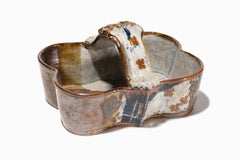
Breathtaking John Glick "Scalloped Basket" Glazed Stoneware Reduction Fired
Located in Detroit, MI
"Scalloped Basket" is a stoneware piece with the decorative layer of the rich toned glazes and markings that John was so well-known for. He was, also, known for the undulating lip lines on his exquisite pieces. The basket portion is shaped with gentle curves and a sculptural handle. Each piece that John produced was unique. He was seduced by the effects of the reduction kiln, which decreased the levels of oxygen during firing, inducing the flame to pull oxygen out of the clay and glazes changing the colors of the glazes depending on their iron and copper content. In this way he achieved the rich gradients of ochre and umber and variations in stippling and opacity. This particular "basket" also has the cool blues and grays that contrast with the umber. It is signed and stamped on the bottom.
John was an American Abstract Expressionist ceramicist born in Detroit, MI. Though open to artistic experimentation, Glick was most influenced by the styles and aesthetics of Asian pottery—an inspiration that shows in his use of decorative patterns and glaze choices. He has said that he is attracted to simplicity, as well as complexity: my work continually reflects my re-examination that these two poles can coexist… or not, in a given series. Glick also took influences from master potters of Japan, notably Shoji Hamada and Kanjrio Kawai, blending their gestural embellishments of simple forms with attitudes of Abstract Expressionism. He was particularly drown to the work of Helen Frankenthaler whose soak-stain style resonated with Glick’s multi-layered glaze surfaces, which juxtaposed veils of atmospheric color with gestural marks and pattern. He spent countless hours developing and making his own tools in order to achieve previously unseen results in his work with clay and glaze.
Glick’s “Plum Tree Pottery...
Category
1970s American Modern Abstract Sculptures
Materials
Stoneware, Glaze
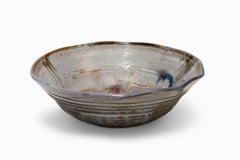
John Glick Plum Street Pottery Glazed Bowl Reduction Fired
Located in Detroit, MI
"Untitled" is a stoneware piece with the decorative layer of the rich toned glazes and markings that John was so well-known for. Each piece that John produced was unique. The lip on this piece is slightly scalloped and the shape is removed from the boring circular to mimic a gentle geometric design. He was seduced by the effects of the reduction kiln, which decreased the levels of oxygen during firing, inducing the flame to pull oxygen out of the clay and glazes changing the colors of the glazes depending on their iron and copper content. In this way he achieved the rich gradients of ochre and umber and variations in stippling and opacity. This piece is signed and stamped on the bottom.
John was an American Abstract Expressionist ceramicist born in Detroit, MI. Though open to artistic experimentation, Glick was most influenced by the styles and aesthetics of Asian pottery—an inspiration that shows in his use of decorative patterns and glaze choices. He has said that he is attracted to simplicity, as well as complexity: my work continually reflects my re-examination that these two poles can coexist… or not, in a given series. Glick also took influences from master potters of Japan, notably Shoji Hamada and Kanjrio Kawai, blending their gestural embellishments of simple forms with attitudes of Abstract Expressionism. He was particularly drown to the work of Helen Frankenthaler whose soak-stain style resonated with Glick’s multi-layered glaze surfaces, which juxtaposed veils of atmospheric color with gestural marks and pattern. He spent countless hours developing and making his own tools in order to achieve previously unseen results in his work with clay and glaze.
Glick’s “Plum Tree Pottery...
Category
1970s American Modern Abstract Sculptures
Materials
Stoneware, Glaze
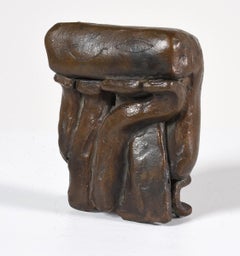
Eugene Caples "Bronze Sculpture I" Abstract Bronze Sculpture
By Eugene Caples
Located in Detroit, MI
This small exquisite "Bronze Sculpture I" is in excellent condition and a perfect example of Eugene Caples craftsmanship. Although it is mainly abstract, there are bits that look figurative either an arm or a leg attempting to emerge from a fold or attempting to hold a pose such as in yoga. It cries out to be touched and held, looked at and caressed. The beautiful patina on the surface gives voice to the many hands that have done these things.
Eugene Caples is a designer and craftsman who worked in Kansas City in the 1960s and later through the early 21st century. He attended the Kansas City Art Institute, earning his Bachelors of Fine Arts in Industrial Design in 1959. In 1963 he was accepted to Cranbrook Academy of Art, Bloomfield Hills, Michigan. The Cranbrook Academy of Art was designed by architect and faculty member, Eliel Saarinen who collaborated with Charles and Ray Eames on chair and furniture design. Numerous creative artists are alumni of Cranbrook and include: Harry Bertoia, Florence Knoll, Jack Lenor Larsen, Donald Lipski, Duane Hanson, Nick Cave, Hani Rashid, George Nelson, Urban Jupena (Nationally recognized fiber artist), Artis Lane (the first African-American artist to have her sculpture, "Sojourner Truth," commissioned for the Emancipation Hall in the Capital Visitor Center in Washington DC), Cory Puhlman (televised Pastry Chef extraordinaire), Thom O’Connor (Lithographs), and Paul Evans (Created Brutalist-inspired sculpted metal furnishings.)
Gene worked...
Category
Late 20th Century American Modern Abstract Sculptures
Materials
Bronze
Eugene Caples "Bronze Sculpture II" Abstract Bronze Sculpture
By Eugene Caples
Located in Detroit, MI
This small exquisite "Bronze Sculpture II" is in excellent condition and a perfect example of Eugene Caples craftsmanship. This is mainly abstract with some graphic or architectural elements and is so delightful that mythical creatures demand to be considered. It cries out to be touched and held, looked at and caressed. The beautiful patina on the surface gives voice to the many hands that have done these things.
Eugene Caples is a designer and craftsman who worked in Kansas City in the 1960s and later through the early 21st century. He attended the Kansas City Art Institute, earning his Bachelors of Fine Arts in Industrial Design in 1959. In 1963 he was accepted to Cranbrook Academy of Art, Bloomfield Hills, Michigan. The Cranbrook Academy of Art was designed by architect and faculty member, Eliel Saarinen who collaborated with Charles and Ray Eames on chair and furniture design. Numerous creative artists are alumni of Cranbrook and include: Harry Bertoia, Florence Knoll, Jack Lenor Larsen, Donald...
Category
Late 20th Century American Modern Abstract Sculptures
Materials
Bronze

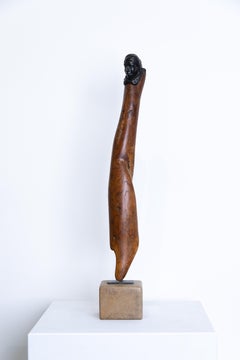
"Draped Figure" Sassafras
Bronze, Figurative Sculpture, 1982
Located in Detroit, MI
"Draped Figure" is a beautiful example of Tazian's ability to meld the smooth texture of wood and the hard texture of bronze into an exquisite object to view, hold or caress. The piece balances perfectly on its stone base and can be easily turned to enjoy from all angles.
Like architects Eliel Saarinan and Albert Kahn and sculptor Corrado Parducci, Tazian is an immigrant creative who has found a home in the city, nurtured by its energy and sheltered by its community.
He developed an early ambition to become an artist, even though he had very little exposure to the arts. ““The only person [who encouraged me] was my 5th grade English teacher, Olivia Balian,” he says. “She really opened the doors of art for me. She said, ‘Those students who are interested in art can stay behind after school and I will show you how to paint and draw.’ Somehow [that] changed my life– she gave me that spark.”
Tazian came to the U.S. to study at St. Francis College in Fort Wayne, Indiana. He earned a bachelor’s degree in art and a Master’s in Art Education, and then earned and MFA in sculpture from Wayne State University in Detroit.
Kegham Tazian is an award-winning sculptor and painter. The Armenian-born artist has gained notoriety for the diversity of his work and the variety of media exemplified in his pieces. A blend of modernism, realism and abstraction are commonly depicted in his paintings and sculptures.
His artwork has been represented in more than 40 solo exhibitions and more than 75 group exhibitions throughout the United States, Canada, Europe, and the Middle East. His work adorns the entrances and halls of major corporations, universities and municipalities, including Siemens Corporation, Huntington Bank, Wayne State University and the city halls of Farmington and Farmington Hills...
Category
21st Century and Contemporary Modern Abstract Sculptures
Materials
Stone, Bronze
Still Thinking About These?
All Recently ViewedMore Ways To Browse
Balthazar Korab
Don Brown Drawing
Dutch Paintings Birds
Ed Fairburn
Emile Gerard
Erte Pencil Signed
Exhibition Poster Man Ray
Exotic Animals Paintings
Fox Hunt Oil Paintings
French Open Tennis
George And Ira Gershwin
Gino Boccasile
Giraffe Oil Painting
Gore Vidal
Grevy Zebra
Grizzly Bear Painting
Hard Hat Vintage
Highland Stag