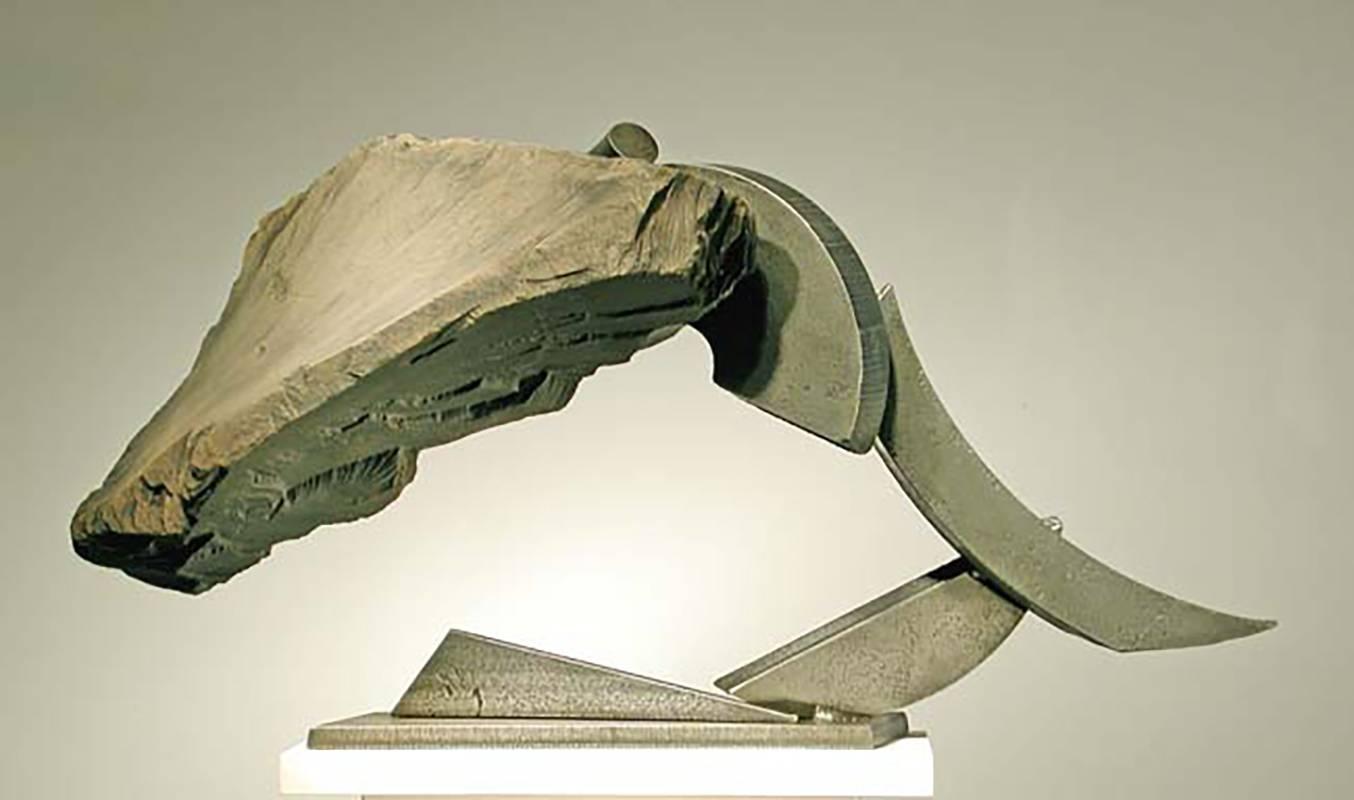
Items Similar to John Van Alstine, NIDUS (The Nest), Sculpture 1991
Want more images or videos?
Request additional images or videos from the seller
1 of 4
John Van AlstineJohn Van Alstine, NIDUS (The Nest), Sculpture 19911991
1991
$19,500
£14,864.79
€16,981.86
CA$27,439.25
A$30,054.49
CHF 15,823.69
MX$358,690.29
NOK 201,658.74
SEK 184,346.49
DKK 126,900.19
About the Item
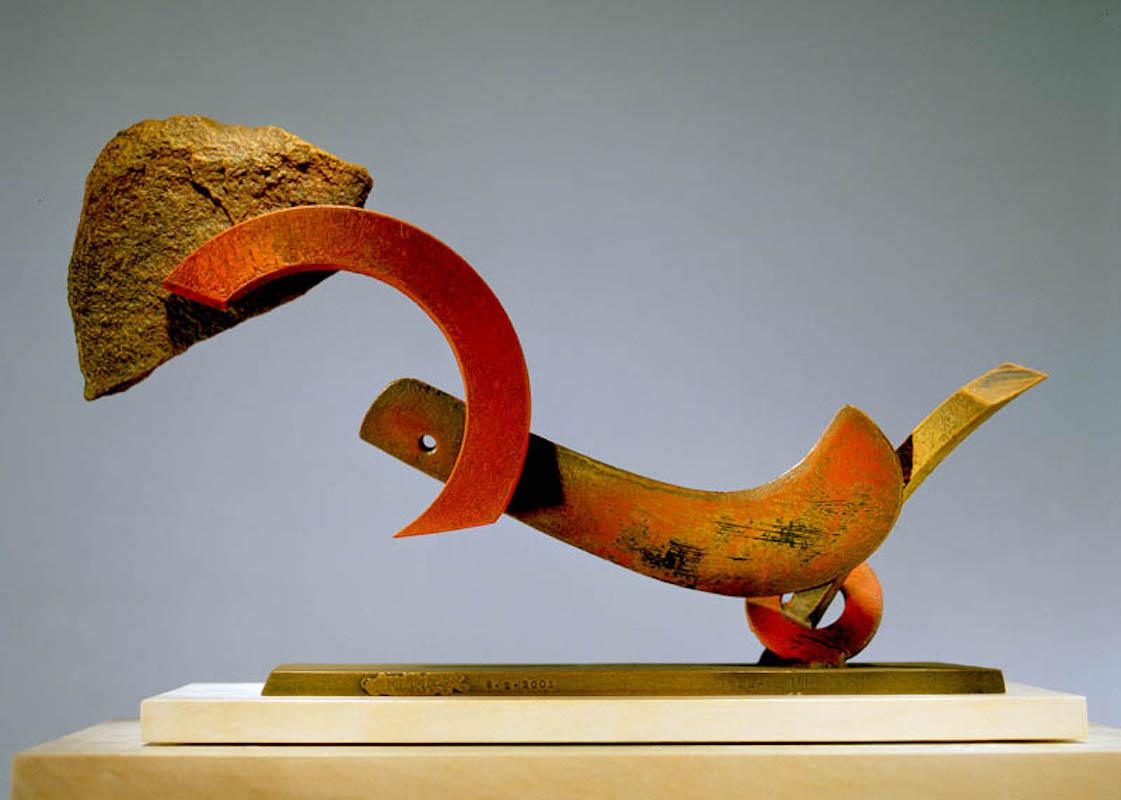
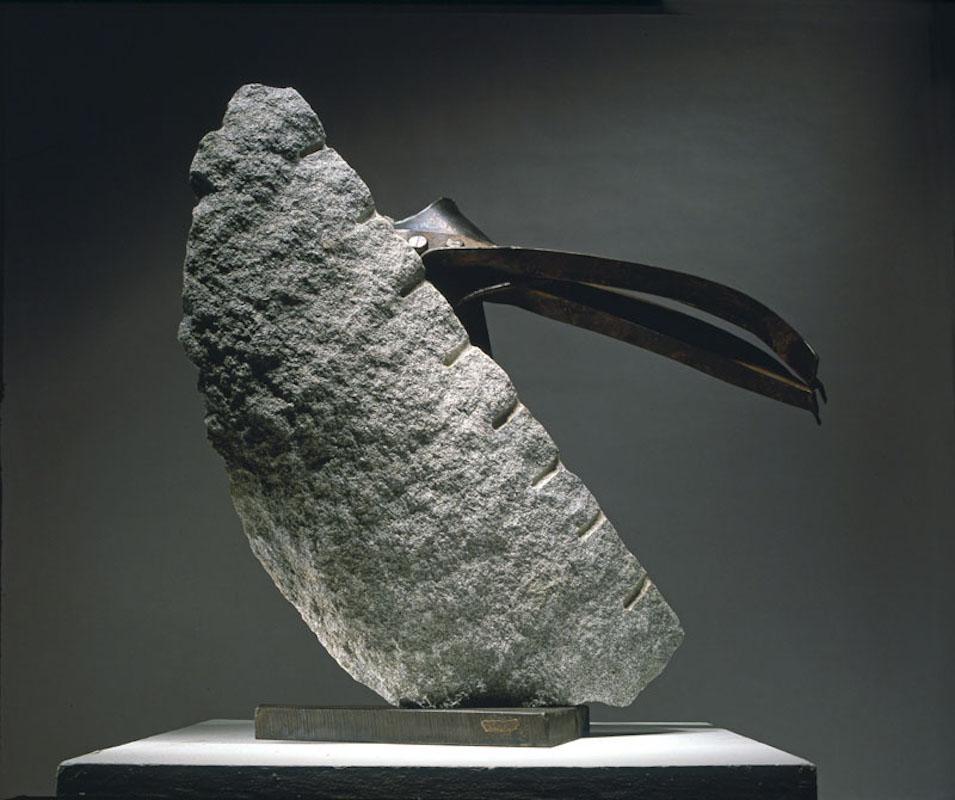
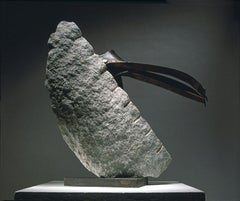
NIDUS (The Nest)
Bronze and steel
29" (height) x 51" (width) x 30" (depth)
Stone and metal, usually granite or slate, and found object steel are central in my sculpture. The interaction of these materials is a major focus. On the most basic level, the work is about the marriage of the natural with the human-made. Stone is used as an assemblage element, the way a welder uses steel, rather than in the traditional manner of subtraction. In contrast to the timelessness of stone, the found-object metal (sometimes cast bronze) is time-specific -20th century industrial. The industrial/structural characteristics inherent in the metal are often employed to physically connect or suspend stone elements allowing a "choreographing" or "floating" of stone. At their best, a compelling visual/physical irony is created. The works strive to communicate on a number of different levels; physical, symbolic, and metaphorical. The duality of an eastern or oriental acceptance of stone and a 20th century industrial American “can do” attitude toward metal is central to the work and an important characteristic that distinguishes it." - John Van Alstine
This sculpture will be shipped directly from the artist's studio.
- Creator:John Van Alstine (1952, American)
- Creation Year:1991
- Dimensions:Height: 29 in (73.66 cm)Width: 51 in (129.54 cm)Depth: 30 in (76.2 cm)
- Medium:
- Movement Style:
- Period:
- Condition:
- Gallery Location:Stamford, CT
- Reference Number:1stDibs: LU25117344502
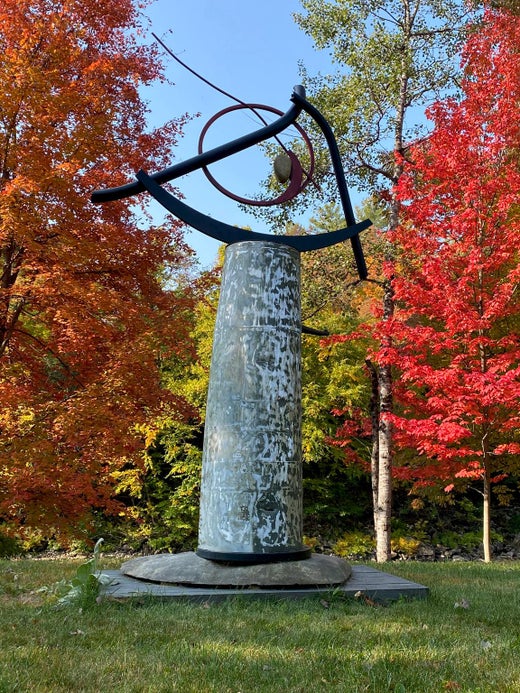
John Van Alstine
BIOGRAPHY Born in upstate New York in 1952, John Van Alstine grew up in the southern Adirondack Mountains. After attending St. Lawrence University, Kent State University (BFA 1974) and Cornell University (MFA 1976), he joined the faculty at the University of Wyoming, Laramie, and later the University of Maryland, College Park, to teach drawing and sculpture. In 1986 he left teaching and moved to the New York area to pursue studio work full-time. In 1987 he purchased a 19th century industrial complex on the banks of the Sacandaga River and returned to the Adirondacks where he now lives and works in the restored historic structure. Van Alstine's work is held in many private and public and corporate collections in the United States and Europe. He has completed many large scale outdoor, site-specific commissions. ARTIST STATEMENT The union of stone and metal—recently rough-hewn New York slate and found object steel—are central in my sculpture. On its most basic level, the work is about the marriage of the natural with the human-made. Stone is used as an assemblage element in the way a welder uses steel, rather than in the traditional manner of subtraction. In contrast to the timelessness of stone, the found-object steel is very time-specific—20th century industrial. The industrial and structural characteristics inherent in the metal are often employed in the work and used to physically connect or suspend stone elements. The strength of the metal allows for a "choreographing" or "floating" of typically earthbound stone. The Sisyphean Circle Series is an attempt to draw parallels between the Greek mythological character and the plight of the artist. As we all know, Sisyphus was forced to roll a large stone up a steep hill, only to have it tumble back after reaching the top. A toil that lasts an eternity is an applicable metaphor for the creative process—especially for a stone sculptor, on both a physical and symbolic level. I am constantly pushing stone around the studio, striving to reach a creative "peak", and once there, start over on the next piece. The process is neverending. Albert Camus, the French existentialist, in his essay The Myth of Sisyphus, used this myth to illustrat his notion that reaching one’s final destination is not of utmost importance. In fact, if one "reconsiders Sisyphus", as Camus suggests, the struggle or journey reveals itself as, ultimately, the most meaningful—an idea that I, and many others, believe is central to the creative process. EDUCATION Cornell University, Ithaca, New York, M.F.A., Cornell Graduate Fellowship in Sculpture, 1976 Kent State University, Kent, Ohio, B.F.A. cum laude, Sculpture, Ceramics and Glass, 1974
Blossom Festival School, Cleveland-Kent, Ohio, 1973, Studied with Richard Stankiewicz, Richard Hunt
St. Lawrence University, Canton, New York, 1970-72
About the Seller
4.9
Gold Seller
Premium sellers maintaining a 4.3+ rating and 24-hour response times
Established in 2012
1stDibs seller since 2013
183 sales on 1stDibs
Typical response time: 1 hour
- ShippingRetrieving quote...Shipping from: Wells, NY
- Return Policy
More From This Seller
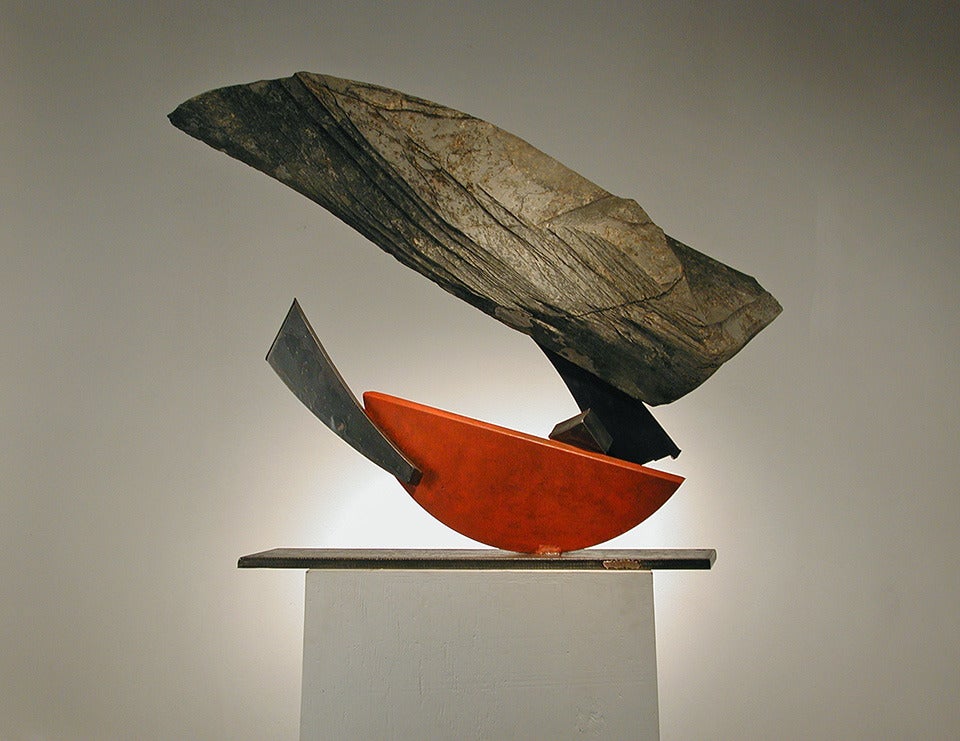
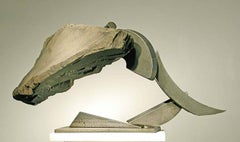
View AllJohn Van Alstine - FLECHE, Sculpture 2005
By John Van Alstine
Located in Stamford, CT
Slate, Steel
Stone and metal, usually granite or slate and found object steel are central in my sculpture. The interaction of these materials is a major focus. On the most basic lev...
Category
Early 2000s Abstract Abstract Sculptures
Materials
Stone, Slate, Steel, Cut Steel, Stainless Steel
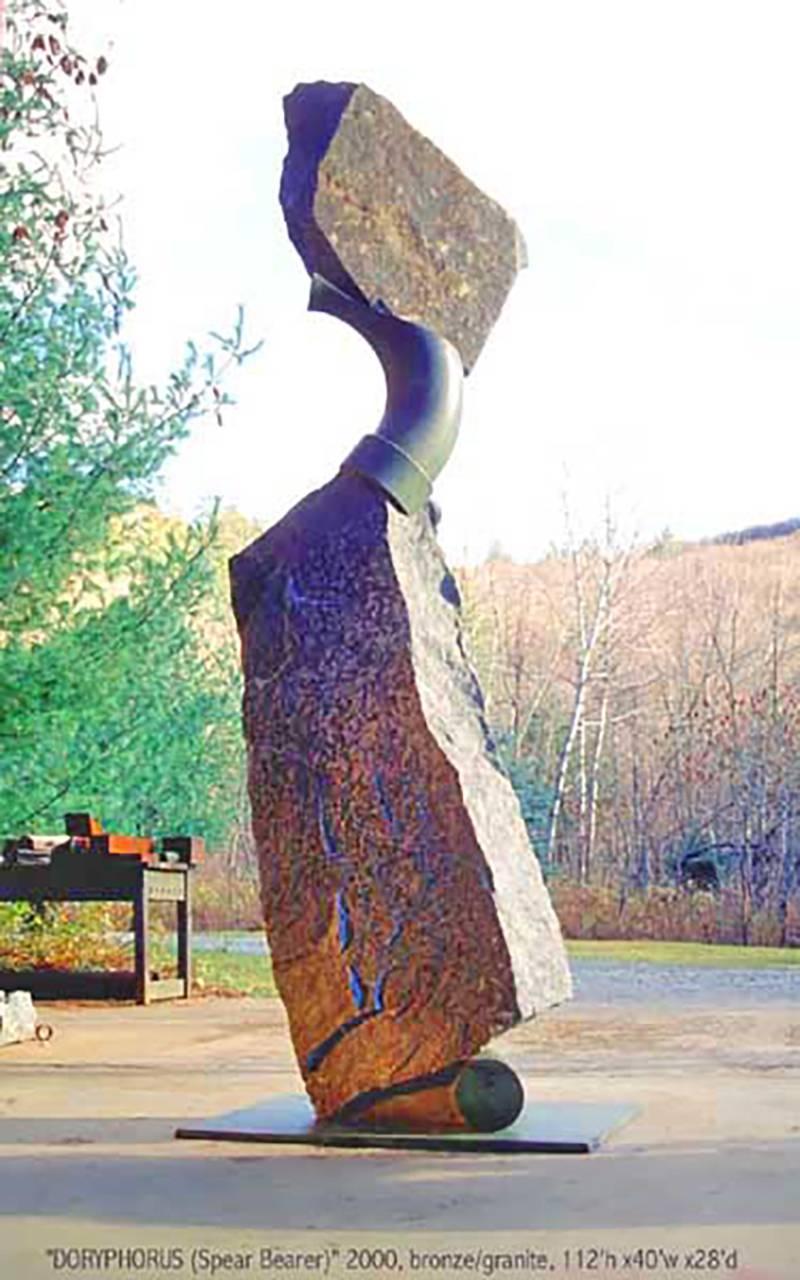
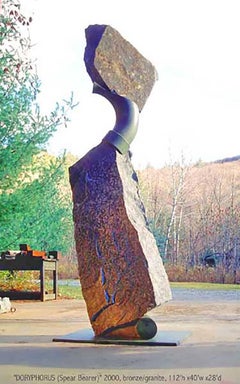
John Van Alstine - DORYPHORUS, Sculpture 2000
By John Van Alstine
Located in Stamford, CT
bronze and granite
Stone and metal, usually granite or slate and found object steel are central in my sculpture. The interaction of these materials is a major focus. On the most bas...
Category
Early 2000s Abstract Abstract Sculptures
Materials
Granite, Bronze
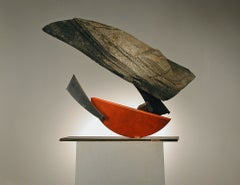
John Van Alstine - Icarus (Frail Wings of Vanity), Sculpture 2010
By John Van Alstine
Located in Stamford, CT
Stone and metal, usually granite or slate, and found object steel are central in my sculpture. The interaction of these materials is a major focus. On the most basic level, the work ...
Category
2010s Abstract Sculptures
Materials
Slate, Metal, Steel
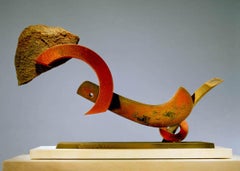
John Van Alstine, BLADE III, Sculpture 2001
By John Van Alstine
Located in Stamford, CT
BLADE III
Enamel on granite and steel
13" (height) x 19" (width) x 6" (depth)
Stone and metal, usually granite or slate, and found object steel are central in my sculpture. The inte...
Category
21st Century and Contemporary Contemporary Abstract Sculptures
Materials
Granite, Enamel, Steel
John Van Alstine, ADZE, Sculpture 1990
By John Van Alstine
Located in Stamford, CT
ADZE
Granite and sealed steel
42" (height) x 41" (width) x 18" (depth)
Stone and metal, usually granite or slate, and found object steel are central in my sculpture. The interaction...
Category
21st Century and Contemporary Contemporary Abstract Sculptures
Materials
Granite, Steel
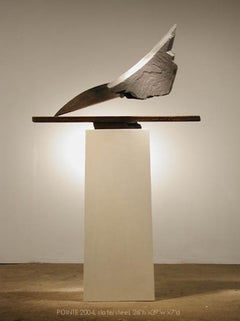
John Van Alstine - Pointe, Sculpture 2004
By John Van Alstine
Located in Stamford, CT
Stone and metal,usually granite or slate and found object steel are central in my sculpture. The interaction of these materials is a major focus. On the most basic level the work is ...
Category
2010s Abstract Geometric Sculptures
Materials
Slate, Stainless Steel
You May Also Like
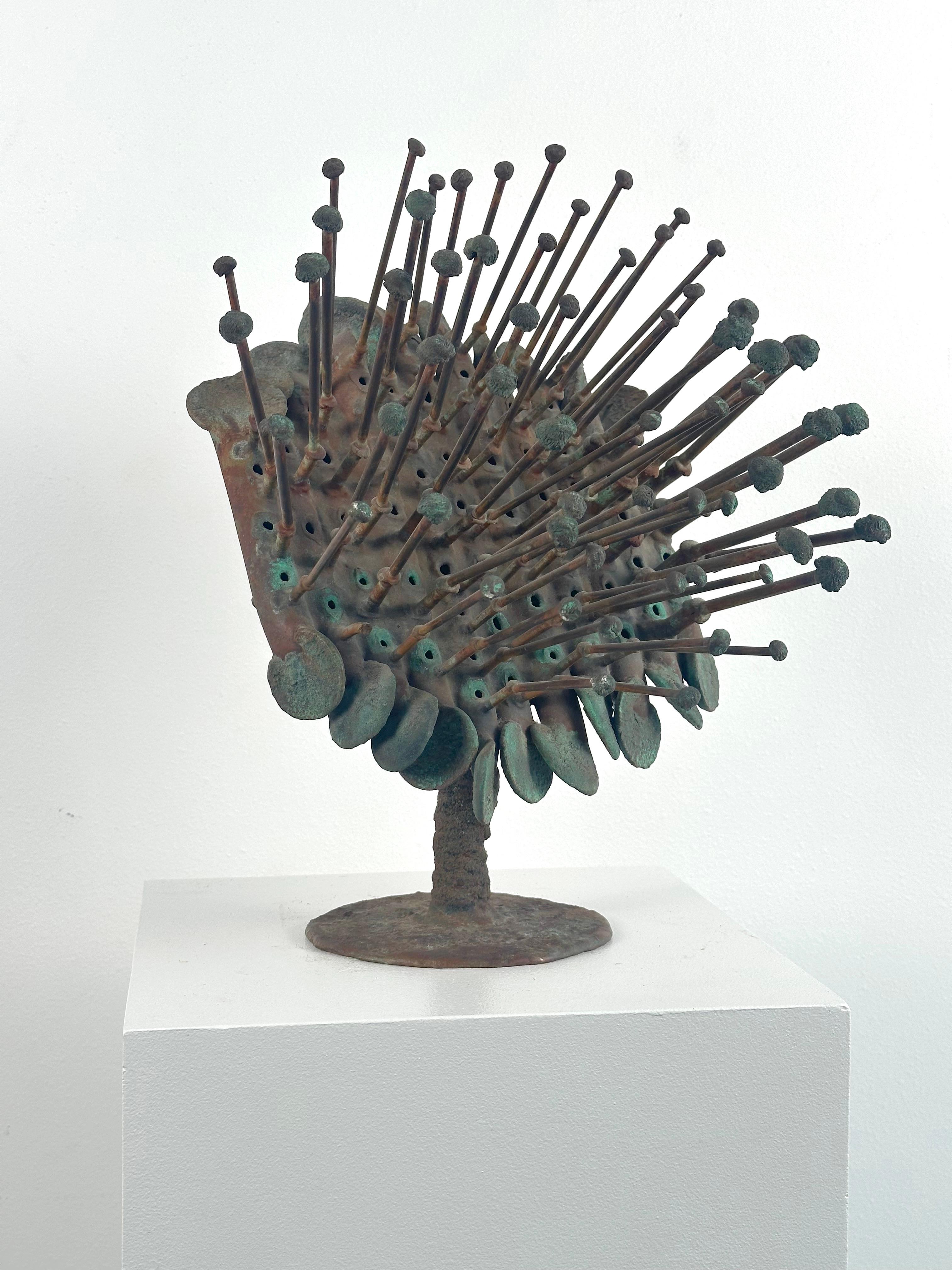
Untitled (Organic abstract bronze sculpture)
Located in Wilton Manors, FL
Klaus Ihlenfeld (b.1934)
Untitled (Flower Form), sculpted phosphor bronze-coated copper sounding sculpture, early 1970s.
Exhibited: Klaus Ihlenfeld - Recent Sculpture at Albright College - Campus Center Gallery from Feb. 18 - March 18, 1973.. Welded bronze. 15 h x 12.5 inches w. Signed with initial on base.
Provenance: Albright College Museum collection.
Excellent condition.
Klaus Karl Otto Ihlenfeld. He was born in Berlin, Germany in 1934. He studied art at the Hochschule für Bildende Künste and completed graduate work with the metal sculptor Hans Uhlmann. He visited the US in 1957 for the first time living in Durham, NC, where he befriended Dr. W. R. Valentiner, the Rembrandt authority and Director of the Museum of Art, Raleigh, NC. Through this friendship in 1960 he met and worked with the metal sculptor Harry Bertoia in Barto, PA.
He joined the Staempfli Gallery in NYC and entered in many group and one-man shows. He has been an Artist-in-Residence in Ogden, Utah; Huntington Museum of Art in West Virginia, Penn State University at University Park; the Colorado State University in Denver; and Shippensburg University. He has large commissions at Kutztown University, Pottstown Hospital, and a monumental relief sculpture at the Emigrant Savings Bank in NYC. He has traveled extensively in Spain, Greece, and Mexico. He is living and working on a farm in Barto, PA welding bronze and forged iron metal sculptures and painting watercolors.
Group Shows:
North Carolina Museum of Art in Raleigh, NC - 1957
Solomon R. Guggenheim Museum in New York City - 1962
Staempfli Gallery in New York City - 1962, 1964 and 1965
Gallery Ludwig Lange in West Berlin, Germany - 1977
Gallery Herbert Remmert and Dr. Barth in Dusseldorf in West Germany - 1981
Jack Savitt Gallery in Macungie, PA - 1981 and 1984
Heinz Ortleb Gallery, West Berlin, Germany - 1992
Central Bucks Chamber of Commerce Show at the James A. Michener Art Museum in Doylestown, PA - 1997
Berks Art Alliance Show at the Reading Art Museum in Reading, PA - 1997
Mayfair Festival of the Arts at the Allentown Art Museum - 1998
Baum School of Art in Allentown, PA - 1997
Schwenkfelder Library and Heritage Center Art Show in Pennsburg, PA - 2001
Reading Public Museum in Reading PA, 2014
Solo Shows:
Kutztown University in Kutztown, PA - 1960 and 1965
Allentown Art Museum in Allentown, PA - 1960 and 1961
Staempfli Gallery in New York City - 1962
Penn State University in University Park, PA - 1964 and 1972
Berks Art Alliance in Wyomissing, PA - 1966
Bertha Eccles Art Center in Ogden, Utah - 1967
Mansfield University in Mansfield, PA - 1967
Huntington Museum of Art in Huntington, WV - 1971
Shippensburg University in Shippensburg, PA - 1972
Albright College in Reading, PA - 1973
Ianuzzi Gallery in Scottsdale, AZ - 1974
Gallery Heimat 85 in West Berlin, Germany - 1977
Jack Savitt Gallery in Macungie, PA - 1981
College Misericordia in Dallas, PA - 1983
Schwenkfelder Library and Heritage Center in Pennsburg, PA, 2013
Periodical Reference:
Kaye, Ellen "The Obsessive Collector," Philadelphia Inquirer Sunday Magazine Sptember 21, 1986 pp. 32-33.
Chronology:
1-30-1934 Born in Berlin, Germany. Father, Kurt Ihlenfeld, Lutheran pastor, novelist, critic and publisher was born in 1901 in Colmar, Alsace Lorain. Mother, Annie Stuhlmann, was born in 1905 in Breslau, Lower Silesia.
1940 - 1950 Public schools in Berlin; Löwen, Lower Silesia; Coswig, Radebeul, Glaubitz, Saxony. Königin Luise-Gymnasium in Dahlem, Berlin. First artworks, drawings and paintings; few sculptures.
1950 - 1956 Studied at the Hochschule für Bildende Künste in West Berlin, Germany. Graduate work with metal sculptor Hans Uhlmann. For 2 years maintained own studio at the Academy. Friendship with writer Günter Grass, and painter F. S. Sonnenstern. Met painters: Max Pechstein, Karl Schmidt-Rottluff, Carl Hofer, Max Kaus, and sculptors: Bernhard Heiliger, Renee Sintenis, and Richard Scheibe. Opened own gallery in the Kurfürstendam area of Berlin.
1954 Traveled to West Germany, France, Barcelona, Spain (Balearic Islands), and Menorca for 3 months.
1957 First visit to the United States in Durham, NC. Participated in a group show at the Museum of Art, Raleigh, NC. Friendship with Dr. W. R. Valentiner, the Rembrandt authority and Director of the Museum of Art, Raleigh, NC. Work with metal sculptor Harry Bertoia in Bally, PA. Started own metal sculptures in Bertoia Studio. Traveled to Mexico and throughout the US. Visited Monte Alban, and Mitla-Oaxaca. Started collecting works of pre-Columbian art. Also African and South Pacific works of art and the works of children.
1958 Returned to West Berlin, Germany to open own workshop and gallery. Cooperation with his brother Bertram Ihlenfeld and brother-in-law, violinist Heinz Ortleb. Precise metal sculptures in various medias.
1959: Motion picture of the development of sculptures: Spiel in Stahl (Play in Steel), filmed by Dr. Hans Cürlis shown at the Bergamo Film Festival in Italy, in West Germany, and German Embassies in South America.
1960 Second visit to the United States. Cooperation with sculptor Harry Bertoia in Bally, PA. Friendship with Brigitta Valentiner Bertoia. Worked on large commissions. Met painter Willem DeKoonig, gallerist Georg W. Staempfli in New York City, and furniture maker George Nakashima in New Hope, PA. First one-man show of sculptures at Kutztown State College, Kutztown, PA. One-man show of sculptures at the Allentown Museum of Art under Director Hirsch.
1961 Traveled and studied archeological sites in Mexico (Monte Alban, Mitla-Oaxaca; Colima, Nayarit, Sinaloa, Patzcuaro, etc.). Collected pre-Columbian art in Mexico and New York City. Second one-man show at the Allentown Museum of Art (sculptures) under Director Caldwell.
1962 One-man show at Staempfli Gallery in New York City. Participated in various group shows at the gallery: "Twenty Sculptors" and "Recent Acquisitions". Met artists Marcel Duchamp and Salvador Dali; sculptors Alexander Calder and Alexander Lieberman. Participated in a major exhibition at the Solomon R. Guggenheim Museum in New York City entitled "Modern Sculpture from the Joseph H. Hirshhorn Collection".
1963 Married Patricia A. Lambert of Springfield, PA. Harry Bertoia was their best man.
1964 One-man show at the Pennsylvania State University, University Park, PA and a group show "Stone, Wood and Metal" at Staemplfi Gallery in New York City. First child, Paul Vincent born.
1965 Entered group show at Staempfli Gallery "Stone and Crystal". One-man show of graphics at Kutztown State Teachers College in Kutztown, PA. One-man show at Wyomissing Art Alliance, Reading, PA.
1966 Commissioned for a fountain sculpture at Kutztown State Teachers College, Kutztown, PA. Birth of twins, Phillip Sydney and Naomi Andrea.
1967 Artist-in-Residence at the Bertha Eccles Art Center, Ogden, Utah (received a grant from the National Endowment of the Arts). Met sculptor Larry Elsner. One-man show at Mansfield State College, Mansfield, PA. Fourth child born, Douglas Robinson.
1968 - 1969 Commissioned to create a large relief sculpture for the Emigrant Savings Bank at 5 East 42nd Street in Manhattan, New York City entitled: Heavenly Bodies, 250 ft. X 32 ft. (weighing 8 tons). Moved to the estate "Iron Masters Mansion", Barto, PA.
1970 - 1971 Artist-in-Residence at the Huntington Museum of Art, Huntington, WV (received a grant from the National Endowment of the Arts). One-man show at the Huntington Museum of Art. A movie was made of the exhibition by the Huntington Television Station. Met A. Moretti, sculptor of glass figures. One-man show at the old Sears and Roebuck mansion in Haverford, PA.
1971 - 1972 Artist-in-Residence at the Pennsylvania State University, University Park, PA (received a grant from the National Endowment of the Arts). Classes for drawing and experimental sculpture. One-man show at the Chambers Building and the Hetzel Union Building. Also Artist-in-Residence at Shippensburg State College, Shippensburg, PA. Commissioned to execute a sculpture for the new Library at the Shippensburg State College. Death of father, Kurt Ihlenfeld.
1973 Invitation to lecture and work with sculpture classes at Colorado State University, Denver, Colorado. One-man show at Albright College, Reading, PA.
1974 - 1976 Years of increased studies and work. Acquisition of a farm in Barto, PA. Built a new workshop. Works and lives with his wife and four children at the Barto, PA farm. New sculptures in iron, bronze, brass and wood. Traveled to Belgium, West Germany and Switzerland. One-man show at Gallery Heimat 85, West Berlin, Germany. One-man show at the Ianuzzi Gallery, Scottsdale, Arizona. Friendship with sculptor Tom Althouse and paintress Jane Mitchell.
1977 - 1981 Traveled to West Berlin. Works exhibited at Gallery Heimat 85, West Berlin. Also exhibited at Gallery Ludwig Lange. New workshop opened at parent's house in West Berlin. Many sculptures in steel, iron and bronze, some are represented at the Gallery Herbert Remmert and Dr. Barth, Düsseldorf, West Germany. Visited the Island of Korfu in Greece. New graphics. First visit to Italy. A fire at the farm destroyed two buildings, also 38 sculptures (created from 1950 to 1979), reliefs, graphics, correspondences, and various art collections.
1981 - 1984 One-man show and group shows at the Jack Savitt Gallery, Macungie, PA. One-man show at Misericordia College, Dallas, PA.
1984 - 1985 Change of direction. Painting in watercolor dominates sculptural work. Also greater interest in collecting other artists' work. One-man show at the James A. Caplan estate in Villanova, PA.
1989 Represented in the June 1989 Colonial Homes magazine. The article and photographs described the artist's life and his collections.
1992 Traveled to Europe, mainly living and working in Germany and Belgium. One-man show in Liegé, Belgium. Sculptures, drawings and paintings shown at the Heinz Ortleb Gallery, Berlin. Death of mother, Annie Ihlenfeld, in Berlin.
1994 - 1996 Restored a large barn at the farm with his son Phillip for extensive art collections and completed sculptures. Created sculpture garden at farm.
1996 Created many new bronze and brass sculptures during the winter months. Participated in the Central Bucks Chamber of Commerce Sculpture Show. Study tour to Bermuda with his wife. The semi-tropical plants and landscapes inspired new works.
1997: Traveled, study-tour, to St. Lucia, near Martinique, in the West Indies with his wife. This tropical environment was most inspiring. Participated in the Central Bucks Chamber of Commerce Sculpture Show at the James A. Michener Art Museum in Doylestown from June 13 to September 7, 1997.
1998 Entered the Berks County Art Alliance juried art show in the fall at the Reading Art Museum, Reading, PA.
1999 Travels and studies with family members of ruins near Oaxaca City, Oaxaca, Mexico (Monte Alban, Mitla, Dainzu, Teotitlan del Valle, Lambityeco, San Jose El Mogote, Yagul), the Rufino Tamayo Museum of Pre-Columbian Art, and the Regional Museum of Anthropology in Oaxaca City, in May. This is one of the most productive years in metal sculpting - forged iron and steel (many large scale works) all welded, new watercolors and art acquisitions.
2000 Sculptures entered in the Baum School Art Auction, Allentown, PA.
2001 Entered a group show of sculpture and paintings at the Schwenkfelder Library and Heritage Center, Pennsburg, PA. Continues to create new sculptures in iron, bronze, brass and wood. Also has continued to produce a wide variety of watercolor & other graphics large and small.
2002 Study tour to the Key West, Cozumel, Tulum, Belize and Nassau. Continues to produce many sculptures in bronze and iron.
2003 - 2004 Visited Niagara Falls, the Finger Lakes, Thousand Islands, Rockport, Maine and Concord, Massachusetts. Many inspirations for water colors and sculptures.
2005 - Exploring Maryland during the summer. First grandchild born in July, which was an extraordinary event. Painting many watercolors and continuing to work in forged iron.
2006
Sculptures entered in the PA Sinfonia Orchestra Art Auction, Allentown, PA. Continues to produce a wide variety of watercolors and bronze sculptures. Acquired over 200 African artifacts. Sculptures sold at David Rago Auctions...
Category
Mid-20th Century Abstract Abstract Sculptures
Materials
Bronze
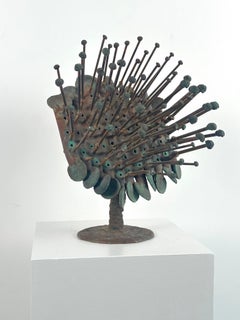
Tucking Under, Original Abstract Sculpture, 2020
By Donna Hapac
Located in Boston, MA
Artist Commentary:
Some of my reed sculptures include found objects. In "Tucking Under," I found part of a damaged hat form at a flea market. I salvaged what I could and used to cr...
Category
21st Century and Contemporary Abstract Abstract Sculptures
Materials
Linen, Organic Material, Wood, Wax
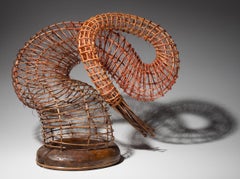
Brutalist Bronze Abstract Modernist Sculpture
Located in Surfside, FL
In the manner of Julio Gonzalez, mixed metal sculpture.
Neo-Dada Abstract Sculpture: Assemblages
Abstract sculpture followed a slightly different course. Rather than focusing on no...
Category
20th Century Abstract Expressionist Abstract Sculptures
Materials
Bronze, Copper
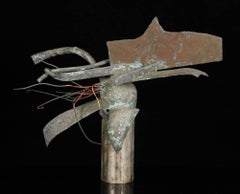
Maquette for Laureate (unique sculpture)
By Seymour Lipton
Located in New York, NY
Seymour Lipton
Maquette for Laureate, ca. 1968-1969
Nickel silver on monel metal
Unique
18 × 8 1/2 × 7 inches
Marlborough-Gerson Gallery, New York
Acquired from the above by the previous owner, 1969
thence by descent
Christie's New York: Monday, June 30, 2008 [Lot 00199]
Acquired from the above Christie's sale This unique sculpture by important Abstract Expressionist sculptor Seymour Lipton is a maquette of the monumental sculpture "Laureate" - one of Lipton's most iconic and influential works located on the Riverwalk in downtown Milwaukee, Wisconsin. Laureate is a masterpiece that was commissioned by the Allen-Bradley Company in memory of Harry Lynde Bradley and as an enhancement for the newly constructed Performing Arts Center. It is located on the east bank of the Milwaukee River at 929 North Water Street. The Bradley family in Milwaukee were renowned patrons of modernist sculpture, known for their excellent taste who also founded an eponymous sculpture park. For reference only is an image of the monumental "Laureate" one of Milwaukee's most beloved public sculptures. According to the Smithsonian, which owns a different unique variation of this work, "The full-size sculpture Laureate was commissioned by the Marcus Center for the Performing Arts in Milwaukee. In the initial drawings, Seymour Lipton combined details from the architectural plan with a wide variety of images, ranging from musical instruments to a lighthouse on the island of Tobago. He transformed the basic shapes from these sketches into a welded sculpture, which evokes a figure composed of columns, harp strings, and coiled rope. Lipton created this piece to celebrate achievement in the arts. The dramatic silhouette commands your attention, reflecting the title Laureate, which means worthy of honor and distinction. The final version of the piece is over twelve feet high and stands out against the pale, flat buildings of the arts center.,,"
Provenance
Marlborough-Gerson Gallery, New York
Acquired from the above by the previous owner, 1969
thence by descent
Christie's New York: Monday, June 30, 2008 [Lot 00199]
Acquired from the above Christie's sale
About Seymour Lipton:
Born in New York City in 1903, Seymour Lipton (1903-1986) grew up in a Bronx tenement at a time when much of the borough was still farmland. These rural surroundings enabled Lipton to explore the botanical and animal forms that would later become sources for his work. Lipton’s interest in the dialogue between artistic creation and natural phenomena was nurtured by a supportive family and cultivated through numerous visits to New York’s Museum of Natural History as well as its many botanical gardens and its zoos. In the early 1920s, with the encouragement of his family, Lipton studied electrical engineering at Brooklyn Polytechnic Institute and pursued a liberal arts education at City College. Ultimately, like fellow sculptor Herbert Ferber, Lipton became a dentist, receiving his degree from Columbia University in 1927. In the late 1920s, he began to explore sculpture, creating clay portraits of family members and friends.
In addition to providing him with financial security, dentistry gave Lipton a foundation in working with metal, a material he would later use in his artwork. In the early 1930s, though, Lipton’s primary sculptural medium was wood. Lipton led a comfortable life, but he was also aware of the economic and psychological devastation the Depression had caused New York. In response, he generally worked using direct carving techniques—a form of sculpting where the artist “finds” the sculpture within the wood in the process of carving it and without the use of models and maquettes. The immediacy of this practice enabled Lipton to create a rich, emotional and visual language with which to articulate the desperation of the downtrodden and the unwavering strength of the disenfranchised. In 1935, he exhibited one such early sculpture at the John Reed Club Gallery in New York, and three years later, ACA Gallery mounted Lipton’s first solo show, which featured these social-realist-inspired wooden works. In 1940, this largely self-taught artist began teaching sculpture at the New School for Social Research, a position he held until 1965.
In the 1940s, Lipton began to devote an increasing amount of time to his art, deviating from wood and working with brass, lead, and bronze. Choosing these metals for their visual simplicity, which he believed exemplified the universal heroism of the “everyman,” Lipton could also now explore various forms of abstraction. Lipton’s turn towards increasing abstraction in the 1940s allowed him to fully develop his metaphorical style, which in turn gave him a stronger lexicon for representing the horrors of World War II and questioning the ambiguities of human experience. He began his metal work with cast bronze sculptures, but, in 1946, he started welding sheet metal and lead. Lipton preferred welding because, as direct carving did with wood, this approach allowed “a more direct contact with the metal.”[ii] From this, Lipton developed the technique he would use for the remainder of his career: “He cut sheet metal, manipulated it to the desired shapes, then joined, soldered, or welded the pieces together. Next, he brazed a metal coating to the outside to produce a uniform texture.”[iii]
In 1950, Lipton arrived at his mature style of brazing on Monel metal. He also began to draw extensively, exploring the automatism that abstract expressionist painters were boasting at the time. Like contemporaries such as Jackson Pollock, Lipton was strongly influenced by Carl Jung’s work on the unconscious mind and the regenerative forces of nature. He translated these two-dimensional drawings into three-dimensional maquettes that enabled him to revise his ideas before creating the final sculpture.The forms that Lipton produced during this period were often zoomorphic, exemplifying the tension between the souls of nature and the automatism of the machine.
In the years following the 1950s, Lipton’s optimism began to rise, and the size of his work grew in proportion. The oxyacetylene torch—invented during the Second World War—allowed him to rework the surfaces of metal sculptures, thus eliminating some of the risks involved with producing large-scale finished works. In 1958, Lipton was awarded a solo exhibition at the Venice Biennale and was thus internationally recognized as part of a small group of highly regarded avant-garde constructivist sculptors. In 1960, he received a prestigious Guggenheim Award, which was followed by several prominent public commissions, including his heroic Archangel, currently residing in Lincoln Center’s David Geffen Hall.
A number of important solo exhibitions of his work followed at The Phillips Collection in Washington, DC (1964); the Milwaukee Art Center and University of Wisconsin, Milwaukee (1969); the Virginia Museum of Fine Arts in Richmond (1972); the Everson Museum in Syracuse, NY (1973); the Herbert E. Johnson Museum of Art of Cornell University in Ithaca, NY (1973); the National Collection of Fine Arts, Smithsonian Institution (now the Smithsonian American Art Museum) in Washington, DC (1978); and a retrospective in 1979 at The Jewish Museum in New York. In 1982 and 1984 alone, two exhibitions of his sculpture, organized respectively by the Mint Museum (Charlotte, NC) and the Hillwood Art Gallery of Long Island University (Greenvale, NY), traveled extensively across museums and university galleries around the nation. In 2000, the traveling exhibition An American Sculptor: Seymour Lipton was first presented by the Palmer Museum of Art of Pennsylvania State University in University Park. Most recently, in 2009, the Ackland Art Museum in Chapel Hill, NC mounted The Guardian and the Avant-Garde: Seymour Lipton’s Sentinel II in Context.
Since 2004, Michael Rosenfeld Gallery has been the exclusive representative of the Estate of Seymour Lipton and has presented two solo exhibitions of his work—Seymour Lipton: Abstract Expressionist Sculptor (2005) and Seymour Lipton: Metal (2008). In 2013, Michael Rosenfeld Gallery presented Abstract Expressionism, In Context: Seymour Lipton, which included twelve major sculptures by the artist, along with works by Charles Alston, Norman Bluhm, Beauford Delaney, Willem de Kooning, Jay DeFeo, Michael Goldberg, Adolph Gottlieb, Hans Hofmann, Lee Krasner, Norman Lewis, Conrad Marca-Relli, Boris Margo, Alfonso Ossorio, Richard Pousette-Dart, Milton Resnick, Charles Seliger...
Category
1960s Abstract Expressionist Abstract Sculptures
Materials
Metal, Silver
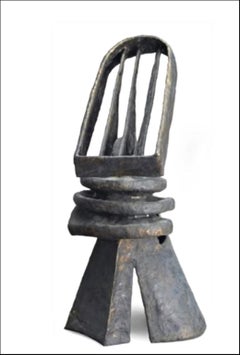
Abstract sculpture:
Because We
re Here
By Tony Moore
Located in New York, NY
My work is concerned with the relationship of humanity and nature. I conceive of an expanded concept of “Nature” as embodying all existence, both the seen and unseen, socio-political events, daily occurrences, as well as private intuitions that are made concrete through creative action. My objects are places of remembrance where multiplicities of associations take place. Most recently these have been concerned with issues of the human condition.
“In recent ceramic Fire Paintings and Sculptures abstracted figures, made from cut twigs, are impressed into wet clay. As I investigated, the figures kept running, fleeing, tumbling, searching, moving away from and towards something else. They moved across landscapes, towards glowing buildings/edifices, systemized structures/societies, which both beckoned them and somehow dominated them. The figures were present, yet also in spirit form, floating and dissolving in diaphanous light and shimmering waters. Twigs became, fathers, mothers and children. They became surrogates, rather like a small child’s dolls, playing out a deeply psychological fiction of desperately moving toward “something”. Something hopeful, yet presently out of reach. Something eternally becoming …”
Tony Moore is an English-American sculptor and painter represented in international museum collections including the Guggenheim Museum, Brooklyn Museum, Greenville Museum, San Angelo Museum of Fine Arts, Woodstock Artists Association & Museum, Art Museum of the U. of Memphis and ASU Art Museum, US and the Yorkshire Museum and Derby Museum, UK.
He received a MFA in Sculpture from Yale University and is the recipient of prestigious awards, including a Louis Comfort Tiffany Award...
Category
2010s Contemporary Abstract Sculptures
Materials
Ceramic, Glaze
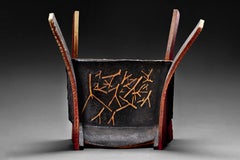
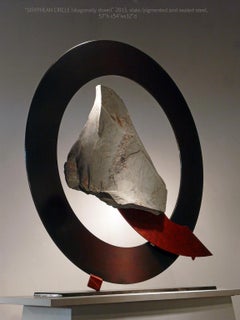
"Sisyphean Circle (diagonally down)", Industrial, Abstract Sculpture
By John Van Alstine
Located in New York, NY
"Sisyphean Circle (diagonally down)" by John Van Alstine
Slate, pigmented and sealed steel
The sculpture of John Van Alstine beautifully, and powerfully, balances the union of stone...
Category
2010s Abstract Abstract Sculptures
Materials
Stone, Slate, Metal, Steel