Items Similar to Centaur abducting a woman
Want more images or videos?
Request additional images or videos from the seller
1 of 15
Aimé-Jules DalouCentaur abducting a womancirca 1895-1902
circa 1895-1902
$32,197.57
£23,840.95
€27,000
CA$44,472.35
A$47,629.90
CHF 25,605.51
MX$578,492.97
NOK 323,538.04
SEK 296,223.14
DKK 205,774.14
About the Item
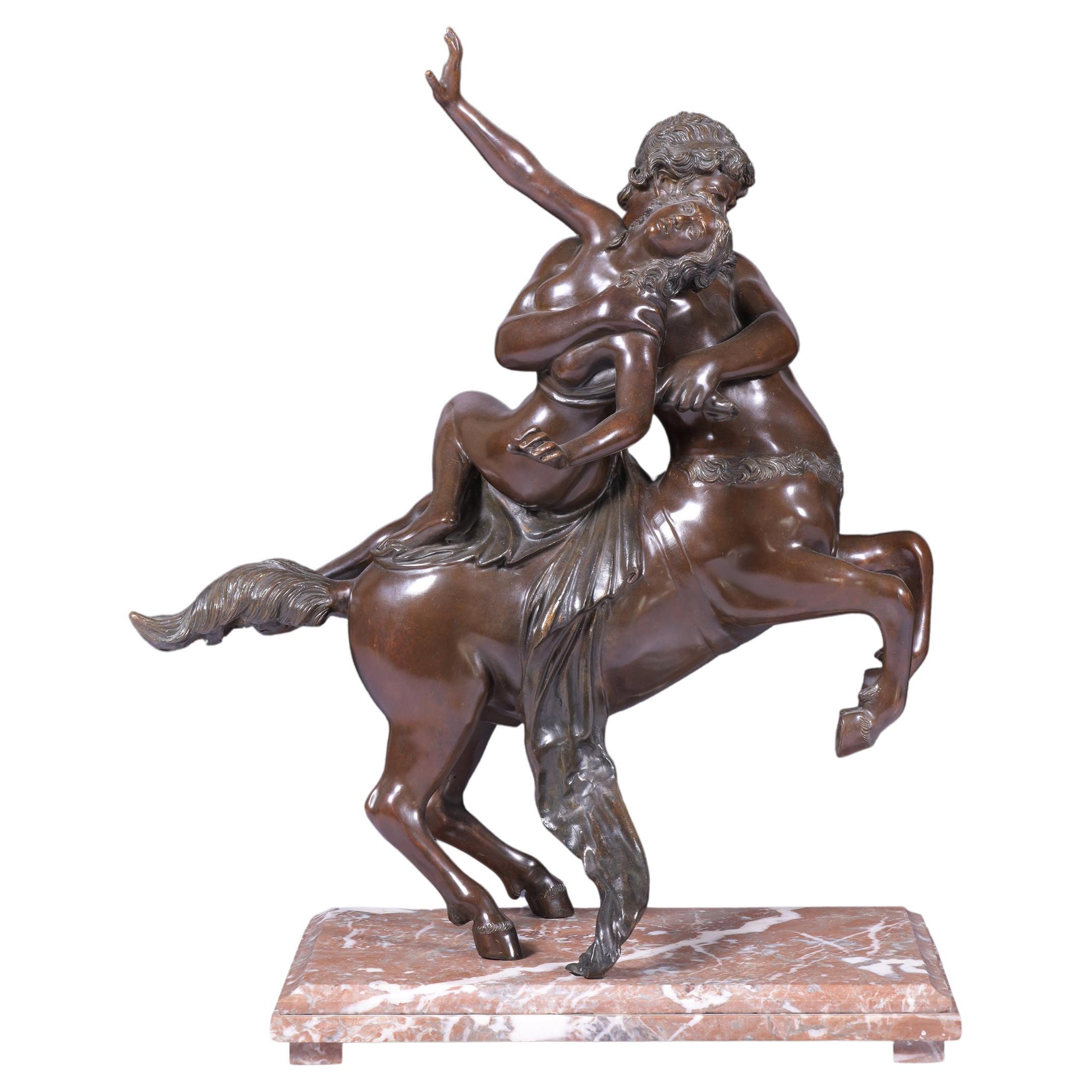
Centaur abducting a woman
by Aimé-Jules DALOU (1838-1902)
A bronze group sculpture with a dark brown patina
Signed on the base "Dalou"
Cast by "A.A. Hébrard" (with the foundry stamp)
The casts by Hébrard are always the finest ones regarding Dalou's works. Perfect in quality of cast and patina.
France
posthumous cast around 1910
height 27 cm
width 21 cm
depth 15,5 cm
A similar model reproduced in "Jules Dalou, le sculpteur de la République", Exhibition held at the Musée du Petit Palais, Paris, 2013, page 415, n°337.
Biography :
Aimé-Jules Dalou, said Jules Dalou (1838-1902) was a French sculptor, born from Protestants glovers craftsmen who raised in secularism and love of the Republic. Jules Dalou was very young talented for modeling and drawing, which earned him the attention of Jean-Baptiste Carpeaux, who made him entered in 1852 in the Little School, the future National School of Decorative Arts in Paris. In 1854, he was admitted to the School of Fine Arts in Paris, where he studied painting in the workshop of Abel de Pujol and sculpture in the workshop of Francisque Duret. He began to earn his living by working for decorators, and began his friendship with Auguste Rodin. Dalou then produced decorative sculptures for buildings on major Parisian avenues, such as the Hotel de la Paiva, on the Champs-Elysees Avenue. He presented but failed four times to Rome prize competition, but exhibited at the 1869 Salon his "Daphnis and Chloe" and the "Embroiderer" at the Salon of 1870, two pieces acquired by the French state. Dalou had one child, Georgette, a girl born with a mental handicap. This is to ensure funding for her daughter's life accommodation in the Orphanage of Arts, that Dalou bequeathed the funds from his workshop to this institution.
After the bloody week of May 1871 Dalou, his wife and their daughter were threatened as Communards, forced into exile and requested asylum. They then joined England and were greeted by his former fellows of the Little School, the painter Alphonse Legros. With Legros, much introduced in the City, he made a serie of terracotta statuettes inspired by boulonnaise peasants or intimate subjects (readers, lullabies), and portraits of the English aristocracy. He became professor for modeling at the National Art Training School, his influence was decisive for many British sculptors. He received orders for a public fountain in marble titled "Charity" (1877) near the Royal Exchange in London, and a monument dedicated to Queen Victoria's grandchildren located in the private chapel of Frogmore at Windsor Castle.
In May 1874, the Paris War Council condemned Dalou in absentia to hard labor for life. Having refused to beg for mercy, he was only in May 1879 being granted amnesty and his family finally returned from exile. His group "The Triumph of the Republic", originally planned for the Place de la Republique in Paris, was finally erected on the Place du Trône, renamed Place de La Nation in 1880. Dalou devoted twenty years to the realization of this monument. The years 1881 and 1882 were difficult, but the 1883 Salon finally revealed him to the French public. He exhibited his two high reliefs: "The Brotherhood of Peoples" and "Mirabeau answering Dreux-Brézé", for which he was awarded the Medal of Honor. Fleeing the world and living in family, Dalou engaged in considerable work and many orders both private and public. For the Universal Exhibition of 1889, was inaugurated on the Place de la Nation the plaster of "The Triumph of the Republic" commissioned by the city of Paris in 1879. Although the bronze version of the group was inaugurated in 1899, this work won the grand prize for sculpture in the exhibition. Dalou left the French Society of Artists in 1890 to expose at the National Society of Fine Arts, of which he was a founding member with Ernest Meissonier, Auguste Rodin and Pierre Puvis de Chavannes. Awarded Knight of the Legion of Honor in 1883, and promoted to officer by President Carnot in 1889, he was elevated to the rank of Commander of the same order in 1899 by President Loubet at the inauguration of the monument of "The Triumph of the Republic".
Dalou had no time to complete his last great project, a monument dedicated to workers, the idea came to him in 1889 after the first opening of "TheTriumph of the Republic". The formality of the ceremony and military parades held the people away from the official event. Dalou was disappointed. True to its republican ideals, he had hoped that this inauguration was an opportunity of great popular democratic party (as it was at the inauguration of the bronze in 1899). His idea was then to pay tribute to the world of workers, craftsmen and peasants with this work being the central subject. At the end of his career Dalou described the project as follows: "I think I have finally found the monument to the workers that I seek since 1889. Sober, without molding or ornament, I wish it'd be severe and imposing. Will I execute it? There is the question. I am old and my health is so weak."
- Creator:Aimé-Jules Dalou (1838 - 1902, French)
- Creation Year:circa 1895-1902
- Dimensions:Height: 10.63 in (27 cm)Width: 8.27 in (21 cm)Depth: 6.11 in (15.5 cm)
- Medium:
- Movement Style:
- Period:
- Condition:
- Gallery Location:PARIS, FR
- Reference Number:Seller: N.X1stDibs: LU2514216390642

Aimé-Jules Dalou
Aimé-Jules Dalou (1838-1902) was one of only a handful of leading late-nineteenth century French Sculptors, whose reputation was perhaps second only to his contemporaries, Henri Chapu (1833-1891) and Marius Jean Antonin Mercié (1845-1916). Dalou was hugely influential and was a founding member of the Société des Artistes Français and later a founder of the Société Nationale des Beaux-Arts. He was officially rewarded with the highest rank of the Légion d'Honneur two years before his death, with the inauguration of the Triumph of the Republic, in 1899. He started his artistic training in 1852 at the Petite Ecole after being encouraged to do so by Jean-Baptiste Carpeaux, where he studied drawing and modelling. Carpeaux continued to support Dalou throughout his career and influenced his sculpture greatly. Dalou began employment in the field of decorative sculpture working for two companies in Paris, Lefèvre and Favière goldsmiths. During this time he contributed towards the architectural features of Hôtel de la Païva, the then home of the infamous French courtesan Esther Lachmann known as La Païva. Dalou's unique approach lay in his broad range of subject, painterly and sculptural source material, though which he absorbed an impressive spectrum of inspiration. The work of an eighteenth-century sculptor, Louis-François Roubiliac, played a significant role in Dalou's artistic development, whose sculptures he studied whilst in London. Dalou's work includes friezes, maquettes, reliefs, and individual bronze figures. He is known for Baroque-inspired allegorical group compositions, as much as for his depictions of the French rural labouring classes. Dalou encouraged students of art to free themselves from the constraints of established traditions, with his style and teachings thought to have awakened a new generation of young British sculptors whose work was later aligned to the New Sculpture movement.
About the Seller
5.0
Recognized Seller
These prestigious sellers are industry leaders and represent the highest echelon for item quality and design.
Established in 1992
1stDibs seller since 2023
11 sales on 1stDibs
Typical response time: 1 hour
- ShippingRetrieving quote...Shipping from: PARIS, France
- Return Policy
More From This Seller
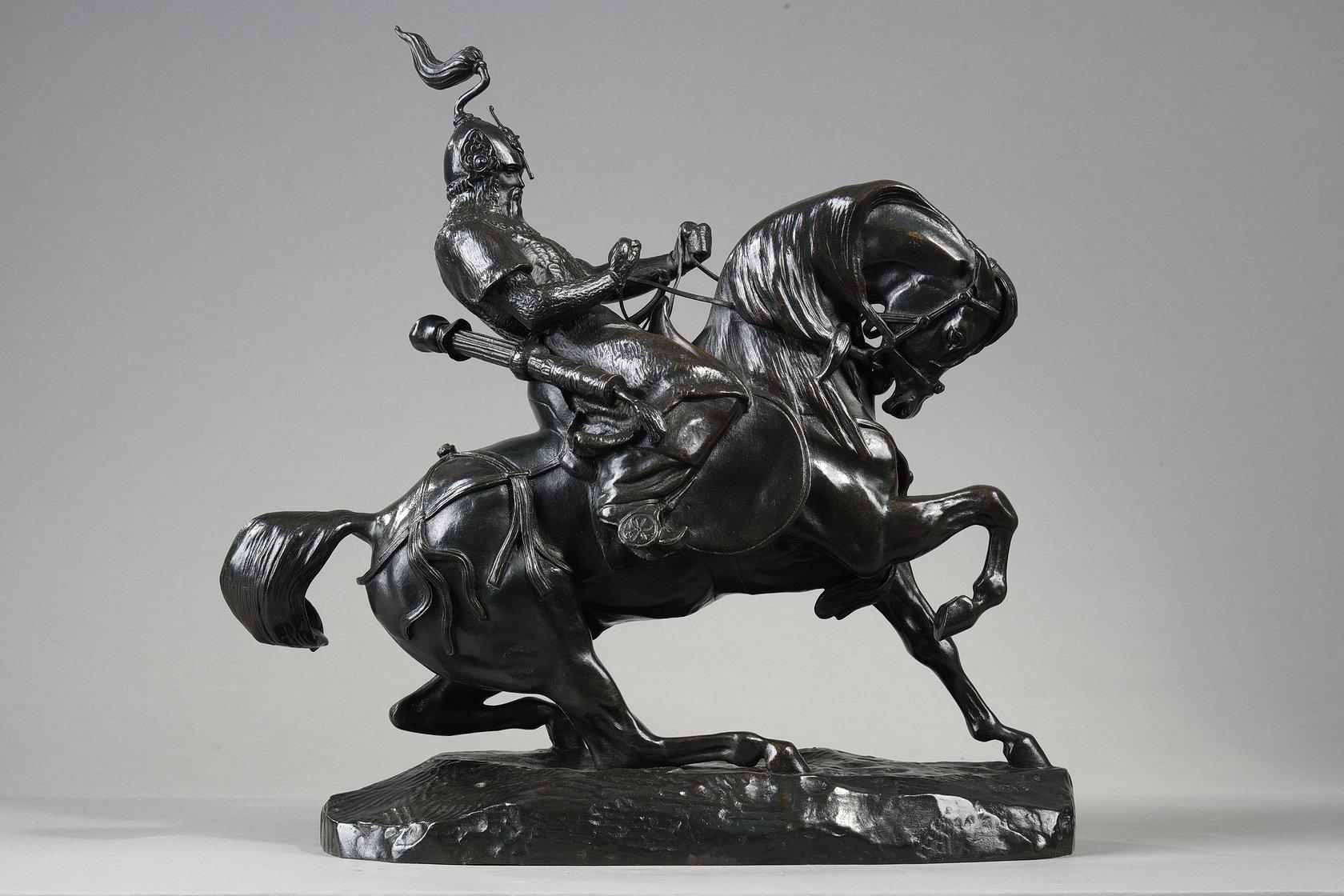
View AllTartar warrior stopping his horse
By Antoine-Louis Barye
Located in PARIS, FR
Tartar warrior stopping his horse
by Antoine-louis BARYE (1796-1875)
Equestrian group in bronze with a nuanced dark greenish brown patina
any cast mark
old edition cast
France
cir...
Category
Late 19th Century French School Figurative Sculptures
Materials
Bronze
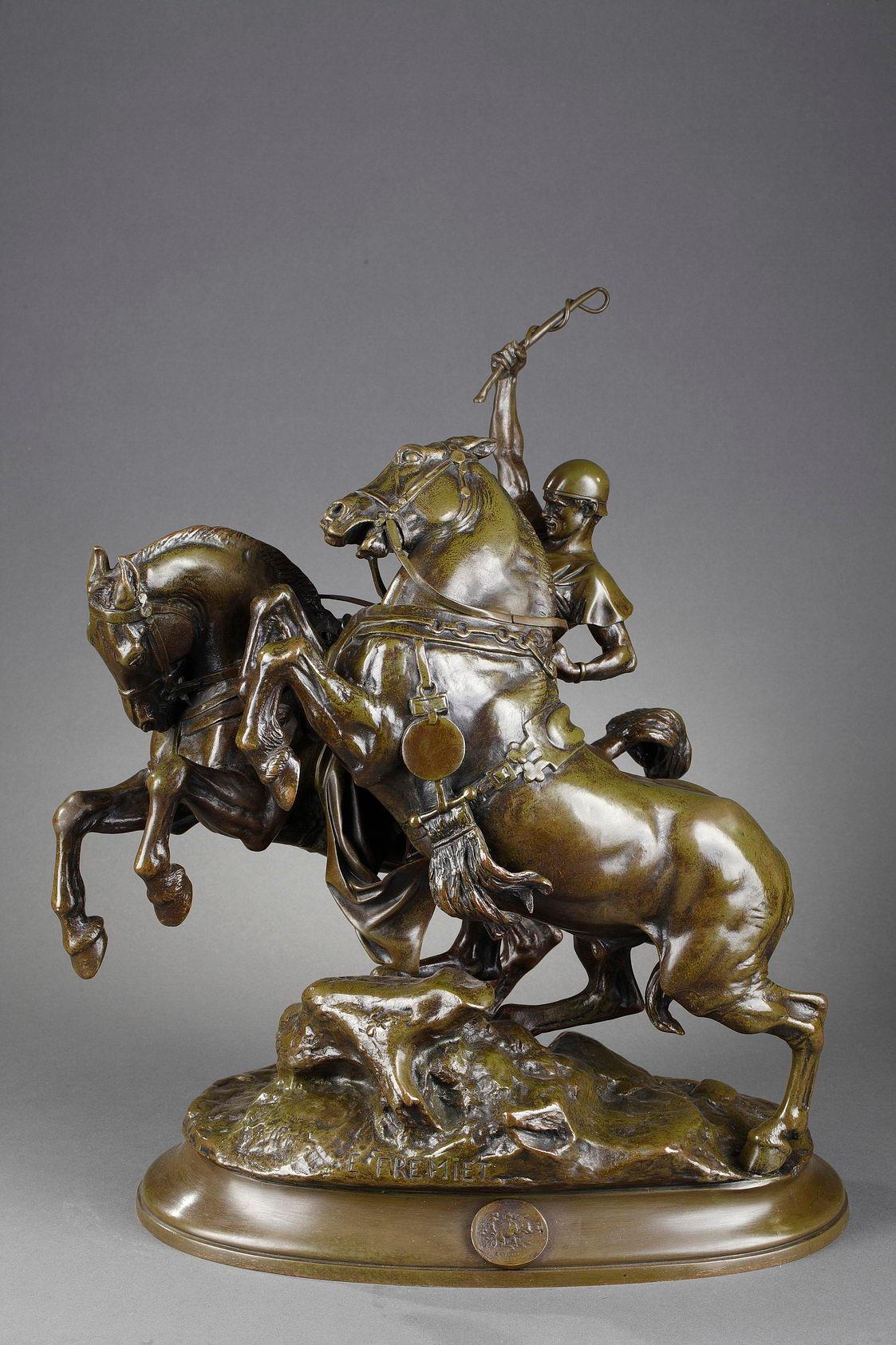
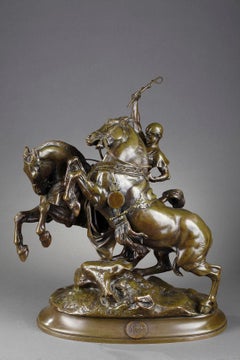
Roman driver on his chariot
By Emmanuel Fremiet
Located in PARIS, FR
Roman driver on his chariot
by Emmanuel Fremiet (1824-1910)
Bronze group with its original nuanced green patina
signed on the base " E. Fremiet "
cast by More
France
circa 1880
hei...
Category
Late 19th Century French School Figurative Sculptures
Materials
Bronze
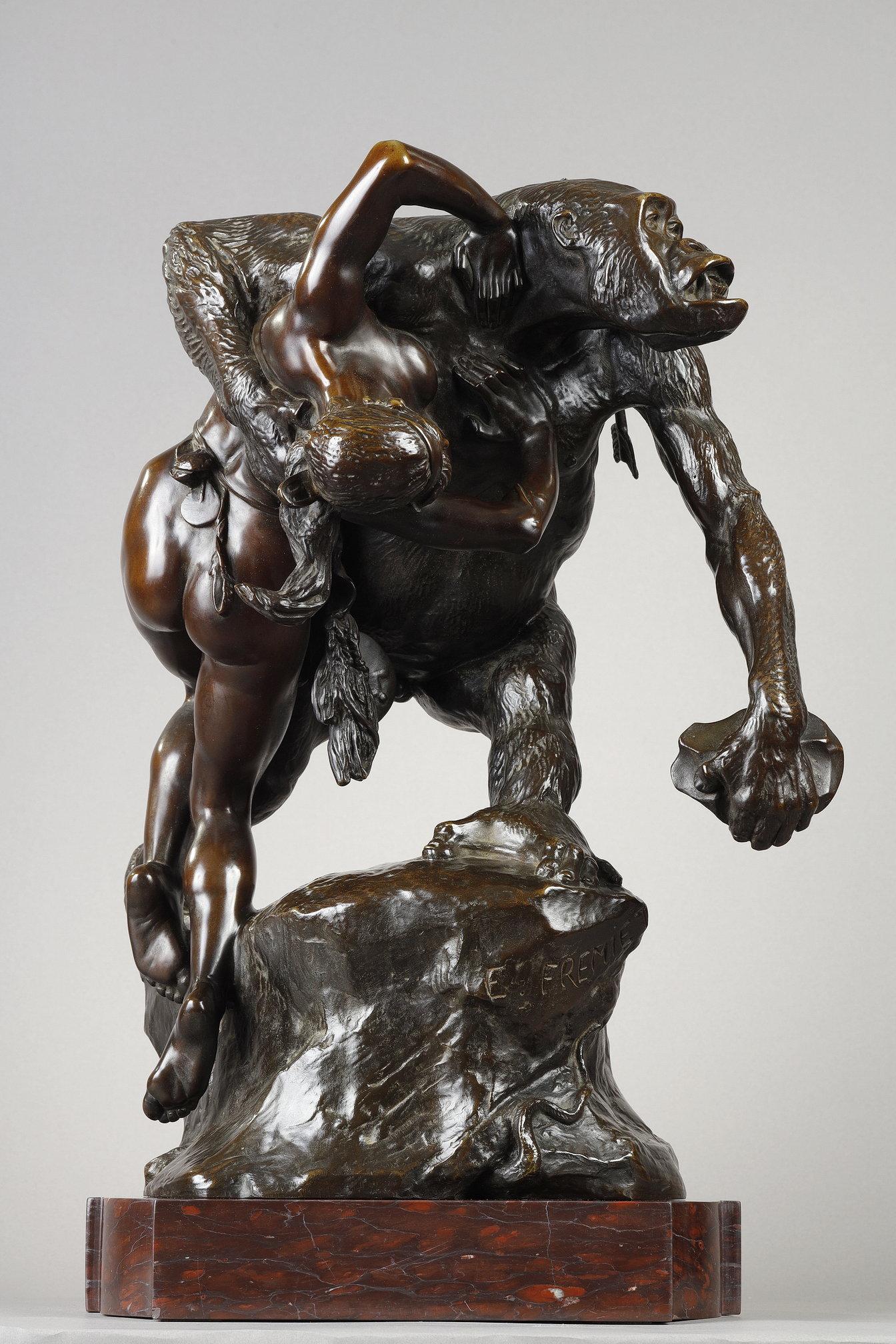
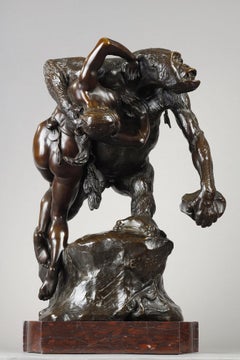
Gorilla kidnapping a woman
By Emmanuel Fremiet
Located in PARIS, FR
Emmanuel FREMIET (1824-1910)
Gorilla kidnapping a woman
A rare bronze group with a greenish dark brown patina
signed "E. Fremiet" on the base
cast by " F. Barbedienne Fondeur " (fo...
Category
Late 19th Century French School Figurative Sculptures
Materials
Bronze
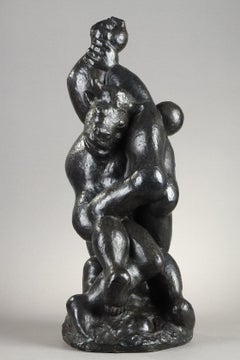
Theseus and the Minotaur
By Baltasar Lobo
Located in PARIS, FR
Theseus and the Minotaur
by Baltasar LOBO (1910-1993)
A bronze group with a greenish dark brown patina
Signed at the lower backside " Lobo "
Cast by " Susse Fondeur Paris " (with th...
Category
1970s French School Figurative Sculptures
Materials
Bronze
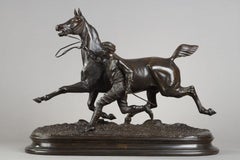
Horse training with its stable lad
Located in PARIS, FR
Horse training with its stable lad
by Arthur Marie Gabriel comte du Passage (1838-1909)
A bronze group with nuanced dark brown patina
Signed on the base " Cte du Passage "
Period ca...
Category
Late 19th Century French School Figurative Sculptures
Materials
Bronze
Caress of Love
By Albert-Ernest Carrier-Belleuse
Located in PARIS, FR
"Caress of Love"
by Albert-Ernest CARRIER-BELLEUSE (1824-1887)
Bronze group sculpture with a nuanced dark brown patina
Signed on the back "A. Carrier-Belleuse"
Resting on a revolvi...
Category
1870s French School Figurative Sculptures
Materials
Bronze
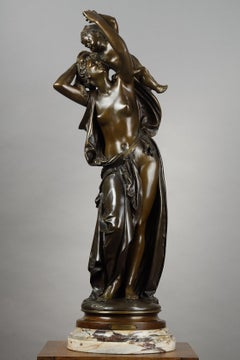
You May Also Like
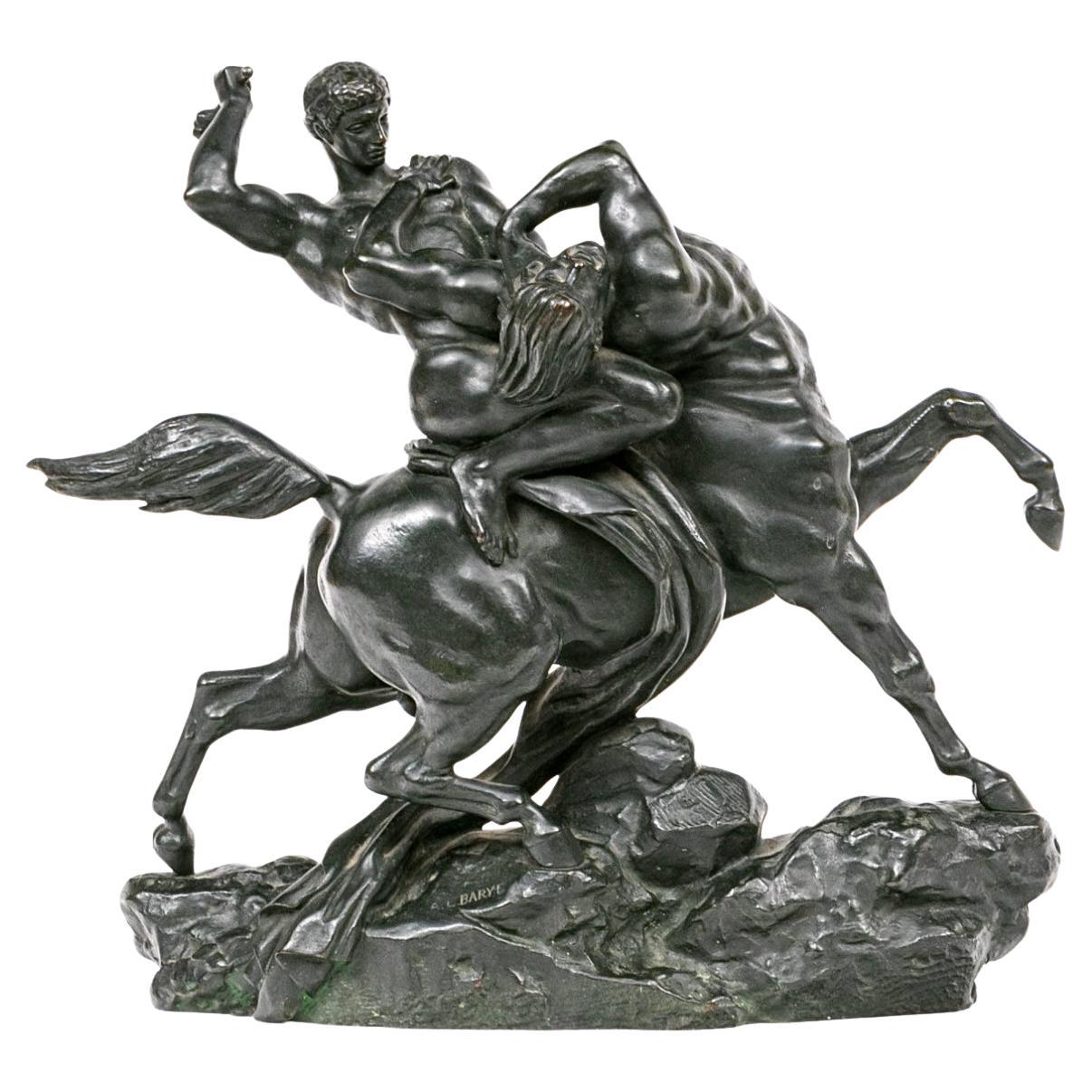
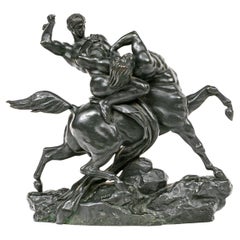
Antoine Louis Barye Theseus Slaying the Centaur Bienor Bronze
By Antoine-Louis Barye
Located in Dallas, TX
Antoine Louis Barye Theseus Slaying the Centaur Bienor Black Patinated Bronze Group.
A French bronze group entitled 'Thesee combattant le centaure Bienor, esquisse' (Theseus slaying...
Category
Antique 1850s French Beaux Arts Figurative Sculptures
Materials
Bronze
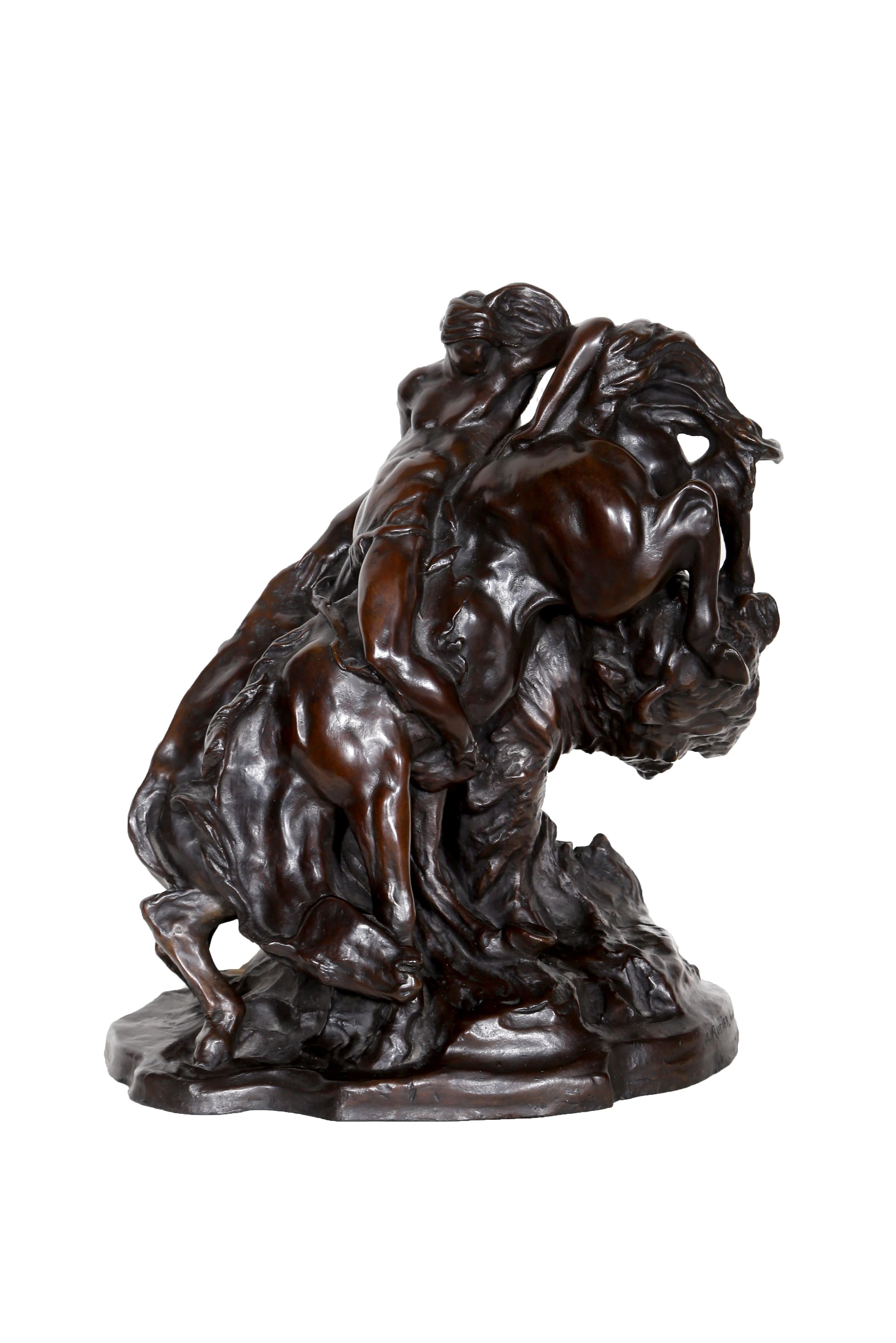
Combat: Indian, Horse and Buffalo
Located in Long Island City, NY
Combat: Indian, Horse and Buffalo: Arthur Putnam (September 6, 1873 – May 27, 1930) was an American sculptor and animalier who was recognized for his bronze sculptures of wild animals. Some of his artworks are public monuments. He was a well-known figure, both statewide and nationally, during the time he lived in California. Putnam was regarded as an artistic genius in San Francisco and his life was chronicled in the San Francisco and East Bay newspapers. He won a gold medal at the 1915 San Francisco...
Category
Early 20th Century Romantic Figurative Sculptures
Materials
Bronze
Price Upon Request
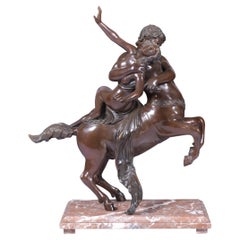
19th Century French Bronze Group of Nessus Abducting Deianira
By Giambologna
Located in Dublin, IE
French Grand Tour bronze group of Nessus abducting Deianira after Giambologna on marble base.
After the model by Giambologna
Circa 1880
French
Footnote:
The first documented example of this famous bronze group was made by Giovanni Bologna...
Category
Antique 19th Century French Classical Greek Figurative Sculptures
Materials
Marble, Bronze
Perseus Freeing Andromeda
Located in New York, NY
JEAN-LÉON GRÉGOIRE
French, (1840-1890)
Perseus Freeing Andromeda
Patinated bronze; Signed 'L. GREGOIRE’
25 1/2 x 13 x 11 inches
Notes:
Jean-Léon Grégoire started to exhibit at...
Category
1870s Figurative Sculptures
Materials
Bronze
Antoine Louis Barye (1795-1875),
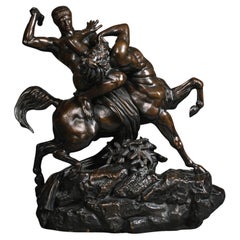
Theseus fighting the centaur Bianor
By Antoine-Louis Barye
Located in Brighton, West Sussex
A Fine Patinated Bronze Group, Entitled 'Thesée Combattant le Centaure Bianor' ('Theseus Fighting the Centaur Bianor'), Cast by Ferdinand Barbedienne, From the Model By Antoine Louis...
Category
Antique 19th Century French Classical Greek Figurative Sculptures
Materials
Bronze
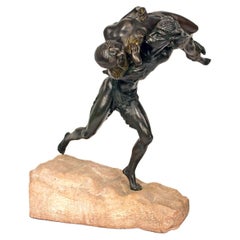
Art Deco Satyr Abducting a Nymph Sculpture by Marcel Bouraine
By Marcel-André Bouraine
Located in Miami, FL
Art Deco cold patinated Bronze sculpture by Marcel-André Bouraine entitled Satyr abducting a Nymph. The piece rest in a hand sculpted rock.
Made in France
Circa: 1930
Signature: ...
Category
20th Century French Art Deco Figurative Sculptures
Materials
Limestone, Bronze
More Ways To Browse
Antique Centaur
Late 19th Century Bronze Sculpture Of A Woman
Jean Baptiste Carpeaux
Centaur Sculpture
19th Century Bronze Knight Sculpture
Centaur Bronze
Clark Bronson
Contemporary Art W Swimmers
Dali Bronze Christ John Cross
Dali Bronze John Saint
Dali Bronze Watch
Dali Gold Relief
Dali Silver Christ
Daniel Kafri
David Bennett Glass
Dogon Bronze
Eddy Maniez
Emil Epple