Want more images or videos?
Request additional images or videos from the seller
1 of 19

Antoine-Louis Barye
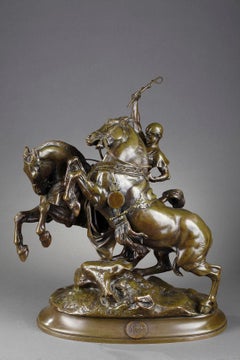
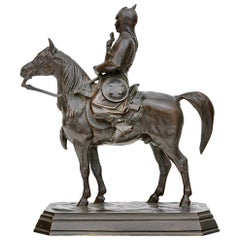
Tartar warrior stopping his horse

circa 1870

$25,972.36
£19,295.64
€21,800
CA$36,011.84
A$38,727.72
CHF 20,707.79
MX$467,045.29
NOK 261,864.14
SEK 238,591.94
DKK 166,152.21

About the Item

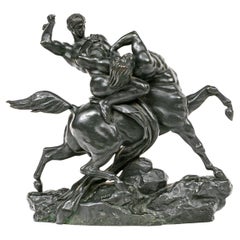
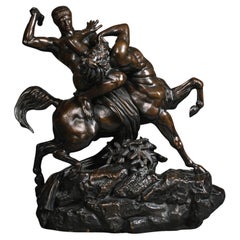
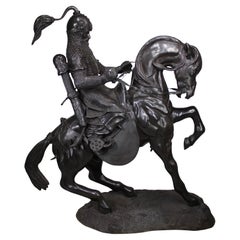
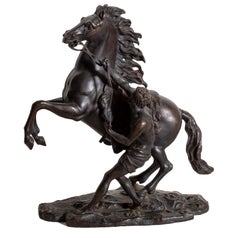
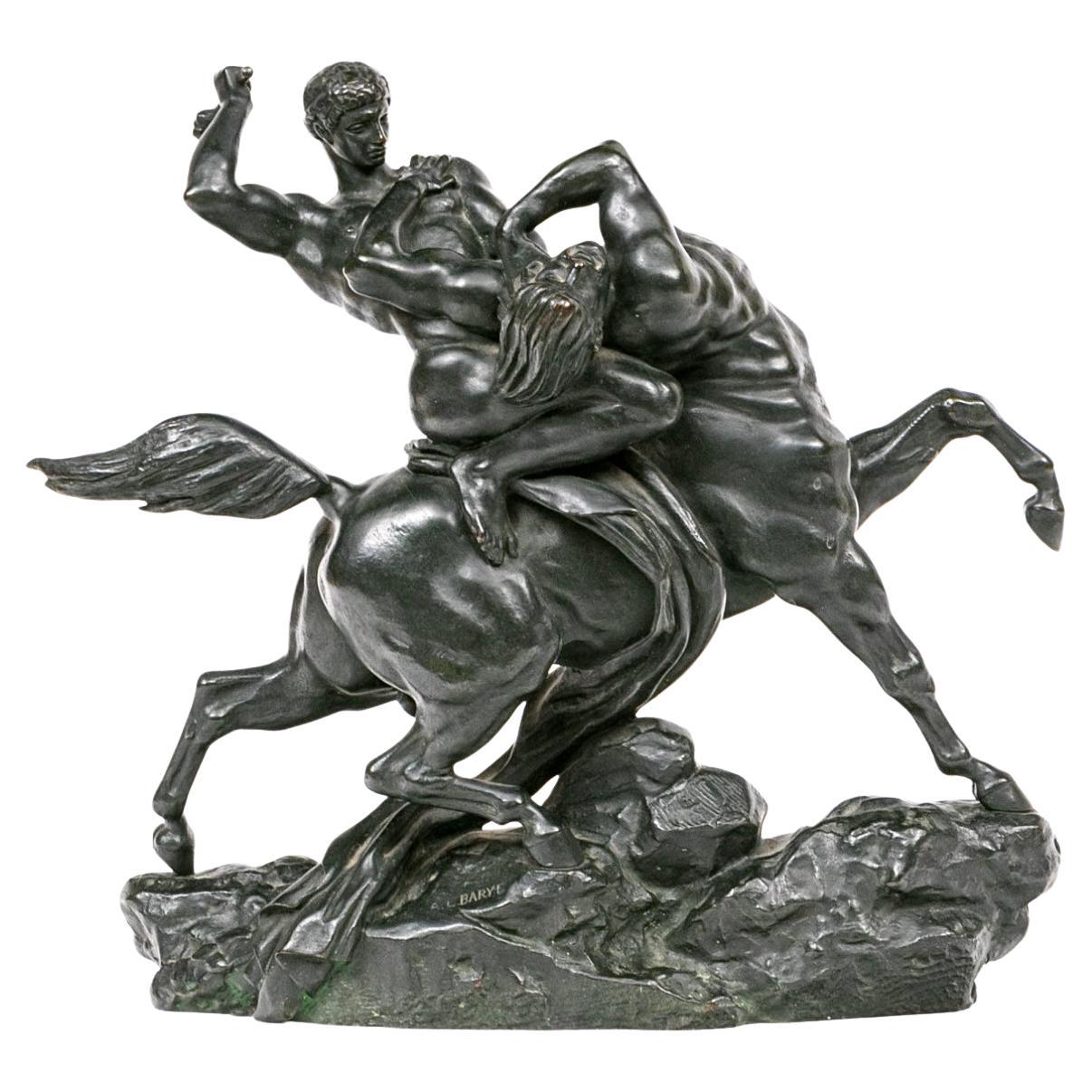
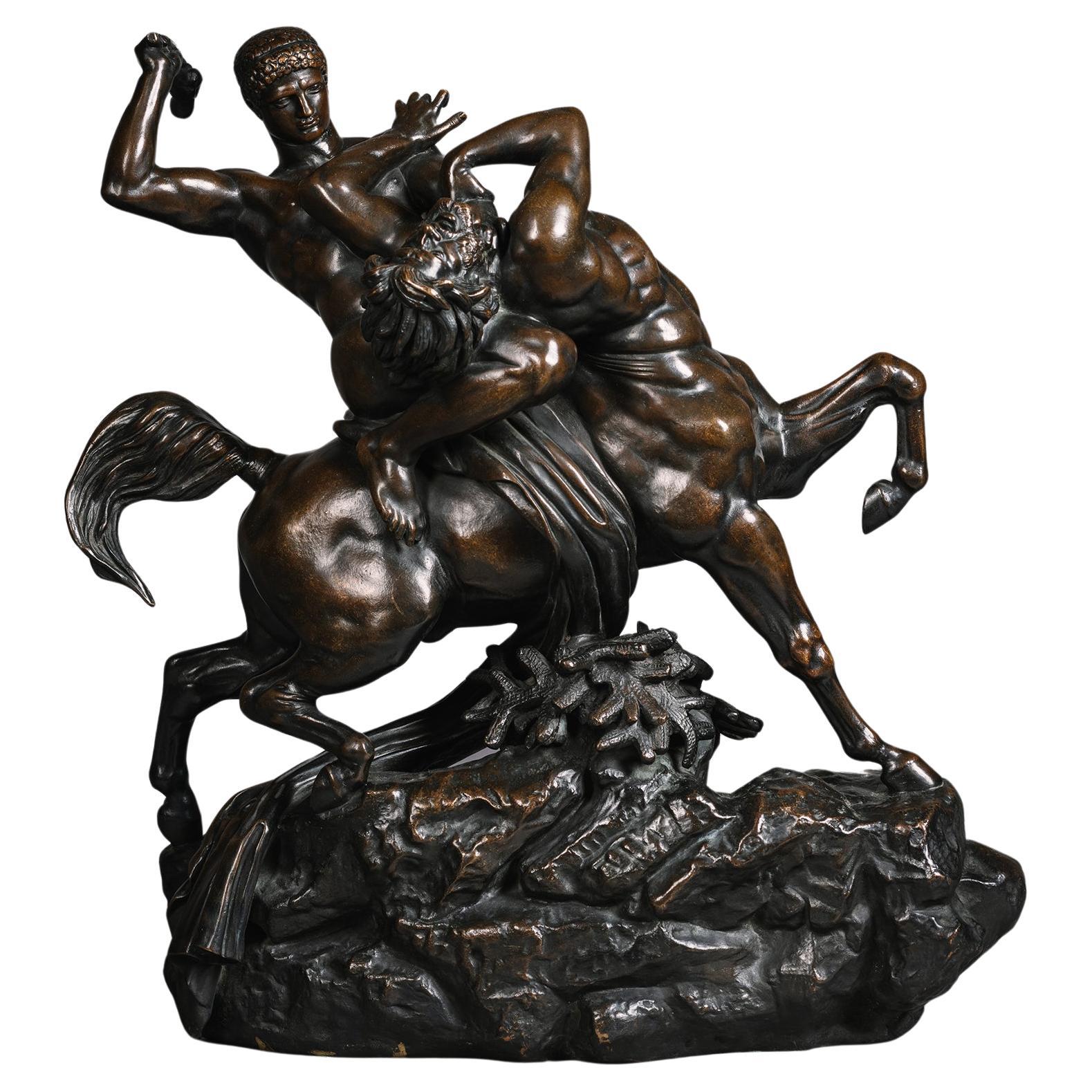
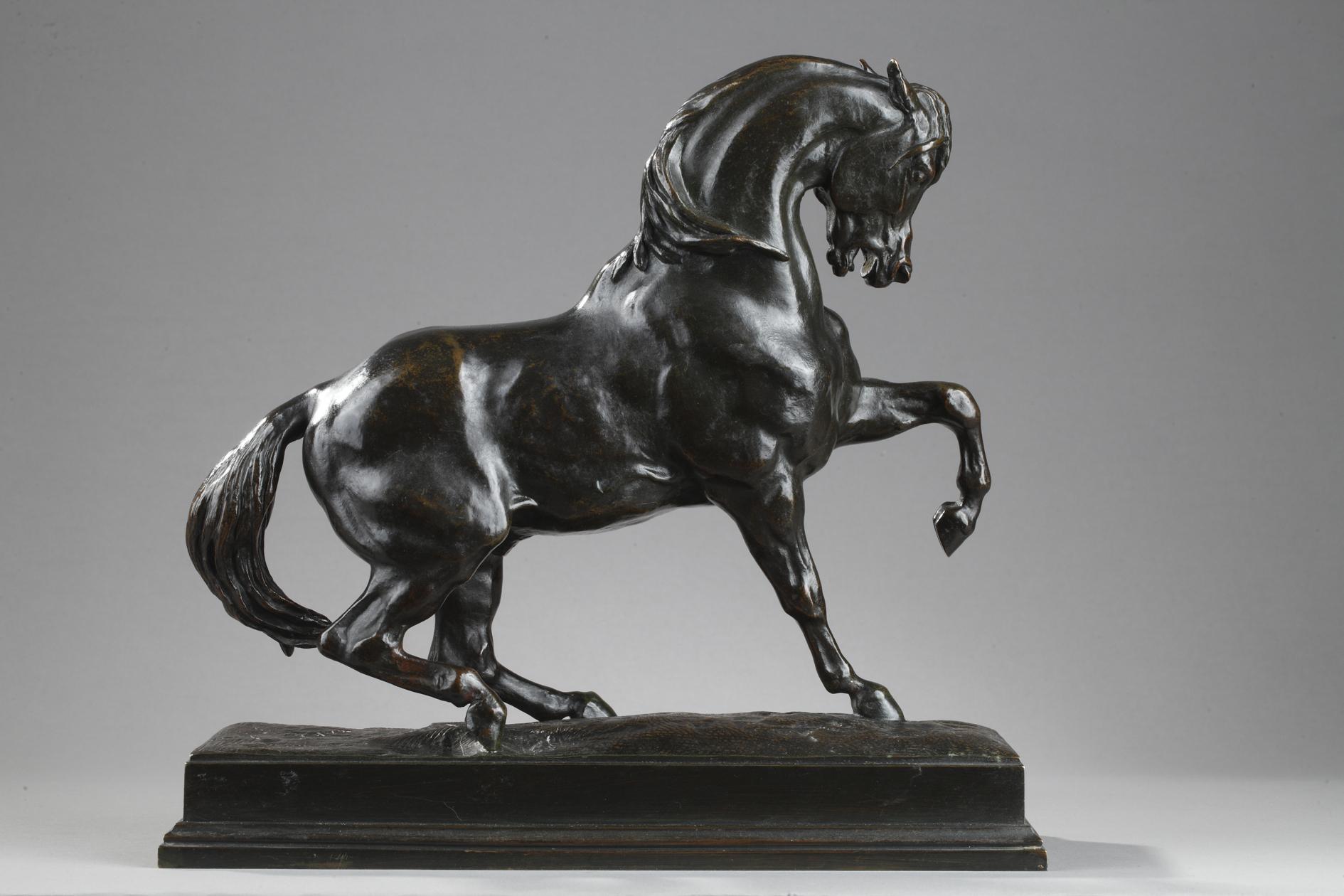
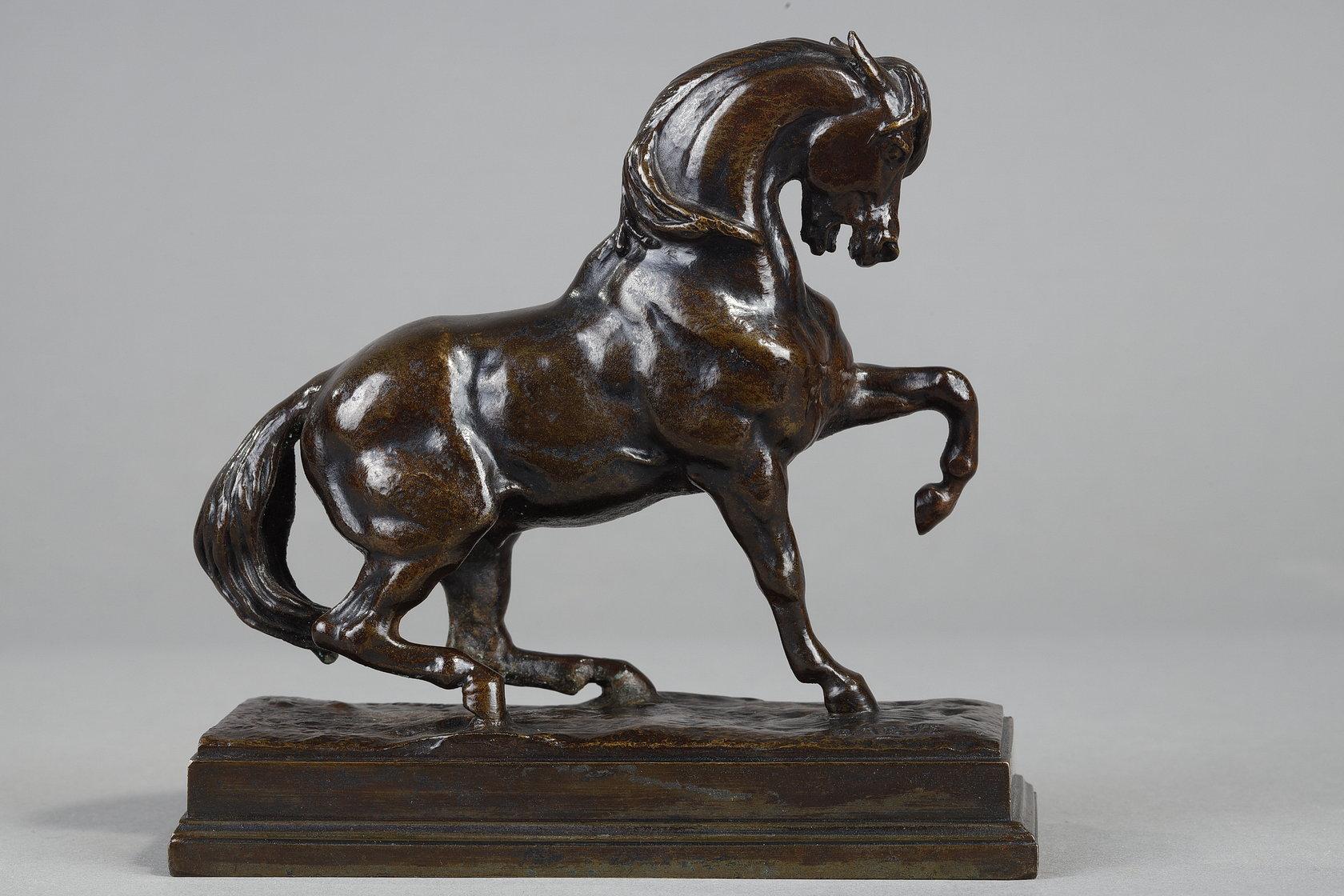
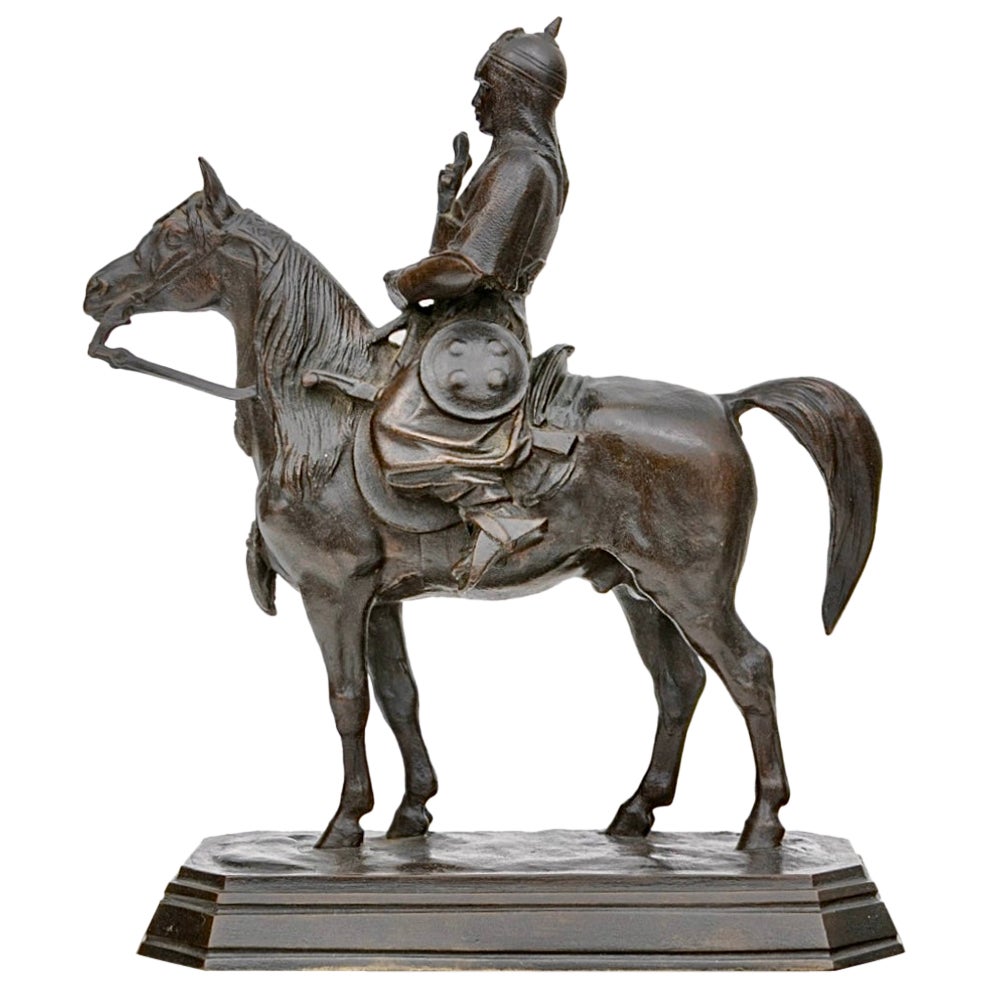
Tartar warrior stopping his horse by Antoine-louis BARYE (1796-1875) Equestrian group in bronze with a nuanced dark greenish brown patina any cast mark old edition cast France circa 1890-1900 height 33,8 cm length 34,5 cm depth 14 cm A similar model is reproduced in "The Barye Bronzes", Stuart Pivar, England, 1974, p.59. Biography : Antoine-Louis Barye (1796-1875) was a French sculptor, known for his animal sculptures. His sketch practice done in the wild, according to the animals of the Jardin des Plantes in Paris, led him gradually to also practice painting. Placed early in Fourier, an engraver on steel manufacturing metal parts for the uniforms of the Great Army, he learned all areas of metal processing and became a peerless worker. He entered the Ecole des Beaux-Arts in Paris in 1818, where he received classical training in the workshop of the sculptor François Joseph Bosio and the painter Antoine-Jean Gros. He graduated in 1820, the second prize for sculpture in Rome for his "Cain cursed by God" .It was in 1831 that Barye became known to the public exhibiting then his "Tiger devouring a Crocodile", tormented and expressive work, which ranked as soon as the first Romantic sculptor, and causing admiration criticism. He now produced numerous masterpieces, often of small dimensions, that will enrich the collections of fans on both sides of the Atlantic. In 1833, Barye exhibited at the Salon his "Lion and Serpent", a king's command to the Tuileries Gardens, an allegory of the monarchy crushing sedition, three years after the July Revolution. Critics are enthusiastic but it's not necessarily the case of his colleagues. In total contrast to the supporters of the academy who then ruled the Institute, Barye opened a foundry and edited himself his production, using modern techniques of his time. Like the Romantic artists of his time, Barye appreciated the exotic and the Middle Ages. He preferred bronze to marble because too cold. The style of Barye settled down from 1843. He gave his human figures inspired by Greek models, such as the bronze group of "Theseus and the Centaur Biénor", an energy and a movement specific to the romantic vision . Barye's Republican ideas do not prevent him from binding with Ferdinand-Philippe d’Orléans, for whom he made a table centerpiece. He became one of the favorite sculptors of Napoleon III, under whose reign he produced monumental works such as "Peace", "Strength", "War" and "The Order" for the decoration of the new palace of the Louvre and an equestrian statue of the emperor for the gates of the Louvre. Despite his business and practice of art that confused members of the Institute, they finally welcome within them in 1868, and Barye knew recognition in the last ten years of his life.
  • Creator:
    Antoine-Louis Barye (1796 - 1875, French)
  • Creation Year:
    circa 1870
  • Dimensions:
    Height: 13.31 in (33.8 cm)Width: 13.59 in (34.5 cm)Depth: 5.52 in (14 cm)
  • Medium:
  • Movement Style:
  • Period:
  • Condition:
  • Gallery Location:
    PARIS, FR
  • Reference Number:
    Seller: N.77591stDibs: LU2514216579292

More From This Seller

View All
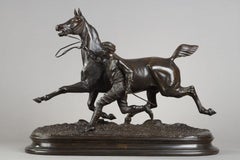
Horse training with its stable lad
Located in PARIS, FR
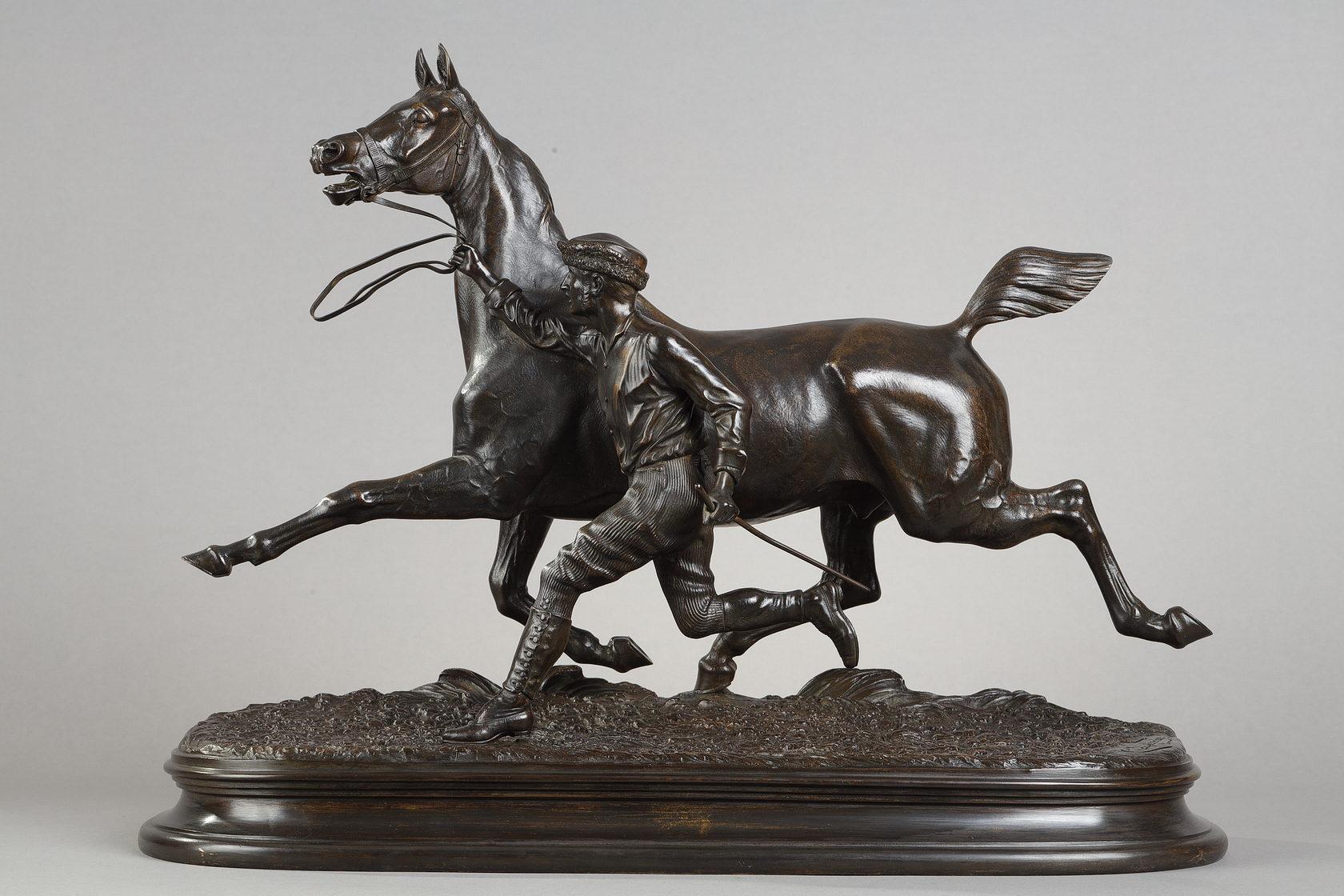
Horse training with its stable lad by Arthur Marie Gabriel comte du Passage (1838-1909) A bronze group with nuanced dark brown patina Signed on the base " Cte du Passage " Period ca...
Category

Late 19th Century French School Figurative Sculptures

Materials

Bronze

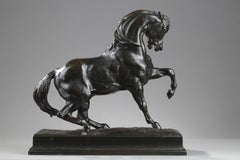
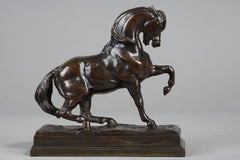
Turkish Horse
By Antoine-Louis Barye
Located in PARIS, FR
"Turkish Horse" by Antoine-Louis Barye (1796-1875) Bronze with nuanced dark brown patina cast by BARBEDIENNE France circa 1880 height 28 cm length 31,5 cm This is the biggest size...
Category

1880s French School Figurative Sculptures

Materials

Bronze

Turkish Horse
By Antoine-Louis Barye
Located in PARIS, FR
Turkish Horse by Antoine-Louis Barye (1796-1875) "Cheval turc, antérieur gauche levé, terrasse carrée" Bronze sculpture with a nuanced dark brown patina Signed " Barye " on the base...
Category

Late 19th Century French School Figurative Sculptures

Materials

Bronze

Roman driver on his chariot
By Emmanuel Fremiet
Located in PARIS, FR
Roman driver on his chariot by Emmanuel Fremiet (1824-1910) Bronze group with its original nuanced green patina signed on the base " E. Fremiet " cast by More France circa 1880 hei...
Category

Late 19th Century French School Figurative Sculptures

Materials

Bronze

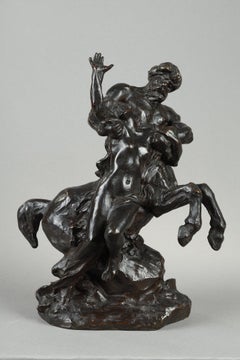
Centaur abducting a woman
By Aimé-Jules Dalou
Located in PARIS, FR
Centaur abducting a woman by Aimé-Jules DALOU (1838-1902) A bronze group sculpture with a dark brown patina Signed on the base "Dalou" Cast by "A.A. Hébrard" (with the foundry sta...
Category

Late 19th Century French School Figurative Sculptures

Materials

Bronze

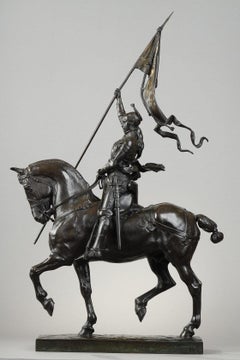
Equestrian Joan of Arc
By Emmanuel Fremiet
Located in PARIS, FR
Equestrian Joan of Arc by Emmanuel FREMIET (1824-1910) A very fine bronze equestrian group with a greenish dark brown patina signed " Fremiet " on the base cast by " F. Barbedienne...
Category

Late 19th Century French School Figurative Sculptures

Materials

Bronze

You May Also Like

Antoine Louis Barye Theseus Slaying the Centaur Bienor Bronze
By Antoine-Louis Barye
Located in Dallas, TX
Antoine Louis Barye Theseus Slaying the Centaur Bienor Black Patinated Bronze Group. A French bronze group entitled 'Thesee combattant le centaure Bienor, esquisse' (Theseus slaying...
Category

Antique 1850s French Beaux Arts Figurative Sculptures

Materials

Bronze

Antoine Louis Barye (1795-1875), Theseus fighting the centaur Bianor
By Antoine-Louis Barye
Located in Brighton, West Sussex
A Fine Patinated Bronze Group, Entitled 'Thesée Combattant le Centaure Bianor' ('Theseus Fighting the Centaur Bianor'), Cast by Ferdinand Barbedienne, From the Model By Antoine Louis...
Category

Antique 19th Century French Classical Greek Figurative Sculptures

Materials

Bronze

Antoine-Louis Barye (French, 1796-1875) Guerrier du Caucase Bronze Figure
By Antoine-Louis Barye
Located in Dallas, TX
Antoine-Louis Barye (French, 1796-1875) "Guerrier du Caucase" cast bronze sculpture depicting a Caucasian warrior in full armor rendered in fine detail riding on his horse. Cast ci...
Category

Antique 1870s French Beaux Arts Figurative Sculptures

Materials

Bronze

A Monumental Bronze Sculpture of "Tartar Warrior Checking His Horse" after Barye
By Antoine-Louis Barye
Located in Los Angeles, CA
A Monumental Equestrian Patinated Bronze Group Sculpture of "Tartar Warrior Checking His Horse" after the original model by Antoine Louis Barye (French, 1795-1875). The large and hea...
Category

Late 20th Century Unknown Islamic Figurative Sculptures

Materials

Bronze

Cheval de Marly, Bronze Equestrian Sculpture by Guillaume Coustou
By Guillaume Coustou
Located in Long Island City, NY
Artist: After Guillaume Coustou, French (1677-1746) Title: Cheval de Marly Medium: Bronze Sculpture, signature inscribed Size: 22 x 19 x 9 in. (55.88 x 48.26 x 22.86 cm) This be...
Category

Early 20th Century Romantic Figurative Sculptures

Materials

Bronze

Antique Horse Bronze Trotting Stallion Isidore Jules Bonheur (France, 1827-1901)
By Isidore Jules Bonheur
Located in SANTA FE, NM
Antique Horse Bronze Portrait of a Trotting Stallion Isidore Jules Bonheur (France, 1827-1901) Cast bronze mounted on a rectangular plinth with dark brown patina, Signed: I. BONHEUR 17 x 11 3/4 A brilliant exploration of a stallion in full trot. The patina is a deep, warm walnut brown with honey-colored tones. Isidore Bonheur was best known and the most distinguished of the 19th century French animalier sculptors. Isidore, the younger brother of Rosa Bonheur and older brother of Auguste, began his studies of painting initially with his father, who was friends with Francisco Goya. By 1848 he debuted at the Paris Salon having discontinued animal and landscape painting to concentrate on creating sculptures and in 1849, Bonheur enrolled at the Ecole des Beaux Arts. He won medals at the Paris Salon in 1859 and did so again in 1865 and in 1869. After entering the Exposition Universelle 1855, he won the Gold Medal in 1889. In the 1870s exhibited in the London at the Royal Academy of Arts where he earned great prestige and won the coveted Medaille d’Or. After winning numerous other medals and prizes, Bonheur was awarded the Legion d' Honneur in 1895 and he was Knighted in Portugal, Spain and France. Bonheur continued exhibiting at the Paris Salon until 1899. Many of his bronzes were fabricated at the foundry owned by Hippolyte Peyrol, Bonheur's brother-in-law by marriage to Isidore’s youngest sister Juliette Bonheur. The Peyrol casts for both Rosa and Isidore are exceptionally well executed which suggests a strong working relationship between the founder and sculptor. There is little doubt that Isidore Bonheur was an acute observer of nature; his animals were not anthropomorphized but modelled to catch movement or posture characteristics of the particular species he was sculpting. He achieved this most successfully with his sculptures of horses which are usually depicted as relaxed rather than spirited. These figures are among his most renowned works and his equestrian models became very popular, particularly among the British aristocracy. An acute observer of nature, his sculptures reflect his commitment to the Realist school - with precise detailing of the movements of animals in their natural habitats. Ultimately, His naturalistic studies of animals are now some of the most highly sought after works by any of the animalier. He was possibly inspired by his many visits to the Buffalo Bill Wild West Show...
Category

1870s Realist Figurative Sculptures

Materials

Bronze