1 of 6
Antonio CanovaCarved Alabaster Bust of the Goddess Aphrodite, after Canova
$2,200List Price
About the Item
- Creator:Antonio Canova (1757 - 1822, Italian)
- Dimensions:Height: 17 in (43.18 cm)Width: 11 in (27.94 cm)Depth: 7 in (17.78 cm)
- Medium:
- Period:
- Condition:
- Gallery Location:Cleveland, OH
- Reference Number:1stDibs: LU10021521623
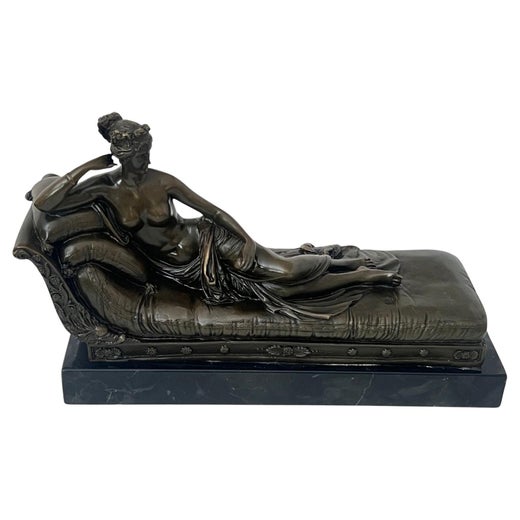
Antonio Canova
Antonio Canova was an Italian Neoclassical sculptor, famous for his marble sculptures. Often regarded as the greatest of the Neoclassical artists
Authenticity Guarantee
In the unlikely event there’s an issue with an item’s authenticity, contact us within 1 year for a full refund. DetailsMoney-Back Guarantee
If your item is not as described, is damaged in transit, or does not arrive, contact us within 7 days for a full refund. Details24-Hour Cancellation
You have a 24-hour grace period in which to reconsider your purchase, with no questions asked.Vetted Professional Sellers
Our world-class sellers must adhere to strict standards for service and quality, maintaining the integrity of our listings.Price-Match Guarantee
If you find that a seller listed the same item for a lower price elsewhere, we’ll match it.Trusted Global Delivery
Our best-in-class carrier network provides specialized shipping options worldwide, including custom delivery.You May Also Like
1900
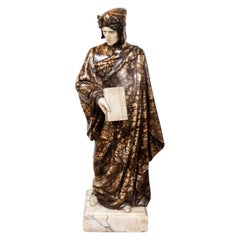
s Alabaster Sculpture of Dante
Located in Los Angeles, CA
A sensitively carved, solid alabaster, antique sculpture of famed Italian poet and philospher, Dante Aligheri (1265-1321). The figure in a rich, flowing robe, holding a book and wear...
Category
1910s Figurative Sculptures
Materials
Alabaster, Marble
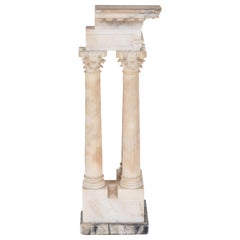
Graceful, Alabaster, Architecture Model
Located in Los Angeles, CA
Beautifully carved, Grand Tour period architectural model featuring fluted columns surmounted by Corinthian capitals and a relief carved pediment above a raised base inset with a fl...
Category
Early 1900s Figurative Sculptures
Materials
Alabaster, Marble
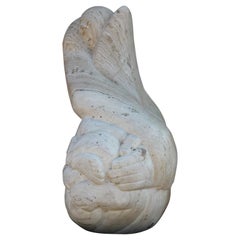
“Mother and Child” Biomorphic Modern Abstract Sculpture of Embracing Figures
Located in Houston, TX
Biomorphic abstract sculpture by Canadian artist John McKinnon. The work features a mother figure holding her child in a loving embrace. Inspired by other modern artists such as Henr...
Category
1980s Abstract Figurative Sculptures
Materials
Marble, Alabaster
$3,500
H 17 in W 10 in D 10 in
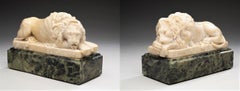
Pair of Italian "Alabaster Stone Lions" after Antonio Canova; Mid 19th Century
Located in SANTA FE, NM
"Pair Recumbent Stone Lions"
after Antonio Canova (1757-1822)
Italian (possibly Florence)
Mid 19th Century
Alabaster, marble
6 x 9 x 4 inches
This is an exquisite pair of Italian alabaster lions on marble bases based on the monumental lions carved by Antonio Canova (1757-1822), the greatest Italian neoclassical sculptor. Canova sculpted the marble lions for the monumental tomb of Pope Clement XIII in St. Peter’s, Rome in 1792
Canova Lions refers to the pair of copies of lion sculptures by Antonio Canova. When Canova created the sculptures in 1792, he installed them on the tomb of Pope Clement XIII. The marble sculptures are some of the most prominent features in St. Peter's Basilica in Rome. Given the intricacies of creating the original Canova lions, some artists created molds and replicated them. A good example is the pair of lion sculptures...
Category
1850s Italian School Figurative Sculptures
Materials
Alabaster, Marble
$6,150
H 6 in W 9 in D 4 in
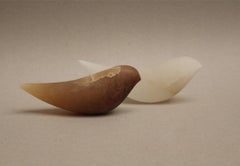
Georgian Contemporary Sculpture by David Natidze - Two Birds 1
Located in Paris, IDF
Alabaster
David Natidze is a Belgium-based sculptor born in 1969 in Georgia known for his refined stone sculptures that blend modernist tradition with minimalist abstraction. He gra...
Category
2010s Contemporary Figurative Sculptures
Materials
Alabaster
$3,000
H 4.34 in W 8.27 in D 3.94 in
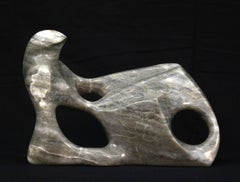
Reclining Figure Alabaster - smooth, stone, figurative, tabletop sculpture
By Jeremy Guy
Located in Bloomfield, ON
From a single piece of silver cloud alabaster, the artist has carved a poetic and modern depiction of a reclining figure. The composition of negative and positive spaces changes as t...
Category
2010s Abstract Figurative Sculptures
Materials
Alabaster
$3,000
H 10 in W 14.5 in D 6 in
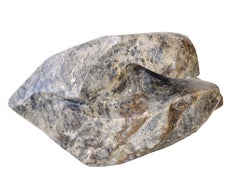
Vintage Abstract Figurative Modern Alabaster Sculpture -- Torso of Woman #106
By Doris Warner
Located in Soquel, CA
Modern abstract sculpture of a woman's torso, signed and dated Warner in stone and marker pen, "Warner '80" and "Warner #106". Dimensions: 16"L x 11"W x 9"H.
Listed artist Doris Ann...
Category
1980s Post-Modern Figurative Sculptures
Materials
Alabaster
$2,500
H 9 in W 16 in D 11 in
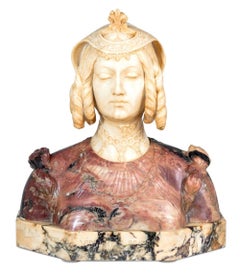
"Violante Beatrice of Bavaria"
Located in Astoria, NY
Aristide Petrilli (Italian, 1868-1930) "Violante Beatrice of Bavaria" Alabaster Bust, late 19th century, the bust on an angular plinth, signed and titled. 17" H x 16" W x 7" D.
Category
Late 19th Century Italian School Figurative Sculptures
Materials
Alabaster
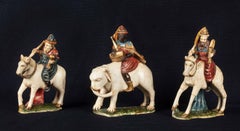
The Three Magi
Located in New York, NY
Provenance: Private Collection, Spain.
Known as Peruvian alabaster for its translucency and workability, Piedra de Huamanga is a highly prized material from the province of Ayacucho in Peru. In the 17th and 18th centuries, local craftsman in the town of Huamanga began to specialize in the production of small-scale, polychrome religious sculptures made from this distinctive stone. Huamanga sculptures are among the most accomplished examples of carving from the Spanish Americas, where polychrome wood sculpture was a far more common sculptural medium. These works, which were created as independent sculptures or as sculptural groups—such as our three Magi—were intended for ecclesiastical as well as domestics settings.
Our three figures likely formed part of a larger Nativity group—a New World variant of the tradition of the Neapolitan Crèche...
Category
Late 18th Century Figurative Sculptures
Materials
Alabaster
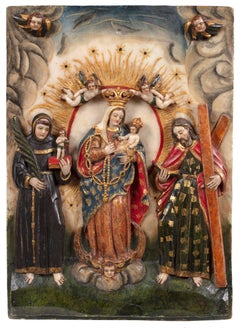
Virgin of the Rosary of Chiquinquirá with Saint Anthony of Padua and Saint Andre
Located in New York, NY
Provenance: Private Collection, Uruguay, for the last 90 years.
Dated 1673 on the reverse (Fig. 1), this exceptional relief is an early example of a distinctly Spanish American art...
Category
1670s Old Masters Figurative Sculptures
Materials
Alabaster
$32,500
H 11.5 in W 8.63 in D 0.88 in