Items Similar to Pair of Prancing Horses, two bronzes signed and numbered by Arno Breker
Want more images or videos?
Request additional images or videos from the seller
1 of 13
Arno BrekerPair of Prancing Horses, two bronzes signed and numbered by Arno Breker1978
1978
$3,320.79
£2,495.89
€2,800
CA$4,601.01
A$5,001.11
CHF 2,677.18
MX$60,451.85
NOK 33,737.63
SEK 31,114.85
DKK 21,329.76
About the Item
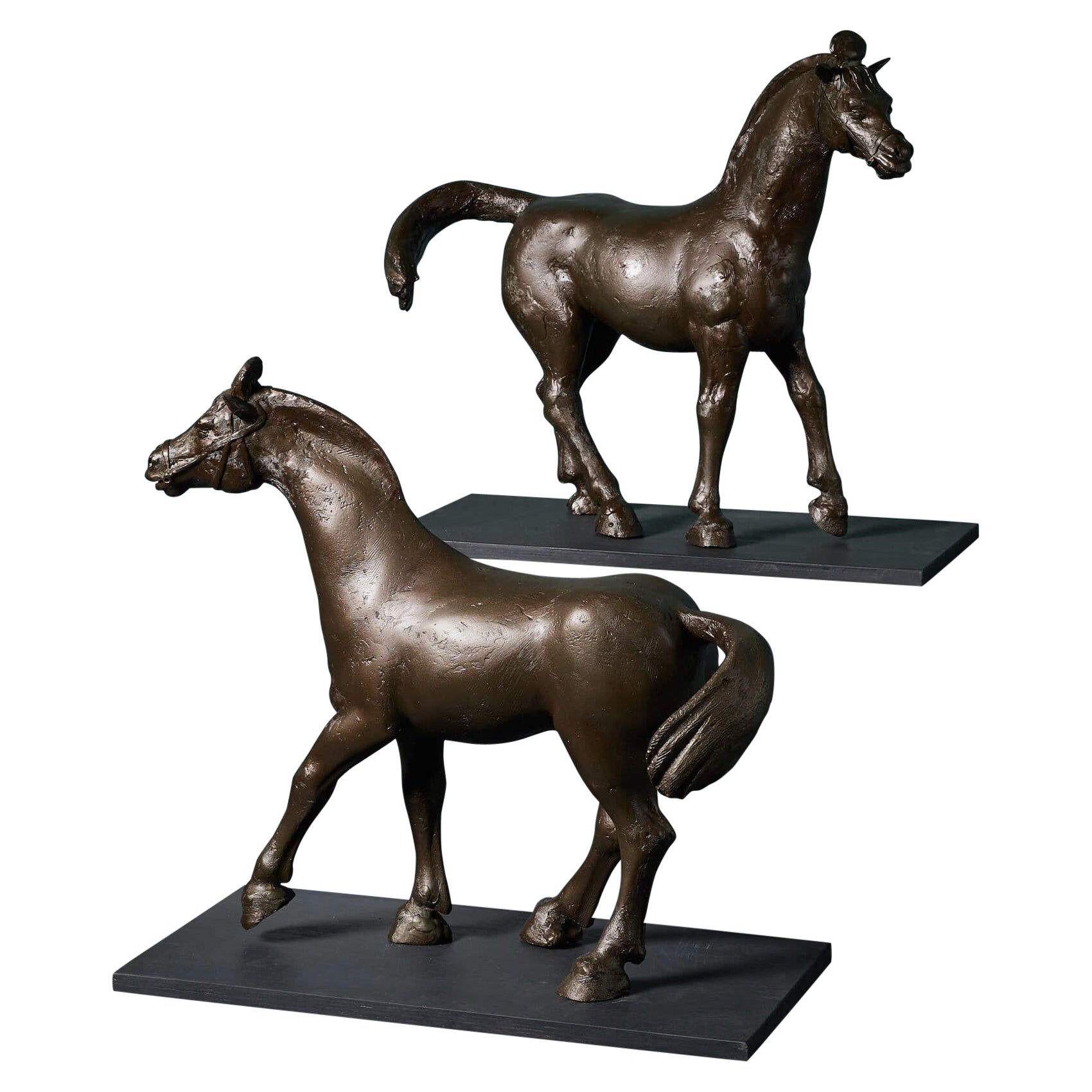
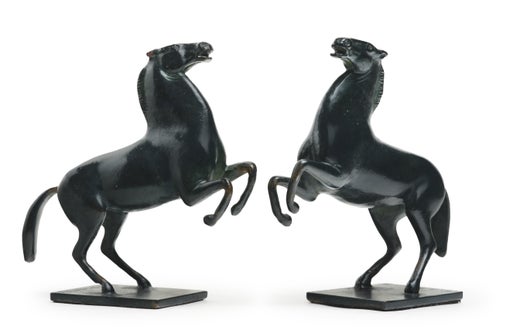
An official artist of the Nazi regime, trained in Montparnasse in the 1930s, Arno Breker continued to sculpt after the fall of the Third Reich, producing large-scale public commissions in Germany and portraits of prominent figures. The two small bronzes presented here, dated around 1978, are part of a long tradition of prancing horses dating back to antiquity. The asymmetrical treatment of the two front legs and the inclination of the head make these two copies of the same artwork a highly decorative pair.
1. Arno Breker, a prolific sculptor, from the Bohemia of Montparnasse to the commissions from the Third Reich ... and from the Federal Republic of Germany
The son of a stone carver, Arno Breker studied fine art and anatomy in his native Elberfeld. At the age of 20, he entered the Düsseldorf Academy of Art. He moved to Paris in 1926, where he continued his training in the studio of Maillol, who dubbed him "the German Michelangelo of the twentieth century". He shared a studio with Alexandre Calder and frequented Jean Cocteau, Foujita, Brancusi, Pablo Picasso and other artists of the bohemian Paris of the time. It was also in Paris in 1933 that he met Demetra Messala, the daughter of a Greek diplomat who posed for Maillol and Picasso, whom he married in 1937. Having won the Prussian Prix de Rome in 1932, he left Paris to stay at the Villa Massimo, the German Academy in Rome.
Returning to Germany in 1934, his style evolved towards a more marked imitation of ancient sculpture. He created two monumental statues for Berlin's Olympic Stadium, before being appointed professor at the Berlin College of Fine Arts in 1937. He came to the attention of the Reich Propaganda Ministry, which awarded him several commissions and provided him with three large studios in which Breker produced many monumental sculptures to the glory of the regime. On June 23, 1940, Breker accompanied Adolf Hitler during a visit to Paris. During the Occupation, his political connections enabled him to intervene on behalf of many artists pursued by the Nazis: for example, he protected Pablo Picasso (then a Communist) from Kommandantur officers.
Most of Arno Breker's work was destroyed in Berlin at the end of the war in 1945 by bombing and intentional destruction perpetrated by soldiers of the victorious powers. After the fall of the Nazi regime, however, Arno Breker was never prosecuted. He opened a new studio in Düsseldorf, where he sculpted until his death in 1991.
He then carried out several public commissions in Germany (Bayreuth, Wuppertal), as well as portraits of numerous personalities, including King Mohammed V of Morocco, Léopold Sedar Senghor (commissioned by the Académie Française in 1978) and the two chancellors of the Federal Republic of Germany, Konrad Adenauer and Ludwig Erhard. The Arno Breker Museum in Nörvenich is now exhibiting some of his artworks.
2. Related artworks: from the Wild Horses of the Quirinal to the Horses of Marly
The prancing horse is a major iconographic theme, found in a series of sculptures from Antiquity, the Renaissance and the Classical Age. Various photos from Arno Breker's studio in Berlin confirm the predominant place of equine representations in his work (alongside male nude statues), and confirm that this reduced version created in 1978 is part of the artist's preferred repertoire.
Prancing horses are generally associated with a male figure in a group that, through a reference drawn from Antiquity, symbolizes man's domination over nature. In this respect, it is very interesting to compare our small bronzes with the horse forming part of a large sculpture by Arno Breker (made in 1936 and probably destroyed in 1945) depicting Alexander taming Bucephalus.
This statue is itself directly inspired by one of the best-known works of 18th-century French sculpture: the famous "Chevaux de Marly" (Horses of Marly - 9th photo in the gallery) , created by Guillaume Coustou and his workshop in 1745, two symmetrical groups each representing a rearing horse held by a groom. Intended for the decoration of the watering hole at Marly, they are now in the Louvre Museum, having long adorned the lower part of the Avenue des Champs-Elysées on the Place de la Concorde (where they have now been replaced by copies).
As the groom is completely hidden behind the prancing horse's body, it is very interesting to compare our little bronze with a view of the other group taken without the groom (10th picture in the gallery).
In addition to the similarities in the horse's position, the treatment of the horse's mane and tail demonstrates a desire to simplify forms, reminiscent of earlier models that may have inspired Coustou himself. This simplification brings our statuettes closer to one of the most famous antique models: the two gigantic groups of horse tamers, sometimes called Dioscuri, which adorn the fountain in front of the Quirinal Palace in Rome. Nearly 5.60 meters high, they were created in Roman times and come from Constantine's Baths. They were inspired by Greek originals that have since disappeared. It is particularly interesting to compare the treatment of the horse's mane with that of the mane on our statues, confirming Arno Breker's inspiration after the antique.
Exhibited in public spaces and widely reproduced in prints from the Renaissance onwards, these horses from the Quirinal are probably the matrix from which this theme was frequently represented, as shown by a sculpture housed in the Kunsthistorisches Museum in Vienna, one of the earliest examples (last picture in the gallery). This sculpture by Bertoldo di Giovanni (after 1420 - 1491), entitled Bellerophon taming Pegasus, represents a variation on the same theme, adapted to this mythological episode by the addition of wings to the horse representing Pegasus.
- Creator:Arno Breker (1900 - 1991, German)
- Creation Year:1978
- Dimensions:Height: 4.88 in (12.4 cm)Width: 4.75 in (12.07 cm)Depth: 2 in (5.08 cm)
- Medium:
- Movement Style:
- Period:
- Condition:Dimensions: height 4 7/8’’ x width 4 3/4” x depth 2’’ (12.5 x 12 x 5 cm) Foundry mark: PK in a rhombus Signed and numbered 7/8 and 8/8 on the base.
- Gallery Location:PARIS, FR
- Reference Number:1stDibs: LU1568215981972
The son of a stone carver, Arno Breker studied fine art and anatomy in his native Elberfeld. At the age of 20, he entered the Düsseldorf Academy of Art. He moved to Paris in 1926, where he continued his training in the studio of Maillol, who dubbed him "the German Michelangelo of the twentieth century". He shared a studio with Alexandre Calder and frequented Jean Cocteau, Foujita, Brancusi, Pablo Picasso and other artists of the bohemian Paris of the time. It was also in Paris in 1933 that he met Demetra Messala, the daughter of a Greek diplomat who posed for Maillol and Picasso, whom he married in 1937. Having won the Prussian Prix de Rome in 1932, he left Paris to stay at the Villa Massimo, the German Academy in Rome. Returning to Germany in 1934, his style evolved towards a more marked imitation of ancient sculpture. He created two monumental statues for Berlin's Olympic Stadium, before being appointed professor at the Berlin College of Fine Arts in 1937. He came to the attention of the Reich Propaganda Ministry, which awarded him several commissions and provided him with three large studios in which Breker produced many monumental sculptures to the glory of the regime. On June 23, 1940, Breker accompanied Adolf Hitler during a visit to Paris. During the Occupation, his political connections enabled him to intervene on behalf of many artists pursued by the Nazis: for example, he protected Pablo Picasso (then a Communist) from Kommandantur officers. Most of Arno Breker's work was destroyed in Berlin at the end of the war in 1945 by bombing and intentional destruction perpetrated by soldiers of the victorious powers. After the fall of the Nazi regime, however, Arno Breker was never prosecuted. He opened a new studio in Düsseldorf, where he sculpted until his death in 1991. He then carried out several public commissions in Germany (Bayreuth, Wuppertal), as well as portraits of numerous personalities, including King Mohammed V of Morocco, Léopold Sedar Senghor (commissioned by the Académie Française in 1978) and the two chancellors of the Federal Republic of Germany, Konrad Adenauer and Ludwig Erhard. The Arno Breker Museum in Nörvenich is now exhibiting some of his artworks.
About the Seller
5.0
Vetted Professional Seller
Every seller passes strict standards for authenticity and reliability
Established in 2020
1stDibs seller since 2021
10 sales on 1stDibs
Typical response time: <1 hour
- ShippingRetrieving quote...Shipping from: PARIS, France
- Return Policy
More From This Seller
View AllL
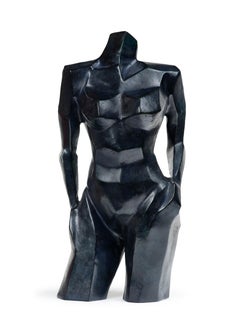
Eclatée (The Fragmented One), an abstract bronze sculpture by Lili Mirante
Located in PARIS, FR
Lili Mirante (Paris, 1966 – last picture in the gallery) is a woman artist who lives and works in Paris. Born into a family of artists (her father was a renowned watercolorist), she ...
Category
2010s Abstract Geometric Abstract Sculptures
Materials
Bronze
Humeur Vagabonde (Wandering Mood) a geometrical bronze sculpture by Lili Mirante
Located in PARIS, FR
Lili Mirante (born in Paris, 1966 - last picture in the gallery) is a woman artist who lives and works in Paris. Born into a family of artists (her father was a renowned watercoloris...
Category
2010s Abstract Geometric Nude Sculptures
Materials
Bronze
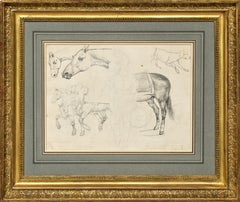
Double-sided Horse Studies by Théodore Géricault
By Jean Louis Andre Theodore Gericault
Located in PARIS, FR
Recto: two horses, preparatory study for the lithograph "Les Boueux" ("The Muddy Ones")
Verso: four studies of horse heads (including two preparatory studies for the watercolor "Plowing in England"), a study of a life guard with the rump of his horse (preparatory to the lithograph "A Party of Life...
Category
1820s Old Masters Animal Drawings and Watercolors
Materials
Carbon Pencil
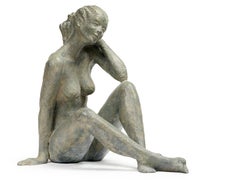
Harmonie (Harmony), a bronze nude sculpture by Lili Mirante
Located in PARIS, FR
Lili Mirante (Paris, 1966 – last picture in the gallery) is a woman artist who lives and works in Paris. Born into a family of artists (her father was a renowned watercolorist), she ...
Category
2010s Modern Nude Sculptures
Materials
Bronze
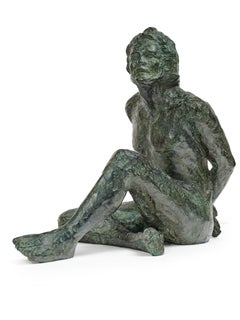
Sébastien (Sebastian), a nude bronze sculpture by Lili Mirante
Located in PARIS, FR
Lili Mirante (Paris, 1966 – last picture in the gallery) is a woman artist who lives and works in Paris. Born into a family of artists (her father was a renowned watercolorist), she ...
Category
2010s Modern Nude Sculptures
Materials
Bronze
Loulou, a nude bronze sculpture by Lili Mirante
Located in PARIS, FR
Lili Mirante (Paris, 1966 – last picture in the gallery) is a woman artist who lives and works in Paris. Born into a family of artists (her father was a renowned watercolorist), she ...
Category
2010s Modern Nude Sculptures
Materials
Bronze
You May Also Like
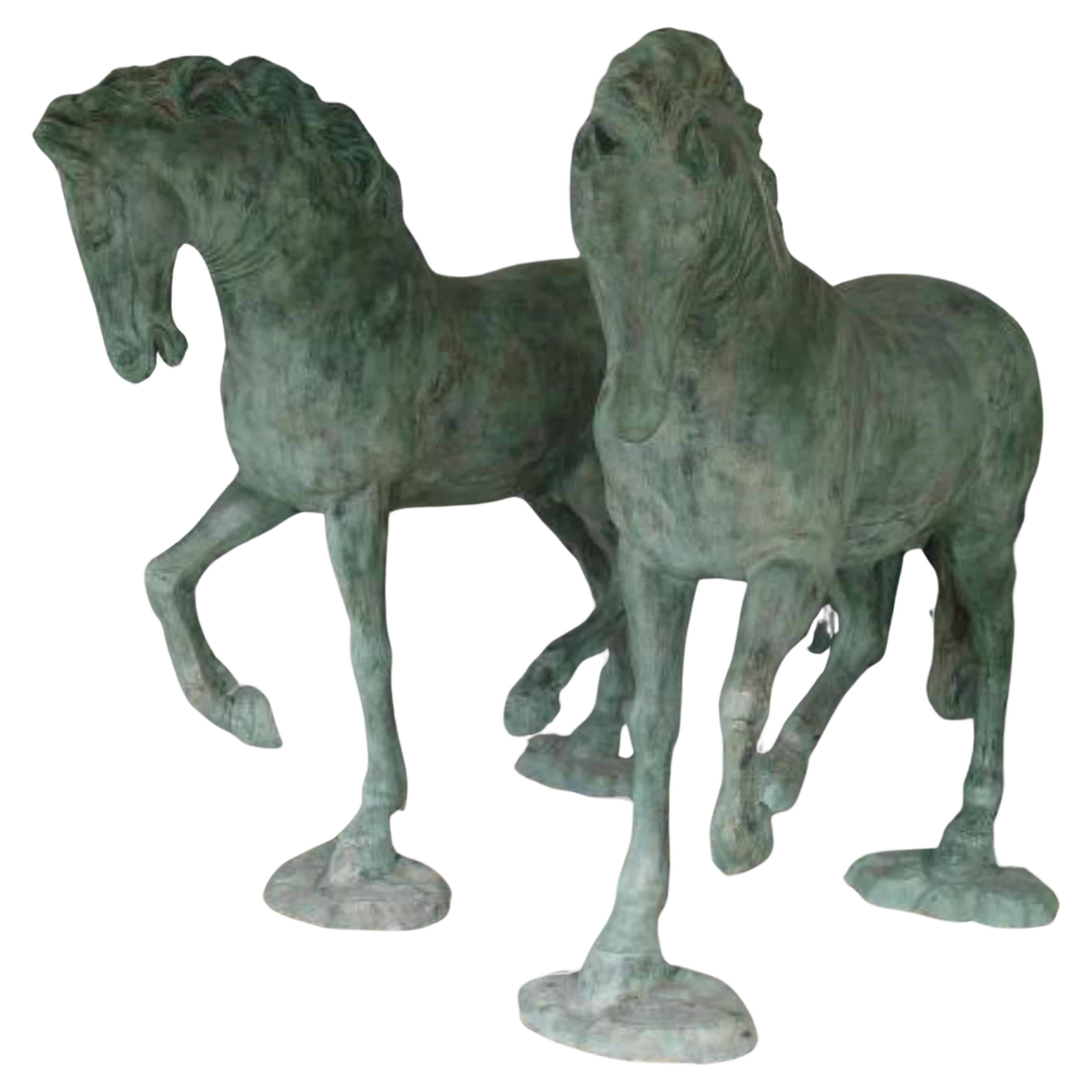
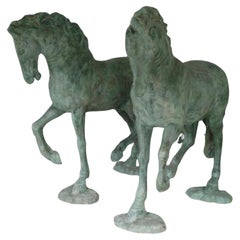
Masterful Pair of Italian Horses in bronze 20th Century 1:1
Located in Madrid, ES
Masterful Pair of Italian Horses in bronze 20th Century 1:1
real height, lost wax casting.
Origin Venice, private collection.
Perfect for the outside or even for the inside.
The dim...
Category
20th Century Italian Modern Animal Sculptures
Materials
Bronze
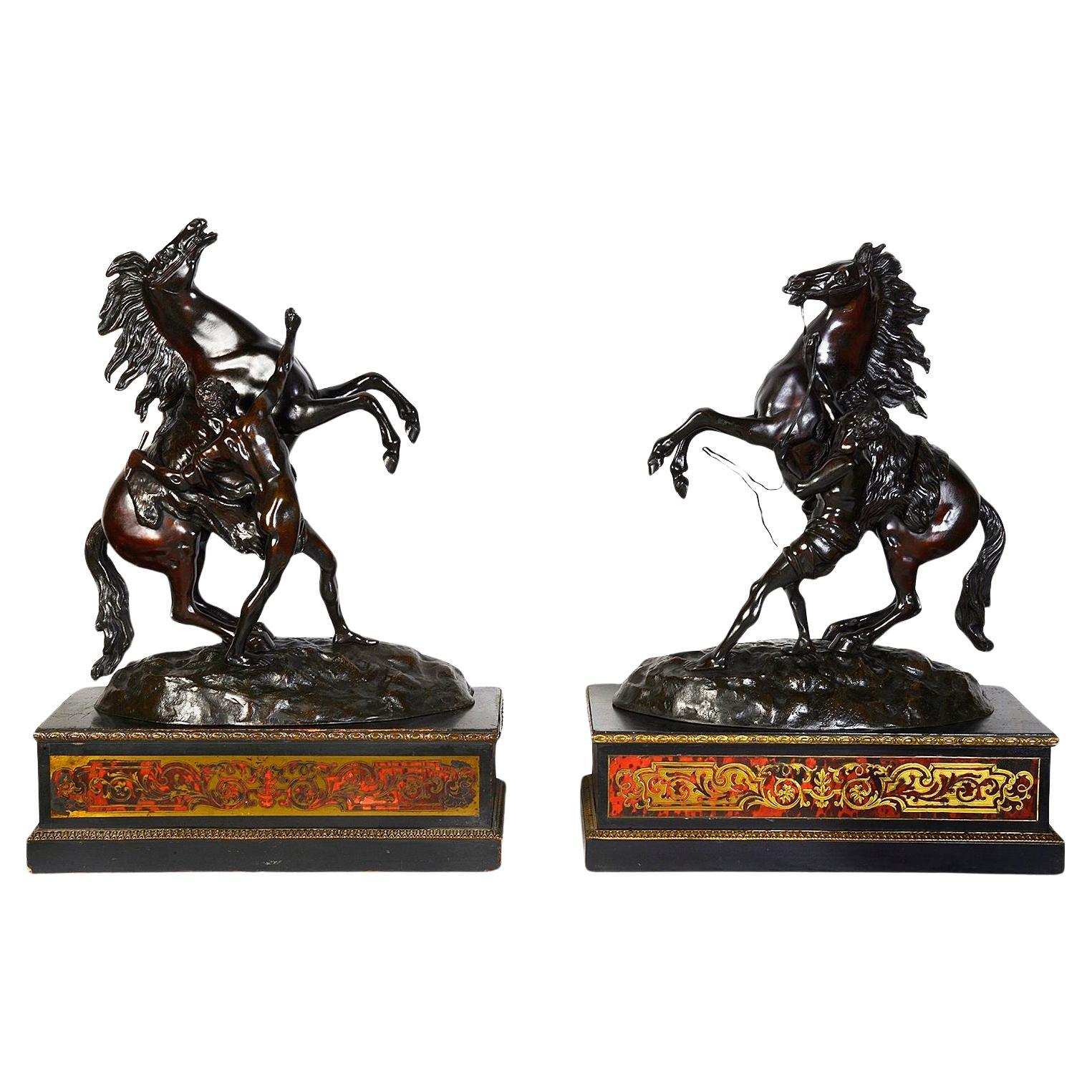
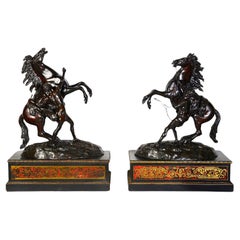
Large Pair of 19th Century Bronze Marly Horses on Boulle Stands 32"(81cm)
By Guillaume Coustou
Located in Brighton, Sussex
A very impressive striking pair of French bronze Marly horses after Guillaume Coustou the elder 1677-1746. Mounted on ebonized, boulle inlaid pedestals.
Batch 80 N/H
Category
Antique 19th Century French Classical Greek Abstract Sculptures
Materials
Bronze
$11,385 Sale Price
20% Off
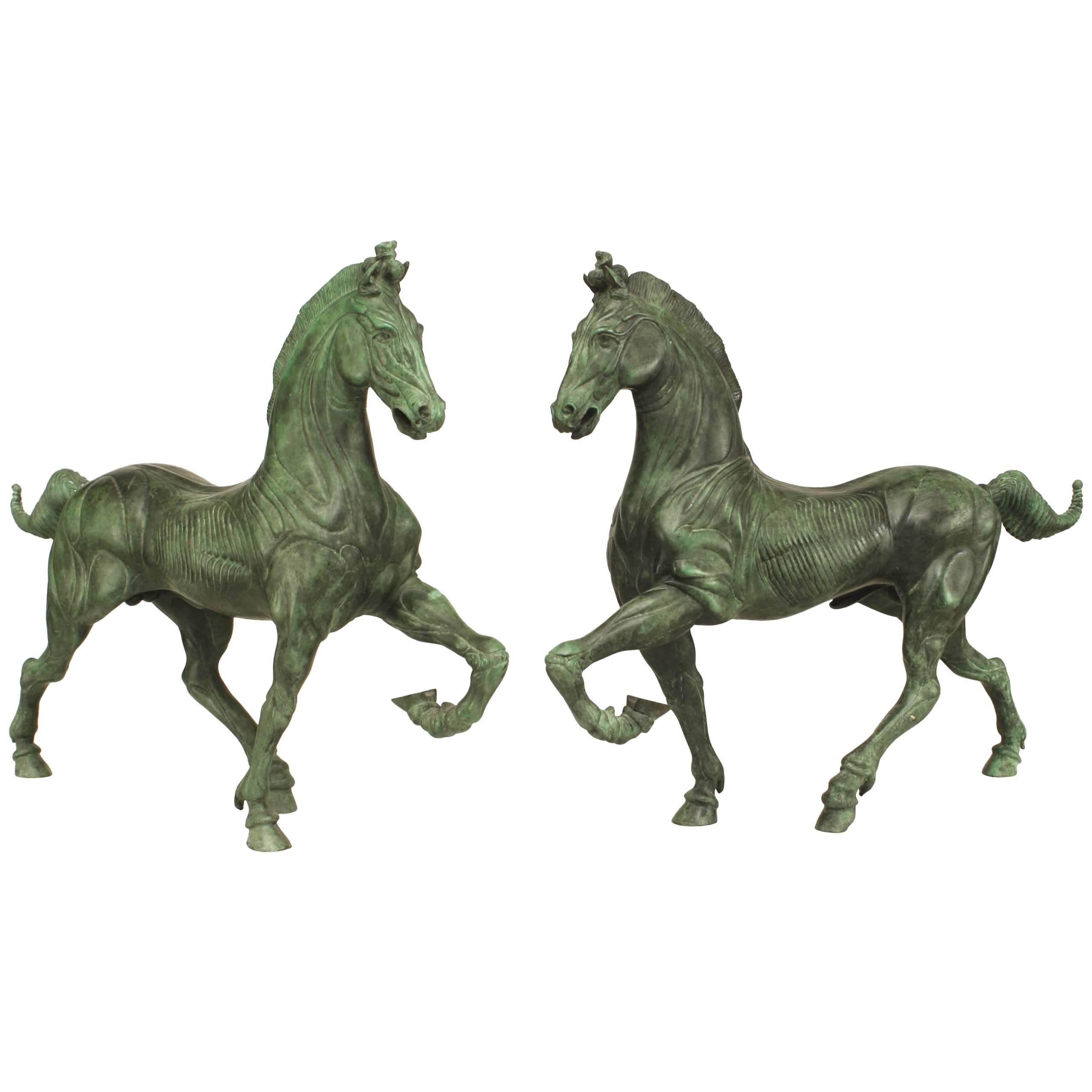
Pair of Green Patinated Bronze Horses
By Ludovico De Luigi
Located in Queens, NY
Pair of Italian Renaissance style green patinated bronze figure of horse walking (from a series of 1,000 titled: "Cavalli di San Marco II", signed by L...
Category
20th Century Italian Renaissance Animal Sculptures
Materials
Bronze

$12,000 / set
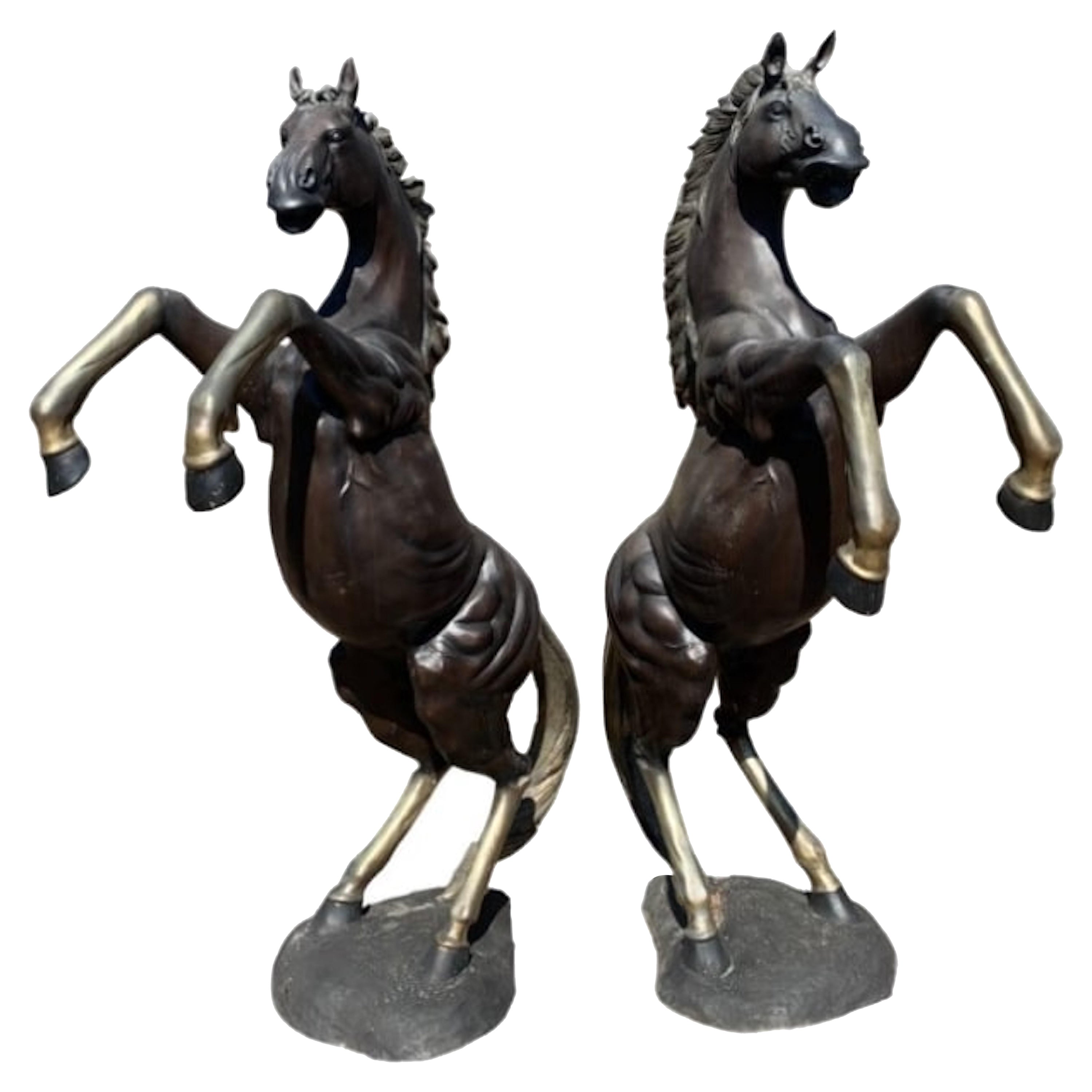
Pair of Bronze Horse Statues
Located in Brooklyn, NY
Gorgeous pair of bronze horse statues. Please confirm location with seller (NY or NJ)
Category
Mid-20th Century Mid-Century Modern Statues
Materials
Bronze
Maison Jansen Pair of Monumental, Electrified Horse Figures
By Maison Jansen
Located in Bridgewater, CT
A pair of rare and spectacular horse figured floor lamps in ebonized wood, design circa 1950 by Maison Jansen. Electrified, each upper hoof fitted with downlights, with red glass eye...
Category
Vintage 1950s French Mid-Century Modern Animal Sculptures
Materials
Chrome
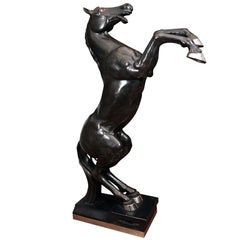
$33,750 Sale Price / set
25% Off
John W. Mills (1933-2023) Pair of Tang Dynasty Horse Sculptures
By John Mills
Located in Wormelow, Herefordshire
A beautiful pair of Tang Dynasty style horse sculptures mounted on rectangular wooden bases by the acclaimed British sculptor, John W. Mills.
Ancient Tang Dynasty horses symbolised ...
Category
Late 20th Century English Mid-Century Modern Animal Sculptures
Materials
Resin, Wood
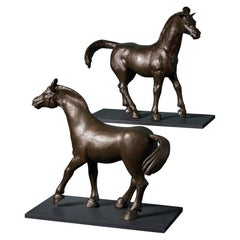
More Ways To Browse
Pair Of Art Deco Sculptures
Rearing Horse
18th Century French Sculpture
Prancing Horse
Art Deco Horse Sculpture
Pegasus Horse
Male Statue
Bronze Horse Signed
Wendy Saxon Brown
Wesley Fleming
Willem Degroot
William Debilzan
William Morris Glass Art
Winged Hat Hermes
Wladimiro Politano
3 Wise Monkeys
A Moreau Angels
Alex Katz Cut Out