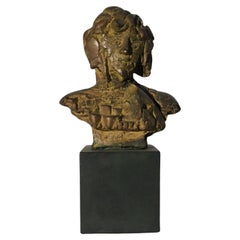
Items Similar to Bronze Plaque Sculpture Judaica Rabbi Figure Portrait American Boston Modernist
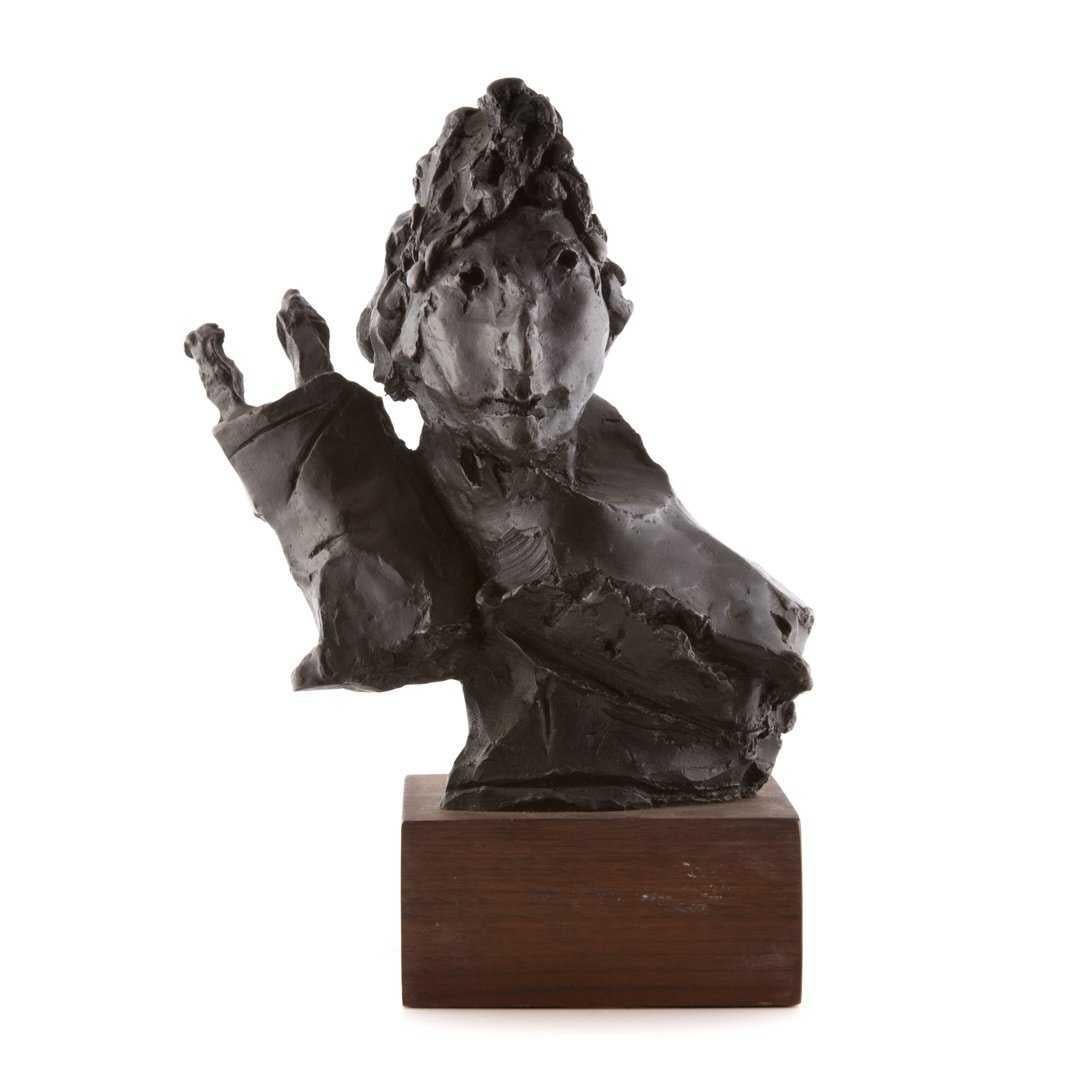
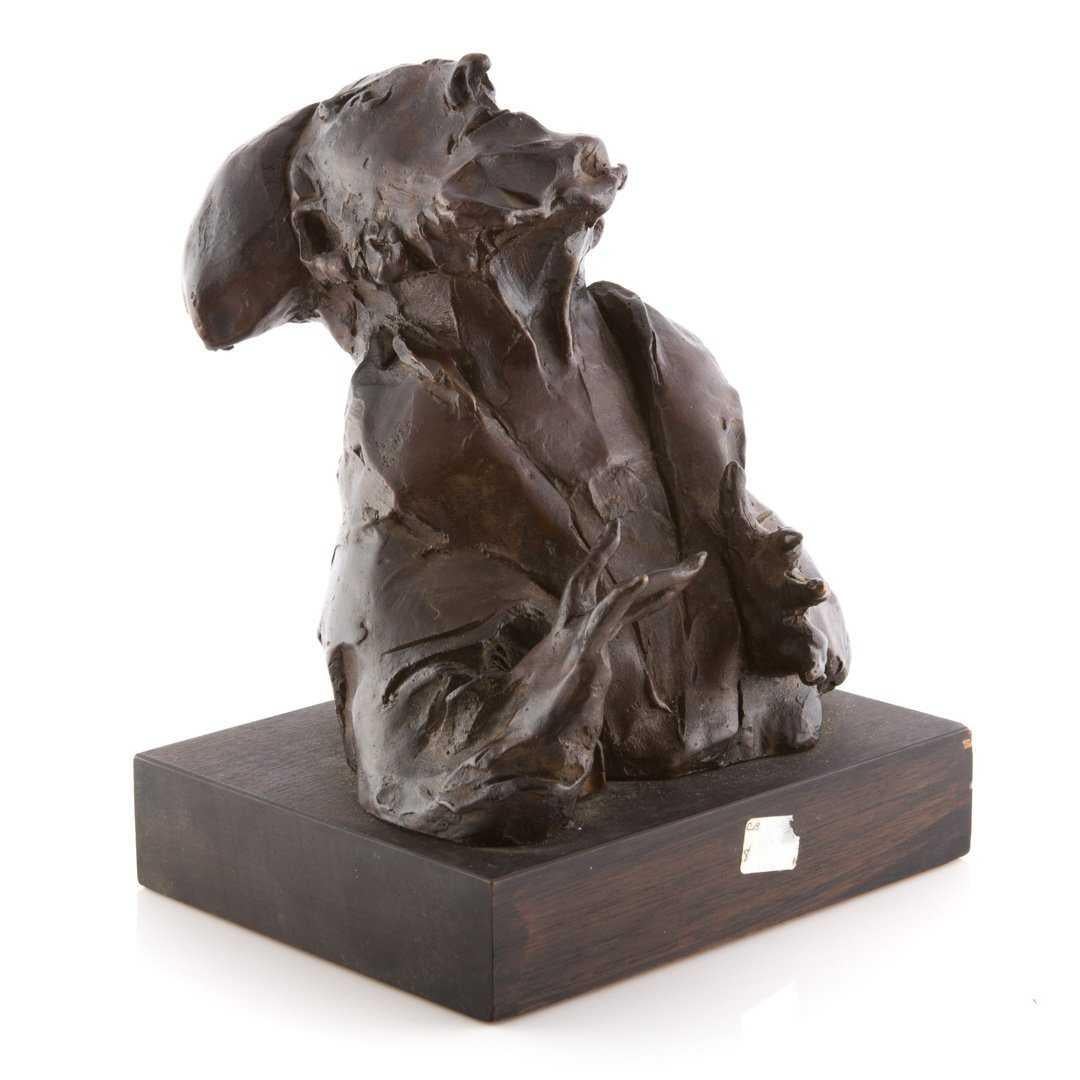
Want more images or videos?
Request additional images or videos from the seller
1 of 12
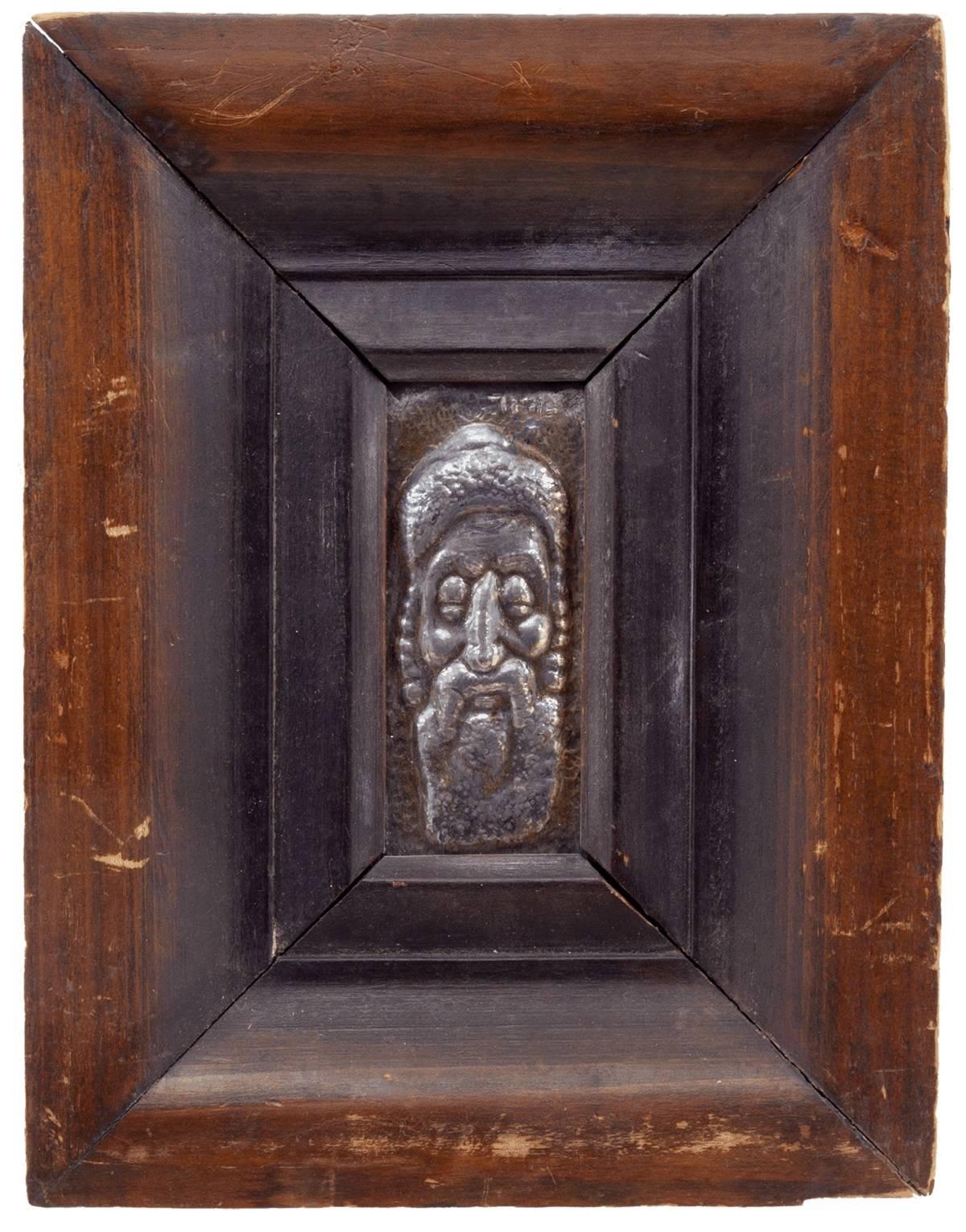
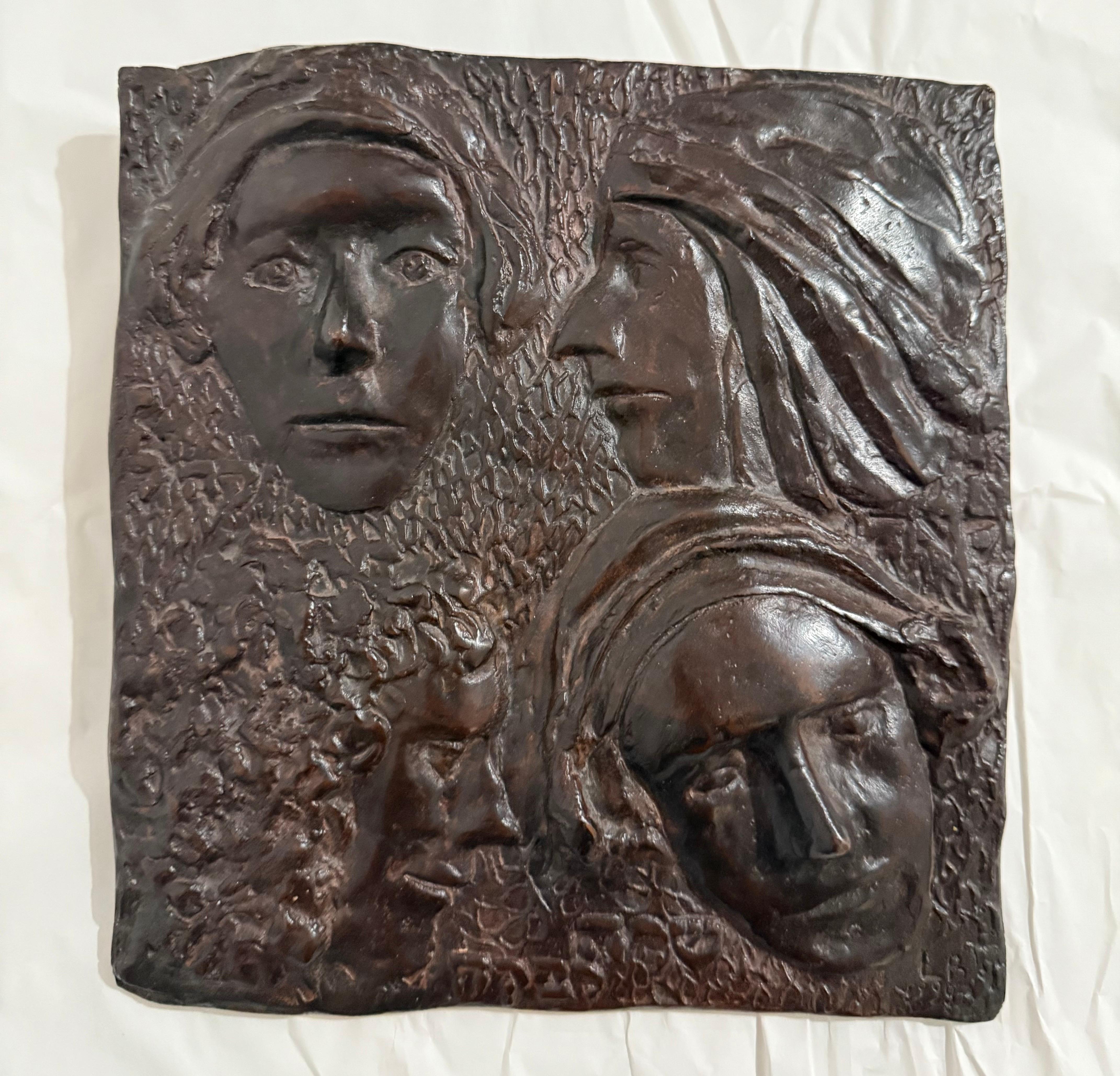
David AronsonBronze Plaque Sculpture Judaica Rabbi Figure Portrait American Boston Modernist
$650
£495.97
€564.20
CA$912.81
A$998.96
CHF 527.86
MX$11,923.26
NOK 6,736.19
SEK 6,160.80
DKK 4,214.28
About the Item
Small Jewish Portrait Relief Plaque
Signed and numbered in Roman numerals from limited edition
Aronson, David 1923-
David Aronson, son of a rabbi, was born in Lithuania in 1923 and immigrated to America at the age of five. He settled in Boston, Massachusetts where he studied at the school of the Museum of Fine Arts under Karl Zerbe, a German painter well known in the early 1900s. Aronson later taught at the school of the Museum of Fine Arts for fourteen years and founded the School of Fine Art at Boston University where he is today a professor emeritus. An internationally renowned sculptor
painter, Aronson has won acclaim for his interpretation of themes from the Hebrew Talmud and Kabala. His best known works include bronze castings, encaustic paintings, and pastels. His work is included in many important public and private collections, and has been shown in several museum retrospectives around the country. He is considered to be one of the most important 20th century American artists.
At twenty-two David Aronson had his first one-man show at New York's Niveau Gallery. The next year, six of his Christological paintings were included in the Fourteen Americans exhibition at Manhattan's Museum of Modern Art where Aronson’s work was included alongside abstract expressionists Arshile Gorky, Robert Motherwell and Isamu Noguchi. In the 1950s, Aronson turned more toward his Jewish heritage for the inspiration for his art. Folklore as well as Kabalistic and other transcendental writings influenced his work greatly. The Golem (a legendary figure, brought to life by the Maharal of Prague out of clay to protect the Jewish community during times of persecution) and the Dybbuk (an evil spirit that lodges itself in the soul of a living person until exorcised) frequently appear in his work.
In the sixties, Aronson turned to sculpture. His work during this period is best exemplified by a magnificent 8’ x 4’ bronze door which now stands at the entrance to Frank Lloyd Wright's Johnson Foundation Conference Center for the Arts in Racine, Wisconsin. In the seventies and eighties, Aronson continued his work in pastel drawings, paintings, and sculptures, often exploring religion and the frailties of man's nature. During this time, in addition to a traveling retrospective exhibition and many one-man shows in New York, Los Angeles, Chicago, and Boston at the Pucker-Safrai Gallery on Newbury Street, Aronson won many awards and became a member of the National Academy of Design in New York. Two years ago he retired from teaching to work full-time in his studio in Sudbury, Massachusetts.
included in the catalog
Contemporary Religious Imagery in American Art
Catalog for an exhibition held at the Ringling Museum of Art, March 1-31, 1974.
Artists represented: David Aronson, Leonard Baskin, Max Beckmann, Hyman Bloom, Fernando Botero, Paul Cadmus, Marvin Cherney, Arthur G. Dove, Philip Evergood, Adolph Gottlieb, Jonah Kinigstein, Rico Lebrun, Jack Levine, Louise Nevelson, Barnett Newman, Abraham Rattner, Ben Shahn, Mark Tobey, Max Weber, William Zorach and others.
Selected Awards
1990, Certificate of Merit, National Academy of Design
1976, Purchase Prize, National Academy of Design
1976, Joseph Isidore Gold Medal, National Academy of Design
1976, Purchase Prize in Drawing, Albrecht Art Museum
1975, Isaac N. Maynard Prize for Painting, National Academy of Design
1973, Samuel F. B. Morse Gold Medal, National Academy of Design
1967, Purchase Prize, National Academy of Fine Arts
1967, Adolph and Clara Obrig Prize, National Academy of Design
1963, Gold Medal, Art Directors Club of Philadelphia
1961, 62, 63, Purchase Prize, National Institute of Arts and Letters
1960, John Siimon Guggenheim Fellowship
1958, Grant in Art, National Institute of Arts and Letters
1954, First Prize, Tupperware Annual Art Fund Award
1954, Grand Prize, Third Annual Boston Arts Festival
1953, Second Prize, Second Annual Boston Arts Festival
1952, Grand Prize, First Annual Boston Arts Festival
1946, Traveling Fellowship, School of the Museum of Fine Arts
1946, Purchase Prize, Virginia Museum of Fine Arts
1944, First Popular Prize, Institute of Contemporary Art
1944, First Judge's Prize, Institute of Contemporary Art
Selected Public Collections
Art Institute of Chicago
Virginia Museum of Fine Arts
Bryn Mawr College
Brandeis University
Tupperware Museum, Orlando, Florida
DeCordova Museum
Museum of Modern Art Print Collection, New York
Atlanta University
Atlanta Art Association
University of Nebraska
Whitney Museum of Art
Corcoran Museum of Art
Smithsonian Institution
Portland Art Museum
Milwaukee Art Institute
Hunter Art Gallery
Pennsylvania Academy of Fine Arts
Hebrew Teacher's College, Brookline, Mass.
Container Corporation of America
Stone Foundation
The Johnson Foundation
Worcester Art Museum
University of New Hampshire
Chico State College Gallery
Munson-Williams-Proctor Institute
Witherspoon Art Gallery
Skirball Museum, Los Angeles
University of Judaism, Los Angeles
Danforth Museum of Art
Syracuse University
Boston University
Selected Solo Exhibitions
MB Modern, New York, 1997
Horwitch Newman Galleries, Scottsdale, Arizona, 1996
Louis Newman Galleries, Beverly Hills, 1977, 1982, 1984, 1986, 1989, 1992
Pucker-Safrai Gallery, Boston, 1976, 1978, 1984, 1986, 1990
Mickelson Gallery, Washington, D.C., 1985 (retrospective)
Southeastern Middlesex University, Dartmouth, Massachusetts, 1983 (retrospective)
Sadye Bronfman Art Center, Montreal, 1982
Towne Gallery, Lenox, Massachusetts, 1982
Rose Art Museum, Brandeis University, 1979 (retrospective)
American Museum of Jewish History, Philadelphia, 1979 (retrospective)
Jewish Museum and National Academy of Design, 1979 (retrospective)
Bernard Danenberg Galleries, New York, 1969, 1972
Verle Gallery, West Hartford, Connecticut, 1967
Kovler Gallery, Chicago, 1966
Hunter Gallery, Chatanooga, Tennessee, 1965
J. Thomas Gallery, Provincetown, 1964
Westhampton Gallery, New York, 1961
Rex Evans Gallery, Los Angeles, 1961
Nordness Gallery, New York, 1960, 1963, 1969
The Downtown Gallery, 1953
Boris Mirski Gallery, Boston, 1951, 1959, 1969
Museum of Modern Art, New York, 1946
Niveau Gallery, New York, 1945, 1956
- Creator:David Aronson (1923, Lithuanian)
- Dimensions:Height: 5 in (12.7 cm)Width: 4 in (10.16 cm)Depth: 1 in (2.54 cm)
- Medium:
- Movement Style:
- Period:
- Condition:
- Gallery Location:Surfside, FL
- Reference Number:1stDibs: LU38217362542
About the Seller
4.9
Platinum Seller
Premium sellers with a 4.7+ rating and 24-hour response times
Established in 1995
1stDibs seller since 2014
1,846 sales on 1stDibs
Typical response time: <1 hour
- ShippingRetrieving quote...Shipping from: Surfside, FL
- Return Policy
More From This Seller
View AllBronze Sculpture Rabbi w Torah Judaica Figure American Boston Figural Modernist
By David Aronson
Located in Surfside, FL
Aronson, David 1923-
David Aronson, son of a rabbi, was born in Lithuania in 1923 and immigrated to America at the age of five. He settled in Boston, Massachusetts where he studied at the school of the Museum of Fine Arts under Karl Zerbe, a German painter well known in the early 1900s. Aronson later taught at the school of the Museum of Fine Arts for fourteen years and founded the School of Fine Art at Boston University where he is today a professor emeritus. An internationally renowned sculptor & painter, Aronson has won acclaim for his interpretation of themes from the Hebrew Talmud and Kabala. His best known works include bronze castings, encaustic paintings, and pastels. His work is included in many important public and private collections, and has been shown in several museum retrospectives around the country. He is considered to be one of the most important 20th century American artists.
At twenty-two David Aronson had his first one-man show at New York's Niveau Gallery. The next year, six of his Christological paintings were included in the Fourteen Americans exhibition at Manhattan's Museum of Modern Art where Aronson’s work was included alongside abstract expressionists Arshile Gorky, Robert Motherwell and Isamu Noguchi. In the 1950s, Aronson turned more toward his Jewish heritage for the inspiration for his art. Folklore as well as Kabalistic and other transcendental writings influenced his work greatly. The Golem (a legendary figure, brought to life by the Maharal of Prague out of clay to protect the Jewish community during times of persecution) and the Dybbuk (an evil spirit that lodges itself in the soul of a living person until exorcised) frequently appear in his work.
In the sixties, Aronson turned to sculpture. His work during this period is best exemplified by a magnificent 8’ x 4’ bronze door which now stands at the entrance to Frank Lloyd Wright's Johnson Foundation Conference Center for the Arts in Racine, Wisconsin. In the seventies and eighties, Aronson continued his work in pastel drawings, paintings, and sculptures, often exploring religion and the frailties of man's nature. During this time, in addition to a traveling retrospective exhibition and many one-man shows in New York, Los Angeles, Chicago, and Boston at the Pucker-Safrai Gallery on Newbury Street, Aronson won many awards and became a member of the National Academy of Design in New York. Two years ago he retired from teaching to work full-time in his studio in Sudbury, Massachusetts.
included in the catalog
Contemporary Religious Imagery in American Art
Catalog for an exhibition held at the Ringling Museum of Art, March 1-31, 1974.
Artists represented: David Aronson, Leonard Baskin, Max Beckmann, Hyman Bloom, Fernando Botero, Paul Cadmus, Marvin Cherney, Arthur G. Dove, Philip Evergood, Adolph Gottlieb, Jonah Kinigstein, Rico Lebrun, Jack Levine, Louise Nevelson, Barnett Newman, Abraham Rattner, Ben Shahn, Mark Tobey, Max Weber, William Zorach and others.
Selected Awards
1990, Certificate of Merit, National Academy of Design
1976, Purchase Prize, National Academy of Design
1976, Joseph Isidore Gold Medal, National Academy of Design
1976, Purchase Prize in Drawing, Albrecht Art Museum
1975, Isaac N. Maynard Prize for Painting, National Academy of Design
1973, Samuel F. B. Morse Gold Medal, National Academy of Design
1967, Purchase Prize, National Academy of Fine Arts
1967, Adolph and Clara Obrig Prize, National Academy of Design
1963, Gold Medal, Art Directors Club of Philadelphia
1961, 62, 63, Purchase Prize, National Institute of Arts and Letters
1960, John Siimon Guggenheim Fellowship
1958, Grant in Art, National Institute of Arts and Letters
1954, First Prize, Tupperware Annual Art Fund Award
1954, Grand Prize, Third Annual Boston Arts Festival
1953, Second Prize, Second Annual Boston Arts Festival
1952, Grand Prize, First Annual Boston Arts Festival
1946, Traveling Fellowship, School of the Museum of Fine Arts
1946, Purchase Prize, Virginia Museum of Fine Arts
1944, First Popular Prize, Institute of Contemporary Art
1944, First Judge's Prize, Institute of Contemporary Art
Selected Public Collections
Art Institute of Chicago
Virginia Museum of Fine Arts
Bryn Mawr College
Brandeis University
Tupperware Museum, Orlando, Florida
DeCordova Museum
Museum of Modern Art Print Collection, New York
Atlanta University
Atlanta Art...
Category
20th Century Expressionist Figurative Sculptures
Materials
Bronze
Judaica Bronze Sculpture "Rabbi" Figure Jewish American Boston Figural Modernist
By David Aronson
Located in Surfside, FL
Aronson, David 1923-
David Aronson, son of a rabbi, was born in Lithuania in 1923 and immigrated to America at the age of five. He settled in Boston, Massachusetts where he studied at the school of the Museum of Fine Arts under Karl Zerbe, a German painter well known in the early 1900s. Aronson later taught at the school of the Museum of Fine Arts for fourteen years and founded the School of Fine Art at Boston University where he is today a professor emeritus. An internationally renowned sculptor & painter, Aronson has won acclaim for his interpretation of themes from the Hebrew Talmud and Kabala. His best known works include bronze castings, encaustic paintings, and pastels. His work is included in many important public and private collections, and has been shown in several museum retrospectives around the country. He is considered to be one of the most important 20th century American artists.
At twenty-two David Aronson had his first one-man show at New York's Niveau Gallery. The next year, six of his Christological paintings were included in the Fourteen Americans exhibition at Manhattan's Museum of Modern Art where Aronson’s work was included alongside abstract expressionists Arshile Gorky, Robert Motherwell and Isamu Noguchi. In the 1950s, Aronson turned more toward his Jewish heritage for the inspiration for his art. Folklore as well as Kabalistic and other transcendental writings influenced his work greatly. The Golem (a legendary figure, brought to life by the Maharal of Prague out of clay to protect the Jewish community during times of persecution) and the Dybbuk (an evil spirit that lodges itself in the soul of a living person until exorcised) frequently appear in his work.
In the sixties, Aronson turned to sculpture. His work during this period is best exemplified by a magnificent 8’ x 4’ bronze door which now stands at the entrance to Frank Lloyd Wright's Johnson Foundation Conference Center for the Arts in Racine, Wisconsin. In the seventies and eighties, Aronson continued his work in pastel drawings, paintings, and sculptures, often exploring religion and the frailties of man's nature. During this time, in addition to a traveling retrospective exhibition and many one-man shows in New York, Los Angeles, Chicago, and Boston at the Pucker-Safrai Gallery on Newbury Street, Aronson won many awards and became a member of the National Academy of Design in New York. Two years ago he retired from teaching to work full-time in his studio in Sudbury, Massachusetts.
included in the catalog
Contemporary Religious Imagery in American Art
Catalog for an exhibition held at the Ringling Museum of Art, March 1-31, 1974.
Artists represented: David Aronson, Leonard Baskin, Max Beckmann, Hyman Bloom, Fernando Botero, Paul Cadmus, Marvin Cherney, Arthur G. Dove, Philip Evergood, Adolph Gottlieb, Jonah Kinigstein, Rico Lebrun, Jack Levine, Louise Nevelson, Barnett Newman, Abraham Rattner, Ben Shahn, Mark Tobey, Max Weber, William Zorach and others.
Selected Awards
1990, Certificate of Merit, National Academy of Design
1976, Purchase Prize, National Academy of Design
1976, Joseph Isidore Gold Medal, National Academy of Design
1976, Purchase Prize in Drawing, Albrecht Art Museum
1975, Isaac N. Maynard Prize for Painting, National Academy of Design
1973, Samuel F. B. Morse Gold Medal, National Academy of Design
1967, Purchase Prize, National Academy of Fine Arts
1967, Adolph and Clara Obrig Prize, National Academy of Design
1963, Gold Medal, Art Directors Club of Philadelphia
1961, 62, 63, Purchase Prize, National Institute of Arts and Letters
1960, John Siimon Guggenheim Fellowship
1958, Grant in Art, National Institute of Arts and Letters
1954, First Prize, Tupperware Annual Art Fund Award
1954, Grand Prize, Third Annual Boston Arts Festival
1953, Second Prize, Second Annual Boston Arts Festival
1952, Grand Prize, First Annual Boston Arts Festival
1946, Traveling Fellowship, School of the Museum of Fine Arts
1946, Purchase Prize, Virginia Museum of Fine Arts
1944, First Popular Prize, Institute of Contemporary Art
1944, First Judge's Prize, Institute of Contemporary Art
Selected Public Collections
Art Institute of Chicago
Virginia Museum of Fine Arts
Bryn Mawr College
Brandeis University
Tupperware Museum, Orlando, Florida
DeCordova Museum
Museum of Modern Art Print Collection, New York
Atlanta University
Atlanta Art...
Category
20th Century Expressionist Figurative Sculptures
Materials
Bronze
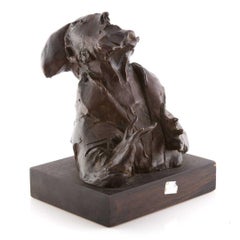
Jerusalem Rabbi, Repousse Sculpture Relief Plaque Israeli Judaica
By Arieh Merzer
Located in Surfside, FL
Arieh Merzer was a prominent Israeli artist and metal worker.
Arie Merzer, an artist who worked in hand-hammered copper, was born in Warsaw, Poland in 1905, the scion of a large Has...
Category
20th Century Modern Figurative Sculptures
Materials
Metal
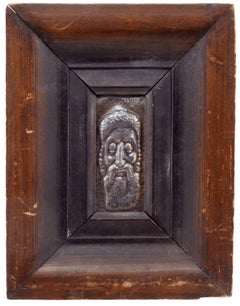
Bronze Sculpture Wall Relief Judaica Jewish Matriarchs Modernist Leonard Baskin
By Leonard Baskin
Located in Surfside, FL
Leonard Baskin (1922-2000)
Jewish Matriarchs, Sarah, Rebecca, Rachel and Leah
with Hebrew calligraphy
Bronze, 1998
9.5 X 9 inches
Judaic biblical bronze of Jewish mothers.
Leonard Baskin (August 15, 1922 – June 3, 2000) was an American sculptor, illustrator, wood-engraver, printmaker, graphic artist, writer and teacher.
Baskin was born in New Brunswick, New Jersey. While he was a student at Yale University, he founded Gehenna Press, a small private press specializing in fine book production. From 1953 until 1974, he taught printmaking and sculpture at Smith College in Northampton, Massachusetts. Subsequently Baskin also taught at Hampshire College in Amherst, Massachusetts.
He lived most of his life in the U.S., but spent nine years in Devon at Lurley Manor, Lurley, near Tiverton, close to his friend Ted Hughes, for whom he illustrated Crow. Sylvia Plath dedicated Sculpto to Leonard Baskin in her famous work, The Colossus and Other Poems (1960).
The Funeral Contege (1997) bronze, Franklin Delano Roosevelt Memorial, Washington, D.C.
His public commissions include a bas relief for the Franklin Delano Roosevelt Memorial and a bronze statue of a seated figure, erected in 1994 for the Holocaust Memorial in Ann Arbor, Michigan.
His works are owned by many major museums including the Metropolitan Museum of Art, the Museum of Fine Arts, Boston, the Museum of Modern Art, the Art Institute of Chicago, the Boca Raton Museum of Art, the British Museum, the Honolulu Museum of Art, the Udinotti Museum of Figurative Art and the Vatican Museums. The archive of his work at the Gehenna Press was acquired by the Bodleian Library at Oxford, England, in 2009. The McMaster Museum of Art in Hamilton, Ontario owns over 200 of his works (some religious and biblical), most of which were donated by his brother Rabbi Bernard Baskin.
Contemporary Religious Imagery in American Art. Catalog for an exhibition held at the Ringling Museum of Art, March 1-31, 1974. Artists represented: David Aronson, Leonard Baskin, Max Beckmann, Hyman Bloom, Fernando Botero, Paul Cadmus, Marvin Cherney, Arthur G. Dove, Philip Evergood, Adolph Gottlieb, Jonah Kinigstein, Arman, Rico Lebrun, Jack Levine, Louise Nevelson, Barnett Newman, Abraham Rattner, Ben Shahn, Mark Tobey, Max Weber, William Zorach and others.In 1955, he was one of eleven New York artists featured in the opening exhibition at the Terrain Gallery, they showed many great artists, Chaim Koppelman, for many years, headed the gallery's Print Division; printmakers such as Will Barnet, Leonard Baskin, Robert Conover...
Category
20th Century Modern Figurative Sculptures
Materials
Bronze
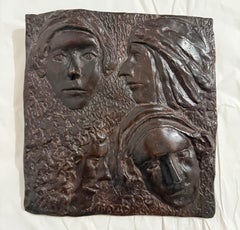
Rare 1940s Copper Repousse Judaica "Shtetl Cheder Boy" Plaque
By Arieh Merzer
Located in Surfside, FL
Arieh Merzer was a prominent Israeli artist and metal worker.
Arie Merzer, an artist who worked in hand-hammered copper, was born in Warsaw, Poland in 1905, the scion of a large Has...
Category
1940s Figurative Sculptures
Materials
Copper
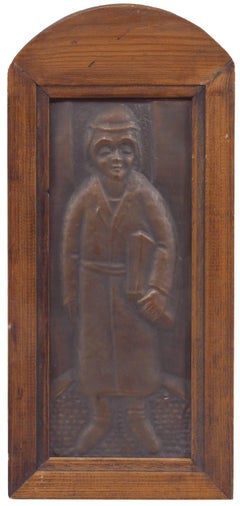
Ted Egri Taos Modernist Judaica Cubist Bronze Sculpture Rabbi
Torah WPA Artist
Located in Surfside, FL
Ted Egri (American, 1913-2010)
Bronze sculpture
Rabbi
Signed Egri and numbered 4/30 on side.
Dimensions: 12"L x 8.5"H x 6.75" D
Born in New York city in 1913 to a Hungarian Jewish emigre family (both of his parents were born in Hungary), Egri was first exposed to music later dropping that for art. He studied with Howard Giles at the Master Institute of the Roerich Museum in New York where he was introduced to Oriental arts, Chinese and Japanese art forms, and later with Hans Hofmann. He worked for the Federal Arts Project, the WPA, making mural paintings and silkscreen prints as well as easel painting. Once WWII began, Egri signed up to serve as a map maker for the Navy, and was witness to some of the fiercest battles in the Pacific. As an artist, he painted many important depictions of his wartime experiences and these works have all be donated to the U.S. Naval Museum.
Already a practicing painter and instructor at the Kansas City Art Institute, Ted Egri came to Taos, New Mexico with his wife Kit in 1950 to continue his study of painting at Ribak's Taos Valley Art School on the GI Bill. Louis Ribak quickly introduced Egri to Eulalia Emetaz, the owner of La Galleria Escondida, who gave him his first one-person show in 1951.
A prolific and versatile artist, as well as arts organizer and advocate, Egri's contributions to underserved African American, Native American, Hispanic and women were honored by two Taos mayors, with no less than two Ted Egri days during his 50-year art career in Taos. Egri remained in Taos. He became widely known for his sculpture, influenced by cubism and painting, with his style ranging from abstract to realistic. Egri had incredible draftsmanship - charcoal, pencil, pastel, watercolor, oils, mixed media, pen and ink, acrylic, gouache Over time his work gradually shifted from its focus on human struggle to an exploration of natural elements and the changes that come about as a result of living in a physical environment like Taos. "The impact of the majestic Sangre de Cristo Mountain Range and the vast spaces of the mesas directed me toward space and form. I moved into sculpture," Egri said in a 1987 interview with ARTSPACE magazine. He was included in a show at Stables Gallery along with Emil Bisttram, Louis Catusco, Edward Corbett, Lawrence Calcagno, Keith Crown, Andrew Dasburg, John De...
Category
Mid-20th Century American Modern Figurative Sculptures
Materials
Bronze
You May Also Like
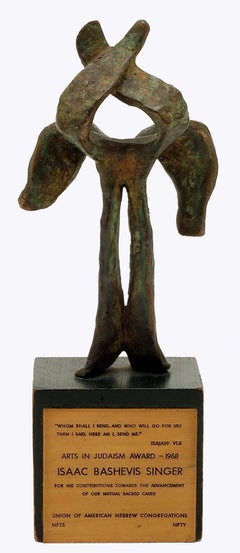
Bronze Sculpture to Isaac Bashevis Singer, Arts in Judaism Award signed Judaica
By Nathaniel Kaz
Located in New York, NY
Nathaniel Kaz
Bronze Sculpture to Isaac Bashevis Singer for Arts in Judaism Award, 1966
Bronze, Square wooden base, Metal tag
Signed and dated "66" to back of bronze portion of the w...
Category
1960s Abstract Expressionist Abstract Sculptures
Materials
Metal, Bronze
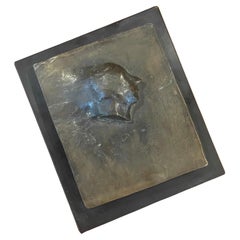
Unique Bronze Figurative Profile Plaque by Thom O
connor
Located in San Diego, CA
Unique bronze figurative profile plaque by Thom O'Connor, circa 1966. The piece is in good vintage condition and measures 6"w x 2"d x 8.5"h. It is numbe...
Category
Mid-20th Century American Mid-Century Modern Figurative Sculptures
Materials
Bronze
$220 Sale Price
20% Off
Large Bronze Sculpture by James Coignard
Located in Long Island City, NY
James Coignard ( France 1925-2008) sculpture, bronze and cast iron. Limited edition of 8.
Signed J. Coignard and numbered 1/8.
Untitled. Foundry mark Guyot. Bronze, gold patina, c...
Category
Late 20th Century French Scandinavian Modern Abstract Sculptures
Materials
Bronze
"Naomi" Mid 20th Century American Bronze Sculpture Female Portrait Figurative
Located in New York, NY
"Naomi" Mid 20th Century American Bronze Sculpture Female Portrait Figurative
Albert W. Wein (1915-1991)
"Naomi"
Bronze, c. 1960s
Signed
Figure: 19 1/2 x 5 1/2 x 5 inches
Overall he...
Category
1960s American Modern Figurative Sculptures
Materials
Bronze
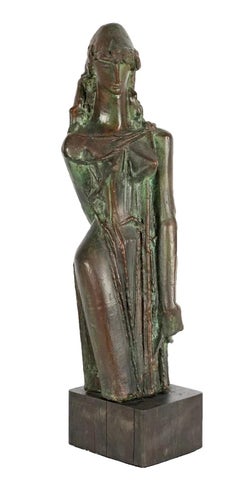
"Robed I" Bronze Sculpture 11" x 4" x 2" inch by Sarkis Tossonian
By Sarkis Tossonian
Located in Culver City, CA
"Robed I" Bronze Sculpture 11" x 4" x 2" inch by Sarkis Tossonian
Sarkis Tossoonian was born in Alexandria in 1953. He graduated from the Faculty of Fine Arts/Sculpture in 1979. He ...
Category
20th Century Contemporary Abstract Sculptures
Materials
Bronze
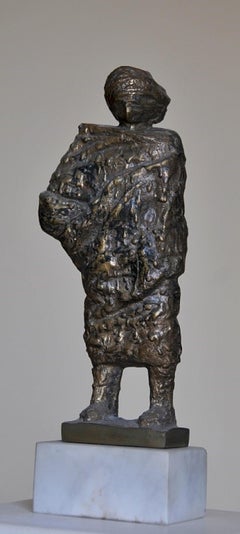
1980 Italy Bronze Sculpture by Edmondo Cirillo Title Ulisse
Located in Brescia, IT
This engagind and intense artwork was created in 1980 by the Italian artist Edmondo Cirillo. It was forged in bronze and gold plated and then burnished. The title of this piece is "...
Category
Late 20th Century Italian Post-Modern Abstract Sculptures
Materials
Bronze