Items Similar to Grand Tour Sculpture Fountain of the The Neapolitan Fisherman after the Antique
Want more images or videos?
Request additional images or videos from the seller
1 of 14
Grand Tour Sculpture Fountain of the The Neapolitan Fisherman after the AntiqueSecond half of the 19th Century
Second half of the 19th Century
$5,696.54
£4,249.25
€4,800
CA$7,928.73
A$8,506.11
CHF 4,562.50
MX$102,412.41
NOK 57,515.69
SEK 52,446.34
DKK 36,579.65
About the Item
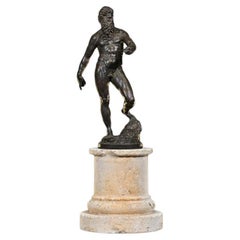
A rare 19th century Grand Tour bronze sculpture of "The Neapolitan Fisherman" with a beautiful weathered patina attributed to the Neapolitan foundry Fonderia Chiurazzi is a full-scale replica of the original now preserved in the Museo Archeologico Nazionale di Napoli.
The male figure is dressed in a short tunic and cap, his head turned slightly to the right, both arms outstretched, his left hand holding a small basket. He is seated on a rocky outcrop adorned with shells, and between his legs runs a small fountain head in the shape of a Bacchus head. Measuring 55 cm in height, the sculpture demonstrates refined workmanship and a rich, natural patina. It comes with the original basket which is usually lost.
During the late 19th and early 20th centuries, Chiurazzi produced many bronzes in various sizes and finishes, but this particular casting is notably of high quality. Chiurazzi in general had high quality cast and finishing and this bronze of the The Neapolitan Fisherman is in the high end when comparing with other makers of the same model. The full-size model is rare. More common are the smaller reduced sizes of the model.
The original Roman bronze fountain figure, commonly known as The Neapolitan Fisherman, was uncovered in 1823 during archaeological excavations at Pompeii, within the Casa della Fontana Piccola (House of the Little Fountain). This find formed part of a richly decorated mosaic fountain ensemble surrounded by four statuettes, among them a seated angler wearing an exomis (tunic) and holding a fishing rod and basket, an image that perfectly captures a moment of relaxed domestic life in a Roman household.
The original layout of the fountain and its sculptures can be seen in Giuseppe Abbate’s illustration, Mosaic Fountain Sculptures in the House of the Small Fountain, Pompeii, published by the Nicolini brothers in 1854. (See attached photo) Abbate’s illustration provides a valuable visual record of how the fountain originally appeared, showing the arrangement of the fisherman, the sister bronze Cupid with Goose, the mosaic basin, and its decorative motifs.
The Italian artist Luigi Bazzani also vividly captured Pompeii’s domestic elegance in his watercolor paintings. Another similar fountain scene, depicts how such spaces may have looked during Pompeii’s flourishing years, with richly ornamented walls, bright mosaics, and sculptural fountains glimmering in sunlight. Another watercolor by Bazzani, painted in 1919, directly portrays the Neapolitan Fisherman in situ at Pompeii. (See photo)
Scholars trace the fisherman’s prototype back to a Hellenistic original of the late 3rd century BCE. Hellenistic sculptural models continued to influence Roman art well into the first centuries CE.
The Fonderia Chiurazzi was established in Naples in 1870 by Gennaro Chiurazzi, a pupil of sculptor Pietro Masulli, who had pioneered the use of the lost-wax casting technique for accurate reproductions of classical bronzes.
After Italian unification (1861), the Naples Archaeological Museum, formerly the Royal Bourbon Museum, began issuing permits to selected workshops to reproduce its vast collections from Pompeii, Herculaneum, and Stabiae. Chiurazzi excelled in this field, combining industrial precision with hand-tooled artistry to produce faithful, museum-quality casts.
By the turn of the 20th century, Chiurazzi bronzes had gained international acclaim, winning prizes at major exhibitions such as the St Louis World’s Fair (1904). They were collected by museums, governments, and private connoisseurs worldwide. The Neapolitan Fisherman became one of the most recognizable and desired models, epitomizing the era’s fascination with rediscovered antiquity.
The Grand Tour and the appeal of classical souvenirs
The Neapolitan Fisherman belongs to the artistic and cultural phenomenon of the Grand Tour, the educational journey through Europe undertaken by young aristocrats and scholars from the 17th to the 19th century. Italy, with its ruins of antiquity, masterpieces of the Renaissance, and picturesque landscapes, was the ultimate destination.
Travelers collected bronze and marble reproductions of ancient statuary as tangible symbols of classical learning and refinement. Foundries such as Chiurazzi’s supplied these discerning travelers with exquisitely crafted reminders of their encounters with ancient Rome and Hellenistic art.
- Attributed to:Fonderia Chiurazzi Napoli
- Creation Year:Second half of the 19th Century
- Dimensions:Height: 21.66 in (55 cm)Width: 13 in (33 cm)Depth: 13.78 in (35 cm)
- Medium:
- Period:
- Condition:It is in untouched good weathered condition. Originally, the fisherman, probably had a fishing rod in his left hand but they are almost always lost. A replacement can be made. The original bronze was found without rod.
- Gallery Location:Stockholm, SE
- Reference Number:1stDibs: LU2608217459892
About the Seller
5.0
Gold Seller
Premium sellers maintaining a 4.3+ rating and 24-hour response times
1stDibs seller since 2023
33 sales on 1stDibs
Typical response time: <1 hour
- ShippingRetrieving quote...Shipping from: Stockholm, Sweden
- Return Policy
More From This Seller
View AllArt Nouveau Relief Sculpture, Plaster, Signed, 1896, Woman in Mussel
Located in Stockholm, SE
A wall-mounted Art Nouveau relief by the Swedish sculptor Johannes Collin, signed “JC 96”, represents one of his earliest known works. Executed in plaster, the oval composition features a stylistically mussel shaped base from which emerges the finely modelled face of a young woman with long flowing hair. Her eyes are closed, conveying a sense of calm introspection and timeless beauty. The softly curved forms and delicate modelling create a serene harmony between natural rhythm and sculptural precision. The work is mounted on a later black-painted wooden plaque (26 × 33 cm), while the sculpture itself measures 21 × 18.5 cm. It is an unusually early piece by the artist, displaying craftsmanship and sensitivity.
Born in Stockholm in 1873, Johannes Collin trained as a sculptor during the final years of the 19th century, a period marked by the transition from academic historicism to the organic, nature-inspired forms of Art Nouveau (Jugendstil). His early works, such as this 1896 relief, already reveal a refined awareness of contour, proportion, and the poetic interplay between human expression and natural form.
Collin studied at the Royal Swedish Academy of Fine Arts (Kungliga Akademien för de fria konsterna) in Stockholm, where he was influenced by sculptors such as John Börjeson and Christian Eriksson. Over the following decades, he developed a personal style that combined naturalistic modelling with decorative rhythm and symbolic depth. He participated in exhibitions at the Konstakademien in Stockholm, in shows organized by the Swedish Artists’ Association (Svenska konstnärernas förening), and at the Baltic Exhibition in Malmö (1914)—one of the era’s major showcases of Scandinavian art and design.
Throughout his career, Collin produced portraits, allegorical figures, and architectural sculpture in plaster, bronze, marble, and terracotta. His works are represented in several Swedish collections, including the Nationalmuseum in Stockholm and the Göteborgs konstmuseum, as well as in regional museums and private collections.
About Art Nouveau / Jugend
Art Nouveau, known in Sweden and Germany as Jugendstil, was an international artistic movement (c. 1890–1910) that sought to unite the arts under the guiding principle of nature’s harmony. Characterized by flowing lines, floral motifs, and organic rhythms, it aimed to dissolve the boundaries between fine and decorative art, bringing art into everyday life. In sculpture, this often meant a focus on the human body, sensual form, and the beauty of natural curves.
Within this aesthetic, Collin’s relief of a woman’s face emerging from a mussel-shaped base carries both mythological and symbolic resonance. The motif recalls the classical image of Venus rising from the sea...
Category
1890s Art Nouveau Figurative Sculptures
Materials
Plaster
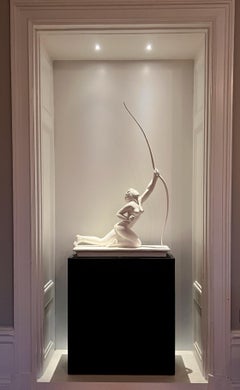
Diana The Huntress Plaster Sculpture, Art Deco, Circa 1920, Signed
Located in Stockholm, SE
Sculpture representing the goddess Diana by Danish sculptor Jens Jacob Bregno (1877–1946), executed in plaster around 1920. This is a highly unusual model by the artist, and possibly...
Category
1920s Art Deco Figurative Sculptures
Materials
Plaster
Walking Tiger Bronze Sculpture, Dark Patinated, Signed
Located in Stockholm, SE
Sculpture of a walking tiger in dark patinated bronze by Johan Axel Wetterlund (1858-1927), signed J. A. Wetterlund, mounted on a black-painted wooden base. This finely modelled bro...
Category
Late 19th Century Naturalistic Figurative Sculptures
Materials
Bronze

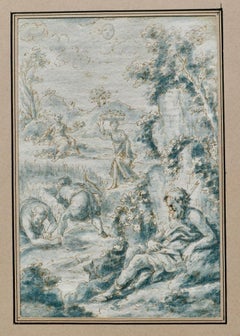
Allegory of Summer, 17th Century Italian Watercolor and Sepia Drawing
Located in Stockholm, SE
A fine Italian watercolor and sepia drawing, an allegory of summer. People harvesting, eating and drinking in a hilly landscape, probably by Antonio Grano (c.1669-1718). In the fron...
Category
Late 17th Century Italian School Figurative Drawings and Watercolors
Materials
Paper, Ink, Watercolor
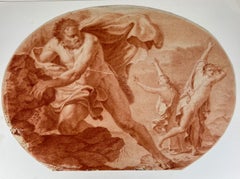
Polyphemus and Acis Red Chalk Drawing, Italian, 17th-18th Century
Located in Stockholm, SE
An Italian red chalk drawing depiction on paper, probably 17th or 18th century, illustrating the dramatic scene of Polyphemus hurling a boulder at Acis and Galatea. Attributed to an...
Category
17th Century Italian School Figurative Drawings and Watercolors
Materials
Paper, Chalk
$1,697 Sale Price
44% Off
Free Shipping
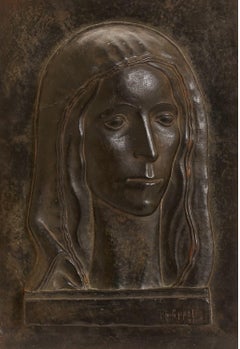
Arvid Knöppel, The Virgin Mary, Bronzed Wall Relief Plaster Sculpture, Signed.
Located in Stockholm, SE
A finely sculpted dark bronzed wall relief plaster sculpture of Virgin Mary by Arvid Knöppel, signed and dated 1921. An unusual subject of his...
Category
1920s Figurative Sculptures
Materials
Plaster
You May Also Like
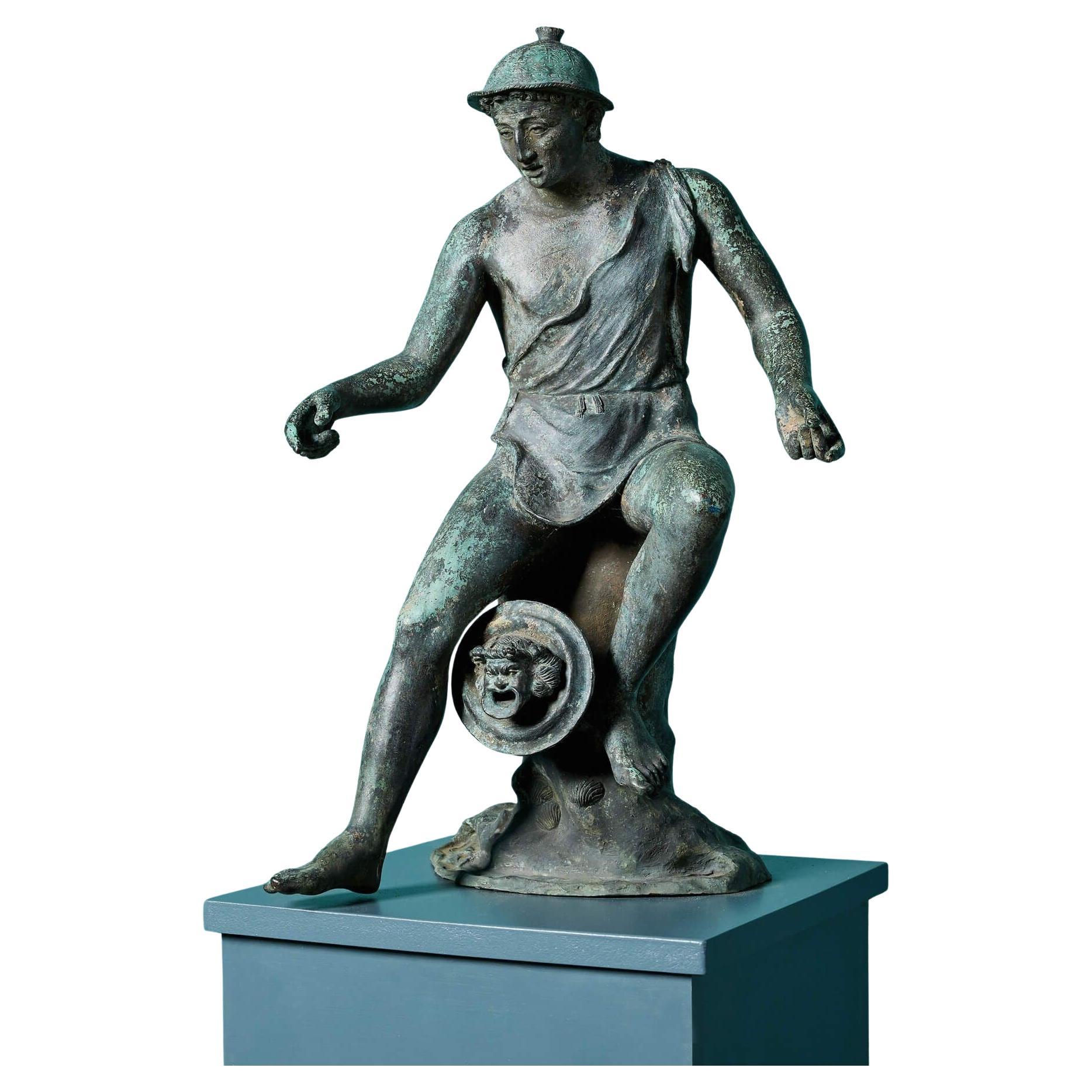
Bronze Sculpture of the Neapolitan Fisherman after the Antique
Located in Wormelow, Herefordshire
A 19th century bronze sculpture of the Neapolitan Fisherman after the antique.
In Grand tour style, the boy almost looks like he is in a stance of motion in this good quality scale,...
Category
Antique Late 19th Century Italian Neoclassical Figurative Sculptures
Materials
Metal, Bronze
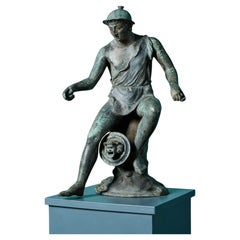
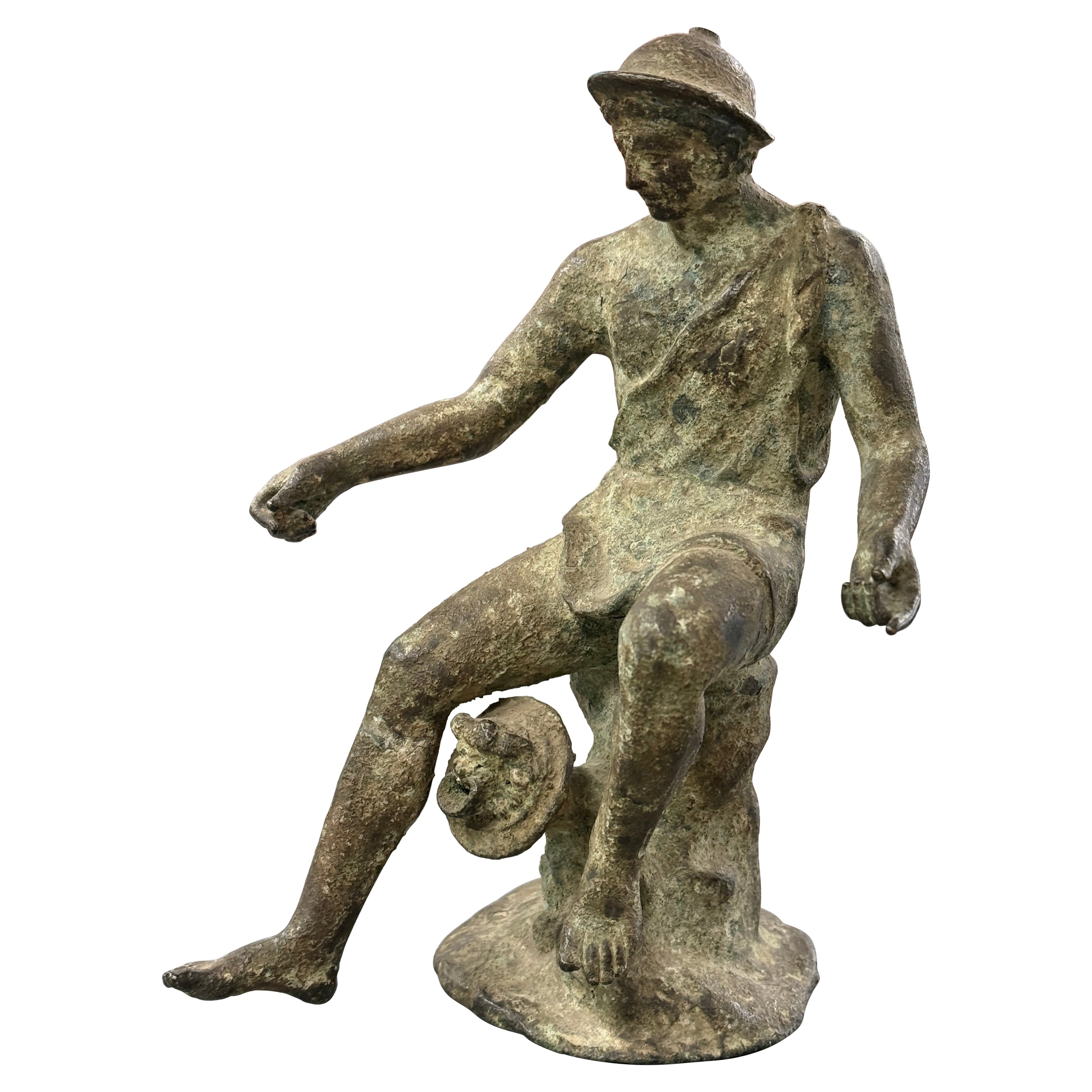
Grand Tour Souvenir Bronze of the Neapolitan Fisherman
Located in Palm Springs, CA
A lovely bronze antique sculpture of a fisherman after the antique excavated in Naples in the early 19th century. These Grand Tour Souvenirs were extremely popular in the 19th and ea...
Category
Early 20th Century Italian Figurative Sculptures
Materials
Bronze
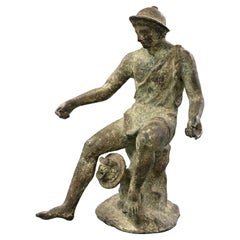
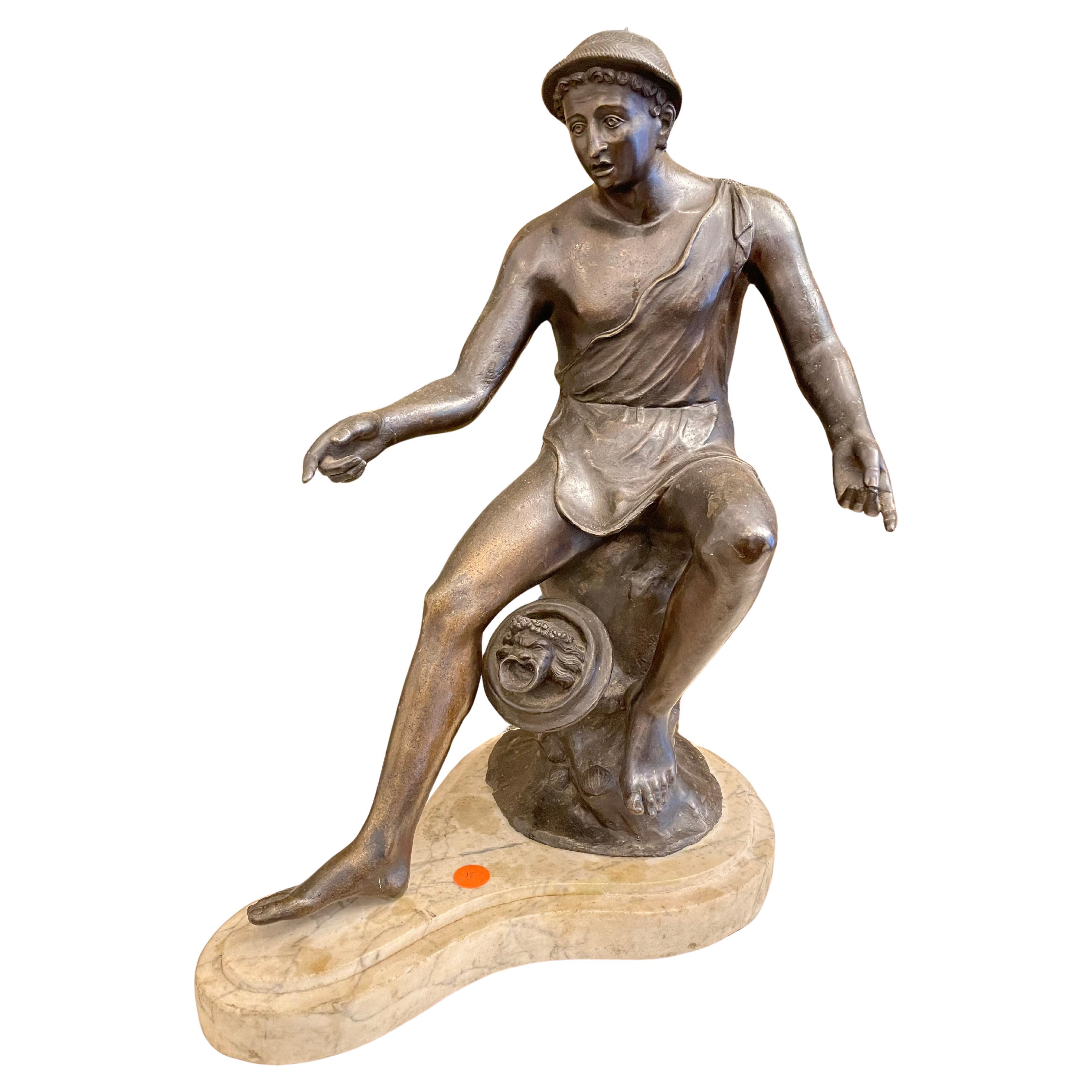
A Bronze Figure of the 1st Century CE Roman ‘Fisherman’, 19th Century
Located in ARMADALE, VIC
A Bronze Figure of the 1st Century CE Roman ‘Fisherman’, 19th Century
Provenance:
Private Australian Collection.
Description:
The male figure cast wearing a tunic and...
Category
Antique 19th Century French Figurative Sculptures
Materials
Bronze
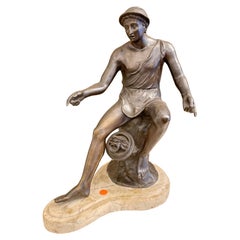
Sculpture Representing a Statue of Hercules, 21st Century.
Located in Saint-Ouen, FR
Sculpture representing a statue of Hercules, 21st century.
Sculpture of Hercules in patinated resin, stone base, 21st century.
H: 33.5 cm, D: 12 cm
Category
21st Century and Contemporary French Modern Figurative Sculptures
Materials
Stone
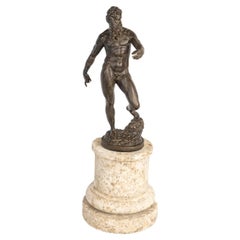
Sculpture Representing a Statue of Hercules, 21st Century.
Located in Saint-Ouen, FR
Sculpture representing a statue of Hercules, 21st Century.
Sculpture of Hercules in patinated resin, stone base, 21st century.
H: 32cm, D: 13cm
Category
21st Century and Contemporary French Modern Figurative Sculptures
Materials
Stone
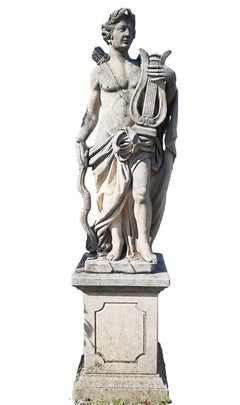
Italian Stone Garden Sculpture of Roman Mythological subject Apollo
Located in Rome, IT
Finely carved mythological subject in Vicenza limestone of Apollo and Minerva Excellent condition from an estate of Veneto.
Measurements: Statues cm 150, base cm 85.
Category
20th Century Academic Figurative Sculptures
Materials
Limestone