1 of 5
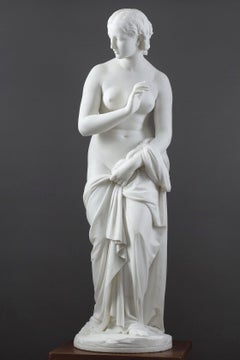
LONDON GENTLEMAN
$19,146.28List Price
About the Item
- Attributed to:Francesco Toso (Italian)
- Dimensions:Height: 34.26 in (87 cm)Width: 13.78 in (35 cm)Depth: 11.82 in (30 cm)
- Medium:
- Movement Style:
- Period:
- Condition:
- Gallery Location:Milano, IT
- Reference Number:1stDibs: LU2802215739552
Authenticity Guarantee
In the unlikely event there’s an issue with an item’s authenticity, contact us within 1 year for a full refund. DetailsMoney-Back Guarantee
If your item is not as described, is damaged in transit, or does not arrive, contact us within 7 days for a full refund. Details24-Hour Cancellation
You have a 24-hour grace period in which to reconsider your purchase, with no questions asked.Vetted Professional Sellers
Our world-class sellers must adhere to strict standards for service and quality, maintaining the integrity of our listings.Price-Match Guarantee
If you find that a seller listed the same item for a lower price elsewhere, we’ll match it.Trusted Global Delivery
Our best-in-class carrier network provides specialized shipping options worldwide, including custom delivery.You May Also Like
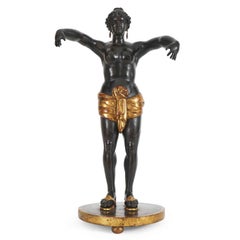
Goddess Circe Italian Neoclassical Sculpture Carved Wood Ebony and Gold 1800s
Located in Milano, IT
Circe 19th-century Italian Wooden Sculpture, the proposed neoclassical figure is a fascinating and rare depiction of the Goddess Circe, made in the early 1800s. The pine wood carving...
Category
Early 19th Century Italian School Figurative Sculptures
Materials
Wood
$6,581
H 27.96 in W 14.57 in D 9.85 in
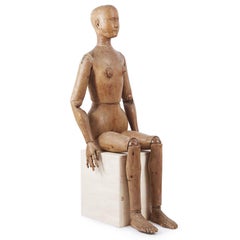
Female Life-size Mannequin Italian Articulated Sculpture In Beech Mid 1800s
Located in Milano, IT
Female Painter's Manikin Mid-1800s jointed and articulated, life-size Italian sculpture, 167 cm tall 66 Inches, made of beech wood with traces of lacquer preparation. This extraordi...
Category
Mid-19th Century Italian School Figurative Sculptures
Materials
Wood
$29,916
H 65.75 in W 15.75 in D 6.3 in
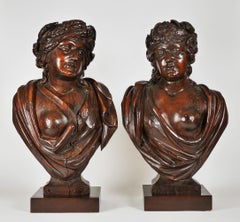
18th Century Italian Carved Neoclassical Semi Nude Female Busts
Located in Beachwood, OH
18th Century Italian Carved Neoclassical Semi Nude Female Busts
Wood affixed to wood plinths
"Leone Della Torra / Italy Country of Origin" labels on b...
Category
18th Century Italian School Figurative Sculptures
Materials
Wood
Coppia di Cigni Luigi XVI Fregi in Legno Dorato Italia XVIII secolo
Located in Pistoia, IT
Coppia di Fregi a forma di cigno in legno scolpito e dorato a mecca. Italia, seconda metà del XVIII secolo.
Nel XVIII secolo, il motivo del cigno nel XVII e XVIII secolo era stretta...
Category
18th Century Italian School Figurative Sculptures
Materials
Wood

$1,136
H 7.88 in W 9.45 in
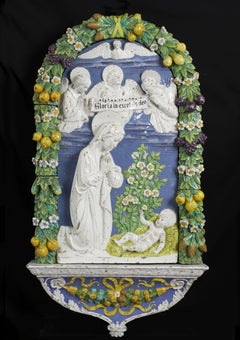
19th Century Madonna Adoring the Infant Jesus Italian School Ceramic White Blue
Located in Sanremo, IT
Cantagalli-manufactured ceramics measuring 125 x 67 cm depicting a sweet Madonna adoring the Child Jesus and the Holy Spirit.
At the beginning of the 19th century, Ulisse Cantagalli...
Category
1830s Italian School Figurative Sculptures
Materials
Ceramic
$17,949
H 49.22 in W 26.38 in
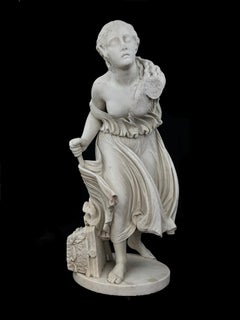
NYDIA, THE BLIND FLOWER GIRL OF POMPEII Marble Sculpture 1856-1870
Located in Soquel, CA
Randolph John Rogers (American, 1825 - 1892) Randolph Rogers' Nydia, the Blind Flower Girl of Pompeii debuted in 1856 to critical and public acclaim, solidifying Rogers’ position as a pre-eminent American sculptor and it remains one of the artist’s most celebrated works today. The subject of Nydia is drawn from Edward Bulwer-Lytton's The Last Days of Pompeii 1834. After touring the ruins of the ancient city in 1833, and inspired by the stories of blinding volcanic ash, he composed the tale of Nydia, a slave who led her master, Glaucus, to safety. Rogers depicts Nydia at the moment that she and Glaucus have become separated in their perilous journey through the rubble and Nydia seeks familiarity in the surrounding chaos, her distress evident in her pained expression. The grace of the sculpture is at odds with the turmoil portrayed; a toppled Corinthian capital lies at her feet and obstructs her next step, indicated by the tilt of her back foot and grip on her walking stick. Examples of this model can be found in major American collections, including The Metropolitan Museum of Art, the Art Institute of Chicago, the Detroit Institute of Arts, the Los Angeles County Museum of Art, and the Museum of Fine Arts, Boston.
Literature, Millard F Rogers, Jr. Randolph Rogers, American Sculptor in Rome. University of Massachusetts Press, 1971, American Figurative Sculpture in the Museum of Fine Arts Boston. Museum of Fine Arts, Boston, 1986. Joyce K Schiller. "Nydia, A Forgotten Icon of the Nineteenth Century." Bulletin of the Detroit Institute of Arts,
Born in Waterloo, New York, Randolph John Rogers became an expatriate* sculptor of idealized figures, portraits, and commemorative works in Neo-Classical* and Realist* styles. He worked in clay, plaster, marble and bronze, and lived both in Italy and the United States. He made 167 examples of Nydia in two sizes (varies depending on base height) 36" and 54'.
Rogers was raised in Ann Arbor, Michigan, and as a young man did woodcuts* for the local newspaper, The Michigan Argus, and also worked as a baker's assistant and a dry goods clerk. In 1847, he moved to New York City, where he hoped to find work as an engraver*, but failing to do so, worked in a dry goods store owned by John Steward...
Category
1850s Italian School Figurative Sculptures
Materials
Marble
$15,000
H 36 in W 19 in D 20 in
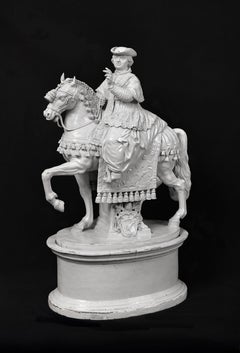
Pio VI blessing on horseback during the Cavalcata for the Possession
Located in Roma, RM
Volpato or Cialli manufacture, molded by Lorenzo Weber, Pio VI blessing on horseback during the Cavalcata for the Possession
English white terracotta of 45 x 29 x 17 cm, datable to...
Category
Mid-18th Century Italian School Figurative Sculptures
Materials
Terracotta
$41,882
H 17.72 in W 11.42 in D 6.7 in
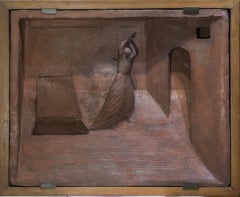
The Trapdoor
By Arturo Martini
Located in Roma, RM
Arturo Martini (Treviso 1889 - Milan 1947), La Botola (1930 / 1933)
Terracotta sculpture 34 x 42 x 9 cm signed lower left; label of Galleria del Milione, Milan, on back.
Provenance...
Category
1930s Italian School Figurative Sculptures
Materials
Terracotta
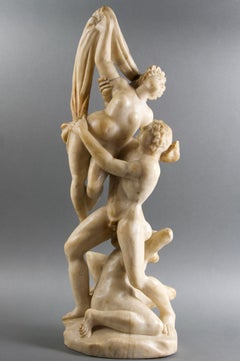
Italian Neoclassical Sculptural Group in Alabaster "The Rape of the Sabine Women" 18th
Located in Pistoia, IT
"The Rape of the Sabine Women," veined alabaster, large sculptural group with classical subject, Volterra manufacture, 18th century.
The so-called Rape of the Sabine Women is a scu...
Category
1790s Italian School Figurative Sculptures
Materials
Alabaster
$6,581
H 25.2 in W 10.63 in D 8.67 in
Musidora
Located in PARIS, FR
"Musidora"
by Odoardo FANTACCHIOTTI (1809-1877)
Sculpture made in white Carrara marble
signed on the side on the base " O. Fantacchiotti "
Italy
around 1862
height 110 cm
diameter ...
Category
1860s Italian School Nude Sculptures
Materials
Marble
Still Thinking About These?
All Recently ViewedMore Ways To Browse
Antique Gentleman
Antique Devil
Richard Orpheo
Riho Kuld
Rodin Man With Broken Nose
Rolling Ball Sculpture
Rosendo Porro Cuesta
Ruslan Karablin
Sacred Langur
Salvador Dali Bas Relief Silver
Salvador Dali Carmen Sculpture
Salvador Dali Medal
Scott Hanson
Sculpture Cell Phone
Sculpture Michael Wilkinson
Sean Henry
Sergei Isupov
Shona Elephant