Want more images or videos?
Request additional images or videos from the seller
1 of 8

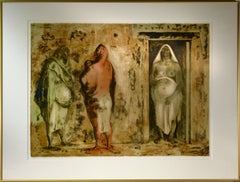
Francisco Zúñiga
Grupo

1982

$3,500
£2,666.32
€3,074.68
CA$4,957.83
A$5,323.47
CHF 2,864.46
MX$62,998.10
NOK 36,086.99
SEK 32,913.35
DKK 22,973.29

About the Item

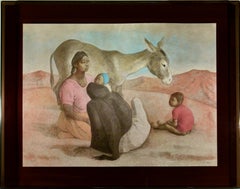
This artwork titled "Grupo" 1982 is an original Mixograph cast paper bas relief by Costa Rican/Mexican artist Francisco Zuniga, 1912-1998. It is hand signed, dated and numbered 24/100 in pencil by the artist. Published by Taller de Grafica Mexicana, Mexico City, printed by Mixografia Workshop, Los Angeles. The artwork size is 11.75 x 16.5 inches, framed size is 19 x 24 inches. Custom framed in an acrylic shadow type box. It is in excellent condition. About the artist: Internationally acclaimed sculptor and printmaker Francisco Zuñiga was born in Costa Rica. He studied drawing, stone sculpture, and engraving at the School of Fine Arts in San Jose. Later, in 1936, he studied stone carving at La Esmeralda in Mexico City. He was appointed to the faculty of La Esmeralda where he remained until his retirement in 1970. Zuniga's art reflects a love and respect for Central American people and traditions. In 1972, he created his first lithograph. As a complement to his emotionally powerful sculpture, Zuniga's prints articulate the sensitivity and sensuality of the human figure. He has been the recipient of numerous international prizes and awards. His work is exhibited frequently in prominent galleries throughout the world and may be found in the permanent collections of twenty-nine museums, including the Metropolitan Museum of Art in New York, the Los Angeles County Museum, the Mexican Museum in San Francisco, and the Phoenix Art Museum. In 1936, Francisco Zuniga left San Jose, Costa Rica, where he had studied drawing at the School of Fine Arts and worked as an assistant in his father's studio, a workshop which produced religious sculpture for the churches and convents in and around the city. His destination was Mexico City. It was from there that he would begin an illustrious career as a sculptor and draftsman. Zuñiga's exploration into the nuances of volume, in line and space, are demonstrated in this, the most complete exhibition of his work to be shown in more than a decade. Mexico City in 1936 was, even then, one of the major art centers of the Americas. As such it witnessed and participated in many of the frenzied and controversial art movements which reflected the political and intellectual climate of the first three decades of the twentieth century. Muralism, the graphic arts, the incorporation of in-ternational movements had produced an artistic climate, which would eventually attract to Mexico international artists and intellectuals such as Sergei Eisenstein, André Breton and Antonin Artaud. Then as now, Mexico City was a major world capital with the infrastructure necessary to exhibit and expose new aesthetic concepts. For all these reasons it was the most obvious destination of choice for Zuñiga. In Mexico he worked with the painter Manuel Rodríguez Lozano, and would become one of the founders of La Esmeralda, the National School of Painting and Sculpture, teaching there between 1938 and 1970. Zuniga also fulfilled commissions for numerous public monuments, but between 1960 and 1980, he began to work exclusively on his studio projects. At the time of his death in 1998, his work would be part of major museum collections internationally. Zuniga's signature sculptures, massive female figures sculpted in onyx or cast in bronze, emphasize an ongoing exploration of figurative representation in Western Art. In Juchitecas en Conversación (1985) a standing female figure with crossed arms faces two figures seated on a bench. The figure closest to her rests her hand on a water jug fully facing the first, while the third, body half turned toward the group, gestures toward them with her left arm. The elongated heads and necks are in direct contrast to the full, earthy bodies of all three. In posture and gesture these figures, with their monumental mass and volume, suggest a relationship of community and of union between women, a theme basic to Zuñiga. Other elements catch the eye: the water jug, the dress. The presence of these elements has often been a reason for categorizing Zuñiga's work as an example of regional representation, i.e. archetypes of indigenous women. Yet in focusing on the posture, gesture and composition in this work and others, Zuñiga is utilizing a juxtaposition of classical sculptural language with indigenous models. You might feel tempted to focus on the appearance of the model, but you should not overlook the stance, the composition, the regal allusion to the classical Western tradition. This issue becomes even more evident in the pastel and charcoal Dos Mujeres de Pie (1977). Two nudes stand slightly off center from each other and face to face. We see before us the full front and full back view of two women. Full-figured, even corpulent, they are full-hipped with legs and feet firmly planted on the earth. In Juchitecas en Conversación (1985) a standing female figure with crossed arms faces two figures seated on a bench. The figure closest to her rests her hand on a water jug fully facing the first, while the third, body half turned toward the group, gestures toward them with her left arm. The elongated heads and necks are in direct contrast to the full, earthy bodies of all three. In posture and gesture these figures, with their monumental mass and volume, suggest a relationship of community and of union between women, a theme basic to Zuñiga. Museums holding his works in their permanent collections include the San Diego Museum of Art, the New Mexico Museum of Art, the Metropolitan Museum of Art and the Museum of Modern Art in New York, the Museo de Arte Moderno in Mexico City, the Dallas Museum of Art, the Phoenix Art Museum, the Ponce Museum of Art in Puerto Rico, and the Hirshhorn Museum and Sculpture Garden in Washington, D.C.
  • Creator:
    Francisco Zúñiga (1912 - 1998, Costa Rican)
  • Creation Year:
    1982
  • Dimensions:
    Height: 19 in (48.26 cm)Width: 24 in (60.96 cm)Depth: 2.65 in (6.74 cm)
  • Movement Style:
  • Period:
  • Condition:
  • Gallery Location:
    San Francisco, CA
  • Reference Number:
    Seller: zu/gru/011stDibs: LU666317457052
More From This Seller

View All
La Espera (The Waiting)
By Francisco Zúñiga
Located in San Francisco, CA
This artwork titled "La Espera" 1973 is an original colors lithograph on Arches paper by renown Costa Rican/Mexican artist Francisco Zuniga, 1912-1998. It is hand signed, dated and n...
Category

Late 20th Century Realist Figurative Prints

Materials

Lithograph

Pessach
By David Sharir
Located in San Francisco, CA
This artwork titled "Pessach" from the suite "The Seven Festivals" 1981, is an original colors serigraph on Arches paper by noted Israeli artist David Sharir,b. 1938. It is hand sign...
Category

Late 20th Century Modern Figurative Prints

Materials

Screen

Naschera
By Vittorio Maria Di Carlo
Located in San Francisco, CA
This artwork titled "Naschera" is an oil painting on canvas by Italian artist Vittorio Maria Di Carlo, 1939-2015. It is hand signed at the lower left corner by the artist. The canvas...
Category

Late 20th Century Modern Figurative Paintings

Materials

Oil

Uncle Charlie s
By Enrique Kico Govantes
Located in San Francisco, CA
Artist: Enrique Kico Govantes (Cuban, born 1957) Title: Uncle Charlie's Year: Circa 1980 Medium: Mixed media and collage Paper Sketch Image size: 9.5 x 13 inches Signatu...
Category

Late 20th Century Modern Mixed Media

Materials

Mixed Media

Familia Indigena III
By Francisco Zúñiga
Located in San Francisco, CA
This artwork titled "Familia Indigena III" 1983 is an original colors lithograph on Wove paper by renown Costa Rican/Mexican artist Francisco Zuniga, 1912-1998. It is hand signed, dated and numbered 67/100 in pencil by the artist. The artwork size is 22 x 29.85 inches, framed size is 28.5 x 36.5 inches. Published and printed by La Poligrafa, Barcelona, Spain. Referenced and pictured in the artist's catalogue raisonne "Zuniga The Complete Graphics, 1972-1984, by Jerry Brewster, plate #93. Beautifully framed in a custom acrylic display box, with brown fabric backing. It is in excellent condition. About the artist: Internationally acclaimed sculptor and printmaker Francisco Zuñiga was born in Costa Rica. He studied drawing, stone sculpture, and engraving at the School of Fine Arts in San Jose. Later, in 1936, he studied stone carving at La Esmeralda in Mexico City. He was appointed to the faculty of La Esmeralda where he remained until his retirement in 1970. Zuniga's art reflects a love and respect for Central American people and traditions. In 1972, he created his first lithograph. As a complement to his emotionally powerful sculpture, Zuniga's prints articulate the sensitivity and sensuality of the human figure. He has been the recipient of numerous international prizes and awards. His work is exhibited frequently in prominent galleries throughout the world and may be found in the permanent collections of twenty-nine museums, including the Metropolitan Museum of Art in New York, the Los Angeles County Museum, the Mexican Museum in San Francisco, and the Phoenix Art Museum. In 1936, Francisco Zuniga left San Jose, Costa Rica, where he had studied drawing at the School of Fine Arts and worked as an assistant in his father's studio, a workshop which produced religious sculpture for the churches and convents in and around the city. His destination was Mexico City. It was from there that he would begin an illustrious career as a sculptor and draftsman. Zuñiga's exploration into the nuances of volume, in line and space, are demonstrated in this, the most complete exhibition of his work to be shown in more than a decade. Mexico City in 1936 was, even then, one of the major art centers of the Americas. As such it witnessed and participated in many of the frenzied and controversial art movements which reflected the political and intellectual climate of the first three decades of the twentieth century. Muralism, the graphic arts, the incorporation of in-ternational movements had produced an artistic climate, which would eventually attract to Mexico international artists and intellectuals such as Sergei Eisenstein...
Category

Late 20th Century Realist Figurative Prints

Materials

Lithograph

Graceness
By Lajos Flesser
Located in San Francisco, CA
This artwork titled "Graceness", done in 1997 is an oil painting on canvas by noted Hungarian artist Lajos Flesser, b.1937. It is signed, titled and dated in the back by the artist. The canvas size is 21.75 x 18 inches, framed is 23.25 x 19.75 inches. Custom framed in a wooden black and gold frame.The artwork is in excellent condition. The frame is in good condition, with a few scuffs to the gold. Please see the final two images for the imperfections. About the artist: Lajos Flesser was born on Aug. 11, 1937 in Budapest, where he grew up in the shadow of World War II. In his late teens he studied at trade school, concentrating on metal skills. His need of communication made him start boxing, and the success was long in coming. In boxing circles, Flesser became a well established name with a couple of Hungarian championships. Then came the fatal year 1956, when Soviet tanks crushed the dreams of freedom. Flesser escaped and came to Sweden via Denmark. In Gothenburg the well known boxing promoter Edvin Alqvist soon became aware of Flesser's capacity as a boxer and offered him a contract. His debut occurred in May 1957...
Category

Late 20th Century Modern Nude Paintings

Materials

Oil

You May Also Like

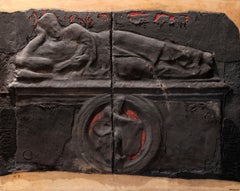
Untitled
Located in PARIS, FR
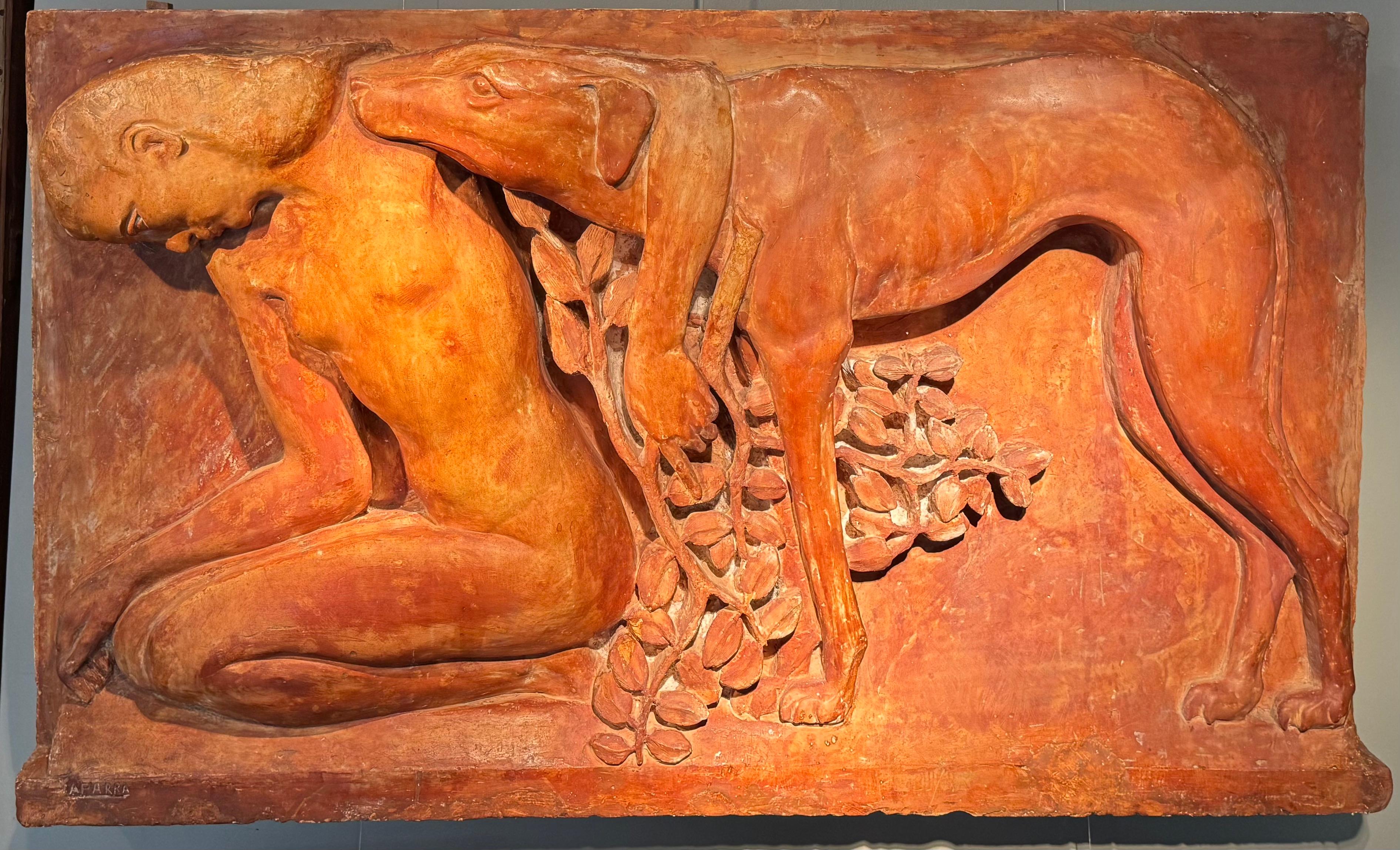
William Laparra (Bordeaux 1873 - Hecho 1920) Untitled Tinted plaster high-relief 67,7 x 120,1 x 14,8 cm = 26.7 × 47.3 × 5.8 in Signed lower left An elegant high-relief depicting a ...
Category

Late 19th Century Figurative Sculptures

Materials

Plaster

Eté
By Hugo Rivas
Located in Atlanta, GA
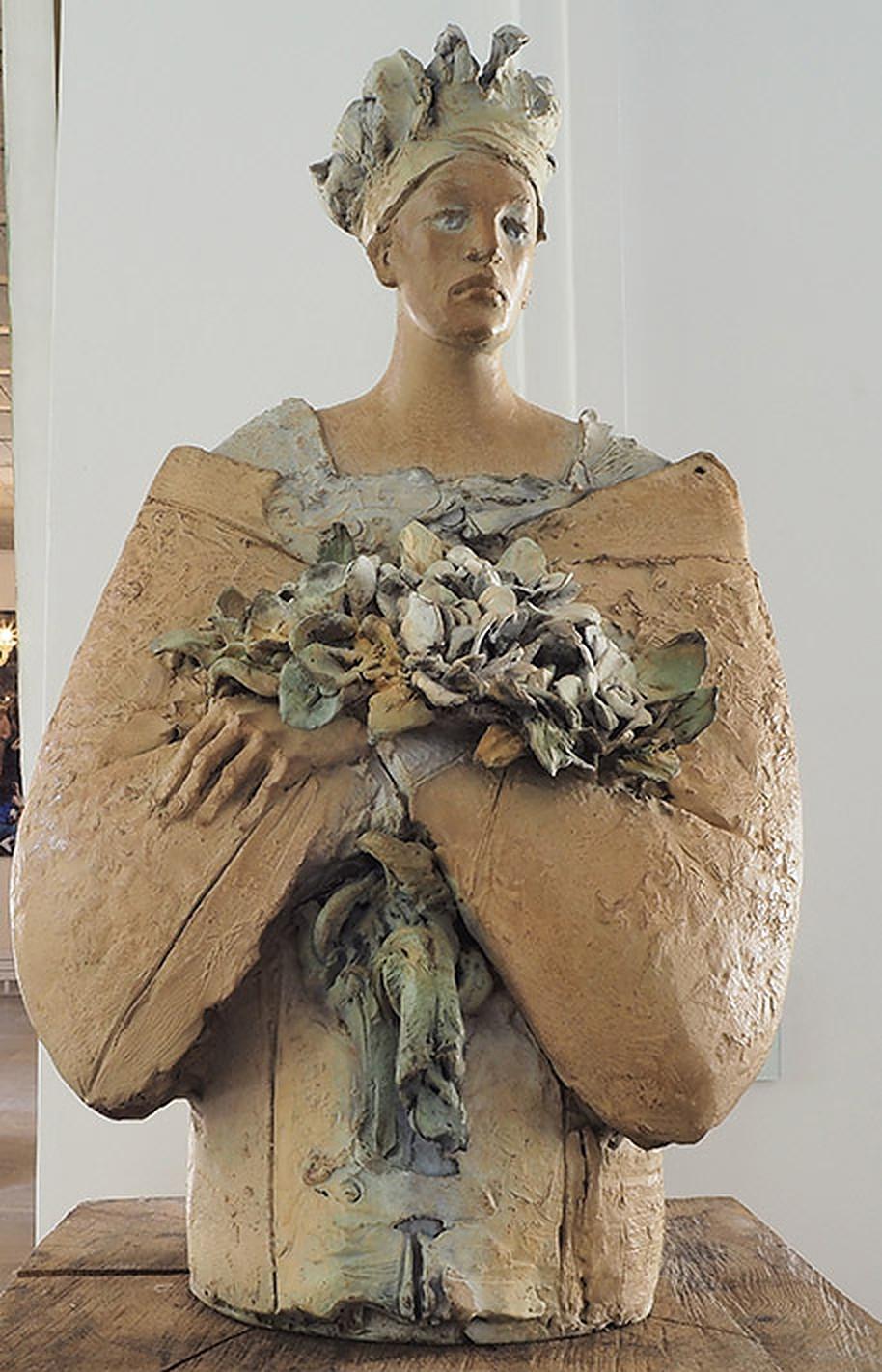
“Making sculpture is a very complex matter. A word added to a form, ultimately helping to better define it. And ultimately helping to understand the whole.” Ugo Riva is probably the...
Category

21st Century and Contemporary Modern Figurative Sculptures

Materials

Bronze

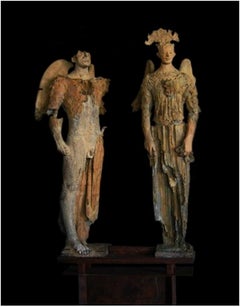
Angeli
By Hugo Rivas
Located in Atlanta, GA
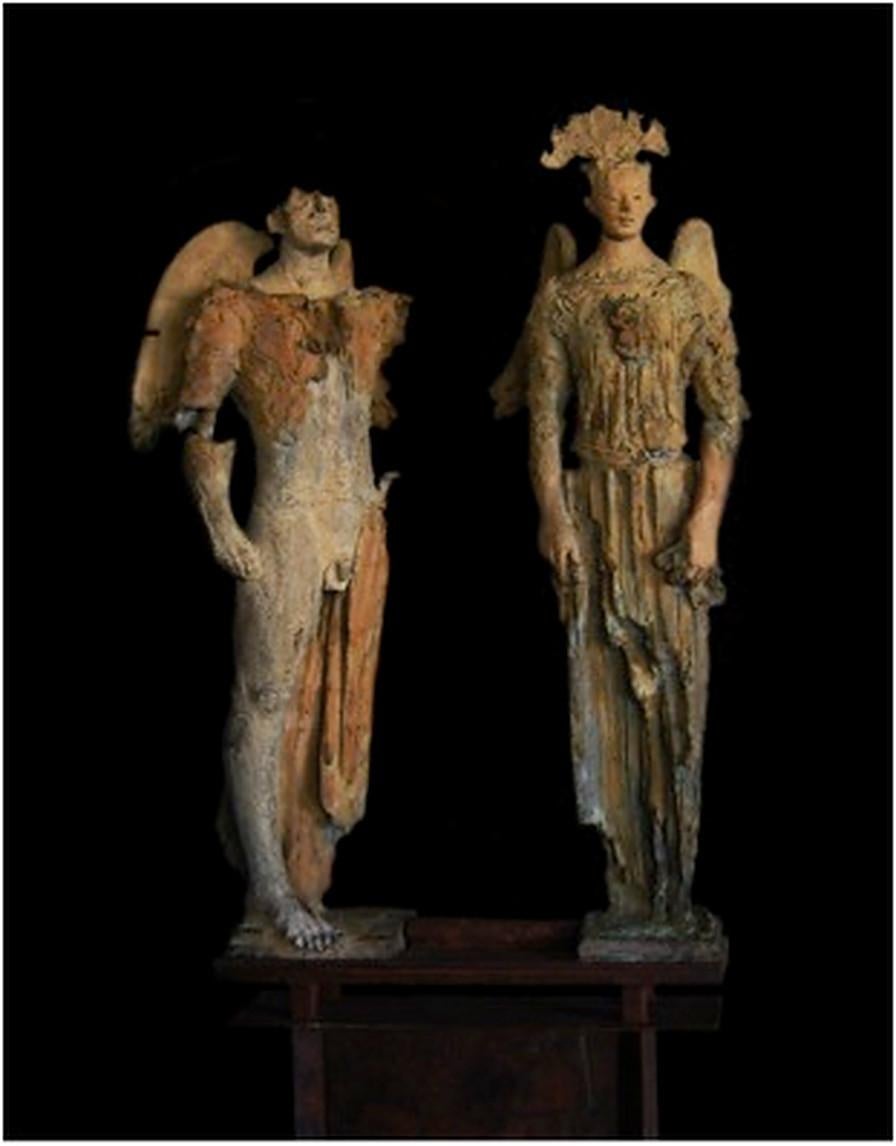
“Making sculpture is a very complex matter. A word added to a form, ultimately helping to better define it. And ultimately helping to understand the whole.” Ugo Riva is probably the most eminent and affirmed artist represented by the Frilli Gallery...
Category

21st Century and Contemporary Modern Figurative Sculptures

Materials

Bronze, Iron

Génesis Añoranza
By Jimenez Deredia
Located in Miami, FL
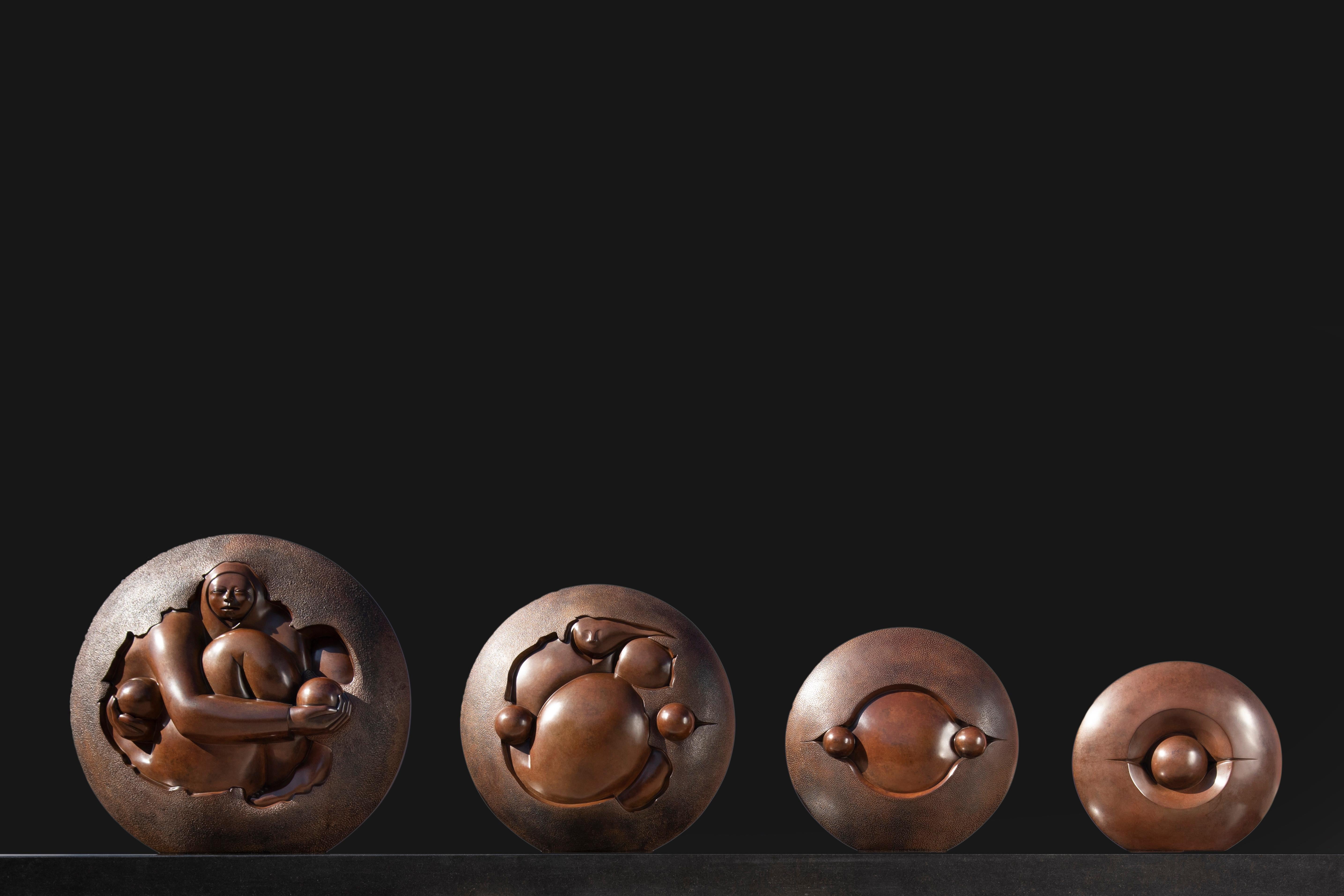
"Longing (añoranza) is a sculptural group formed by four elements and cast in bronze, which arise, grow and expand to generate what is a metaphor of life, and through longing finding...
Category

2010s Figurative Sculptures

Materials

Bronze

Amistad
By Gustavo Torres
Located in Fort Lauderdale, FL
Bronze
Category

2010s Contemporary Sculptures

Materials

Bronze

Inquisidor
By Miguel Zapata
Located in Dallas, TX
signed "Zapata 08" at lower right
Category

21st Century and Contemporary Contemporary Mixed Media

Materials

Mixed Media