Items Similar to Christ with Crown of Thorns / - Seeing gaze -
Want more images or videos?
Request additional images or videos from the seller
1 of 6
Hans ThomaChrist with Crown of Thorns / - Seeing gaze -1902
1902
$4,209.70
£3,115.12
€3,500
CA$5,760.51
A$6,275.56
CHF 3,314.15
MX$75,336.50
NOK 42,226.03
SEK 38,593
DKK 26,667.47
About the Item
Hans Thoma (1839 Bernau - 1924 Karlsruhe), Christ with Crown of Thorns, 1902. Brass relief plate in niello technique with raised sections, 38 cm x 40 cm. Monogrammed and dated “hTh 1902” at the bottom right.
- Partially discolored, otherwise in excellent condition
- Seeing gaze -
Christ looks at us intently and at the same time through us. The crown of thorns and the drops of blood stand out in relief, making the pain seem tangible and immediately present. With the pain, Christ's gaze has transcended itself, so that the incarnate God—like his Father—now seems to see everything. At the same time, the captivating power of his enigmatic gaze testifies to its effectiveness. Depicted frontally, Christ's face forms the center of the painting, emphasized by its almost square format, from which rays of divine light emanate in all directions, transforming the brass into a golden background. Christ gains an iconic timelessness that transforms his face into an archetype of himself, yet one that seems very real thanks to the flowing drops of blood and the filigree, seemingly tangible hair and beard reminiscent of Albrecht Dürer's self-portrait as Christ.
Hans Thoma, for whom the revitalization of sacred art was a very important aspect of his work, takes on what is probably the greatest artistic challenge here: depicting the face of Christ, which is both divine and human, and he succeeds in making both aspects vividly present.
The picture plate was created in connection with Hans Thomas' co-initiation of the State Majolica Manufactory in Karlsruhe. It is a unique work of art in its own right and at the same time the archetype of its artisanal reproduction. The relief panel also testifies to Hans Thomas' desire to constantly explore new artistic media and exploit their creative potential. Against this background, the relief panel is a synthesis of sculpture and printmaking.
About the artist
After failing to complete his apprenticeship as a lithographer, painter and clockmaker, Hans Thoma trained as an autodidact painter. In 1859 he won a scholarship to the Karlsruhe Art School, where he became a student of Wilhelm Schirmer and Ludwig Des Coudres. After graduating in 1866, Thoma spent time in Basel and Düsseldorf. He met Otto Scholderer, with whom he traveled to Paris in 1868. There he was impressed by the art of Gustave Courbet and the Barbizon School. After his works were rejected by the Karlsruhe Kunstverein, Thoma moved to Munich in 1870, where he was close to the Leibl circle. Wilhelm Trüber worked for a time in Thoma's studio in Munich. In 1874 he made the first of a series of trips to Italy with the painter Albert Lang, where he met Hans von Marées and Adolph von Hildebrand and became friends with Arnold Böcklin, whose art made a lasting impression on Thoma. On his return to Munich, Thoma became a student of Cella Berteneder, whom he married in 1877.
Thoma traveled to England in 1879 at the invitation of art collector Charles Minoprio. Over the years, Minoprio acquired more than 60 oil paintings by Thoma and organized the first exhibition of his art abroad in Liverpool in 1884. Thoma had lived in Frankfurt since 1878. The following year, the Frankfurter Kunstverein organized the first solo exhibition of his work. After a trip to the Netherlands, Thoma moved to Kronberg im Taunus in 1899, where the Kronberg painters' colony was based. That same year he was appointed professor at the Karlsruhe Art School and director of the Karlsruhe Kunsthalle. In 1901, together with Wilhelm Süs, Hans Thoma founded the Grand Ducal Majolica Manufactory in Karlsruhe, for which he supplied designs from then on.
Thoma was now at the height of his artistic fame. The 1909 edition of Meyer's Großes Konversations-Lexikon noted that Thoma had become one of the German people's favorite painters. On the occasion of his 80th birthday in 1919, Ernst Oppler and Lovis Corinth organized a large celebration. After Thoma's death, the Berlin National Gallery dedicated a major exhibition to him in 1922, and the Basel Kunsthalle in 1924.
GERMAN VERSION
Hans Thoma (1839 Bernau - 1924 Karlsruhe), Christus mit Dornenkrone, 1902. Reliefplatte aus Messing in Niello-Technik mit erhabenen Partien, 38 cm x 40 cm. Rechts unten mit „hTh 1902" monogrammiert und datiert.
- Partiell etwas verfärbt, ansonsten in ausgezeichnetem Zustand
- Sehender Blick -
Christus blickt uns eindringlich an und zugleich durch uns hindurch. Die Dornenkrone und die Blutstropfen treten erhaben hervor, womit sich der Schmerz gleichsam materiell verfestigt und unmittelbar präsent wird. Mit dem Schmerz hat sich der Blick Christi transzendiert, so dass der menschgewordene Gott – seinem Vater gleich – nun alles zu sehen scheint. Dabei zeugt die Bannkraft des enigmatischen Blickes zugleich von seiner Wirkkraft. Bildfrontal en face dargestellt, bildet Christi Antlitz das vom nahezu quadratischen Format forcierte Zentrum des Bildes, von dem in alle Richtungen Strahlen des göttlichen Lichtes ausgehen, die das Messing in einen Goldgrund verwandeln. Christus gewinnt eine ikonenhafte Überzeitlichkeit, die sein Gesicht in ein Urbild seiner selbst wandelt, das durch die laufenden Blutstropfen und die an Albrecht Dürers Selbstbildnis als Christus gemahnenden filigranen, scheinbar greifbaren Kopf- und Barthaare jedoch ganz real gegenwärtig zu sein scheint.
Hans Thoma, für den die Revitalisierung der Sakralkunst ein ganz wesentliches Moment seines Schaffens gewesen ist, nimmt sich hier der wohl größten künstlerischen Herausforderung an, das Antlitz Christi darzustellen, das gleichermaßen göttlich wie menschlich ist und ihm gelingt es, beide Aspekte eindringlich präsent werden zu lassen.
Die Bildplatte ist im Zusammenhang von Hans Thomas Mitinitiation der Staatlichen Majolika Manufaktur Karlsruhe entstanden. Sie ist ein eigenständiges unikales Kunstwerk und zugleich das Urbild seiner kunsthandwerklichen Vervielfältigung. Die Reliefplatte zeugt zugleich von Hans Thomas Willen, immer neue künstlerische Medien zu erschießen und ihr Gestaltungspotenzial auszuschöpfen. Vor diesem Hintergrund ist die Reliefplatte eine Synthese von Skulptur und Druckgraphik.
zum Künstler
Nachdem er Lehren als Lithograph, Anstreicher und Uhrschildmaler abgebrochen hatte, bildete sich Hans Thoma autodidaktisch als Kunstmaler. Dies brachte ihm 1859 ein Stipendium für die Kunstschule in Karlsruhe ein, wo er Schüler von Wilhelm Schirmer und Ludwig Des Coudres wurde. Nach Abschluss des Studiums, 1866, hielt sich Thoma in Basel und Düsseldorf auf. Er lernte Otto Scholderer kennen, mit dem er 1868 nach Paris reiste. Dort beeindruckten ihn die Kunst Gustave Courbets und die Schule von Barbizon. Nach der Ablehnung seiner Werke im Karlsruher Kunstverein wurde Thoma 1870 in München ansässig, wo er dem Leibl-Kreis nahestand. In München arbeitete Wilhelm Trüber zeitweise in Thomas Atelier. 1874 erfolgte zusammen mit dem Maler Albert Lang die erster einer Reihe von Italienreisen, auf der er Hans von Marées und Adolph von Hildebrand kennenlernte und mit Arnold Böcklin Freundschaft schloss, dessen Kunst Thoma nachhaltig beeindruckte. Nach seiner Rückkehr nach München wurde Cella Berteneder Thomas Schülerin, die er 1877 ehelichte.
Auf Einladung des Kunstsammlers Charles Minoprio reiste Thoma 1879 nach England. Im Laufe der Jahre erwarb Minoprio mehr als 60 Ölbilder Thomas und veranstaltete 1884 die erste Auslandsausstellung seiner Kunst in Liverpool. Ab 1878 lebte Thoma in Frankfurt. Im Folgejahr zeigte der Frankfurter Kunstverein die erste Einzelausstellung seiner Werke. Nach einer Reise in die Niederlande zog Thoma 1899 nach Kronberg im Taunus, wo die Kronberger Malerkolonie ansässig war. Im selben Jahr wurde er zum Professor der Karlsruher Kunstschule und zum Direkter der Karlsruher Kunsthalle berufen. 1901 war Hans Thoma mit Wilhelm Süs Gründer der Großherzoglichen Majolika-Manufaktur Karlsruhe, für die er fortan Entwürfe lieferte.
Thoma stand nun auf dem Höhepunkt seines künstlerischen Ruhmes. Meyers Großes Konversations-Lexikon stellt in der 1909 erschienen Auflage fest, Thoma sei zu einem Lieblingsmaler des deutschen Volkes geworden. Anlässlich des 80. Geburtstags, 1919, organisierten Ernst Oppler und Lovis Corinth eine große Feierlichkeit. Nachdem Thoma verstorben war, widmete ihm die Berliner Nationalgalerie 1922 und die Basler Kunsthalle 1924 eine große Werkschau.
About the Seller
5.0
Vetted Professional Seller
Every seller passes strict standards for authenticity and reliability
Established in 2014
1stDibs seller since 2023
23 sales on 1stDibs
- ShippingRetrieving quote...Shipping from: Berlin, Germany
- Return Policy
More From This Seller
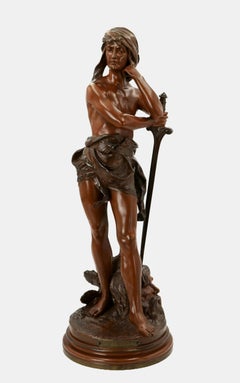
View AllThe Victorious David / - The melancholy of the radiant hero -
Located in Berlin, DE
Henri Honoré Plé (1853 Paris - 1922 Paris), The Victorious David, around 1890. Red-brown and brown patinated bronze with terrain plinth mounted on a round base. 62 cm (total height) ...
Category
1890s Realist Figurative Sculptures
Materials
Bronze
The Prophet / - The Burden of the Prophet -
Located in Berlin, DE
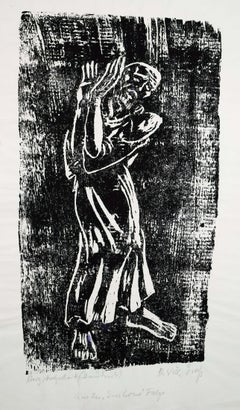
Wilhelm Gross (1883 Schlawe - 1974 Oranienburg-Eden), The Prophet, c. 1955. Woodcut on thin laid paper, 43 cm x 23 cm (depiction), 61 cm x 43 cm (sheet size), signed “Dr. Wilh.[elm] Gross” in pencil lower right, inscribed “Orig.[inal] Holzschnitt (Handabdruck)” lower left and inscribed “Aus der ”Ecce homo“ Folge” in the center.
- The wide margin with traces of pressing due to the impression, the sitter's left foot with a small purple stain, otherwise in vibrant condition.
- The Burden of the Prophet -
The large-format woodcut shows a prophet figure that takes up almost the entire height of the sheet. However, instead of seeing something in the distance that is still hidden from our eyes - as is usual in depictions of prophets - the figure has raised his hands in a defensive gesture, as if the prophet is trying to ward off what he has seen. At the same time, however, the position of the arms is an acceptance of the inevitable, which only those who recognize what is to come will have to bear for the time being, which is why the figure in the painting - despite its size - appears almost solitary, alone and exposed to the burden of suffering.
In a manner reminiscent of the folds of medieval wooden sculptures...
Category
1950s Realist Figurative Prints
Materials
Paper
The Victorious David / - The melancholy of the radiant hero -
Located in Berlin, DE
Henri Honoré Plé (1853 Paris - 1922 Paris), The Victorious David, around1890. Red-brown and brown patinated bronze with terrain plinth mounted on a round base. 42 cm (total height) x...
Category
1890s Realist Figurative Sculptures
Materials
Bronze

The completely naked prostration
Located in Berlin, DE
Willibrord Haas (*1936 Schramberg), The completely naked prostration, 1999. Etching, 32.5 cm x 23.5 cm (plate size), 54 cm x 37.5 cm (sheet size). Signed “Willibrord Haas” in lead by...
Category
1990s Realist Nude Prints
Materials
Paper

Blessed are the merciful / - The support of care -
Located in Berlin, DE
Nehmer, Rudolf (1912-1983), Blessed are the merciful, 1948
Rudolf Nehmer (1912 Bobersberg - 1983 Dresden), Blessed are the merciful, 1948. Woodcut on yellowish wove paper, 18.8 cm x ...
Category
1940s Realist Figurative Prints
Materials
Woodcut
Adoration of the Magi / - The Rider of the Sun -
Located in Berlin, DE
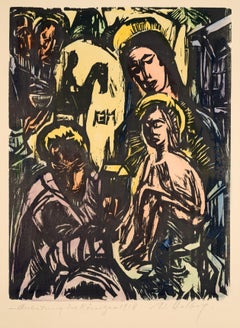
Walter Helbig (1878 Falkenstein - 1968 Ascona), Adoration of the Magi, 1918. Hand-colored linocut, 30 cm x 22.5 cm (depiction), 50 cm x 35 cm (sheet size), signed “W.[alter] Helbig” in pencil lower right, inscribed “Adoration of the Magi” lower left and dated “1918”. Below this a handwritten dedication “with heartfelt Christmas greetings”.
- Paper somewhat darkened and with slight creases, thumbtack holes in the corners
- The Rider of the Sun -
The 'apocalypse' of World War I brought about a return to sacred art. Walter Helbig belonged to the circle of the 'Brücke' and the 'Blauer Reiter'. With his reinterpretation of religious themes in an expressionist formal language, Helbig shaped an avant-garde neo-sacred art. This is symbolically expressed in the silhouette of the rider against the sun-like yellow background. It refers to the awakening initiated by the Blue Riding, which is now linked back to the sacred.
The rider and horse "look" at Mary and the Christ Child, who occupy the entire field. Opposite them are the three kings, the eldest of whom kneels before Christ and offers him a gold-filled casket. The expressionist lines give rise to a tower that rises into the "sun", so that the gift has become a Gothic church, expressing the hope that the fallen world will be resurrected in the name of Christ. This dimension of meaning is emphasized by the magical effect of the color scheme.
About the artist
In 1895, Walter Helbig began studying at the Dresden Academy of Art, where he became friends with the future Brücke artist Otto Müller, with whom he lived in Dresden from 1903 to 1905. While studying in Italy from 1897 to 1899, he met Arnold Böcklin and Adolf von Hildebrand. After completing his studies, he first worked for Otto Gussmann, painting churches. From 1905 to 1909 he worked as a freelance painter in Hamburg. In 1909, through the mediation of Otto Müller, Helbig made the acquaintance of artists from the 'Brücke'. In 1910 he exhibited at the founding exhibition of the Berlin 'Neue Sezession'. In the same year, he moved to Switzerland, where, together with Hans Arp and Oscar Lüthy, he founded the 'Moderne Bund' in Weggis, to which Cuno Amiet and Giovanni Giacometti also belonged. At the second exhibition of the 'Moderne Bund' in Zurich in 1911, Henri Matisse and Robert Delaunay were represented alongside artists from the 'Blauer Reiter'. In 1913, Helbig traveled to Paris with Arp and Lüthy. After the dissolution of the 'Moderne Bund', Helbig was represented at the first Dada exhibition in Zurich in 1914. In 1919, he joined the Berlin 'Novembergruppe'. After the devastation of World War I, Helbig turned increasingly to religious themes in his work. In 1924, like many other artists of his time, he moved to Ascona for financial reasons, where he became a naturalized citizen in 1938. There he founded the artists' association "The Great Bear", to which Marianne von Werefkin...
Category
1910s Expressionist Figurative Prints
Materials
Paper
You May Also Like
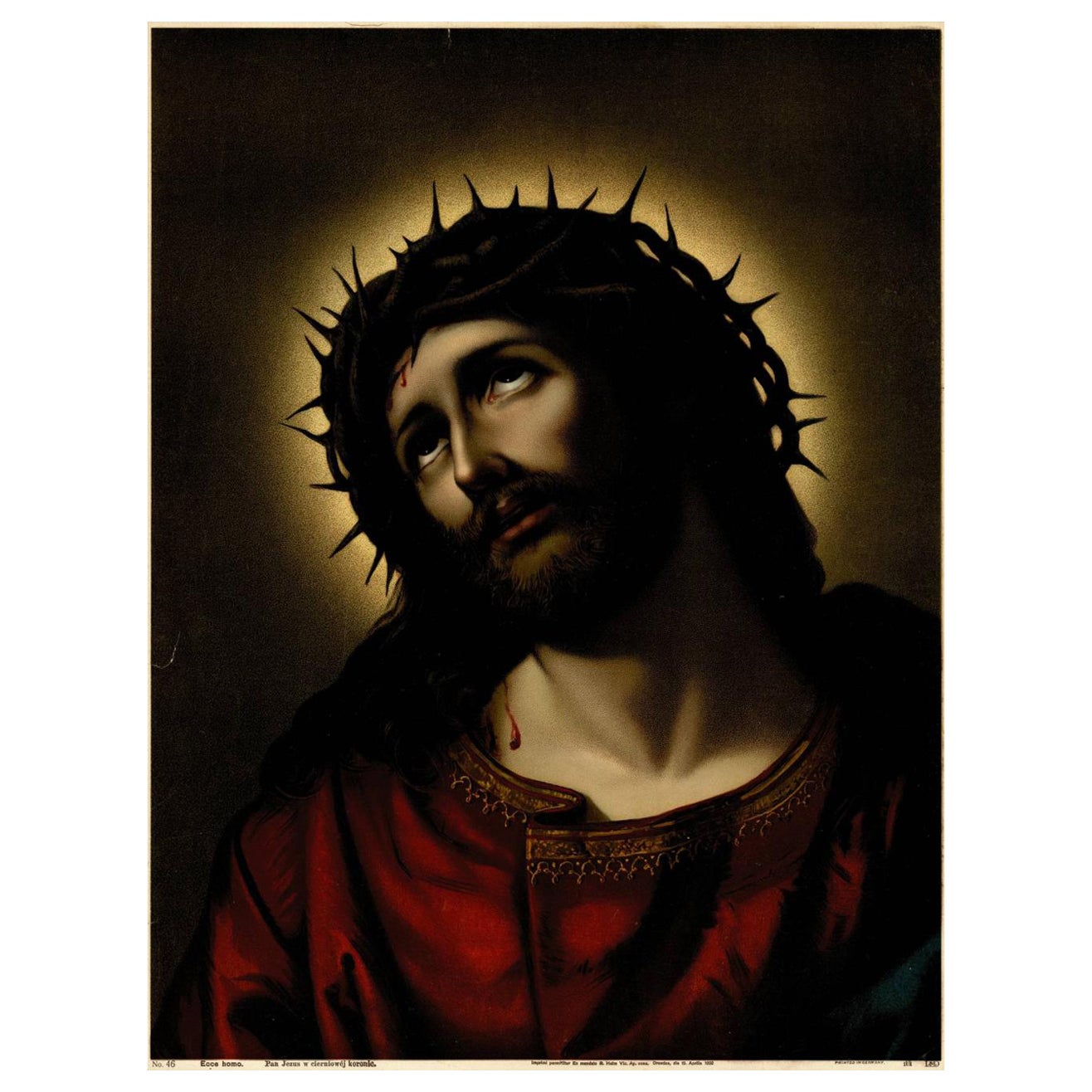
Ecce Homo, 1899 German Chromolithograph of Christ with Crown of Thorns (Dresden)
Located in Langweer, NL
Ecce Homo, 1899 German Chromolithograph of Christ with Crown of Thorns (Dresden)
This moving late-19th-century chromolithograph of Christ as “Ecce Homo” was printed in Dresden in 18...
Category
Antique Late 19th Century German Prints
Materials
Paper
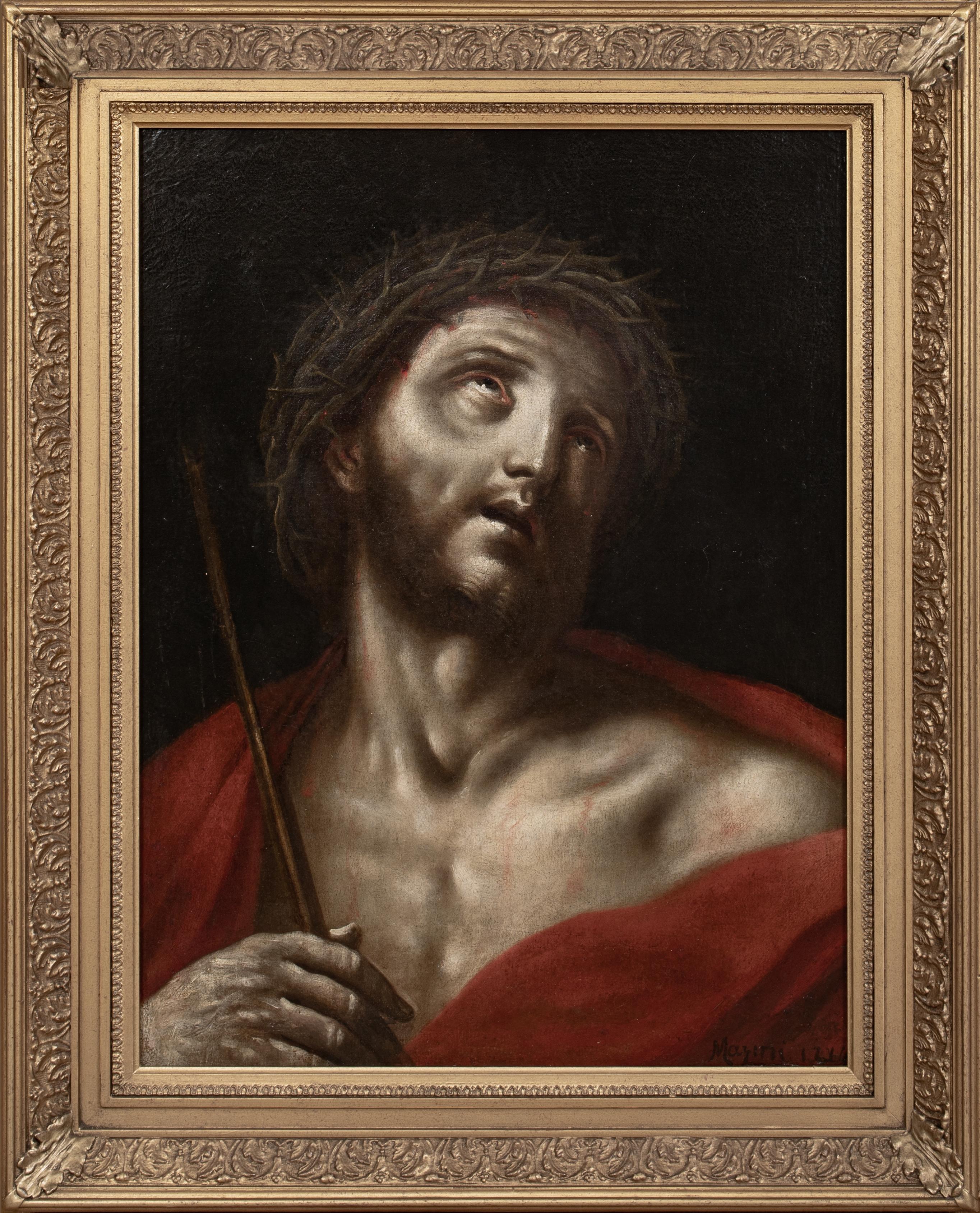
Christ Wearing The Crown Of Thorns, 17th Century circle Carlo Dolci (1616-1686)
Located in Blackwater, GB
Christ Wearing The Crown Of Thorns, 17th Century
circle of Carlo Dolci (1616-1686)
Large 17th Century Italian Old Master of Christ wearing the Crown of Thorns, oil on canvas. Excel...
Category
17th Century Portrait Paintings
Materials
Canvas, Oil
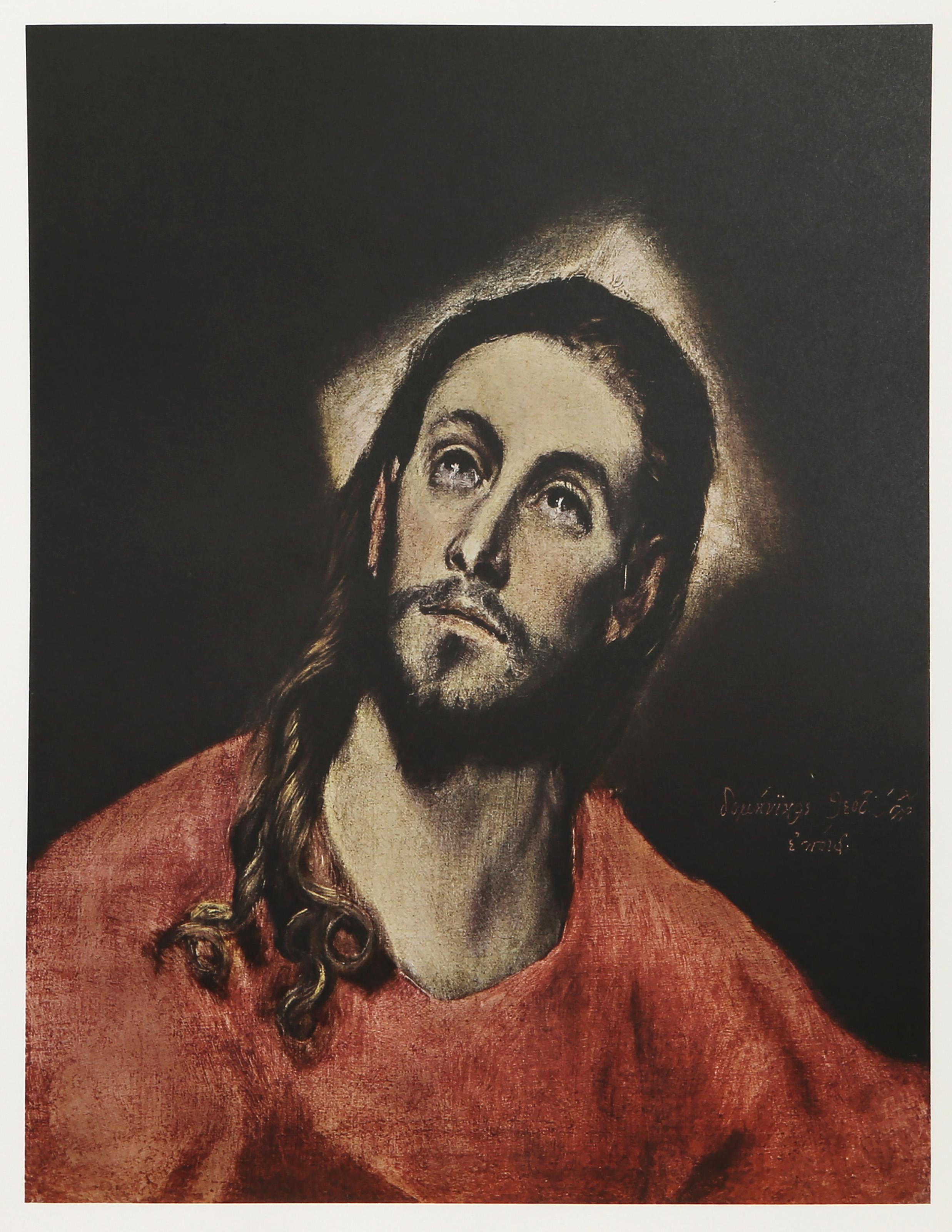
Head of Christ, Renaissance Poster after Doménikos Theotokópoulos
Located in Long Island City, NY
Doménikos Theotokópoulos, After, Greek (1541 - 1614) - Head of Christ, Year: Printed: circa 1970, Medium: Poster, Image Size: 23.5 x 18 inches, Size: 29 x 23 in. (73.66 x 58.42 c...
Category
1970s Renaissance Portrait Prints
Materials
Offset
Crown of Thorns, Original oil Painting, Ready to Hang
Located in Granada Hills, CA
Artist: Alexander Litvinov
Work: Original oil painting, handmade artwork, one of a kind
Medium: Oil on Canvas
Style: Classic Figurative
Year: 1997
Title: Crown of Thorns
Size: 24" x...
Category
2010s Impressionist Figurative Paintings
Materials
Canvas, Oil
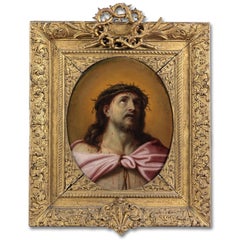
Fine Italian 17th Century Oil on Canvas Head of Jesus Christ Crowned with Thorns
By (circle of) Pierre Mignard
Located in LA, CA
A very fine Italian 17th century oval oil on canvas "Head of Christ Crowned with Thorns" Circle of Pierre Mignard (French, 1612-1695) within...
Category
17th Century Old Masters Figurative Paintings
Materials
Oil, Canvas, Wood
$44,850 Sale Price
30% Off
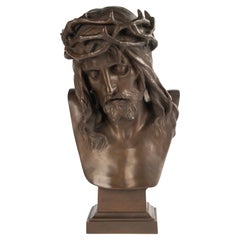
19th Century Bust - Eugène Marioton - Bronze - Christ with Crown of Thorns
By Siot, Paris 1, Eugene Marioton
Located in Casteren, Noord-Brabant
Impressive 19th-century bronze bust of Christ with the Crown of Thorns, signed E. Marioton. The sculpture depicts Christ in a moment of serene sorrow, his head slightly bowed beneath...
Category
Antique Late 19th Century French Belle Époque Religious Items
Materials
Bronze