Want more images or videos?
Request additional images or videos from the seller
1 of 6
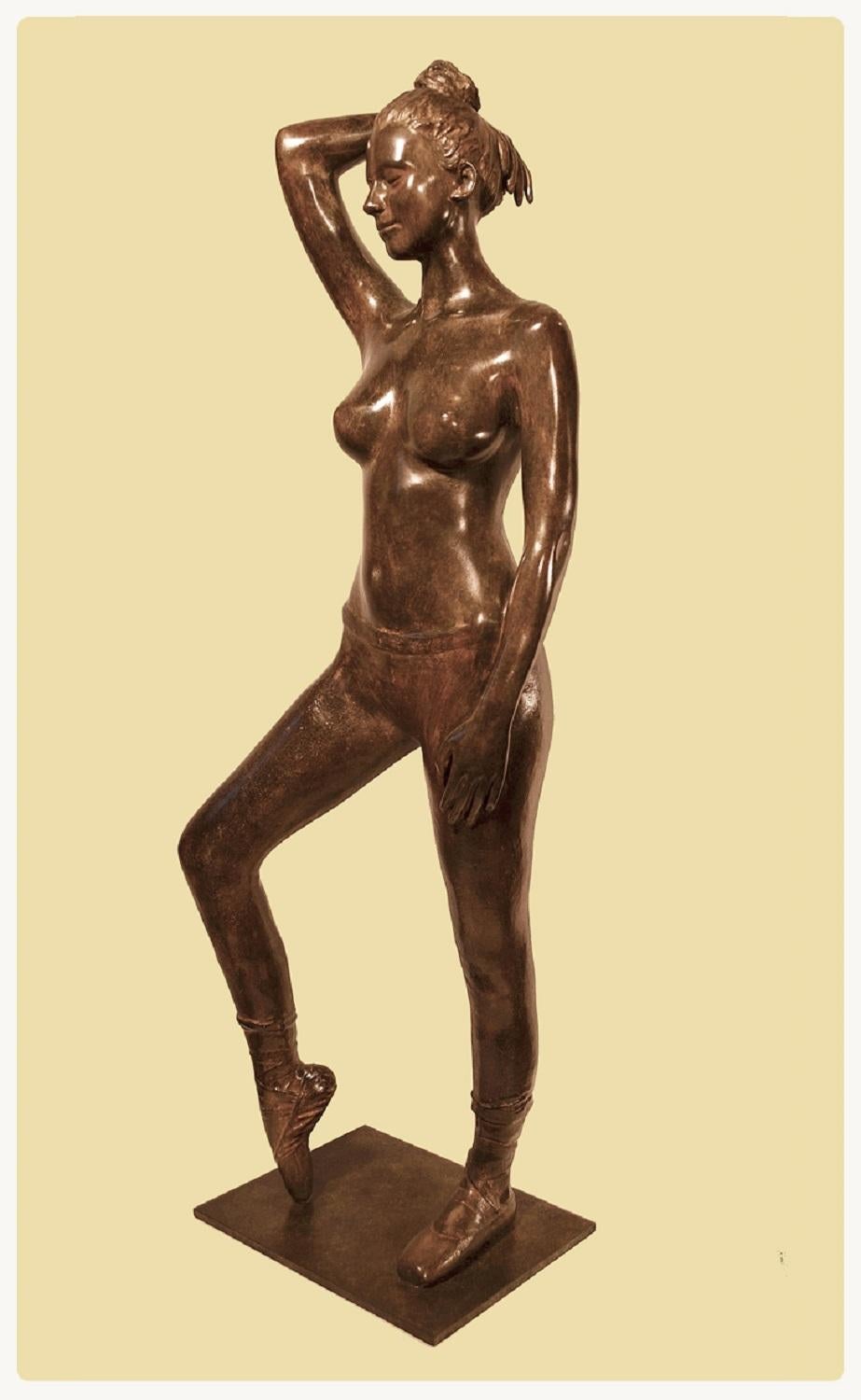
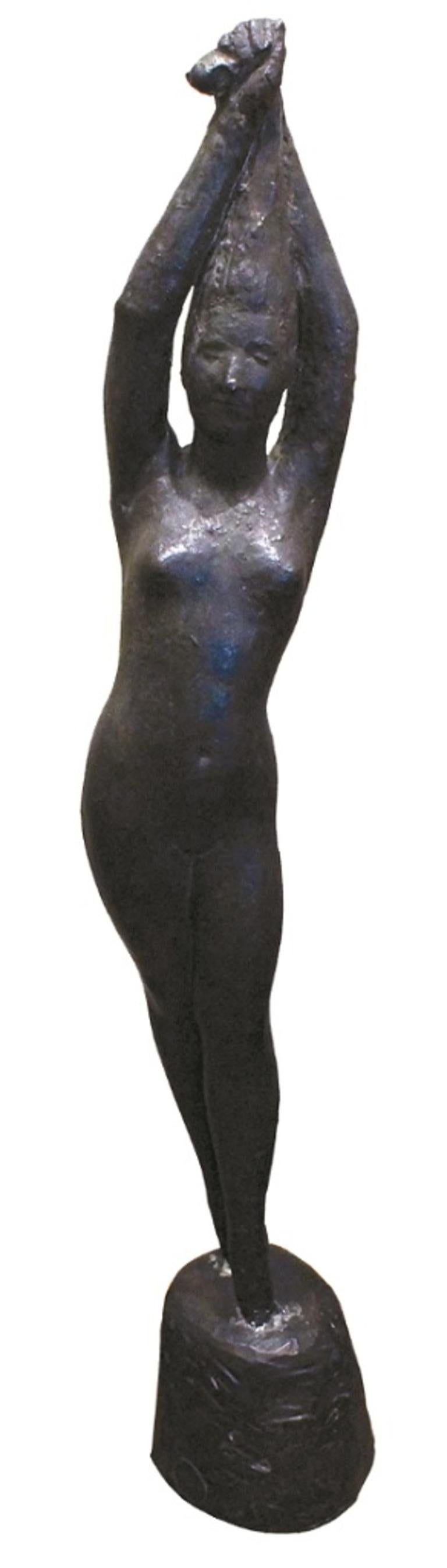
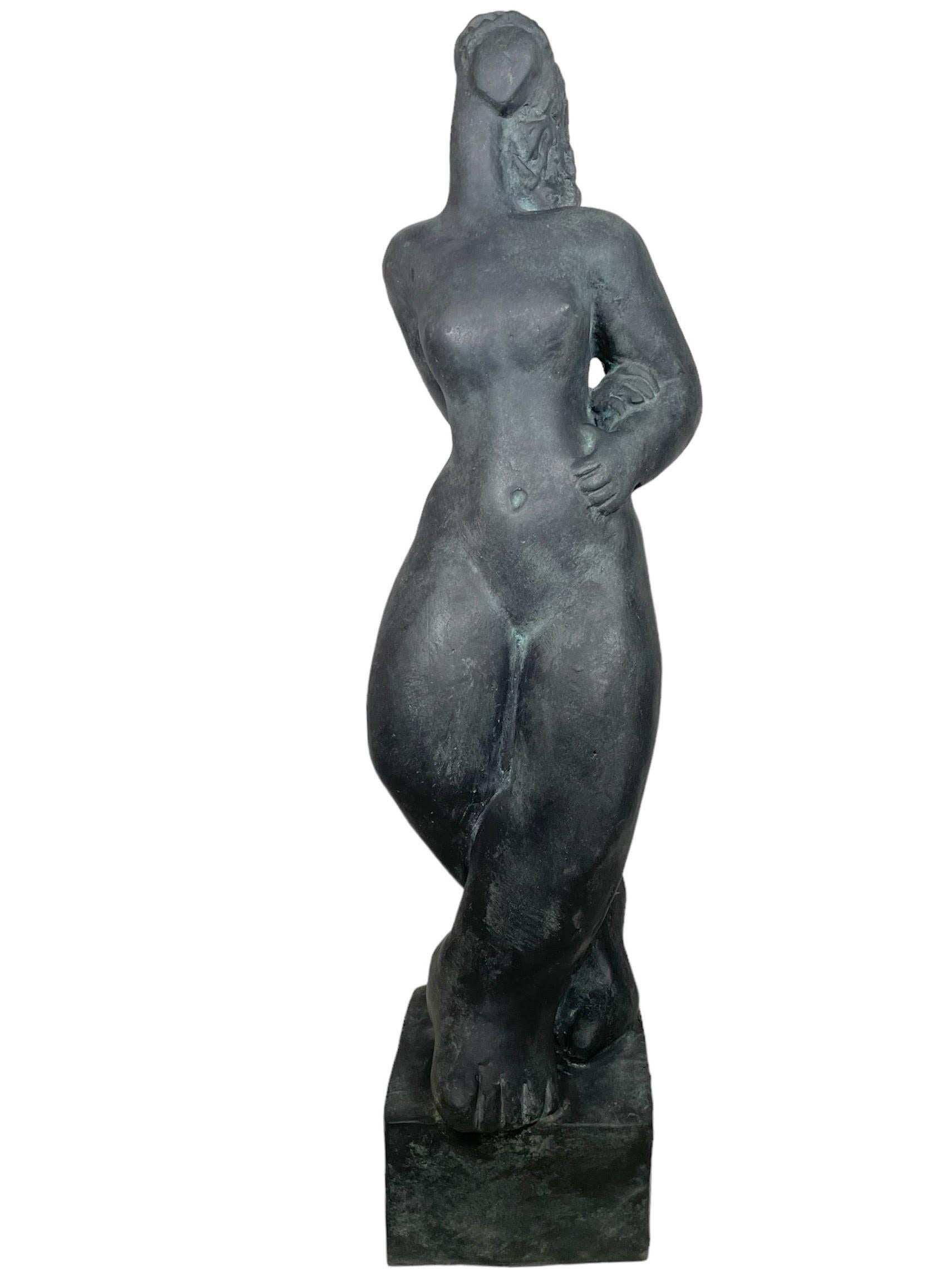
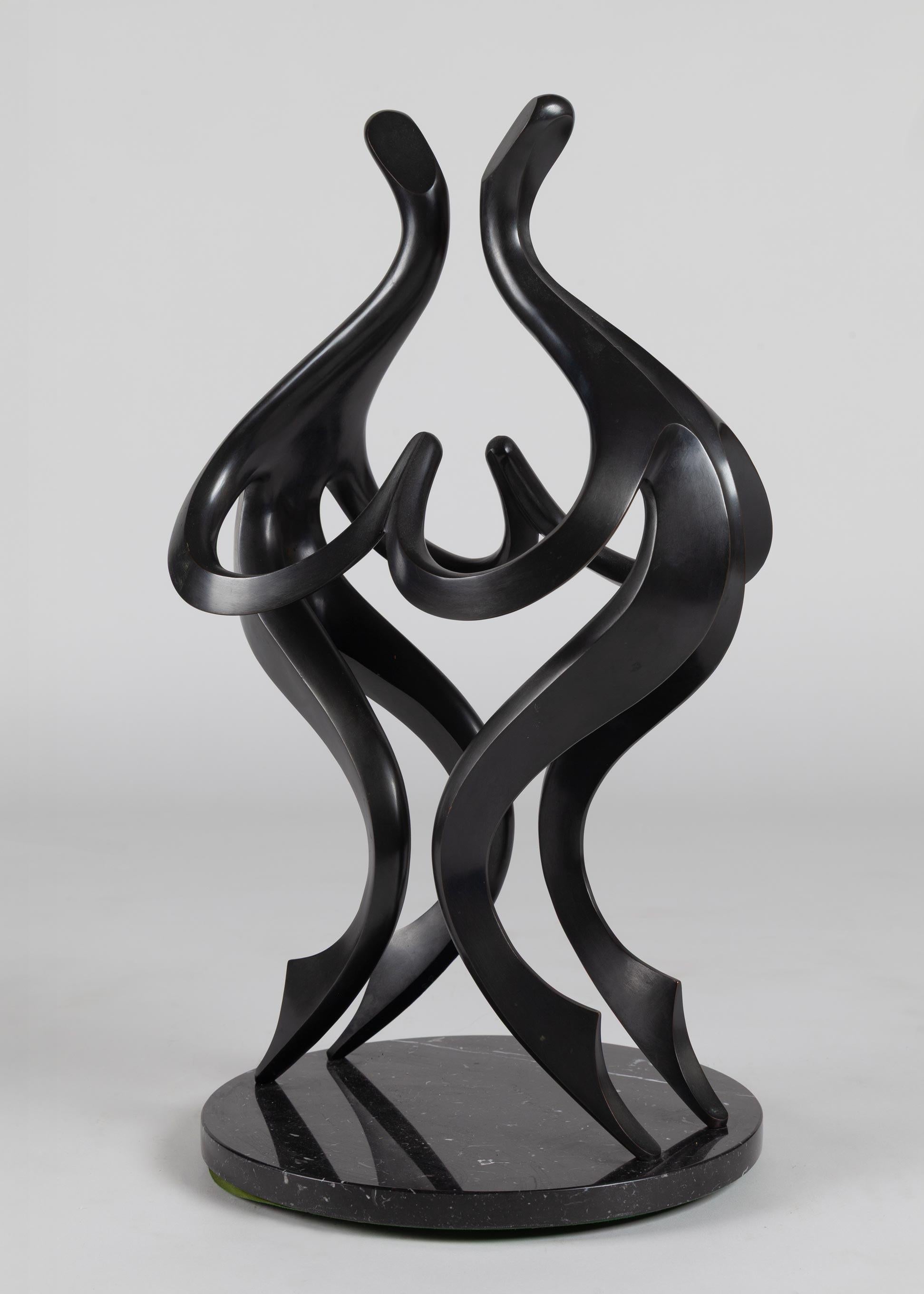
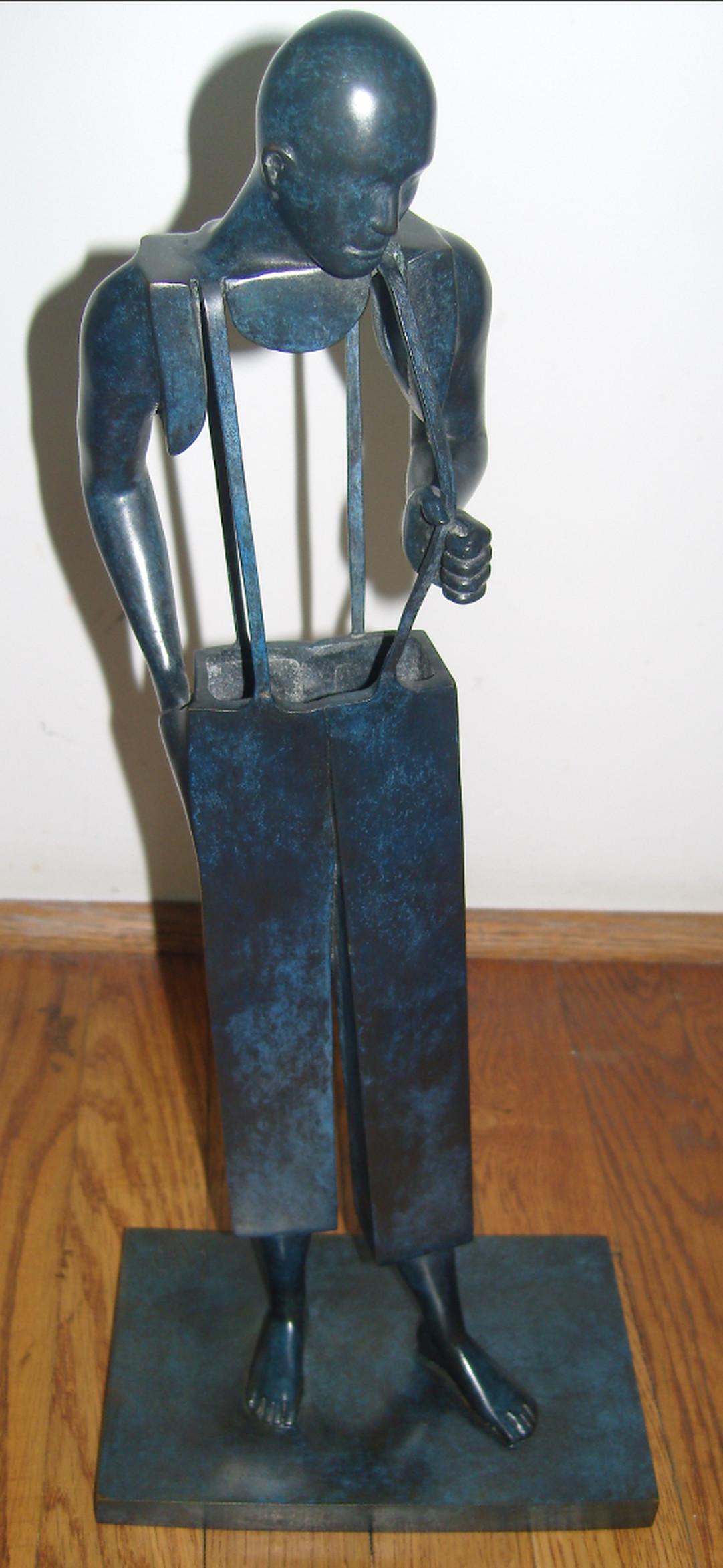
Jean-Louis CORBYAfrican Dancer
$71,500
£53,967.18
€61,847.63
CA$99,796.54
A$108,719.45
CHF 57,415.16
MX$1,305,149.59
NOK 731,534.94
SEK 668,595.47
DKK 461,994.27
About the Item
Jean-Louis Corby was born in 1951 and was predominantly influenced creatively by the 1970s. The 1970s were a period of consolidation and growth in the arts, most often characterised as a response to the dominant stresses of the previous decade. Conceptual art developed as a influential movement, and was in part an evolution of and response to minimalism. Land Art took the artwork into the expansive outdoors, taking creative production away from commodities and engaging with the earliest ideas of environmentalism. Process art combined elements of conceptualism with other formal considerations, creating cryptic and experimental bodies of work. Expressive figurative painting began to regain importance for the first time since the decline of Abstract Expressionism twenty years before, especially in Germany where Gerhard Richter, Anselm Kiefer, Georg Baselitz became highly influential figures worldwide. Many of the artists who became so famous and successful in the 1960s remained leading figures. For example, Andy Warhol branched out into film and magazine publishing, the first kind of cross cultural activity for a visual artist. This secured his reputation as a major international celebrity in his own right. n Japan and Korea, artists associated with the Mono-Ha movement focused on encounters between natural and industrial materials such as stone, glass, cotton, sponge, wood, oil and water, arranging them in mostly unchanged, fleeting states. The works focused on the interplay between these various elements and the surrounding space, and had a strong focus upon the European ideas of phenomenology.
- Creator:Jean-Louis CORBY (1951, French)
- Dimensions:Height: 65 in (165.1 cm)Width: 30 in (76.2 cm)Depth: 26 in (66.04 cm)
- Medium:
- Period:
- Condition:
- Gallery Location:Atlanta, GA
- Reference Number:1stDibs: LU155528544682
About the Seller
5.0
Vetted Professional Seller
Every seller passes strict standards for authenticity and reliability
Established in 2008
1stDibs seller since 2021
19 sales on 1stDibs
- ShippingRetrieving quote...Shipping from: Atlanta, GA
- Return Policy
More From This Seller
View AllElegant
Located in Atlanta, GA
Jean-Louis Corby was born in 1951 and was predominantly influenced creatively by the 1970s. The 1970s were a period of consolidation and growth in the arts, most often characterised ...
Category
21st Century and Contemporary Modern Figurative Sculptures
Materials
Bronze
$13,000
Obsession de Gustave
Located in Atlanta, GA
Jean-Louis Corby was born in 1951 and was predominantly influenced creatively by the 1970s. The 1970s were a period of consolidation and growth in the arts, most often characterised ...
Category
21st Century and Contemporary Modern Figurative Sculptures
Materials
Bronze
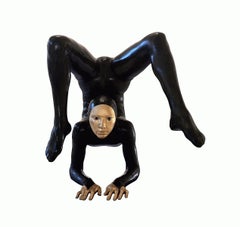
Grande Contorsionniste V
By Mauro Corda
Located in Atlanta, GA
Mauro Corda’s figurative sculptures maintain a reverence for classical and modernist traditions, while also expressing the artist’s voice. Though born in France, the artist hails fro...
Category
21st Century and Contemporary Modern Figurative Sculptures
Materials
Bronze, Gold Leaf
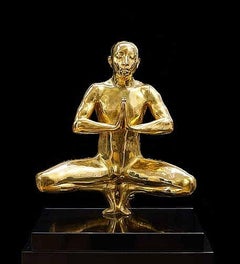
YOGA II
By Mauro Corda
Located in Atlanta, GA
Mauro Corda’s figurative sculptures maintain a reverence for classical and modernist traditions, while also expressing the artist’s voice. Though born in France, the artist hails fro...
Category
21st Century and Contemporary Modern Figurative Sculptures
Materials
Bronze, Gold Leaf
$28,080
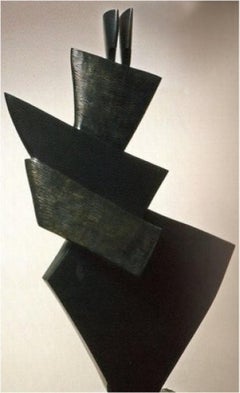
Paso
By Jacques LE BESCOND 1
Located in Atlanta, GA
Jacques LE BESCOND (born in CAEN in 1945) was young when he started to sculpture. He was particularly fond of wood. His encounter with a craftsman w...
Category
21st Century and Contemporary Modern Abstract Sculptures
Materials
Bronze
$20,800
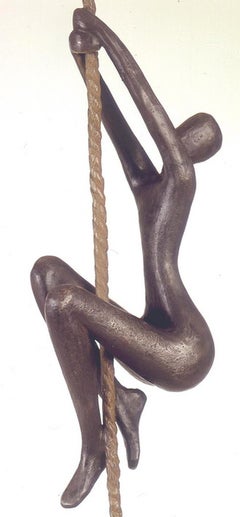
Aspiration
By Tolla Inbar
Located in Atlanta, GA
Tolla Inbar is an international sculpture artist. Born in Germany in 1958, Tolla attended the Merz school in Stuttgart until 1971. There she specializing in the art of ceramics and s...
Category
21st Century and Contemporary Modern Figurative Sculptures
Materials
Bronze
$84,500
You May Also Like
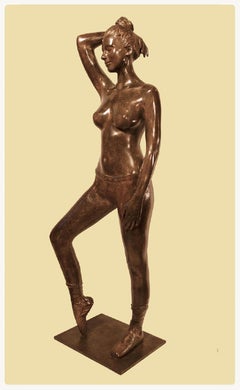
Poiting Dancer by Patrick Brun
By Patrick Brun
Located in Pasadena, CA
Patrick BRUN was born in Paris in 1941. After obtaining his Engineering degree, he began his professional life as a teacher in mathematics and physics. After this period, he started ...
Category
21st Century and Contemporary Contemporary Figurative Sculptures
Materials
Bronze
$4,800 Sale Price
33% Off
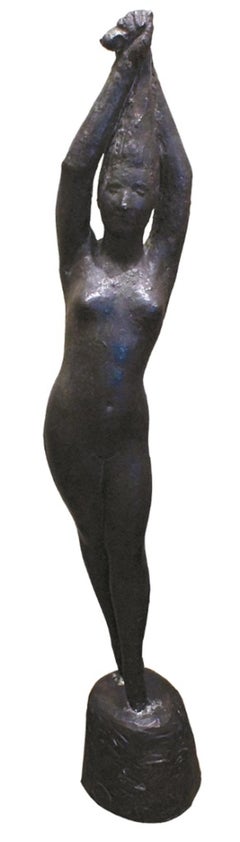
The Dancer - Sculpture by Giacomo Manzù - 1957
By Giacomo Manzú
Located in Roma, IT
The Dancer is a sculpture realized by Giacomo Manzù in 1957. Unique piece.
Exhibitions:
Manzù. L’Uomo e l’Artista, Palazzo Venezia, Roma 2002-2003
Manzù-Marino. Gli ultimi moderni,...
Category
1950s Modern Figurative Sculptures
Materials
Bronze
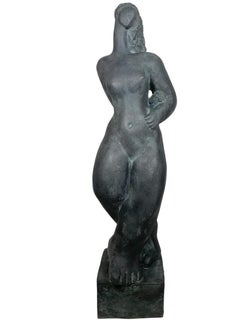
Danse
Located in Villafranca Di Verona, IT
Numbered and limited to 12 copies ( 8 + 4 P.A)
Artwork signed
Authenticity: Sold with certificate of Authenticity from the gallery
Invoice from the gallery
Sculpture: bronze, metal,...
Category
21st Century and Contemporary Modern Nude Sculptures
Materials
Bronze
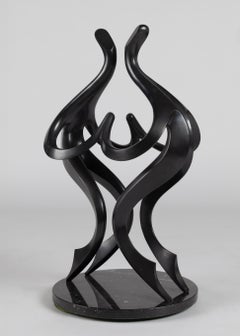
Dancing Figures
Located in Columbia, MO
Larry Young (American, born 1943) is a sculptor based in Columbia, Missouri, whose work spans over 50 monumental outdoor installations worldwide. Though he first achieved distinctio...
Category
20th Century Contemporary Figurative Sculptures
Materials
Bronze
The Dancer - Sculpture by Giuseppe Zumbolo - 2014
Located in Roma, IT
A unique piece from 2014, in excellent condition, with artist's certificate of authenticity.
The sculpture is created like this: internal iron structure, carved and shaped with ceme...
Category
2010s Contemporary Figurative Sculptures
Materials
Iron
$1,731 Sale Price
20% Off
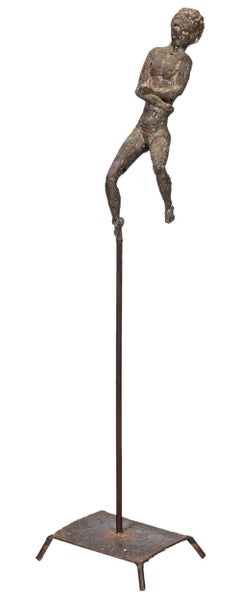
"Dancer" David Hare, Male Nude, Figurative Sculpture, Mid-Century Surrealist
By David Hare
Located in New York, NY
David Hare
Dancer, circa 1955
Bronze with integral stand
68 high x 17 wide x 13 1/2 deep inches
“Freedom is what we want,” David Hare boldly stated in 1965, but then he added the caveat, “and what we are most afraid of.” No one could accuse David Hare of possessing such fear. Blithely unconcerned with the critics’ judgments, Hare flitted through most of the major art developments of the mid-twentieth century in the United States. He changed mediums several times; just when his fame as a sculptor had reached its apogee about 1960, he switched over to painting. Yet he remained attached to surrealism long after it had fallen out of official favor. “I can’t change what I do in order to fit what would make me popular,” he said. “Not because of moral reasons, but just because I can’t do it; I’m not interested in it.”
Hare was born in New York City in 1917; his family was both wealthy and familiar with the world of modern art. Meredith (1870-1932), his father, was a prominent corporate attorney. His mother, Elizabeth Sage Goodwin (1878-1948) was an art collector, a financial backer of the 1913 Armory Show, and a friend of artists such as Constantin Brancusi, Walt Kuhn, and Marcel Duchamp.
In the 1920s, the entire family moved to Santa Fe, New Mexico and later to Colorado Springs, in the hope that the change in altitude and climate would help to heal Meredith’s tuberculosis. In Colorado Springs, Elizabeth founded the Fountain Valley School where David attended high school after his father died in 1932. In the western United States, Hare developed a fascination for kachina dolls and other aspects of Native American culture that would become a recurring source of inspiration in his career.
After high school, Hare briefly attended Bard College (1936-37) in Annandale-on-Hudson. At a loss as to what to do next, he parlayed his mother’s contacts into opening a commercial photography studio and began dabbling in color photography, still a rarity at the time [Kodachrome was introduced in 1935]. At age 22, Hare had his first solo exhibition at Walker Gallery in New York City; his 30 color photographs included one of President Franklin Roosevelt.
As a photographer, Hare experimented with an automatist technique called “heatage” (or “melted negatives”) in which he heated the negative in order to distort the image. Hare described them as “antagonisms of matter.” The final products were usually abstractions tending towards surrealism and similar to processes used by Man Ray, Raoul Ubac, and Wolfgang Paalen.
In 1940, Hare moved to Roxbury, CT, where he fraternized with neighboring artists such as Alexander Calder and Arshile Gorky, as well as Yves Tanguy who was married to Hare’s cousin Kay Sage, and the art dealer Julian Levy. The same year, Hare received a commission from the American Museum of Natural History to document the Pueblo Indians. He traveled to Santa Fe and, for several months, he took portrait photographs of members of the Hopi, Navajo, and Zuni tribes that were published in book form in 1941.
World War II turned Hare’s life upside down. He became a conduit in the exchange of artistic and intellectual ideas between U.S. artists and the surrealist émigrés fleeing Europe. In 1942, Hare befriended Andre Breton, the principal theorist of surrealism. When Breton wanted to publish a magazine to promote the movement in the United States, he could not serve as an editor because he was a foreign national. Instead, Breton selected Hare to edit the journal, entitled VVV [shorth for “Victory, Victory, Victory”], which ran for four issues (the second and third issues were printed as a single volume) from June 1942 to February 1944. Each edition of VVV focused on “poetry, plastic arts, anthropology, sociology, (and) psychology,” and was extensively illustrated by surrealist artists including Giorgio de Chirico, Roberto Matta, and Yves Tanguy; Max Ernst and Marcel Duchamp served as editorial advisors.
At the suggestion of Jacqueline Lamba...
Category
1950s Abstract Figurative Sculptures
Materials
Bronze
$20,000 Sale Price
20% Off