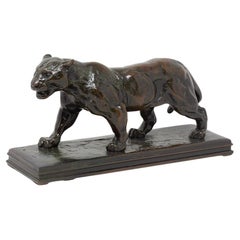
Items Similar to Walking Tiger - Late 19th century Bronze Sculpture
Want more images or videos?
Request additional images or videos from the seller
1 of 8
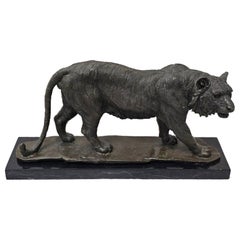
Johan Axel WetterlundWalking Tiger - Late 19th century Bronze SculptureLate 19th Century
Late 19th Century
$3,803.73
£2,852.15
€3,200
CA$5,307.61
A$5,746.59
CHF 3,055.20
MX$69,307.85
NOK 38,420.84
SEK 35,819.16
DKK 24,377.94
About the Item
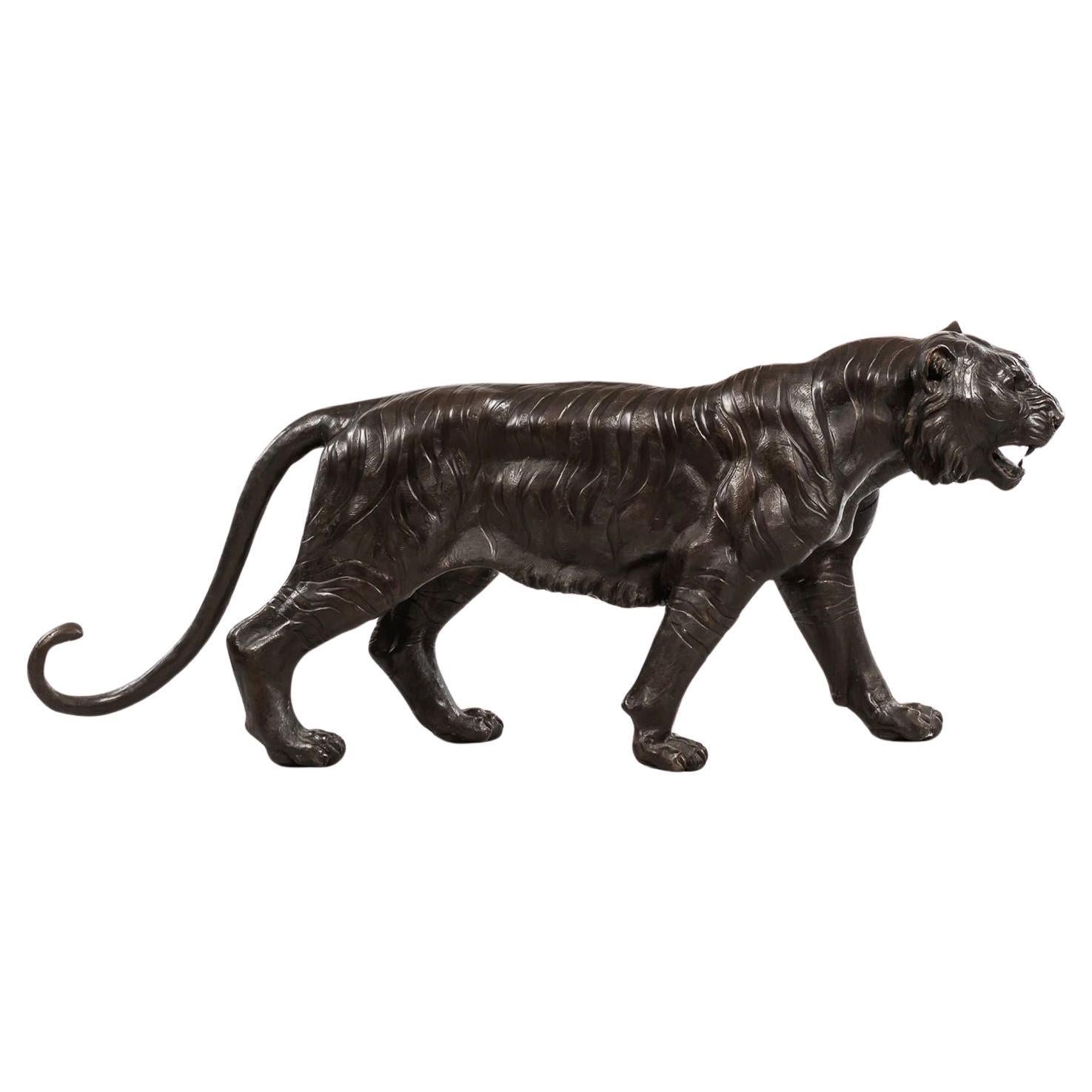
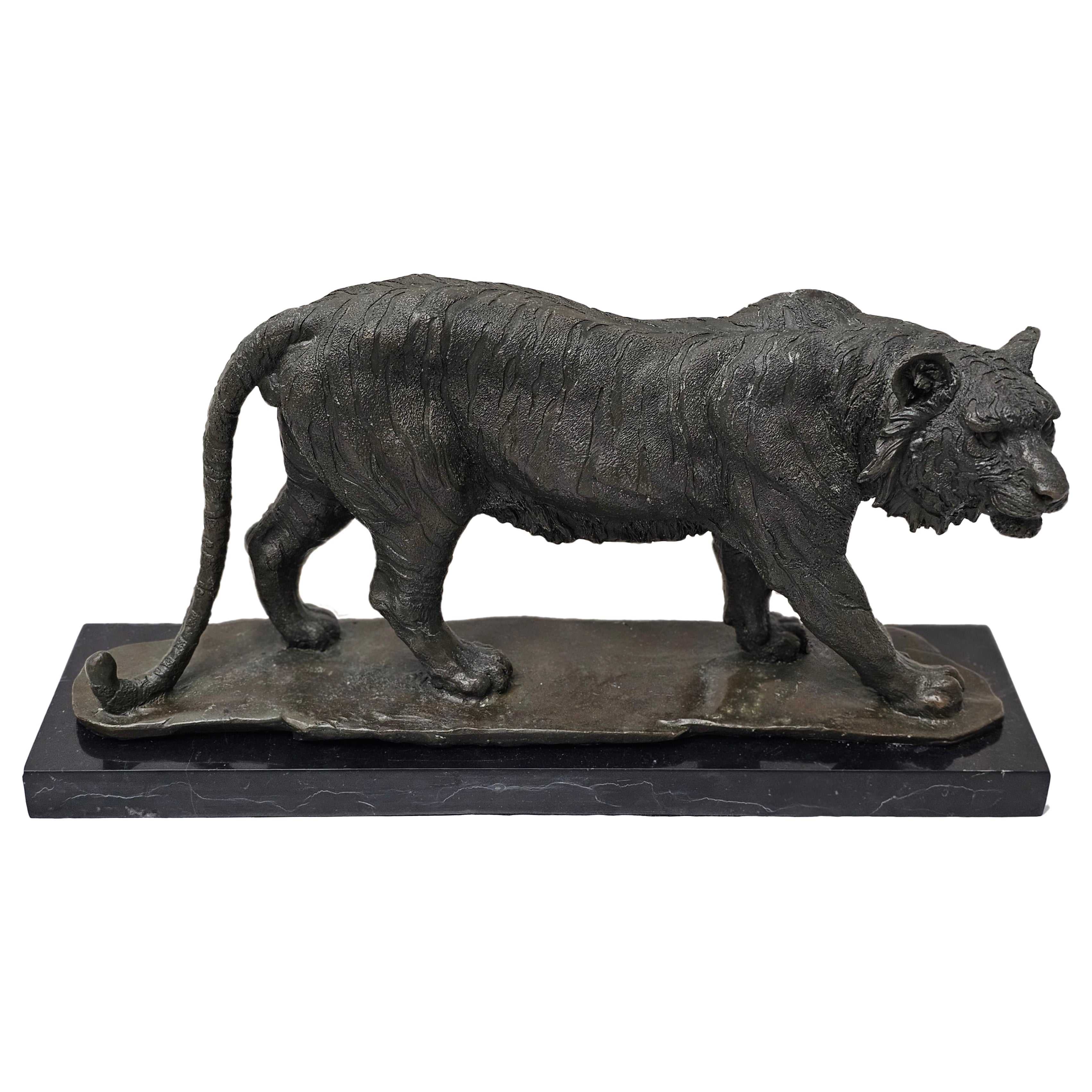
Sculpture of a walking tiger in dark patinated bronze by Johan Axel Wetterlund (1858-1927), signed J. A. Wetterlund, mounted on a black-painted wooden base. This finely modelled bronze sculpture of a walking tiger exemplifies the naturalistic precision and quiet strength characteristic of the Swedish sculptor Johan Axel Wetterlund. The animal’s muscular tension and balanced movement reveal Wetterlund’s technical skills and his observation of nature.
Johan Axel Wetterlund was born in Stockholm in 1858. He received his early artistic training at the Royal Swedish Academy of Fine Arts (Kungliga Akademien för de fria konsterna) in Stockholm, where he studied sculpture during the 1870s and 1880s under leading figures of the Swedish academic tradition. His early work reflects the influence of classical sculpture combined with a growing interest in naturalism, which would later define much of his artistic production.
After completing his studies, Wetterlund continued to develop his style through study trips abroad, particularly to Paris, where he became acquainted with the latest developments in European sculpture. He absorbed influences from the French animalier tradition, represented by artists such as Antoine-Louis Barye and Emmanuel Frémiet, whose focus on anatomical accuracy and expressive form clearly informed Wetterlund’s own depictions of animals and human figures.
Wetterlund established himself in Stockholm as a sculptor of both public monuments and smaller bronze works, often with subjects drawn from Nordic history, mythology, and the natural world. His sculptures were regularly exhibited at the Royal Academy exhibitions and at the Swedish Art and Industry Exhibitions during the late 19th and early 20th centuries.
He became a member of the Swedish Artists’ Association (Svenska Konstnärernas Förening) and participated in numerous national art events. Wetterlund’s works were also shown internationally, reflecting the growing reputation of Swedish sculpture in Europe around the turn of the century.
Among his best-known public works are several portrait busts and commemorative sculptures found in Swedish cities, as well as smaller bronze figures portraying animals in motion, a subject for which he became particularly admired.
Wetterlund’s sculpture is characterised by a balance between academic discipline and naturalistic observation. Whether portraying animals or human figures, he sought to capture vitality rather than idealisation. His bronzes are often patinated in dark tones, giving them a restrained and timeless character.
In works such as the Walking Tiger, Wetterlund demonstrates a sensitivity to rhythm and proportion, reflecting both his formal training and his empathy for the living subjects he modelled.
Johan Axel Wetterlund remained active until the 1920s and passed away in 1927. Though less widely known today than some of his contemporaries, he is regarded as part of the generation that bridged the classical academic tradition and the modern, more expressive realism in Swedish sculpture.
His animal sculptures, such as this tiger, stand as enduring examples of Swedish fin-de-siècle craftsmanship, uniting precision, grace, and a quiet sense of movement that continues to resonate with collectors and art historians alike.
- Creator:Johan Axel Wetterlund (1858 - 1927, Swedish)
- Creation Year:Late 19th Century
- Dimensions:Height: 10.24 in (26 cm)Width: 13.78 in (35 cm)Depth: 4.34 in (11 cm)
- Medium:
- Movement Style:
- Period:
- Condition:
- Gallery Location:Stockholm, SE
- Reference Number:1stDibs: LU2608217196472
About the Seller
5.0
Gold Seller
Premium sellers maintaining a 4.3+ rating and 24-hour response times
1stDibs seller since 2023
32 sales on 1stDibs
Typical response time: <1 hour
- ShippingRetrieving quote...Shipping from: Stockholm, Sweden
- Return Policy
More From This Seller
View AllDiana The Huntress - 1920´s Plaster Sculpture
Located in Stockholm, SE
Sculpture representing the goddess Diana by Danish sculptor Jens Jacob Bregno (1877–1946), executed in plaster around 1920. This is a highly unusual model by the artist, and possibly...
Category
1920s Art Deco Figurative Sculptures
Materials
Plaster
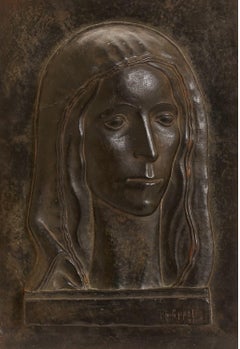
Arvid Knöppel, The Virgin Mary, Bronzed Wall Relief Plaster Sculpture, Signed.
Located in Stockholm, SE
A finely sculpted dark bronzed wall relief plaster sculpture of Virgin Mary by Arvid Knöppel, signed and dated 1921. An unusual subject of his...
Category
1920s Figurative Sculptures
Materials
Plaster
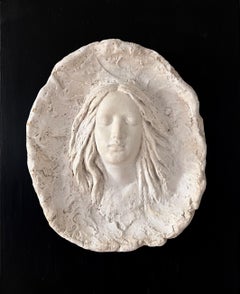
Art Nouveau Sculpture - 19th Century Plaster
Located in Stockholm, SE
A wall-mounted Art Nouveau relief by the Swedish sculptor Johannes Collin, signed “JC 96”, represents one of his earliest known works. Executed in plaster, the oval composition featu...
Category
1890s Art Nouveau Figurative Sculptures
Materials
Plaster
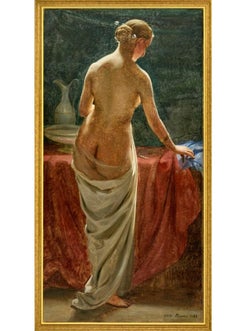
19th Century Neoclassical Scene - Psyche, Oil on Canvas
By Otto Bache
Located in Stockholm, SE
In this neoclassical oil on canvas signed and dated “Otto Bache 1864”, the artist depicts Psyche standing with her back turned to the viewer beside a red draped table. Her hair is ar...
Category
1860s Other Art Style Figurative Paintings
Materials
Oil
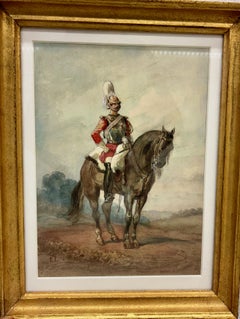
Cavalry Officer on his Horse
Located in Stockholm, SE
A finely worked watercolour on paper depicts a mounted cavalry officer—formal in bearing and costume—painted with the delicate clarity for which Egron Lundgren is best known. The she...
Category
Mid-19th Century Other Art Style Animal Drawings and Watercolors
Materials
Paper, Watercolor
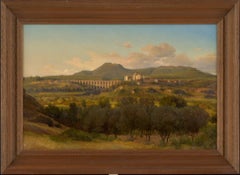
Italian Landscape, Ariccia and The Alban Mountains - Oil on Paper 1850´s
Located in Stockholm, SE
View of the Ariccia Bridge and the Alban Hills
This finely executed plein air landscape depicts the monumental bridge of Ariccia and the town with the surrounding Alban Hills, painted by German landscape artist Joachim Ludwig Heinrich Daniel Bünsow (born 1821 in Kiel, died 1910 in the same city). Executed in oil on paper mounted on cardboard, the work dates from his Italian period between 1853 and 1858. Not signed.
Bünsow received his artistic training at the Royal Danish Academy of Fine Arts in Copenhagen from 1839 to 1848, studying under Johann Ludwig Lund and Christoffer Wilhelm Eckersberg. In 1844, the Copenhagen Art Association acquired his painting "Tellingstedt in Dithmarschen." Following his studies, he traveled to Dresden, where he became associated with the circle around Johan Christian Dahl. A scholarship from the Copenhagen Academy enabled Bünsow to reside in Rome from 1853 to 1858. During this period, his landscapes evolved from the finely toned, naturalistic style of his early work to more atmospheric and idealized compositions, influenced by Louis Gurlitt.
Bünsow's early works from his time in Copenhagen are characterized by fine tonality and naturalistic rendering, reflecting the style of his teacher Christoffer Wilhelm Eckersberg. His Italian landscapes, however, exhibit a more atmospheric and idealized approach, influenced by Louis Gurlitt. Notably, Bünsow produced high-quality drawings during his time in Rome, some of which are preserved in the Kunsthalle zu Kiel.
Historical Context: The Ariccia Bridge
In the early 19th century, the local authorities sought to improve the Appian Way's safety and accessibility. The solution involved constructing bridges to span the Ariccia valley and adjacent ravines. In 1843, Pope Gregory XVI commissioned a six-arched bridge to address the elevation differences. Following his death in 1846, Pope Pius IX continued the project, entrusting architect Ireneo Aleandri with the design and Giuseppe Bertolini with the execution.
Completed in 1854, the bridge stands as a significant 19th-century engineering achievement. Featuring three tiers of elegant neoclassical arches inspired by Roman art, it measures 59 meters in height and 312 meters in length. Travertine columns at both ends commemorate the Roman milestones...
Category
1850s Other Art Style Landscape Paintings
Materials
Paper, Oil, Cardboard
$4,564 Sale Price
20% Off
Free Shipping
You May Also Like
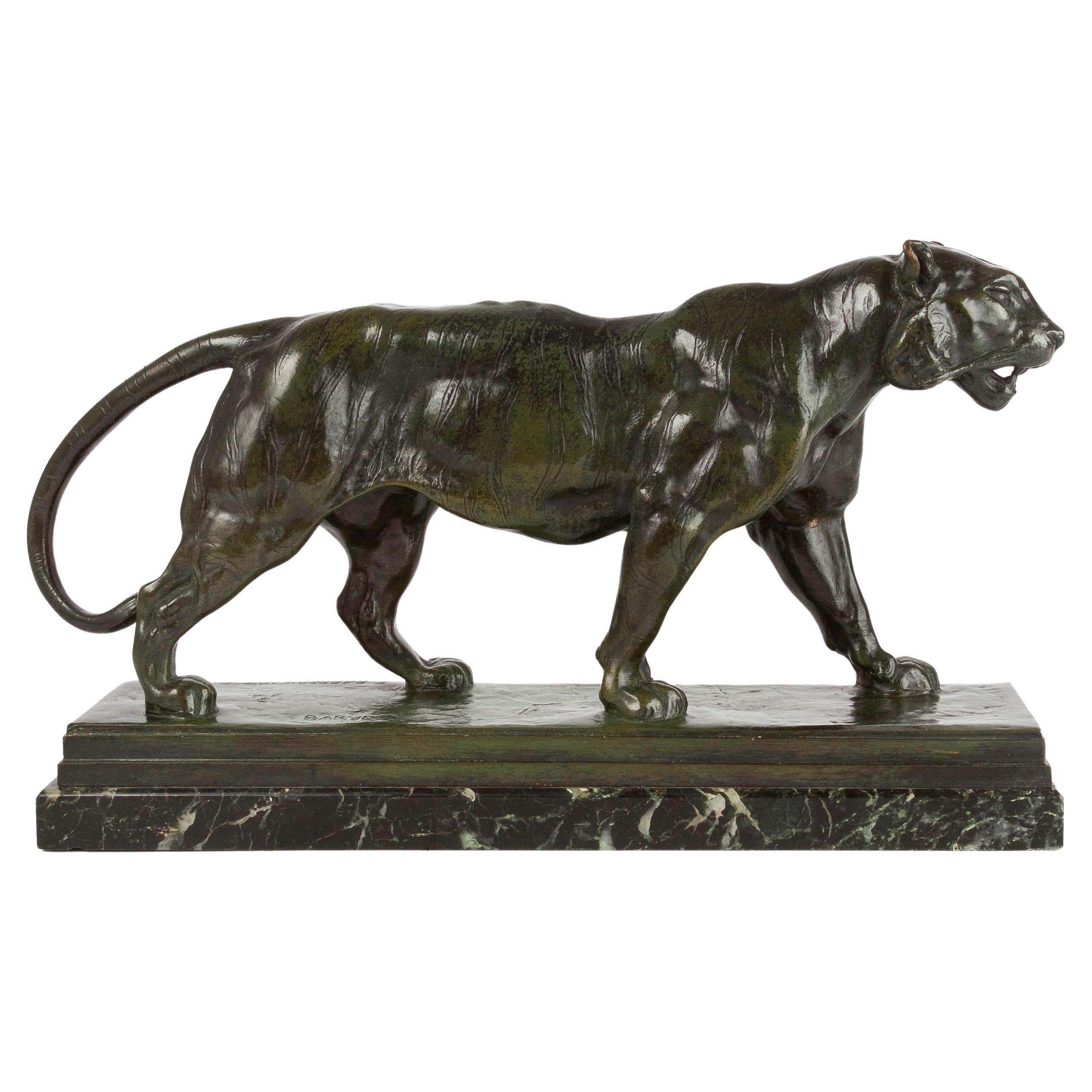
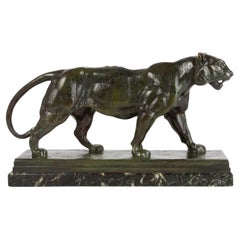
French Antique Bronze Sculpture"Walking Tiger"by Antoine-Louis Barye, Barbedienn
By Antoine-Louis Barye, F. Barbedienne Foundry
Located in Shippensburg, PA
ANTOINE-LOUIS BARYE
French, 1795-1875
"Tigre Qui Marche"
Patinated bronze Signed in base "BARYE", incised "F. BARBEDIENNE FONDEUR, FRANCE" conceived 1841, cast circa 1880-1900
Item # 110UGP10Q
Barye's ability to merge our romantic idealization of nature with a colder reality of nature's predator is beautifully represented in this striding cat. Originally conceived in 1841, Tigre Qui Marche (Walking Tiger...
Category
Antique 19th Century French Romantic Animal Sculptures
Materials
Marble, Bronze
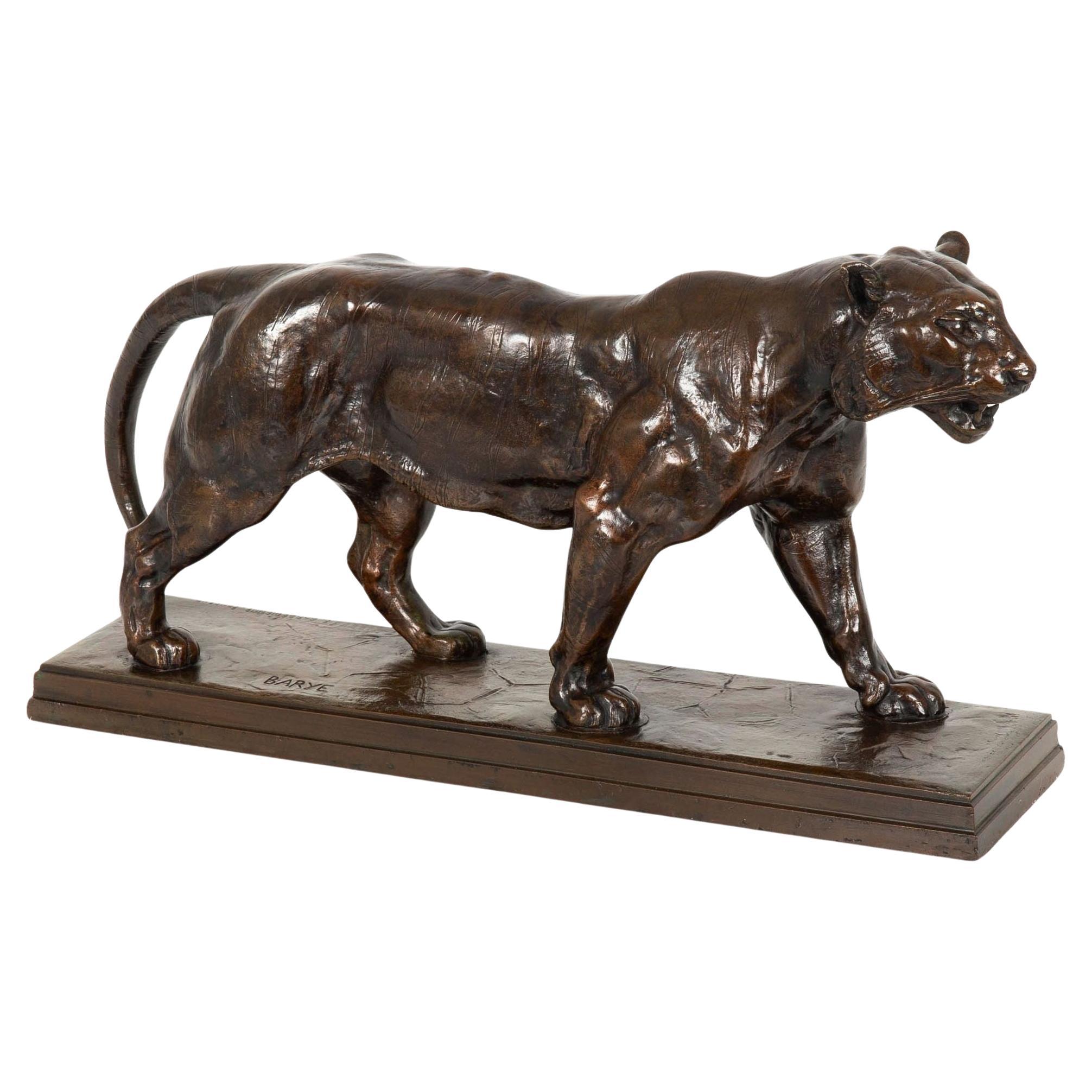
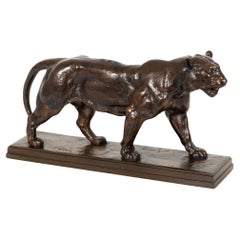
French 1880s Bronze Sculpture “Tiger Walking” by Antoine-Louis Barye
By F. Barbedienne Foundry, Antoine-Louis Barye
Located in Shippensburg, PA
ANTOINE-LOUIS BARYE
France, 1796-1875
Tigre Qui Marche
Sand-cast bronze with medium-brown, black and coppery patination signed "BARYE" with gently raised edges, incised "F. BARBED...
Category
Antique 19th Century French Romantic Animal Sculptures
Materials
Bronze
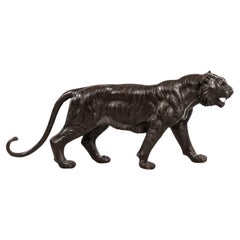
Life-Size Bronze Sculpture of a Walking Bengal Tiger by G. Van de Voorde
By Georges Van De Voorde
Located in Los Angeles, CA
This stunning life-size bronze sculpture captures the majestic essence of a Bengal tiger in all its untamed glory. The bronze is finished with a dark brown patina, giving this piece ...
Category
Vintage 1950s Belgian Animal Sculptures
Materials
Bronze
Bronze Sculpture of A Stalking Tiger w/ Brown Patina on a Mottled Marble Plinth
Located in Germantown, MD
A Bronze Sculpture of A Stalking Tiger with Brown Patina on a Mottled Marble Plinth. Amazing details and realistic. Measures 18" in width, 4.5" in depth and 9" tall overall. 17" W x ...
Category
20th Century Unknown Neoclassical Animal Sculptures
Materials
Marble, Bronze
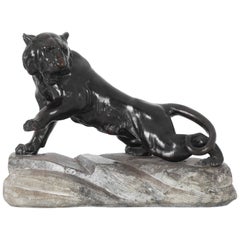
Vintage Bronze Tiger Sculpture
Located in High Point, NC
This bronze tiger sculpture on a stone was made in France, and will make an impressive statement in any interior space. The tiger, with open jaw...
Category
Vintage 1950s French Animal Sculptures
Materials
Stone, Bronze
$2,796 Sale Price
30% Off
French Bronze Jaguar Qui Marche No. 2 (Walking Jaguar) by Antoine Barye
By Antoine-Louis Barye
Located in Newark, England
SIGNED BAYRE
From our Sculpture collection, we are delighted to offer this Jaguar Qui Marche No. 2 (Walking Jaguar) Bronze by Antoine-Louis Barye. The Jaguar Qui Marche translates ...
Category
Antique Late 19th Century French Belle Époque Animal Sculptures
Materials
Bronze