Items Similar to Art Nouveau Sculpture - 19th Century Plaster

Want more images or videos?
Request additional images or videos from the seller
1 of 12
JOHANNES COLLINArt Nouveau Sculpture - 19th Century Plaster1896
1896
$1,917.79
£1,434.63
€1,600
CA$2,640.39
A$2,889.58
CHF 1,526.89
MX$34,489.10
NOK 19,485.04
SEK 17,820.66
DKK 12,190.19
About the Item
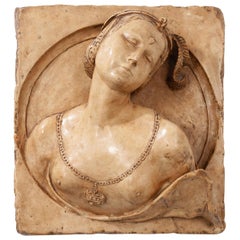
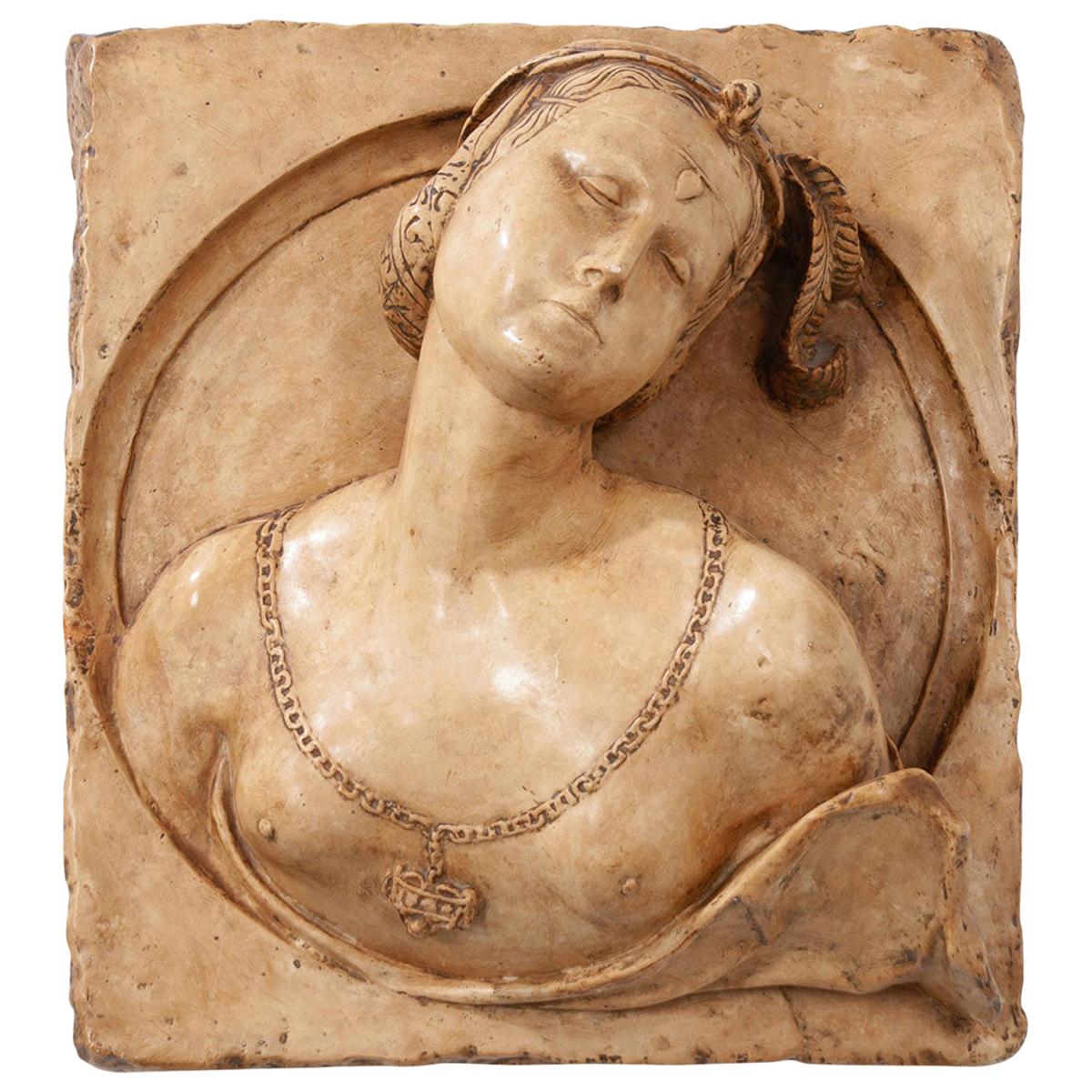
A wall-mounted Art Nouveau relief by the Swedish sculptor Johannes Collin, signed “JC 96”, represents one of his earliest known works. Executed in plaster, the oval composition features a stylistically mussel shaped base from which emerges the finely modelled face of a young woman with long flowing hair. Her eyes are closed, conveying a sense of calm introspection and timeless beauty. The softly curved forms and delicate modelling create a serene harmony between natural rhythm and sculptural precision. The work is mounted on a later black-painted wooden plaque (26 × 33 cm), while the sculpture itself measures 21 × 18.5 cm. It is an unusually early piece by the artist, displaying craftsmanship and sensitivity.
Born in Stockholm in 1873, Johannes Collin trained as a sculptor during the final years of the 19th century, a period marked by the transition from academic historicism to the organic, nature-inspired forms of Art Nouveau (Jugendstil). His early works, such as this 1896 relief, already reveal a refined awareness of contour, proportion, and the poetic interplay between human expression and natural form.
Collin studied at the Royal Swedish Academy of Fine Arts (Kungliga Akademien för de fria konsterna) in Stockholm, where he was influenced by sculptors such as John Börjeson and Christian Eriksson. Over the following decades, he developed a personal style that combined naturalistic modelling with decorative rhythm and symbolic depth. He participated in exhibitions at the Konstakademien in Stockholm, in shows organized by the Swedish Artists’ Association (Svenska konstnärernas förening), and at the Baltic Exhibition in Malmö (1914)—one of the era’s major showcases of Scandinavian art and design.
Throughout his career, Collin produced portraits, allegorical figures, and architectural sculpture in plaster, bronze, marble, and terracotta. His works are represented in several Swedish collections, including the Nationalmuseum in Stockholm and the Göteborgs konstmuseum, as well as in regional museums and private collections.
About Art Nouveau / Jugend
Art Nouveau, known in Sweden and Germany as Jugendstil, was an international artistic movement (c. 1890–1910) that sought to unite the arts under the guiding principle of nature’s harmony. Characterized by flowing lines, floral motifs, and organic rhythms, it aimed to dissolve the boundaries between fine and decorative art, bringing art into everyday life. In sculpture, this often meant a focus on the human body, sensual form, and the beauty of natural curves.
Within this aesthetic, Collin’s relief of a woman’s face emerging from a mussel-shaped base carries both mythological and symbolic resonance. The motif recalls the classical image of Venus rising from the sea, where the shell or mussel symbolizes birth, femininity, and the creative power of nature. In the Art Nouveau context, the merging of the female form with a natural object expresses the unity between woman and nature, portraying her as both a force of creation and a vessel of introspection. The closed eyes suggest an inner vision or spiritual calm, transforming the composition into a meditation on beauty, stillness, and the eternal rhythm of life.
Thus, the woman in the mussel becomes not merely a decorative subject but a symbol of the lifegiving principle of nature itself, a recurring theme in the poetic and organic language of early modern sculpture.
- Creator:JOHANNES COLLIN (1873 - 1951, Swedish)
- Creation Year:1896
- Dimensions:Height: 13 in (33 cm)Width: 10.24 in (26 cm)Depth: 2.37 in (6 cm)
- Medium:
- Movement Style:
- Period:
- Condition:In very good condition. The black painted background wooden plaque is later.
- Gallery Location:Stockholm, SE
- Reference Number:1stDibs: LU2608217181392
About the Seller
5.0
Gold Seller
Premium sellers maintaining a 4.3+ rating and 24-hour response times
1stDibs seller since 2023
33 sales on 1stDibs
Typical response time: <1 hour
- ShippingRetrieving quote...Shipping from: Stockholm, Sweden
- Return Policy
More From This Seller
View AllArvid Knöppel, The Virgin Mary, Bronzed Wall Relief Plaster Sculpture, Signed.
Located in Stockholm, SE
A finely sculpted dark bronzed wall relief plaster sculpture of Virgin Mary by Arvid Knöppel, signed and dated 1921. An unusual subject of his...
Category
1920s Figurative Sculptures
Materials
Plaster
Diana The Huntress - 1920´s Plaster Sculpture
Located in Stockholm, SE
Sculpture representing the goddess Diana by Danish sculptor Jens Jacob Bregno (1877–1946), executed in plaster around 1920. This is a highly unusual model by the artist, and possibly...
Category
1920s Art Deco Figurative Sculptures
Materials
Plaster
19th Century Neoclassical Scene - Psyche, Oil on Canvas
By Otto Bache
Located in Stockholm, SE
In this neoclassical oil on canvas signed and dated “Otto Bache 1864”, the artist depicts Psyche standing with her back turned to the viewer beside a red draped table. Her hair is arranged in a tight knot, secured with a hairpin adorned with two large pearls. She holds a light drapery that covers her legs, while the rest of her body remains nude. With her head turned toward the right, she gazes downward toward the table, where a blue gown or drapery lies, the garment she is about to put on.
Her softly illuminated profile emerges as she turns in the light falling from the upper left, creating a striking backlight that heightens the contrast along the contours of her body. On the richly red draped table before her rest her jewellery and, to her left, a large amphora-shaped jug and a tazza bowl. The light descending from above to the left defines the composition with sharp contrasts between brightness and shadow, revealing the delicate modelling of Psyche’s form and lending the scene a quiet sense of introspection and grace.
Exhibited: Winkel & Magnussen October 1915 no. 5, ill. p. 5.
Otto Bache was born in 1839 in Roskilde, Denmark, and died in 1927 in Copenhagen.
At the age of only eleven he was admitted to the Royal Danish Academy of Fine Arts in Copenhagen where he studied drawing and painting under the supervision of artists such as Wilhelm Marstrand. His early training gave him a basis in the Danish “Golden Age” tradition of realism and naturalism, but he went on to travel and extend his horizons. In 1866 he received an Academy travel-scholarship and went to Paris, then Italy (1867–68).
The influence of Paris is often noted: his palette became richer, his handling freer, his light stronger, and his subjects broader. Later in his career, from around 1887, he held the post as professor and on various occasions director of the Royal Danish Academy.
Bache’s early work reflects his rigorous academic training: careful drawing, subdued palette and interest in genre scenes and rural life. After his travel in Paris and Italy he adopted a somewhat more robust handling of color and light, but still remained essentially realist and narrative in approach.
He painted portraits, animal and hunting subjects, genre scenes, and large history-paintings depicting key moments from Danish history.
In particular, during the 1880s and 1890s when he was commissioned to execute large history canvases for the Museum of National History at Frederiksborg Castle and similar institutions, depicting events such as the exploits of Danish soldiers...
Category
1860s Other Art Style Figurative Paintings
Materials
Oil
Cloud Study - 19th Century Oil on Paper
Located in Stockholm, SE
Cloud study by a rocky coastline overlooking the sea. To the right of the composition stands a large maritime marker, while in the lower left a few ship masts emerge in the distance....
Category
19th Century Other Art Style Landscape Paintings
Materials
Paper, Oil, Wood Panel
Portrait of a Romani Woman - 19th Century Drawing
Located in Stockholm, SE
A graphite profile portrait drawing of a woman on paper by Johannes Collin (1873-1951), signed “Johannes Collin 98” and titled “Zigenerska”. This early and unusual work by Collin presents his interest in refined drawing and capturing character even at a modest scale. It dates from 1898, a formative moment for the artist when he was studying arts and stands out as a somewhat rare example of his graphic or drawing work rather than his better known small bronzes.
Johannes Collin was born in 1873 in Skåne, south Sweden.
After passing his matriculation at the Cathedral School in Lund in 1892, he studied at university in 1894–96 and then turned to art studies.
From 1899 to 1901 he studied at the Royal Academy of Fine Arts in Stockholm, and from 1903 to 1905 he studied sculpture in Paris.
Collin settled in Lund, Skåne and pursued a career as sculptor and poet. He died in 1951 in Lund.
He was the son of a farmer and raised in the Skåne countryside. Early on he developed a sensitivity to form, figure, and expression, combining his sculptural ambitions with literary leanings (he later published a small volume of poetry).
Collin appears to have had an individualistic personality: he moved in student and artistic circles in Lund, but also kept a modest, sometimes even eccentric public persona. In the mid-1930s, he increasingly turned to poetry and pared back his three-dimensional work.
From his early years, he gradually developed into a sculptor working in bronze and patinated materials. Much of his work consists of small‐scale bronzes with an intensity of expression. One critic (in Kulturens yearbook) wrote of Collin that “the monumental is not in the work’s external dimensions but in the attitude … your small sculptures have an inner monumentality”.
Collin exhibited his works in various venues: for example he took part in the Lund Exhibition (“Lundautställningen”) in 1907.
Internationally, he showed works in Munich in 1909 and 1913, where his efforts were positively reviewed.
A noteworthy retrospective or exhibition was held at the museum Kulturen in Lund, when a donation of Collin’s sculptures...
Category
1890s Other Art Style Portrait Drawings and Watercolors
Materials
Paper, Graphite
Russian Princess Olga Meyendorff, born Gorchakov - 19th Century Portrait
Located in Stockholm, SE
Portrait of Princess Olga Gorchakov by female 19th century artist Elise Hügel.
An oval portrait of Princess Olga Gortschakoff (1838–1926), here pictured soon after her marriage to Baron Friedrich Adeldagus Felix von Meyendorff, becoming Baroness von Meyendorff, signed Elise Hügel and dated 1858. Executed in oil on canvas, the work shows a young Olga in her early 20´s...
Category
1850s Other Art Style Portrait Paintings
Materials
Canvas, Oil
You May Also Like
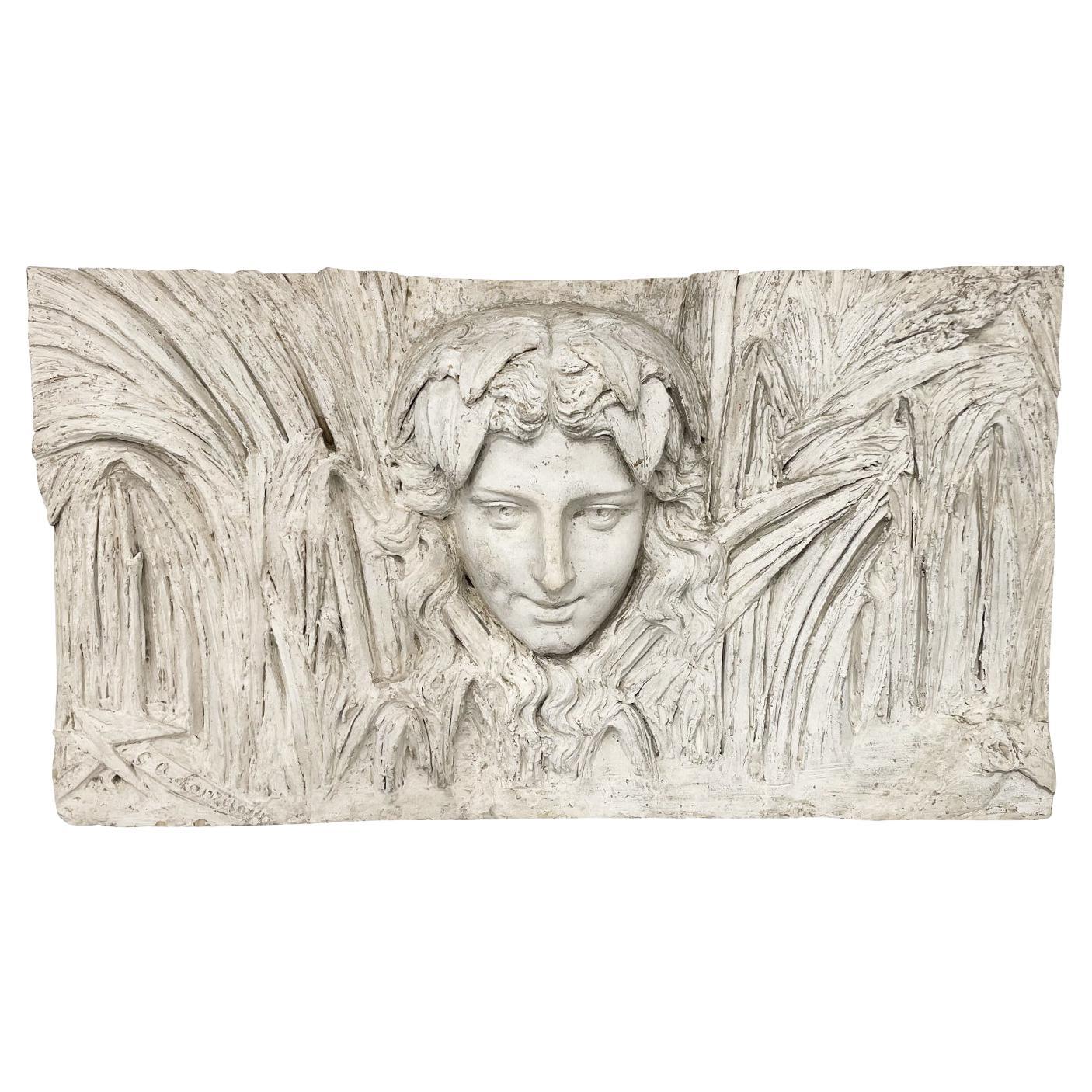
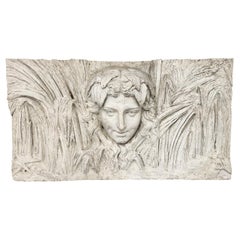
20th Century French Vintage Art Deco Plaster Wall Relief of a Woman
Located in West Palm Beach, FL
A white, vintage Art Deco French wall, bas relief of a female head made of hand crafted plaster, in good condition. Signed on the lower left. Not recommended for exterior use. Minor ...
Category
Early 20th Century French Art Deco Wall-mounted Sculptures
Materials
Plaster
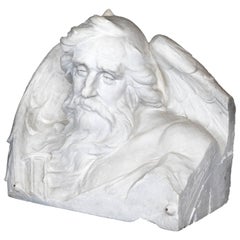
Monumental Plaster Sculpture
Located in Los Angeles, CA
This large work of art molded during the early 1900's is signed by the artist. The winged bearded man is in good condition for its age, and on a solid wood structure. The sculpture...
Category
Vintage 1910s French Art Nouveau Figurative Sculptures
Materials
Plaster, Wood
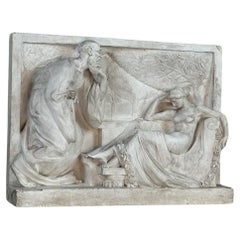
Plaster Sculpture, Around 1900
Located in Honnelles, WHT
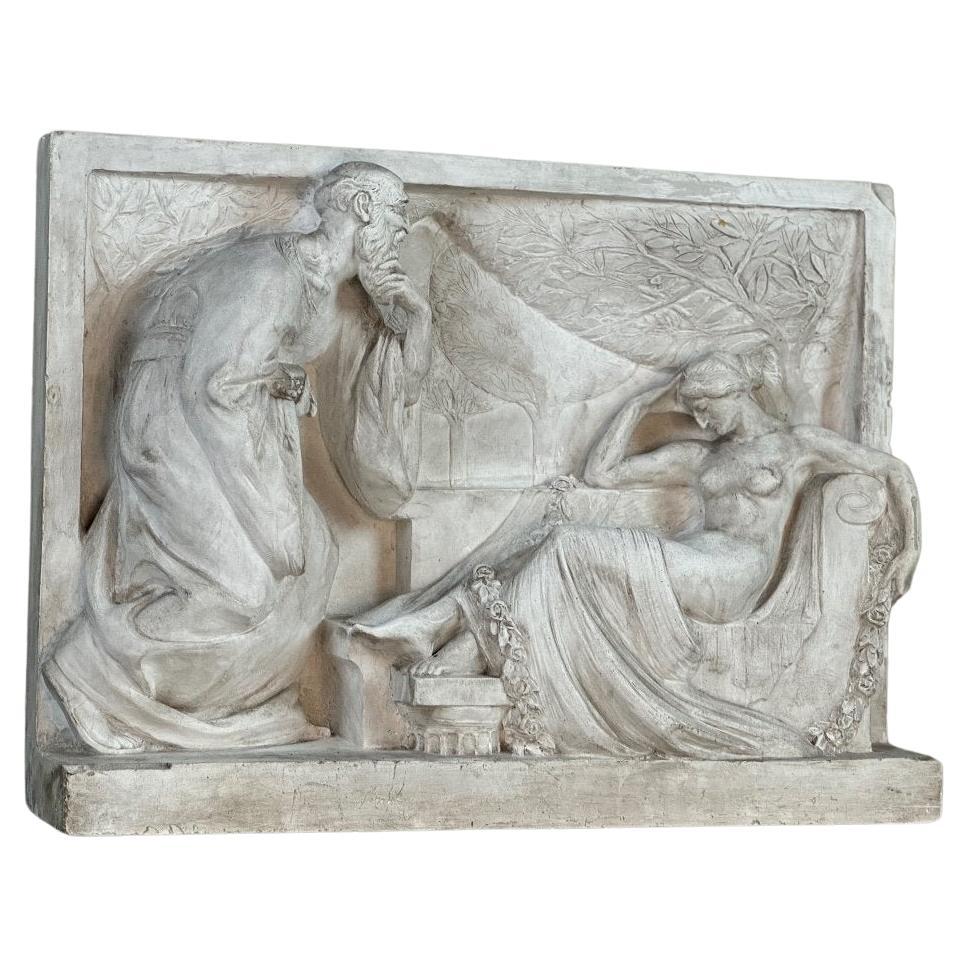
Plaster sculpture, youth and old man, no signature
Category
Early 20th Century European Greco Roman Figurative Sculptures
Materials
Plaster
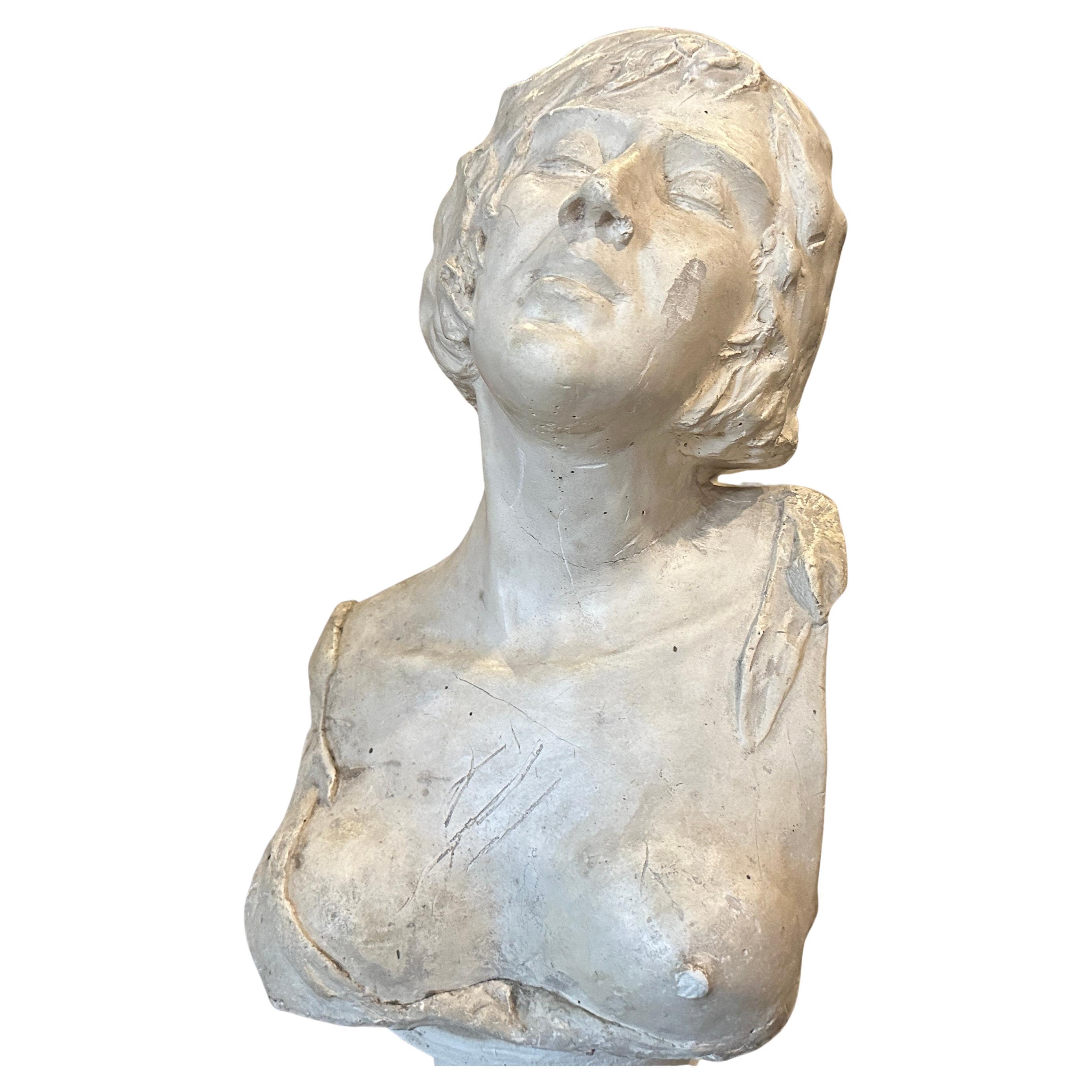
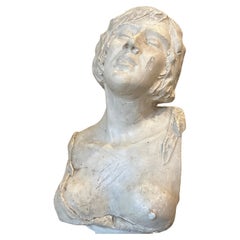
An Art Nouveau Plaster Italian Sculpture of a Woman
Located in Catania, Sicilia
This Italian sculpture fits within the tradition of capturing feminine beauty in a romanticized manner, emphasizing elegance and emotional expression, it shows a woman in a serene or...
Category
Early 20th Century Italian Art Nouveau Busts
Materials
Plaster
Plaster Sculpture, Art Deco Period, Jan
Joel Martel Style, France, circa 1930
Located in Auribeau sur Siagne, FR
This woman bust is in Plaster. It is an Art Deco Sculpture, made circa 1930, in France.
In a white color. In the Style of Jan and Joël MARTEL.
Category
Vintage 1930s French Art Deco Figurative Sculptures
Materials
Plaster
$1,150 Sale Price
20% Off
French 19th Century Plaster Copy of Lady from the Louvre
Located in Baton Rouge, LA
Stunning French 19th century plaster copy of lady from the Louvre, circa 1850. It has a small plaque on the back “Musee Du Louvre -Reproduction Interdite - Ateliers de Moulage.”
Category
Antique 19th Century French Other Wall-mounted Sculptures
Materials
Plaster