Items Similar to Atelier of John Gibson Venus in Marble Neoclassical Sculpture
Video Loading
Want more images or videos?
Request additional images or videos from the seller
1 of 15
Atelier of John Gibson Venus in Marble Neoclassical Sculpturecirca 1850s
circa 1850s
$15,384.62
£11,496.49
€13,000
CA$21,422.31
A$23,020.52
CHF 12,351.85
MX$271,167.69
NOK 155,310.77
SEK 141,875.38
DKK 99,100
About the Item
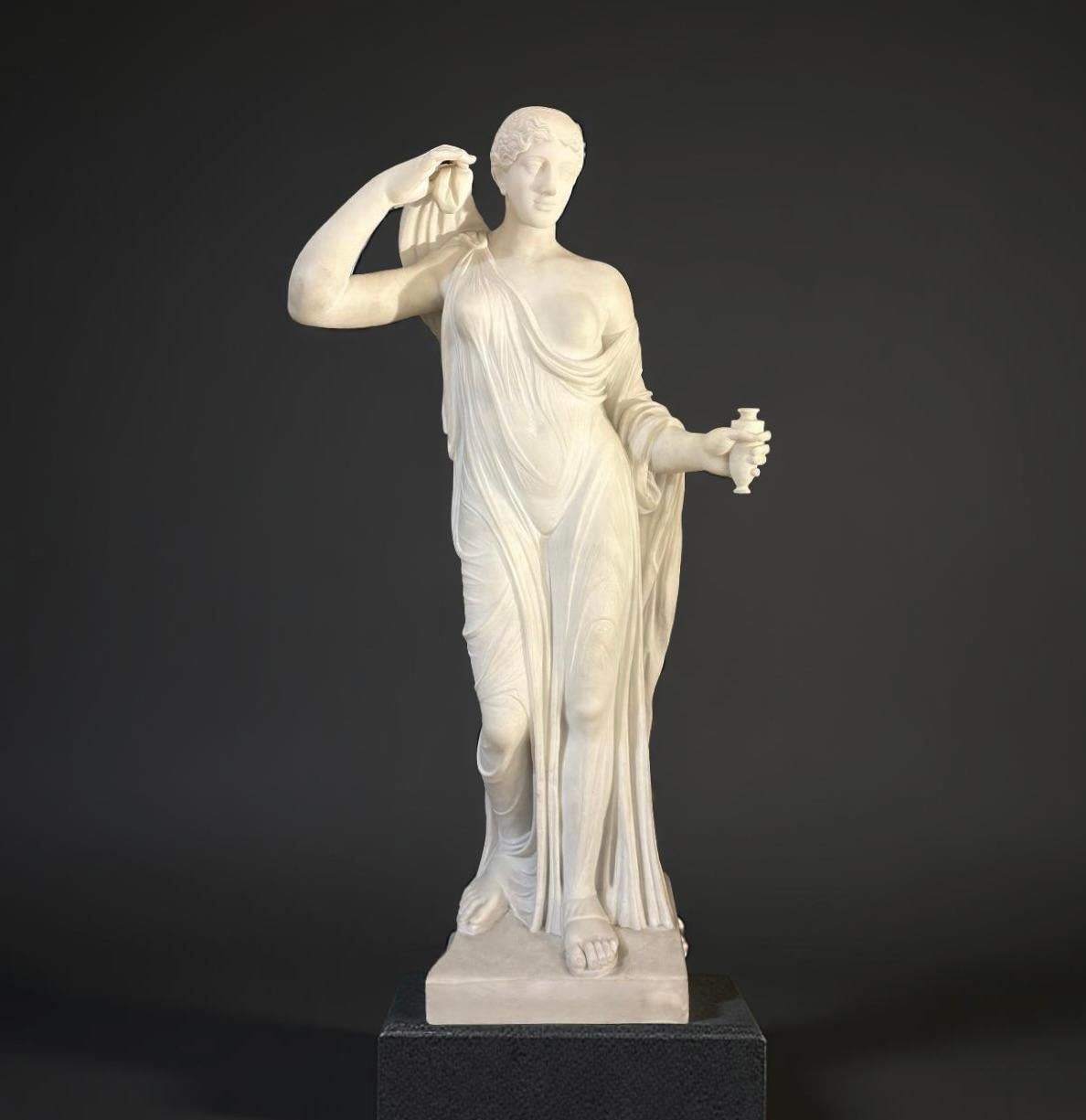
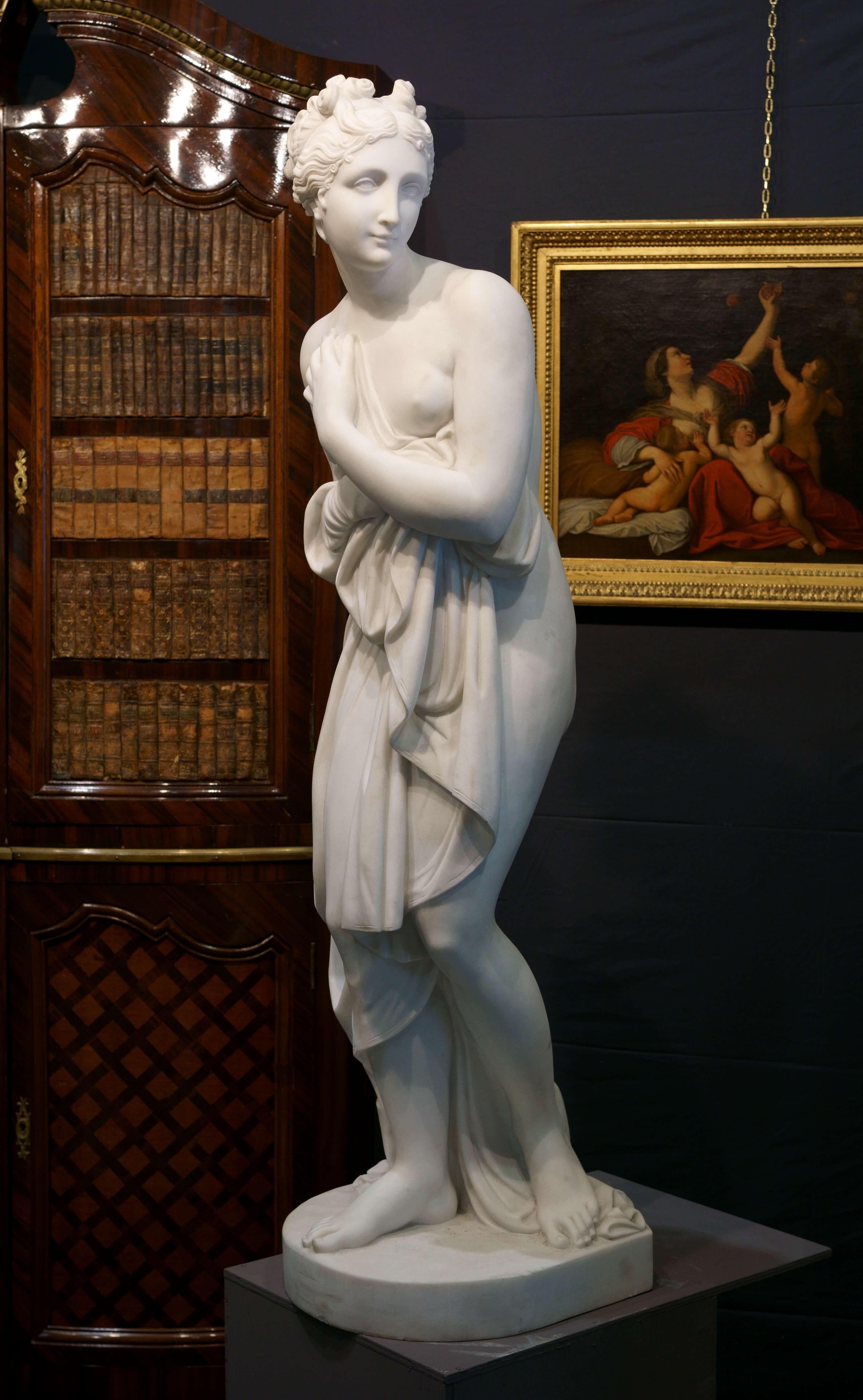
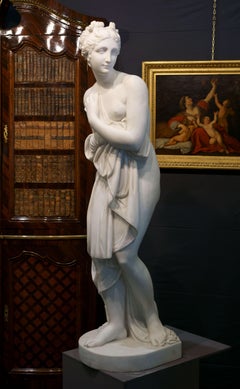
Large white marble sculpture depicting Venus, from the workshop of John Gibson, Rome, circa 1850. Known as Venus Verticordia or Venus Colored, its history is fascinating.
John Gibson (June 19, 1790 - January 27, 1866) was a prominent Welsh neoclassical sculptor. He studied in Rome with Canova and opened his own workshop there, where he worked until his death. Born in Wales and raised in Liverpool, John Gibson had a brilliant career. After completing his apprenticeship at the age of 26, this ambitious Welshman arrived in London as a promising artist. He exhibited several times at the Royal Academy and, within two years, realized the dream of every young sculptor of his time: to study in Rome. The next two years spent with Canova shaped his career and sculptural approach. Gibson also studied with Bertel Thorvaldsen and, at the age of 31, opened his workshop on Via della Fontanella, near Piazza del Popolo. John Gibson's workshop was one of the largest in Rome during his lifetime; it was an essential stop on the circuit of Roman sculptors' workshops, as described in Hawks Le Grice's famous 1840 manual. He employed specialized modelers, sculptors, and trainers and counted among his students several promising artists, such as Harriet Hosmer, William Theed, and Benjamin Spence. Around 1839, Joseph Neeld, heir of wealthy goldsmith Philip Rundell, commissioned Gibson to create a standing Venus for his prestigious collection of contemporary British sculpture housed at Grittleton Hall in Wiltshire. Gibson first exhibited this work at the Royal Academy in 1839 under the title Venus Verticordia, meaning "She who changes hearts." In ancient Rome, Venus Verticordia was believed to have the power to convert the hearts of women and girls from lust to chastity. Gibson's Venus is not a stereotypical copy of the ancient: a keen observer, he loved to watch passersby, capture their gestures and transpose them into his creations. He always carried a small notebook full of preparatory sketches and notes. Regarding his Venus, he said, "I had often noticed that women, when holding a fan or light object, generally rest their hands in front of them. I therefore depicted my Venus standing, holding a golden apple in her left hand." At his feet, in the purest tradition of Renaissance sculpture, he placed a tortoise, a symbol of fertility, love, longevity and protection. The Venus Verticordia was such a success among Gibson's customers that he decided to create a colored version of it in the Greek style, which he presented at the Great Exhibition of 1862. This colorful model caused a stir and scandal at the Exposition and from then on became universally known as the Colored Venus. The fame of the Colored Venus earned Gibson additional commissions for various versions of the model, in different sizes, most of them uncolored. Many of these, particularly the larger ones (118 to 167 cm), bear the artist's signature, but there are also smaller, unsigned versions, such as the 74 cm one preserved at the Art Gallery of New South Wales in Sydney.
We can say with certainty that our model, in pure Carrara statuary marble, is undoubtedly one of those unsigned versions that came out of the artist's studio: of exceptional quality and condition, it belonged to the collection of an important Roman family. As Gibson himself described, "I tried to give my Venus an expression of purity and gentleness, imbued with unchanged dignity and grace, and great spiritual elevation." These are all typically Victorian values, worthy of the quintessential Victorian sculpture.
The sculpture is intact, never having undergone restoration.
Size:
Hauteur : 84 cm
Base: 26 x 24 cm
- Attributed to:John Gibson (1790 - 1866, English)
- Creation Year:circa 1850s
- Dimensions:Height: 33.08 in (84 cm)Width: 10.24 in (26 cm)Depth: 9.45 in (24 cm)
- Medium:
- Movement Style:
- Period:
- Condition:Perfect condition, intact, never restored.
- Gallery Location:Pistoia, IT
- Reference Number:1stDibs: LU2746217450572
About the Seller
4.8
Vetted Professional Seller
Every seller passes strict standards for authenticity and reliability
Established in 1997
1stDibs seller since 2024
20 sales on 1stDibs
Typical response time: 1 hour
- ShippingRetrieving quote...Shipping from: PISTOIA, Italy
- Return Policy
More From This Seller
View AllImponente Scultura Neoclassica Italiana in Marmo Venere Genitrice XIX secolo
Located in Pistoia, IT
Imponente scultura neoclassica in marmo, modello conosciuto come Afrodite Louvre-Napoli o Venus Genitrix, bottega italiana, 19 secolo.
La dea è raffigurata in piedi, al momento de...
Category
19th Century Academic Figurative Sculptures
Materials
Marble
Large Neoclassical White Marble Sculpture Venus Italica mid-19th century
Located in Pistoia, IT
Venus Italica, imposing sculpture in white Carrara marble, mid-nineteenth-century Roman atelier.
Antonio Canova made several sculptures depicting Venus. The first was made as compen...
Category
Mid-19th Century Italian School Figurative Sculptures
Materials
Marble
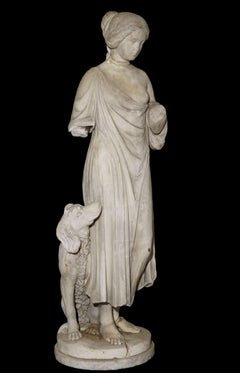
Large Italian Neoclassical Marble Sculpture Allegory 18th century
Located in Pistoia, IT
Impressive neoclassical Carrara marble sculpture depicting the Allegory of Friendship and Loyalty, second half of the 18th century.
The sculpture depicts Friendship as a classical ...
Category
Late 18th Century Italian School Figurative Sculptures
Materials
Marble
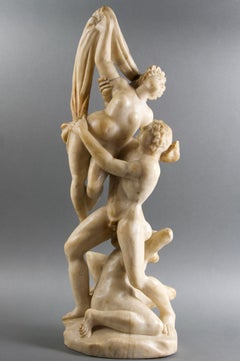
Italian Neoclassical Sculptural Group in Alabaster "The Rape of the Sabine Women" 18th
Located in Pistoia, IT
"The Rape of the Sabine Women," veined alabaster, large sculptural group with classical subject, Volterra manufacture, 18th century.
The so-called Rape of the Sabine Women is a scu...
Category
1790s Italian School Figurative Sculptures
Materials
Alabaster
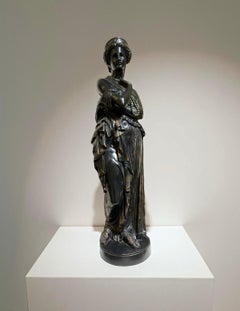
Grande Bronzo Francese "Elena di Troia" Firmato Fonderia Barbedienne
Located in Pistoia, IT
"Elena di Troia", grande scultura in bronzo a patina bruna firmata alla base J.Clesinger-Rome 1864 - F. Barbedienne fonditore e recante il sigillo di riduzione meccanica Collas.
Ecc...
Category
1860s French School Figurative Sculptures
Materials
Bronze
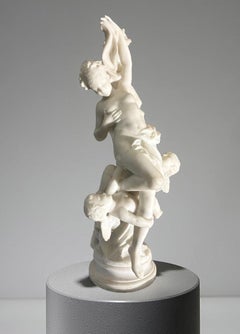
Grande Gruppo in Marmo "L
Innocenza tormentata dall
Amore" Scultura Francese
Located in Pistoia, IT
Imponente gruppo in marmo bianco raffigurante "Innocenza tormentata da Amore", firmato Luca Madrassi. Scuola francese, fine XIX secolo, periodo Art Nouveau.
Questo splendido grupp...
Category
Late 19th Century Art Nouveau Figurative Sculptures
Materials
Marble
You May Also Like
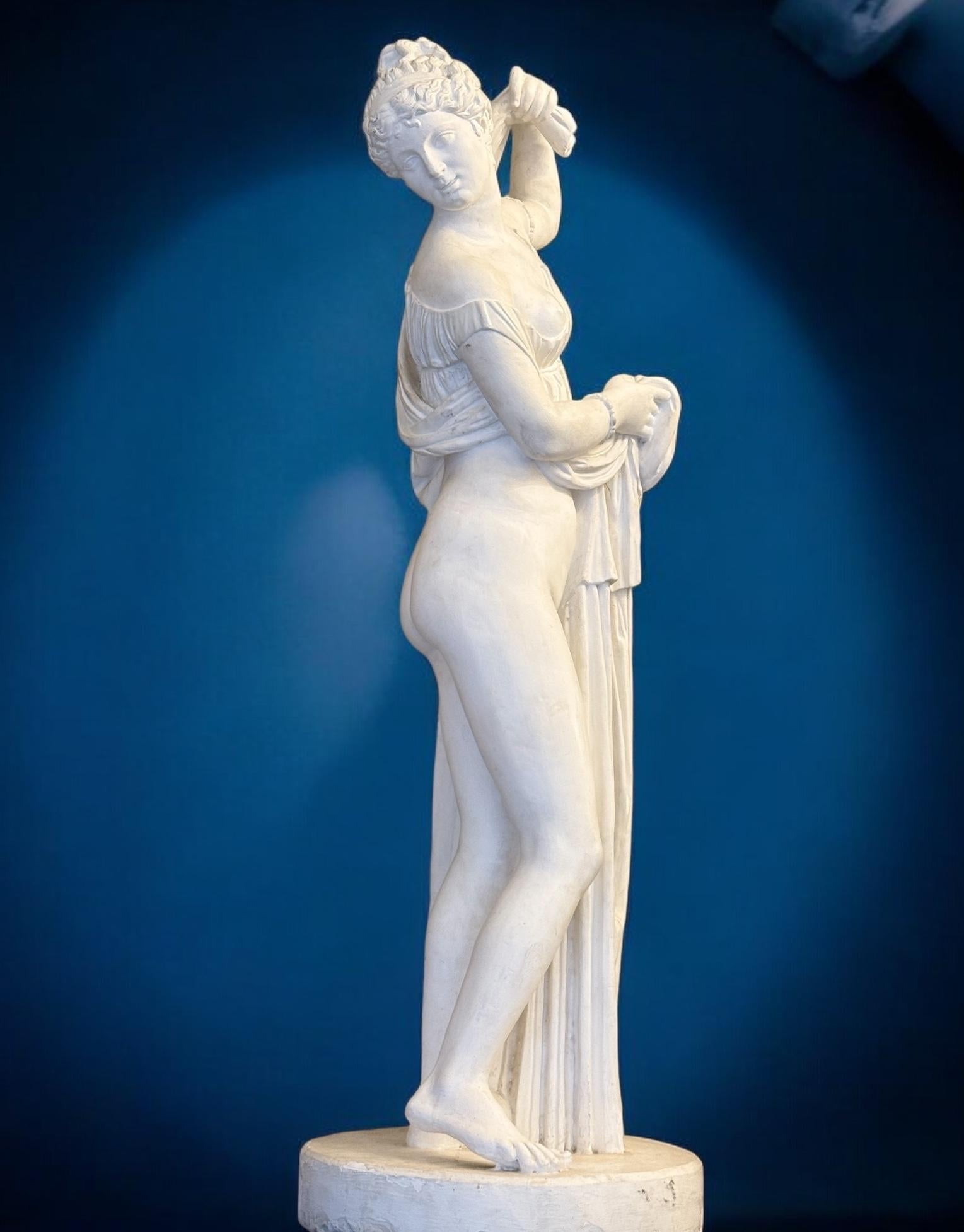
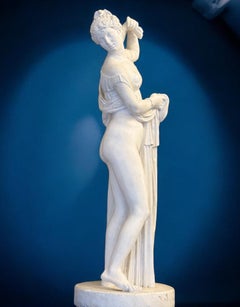
Life-size Plaster Statue of The Callipygian Venus or Aphrodite 1920
Located in Rome, IT
Italian life-size plaster sculpture , figure of the Callipygian Venus, after the antique Roman marble statue.
Aphrodite Kallipygos, or Callipygian Venus literally means “Venus of ...
Category
1920s Academic Nude Sculptures
Materials
Plaster
$8,520 Sale Price
20% Off
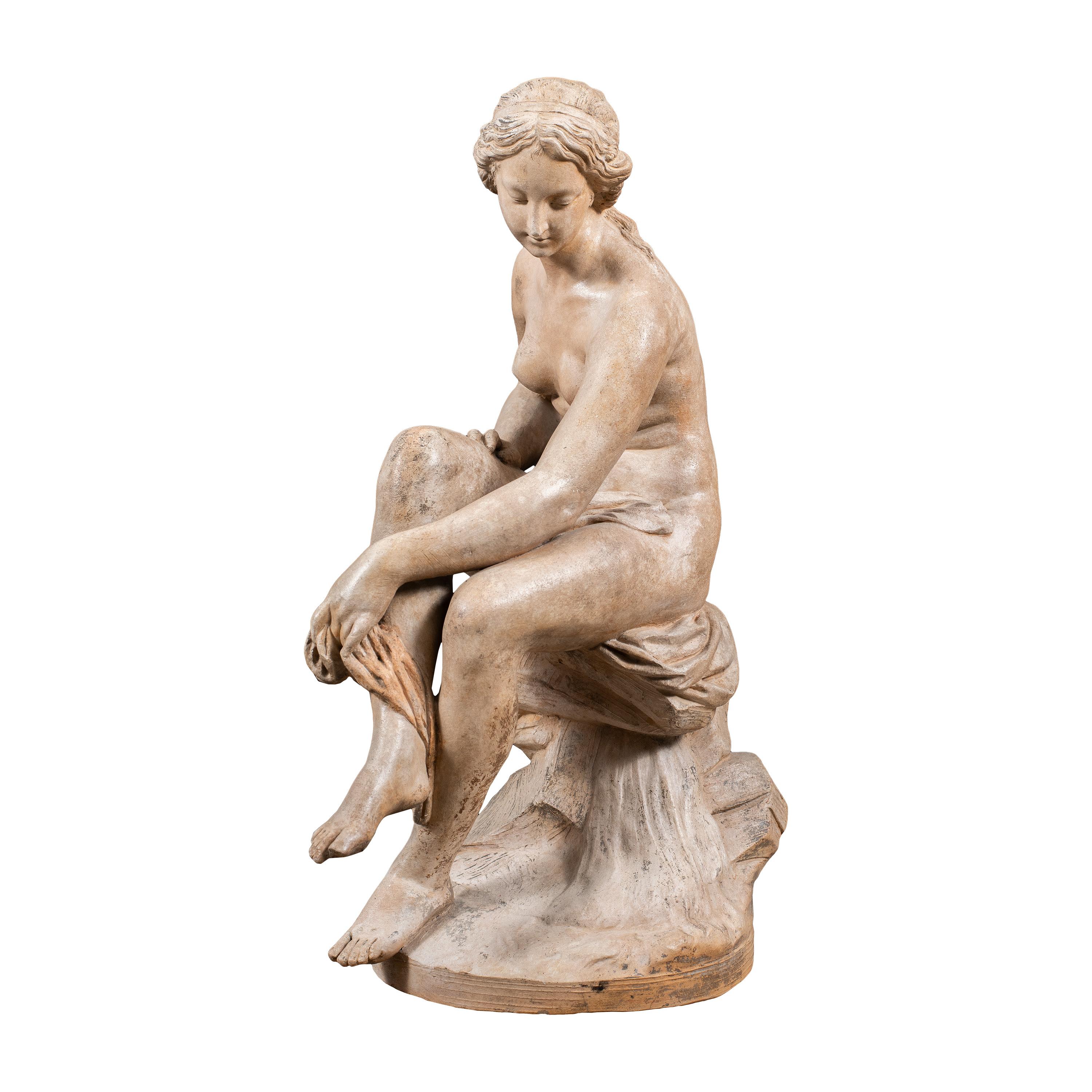
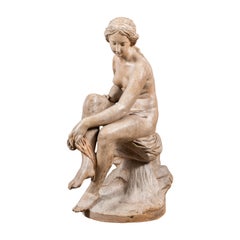
Classicist Italian artist - 18th century terracotta figure sculpture - Venus
Located in Varmo, IT
Terracotta sculpture - Venus. Italy, 18th century.
27 x 22 x 45 cm.
Made entirely of terracotta. Depicting a bathing Venus (small crack on the foot).
- This item is sold with a c...
Category
Early 18th Century Figurative Sculptures
Materials
Terracotta
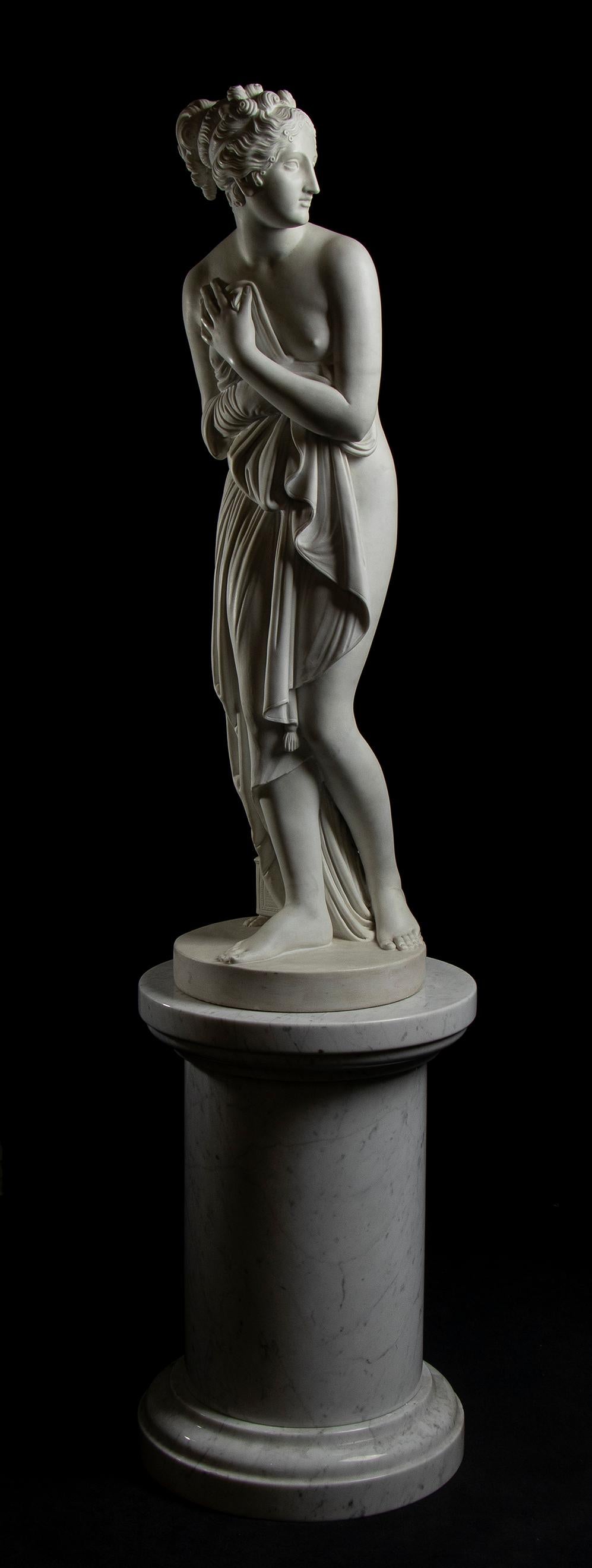
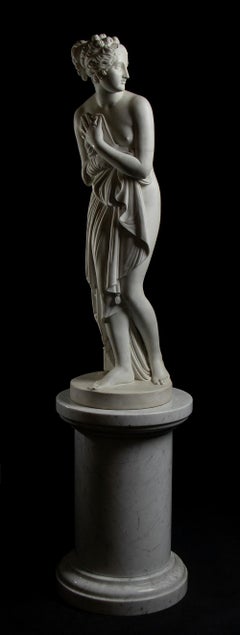
Antonio Canova (After) Marble Sculpture Of Venus Italica On Marble Base
By Antonio Canova
Located in Roma, IT
a superb scale size of the Venere italica, the famous and notable sculpture carved by Antonio Canova in the 19th century standing on circular Carrara marble base.
At the top of his ...
Category
19th Century Other Art Style Figurative Sculptures
Materials
Marble
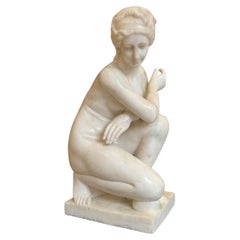
Scultura raffigurante Venere accovacciata in marmo - XX secolo
Located in Fidenza, IT
Scultura raffigurante Venere accovacciata in marmo bianco di Carrara del XX secolo.
La scultura raffigura la dea dell'amore e della bellezza, Venere, in una posa intima e pudica dur...
Category
20th Century Italian Figurative Sculptures
Materials
Carrara Marble
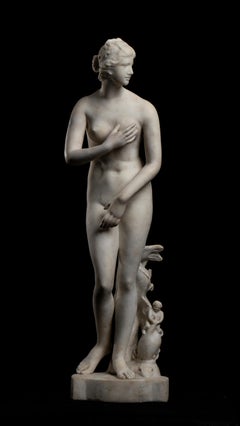
19th White Marble Sculpture of Venus De Medici Grand Tour Style Italian
Located in Roma, IT
A white marble grand tour version of Venus de Medici carved by an Italian Sculptor artist in the 19th century in Italy, probably in Florence.
The Venus of Medici is a one of the mos...
Category
19th Century Figurative Sculptures
Materials
Marble
Terracotta figurativa italiana a tema mitologico dei primi del Novecento
Located in Florence, IT
Piccola terracotta a soggetto mitologico firmata sul retro sulla base "Zambini", che per la grafia (in particolare la Z che ricorda una F) permette di identificar...
Category
Early 20th Century Renaissance Nude Sculptures
Materials
Terracotta