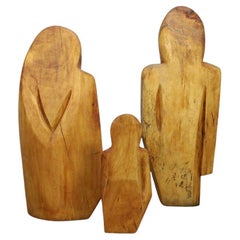
Items Similar to Nativity Scene By Leo Salazar Hand Carved Cedar Wood 1960s
Want more images or videos?
Request additional images or videos from the seller
1 of 8
Leo SalazarNativity Scene By Leo Salazar Hand Carved Cedar Wood 1960s1960
s
1960 s
$6,500
£4,959.34
€5,645.82
CA$9,135.82
A$10,042.49
CHF 5,272.26
MX$119,412.47
NOK 67,707.82
SEK 61,674.51
DKK 42,183.31
About the Item
Nativity Scene with Blessed Mary, Kneeling Joseph, Angel, One Shepherd, One King, Manger, Baby Jesus, and Two Animals. The figures range in height from 18.5" to 12"; animals are 3" x 6" and 2" x 5.5"; manger and infant 6.5" x 6.5" x 3". The pieces are all hand carved and signed on the bottom.
From the book, “Tradiciones Nuevomexicanas” author Mary Caroline Montano writes: “Leo Salazar apprenticed with Patrocino Barela and developed his own abstract style. His work is found in churches in Taos, Dixon, Santa Fe, and Albuquerque as well as the Smithsonian Institution, the Vatican, the Berlin Museum of International Folk Art and the Milicent Rogers Museum. There was no spacious studio with north light for this active artist. In summer he sat on an old car seat beneath a pickup camper shell propped up on some pieces of plywood in his backyard. In winter he moved into a tin storage shed and fed chips and branches into an old wood stove. With his black beret pulled down over his thick graying hair and the company of his cassette player and collection of Spanish music, he’d work a twisted cedar trunk with a chisel….”
Salazar started carving cedar wood santos at the age of 33, in 1965. He devoted most of his time, eight to 10 hours a day, to his art, but he had no formal schooling in sculpture. “I learned by just watching the great master carver, Pat Barela of Taos.”
About the Seller
5.0
Vetted Professional Seller
Every seller passes strict standards for authenticity and reliability
Established in 2014
1stDibs seller since 2019
110 sales on 1stDibs
Typical response time: 15 hours
- ShippingRetrieving quote...Shipping from: Detroit, MI
- Return Policy
More From This Seller
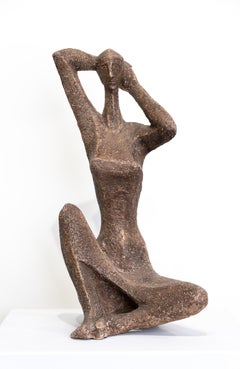
View AllWalter Midener "Contemplation" Seated Figure Clay Sculpture Mid-Century Modern
Located in Detroit, MI
“Contemplation” is an abstract clay sculpture of a female. The figure has both arms and legs extended, but the dignified pose suggests an intimate rather than a sexual moment. The sculpture is delicately rendered, but monumental in pose and clean composition reminiscent of the English artist Henry Moore. The surface is warm and slightly rough to the touch. This sculpture is in the round and beautifully balanced geometrically with the hands clasped behind the head forming a slightly flattened polygon shape that is echoed in the positioning of the legs and draped fabric of a presumed dress. The figure draws the viewer into her contemplation, peace and confidence. An exceptional piece by Midener.
Walter Midener...
Category
Mid-20th Century Modern Figurative Sculptures
Materials
Clay
“Santa Cruz de las Huertas Jalisco”, Ceramic, Glaze, Colors, Mexican Folkart
Located in Detroit, MI
SALE ONE WEEK ONLY
“Santa Cruz de las Huertas Jalisco” is a whimsical, charming and colorfully ceramic rendition painted blue and red of a local bus that traversed the town where the artist Candelario Medrano...
Category
Mid-20th Century Folk Art Figurative Sculptures
Materials
Ceramic, Glaze

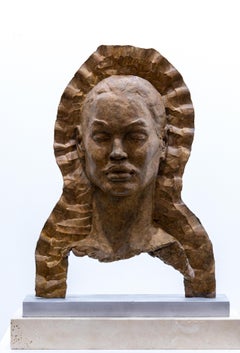
"Madonna" Bronze Sculpture with Patina, Marble base, Figurative, Female
By Artis Lane
Located in Detroit, MI
All my life I have worked on three levels of consciousness: Portraits, Social Injustice & Metaphysics. In my work I strive to heal, uplift and inspire viewers and collectors to find ...
Category
Late 20th Century Contemporary Figurative Sculptures
Materials
Marble, Bronze
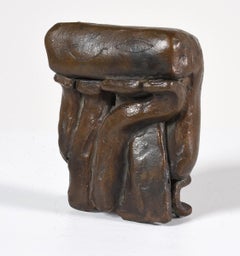
Eugene Caples "Bronze Sculpture I" Abstract Bronze Sculpture
By Eugene Caples
Located in Detroit, MI
This small exquisite "Bronze Sculpture I" is in excellent condition and a perfect example of Eugene Caples craftsmanship. Although it is mainly abstract, there are bits that look figurative either an arm or a leg attempting to emerge from a fold or attempting to hold a pose such as in yoga. It cries out to be touched and held, looked at and caressed. The beautiful patina on the surface gives voice to the many hands that have done these things.
Eugene Caples is a designer and craftsman who worked in Kansas City in the 1960s and later through the early 21st century. He attended the Kansas City Art Institute, earning his Bachelors of Fine Arts in Industrial Design in 1959. In 1963 he was accepted to Cranbrook Academy of Art, Bloomfield Hills, Michigan. The Cranbrook Academy of Art was designed by architect and faculty member, Eliel Saarinen who collaborated with Charles and Ray Eames on chair and furniture design. Numerous creative artists are alumni of Cranbrook and include: Harry Bertoia, Florence Knoll, Jack Lenor Larsen, Donald Lipski, Duane Hanson, Nick Cave, Hani Rashid, George Nelson, Urban Jupena (Nationally recognized fiber artist), Artis Lane (the first African-American artist to have her sculpture, "Sojourner Truth," commissioned for the Emancipation Hall in the Capital Visitor Center in Washington DC), Cory Puhlman (televised Pastry Chef extraordinaire), Thom O’Connor (Lithographs), and Paul Evans (Created Brutalist-inspired sculpted metal furnishings.)
Gene worked...
Category
Late 20th Century American Modern Abstract Sculptures
Materials
Bronze
Kirk Roda Figurative Sculpture "Barkbud Herd" Treehorses
By Kirk Roda
Located in Detroit, MI
Delicate, frightening, otherworldly are all descriptions that apply to these unique sculptures by artist, Kirk Roda. "Barkbud Herd" is an exploration of pure...
Category
2010s Figurative Sculptures
Materials
Mixed Media
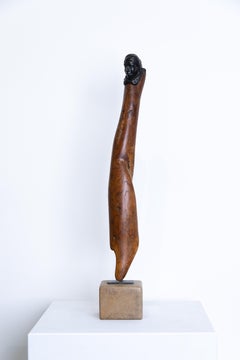
"Draped Figure" Sassafras
Bronze, Figurative Sculpture, 1982
Located in Detroit, MI
"Draped Figure" is a beautiful example of Tazian's ability to meld the smooth texture of wood and the hard texture of bronze into an exquisite object to view, hold or caress. The piece balances perfectly on its stone base and can be easily turned to enjoy from all angles.
Like architects Eliel Saarinan and Albert Kahn and sculptor Corrado Parducci, Tazian is an immigrant creative who has found a home in the city, nurtured by its energy and sheltered by its community.
He developed an early ambition to become an artist, even though he had very little exposure to the arts. ““The only person [who encouraged me] was my 5th grade English teacher, Olivia Balian,” he says. “She really opened the doors of art for me. She said, ‘Those students who are interested in art can stay behind after school and I will show you how to paint and draw.’ Somehow [that] changed my life– she gave me that spark.”
Tazian came to the U.S. to study at St. Francis College in Fort Wayne, Indiana. He earned a bachelor’s degree in art and a Master’s in Art Education, and then earned and MFA in sculpture from Wayne State University in Detroit.
Kegham Tazian is an award-winning sculptor and painter. The Armenian-born artist has gained notoriety for the diversity of his work and the variety of media exemplified in his pieces. A blend of modernism, realism and abstraction are commonly depicted in his paintings and sculptures.
His artwork has been represented in more than 40 solo exhibitions and more than 75 group exhibitions throughout the United States, Canada, Europe, and the Middle East. His work adorns the entrances and halls of major corporations, universities and municipalities, including Siemens Corporation, Huntington Bank, Wayne State University and the city halls of Farmington and Farmington Hills...
Category
21st Century and Contemporary Modern Abstract Sculptures
Materials
Stone, Bronze
You May Also Like
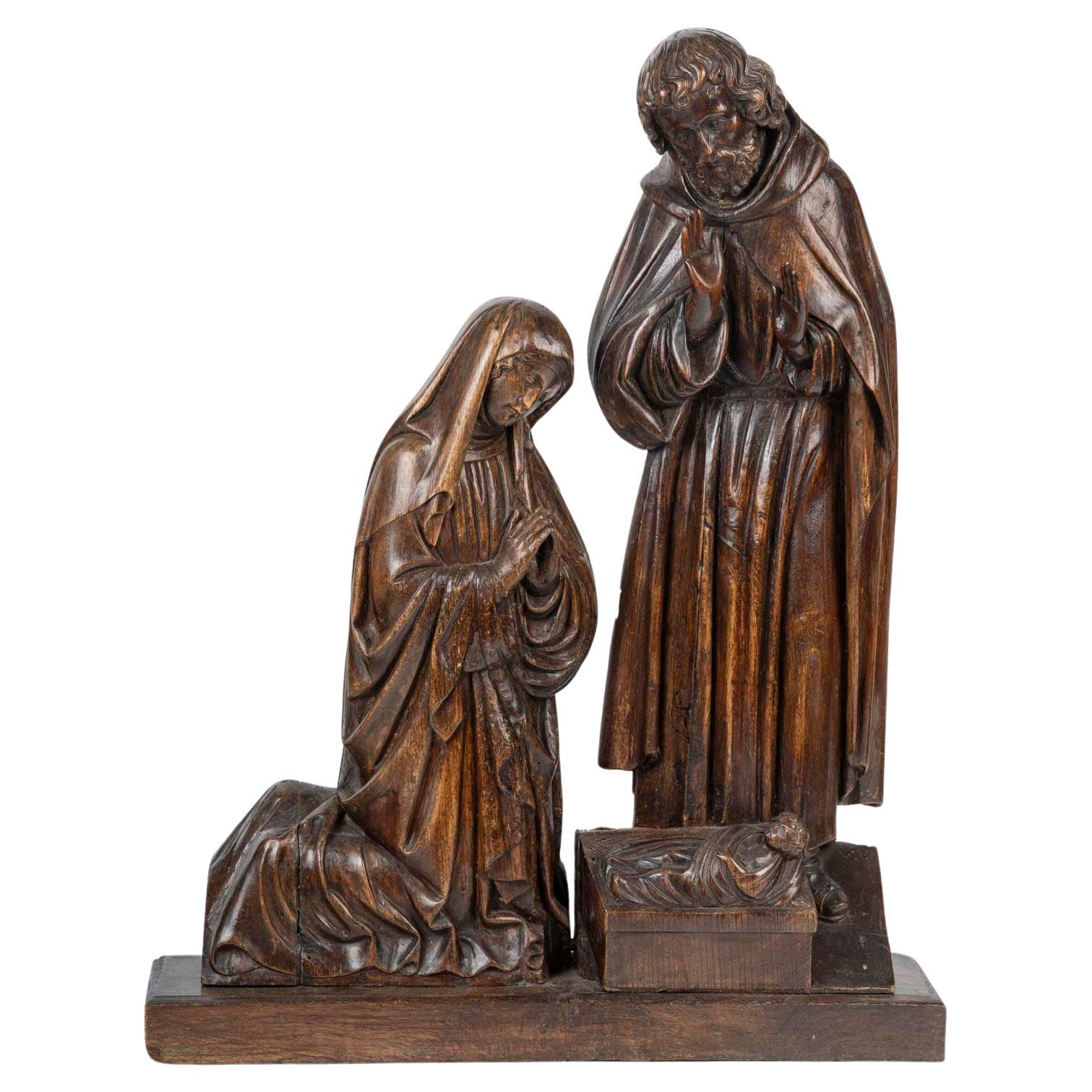
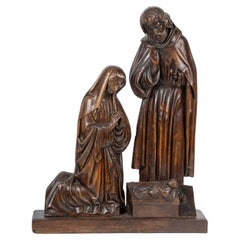
Religious Sculpture Representing the Nativity, Carved Wood from the 16th Century
Located in Saint-Ouen, FR
Religious sculpture representing the nativity, carved wood from the 16th century.
Carved wood sculpture, walnut wood and oak wood base, sculpture representing the nativity, circa 16...
Category
Antique 16th Century French Neoclassical Figurative Sculptures
Materials
Oak, Walnut
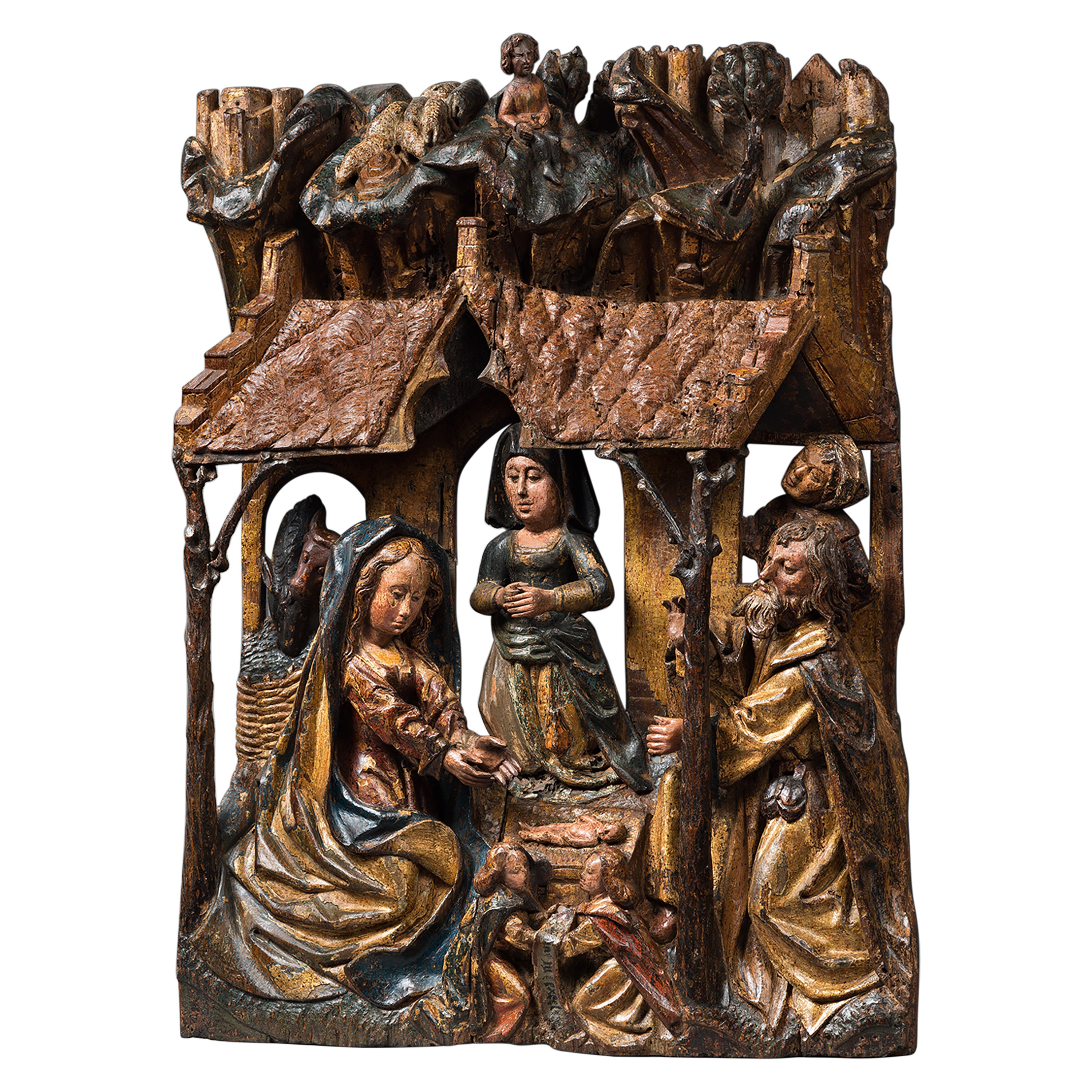
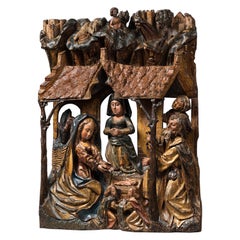
Late 15th Century Polychrome Wood Carving Depicting the Nativity
Located in Saint-Ouen, FR
While the birth of Christ is briefly told in the Gospel of Luke (2, 7) it is in the apocryphal texts that we find most of the elements and details that have then inspired artists. As of the 14th century and even more of the 15th century the subject of the Adoration of the Child replaces in Western art the scene of the Birth, much favoured in Byzantine art. Instead of being depicted lying with the new-born swathed in the manger, the Virgin is now kneeling, her hands joined in prayer in front of the naked child. This change was probably hastened by the popularity of the visions of Saint Bridget of Sweden to whom the Virgin allegedly appeared to show how she had given birth to Jesus (Visions, VII, chap. 21).
Sheltered by a thatch-roofed structure the Virgin is kneeling in front of the Child Jesus. She wears a magnificent red dress under a large gold cloak. Her curled blond hair is partially veiled. The newborn is lying on a straw mat. Joseph is depicted with a parted beard and stands opposite from the Virgin. He wears a tunic and a coat with a purse hanging from the belt. His costume reminds us of the long journey him and Mary have accomplished to reach Bethlehem.
Two other women are present. One is looking through the stable’s window to observe the Holy Family while another one kneels in prayer in front of the divine child. The rich costume of the lady might indicate she is a donator.
However they could also both represent the women who took part in the birth of Christ, Zelemi and Salome. Salome, incredulous did not believe in the virginal conception of Mary and she is represented far from the scene. The artist has depicted her with an expression of doubt on her face. Zelemi, on the contrary, is a believer. She is rewarded by a place of honour at the heart of the scene, close to Mary.
To the left the donkey and ox that have accompanied Mary and Joseph to Bethlehem observe quietly the scene.
On the foreground two angels hold a scroll reading an excerpt from the Gloria : “/Gloria/ in excelsis /Deo/.” One of the angels wears a blue cape while the other’s is red Those two colours are very significant as during Middle-Ages blue symbolises hope and red charity. Together they express the hope in redemption thanks to the advent of Christ and his sacrifice to come.
Above the main scene, up a cliff, a small shepherd lets his herd of sheep graze amidst the trees. He is framed by two walled cities.
This wood carving is the work of a very skilled and inventive artist. The piece bears witness to his exceptional talent. The realism of the scene is emphasised by the amount of details depicted. The refinement of the carving itself is highlighted by the well preserved polychromy.
This key moment of the New Testament is set in a contemporary context thanks to the clothes of the characters and the scenes of rural life. The universal dimension of the scene is intensified while allowing contemporary viewers to grasp its meaning more easily.
This care for details, the picturesque realism as well as the extraordinary rendition of the cloths suggest it was made by a Flemish artist during the late 15th century.
This relief can be compared with the panel of the Nativity from the Saint-Vaast altarpiece made by Jacques Daret between 1433 and 1435, today in Madrid’s Thyssen-Bronemisza Museum.
Literature
Louis Réau, Iconographie de l’Art chrétien...
Category
Antique 15th Century and Earlier Dutch Gothic Figurative Sculptures
Materials
Wood
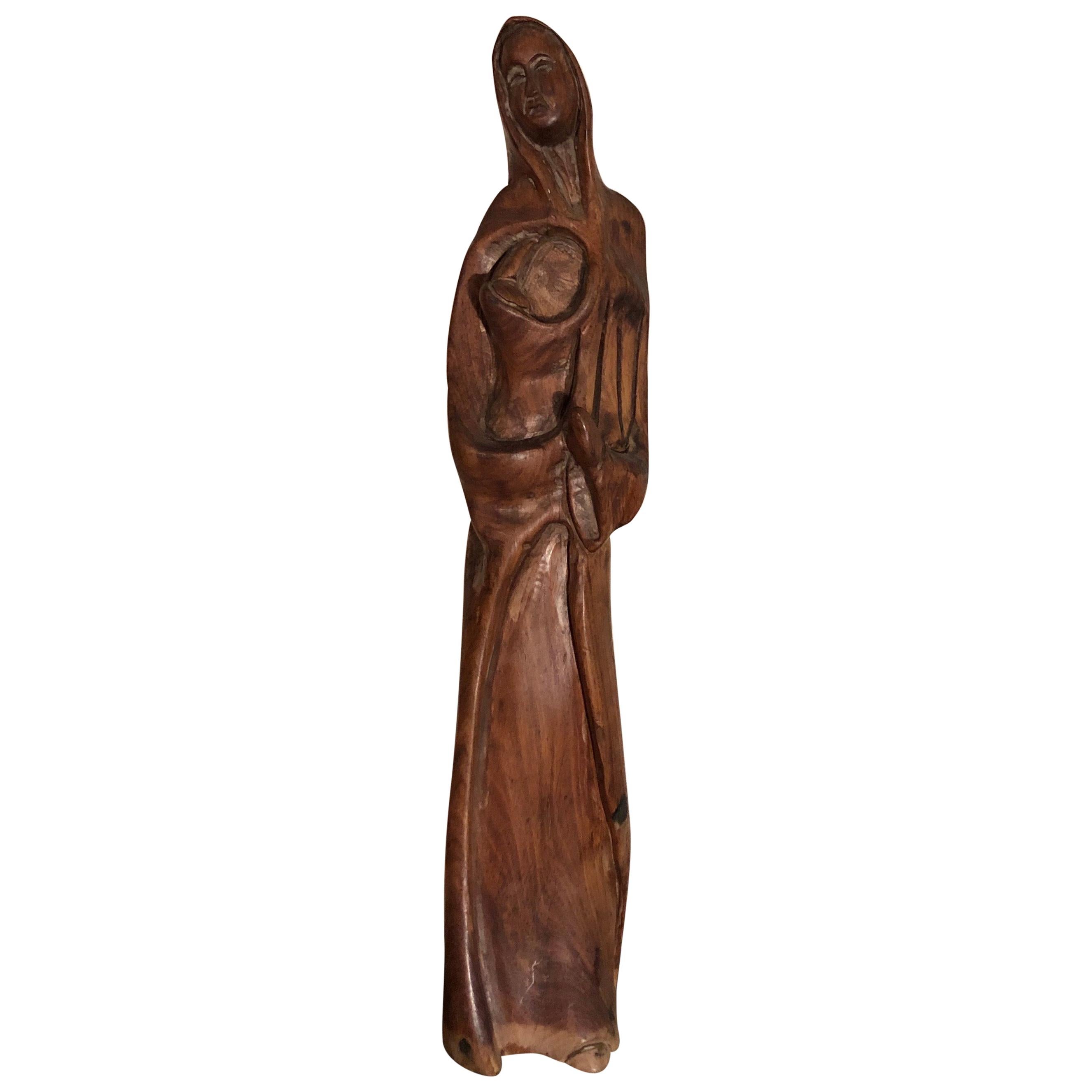
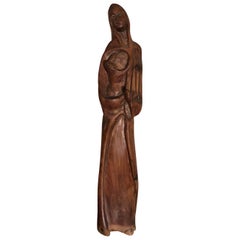
Hand Carved Wooden Mother and Child Statue
Located in Redding, CT
Hand carved wooden mother and child statue. Or Madonna and child. Mid Century modernist in style. Nice rich wood patina with intricate craftsme...
Category
Vintage 1960s Mid-Century Modern Figurative Sculptures
Materials
Walnut
$460 Sale Price
42% Off
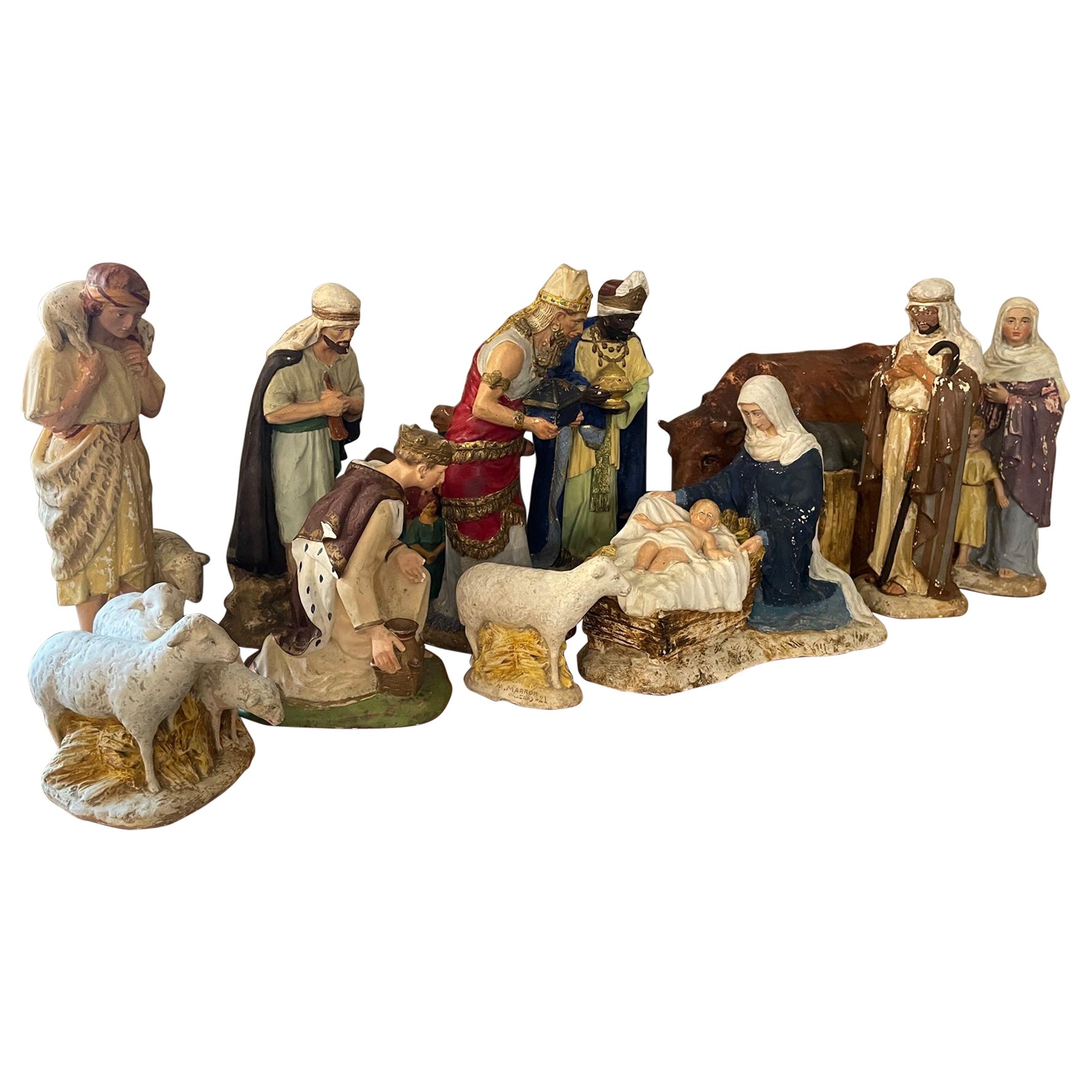
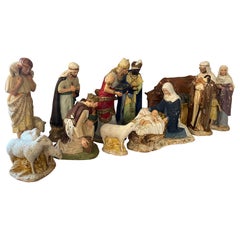
Early 20th century French Plaster Nativity Scene Figurines signed Marron, 1920s
Located in LEGNY, FR
Very nice and rare 20th century French set of plaster nativity scene figurines.
Twelve pieces are representing the religious nativity characters and the animals.
Large dimensions. ...
Category
Vintage 1920s French Figurative Sculptures
Materials
Plaster
$3,062 Sale Price / set
20% Off
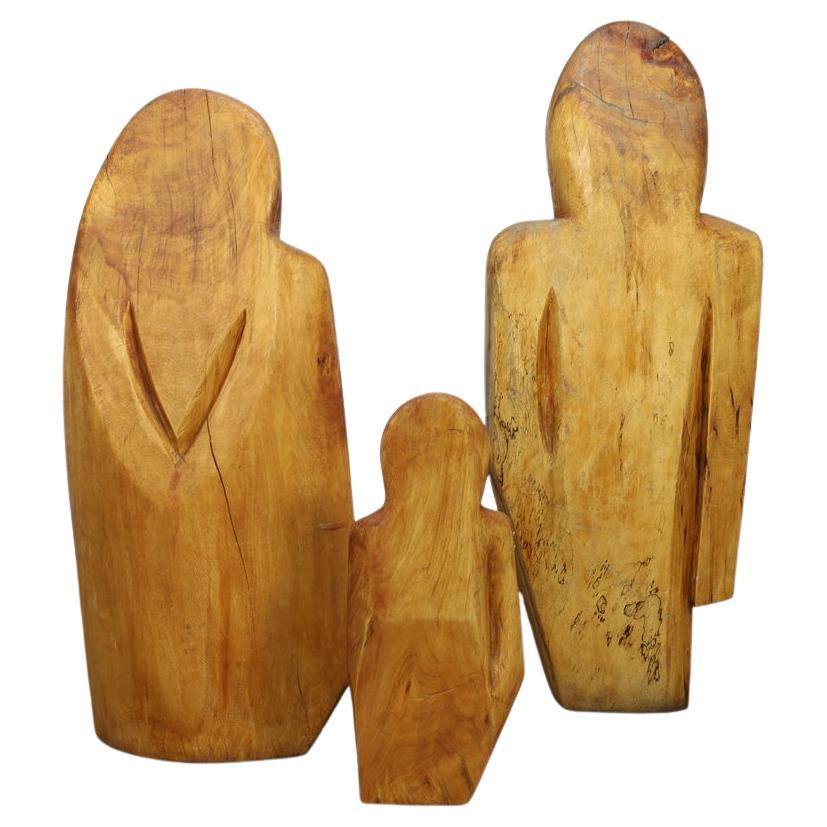
Sculpture Group “Family in Wood” by Roland Lavianne, 1970s
By Roland Lavianne
Located in DE KWAKEL, NL
This expressive trio of sculptures in solid oak, titled Family in Wood, was created in the 1970s by Roland Lavianne. The group represents a family in stylised, upright forms — each f...
Category
Vintage 1970s French Other Figurative Sculptures
Materials
Wood
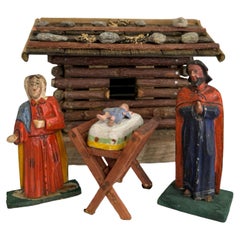
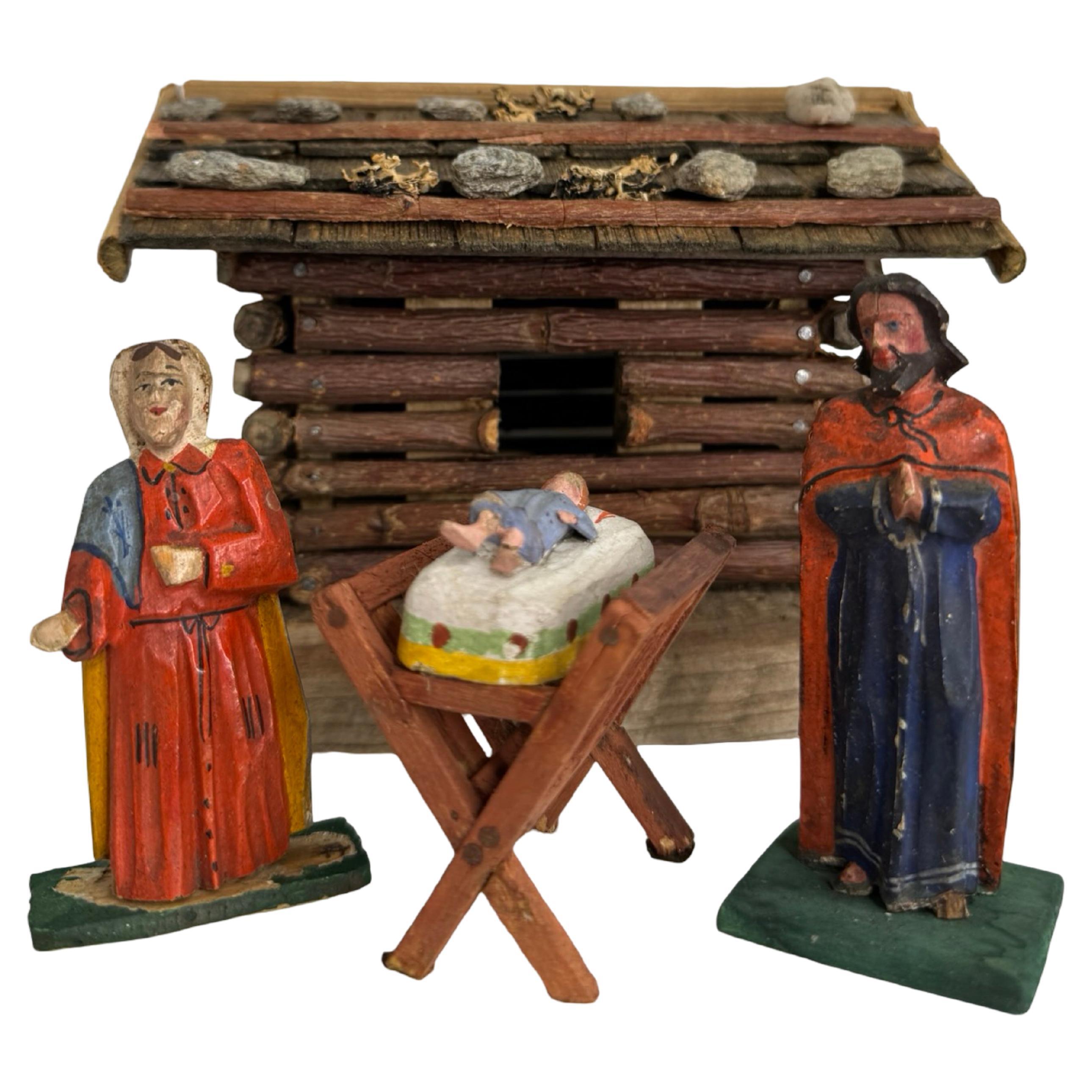
Antique Grulich Christmas Nativity Figure Lot, late 19th Century Folk Art
Located in Nuernberg, DE
Beautiful Antique Grulich Nativity Figures — Late 19th Century
This rare and culturally significant set of nativity figures originates from the historic Králiky region (formerly Gr...
Category
Antique Late 19th Century Czech Folk Art Toys and Dolls
Materials
Wood