Items Similar to The Three Magi
Want more images or videos?
Request additional images or videos from the seller
1 of 5
Peruvian, Ayacucho SchoolThe Three Magica. 1800
ca. 1800
$28,500
£21,712.27
€24,778.83
CA$40,049.24
A$43,646.63
CHF 23,112.77
MX$524,241.98
NOK 292,612.81
SEK 269,028.69
DKK 185,070.40
About the Item
Provenance: Private Collection, Spain.
Known as Peruvian alabaster for its translucency and workability, Piedra de Huamanga is a highly prized material from the province of Ayacucho in Peru. In the 17th and 18th centuries, local craftsman in the town of Huamanga began to specialize in the production of small-scale, polychrome religious sculptures made from this distinctive stone. Huamanga sculptures are among the most accomplished examples of carving from the Spanish Americas, where polychrome wood sculpture was a far more common sculptural medium. These works, which were created as independent sculptures or as sculptural groups—such as our three Magi—were intended for ecclesiastical as well as domestics settings.
Our three figures likely formed part of a larger Nativity group—a New World variant of the tradition of the Neapolitan Crèche. Melchior, Balthasar, and Caspar each carry their gifts of gold, frankincense, and myrrh, as specified in the Gospel of Matthew. But the lands from which they traveled and the animals which brought them to Bethlehem are not identified in the Bible. Here the anonymous artist of our figurines has followed a popular tradition that became current in the Renaissance, in which the eldest of the three kings, Melchior, was thought to be from East Asia; the middle magus, Caspar, from Arabia; and the youngest, Balthasar, from Africa. They travel on appropriate modes of transportation: a horse for Melchior, a camel for Caspar, and an elephant for Balthasar, slow as it might make the journey. The natural warm white color of the stone is retained for the three animals and for the skin of the Magi, save for Balthasar whose face, arms, and hands have been delicately painted. With the exuberantly colored robes and hats worn by the Magi, these figures are charming celebrations of the Feast of the Epiphany.
- Creator:Peruvian, Ayacucho School (Peruvian)
- Creation Year:ca. 1800
- Dimensions:Height: 7.5 in (19.05 cm)Width: 6.5 in (16.51 cm)
- Medium:
- Period:
- Condition:
- Gallery Location:New York, NY
- Reference Number:1stDibs: LU10212238202
About the Seller
5.0
Recognized Seller
These prestigious sellers are industry leaders and represent the highest echelon for item quality and design.
Established in 1997
1stDibs seller since 2012
24 sales on 1stDibs
Typical response time: 7 hours
- ShippingRetrieving quote...Shipping from: New York, NY
- Return Policy
More From This Seller
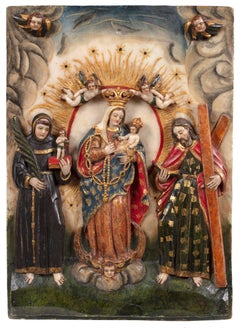
View AllVirgin of the Rosary of Chiquinquirá with Saint Anthony of Padua and Saint Andre
Located in New York, NY
Provenance: Private Collection, Uruguay, for the last 90 years.
Dated 1673 on the reverse (Fig. 1), this exceptional relief is an early example of a distinctly Spanish American art...
Category
1670s Old Masters Figurative Sculptures
Materials
Alabaster
Virgin and Child with Angels Carrying the Cross (Vision of the Cross)
Located in New York, NY
Provenance: Fernandez Jimenez, Spain; part a family collection for over 80 years.
Prints transported to the New World for use in missionary work and religious instruction often serv...
Category
18th Century Old Masters Figurative Paintings
Materials
Canvas, Oil
Cuzco School Baptismal Dish
By Spanish Colonial (Peruvian)
Located in New York, NY
Provenance:
Manuel Ortíz de Zevallos y García, Peru; and by descent in the family to:
Private Collection, New York.
This impressive baptismal dish is an example of eighteenth-cent...
Category
18th Century Old Masters Sculptures
Materials
Silver
A Magnificent Gilt Wood Mirrored Frame
Located in New York, NY
Provenance: Private Collection, Argentina; there acquired by
Mr. and Mrs. Ernest T. Harper, New York, by 1960; by descent to:
Mr. and Mrs. Alan Harper, New York, until 2024.
This extraordinary mirrored frame is an exuberant and nearly perfectly preserved example of Andean 18th-century decorative art. Pierced mirrored rosettes surrounding floral motifs are set against mirrored surrounds along a broad frieze bordered within and without by elaborate raised moldings, inlaid by small, shaped mirrors. Repeating ornamental motifs reflecting both Spanish and indigenous designs surround both the inside panel and the exterior perimeter, the four corners of which are punctuated by mirrored rosettes.
Glass mirrors were unknown to the indigenous population of the Americas prior to the arrival of Europeans (obsidian mirrors...
Category
18th Century Old Masters Figurative Paintings
Materials
Canvas, Mirror, Wood, Oil
Young Christ Pricked by a Thorn (Niño de la Espina)
Located in New York, NY
Provenance: Private Collection, Paraguay, for at least the last 80 years
Painted in the Viceroyalty of Peru during the 18th century, the present work depicts the young Christ as the Niño de la Espina—a devotional representation of Christ as he looks down at his bleeding finger, which has been pricked by the crown of thorns resting on his lap. The subject of the Young Christ Pricked by a Thorn was especially popular in Cuzco, and the rich details and decorative elements of our work perfectly capture the essence and style of the Cuzco School of painting.
In our painting, Christ wears an intricately patterned floor-length robe trimmed with gilded cuffs and a gilded collar. The delicate gilding, including the halo of golden rays emanating from his head, are executed in brocateado, an ornamental over-gilding technique that is characteristic of the Cuzco School. The red chair on which Christ sits also includes brocateado in the decorative gilt elements. The form of the chair takes inspiration from those commonly used by friars both in Spain and the Andes, known as silla frailera or sillon frailero, and was also frequently employed in related depictions of the Virgin Mary Spinning. Here the young Christ is rendered with soft, elongated features that reflect the influence of the Italian Mannerist painters who were pivotal to the formation of the Cuzco School, including the Jesuit friar Bernardo Bitti and Matteo Pérez del Alesio. Additionally, while its origins can be traced to Northern European pictorial traditions, the lush flower garland that frames the work is a signature feature of Cuzqueño painting...
Category
18th Century Old Masters Figurative Paintings
Materials
Canvas, Oil
The Princeton Tiger
Located in New York, NY
Provenance: The artist; thence by descent to his granddaughter:
Rhoda Knight Kalt; from whom acquired by:
Private Collection, Pennsylvania, 1995–2025.
Literature: Richard Milner, Ch...
Category
1940s Figurative Sculptures
Materials
Plaster
You May Also Like
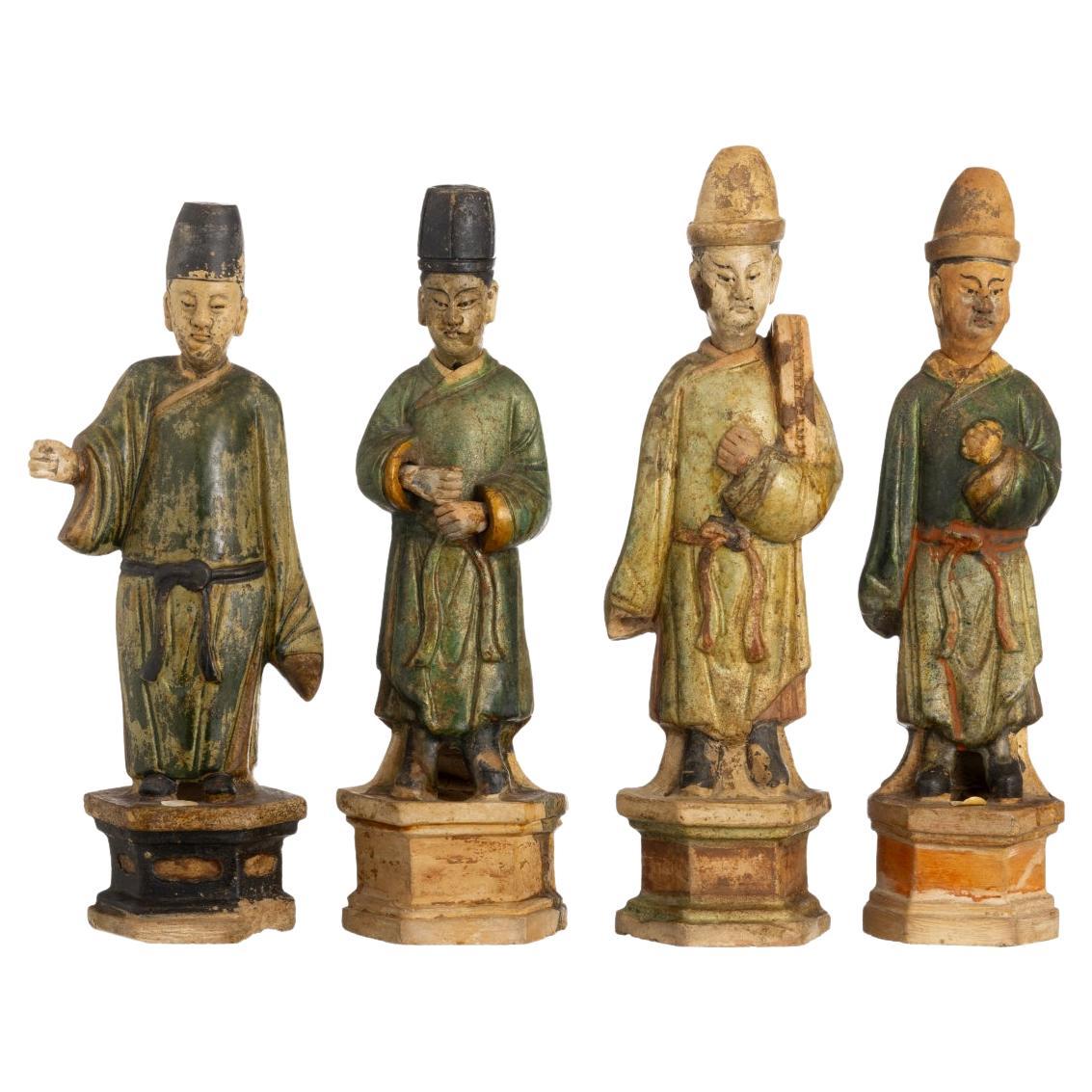
Ming Dunasty - Four Procedural Figures
Located in Porto, PT
These remarkable Chinese sculptures, dating from the Ming dynasty, are crafted in glazed terracotta and showcase the exquisite artistry and ceremonial elegance of the period. Each fi...
Category
Antique 15th Century and Earlier Ceramics
Materials
Ceramic
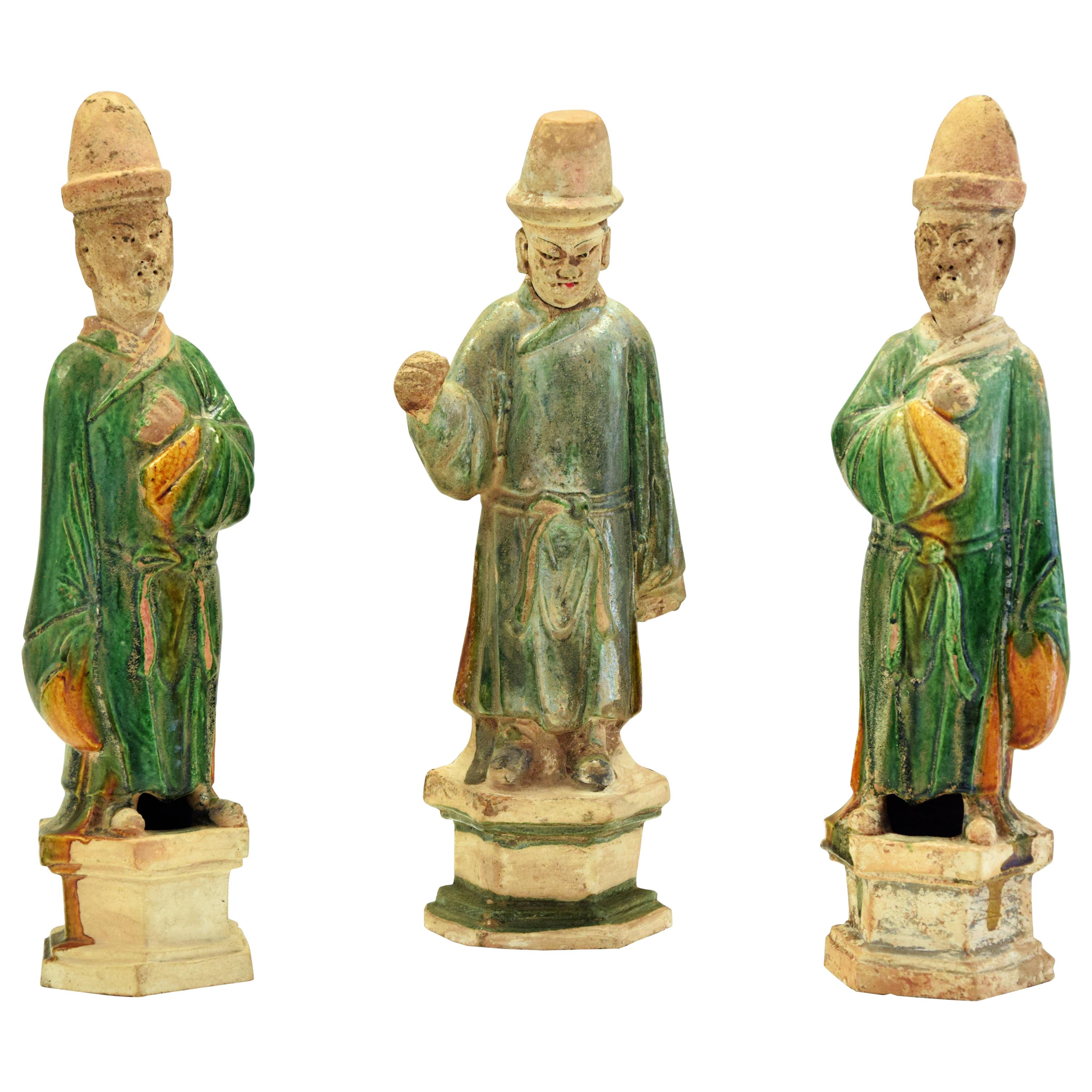
Three Ancient Terracotta Sculptures, China Ming Period
Located in Roma, IT
This Chinese terracotta group of figures is made up of three figures of Chinese dignitaries in glazed green and ocher terracotta on hexagonal bases and removable heads.
From the d...
Category
Antique 16th Century Chinese Sculptures and Carvings
Materials
Terracotta
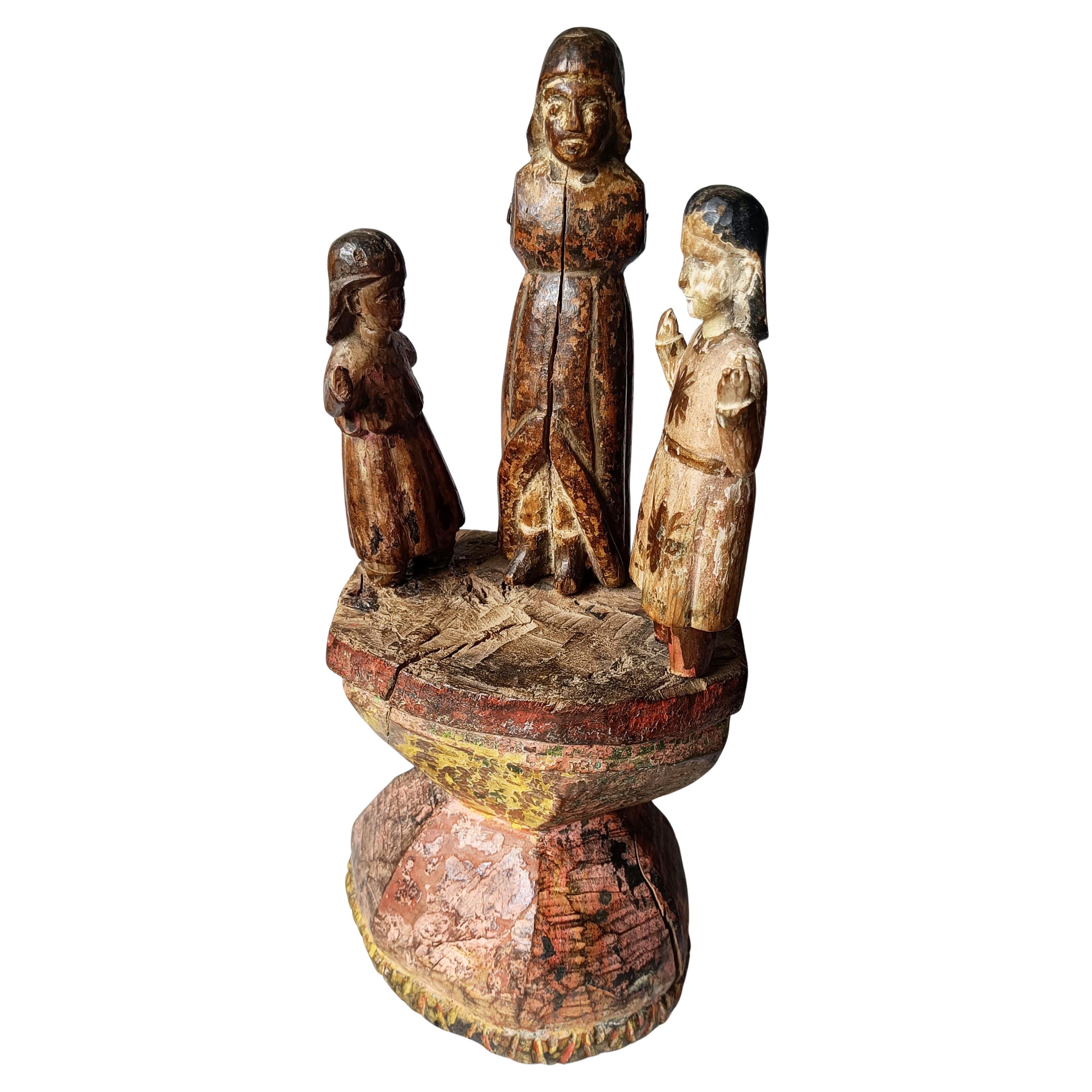
Antique South American Spanish Colonial Folk Art Santos Figural Group
Located in London, GB
Antique South American Spanish Colonial Poly chrome Folk Art Santos figure The finely sculptured hard wood figure standing with a cross and bible on a pedestal base, painted in p...
Category
Antique 18th Century Peruvian Antiquities
Materials
Gesso, Wood
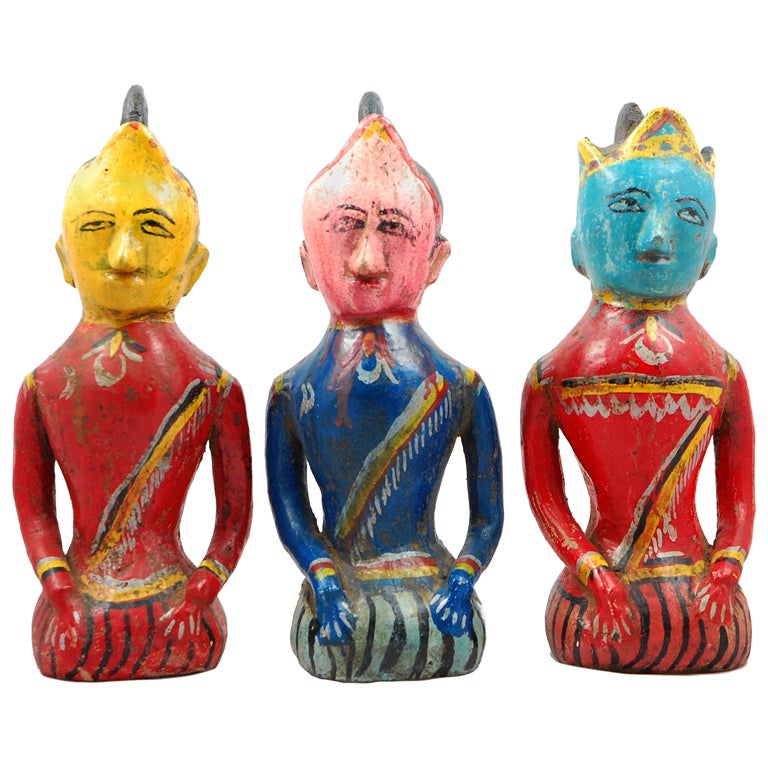
Set Of Three Indian Folk Art Figures
Located in Asheville, NC
Set of three Indian figures vividly painted. They appear to be kneeling in prayer two have their hair in buns and the third wears a crown. It is likely that the third blue figure is ...
Category
20th Century Indian Folk Art Sculptures
Materials
Wood
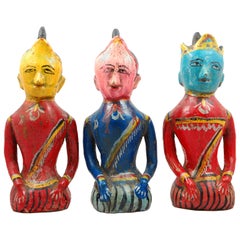
$1,800 / set
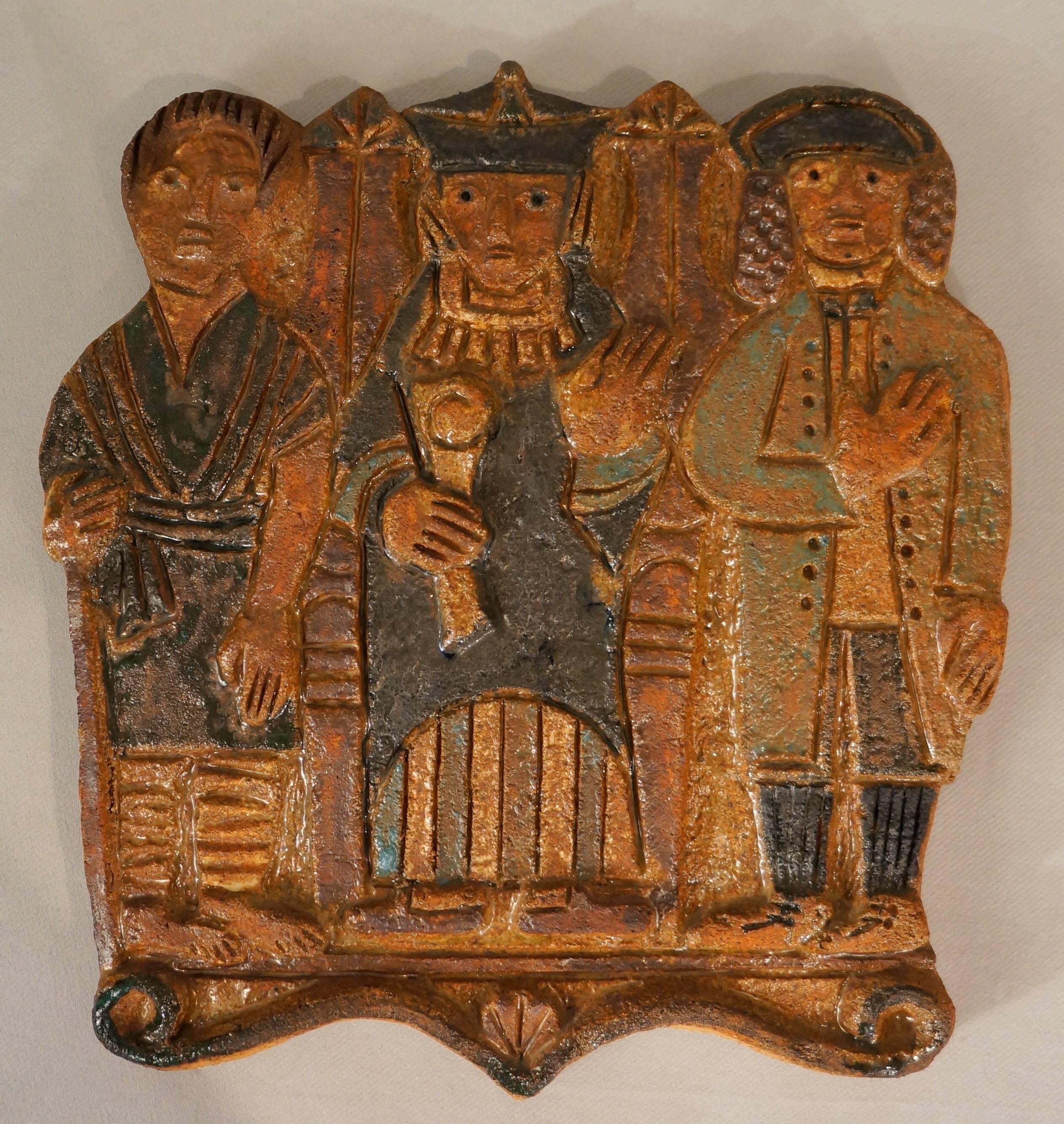
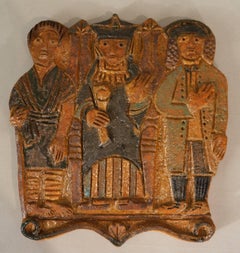
Les 3 Amis, 1950-55 - ceramic, 30x36x5 cm
By Les Argonautes
Located in Nice, FR
Ceramic from Vallauris
Workshop "Les Argonautes", Vallauris: Isabelle Ferlay (1917-?) And Frédérique Bourguet (1925-1997)
Isabelle Ferlay and Frédérique Bourguet founded their ceramic workshop in Vallauris in 1953, which they named "Les Argonautes", in reference to the famous Greek epic.
Isabelle studied painting at the Fine Arts school of Lyon in 1940, then she attended the Fine Arts in Marseille. Finally, she finished her artistic training in Montpellier, at the Fontcarade national school, where she learned ceramics.
Françoise dit Frédérique Bourguet studied at the Beaux-Arts in Montpellier until 1945 and it was in Sèvres, in Françoise Bizette's studio, that she trained in the art of ceramics. She created her first workshop in Paris in 1945, which she shared with Valentine Schlegel until 1951. The two women ceramicists then practiced
modeling technique. It was in 1953 that she met Isabelle Ferlay and together, they decided to set up a workshop in Vallauris. They produce
shaped pieces, sometimes molded, made of earthenware, enamelled in bright colors. In the 1970s they made stoneware cooked over a wood fire. Some ceramists frequented their workshop, notably the very talented Jacques Innocenti and François Raty.
Category
Mid-20th Century More Art
Materials
Ceramic
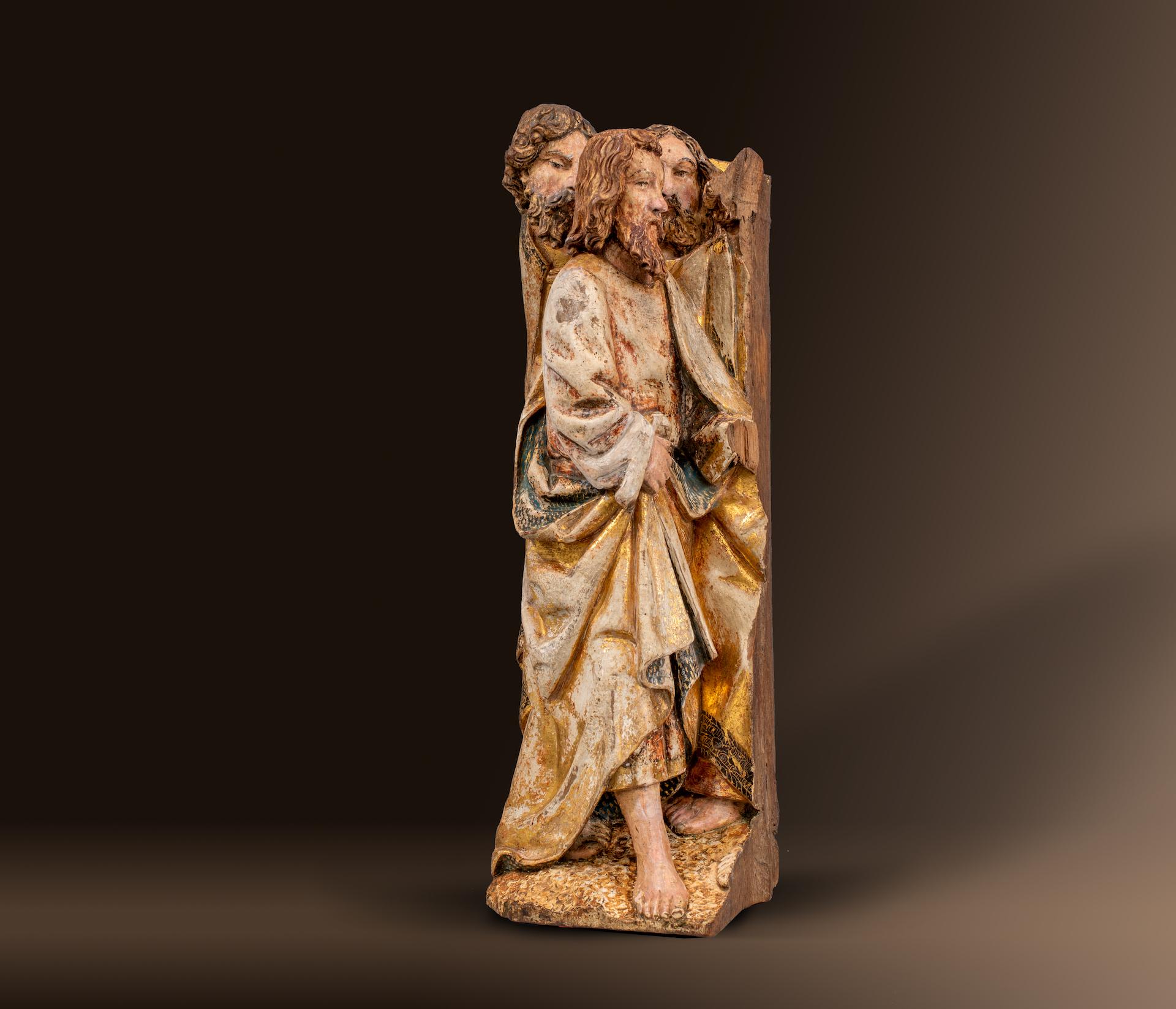
Apostel group
Located in Wien, Wien
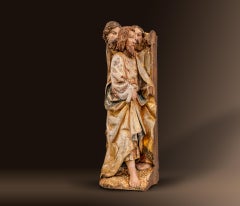
APOSTLE GROUP
ORIGINAL VERSION
Flemish/Brabant
Around 1500
Oak wood carved
Height 37.5 cm, width 12 cm,
Depth 12.5 cm
Category
15th Century and Earlier Figurative Sculptures
Materials
Wood
$19,800
More Ways To Browse
Peru Sculpture
Antique Nativities
Three Kings
Antique Creche
Large Nativity
Indoor Tree Sculpture
Jacqueline Picasso Ceramic
Jiang Tie Feng Sculpture
Jimmie Martin
Joseph Ndandarika
Julie Jaler
Kaws Resting
Klein Blue Sculpture
Kurt Weiser
Leonard Baskin Bronze Sculpture
Leonard Baskin Bronze
Lolly Pop
Marshall Fredericks