Items Similar to Pair of Italian "Alabaster Stone Lions" after Antonio Canova; Mid 19th Century
Want more images or videos?
Request additional images or videos from the seller
1 of 10
UnknownPair of Italian "Alabaster Stone Lions" after Antonio Canova; Mid 19th CenturyCirca 1850
Circa 1850
$6,150
£4,679.25
€5,391.45
CA$8,731.08
A$9,366.88
CHF 5,024.20
MX$112,775.99
NOK 63,335.97
SEK 57,753.63
DKK 40,281.32
About the Item
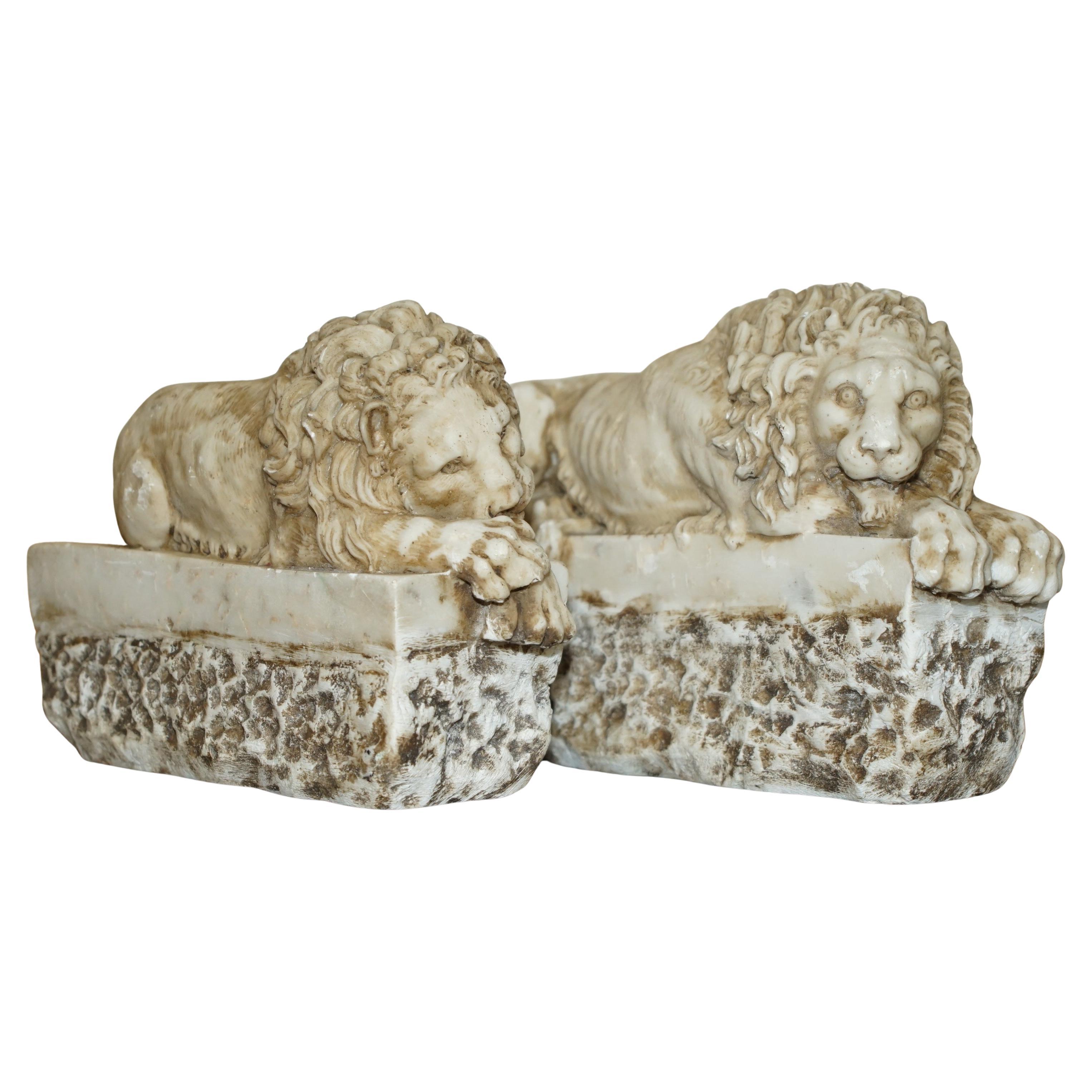
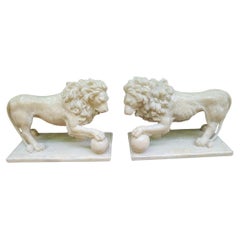
"Pair Recumbent Stone Lions"
after Antonio Canova (1757-1822)
Italian (possibly Florence)
Mid 19th Century
Alabaster, marble
6 x 9 x 4 inches
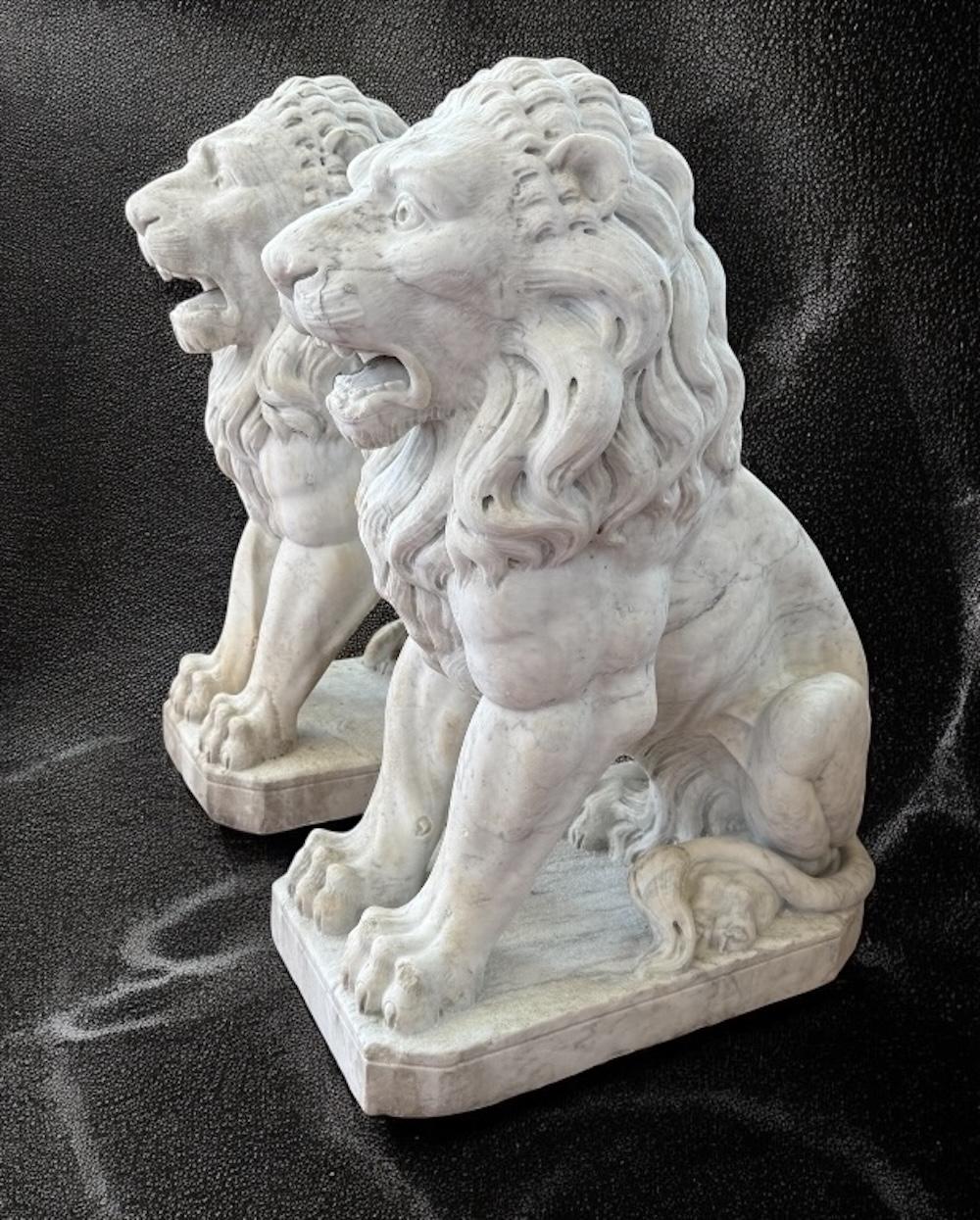
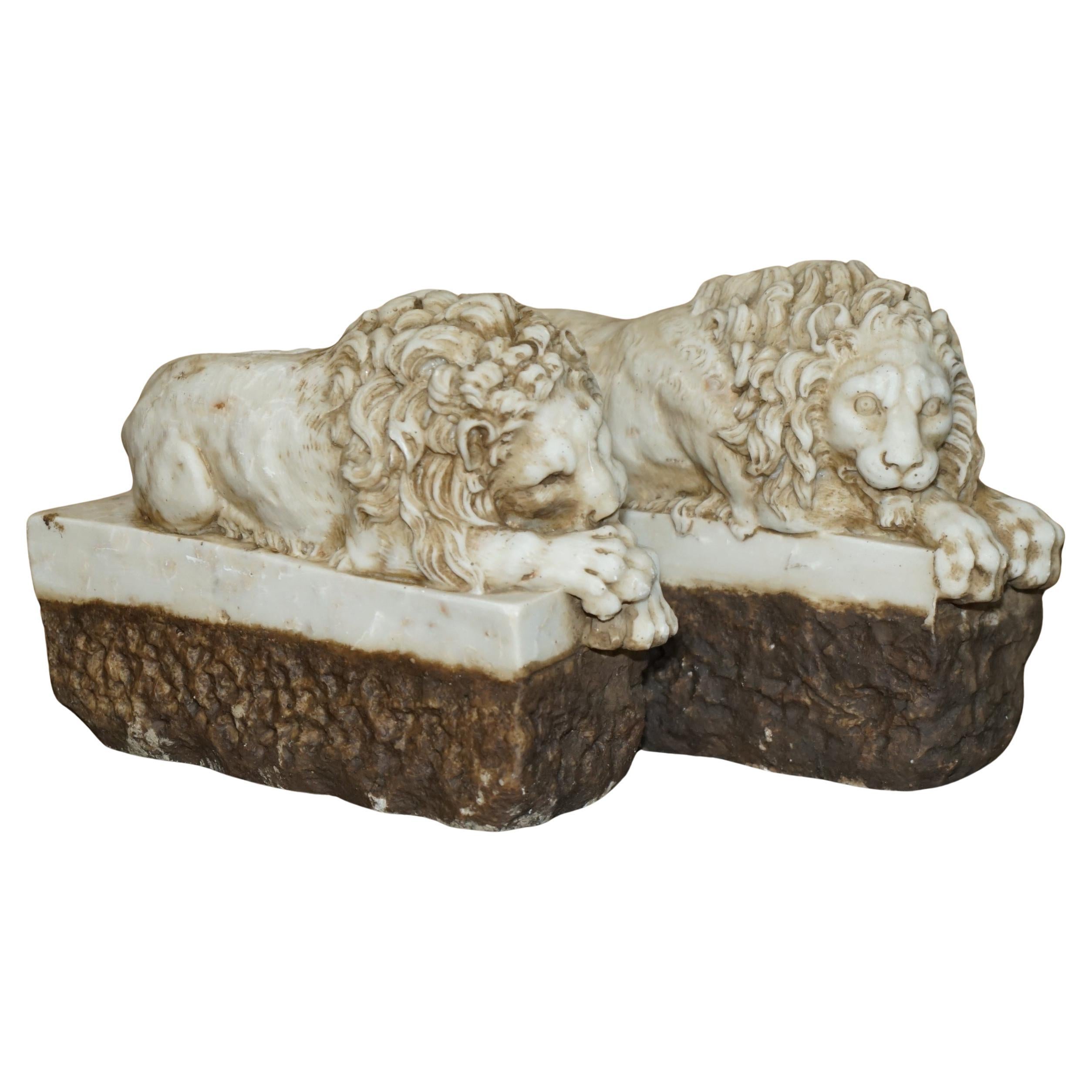
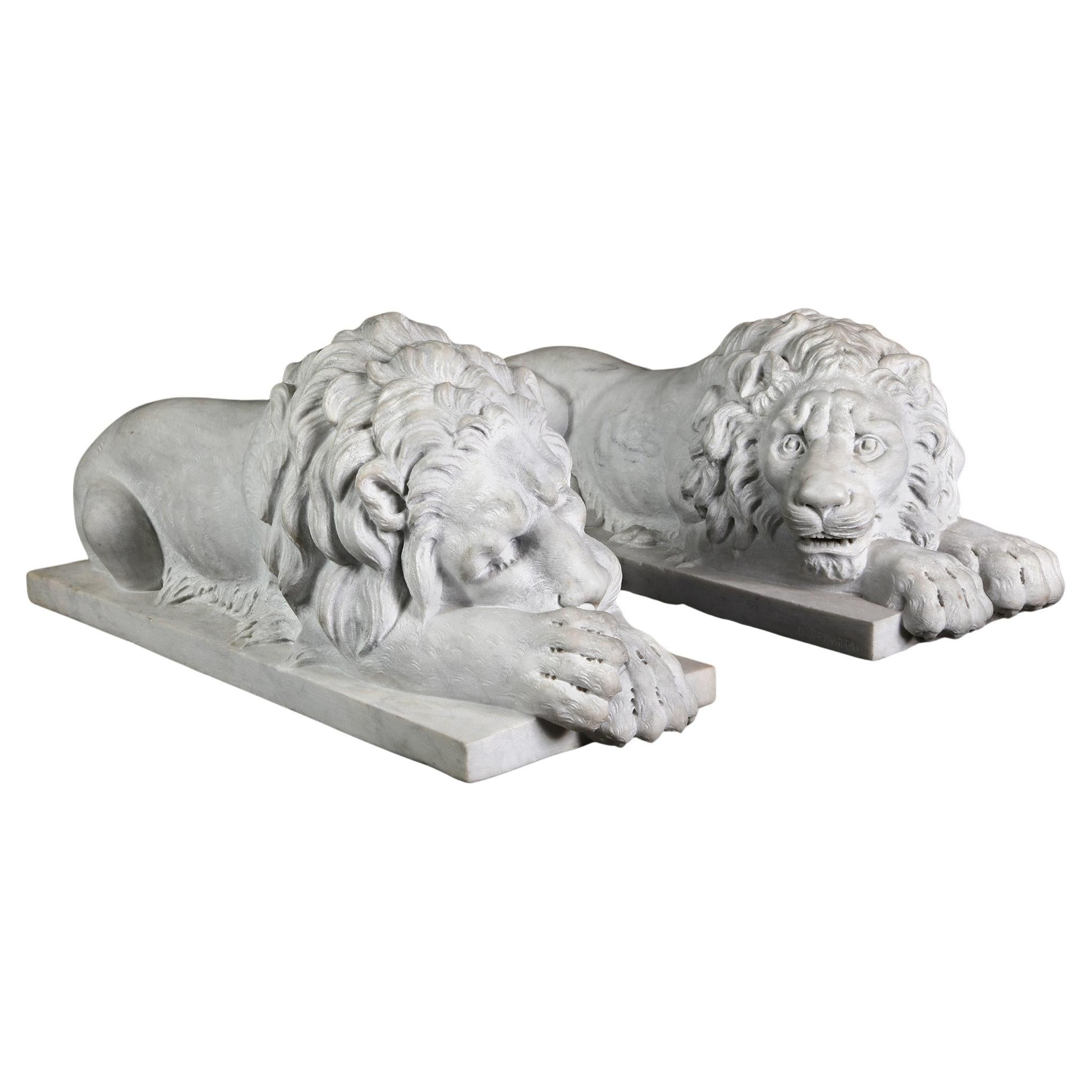
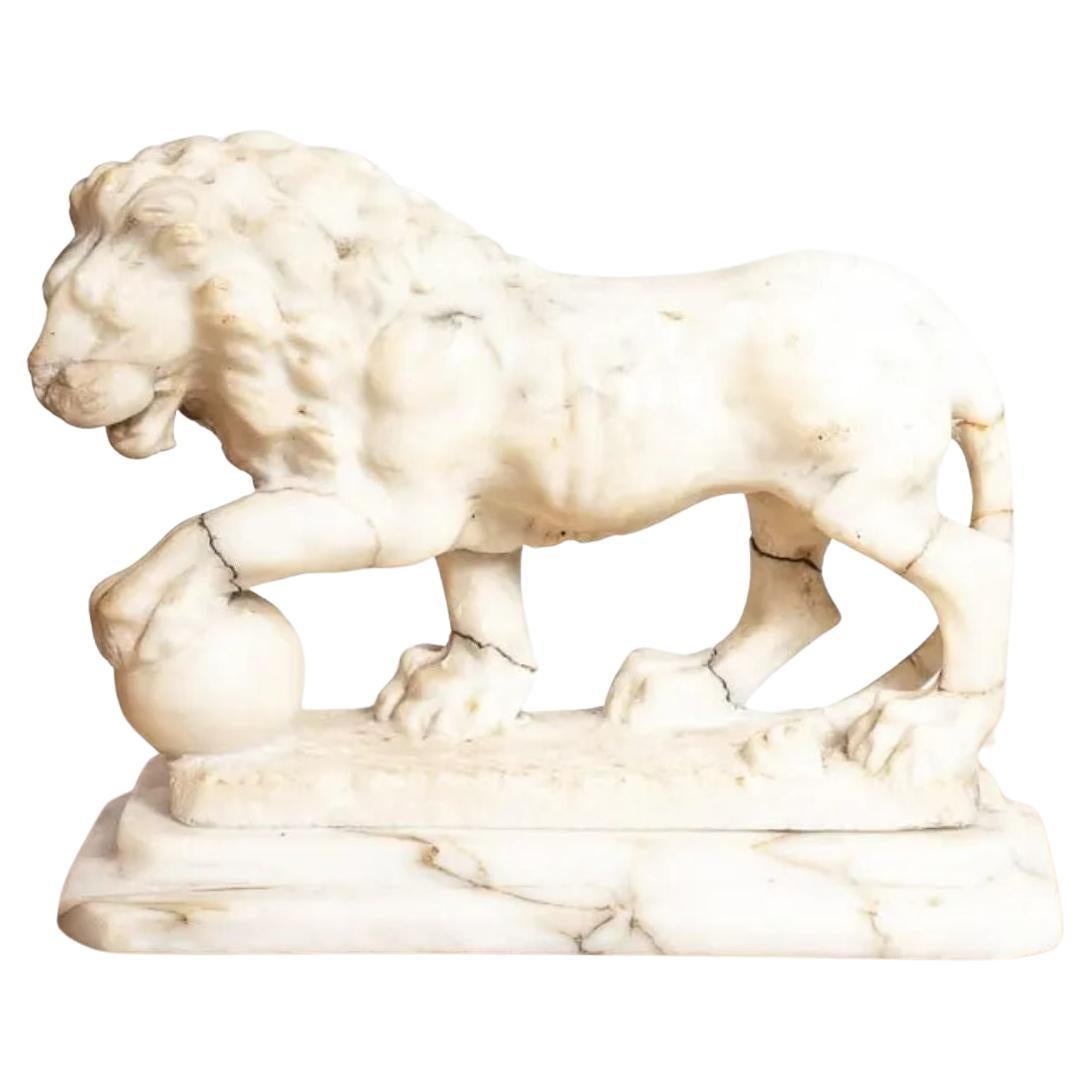
This is an exquisite pair of Italian alabaster lions on marble bases based on the monumental lions carved by Antonio Canova (1757-1822), the greatest Italian neoclassical sculptor. Canova sculpted the marble lions for the monumental tomb of Pope Clement XIII in St. Peter’s, Rome in 1792
Canova Lions refers to the pair of copies of lion sculptures by Antonio Canova. When Canova created the sculptures in 1792, he installed them on the tomb of Pope Clement XIII. The marble sculptures are some of the most prominent features in St. Peter's Basilica in Rome. Given the intricacies of creating the original Canova lions, some artists created molds and replicated them. A good example is the pair of lion sculptures at the Corcoran Gallery of Art entrance in Washington DC which have stood in their same location since 1860. Canova was able to create such life-like, believable sculptures because as one of the premier artists in 18th-century Rome, he was known for the length of time he spent during the study phase. Canova was so meticulous that when the time came to create a sculpture, he would do it without making any corrections. With his large studio, Canova was able to execute highly-sophisticated projects for rulers like French Emperor Napoleon Bonaparte, European aristocracy and nobility as well as prominent Italian religious figures.
St. Peter's Basilica in the Vatican City is home to exquisite works of art by some of Italy's finest sculptors, including Michelangelo. Like Canova, Michelangelo took part in memorable sculptural and architectural projects. Especially notable examples of Michelangelo's work are the sculpture of David in Florence and the frescoes on the ceiling of the Sistine Chapel. Clearly Canova is in good company regarding his stature as an artist. Having worked for St. Peter's Basilica, he must have made a name for himself and attracted commissions for bigger projects. You only need to see the popularity of the Canova lions to know his impact on the world of art.
By the close examination of the two Canova lions it's possible to derive their meanings. While one lion is sleeping, the other is more vibrant. The combination of the two lions tells us about the Pope's moderate yet determined mien. Before he died, Canova made many copies of the two lions for different clients across the world. Other artists created copies many years after he had died.
The Canova lions have proved to be eternally popular images; copies were made soon after in the workshops of Rome to sell to wealthy ‘Grand Tourists’ as souvenirs from their classical tour. In England, Canova’s greatest patron was the 6th Duke of Devonshire whose seat was at Chatsworth House, Derbyshire. The Grand Tour of the late 17th, 18th and 19th centuries saw many upper class, wealthy and aristocratic gentlemen and ladies traveling to Italy and Europe for pleasure, education and inspiration. This afforded them the opportunity to view important classical and Renaissance works of art and architecture.
The term ‘Grand Tour’ was coined by the Catholic priest and travel writer Richard Lassels (circa 1603-68), who used it in his influential guidebook "The Voyage of Italy," published in 1670, to describe young lords travelling abroad to learn about art, architecture and antiquity. Robert Adam wrote of Rome in 1755, ‘Rome is the most glorious place in the universal world. A grandeur and tranquillity reigns in it, everywhere noble and striking remains of antiquity appear in it, which are so many that one who has spent a dozen years in seeing it is still surprised with something new…’
- Creation Year:Circa 1850
- Dimensions:Height: 6 in (15.24 cm)Width: 9 in (22.86 cm)Depth: 4 in (10.16 cm)
- Medium:
- Movement Style:
- Period:
- Condition:This pair is in very fine condition and are beautifully carved.
- Gallery Location:SANTA FE, NM
- Reference Number:1stDibs: LU1408211778962
About the Seller
5.0
Platinum Seller
Premium sellers with a 4.7+ rating and 24-hour response times
Established in 1995
1stDibs seller since 2020
130 sales on 1stDibs
Typical response time: 2 hours
- ShippingRetrieving quote...Shipping from: Santa Fe, NM
- Return Policy
More From This Seller
View AllAntique Pair of Russian Wolf Hound/Borzoi Dog Portrait Sculptures circa 1930
s
Located in SANTA FE, NM
Antique Pair of Russian Wolfhounds/Borzois Dog Portrait Sculptures
by Scalini (aka Scali; Italian, 20th century)
circa 1930's
Patinated spelter
9 x 14 inches (on bases)
Though rath...
Category
1920s Art Deco Figurative Sculptures
Materials
Cast Stone, Bronze
$2,310 Sale Price
40% Off
Painted Cast-Metal Tiger circa 1900
Located in SANTA FE, NM
Painted Cast-Metal Tiger
Continental School, circa 1900
8.75 x 19.5 inches
Ex. Collection Interior Designer Joseph Cicio
Born and raised in Brooklyn, New York, Joseph Cicio followe...
Category
Early 20th Century Academic Figurative Sculptures
Materials
Metal
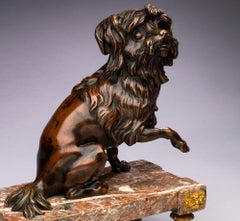
Antique 19th century Bronze Dog Portrait of a Löwchen on a Marble Base
Located in SANTA FE, NM
Antique Bronze Dog Portrait of a Löwchen on a Marble Base
French 19th century
1/2 x 8 x 5 1/2 inches
The chiseled bronze has a nuanced, rich brown patina depicting a Löwchen in the round, seated on a quadrangular marble base decorated with very fine gilt bronze flowers and fluted feet. Napoleon III, Louis XVI style. Based on a model by Jacques Caffieri for the Prince de Condé in 1773.
(More images to be added.)F
Executed during the nineteenth century, this figure is fully in line with the eclectic taste of the reign of Napoleon III. Indeed, the Empress Eugenie brought the Louis XVI style up to date in her castle of Compiègne. Jacques Caffieri is one of the most famous bronze smiths of the eighteenth century. In 1715 he was admitted as a master caster and chiseler, and worked almost exclusively for the crown castles...
Category
19th Century Rococo Figurative Sculptures
Materials
Marble, Bronze
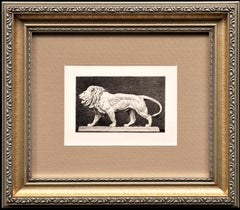
Antique Etching Le Lion Qui Marche by Antoine-Louis Barye (French, 1796-1875)
By Antoine-Louis Barye
Located in SANTA FE, NM
Le Lion Qui Marche
Antoine-Louis Barye (French, 1796-1875)
Circa 1880
Etching on laid paper after the original bronze by master etcher Abel Lurat (F...
Category
1880s French School Animal Prints
Materials
Paper, Ink, Etching
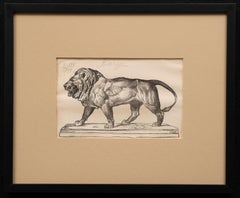
Antoine Louis-Barye "Walking Lion" Antique Engraving by Firmin Gillot ca. 1870
By Antoine-Louis Barye
Located in SANTA FE, NM
"Walking Lion"
Antoine Louis-Barye (France, 1775-1895)
Antique Engraving by Firmin Gillot
Circa. 1870
11 1/3 x 7 3/4 (21 3/8 x 17 1/2 frame) inches
This is "Walking Lion," along with "Walking Tiger...
Category
1870s Realist Animal Prints
Materials
Black and White
Antique Bronze Dog "Whippet with a Butterfly" Arthur Waagen (1833-1898) 2 of 2
By Arthur Waagen
Located in SANTA FE, NM
Antique Bronze Dog Portrait
“La Levrette au Papillon” or “Whippet (Greyhound) with a Butterfly”
Arthur Waagen (Germany, France 1833-1898)
Circa 1860’s
11 x 8 x 4 inches
(2of 2. No...
Category
1860s Academic Figurative Sculptures
Materials
Bronze

You May Also Like
Exceptional Pair of Italian Neoclassical Leons Carrara Marble Statues
Located in Rome, IT
Outstanding pair Italian Neoclassical Leons Carrara Marble sculptures.
A timeless piece for your garden or interior decoration.
Good condition, with visible signs of wear and ...
Category
1790s Academic Figurative Sculptures
Materials
Marble
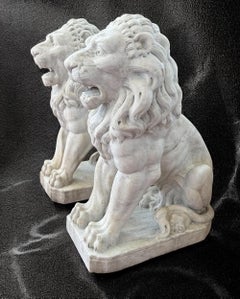
FINE PAIR OF ANTIQUE 19TH CENTURY ITALIAN ALABASTER LiONS AFTER ANTONIO CANOVA
Located in West Sussex, Pulborough
Royal House Antiques
Royal House Antiques is delighted to offer for sale this extremely collectable pair of original Antique Circa 1880 Italian Grand Tour Alabaster Recumbent Lions ...
Category
Antique 1880s Italian Grand Tour Animal Sculptures
Materials
Alabaster
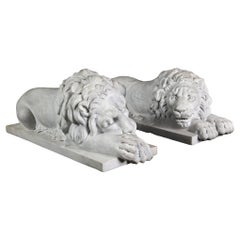
Danilo Cervietti Pair of Marble Canova Lions - Second half 20th Century
Located in Baambrugge, NL
This impressive pair of white marble lions was sculpted by the renowned Italian artist Danilo Cervietti (20th Century). The sculptures are loosely modeled after the style of Antonio ...
Category
Mid-20th Century Italian Animal Sculptures
Materials
Marble
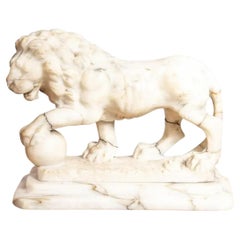
Italian Alabaster Figure of The Medici Lion, 19th Century
Located in London, GB
Italian Alabaster Figure of the Medici Lion
Late 19th century Italian carved alabaster 'Grand Tour' souvenir sculpture, after the antique, "The Medici Lion". Carved alabaster mode...
Category
Antique 19th Century Italian Renaissance Animal Sculptures
Materials
Alabaster
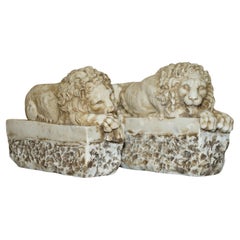
PAIR OF ANTIQUE ITALIAN ANTONIO CANOVA CORCORAN GALLERY OF ART WASHINGTON LIONs
Located in West Sussex, Pulborough
Royal House Antiques
Royal House Antiques is delighted to offer for sale this extremely collectable pair of original Antique Circa 1880 Italian Grand Tour Alabaster Recumbent Lions after the original huge statues by Antonio Canova and as displayed in the Corcoran gallery of Art in Washington
These are original examples not later copies, they have a stunning antique patina and look expensive and important in any setting
Grand tour pieces were purchased by young men and women in high society when they finished their studies, they would go on a "Grand Tour" around Europe visiting the sites and collecting trinkets, these trinkets could be very small such as ingots, or if you were fabulously wealthy they would be much larger and heavier like these lions
About Tomb of Pope Clement XIII
The artwork, titled “Tomb of Pope Clement XIII,” is a sculpture created by Antonio Canova in 1792. Belonging to the Neoclassicism art movement, this masterpiece exemplifies the genre of sculpture.
In the artwork, Canova masterfully arranges various sculptural elements to create a poignant and regal composition. The tomb consists of a carved effigy of Pope Clement XIII, situated in a reverent pose atop an elaborately adorned sarcophagus. The Pope’s figure is cloaked in flowing garments, kneeling in prayer, signifying his piety. Below, two imposing lions flank the monument, symbolizing strength and vigilance. An angelic figure, wings partially spread, gazes downwards with a sorrowful expression, embodying the eternal mourning for the departed. Adjacent to the angel, a robed woman stands, her somber posture accentuating the tomb’s solemn atmosphere. The architectural framework, with its towering columns and vaulted arch, adds to the grandeur and reverence of the entire composition, upholding the Neoclassical ideals of symmetry, order, and monumental form.
Later in life the Canova Lions were replicated, they are located in front of the Corcoran Gallery of Art in Washington, D.C, these were cast in bronze from molds of the originals. The pieces were installed in 1860
This pair as mentioned are sublime, they really set the scene for a room, I've had a pair on the top of my piano for years with a large Tiffany lamp...
Category
Antique 1880s Italian Grand Tour Animal Sculptures
Materials
Alabaster
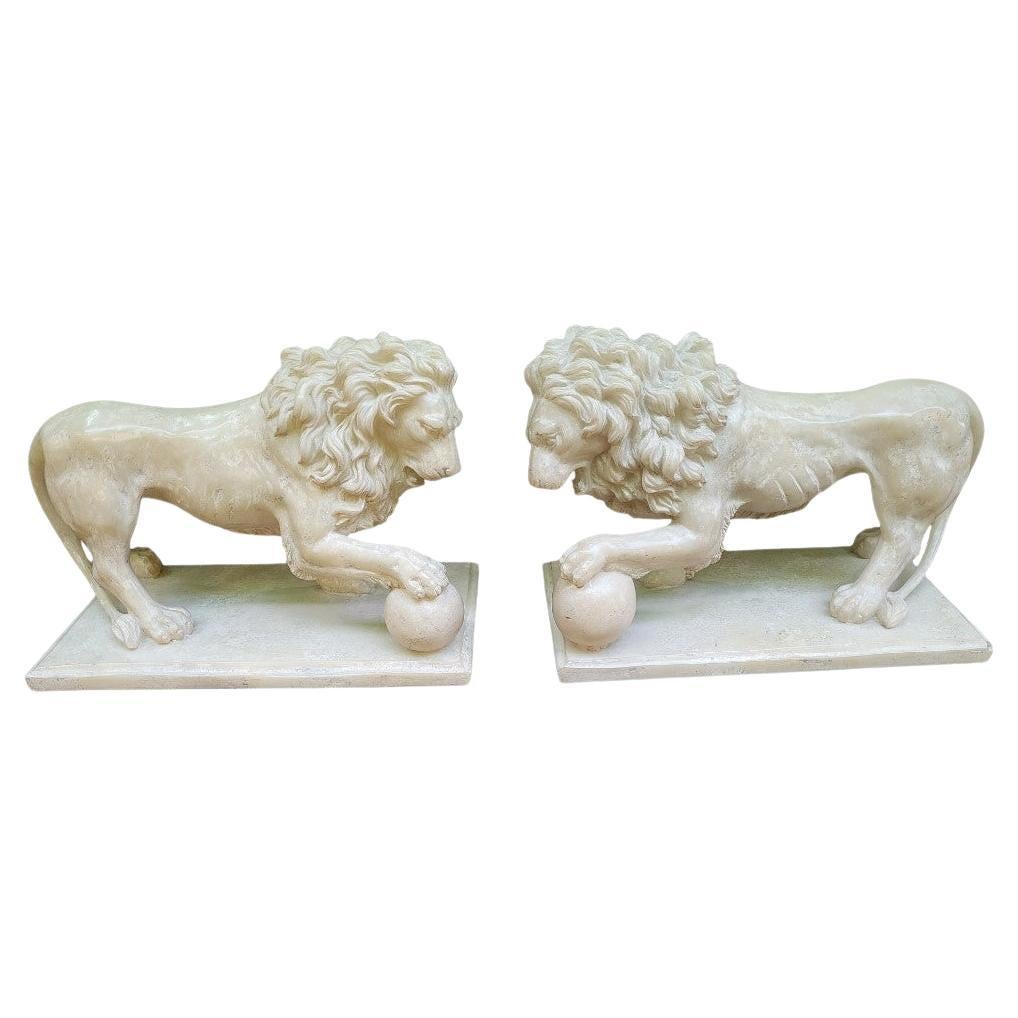
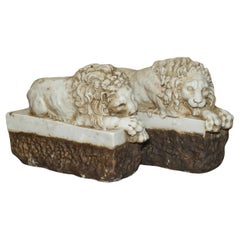
Pair of Italian Medici Resin Lion Sculptures
Located in London, GB
A Lovely Pair of Medici Lions C20th
The Original Lion Decorated the Entrance to the Famous Villa Medici in ROma
Italian Work from the Grand Tour
These Sculptures are of Good size a...
Category
20th Century Unknown Renaissance Animal Sculptures
Materials
Resin
$1,189 / item
More Ways To Browse
Antique Lion Sculpture
Sculptures Of Lions
Antique Alabaster Sculpture
Italian Sculpture Stone
Marble Lion
Marble Lions
19th Century Italian Alabaster
19th Century Alabaster Sculpture
Antique Stone Lions
Recumbent Lions
Lion Marble Sculpture
Italian Marble Lions
Catholic Priest
Sleeping Lion
Bearbrick Kaws Dissected
Bearbrick Keith Haring 1000
Beto Gatti
Bill Mack Bronze Art