Want more images or videos?
Request additional images or videos from the seller
1 of 7
Viktor SchreckengostGolf (Wall Plaque)1930-1
1930-1
$3,000
£2,272.22
€2,609.26
CA$4,204.29
A$4,572.63
CHF 2,423.32
MX$54,789.61
NOK 30,799.21
SEK 28,216.26
DKK 19,503.22
About the Item
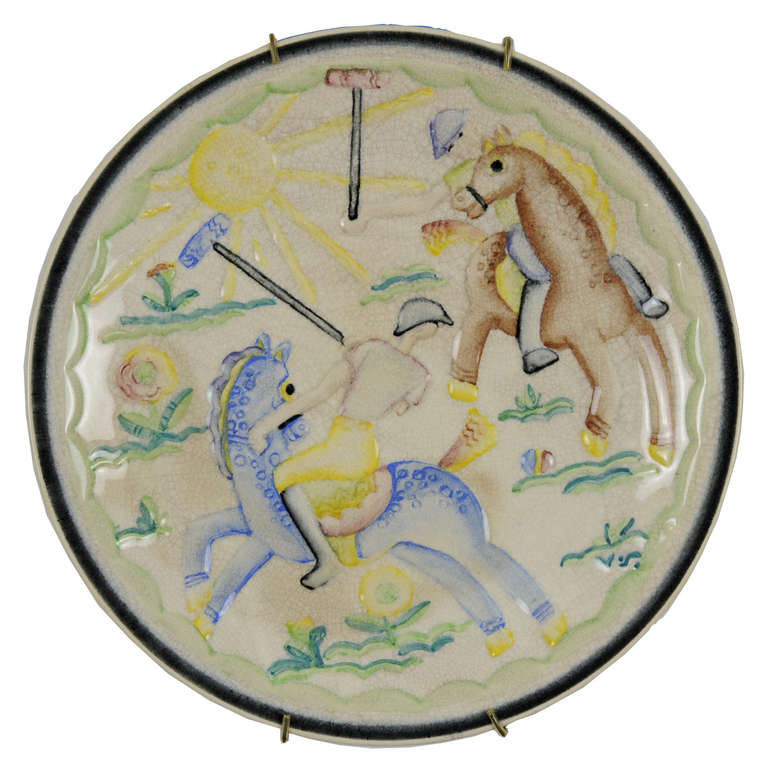
Golf (Wall Plaque)
Polychromed ceramic, c. 1930-1
Signed with the artist's initials: VS recto
Very rare, only a few produced prior to the closure of Cowan Pottery
Format: Round ceramic plate, 11 1/4 inches
Designed by the artist while working for Cowan Pottery in 1930. One of Cowan's clients, an interior designer, requested plates decorated with different outdoor activities. Others in the series included "Swimming," "Tennis," "Polo," and "The Hunt."
According to Henry Adams, the number of examples created was very limited due to the closing of Cowan Pottery in 1931. Very rare
Condition: Good, with the usual craquelure of the glazes used.
Note: Industrial design democratizes high style, and Mr. Schreckengost was widely considered among the most democratic industrial designers. He made, quite literally, the stuff of life — things found routinely in homes, backyards and garages in this country and around the world. He designed bicycles for Sears and everyday china for American Limoges. He designed children’s toys and pedal cars; flashlights, furniture and fans; lawn chairs, lawn mowers and golf carts; baby walkers and artificial limbs.
In 2006 Mr. Schreckengost was awarded the National Medal of Arts, the country’s highest cultural honor. His work is in the permanent collection of major museums, including the Renwick Gallery, the Cooper-Hewitt National Design Museum and the Art Institute of Chicago.
Mr. Schreckengost belonged to the first great generation of American industrial designers, which included luminaries like Russel Wright, Norman Bel Geddes and Raymond Loewy.
The lights of New York did, however, inspire his most famous piece, the “Jazz” bowl, commissioned by an anonymous client in 1930. Originally trained as a ceramicist, Mr. Schreckengost was then working for the Cowan Pottery Studio in Rocky River, Ohio. One day he picked up what looked like a routine order for a punch bowl with a New York theme. The client, a woman named Eleanor, was delighted with the bowl, Mr. Schreckengost learned. Her husband, Franklin, liked it too. Mrs. Roosevelt, then the first lady of New York State, ordered two more “Jazz” bowls from Mr. Schreckengost, one for her home in Hyde Park, another for a house on Pennsylvania Avenue in Washington that she fully expected to occupy in 1933.
Widely photographed, the “Jazz” bowls are considered signal examples of Art Deco style. In 2004 Sotheby’s sold one of the $50 bowls at auction for $254,400.
New York Times, Obituary, Feb. 2, 2008
- Creator:Viktor Schreckengost (1906, American)
- Creation Year:1930-1
- Dimensions:Height: 11.25 in (28.58 cm)Width: 11.25 in (28.58 cm)
- Medium:
- Movement Style:
- Period:
- Condition:
- Gallery Location:Fairlawn, OH
- Reference Number:Seller: FA73271stDibs: LU14016413252
Viktor Schreckengost
The son of a commercial potter in Sebring, Ohio, Viktor Schreckengost learned the craft of sculpting in clay from his father. In the mid-1920s, he enrolled at the Cleveland School of Art (now the Cleveland Institute of Art, or CIA) to study cartoon making, but after seeing an exhibition at the Cleveland Museum of Art he changed his focus to ceramics. Upon graduation in 1929, he studied ceramics in Vienna, Austria, where he began to build a reputation, not only for his art, but also as a jazz saxophonist. A year later, at the age of 25, he became the youngest faculty member at the CIA. In 1931, Schreckengost won the first of several awards for excellence in ceramics at the Cleveland Museum of Art, and his works were shown at the Metropolitan Museum of Art, the Art Institute of Chicago, the Panama-Pacific Exposition in San Francisco, and elsewhere. By the mid-1930s, Schreckengost had begun to pursue his interest in industrial design. For American Limoges, he created the first modern mass-produced dinnerware, called Americana. Along with engineer Ray Spiller, Schreckengost designed the first-cab-over-engine truck for Cleveland's White Motor Company. By the end of the decade, he had designed the first Mercury Bicycle for Murray, Ohio. In 1939, the bicycle and "The Four Elements" in clay were displayed at the New York World's Fair. In the 1940s, Schreckengost's designs for children's pedal cars (as well as bicycles and toys) helped Murray, Ohio become the world's largest manufacturer of pedal cars. His design and ceramic work was interrupted by World War II, when he was recruited by the Navy to develop a system for radar recognition that won him the Secretary of Navy's commendation. After the war, Schreckengost resumed his industrial design career creating products for Murray, Sears, General Electric, Salem China Company, and Harris Printing, among others. Approximately 100 million of his bicycles were manufactured by Murray, making it the largest bicycle-maker in the world. He retired from industrial design in 1972, but continued teaching at the Cleveland Institute of Art. Biography from the Archives of askART In June, 2006, Viktor Schreckengost celebrated his 100th birthday in Cleveland Heights, Ohio. Of him at this event, it was written: Viktor Schreckengost, a prolific designer whose works ranging from toys, ceramics and paintings to dinnerware and trucks, have touched countless lives, expects his next inspiration to come at any time. . . (he) always seemed to know what to create by responding to needs---like improving the ride of a child's wagon or making user-friendly tableware with an artistic flair." To recognize his birthday, more than 130 galleries and museums featured his work the summer of 2006 in a "National Centennial Exhibition" that paid tribute to his legacy that "includes generations of students who became designers who shaped the output of industrial America in the post World-War II era." In February 2008, Victor Schreckengost died at age 101 at Tallahassee, Florida, where he was spending the winter.
About the Seller
5.0
Recognized Seller
These prestigious sellers are industry leaders and represent the highest echelon for item quality and design.
Platinum Seller
Premium sellers with a 4.7+ rating and 24-hour response times
Established in 1978
1stDibs seller since 2013
836 sales on 1stDibs
Typical response time: <1 hour
Associations
International Fine Print Dealers Association
- ShippingRetrieving quote...Shipping from: Fairlawn, OH
- Return Policy
More From This Seller
View AllPolo (Wall Plaque)
By Viktor Schreckengost
Located in Fairlawn, OH
Polo (Wall Plaque)
Polychromed ceramic, c. 1930-1931
Signed with the artist's initials: VS recto
Cowan Pottery stamp verso
References And Exhibitions:
Designed by the artist while working for Cowan Pottery in 1930. One of Cowan's clients, an interior designer, requested plates decorated with different outdoor activities. Others in the series included "Swimming," "Tennis," "Golf," and "The Hunt."
Condition: with the usual craquelure
Size: 11 1/4 inches in diameter
Industrial design democratizes high style, and Mr. Schreckengost was widely considered among the most democratic industrial designers. He made, quite literally, the stuff of life — things found routinely in homes, backyards and garages in this country and around the world. He designed bicycles for Sears and everyday china for American Limoges. He designed children’s toys and pedal cars; flashlights, furniture and fans; lawn chairs, lawn mowers...
Category
1930s American Modern Figurative Sculptures
Materials
Ceramic
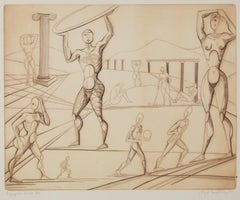
Olympian Games
By Ray H. French
Located in Fairlawn, OH
Olympian Games
Engraving, 1957
Signed, dated, titled and numbered (see photos)
Edition: 25 (7/25)
From the first and only edition, probably less than 8 impressions printed
Printed by the artist
Condition: Excellent
soft fold in upper left margin
Image size: 15 7/8 x 19 7/8 inches
Sheet size: 18 1/2 x 22 3/8 inches
Provenance: Estate of the artist
Martha A. French Revocable Trust
Item Reference
LU14013763732
Crucifixion, color etching, 1947
Item Reference
LU14013160582
The Web, engraving, 1950
Item Reference
LU14011892032
The Swan, mixed media (etching & soft ground), 1957
Item Reference
LU1404294651
Snowy Egret, engraving, 1954, third edition c. 1990, printed by the master printer Jon Clemens
Item Reference
LU1402253433
Debris, color etching, c. 1940, printed by the artist at the John Herron Art Institute, Indianapolis, Indiana
Item Reference
LU140331242
Crucifixion, engraving, 1958
Item Reference
LU140145330
Strange Animals, engraving, 1947
Item Reference
G130708140172
The Gull, engraving, 1955
Item Reference
LU14012448972
Moon Rays...
Category
1950s American Modern Figurative Prints
Materials
Engraving
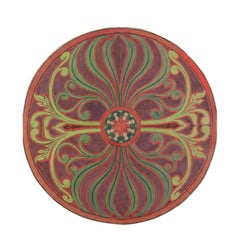
Untitled Art Nouveau Rondelle
Located in Fairlawn, OH
Unknown Artist, France, late 19th century
Anonymous c. 1900 Rondelle on antique laid paper
Ink, Watercolor and or Gouache
Unsigned
An Art Nouveau preliminary design for a decorative ...
Category
Early 1900s Art Nouveau Abstract Drawings and Watercolors
Materials
Ink, Watercolor, Pigment
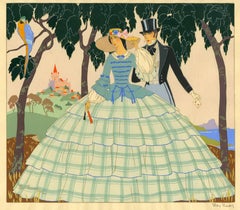
En Espagne
By Victor Max Ninon
Located in Fairlawn, OH
En Espagne
Pochoir (silk screen) printed in colors
Signed by the artist in pencil lower right
The artist won a gold medal in Paris in 1925 for his pochoirs
Condition: Excellent
Image...
Category
1920s Art Deco Figurative Prints
Materials
Screen
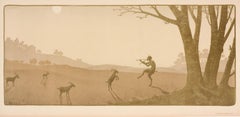
Vision Antique
By Paul Berthon
Located in Fairlawn, OH
Vision Antique
Color lithograph, 1899
Signed in the stone upper left (see photo)
Titled in the stone lower right (see photo)
Edition: unsigned edition about 200 (per Arwas)
Published...
Category
1890s Art Nouveau Abstract Prints
Materials
Lithograph
Coquette
By Victor Max Ninon
Located in Fairlawn, OH
Coquette
Pochoir (silk screen) printed in colors, c. 1923-1925
Signed by the artist in pencil lower right; numbered in ink on the image, (see photo)
Edition: 250 (100/250) in pencil in image (see photo)
Image size: 10-1/2 x 12-3/4"
The artist won a gold medal in Paris in 1925 for his porchoirs
Victor Max Ninon (Vittorio Accornero de Testa, Italian, 1896-1982)
Biography
Vittorio Accornero de Testa was born in Casale Monferrato in 1896. He completed his first studies at the "Leardi" institute, but was forced to interrupt them due to the war events of the First World War . At 19 he was second lieutenant of the Alpine troops and in 1916 he took one of the first pilot's licenses. During the war he knows the bitterness of shooting down in air combat (for which he is decorated), but also the good fortune to stay alive, albeit with a disability. His art blossomed in the postwar period, first signing his works simply Ninon and then, probably at the suggestion of a French publisher, under the pseudonym of "Victor Max Ninon" (Victor and Max indicate strength and masculinity, Ninon boyhood) .In 1919 and 1924 he made illustrations for theGiornalino della Domenica , also together with his first wife Edina Altara , for Ardita and La Lettura . In 1923 he won the cover competition organized by the magazine El Hogar of Buenos Aires and in 1925 with his pochoirs he imposed himself in Paris at the international exhibition of modern decorative and industrial arts , obtaining a gold medal. In the same year he made two covers for the US magazine The Smart Set . In the 1920s he made numerous series of art deco style postcards for the Milanese publishing house Degami . On June 4, 1929, aGenoa embarks on the Conte Grande together with his wife Edina Altara , for New York . The two stayed in the American metropolis for a few months: in this period Accornero worked on the creation of theatrical sets and created some covers for Country Life magazine . Accornero gets awards and prizes, but the great economic crisis of the time and the nostalgia for Italy convince the two to return to their homeland, where they resume their activity as illustrators.
In 1934 Accornero moved to Milan, separated amicably from his wife and continued to dedicate himself to the illustration of children's books, abandoning the pseudonym Victor Max Ninon. It illustrates about 60 books, from the fables of Andersen , Perrault and Grimm , to the tales of Poe , as well as the famous Pinocchio and Cuore published by Mondadori, Mursia, Hoepli, Martello. Several books illustrated by Accornero have been published in French, Spanish, German and English. In addition to the periodicals already mentioned, he collaborates on the first edition of the Encyclopedia of Boys , Mondadori, and with the Italian magazines Lidel , Il Secolo XX, The Italian Illustration , Fantasies of Italy , The Woman , Cordelia , For You Lady , Grace , Metropolis , La Domenica del Corriere , The Corriere dei Piccoli .
In 1936 enters the world of cinema, creating sets and costumes for Wedding Vagabonde of Guido Brignone and The White Squadron of Augustus Genina . From 1935 to 1950 he also devoted himself to the theater, taking care of sets and costumes for numerous operettas, ballets and performances at the Scala in Milan and for the Milanese theaters Manzoni, Lirico and Olympia. Stages Marcello di Giordano, Nina pazza d'amore by Paisiello, I cantori di Nurimberga by Wagner, La Bohème by Puccini and other works. For this activity he is also cited in the Theater encyclopedia.
In the 1940s and 1950s he wrote and illustrated six books for children for Mondadori: Tomaso (1944), Giacomino (1949), Tomaso Cacciatore (1950), Zio Stefano (1950), In Campagna che delizia! (1953), Tomaso, dear Tomaso (1955). His illustrations of Perrault's Tales published in those years by Hoepli are famous.
His art in the fifties evolves towards hyperrealism . There are many personal exhibitions in Italy and abroad, including those at the Gallerie Gussoni (1959) and Bolzani (1963 and 1966) in Milan and Walcheturm (1962) in Zurich. Eminent critics praise his work, from Orio Vergani to Enrico Piceni, from Reto Roedel to De Chirico himself. On the Domenica del Corriere , the journalist, writer and painter Dino Buzzati...
Category
1920s Art Deco Figurative Prints
Materials
Stencil
You May Also Like
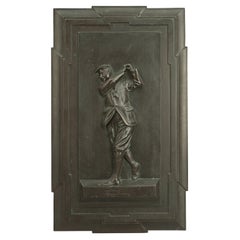
Antique Harry Vardon Golf Plaque
Located in Oxfordshire, GB
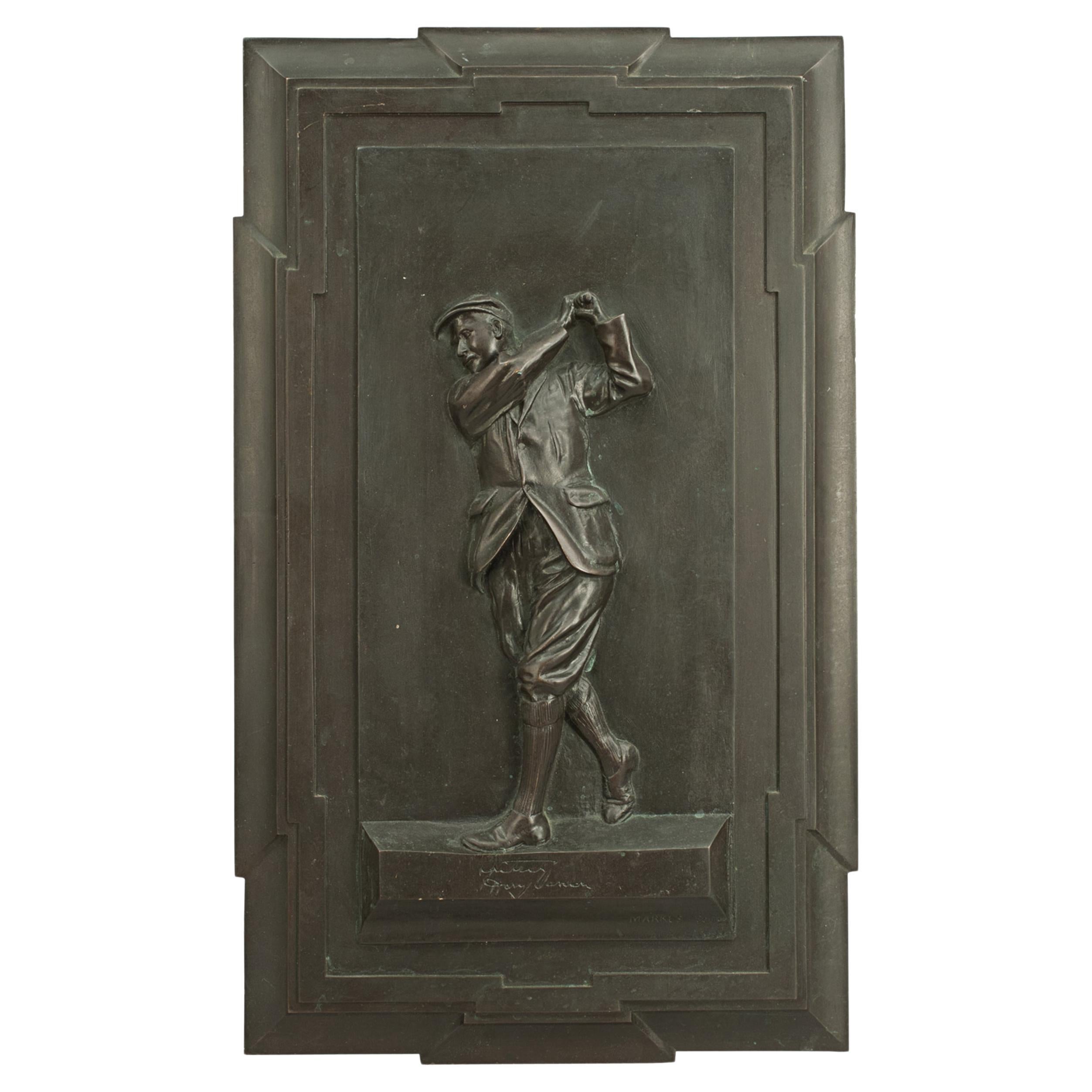
Antique bronze plaque of Harry Vardon.
A rare, MARKES, cast bronze plaque of the Champion Golfer Harry Vardon. The impressive and well known figure of Va...
Category
20th Century English Sporting Art Sports Equipment and Memorabilia
Materials
Bronze
Antique Ceramic Sporting Golf Tile
Located in Oxfordshire, GB
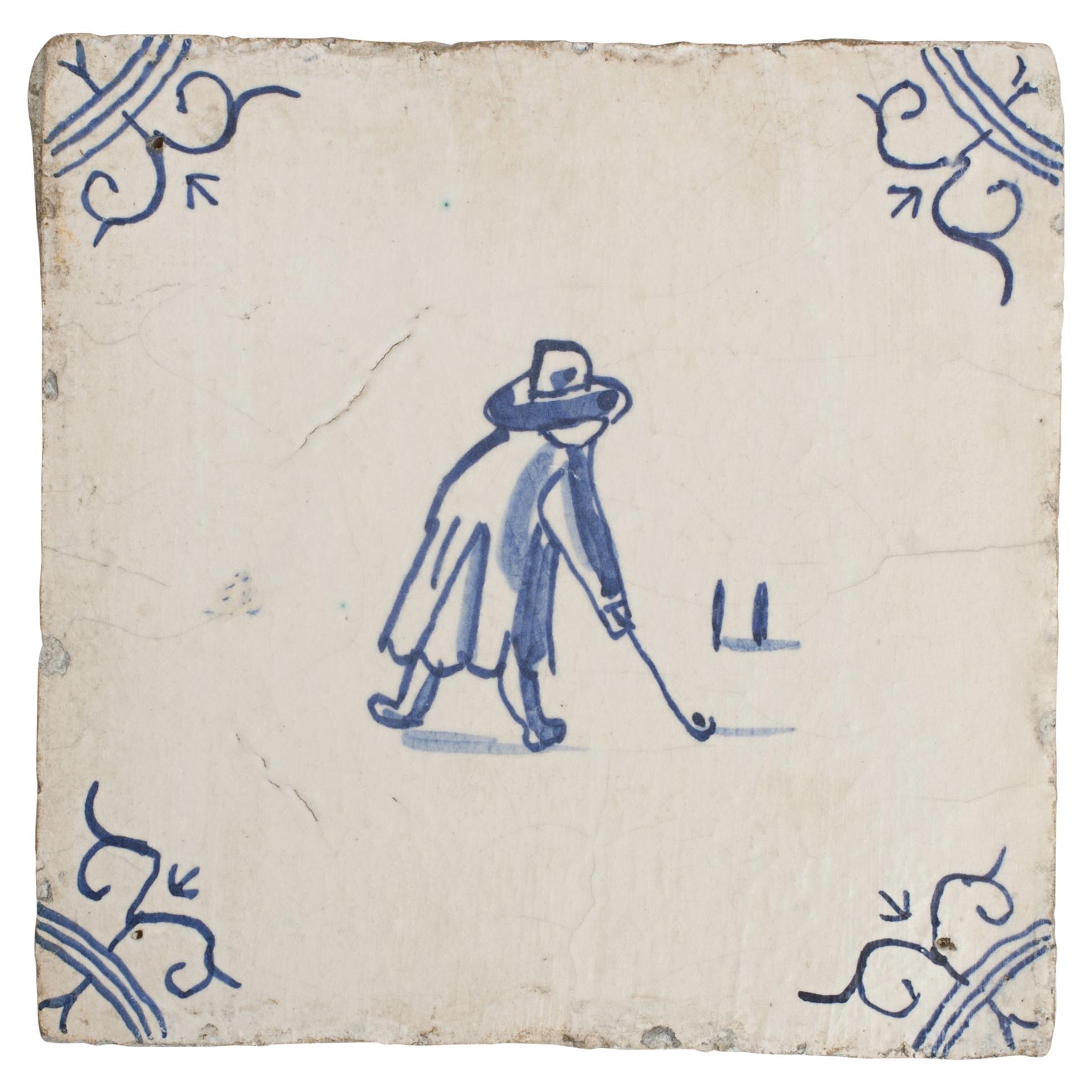
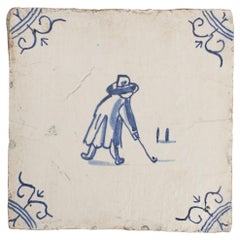
Dutch Delft Kolf Tile.
An early Dutch delft blue and white golf tile - hand painted with a Kolf scene depicting a Colf/ Kolf player. The blue image is on an off white background with...
Category
Antique 18th Century Dutch Sporting Art Ceramics
Materials
Ceramic
Ceramic Carlton Ware Pin Tray With Golf Scene.
Located in Oxfordshire, GB
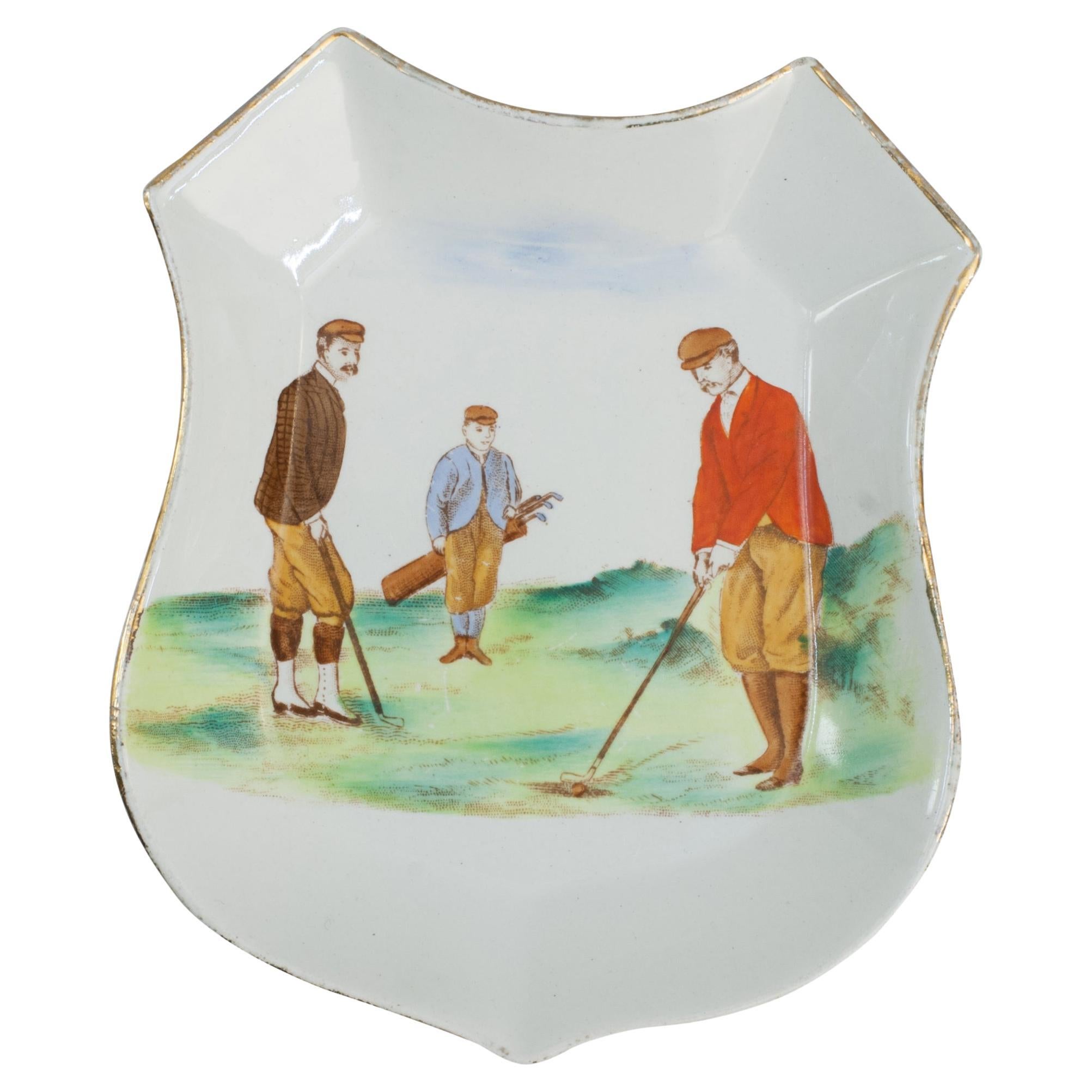
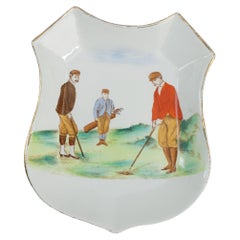
Wiltshaw & Robinson Carlton Ware Golf Pin Tray.
A ceramic Carlton Ware pin tray with a golfing scene and gilt rim. The golf scene shows one golfer dressed in ...
Category
Antique 1890s British Sporting Art Sports Equipment and Memorabilia
Materials
Ceramic
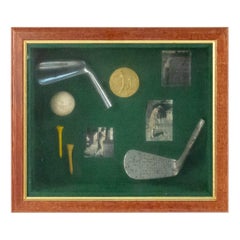
20th Century Assemblage English Golf Display Case Wall Plaque
Located in Queens, NY
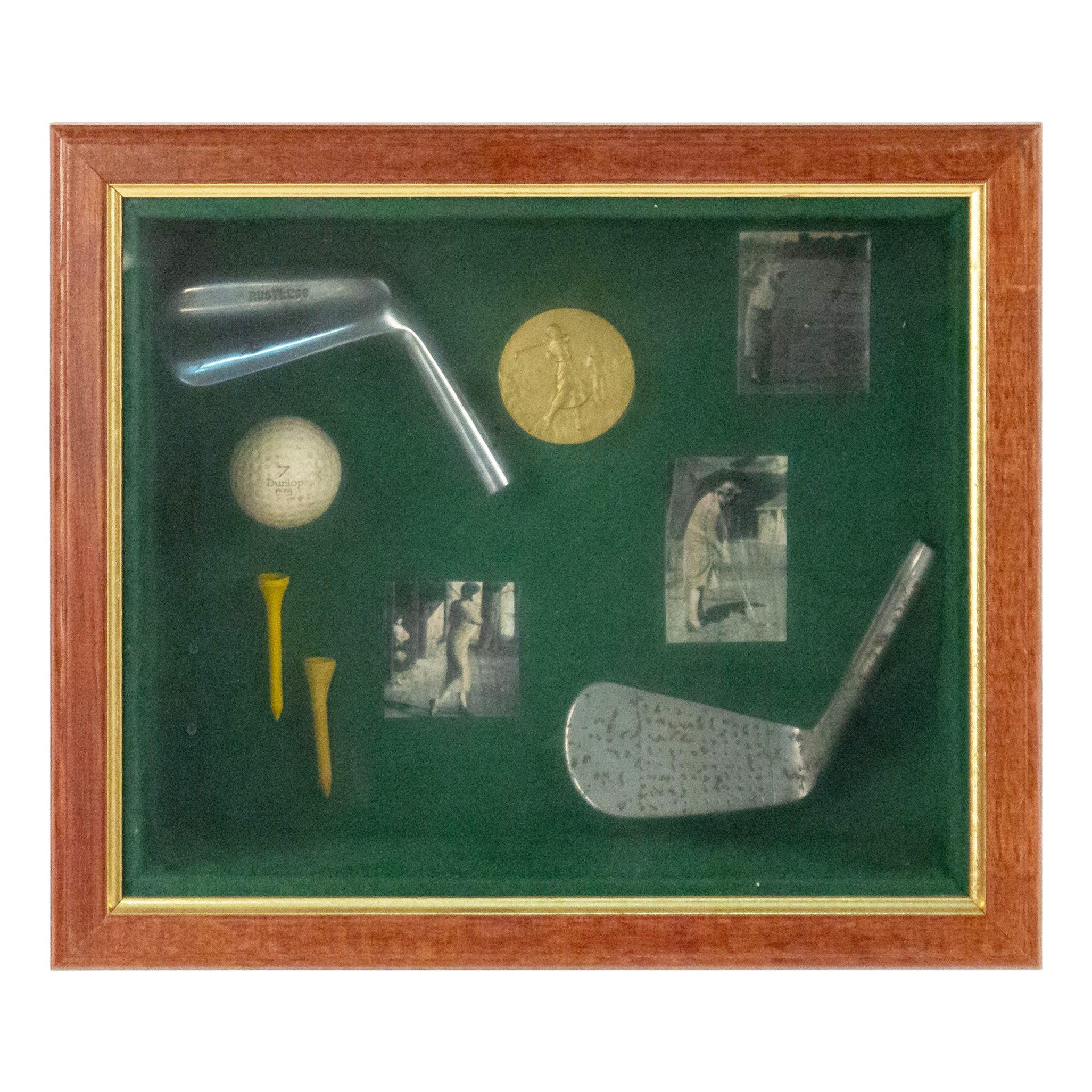
English display case wall plaque with golf iron head, tees, and photo in oak frame.
Category
20th Century British Country Sports Equipment and Memorabilia
Materials
Iron, Wrought Iron
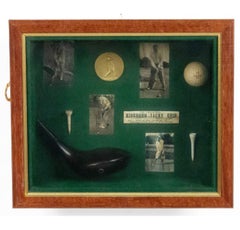
English Golf Display Case Wall Plaque
Located in Queens, NY
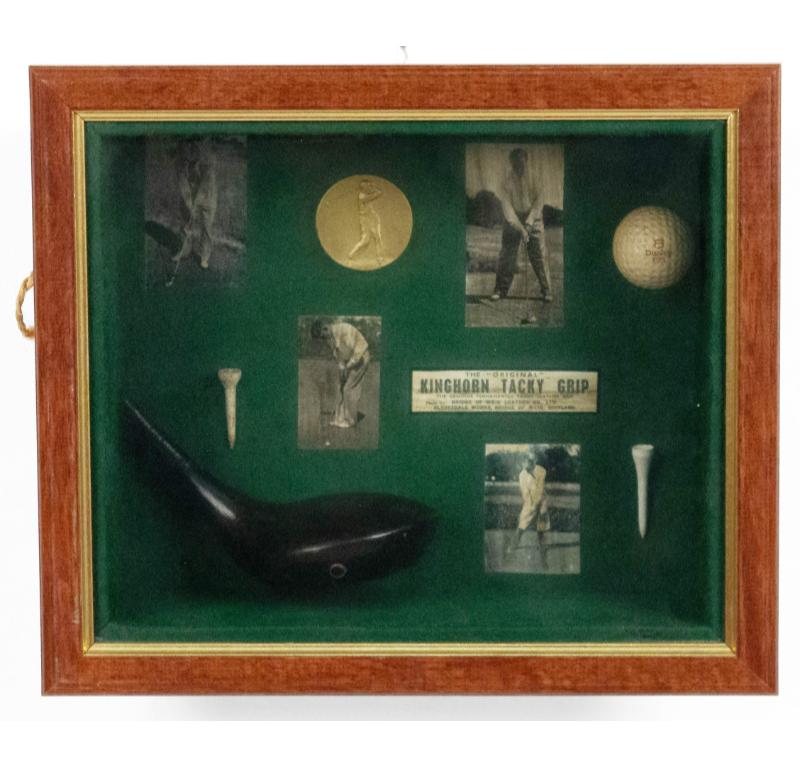
English display case wall plaque with golf driver and iron heads and trophy in oak frame.
Category
20th Century British British Colonial Decorative Art
Materials
Iron
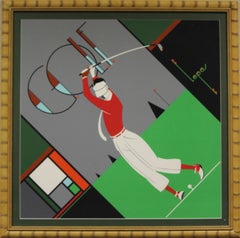
"Art Deco Golfer"
Located in Bristol, CT
Serigraph by Charles Lepas depicting an art deco golfer in a custom bamboo frame
Image Sz: 25.5"Sq
Frame Sz: 31"Sq
Category
20th Century Figurative Paintings
Materials
Ink, Lithograph
$1,800