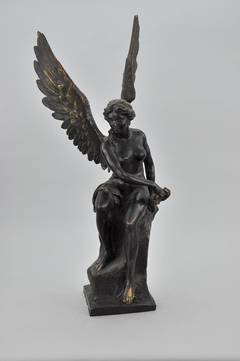
1910s Nude Sculptures
to
7
5
1
Overall Width
to
Overall Height
to
17
81
372
660
10
13
24
30
3
10
26
23
40
38
9
3
1
12
12
11
9
7
4
2
1
1
1
11
11
2
1
1
1
1
1
7
6
Period: 1910s
Standing Nude
By Eugene Wagner
Located in Los Angeles, CA
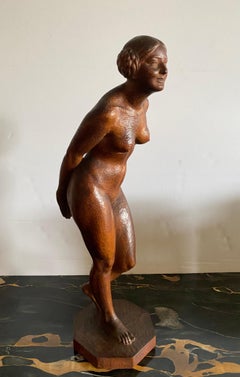
An original carved wood sculpture of an Art Deco standing nude .
German sculptor (1871 Berlin to 1942 ibid), studied at the Dresden Academy, took part in exhibitions in Munich, Düsse...
Category
Art Deco 1910s Nude Sculptures
Materials
Wood
Life-Size Art Deco Diana Bronze
By Hans Harry Liebmann
Located in Miami, FL
This is a rare statement piece that commands that eye. It is of museum quality will be the centerpiece of any space. Masterfully crafted details of the human form are finely rendered in a pre-art deco style. Hans Harry Liebmann...
Category
Art Deco 1910s Nude Sculptures
Materials
Bronze

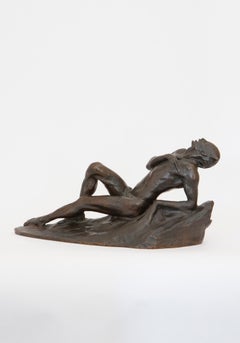
Reclining Man Ashcan Early 20th Century American Scene Social Realism Gay Nude
By Isidore Konti
Located in New York, NY
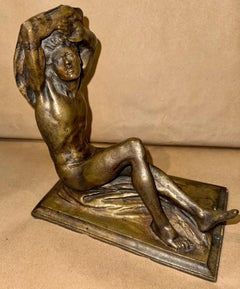
"Reclining Man" Ashcan Early 20th Century American Scene Social Realism Gay Nude
Isadore Konti (1862 - 1938)
"Reclining Man"
7 1/2 w x 4 1/2 d x 7 high inch...
Category
American Realist 1910s Nude Sculptures
Materials
Bronze
Forest idyll / - Soulmate -
Located in Berlin, DE
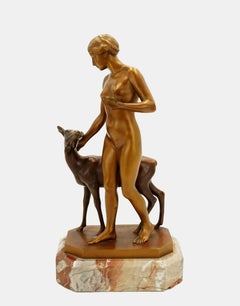
Rudolf Kaesbach (1873 Gladbach - 1955 Berlin), Forest idyll, around 1915. Bronze, gold and golden brown patina, with cast plinth, mounted on a marble base (5 cm high), total height 36 cm, dimensions of the bronze: 31 cm (height) x 17 cm (length) x 12 cm (width). Weight 4,6 kg, signed on the plinth "R.[udolf] KAESBACH".
- a few rubbed areas, overall in excellent condition for its age
- Soulmate -
The bronze sculpture depicts a young woman in an intimate exchange with a deer that accompanies her. The animal pauses to turn toward her, while the nude beauty slows her pace to look into the deer's eyes and tenderly caress it with her hand. The woman and the deer are in inner harmony. Even though her lips remain motionless, she speaks the language of the animal with which she is deeply connected.
The golden patina, which contrasts with the more naturalistic coloring of the deer, gives the young woman the appearance of a saint, even if she cannot be identified as such. At the same time, she evokes memories of Diana, the goddess of the hunt, or a nymph. But she lacks the ferocity. In her innocent naivety, she is more like a vestal virgin, who is not at home in the solitude of the forest. And yet, the young beauty, moving unclothed in the heart of nature, looks like a priestess with her hair tied up and a carefully carried bowl on her way to a sacred grove.
In order to open up the above-mentioned associations, Kaesbach deliberately designed the female figure in such a way that she cannot be identified as a specific person. He has created an allegory of natural femininity, characteristic of Art Nouveau, in which the deer is far more than a companion animal. It displays the same gracefulness as the young woman, and the inner resemblance between the two makes the deer appear as her other self. In animal terms, it embodies her inner being, which also gives the deer an allegorical character.
About the artist
Rudolf Kaesbach studied sculpture at the Hanau Academy and worked in a bronze foundry in Paris in 1900. In order to work as an independent artist, he opened a workshop in Düsseldorf, where he cast bronzes from models he designed. In 1902 he made his debut at the German National Art Exhibition in Düsseldorf. The following year Kaesbach went to the academy in Brussels. There he was inspired by contemporary Belgian sculpture, especially the work of Constantin Meunier. He moved to Berlin, where he opened a studio in the villa district of Grunewald and devoted himself to life-size marble sculptures and the design of bronzes. From 1911, he regularly presented his works at the major art exhibitions in Berlin, as well as in Düsseldorf and Malmö. Between 1936 and 1939, he also created models for the Rosenthal porcelain factory. From 1939 to 1944, Kaesbach was represented at the major German art exhibitions in Munich.
GERMAN VERSION
Rudolf Kaesbach (1873 Gladbach - 1955 Berlin), Waldidyll, um 1915. Gold und goldbraun patinierte Bronze mit gegossener Plinthe, auf einem Marmorsockel montiert (5 cm Höhe), Gesamthöhe 36 cm, Maße der Bronze: 31 cm (Höhe) x 17 cm (Länge) x 12 cm (Breite). Gewicht 4,6 kg, auf der Plinthe mit „R.[udolf] KAESBACH“ signiert.
- vereinzele beriebene Stellen, insgesamt in einem altersgemäß ausgezeichneten Zustand
- Seelenverwandtschaft -
Die Bronzeplastik veranschaulicht eine junge Frau im innigen Austausch mit einem sie begleitenden Reh. Das Tier hält inne, um sich zu ihr hochzuwenden, während die nackte Schönheit ihren Schritt verlangsamt, um dem Reh ebenfalls in die Augen zu schauen und es zärtlich mit der Hand zu liebkosen. Die Frau und das Reh sind in einem inneren Gleichklang. Auch wenn ihre Lippen unbewegt bleiben, spricht sie die Sprache des Tieres, mit dem sie auf eine tief empfundene Weise verbunden ist.
Die im Kontrast zur naturalistischeren Einfärbung des Rehs aufstrahlende goldfarbene Patina lässt die junge Frau wie eine Heilige erscheinen, auch wenn sich nicht als Heilige identifizierbar ist. Zugleich ruft sie Erinnerungen an die Jagdgöttin Diana oder eine Nymphe hervor. Dafür fehlt ihr allerdings die Wildheit. In ihrer unschuldigen Naivität gemahnt sie vielmehr an eine Vestalin, die freilich nicht in der Waldeinsamkeit zu Hause ist. Und doch wirkt die sich unbekleidet im Herzen der Natur bewegende junge Schönheit wie eine Priesterin, die sich mit hochgebundenem Haar und der vorsichtig getragenen Schale und dem Wege zu einem Heiligen Hain befindet.
Um die gennannten Assoziationen zu eröffnen, hat Kaesbach die Frauenfigur bewusst so gestaltet, dass sie nicht als konkrete Person identifizierbar ist. Damit hat er eine für den Jugendstil charakteristische Allegorie natürlicher Weiblichkeit geschaffen, bei der das Reh weit mehr als ein Begleittier ist. Es weist dieselbe grazile Anmut wie die junge Frau auf und der innere Gleichklag der beiden lässt das Reh als ihr anderen Ich erscheinen. Es verkörpert – ins Animalische übertragen - ihr inneres Wesen, wodurch auch dem Reh ein allegorischer Charakter zukommt.
zum Künstler
Rudolf Kaesbach studierte an der Akademie Hanau Bildhauerei und war im Jahr 1900 in einer Pariser Bronzegießerei tätig. Um sich als eigenständiger Künstler betätigen zu können, eröffnete er in Düsseldorf eine Werkstatt, in der er Bronzen nach selbstentworfenen Modellen goss. 1902 debütierte er auf der Deutschen Nationalen Kunstaustellung in Düsseldorf. Im Folgejahr ging Kaesbach an die Akademie nach Brüssel. Dort wurde er von der zeitgenössischen belgischen Bildhauerei, insbesondere vom Werk Constantin Meuniers, inspiriert. Zurückgekehrt zog er nach Berlin, wo er im Villenviertel Grunewald ein Atelier eröffnete und sich neben dem Entwurf für Bronzen der lebensgroßen Marmorbildhauerei widmete. Ab 1911 präsentierte er seine Werke regelmäßig auf den Großen Berliner Kunstausstellungen, aber auch in Düsseldorf und Malmö. Zwischen 1936 und 1939 fertigte er zudem Modelle für die Porzellan-Manufaktur Rosenthal an. Von 1939 bis 1944 war...
Category
Jugendstil 1910s Nude Sculptures
Materials
Bronze
Danseuse au Voile, Renoir, Sculpture, impressionism, naked woman, nude, bronze
Located in Geneva, CH
PIERRE-AUGUSTE RENOIR (1841-1919) La Danseuse au Voile
Cast in 1964
Ed. 14/20 pcs / Conceived in 1913 Bronze with a black patina
64 x 46 x 28 cm
Signed, foundry's stamp and numbered ...
Category
Impressionist 1910s Nude Sculptures
Materials
Bronze
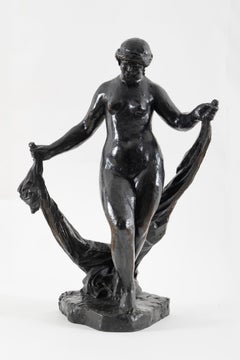
Antique Orientalist Arab Slave Trader Female Nude Group Cold Painted Bronze 1910
Located in Portland, OR
A very large 24" (61cm) Franz Xavier Bergmann (1861-1936) cold painted bronze group statue, signed, Austria, circa 1910.
The bronze in the Orientalist manner & depicts a young slave ...
Category
Art Nouveau 1910s Nude Sculptures
Materials
Bronze
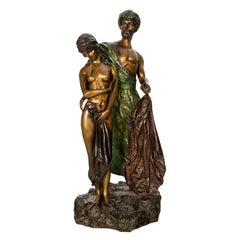
Mother Happiness / - The ecstasy of maternal joy -
Located in Berlin, DE
Johannes Boese (1856 Ostrog - 1917 Berlin), Mutterglück, um 1910. Goldbraun patinierte Bronze auf gegossener rechteckiger Plinthe, montiert auf zweifarbigem Marmorsockel (9,5 cm Höhe...
Category
Art Nouveau 1910s Nude Sculptures
Materials
Bronze
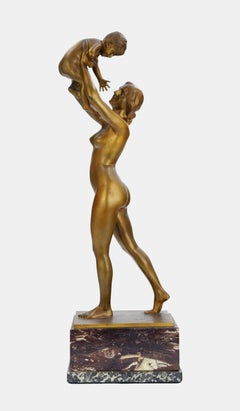
Diane with a Quiver
Located in Thirsk, GB
Signed DALOU with Hebrard foundry mark CIRE PERDUE A. A HERBRARD
Category
1910s Nude Sculptures
Materials
Bronze
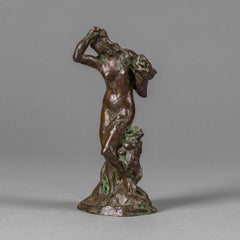
First Steps, Early 20th Century Bronze Sculpture, Cleveland School
Located in Beachwood, OH
William Zorach (American 1891-1966)
First Steps, 1918
Bronze
8.5 x 5 x 4 inches, including base
Born in 1887 in Lithuania, William Zorach immigrated with his family to the United States when he was just four years old, settling in Cleveland, Ohio. Zorach displayed an exceptional artistic talent at a young age and, at the recommendation of his seventh-grade teacher, began studying lithography at night at the Cleveland School of Art. It was not long before he was apprenticing at a lithography company in Cleveland. It was there that he realized he wanted to become an artist - to escape the commercial end of the field in which he was suddenly immersed.
In 1907, Zorach saved enough money to move to New York and study art at the National Academy of Design, where he received several awards for his paintings and drawings. He continued his studies in Paris in 1910 at La Palette. This year abroad would turn out to be quite fruitful because in Paris he was greatly influenced by the Cubist and Fauvist movements and had several paintings exhibited at the Salon d'Automme. This influence and subsequent success fueled his career back in the states where he was honored with his first one-man exhibition. Due to this new-found stability, he married a young woman he met at school in Paris, and they moved to New York and set up a studio. Shortly after, their work was accepted into the famous 1913 Armory Show.
For the next nine years, Zorach continued to think of himself as a painter, although he had already begun to experiment in sculpting. He was experiencing modest success with his painting and was therefore reluctant to abandon it completely. However, he was impelled toward sculpting, and in 1922, he painted his last oil.
Zorach's involvement with sculpture began largely be accident. While he was working on a series of wood-block prints, Zorach suddenly became more interested in the butternut panel than the print and turned the panel into a carved relief. With no formal training as a sculptor, Zorach's first sculptures were of wood and his carving tools were primitive, such as a jack-knife. I n fact, his early works have a certain stylized look, suggesting the influence of various primitive arts such as African and American folk.
Zorach found his sculptural direction by instinct, but was not unaware of what other sculptors were doing, both here and abroad. He soon allied himself with a growing number of modern sculptors who believed in the esthetic necessity of carving their own designs directly in the block of stone or wood rather than modeling them in clay. From the beginning he found a deep satisfaction in the slow and patient process of freeing the image from its imprisoning block, watching the forms emerge and appear.
"The actual resistance of tough material is a wonderful guide," Zorach said in a lecture on direct sculpture in 1930. The sculptor "cannot make changes easily, there is no putting back tomorrow what was cut away today. His senses are constantly alert. If something goes wrong there is the struggle to right the rhythm. And slowly the vision grows as the work progresses." Zorach also found that the material itself had a constantly modifying effect on the artist's vision. The grain of the wood, the markings in the stone, the shape of the log or boulder all set limits and suggested possibilities. He was always sensitive to the characteristic qualities of his material and occasionally let them play a major role in determining his forms. In works such as these, the feel of the original material is preserved in the finished piece and is often heightened by leaving parts of the original surface untouched and other areas roughly marked by the sculptors tools...
Category
1910s Nude Sculptures
Materials
Bronze
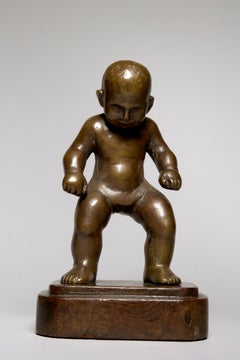
Spear Fighter / - The Fighter
s Concentration -
Located in Berlin, DE
Ludwig Eisenberger (active in Berlin between 1895-1920), Spear Fighter, around 1910. Brown patinated bronze with residual gilding on a cast terrain plinth with marble base (8 cm high...
Category
Realist 1910s Nude Sculptures
Materials
Bronze
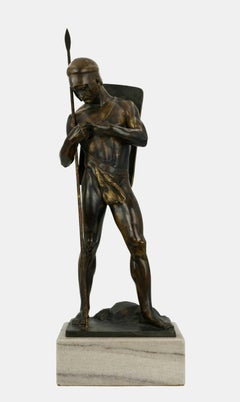
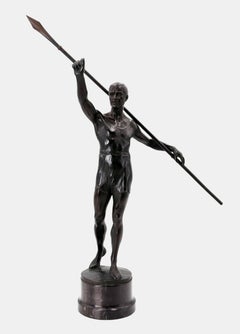
Javelin thrower / - Roman present -
By Franz Iffland
Located in Berlin, DE
Franz Iffland (1862 Tempelhof - 1935 Berlin), Javelin thrower, after 1910. Olive-black patinated bronze with cast plinth mounted on a white-veined black marble base (7 cm high). Tota...
Category
Art Deco 1910s Nude Sculptures
Materials
Bronze
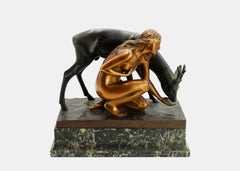
The Feeding / - Natural grace -
Located in Berlin, DE
Erich Schmidt-Kestner (1877 Berlin - 1941 Nordhausen), The Feeding, around 1915. Gold and black patinated bronze with cast brown patinated plinth mounted on a lightly veined black-gr...
Category
Art Nouveau 1910s Nude Sculptures
Materials
Bronze
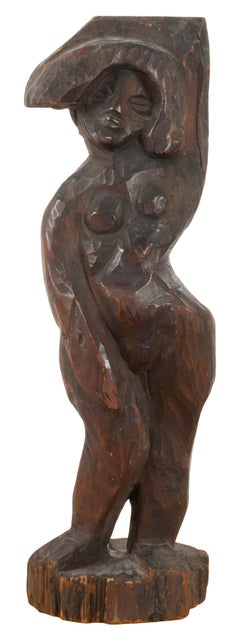
Standing Female Nude After Alexander Archipenko
By Walt Kuhn
Located in Fairlawn, OH
Illustrated: "Walt Kuhn, Painter, His Life and Work, by Phillip Rhys Adams, page 67, plate 27, Courtesy of Kennedy Galleries-Kuhn Estate (see photo)
Kuhn’s sculptures were collected...
Category
Cubist 1910s Nude Sculptures
Materials
Wood
Related Items
Javelin thrower / - Roman present -
By Franz Iffland
Located in Berlin, DE
Franz Iffland (1862 Tempelhof - 1935 Berlin), Javelin thrower, after 1910. Olive-black patinated bronze with cast plinth mounted on a white-veined black marble base (7 cm high). Tota...
Category
Art Deco 1910s Nude Sculptures
Materials
Bronze

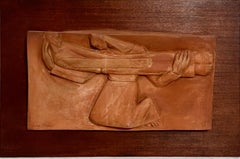
Large George Aarons Terracotta Sculpture Relief Art Deco Plaque WPA Artist
Located in Surfside, FL
Two Figures (Mother and son)
9" x 17" terracotta sculpture, signed lower left mounted to wood panel, 15 1/2" x 23 1/2"
George Aarons (born Gregory Podubisky, in St. Petersburg, Russ...
Category
Art Deco 1910s Nude Sculptures
Materials
Wood, Terracotta
$2,200
H 15.5 in W 23.5 in D 1 in
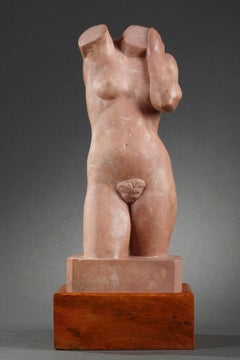
Torso of a woman
Located in PARIS, FR
Torso of a woman
by Auguste HENG (1891-1968)
Sculpture in pink marble stone
Signed on the base " A. Heng "
Presented on an olive-wood base
France
circa 1925
height 34,5 cm
height ...
Category
Art Deco 1910s Nude Sculptures
Materials
Stone
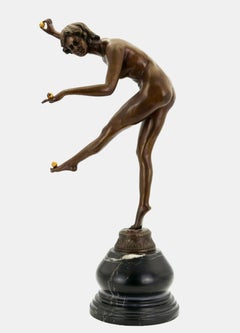
Juggler / - Artistic naturalness -
Located in Berlin, DE
Claire Jeanne Robertine Colinet (1880 Brussels - 1950 Asnières-sur-Seine), Juggler, around 1920. Brownish patinated bronze with gilded balls on a round, multi-profiled stone base (10...
Category
Art Deco 1910s Nude Sculptures
Materials
Bronze
$3,455
H 18.51 in W 7.88 in D 9.85 in
Female Torso - Small Figurative Sculpture Woman Bronze Dark Brown Patina
Located in Sofia, BG
"Female torso" is a monumental bronze sculpture of a woman.
The bronze is covered with green patina. It is created by the artist Maestro Willem Botha.
About the artwork
Edition : 2 of 14 in total
Certificate of authenticity: issued by Snow Pearl art gallery
NEW MOVEMENT & STYLE: Contemporary
Maestro Willem Botha
The masterpiece is suitable for representative offices, gardens, parks, homes etc.
“The impressions of this artwork on the viewer is so mighty, mesmerizing, grand, that it paralyzes the imagination.
All his sculptures bring positive energy, emotion, represented by the vast creative power of the author's talent.”
Maestro Willem Botha was born in South Africa in 1962.
Today he lives in Bulgaria and works in a creative workshop in Sofia.
Willem started his career as Sculptor at Shows and Exhibitions in the South African Defense Force in 1981. He was mentored by Artists like Andre Prinsloo and Jan van Der Merwe.
In 1986, he moved to Namibia where he was a Sculptor for the Windhoek State Museum. During the time in Windhoek, he had several one man and group expeditions in various galleries in Windhoek and Swakopmund.
In 1988 he was commissioned to remake the Atlas Sculpture on the House Hohenzollern Building in Swakopmund.
In 1990, he moved to Town where he sculpted full time. Willem did some freelance work for Jean Doyle, helping with the bronze casting of her work. During his time in Cape Town, he exhibited in several galleries in and around Cape Town.
In 1991, he moved to Graskop, where he continued full time sculpting and he opened his own foundry.
He moved back to Pretoria in 1992, to continue sculpting and established Art Cast Foundry. In the same year he was commissioned to do several decorative works for the Palace of Sun City, that includes, all the doors bronze handles. Sculptors that he did castings for are to name but a few, the late Bobby Lawrence, Niko van Rensberg, Maureen Quinn, Anton Smit, Andre Prinsloo, Barry Jackson...
Category
Contemporary 1910s Nude Sculptures
Materials
Metal, Bronze
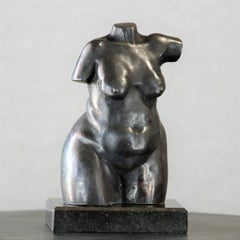
$1,429
H 5.91 in W 3.55 in D 2.76 in
Late 19th Century Pair of Bronze Atlas Sculptures with Globe
Armillary Sphere
Located in Fredericksburg, VA
This pair of bronze sculptures of Atlas with Globe & Armillary Sphere are of high cast quality. Pairs have sold for over 700,000 Euro. Their condition is excellent for age and has ve...
Category
Art Deco 1910s Nude Sculptures
Materials
Bronze
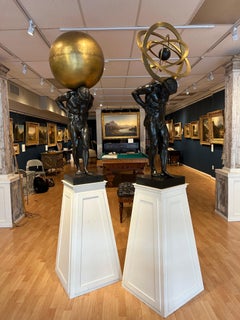
$395,000
H 89 in W 22 in
Janne by Nando Kallweit. Elegant figurative sculpture.
Located in Coltishall, GB
Janne is an elegant figurative bronze sculpture by Nando Kallweit.
Modelled on modern youthful postures but with a nod to the importance of heritage through the stylised Egyptian-in...
Category
Other Art Style 1910s Nude Sculptures
Materials
Bronze
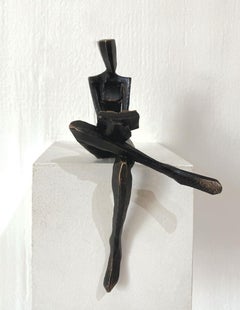
$720
H 6.3 in W 2.37 in D 3.55 in
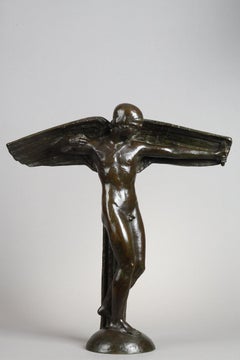
Icarus
Located in PARIS, FR
Icarus
by René ANDREI (1906-1987)
A bronze sculpture with a greenish brown patina
signed "R. Andrei" on the base
cast by "Susse Frs Edts Paris" (with the stamp and the foundry mark...
Category
Art Deco 1910s Nude Sculptures
Materials
Bronze
Bust of a young woman / - The Opulence of Beauty -
Located in Berlin, DE
Anton Nelson (i.e. Antoine Joseph van den Kerckhoven) (1849 Brussels - after 1910 ibid.), Bust of a young woman, c. 1890. Patinated bronze on cast base, 30 cm (total height) x 20 cm ...
Category
Art Nouveau 1910s Nude Sculptures
Materials
Bronze

$774
H 11.82 in W 7.88 in D 5.52 in
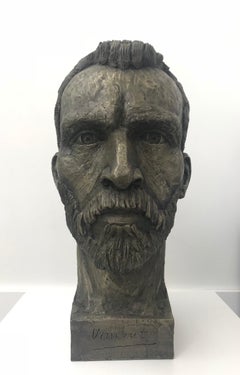
Cold Cast Bronze Bust Sculpture of Vincent Van Gogh by British Sculptor Artist
Located in Preston, GB
Cold Cast Bronze Bust Sculpture of Vincent Van Gogh by British Artist & Sculptor Anthony D Padgett BA MA PGDip, Born in 1969.
Everyone has an idea o...
Category
Contemporary 1910s Nude Sculptures
Materials
Cast Stone, Metal, Bronze
$5,491 Sale Price
20% Off
H 14 in W 9 in D 7 in
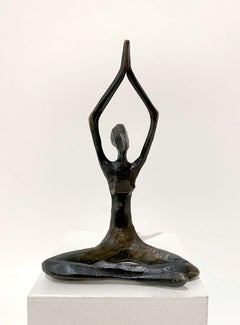
Cherry II by Nando Kallweit. Elegant figurative sculpture.
Located in Coltishall, GB
Cherry II is an elegant figurative bronze sculpture by Nando Kallweit.
This evocative bronze sculpture captures the serene grace of a figure in a lotus yoga pose, projecting a power...
Category
Other Art Style 1910s Nude Sculptures
Materials
Bronze
$858
H 5.52 in W 1.58 in D 3.55 in
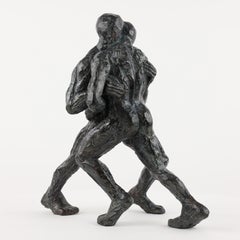
Wrestlers VIII by Yann Guillon - Contemporary bronze sculpture, male athletes
By Yann Guillon
Located in Paris, FR
Wrestler VIII is a bronze sculpture by French contemporary artist Yann Guillon, dimensions are 47 × 44 × 29 cm (18.5 × 17.3 × 11.4 in).
This sculpture is signed and numbered, it is ...
Category
Contemporary 1910s Nude Sculptures
Materials
Bronze
$9,412
H 18.51 in W 17.33 in D 11.42 in
Previously Available Items
Nijinski Dance Ballet Russes American French Woman Sculptor early 20th Century
Located in New York, NY
Nijinski Dance Ballet Russes American French Woman Sculptor early 20th Century , Bronze
12 1/2 “ x 6 1/4” H x 6” W
Sculpted c. 1912 while Hoffman with studying with Rodin. In 1912 she won First Prize the Paris Salon for her new modern way of sculpting movement in bronze with Russian Dancers (Anna Pavlova). Hoffman was the first, other followed her style.
About the sculpture
Vaslav Nijinsky (1889-1950). This bronze is a study from the dance L’apres-midi d’un faune (1910) with music by Debussy. It was a scandalous ballet performed with the Ballet Russes and Paris was in an uproar over his new modern style of choreography and overt sexuality. At the end of the ballet after toying with some nymphs Nijinski pleasures himself on stage with one of their scarves creating the scandal. Paris was in an uproar.
Nijinski begged Auguste Rodin to help him calm the critics. Rodin who was known for his eroticism, wrote a letter to the editor of Le Figaro explaining how great Nijinsky danced and exploded into well… you know. Anyway the French public now turned their energy against Rodin, forgetting Nijinsky. France was negotiating with Rodin to purchase his studio which would become the Musee Rodin after his death and they almost shut those talks down because of his letter to the editor.
Sculptor Malvina Hoffman...
Category
French School 1910s Nude Sculptures
Materials
Bronze
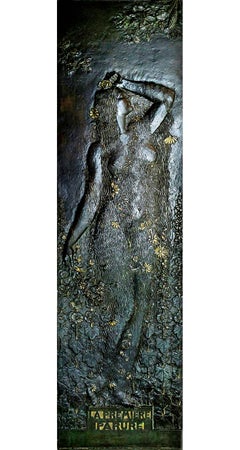
La Première Parure (Eve) -- Art Nouveau oversized bas-relief
By Paul Moreau-Vauthier
Located in Miami, FL
La Premier Parure is a French term for a perfect match, generally used for jewelry and ornamentation. In this case, it is used as a metaphor for Adam and Eve. This monumental bronze ...
Category
Art Nouveau 1910s Nude Sculptures
Materials
Bronze
H 101 in W 28 in D 2.5 in
Nike
By André Vincent Becquerel
Located in Saint Augustine, FL
"Nike" Original Classic Bronze Sculpture by Andre-Vincent Becquerel (France, 1893 - 1981), made shortly after World War I in Paris, c. 1920. Depicting Nike, Goddess of Victory, seate...
Category
Art Nouveau 1910s Nude Sculptures
Materials
Bronze