Late 19th Century Sculptures

to
19
113
56
76
36
21
Overall Width
to
Overall Height
to
226
664
3,883
17,398
82
44
125
140
70
173
275
384
561
525
80
4
3
3
2
1
240
186
181
152
135
83
52
33
27
22
20
10
10
10
8
7
6
6
6
6
238
231
47
42
18
19
8
6
6
5
168
134
Period: Late 19th Century
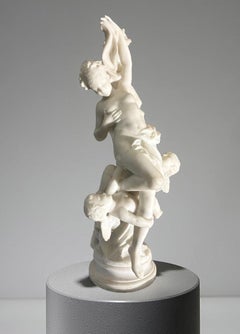
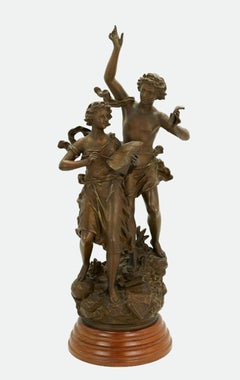
Grande Gruppo in Marmo "L Innocenza tormentata dall Amore" Scultura Francese
Located in Pistoia, IT
Imponente gruppo in marmo bianco raffigurante "Innocenza tormentata da Amore", firmato Luca Madrassi. Scuola francese, fine XIX secolo, periodo Art Nouveau. Questo splendido grupp...
Category

Art Nouveau Late 19th Century Sculptures

Materials

Marble

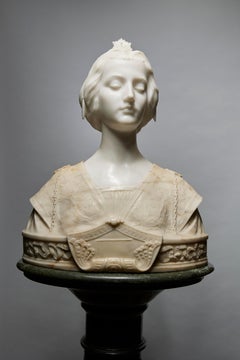
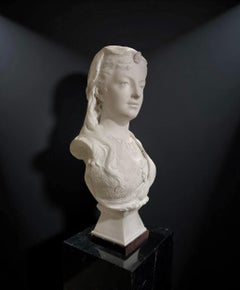
Late 19th Century Italian Finely Finished Bust of Renaissance Lady w/ Pedestal
Located in Beachwood, OH
Italian, Late 19th Century Finely Finished Bust of Renaissance Lady White marble, garment in veined buff colored marble on fitted green marble pedestal Bust: 22 x 18 x 9 inches Pedes...
Category

Late 19th Century Sculptures

Materials

Marble

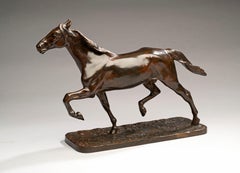
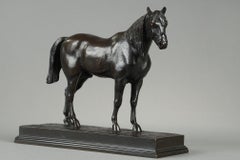
Antique Horse Bronze Trotting Stallion Isidore Jules Bonheur (France, 1827-1901)
Located in SANTA FE, NM
Antique Horse Bronze Portrait of a Trotting Stallion Isidore Jules Bonheur (France, 1827-1901) Cast bronze mounted on a rectangular plinth with dark brown patina, Signed: I. BONHEUR 17 x 11 3/4 A brilliant exploration of a stallion in full trot. The patina is a deep, warm walnut brown with honey-colored tones. Isidore Bonheur was best known and the most distinguished of the 19th century French animalier sculptors. Isidore, the younger brother of Rosa Bonheur and older brother of Auguste, began his studies of painting initially with his father, who was friends with Francisco Goya. By 1848 he debuted at the Paris Salon having discontinued animal and landscape painting to concentrate on creating sculptures and in 1849, Bonheur enrolled at the Ecole des Beaux Arts. He won medals at the Paris Salon in 1859 and did so again in 1865 and in 1869. After entering the Exposition Universelle 1855, he won the Gold Medal in 1889. In the 1870s exhibited in the London at the Royal Academy of Arts where he earned great prestige and won the coveted Medaille d’Or. After winning numerous other medals and prizes, Bonheur was awarded the Legion d' Honneur in 1895 and he was Knighted in Portugal, Spain and France. Bonheur continued exhibiting at the Paris Salon until 1899. Many of his bronzes were fabricated at the foundry owned by Hippolyte Peyrol, Bonheur's brother-in-law by marriage to Isidore’s youngest sister Juliette Bonheur. The Peyrol casts for both Rosa and Isidore are exceptionally well executed which suggests a strong working relationship between the founder and sculptor. There is little doubt that Isidore Bonheur was an acute observer of nature; his animals were not anthropomorphized but modelled to catch movement or posture characteristics of the particular species he was sculpting. He achieved this most successfully with his sculptures of horses which are usually depicted as relaxed rather than spirited. These figures are among his most renowned works and his equestrian models became very popular, particularly among the British aristocracy. An acute observer of nature, his sculptures reflect his commitment to the Realist school - with precise detailing of the movements of animals in their natural habitats. Ultimately, His naturalistic studies of animals are now some of the most highly sought after works by any of the animalier. He was possibly inspired by his many visits to the Buffalo Bill Wild West Show...
Category

Realist Late 19th Century Sculptures

Materials

Bronze

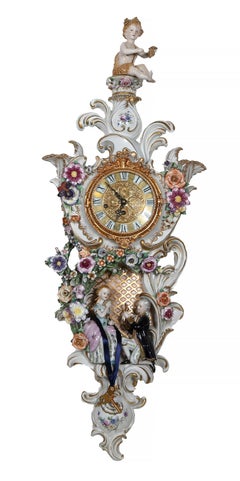
Couple Proposing, Baroque Porcelain Clock by Richard Klemm
Located in Long Island City, NY
Richard Klemm, German (1852 - 1916) - Couple Proposing, Medium: Porcelain Clock, maker's mark stamp verso, Size: 39 x 12 x 6.5 in. (99.06 x 30.48 x 16.51 cm)
Category

Baroque Late 19th Century Sculptures

Materials

Porcelain

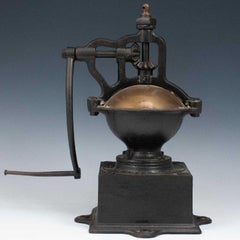
Antique, 19th C. Peugeot Frères Brevetés French Coffee Grinder Table Sculpture
Located in Surfside, FL
This is being sold as a piece of (functional?) decorator table sculpture for a kitchen or restaurant. I do not know if or how it works. the wheel and gears turn. It might be missing a cover on the handle. It is a lovely antique piece. Made in France. A halfcentury before they produced their first car, the Peugeot brothers were making coffee grinders, continuing to do so for over 100years. In 1840 the Peugeots produced their first moulin a cafe out of a combination of metal and wood. The beans were inserted into the metal hopper up top; metal gears were turned by a woodenknob-capped metal...
Category

Modern Late 19th Century Sculptures

Materials

Metal, Brass

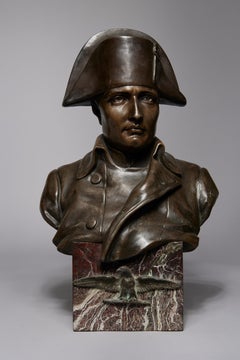
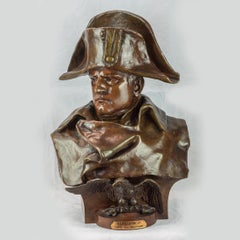
Late 19th Century Bronze Bust of Napoleon Sculpture, Italian Artist
Located in Beachwood, OH
Raphaël Nannini (Italian, 1852-1925) Napoleon Bust, Late 19th Century Bronze on marble base Signed on back 17 x 11 x 8 inches Raphael Nannini was born in Florence. He exhibited at t...
Category

Late 19th Century Sculptures

Materials

Marble, Bronze

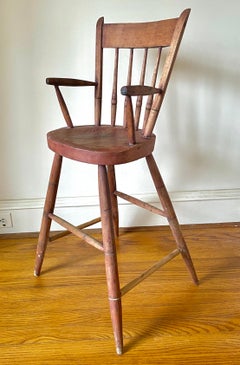
Child s Winsdor Chair, antique, ca. 1880, American (Maine), original red wash
Located in Bryn Mawr, PA
Rare child's Windsor chair, ca. 1880s. American antique, crafted in Maine. Original red wash. Seat is 22" from the floor. Originally made for a child. (Does not conform to today's sa...
Category

Folk Art Late 19th Century Sculptures

Materials

Wood

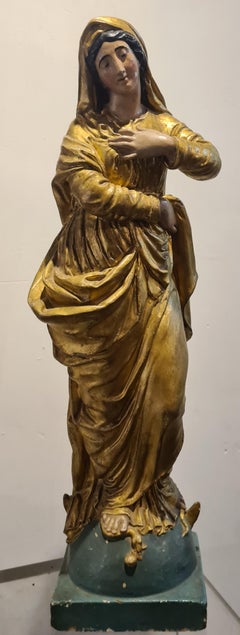
French Polychrome and Gilded Statue of The Virgin Mary
Located in Cotignac, FR
A polychrome and gilt plaster statue of the Blessed Virgin Mary. The quality of the original gilding and the handling of the folds in the clothing are exceptional. A wonderful statu...
Category

Renaissance Late 19th Century Sculptures

Materials

Gold Leaf

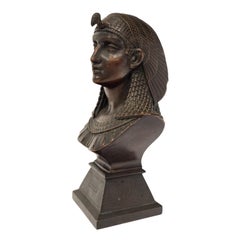
Antique French Egyptian Revival Bronze Bust Sculpture Statue "Queen of Babylon"
Located in Portland, OR
A good antique cast bronze sculpture an Egyptian Revival bust "The Queen of Babylon", by the 19th century French sculptor Paul Auguste Gagne, circa 1875. This rare & unusual bronze b...
Category

French School Late 19th Century Sculptures

Materials

Bronze

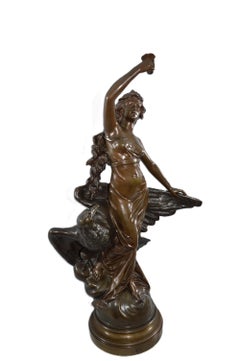
French Art Nouveau Bronze
Located in Berlin, DE
Bronze 72 cm signed Height: 72 cm. Base diameter: approx. 22 cm. Signed "E. Drouot". Stamped "BD Fondeur, Paris". Plaque engraved "Hebe Par Drouot (Hors Concours)". Bronze, cast, ...
Category

Art Nouveau Late 19th Century Sculptures

Materials

Bronze

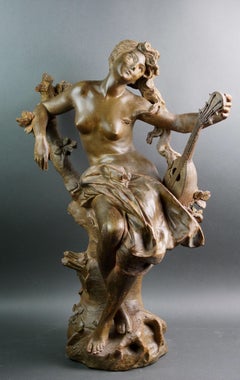
Large French Art Nouveau Patinated Terracotta Sculpture Signed
Located in Pistoia, IT
Luca Madrassi (1848-1919), large patinated terracotta sculpture in Art Nouveau style, late 19th century. The sculpture depicts a half-naked young woman sitting in a tree holding a m...
Category

Art Nouveau Late 19th Century Sculptures

Materials

Terracotta

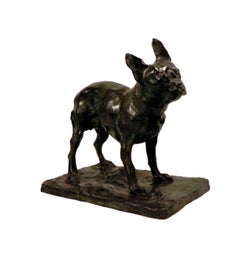
Bronze French Bulldog by Rembrandt Bugatti(1884 - 1916)
Located in Gent, VOV
Bronze French bulldog In 1905, Rembrandt Bugatti took his mother's French Bulldog as a model and created this living sculpture, the dog bending its head and seeming to question the ...
Category

Naturalistic Late 19th Century Sculptures

Materials

Bronze

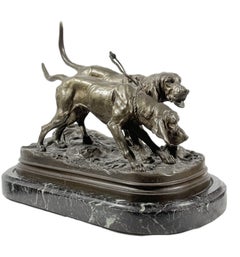
Alfred Dubucand (1828-1894): Two hunting dogs
Located in Berlin, DE
Dubucand Alfred 1828-1894 Two Hunting Dogs, Bronze on a Marble Base The Bronze with the monogram 'E.V.' and the number '2958' Two Hunting Dogs, Group Signed Alfred Dubucand, Fren...
Category

Realist Late 19th Century Sculptures

Materials

Bronze

Half-blood Horse, head raised
Located in PARIS, FR
Half-blood Horse, head raised by Antoine-Louis BARYE (1796-1875) A bronze sculpture with a dark brown patina Signed on the base " Barye " Cast by " F. Barbedienne fondeur " (with th...
Category

French School Late 19th Century Sculptures

Materials

Bronze

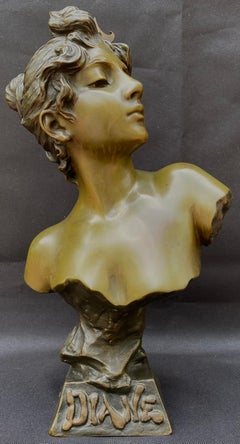
“Diana”
Located in Southampton, NY
Beautiful golden brown patina bronze of Diana, the goddess of the moon by the French sculptor, Emmanuel Villanis. Signed on her shoulder. Impressed foundry stamp on base, “Society de...
Category

Academic Late 19th Century Sculptures

Materials

Bronze

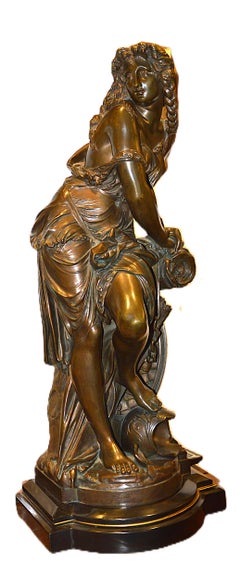
Amazone
Located in Berlin, DE
ALBERT-ERNEST CARRIER-BELLEUSE French 1824 - 1887 signed: A. CARRIER Bronze Marmor Albert-Ernest Carrier-Belleuse (1824–1887) was a prominent French sculptor of the 19th centur...
Category

Art Nouveau Late 19th Century Sculptures

Materials

Bronze

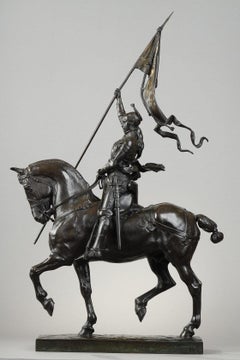
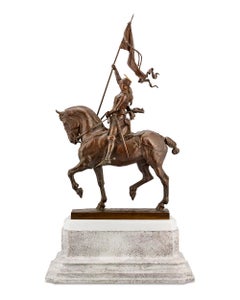
Equestrian Joan of Arc
Located in PARIS, FR
Equestrian Joan of Arc by Emmanuel FREMIET (1824-1910) A very fine bronze equestrian group with a greenish dark brown patina signed " Fremiet " on the base cast by " F. Barbedienne...
Category

French School Late 19th Century Sculptures

Materials

Bronze

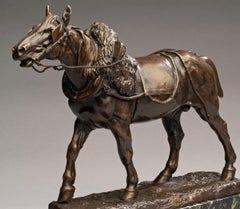
Antique Bronze Portrait Draft Horse by Isidore Jules Bonheur (France, 1827-1901)
Located in SANTA FE, NM
Antique Bronze Portrait of a Draft Horse Isidore Jules Bonheur (France, 1827-1901) Circa 1840s Cast bronze mounted on a rectangular plinth atop a marble s...
Category

Realist Late 19th Century Sculptures

Materials

Bronze

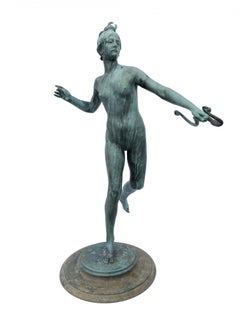
Diana the Huntress, 1890 Classical Bronze Sculpture of Nude Woman
Located in Beachwood, OH
Frederick William MacMonnies (American, 1863-1937) Diana, 1890 Bronze with green verdigris patina Signed and dated Copyright 1894 with Jaboeuf & Rouard, Paris foundry mark 31 x 21 x 17 inches A sculptor of classical figures, American-born Frederick MacMonnies...
Category

Late 19th Century Sculptures

Materials

Bronze

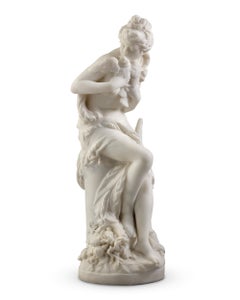
Allegory of Peace by Albert-Ernest Carrier-Belleuse
Located in New Orleans, LA
Albert-Ernest Carrier-Belleuse 1824–1887 French Allégorie de la Paix (Allegory of Peace) Signed “Carrier-Belleuse” White marble A vision of serenity and grace, Allégorie de la Pa...
Category

Late 19th Century Sculptures

Materials

Marble

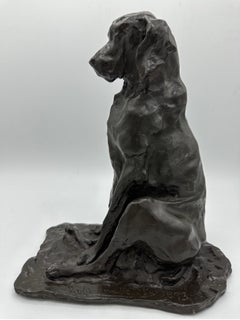
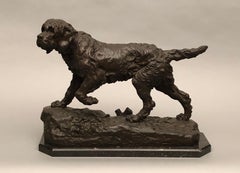
A late 19th century bronze animalier figure of a seated hound
By Prince Paul Troubetzkoy
Located in Bath, Somerset
A late 19th century bronze of a hound, seated on a naturalistic base, after Prince Paul Troubetzkoy. Incised to base 'Paolo Troubetzkoy 1893', with a dark brown patina. Born in 1866...
Category

Naturalistic Late 19th Century Sculptures

Materials

Bronze

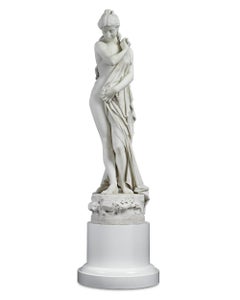
La Casta Susanna by Urbano Lucchesi
Located in New Orleans, LA
Urbano Lucchesi 1844 - 1906 Italian La Casta Susanna (The Chaste Susanna) Marble This elegant statue entitled La Casta Susanna depicts the virtuous biblical figure Susanna, exper...
Category

Late 19th Century Sculptures

Materials

Marble

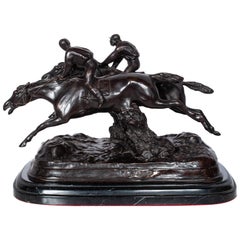
Antique French 19th Bronze Equestrian Group Horses Jockeys Statue Sculpture 1895
Located in Portland, OR
A fine late 19th century antique French bronze sculpture group, of a pair of race horses & jockeys, by Paul Louis Emile Loiseau-Rousseau, Paris (1861-1927). The bronze circa 1895 de...
Category

French School Late 19th Century Sculptures

Materials

Bronze

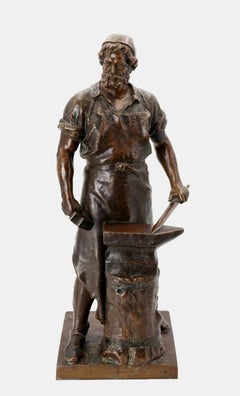
The Blacksmith of Solingen / - The Double-edged Sword -
Located in Berlin, DE
Wilhelm Albermann (1835 Werden an der Ruhr - 1913 Cologne), The Blacksmith of Solingen, after 1895. Bronze-color patinated zinc cast on plinth, 47 cm (height) x 20 cm (width) x 16 cm (depth), weight 5.5 kg. Signed “Albermann.” on the plinth and identified as a cast by “AKT.[TIEN] GES.[ELLSCHAFT] GLADENBECK BERLIN”. Dedication on the front: “Mr. Ing. F. Kuhlmann to the wedding. Management and officials of the Hannoversche Waggonfabrik. Aircraft construction department". - The zinc showing through in spots, the patina somewhat stained, the right upper arm under the sleeve retouched in black. - The Double-edged Sword - The figure is a reduction of Wilhelm Albermann's 1895 fountain figure of the armourer of Solingen, who has always been identified with the historical blacksmith Peter Hahn. In 1839, Karl Simrock wrote the poem “The Blacksmith of Solingen" and thus coined the legendary figure. The first and penultimate verses read: A blacksmith spoke to Solingen With every bayonet, That came to his diligence: "Oh, that Fritz had it!" The war took its course, Many battles were fought, Which often made him fearful and anxious In his soul. The blacksmith had given up his trade to fight for Frederick the Great. Not least because of his strength and will to fight, the battles were won. With his fountain sculpture, Albermann has given the legendary blacksmith a figurative form and at the same time created a landmark for the city of Solingen, which was once famous for the art of sword forging and today still stands for the production of high-quality knives. During the bombing raid in November 1944, the fountain was destroyed along with the entire old town of Solingen. Only the head remained. The broad-shouldered blacksmith stands securely behind his anvil, his leather apron tied around him, and has just finished a sword blade with his own "weapon" - the blacksmith's hammer. His entire body shows the strength with which he wields the hammer, but also the strain of this activity, as evidenced by the wide open shirt, the somewhat 'untidy' apron, and especially the furrowed face. However, the blacksmith does not look at the finished work, but resolutely and at the same time thoughtfully into the distance, in line with the quoted verse from Simrock's poem that the battles "often made him fearful and anxious in his soul". There is certainly something melancholy in his gaze, fed by the knowledge of the necessity of forging swords and taking up arms and their deadly use - experiences Albermann had to make during his own war missions. The flowing full beard gives his gaze into the distance an almost prophetic character. In keeping with the craft of the perfectly formed art of blacksmithing, the detailed casting reproduces the respective materials depicted in perfect form: the leather apron convincingly conveys the impression of leather and lies - also in the back view - like a second formed layer over the body, while the shirt and trousers illustrate their own textile qualities. Due to its masterful execution and profound content, the “Blacksmith of Solingen”, which has survived in its cast reproductions, remains Albermann's most famous work to this day. About the artist The son of a carpenter, Wilhelm Albermann began an apprenticeship as a joiner, but then followed his artistic calling and trained as a sculptor in Elberfeld. In 1855, at the age of twenty, he was drafted into the army in Berlin, where he served until 1857. Albermann attended the Berlin Art Academy on the side and began regular studies after his service. While still a student, he completed commissioned works for his teachers August Fischer and Hugo Hagen. His first independent commissions followed, enabling him to establish a flourishing sculpture studio in Cologne in 1865. His artistic activities were repeatedly interrupted by military service, and he took part in the German-Danish War in 1864, the war against Austria in 1866, and the Franco-Prussian War in 1870/71. After his last war service, Albermann, already a respected artist, founded a commercial drawing school at the request of the city government, where he taught the modeling class and served as director until 1896. In 1890 he also worked for the "Society for the Promotion of Sculpture in the Rhineland and Westphalia". Albermann was one of the most prolific sculptors in Cologne in the second half of the 19th century. He created numerous monuments, fountains, tomb sculptures, architectural ornaments, and domestic statues. At its peak, his workshop employed up to thirty sculptors and stonemasons at a time. GERMAN VERSION Wilhelm Albermann (1835 Werden an der Ruhr - 1913 Köln), Der Schmied von Solingen, nach 1895. Bronzefarben patinierter Zinkguss auf gegossener Plinthe, 47 cm (Höhe) x 20 cm (Breite) x 16 cm (Tiefe), Gewicht 5,5 kg. Auf der Plinthe mit „Albermann.“ signiert und als Guss der „AKT.[TIEN] GES.[ELLSCHAFT] GLADENBECK BERLIN“ ausgewiesen. Schauseitige Widmung: „Herrn Ing. F. Kuhlmann zur Vermählung. Direktion und Beamte der Hannoverschen Waggonfabrik. Abt. Flugzeugbau“. - Punktuelles Durchscheinen des Zinks, Patina etwas fleckig, der rechte Oberarm unter dem Ärmel schwarz retuschiert. - Die Zweischneidigkeit des Schwertes - Die Figur ist eine Reduktion von Wilhelm Albermanns 1895 geschaffener Brunnenfigur des Waffenschmieds von Solingen, der seit jeher mit dem historischen Schmied Peter Hahn identifiziert wurde. 1839 hatte Karl Simrock das Gedicht „Der Schmied von Solingen“ verfasst und damit die legendäre Figur geprägt. Die erste und die vorletzte Strophe lauten: Zu Solingen sprach ein Schmied Bei jedem Bajonette, Das seinem Fleiß geriet: »Ach, daß der Fritz es hätte!« Der Krieg ging seinen Gang, Man schlug noch viele Schlachten, Die oft ihm angst und bang' In seiner Seele machten. Der Schmied hatte sein Handwerk ruhen lassen, um selbst für Friedrich den Großen zu kämpfen. Nicht zuletzt durch seine Kraft und seinen Kampfeswillen verliefen die Schlachten siegreich. Dem legendären Schmied verlieht Albermann mit seiner Brunnenskulptur eine bildliche Gestalt und schuf damit zugleich ein Wahrzeichen der Stadt Solingen, die einst für die Kunst des Schwerterschmiedens berühmt war und bis heute für die Herstellung qualitätvoller Messer einsteht. Beim Bombenangriff im November 1944 wurde mit der gesamten Solinger Altstadt auch der Brunnen zerstört. Einzig der Kopf blieb erhalten. Mit sicherem Stand und umgebundener Lederschürze steht der breitschultrige Schmied hinter seinem Amboss und hat gerade mit seiner eigenen ‚Waffe‘ – dem Schmiedehammer – eine Schwertklinge fertiggestellt. Seinem gesamten Körper ist die Kraft abzulesen, mit der er den Hammer führt, aber auch die Anstrengung dieser Tätigkeit, wovon das weit geöffnete Hemd, die etwas ‚unordentlich‘ arrangierte Schürze und vor allem das zerfurchte Gesicht zeugen. Der Schmied schaut aber nicht auf das vollendete Werk, sondern entschlossen und zugleich sinnierend in die Ferne, entsprechend der zitierten Zeile von Simrocks Gedicht, dass die Schlachten „oft ihm angst und bang‘ in seiner Seele machten“. Der Blick hat durchaus etwas Melancholisches, dass sich aus dem Wissen um die Notwendigkeit, Schwerter zu schmieden und zu den Waffen zu greifen und deren tödlichem Einsatz speist – Erfahrungen, die Albermann bei seinen eigenen Kriegseinsätze machen musste. Der wallende Vollbart verleiht dem in die Ferne schauenden Blick einen beinahe prophetischen Charakter. Dem Handwerk der formvollendenden Schmiedekunst entsprechend, gibt der detaillierte Guss die jeweils dargestellten Materialien in vollendeter Ausformung wieder: Die Lederschürze vermittelt überzeugend den Eindruck des Leders und liegt – auch in der Rückenansicht – wie eine zweite ausgeformte Schicht über dem Körper, während das Hemd und die Hose...
Category

Realist Late 19th Century Sculptures

Materials

Metal

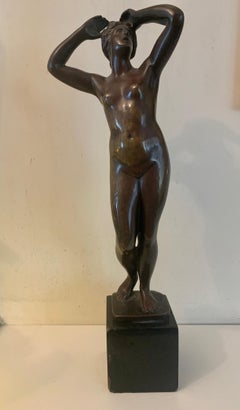
19th century French Bronze of a naked woman standing up.
Located in Woodbury, CT
Well modeled 19th century French bronze of a standing naked woman. Signed Cartinet, this piece is a wonderful example of the skill of a Sculptor. The piece retains all its origina...
Category

Victorian Late 19th Century Sculptures

Materials

Bronze

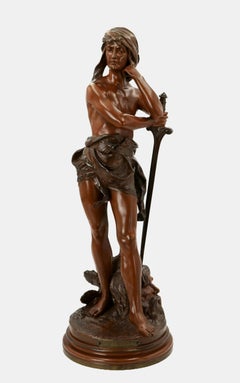
The Victorious David / - The melancholy of the radiant hero -
Located in Berlin, DE
Henri Honoré Plé (1853 Paris - 1922 Paris), The Victorious David, around1890. Red-brown and brown patinated bronze with terrain plinth mounted on a round base. 42 cm (total height) x...
Category

Realist Late 19th Century Sculptures

Materials

Bronze

Italian 19th Century Carrara Marble Sculpture " Young Beauty Going for a Swim"
Located in LA, CA
A very fine Italian 19th century Carrara marble sculpture depicting a young beauty going for a Swim standing on the steps of a dock, raised on its original carved green marble pedest...
Category

Academic Late 19th Century Sculptures

Materials

Marble

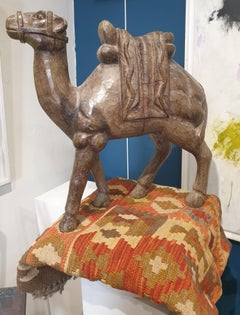
Large Neapolitan 19th Century Hardwood Sculpture of a Crèche Camel.
Located in Cotignac, FR
Large, Neapolitan, late 19th Century hardwood sculpture of a camel. Artist unknown. A beautifully patinated hardwood sculpture. The sculpture is extremely charming and having been handled for over a century has a lovely warm and tactile patina. It is particularly nice too see the work of the craftsperson in the adze and chisel marks along the body of the sculpture. The Italians and most notably the area around Naples has a long and storied tradition in the creation of sculptures for Nativity Scenes. This camel is both an endearing item and a piece of social history. A wonderful addition in its own right to the traditional Christmas scene, by tradition this sculpture was used as a maquette for the production of papier-maché models used in Christmas Creches which have such a long tradition in Italy and throughout the world. Wonderfully carved this piece was used to create hollow models out of papier-maché which were more affordable for this Christmas tradition. Hundreds of strips of papier-maché would be layered onto the figure in all directions. Then using a sharp tool the papier-maché was pushed into all the crevices of the sculpture to give it crisp detail. Once the layers of paper were dry the papier-maché was cut at certain points and lifted off the sculpture. Then finally the resulting body parts were glued back together, painted and patinated ready to be placed in the crèche scene. In the Christian tradition, a nativity scene (also known as a manger scene...
Category

Art Nouveau Late 19th Century Sculptures

Materials

Wood

Pair Japanese Lacquered Maki-e Meiji Period Cabinets 漆器 蒔絵 塗物 漆塗
Located in Cotignac, FR
A pair of Meiji period, late 19th Century Lacquerware (漆器, shikki) miniature cabinets on stands. The decorative panels are of very fine quality. The cabinets are a 'true pair' that i...
Category

Edo Late 19th Century Sculptures

Materials

Wood, Lacquer

Tiger surprising an antelope
Located in PARIS, FR
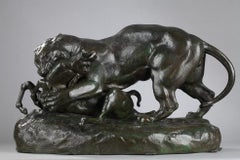
Antoine-Louis BARYE (1796-1875) Tiger surprising an antelope Bronze with nuanced dark greenish brown patina Signed on the base " Barye " Cast by Barye's own workshop (conducted in t...
Category

French School Late 19th Century Sculptures

Materials

Bronze

Large 19th Century Antique Marble Bust of Apollo of Belvedere
Located in New York, NY
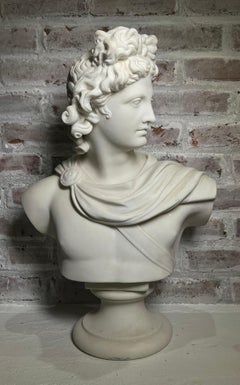
Pietro Bazzanti (1842-1881) specialized in allegorical and genre subjects as well as copies of Antique and Renaissance sculpture. Regarded as one of the most talented sculptors of h...
Category

Academic Late 19th Century Sculptures

Materials

Marble

A French 19th Century Carved Marble Whimsical Figural Urn Fountain with Children
Located in LA, CA
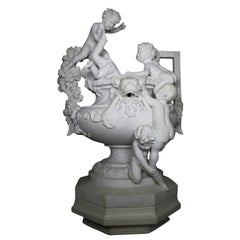
A very fine large, rare and charming, French, 19th century. Belle Époque carved white marble whimsical figural urn fountain depicting children climbing on an urn with flowers and gar...
Category

Academic Late 19th Century Sculptures

Materials

Marble

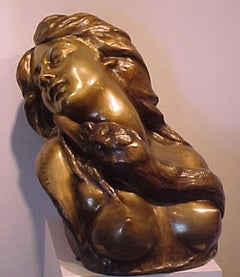
Head of Lust (Tete de la Luxure)
Located in New York, NY
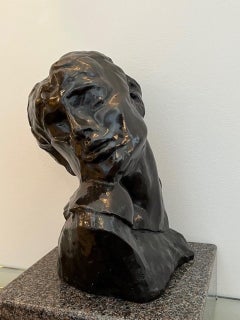
Originally conceived in 1880-82 for the tympanum of the Gates of Hell, where she is cradled in the arms of L'homme qui tombe, as well as crouching in slightly varied form to the lef...
Category

Impressionist Late 19th Century Sculptures

Materials

Bronze

Kuba African Warthog Divining Figure tribal arts sculpture
Located in Wilton Manors, FL
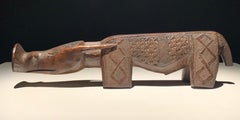
Warthog Divining Figure. Kuba, DRC. Late 19th century. Carved wood with palm oil patina, 12.5 incehes (l), 3.25 inches (h), 2 5/8 inches (d). Loss evident at tip of right ear and on snout. Provenance: Ex. collection Martin and Faith-Dorian Wright; J.J. Klegman; Angelo Caggiula-Carulucci, chief magistrate in Belgian Congo for King Leopold...
Category

Abstract Late 19th Century Sculptures

Materials

Wood

Jean Clesinger "Zingara" Patinated Bronze
Located in Astoria, NY
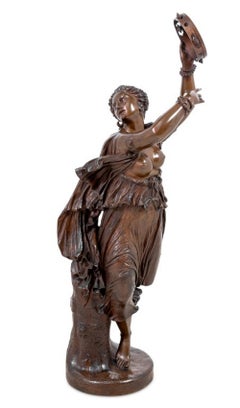
Jean Baptiste Clesinger (French, 1814-1883) "Zingara" Patinated Bronze Sculpture, 1857, cast by F. Barbedienne, the Neapolitan dancer upholding a tambourine, signed "J Clesinger, Rom...
Category

Pre-Raphaelite Late 19th Century Sculptures

Materials

Bronze

Edgard Degas: Horse Clearing an Obstacle (work 48 /certified by Comité Degas)
Located in Gent, VOV
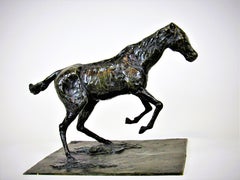
Horse Clearing an Obstacle (work number 48) Bronze with dark brown green patina bearing the stamp of the signature "Degas", Numbered IV/IX and dated 1998 Posthumous lost wax casting as of 1998. Stamp of Valsuani. Signed Degas The work is a sought-after rarity in terms of Degas’ sculptures. This bronze is distinguished by the fact that it is a Valsuani bronze, meaning it faithfully records Degas’ wax version’s as it appeared at the time of its creation. Most Degas' bronzes that are found on the market were cast by Hébrard – these serialized bronzes are surmoulages, or “aftercasts,” that were cast from the modèle bronzes currently in the Norton Simon Museum (Pasadena). Because these Hebrard bronzes...
Category

Impressionist Late 19th Century Sculptures

Materials

Bronze

French 19th century Animalier bronze of Two Hares on a naturalistic base
Located in Bath, Somerset
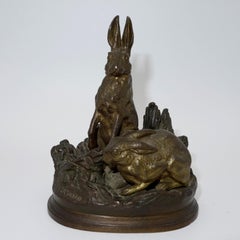
19th century bronze group of a standing and sitting hare by French animalier sculptor Alfred Dubucand (1823-1894). Finely detailed bronze with good dark brown patination. Signature '...
Category

Naturalistic Late 19th Century Sculptures

Materials

Bronze

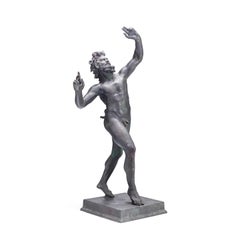
Late 19th century Grand Tour bronze of the Dancing Faun
Located in Bath, Somerset
A 19th century 'Grand Tour' bronze figure of the Dancing Faun, standing on a bronze square plinth. The faun balances on his toes and pivots, his horned head raised, his hair wreathe...
Category

Late 19th Century Sculptures

Materials

Bronze

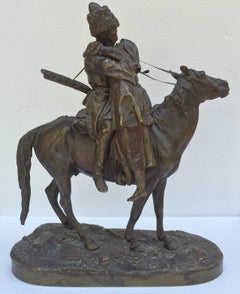
"The Farewell Kiss"
Located in Southampton, NY
This is a beautiful original bronze casting by the foremost Russian sculptor of his day Evgeny Lanceray. Artist signed on the base in Cyrillic (image 5) and is also inscribed on the ...
Category

Realist Late 19th Century Sculptures

Materials

Bronze

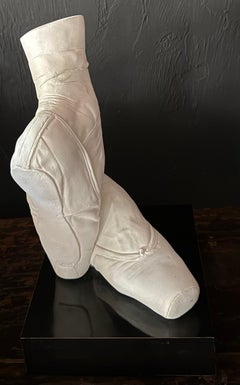
“Waiting in the Wings”
Located in Southampton, NY
Here for your consideration is a beautiful vintage Austin sculpture John Cutrone 1987 "Waiting in the Wings" ballet slippers. Signed " Austin Prod Inc 19...
Category

Contemporary Late 19th Century Sculptures

Materials

Laminate, Plaster

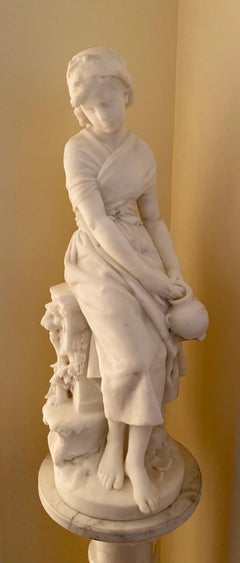
THE SPRING
Located in Los Angeles, CA
Beautiful La Belle Epoque marble in nive vintage condition. Mathurin Moreau (1822-1912) was a French sculptor in the academic style. He was born in Dijon, first exhibited in the 1848 Salon, and finally received a medal of honor...
Category

Academic Late 19th Century Sculptures

Materials

Marble

THE SPRING
THE SPRING
$5,700 Sale Price
40% Off
Leon Bonduel "L Alerte" Neoclassical Patinated Bronze Sculpture
Located in Astoria, NY
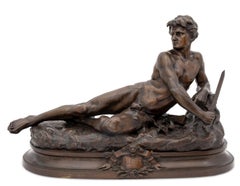
Leon Bonduel (French, 1857-1928) "L'Alerte" [The Alert] Patinated Bronze Sculpture, 1889, depicting reclining nude man rising from sleep with a sword in hand, on a naturalistic base ...
Category

Late 19th Century Sculptures

Materials

Bronze

Walking Tiger - Late 19th century Bronze Sculpture
Located in Stockholm, SE
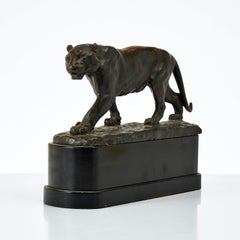
Sculpture of a walking tiger in dark patinated bronze by Johan Axel Wetterlund (1858-1927), signed J. A. Wetterlund, mounted on a black-painted wooden base. This finely modelled bro...
Category

Naturalistic Late 19th Century Sculptures

Materials

Bronze

Why Born a Slave (Replica after the original work)
Located in Paris, Île-de-France
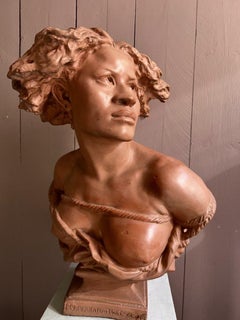
Jean-Baptiste Carpeaux (1827-1875) Why Born a Slave (Replica after the original work) Tinted terracotta or plaster, 60 cm in height, base 18 x 20 cm Provenance: Private collection ...
Category

Romantic Late 19th Century Sculptures

Materials

Terracotta, Plaster

Bronze Walking Elephant By Rembrandt Bugatti (1884 - 1916)
Located in Gent, VOV
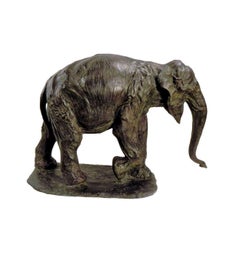
Elephant walking Bronze statue of a "large Indian elephant walking" after Rembrandt Bugatti (Italian, 1884-1916). This bronze was cast using the...
Category

Realist Late 19th Century Sculptures

Materials

Bronze

VALTON Charles. The Griffin Marco. Patinated bronze. Marble base. Signed.
Located in Paris, FR
The Griffin Marco. Patinated bronze. Marble base. Signed and titled. Charles Valton was a French sculptor known for his works created in the animalier style, a 19th-century movement ...
Category

Realist Late 19th Century Sculptures

Materials

Bronze

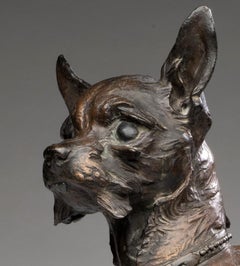
Rare, Antique, Life-Size Dog Bronze of a Chihuahua "Lydie" Charles Valton. 1890s
Located in SANTA FE, NM
Antique Bronze Dog Sculpture Chihuahua "La Petite Belle Lydie" Charles Valton (French, 1851-1918) Circa 15 1/2 x 10 1/4 x 7 Lydie is a Chihuahua making her a very rare image from ...
Category

Realist Late 19th Century Sculptures

Materials

Bronze

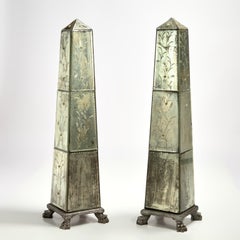
Pair of Antique Italian Mirrored Obelisks
Located in Palm Beach, FL
Standout pair of 19th Century neoclassical Italian obelisks clad in mirrored sections with etched floral designs now oxidized to perfection with the expected imperfections. Presented...
Category

Abstract Geometric Late 19th Century Sculptures

Materials

Mirror

The Victorious David / - The melancholy of the radiant hero -
Located in Berlin, DE
Henri Honoré Plé (1853 Paris - 1922 Paris), The Victorious David, around 1890. Red-brown and brown patinated bronze with terrain plinth mounted on a round base. 62 cm (total height) ...
Category

Realist Late 19th Century Sculptures

Materials

Bronze

Bust of Napoleon Bonaparte
Located in New York, NY
RENZO COLOMBO Italian, (1856-1885) Bust of Napoleon Bonaparte Patinated bronze; Signed R. Colombo 1885 on Right Side 22 x 15 inches Notes: The...
Category

Late 19th Century Sculptures

Materials

Bronze

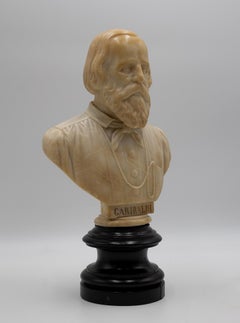
Portrait of Giuseppe Garibaldi - Original Marble Sculpture - Late 19th Century
Located in Roma, IT
This Portrait go Giuseppe Garibaldi is an original decorative marble sculpture realized in Italy by Italian manufacture during the end of the XIX century. The alabaster marble sta...
Category

Modern Late 19th Century Sculptures

Materials

Marble

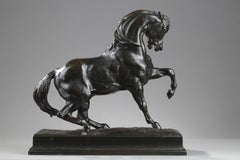
Turkish Horse
Located in PARIS, FR
"Turkish Horse" by Antoine-Louis Barye (1796-1875) Bronze with nuanced dark brown patina cast by BARBEDIENNE France circa 1880 height 28 cm length 31,5 cm This is the biggest size...
Category

French School Late 19th Century Sculptures

Materials

Bronze

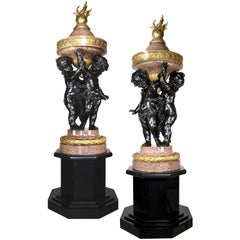
Monumental Pair French 19th Century Putto Flambeaux Urns Torchere Urn Sculptures
Located in LA, CA
A Monumental Museum Quality Pair of French 19th Century Figural Gilt and Patinated Bronze Rosso Granite Marble Flambeaux Urns, each depicting a pair of standing allegorical and whims...
Category

Romantic Late 19th Century Sculptures

Materials

Marble, Granite, Bronze, Brass

Allegory of Progress / - The Driving Force of Inspiration -
Located in Berlin, DE
Ernest Rancoulet (1842-1918), Allegory of Progress, around 1890. Bronze-plated metal cast with cast terrain plinth mounted on a wooden base (6 cm high). 64.5 cm (total height) x 28 c...
Category

Realist Late 19th Century Sculptures

Materials

Metal

Large Orientalist Bust in Marble of Armida French School 19th century Signed
Located in Pistoia, IT
Zacharie Rimbez (active between 19th and 20th centuries). White marble Orientalist bust depicting Armida, second half of the 19th century. Armida is a Muslim sorceress, a charact...
Category

French School Late 19th Century Sculptures

Materials

Marble

Jeanne d Arc by Emmanuel Frémiet
Located in New Orleans, LA
Emmanuel Frémiet 1824–1910 French Jeanne d’Arc Signed “E FREMIET” This commanding bronze of Jeanne d’Arc by Emmanuel Frémiet captures one of the most enduring symbols of French n...
Category

Academic Late 19th Century Sculptures

Materials

Bronze

Leda and the Swan
Located in West Hollywood, CA
Presenting a magnificent early Art Nouveau bronze by Belgian artist Jef Lambeaux(1852-1908.) “Leda and the Swan”, is an original Art Nouveau Bronze,...
Category

Art Nouveau Late 19th Century Sculptures

Materials

Bronze

Tiger and Lion walking
Located in PARIS, FR
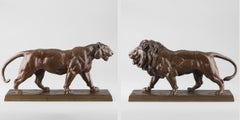
Rare pair of "Tiger and Lion walking" by Antoine-Louis BARYE (1796-1875) A very fine pair of bronze sculptures with a nuanced brown patina each signed "Barye" on the base cast by "F...
Category

French School Late 19th Century Sculptures

Materials

Bronze

David Slaying Goliath Large Figural Bronze Statue by Antonin Mercie
Located in New York, NY
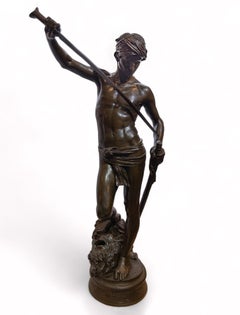
The base marked "A. Mercie" and "506 F. Barbenienne, Fondeur, Paris" ad "A. Collas" "Reduction Mecanique." The dazzling David, a prolific subject amongst sculpture artists beginning...
Category

Academic Late 19th Century Sculptures

Materials

Bronze

Zebu and Python
Located in PARIS, FR
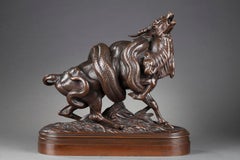
Zebu and Python by Henri-Alfred JACQUEMART (1824-1896) Bronze group with nuanced brown patina signed on the base " A. Jacquemart " old cast France circa 1870 height 35,5 cm length...
Category

French School Late 19th Century Sculptures

Materials

Bronze

Read More

At Hosfelt Gallery, Bertoia Masterworks Complement Dynamic Contemporary Art

For nearly three decades, San Francisco–based Todd Hosfelt has curated against the grain — with a show on the legendary modernist Harry Bertoia the latest case in point.

This Weathered-Steel Sculpture Distills a Form of Protest into a Minimalist Monument

Part of Alejandro Vega Beuvrin’s “Barricada” series, the work is a subversive tribute to the street smarts of citizen activists.

How the Chunky, Funky Ceramics of 5 Mid-Century American Artists Balanced Out Slick Modernism

Get to know the innovators behind the pottery countercultural revolution.

Art Brings the Drama in These Intriguing 1stDibs 50 Spaces

The world’s top designers explain how they display art to elicit the natural (and supernatural) energy of home interiors.

Chryssa’s 1962 Neon Sculpture Was Way ahead of the Art-World Curve

By working with lettering, neon and Pop imagery, Chryssa pioneered several postmodern themes at a time when most male artists detested commercial mediums.

How to Spot a Fake KAWS Figure

KAWS art toys have developed an avid audience in recent decades, and as in any robust collectible market, counterfeiters have followed the mania. Of course, you don’t have to worry about that on 1stDibs, where all our sellers are highly vetted.

A Giant Wedding Cake Has Us Looking at Portuguese Tiles in a New Light

At Waddesdon Manor, artist Joana Vasconcelos has installed a three-tiered patisserie inspired by the narrative tile work of her homeland. We take a look at the cake sculpture and how Portuguese tiles have been used in architecture from the 17th century to today.

These Soft Sculptures Are Childhood Imaginary Friends Come to Life

Miami artist and designer Gabriela Noelle’s fantastical creations appeal to the Peter Pan in all of us.

Still Thinking About These?

All Recently Viewed