Items Similar to Cuzco School Baptismal Dish
Want more images or videos?
Request additional images or videos from the seller
1 of 4
Spanish Colonial (Peruvian)Cuzco School Baptismal Dish18th Century
18th Century
$23,000
£17,371.14
€20,066.37
CA$32,403.73
A$34,704.40
CHF 18,656.85
MX$421,505.23
NOK 235,738.35
SEK 215,835.99
DKK 149,932.46
About the Item
Provenance:
Manuel Ortíz de Zevallos y García, Peru; and by descent in the family to:
Private Collection, New York.
This impressive baptismal dish is an example of eighteenth-century silverwork from the viceregal Peru. From its roots as a synthesis of Spanish tastes and practices with those of indigenous peoples, the art of silversmithing in the Americas developed into a rich tradition that responded to the unique desires and needs of colonial society. Already in the mid-sixteenth century, there was great demand for silver objects both in Spain and in Latin America, due in no small part to the large amounts of base silver being mined and refined there. This demand remained constant through the eighteenth century, the last flowering of the colonial silversmithing tradition, which melted away with the political changes and the independence movements of the early nineteenth century. This baptismal dish dates from this final period of viceregal silverwork, and its form and style correspond with similar works produced at this time in Peru.
The most striking feature of this baptismal font is its imitation of a scallop shell. The scallop shell was a common symbol in the Christian tradition from the medieval period on, probably originating with the shells worn by pilgrims on their return from shrine of Saint James in Santiago de Compostela in Spain. These shells also came to be associated with the notion of rebirth by water, and thus, the sacrament of baptism. The scallop shell was a recurring motif in Peruvian silverwork of the eighteenth century, and several types of objects were modeled on its shape, including holy-water fonts, basins, shells for pouring water during baptism, and baptismal dishes like this one.
This silver shell is adorned with concave gadroons, or grooves, and its curved base is decorated with foliage, scrolls, and flowers. The undulating/scalloped rim of the basin contains a raised, C-shaped decoration that is repeated inside the shell along the base of the gadroons. The underside of the shell reveals signs of the techniques used in its creation, as well as one of the most fantastic aspects of the work: the three spiraled conch shells that serve as the feet of the dish. The dish’s elaborate backsplash features shell and feather motifs.
Silver was the material of choice for both ecclesiastical and domestic vessels in the New World, not only for its status as a precious metal, but also because of its abundance and durability. Baptismal dishes in the shape of scallops were common in Peru, a clear indication of their popularity and desirability. They were intended for ecclesiastical use as baptismal fonts, as well as for domestic use as decorative pieces placed on top of furniture. In the latter case, these dishes fall into the category of religio-domestic works—objects intended for the home that refer to religious activity. The scale and the secular coat of arms on this dish indicates that it was likely originally destined for a domestic setting.
This baptismal dish formerly belonged to Manuel Ortíz de Zevallos y García (1809–1882), a lawyer and politician in Peru, and descended among American members of his family.
- Creator:
- Creation Year:18th Century
- Dimensions:Height: 11.25 in (28.58 cm)Width: 16.75 in (42.55 cm)Depth: 21.5 in (54.61 cm)
- Medium:
- Movement Style:
- Period:
- Condition:
- Gallery Location:New York, NY
- Reference Number:1stDibs: LU10210840632
About the Seller
5.0
Recognized Seller
These prestigious sellers are industry leaders and represent the highest echelon for item quality and design.
Established in 1997
1stDibs seller since 2012
24 sales on 1stDibs
Typical response time: 9 hours
- ShippingRetrieving quote...Shipping from: New York, NY
- Return Policy
More From This Seller
View AllSilver and Transitional Andean Textile Casket
By Spanish Colonial (Peruvian)
Located in New York, NY
Silver was the material of choice for both ecclesiastical and domestic vessels in the New World, not only for its status as a precious metal, but also because of its abundance and du...
Category
Early 18th Century Sculptures
Materials
Silver
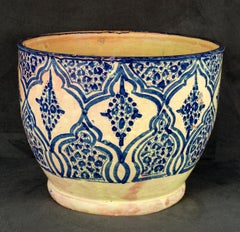
Moroccan, Fez or Meknes: Tall bowl (Jobbana) with geometric designs
Located in New York, NY
Provenance:
Collection of Emily Johnston De Forest and Robert Weeks De Forest, New York, by 1911-until 1942; thence by descent until 2018.
Literature: ...
Category
1810s Sculptures
Materials
Earthenware, Tin Glaze
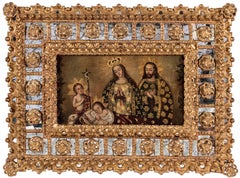
A Magnificent Gilt Wood Mirrored Frame
Located in New York, NY
Provenance: Private Collection, Argentina; there acquired by
Mr. and Mrs. Ernest T. Harper, New York, by 1960; by descent to:
Mr. and Mrs. Alan Harper, New York, until 2024.
This extraordinary mirrored frame is an exuberant and nearly perfectly preserved example of Andean 18th-century decorative art. Pierced mirrored rosettes surrounding floral motifs are set against mirrored surrounds along a broad frieze bordered within and without by elaborate raised moldings, inlaid by small, shaped mirrors. Repeating ornamental motifs reflecting both Spanish and indigenous designs surround both the inside panel and the exterior perimeter, the four corners of which are punctuated by mirrored rosettes.
Glass mirrors were unknown to the indigenous population of the Americas prior to the arrival of Europeans (obsidian mirrors...
Category
18th Century Old Masters Figurative Paintings
Materials
Canvas, Mirror, Wood, Oil
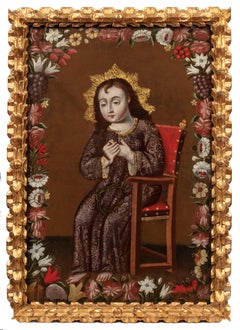
Young Christ Pricked by a Thorn (Niño de la Espina)
Located in New York, NY
Provenance: Private Collection, Paraguay, for at least the last 80 years
Painted in the Viceroyalty of Peru during the 18th century, the present work depicts the young Christ as the Niño de la Espina—a devotional representation of Christ as he looks down at his bleeding finger, which has been pricked by the crown of thorns resting on his lap. The subject of the Young Christ Pricked by a Thorn was especially popular in Cuzco, and the rich details and decorative elements of our work perfectly capture the essence and style of the Cuzco School of painting.
In our painting, Christ wears an intricately patterned floor-length robe trimmed with gilded cuffs and a gilded collar. The delicate gilding, including the halo of golden rays emanating from his head, are executed in brocateado, an ornamental over-gilding technique that is characteristic of the Cuzco School. The red chair on which Christ sits also includes brocateado in the decorative gilt elements. The form of the chair takes inspiration from those commonly used by friars both in Spain and the Andes, known as silla frailera or sillon frailero, and was also frequently employed in related depictions of the Virgin Mary Spinning. Here the young Christ is rendered with soft, elongated features that reflect the influence of the Italian Mannerist painters who were pivotal to the formation of the Cuzco School, including the Jesuit friar Bernardo Bitti and Matteo Pérez del Alesio. Additionally, while its origins can be traced to Northern European pictorial traditions, the lush flower garland that frames the work is a signature feature of Cuzqueño painting...
Category
18th Century Old Masters Figurative Paintings
Materials
Canvas, Oil
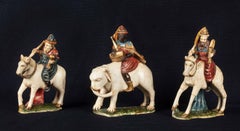
The Three Magi
Located in New York, NY
Provenance: Private Collection, Spain.
Known as Peruvian alabaster for its translucency and workability, Piedra de Huamanga is a highly prized material from the province of Ayacucho in Peru. In the 17th and 18th centuries, local craftsman in the town of Huamanga began to specialize in the production of small-scale, polychrome religious sculptures made from this distinctive stone. Huamanga sculptures are among the most accomplished examples of carving from the Spanish Americas, where polychrome wood sculpture was a far more common sculptural medium. These works, which were created as independent sculptures or as sculptural groups—such as our three Magi—were intended for ecclesiastical as well as domestics settings.
Our three figures likely formed part of a larger Nativity group—a New World variant of the tradition of the Neapolitan Crèche...
Category
Late 18th Century Figurative Sculptures
Materials
Alabaster
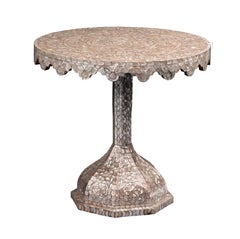
Mother of Pearl Inlaid Wooden Occasional Table
Located in New York, NY
This occasional table is a remarkable example of the luxurious furniture popular during the 17th and 18th centuries in Colonial Latin America. The decorative technique that creates s...
Category
18th Century More Art
Materials
Wood
You May Also Like
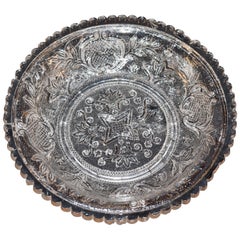
19th Century Boston
Sandwich EAPG Dish
By Boston and Sandwich Glass Company
Located in High Point, NC
19th century Boston & Sandwich early American pressed glass plate in the "Shield Acanthus" pattern.
Category
Antique 19th Century American Glass
Materials
Glass
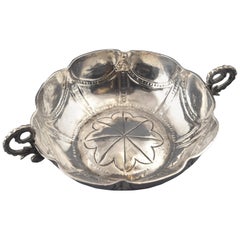
Silver Cup "tembladera", 18th Century
Located in Madrid, ES
Without hallmarks.
Container known as catavinos (wine tasting cup) or tembladera with two flat handles in the form of closed "S" (with simplified vegetable decoration) and a line "d...
Category
Antique 17th Century European Baroque More Dining and Entertaining
Materials
Silver
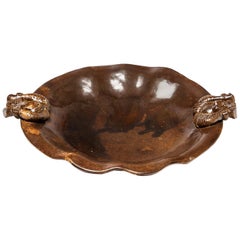
Big Dish in the Style of Guidette Carbonell, circa 1940-1950
By Guidette Carbonell
Located in Saint-Ouen, FR
A big dish in the style of Guidette Carbonell with brown glaze decoration.
Perfect original conditions,
circa 1940-1950.
Unique piece.
Category
20th Century French Beaux Arts Decorative Dishes and Vide-Poche
Materials
Ceramic
Silver Plate Bowl
Located in Alessandria, Piemonte
Elegant large silver plate bowl for Your table: for desserts or fruit, to prepare a table center piece for Christmas.
It's very beautiful ! with a g...
Category
Mid-20th Century American Baroque Decorative Dishes and Vide-Poche
Materials
Silver Plate
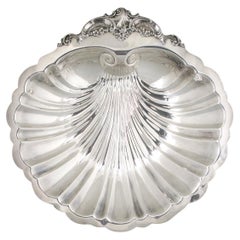
$2,146
Spanish 19th Century Fajalauza Bowl from Granada
Located in Baton Rouge, LA
A charming, handpainted terracotta lebrillo bowl from Granada, Spain (19th century)–these illustrative ceramic works collectively known as fajalauza pottery can be traced back to at ...
Category
Antique 19th Century Spanish Spanish Colonial Ceramics
Materials
Clay
17th C. Rare Alms Dish Bowl Luxury Vide Poche Center Tray Decorative Object
Located in West Hollywood, CA
17th C. Rare Alms Dish Bowl Luxury Vide Poche Center Tray Decorative Object .German Baroque . A real period collector’s item Circa 1600’s Alms collecting German Baroque dish with inc...
Category
Antique 17th Century German Baroque Decorative Art
Materials
Metal
$6,080 Sale Price
20% Off
More Ways To Browse
Peru Sculpture
Latin America Antique
Colonial Spanish Art
Peruvian Colonial
Spiral Shell
Antique Holy Water
Antique Shell Sign
Colonial Silver Spanish
Antique Holy Water Font
Antique Baptismal Fonts
Spanish Colonial 18th C Furniture
Cuzco School
Antique Peruvian Silver
Baptismal Silver
Spanish Colonial School
Baptismal Shell
Oiseau Picasso
Sung Ware