Items Similar to "THE MANTEL SERIES" John Glick Stoneware Objets d
Art Intimate Indoor/Outdoor
Want more images or videos?
Request additional images or videos from the seller
1 of 15
John Glick"THE MANTEL SERIES" John Glick Stoneware Objets d
Art Intimate Indoor/Outdoor1998
1998
$6,500
£4,858.57
€5,606.08
CA$9,099.34
A$9,614.27
CHF 5,171.35
MX$115,115.36
NOK 64,791.01
SEK 59,339.16
DKK 41,861.82
About the Item
SALE ONE WEEK ONLY
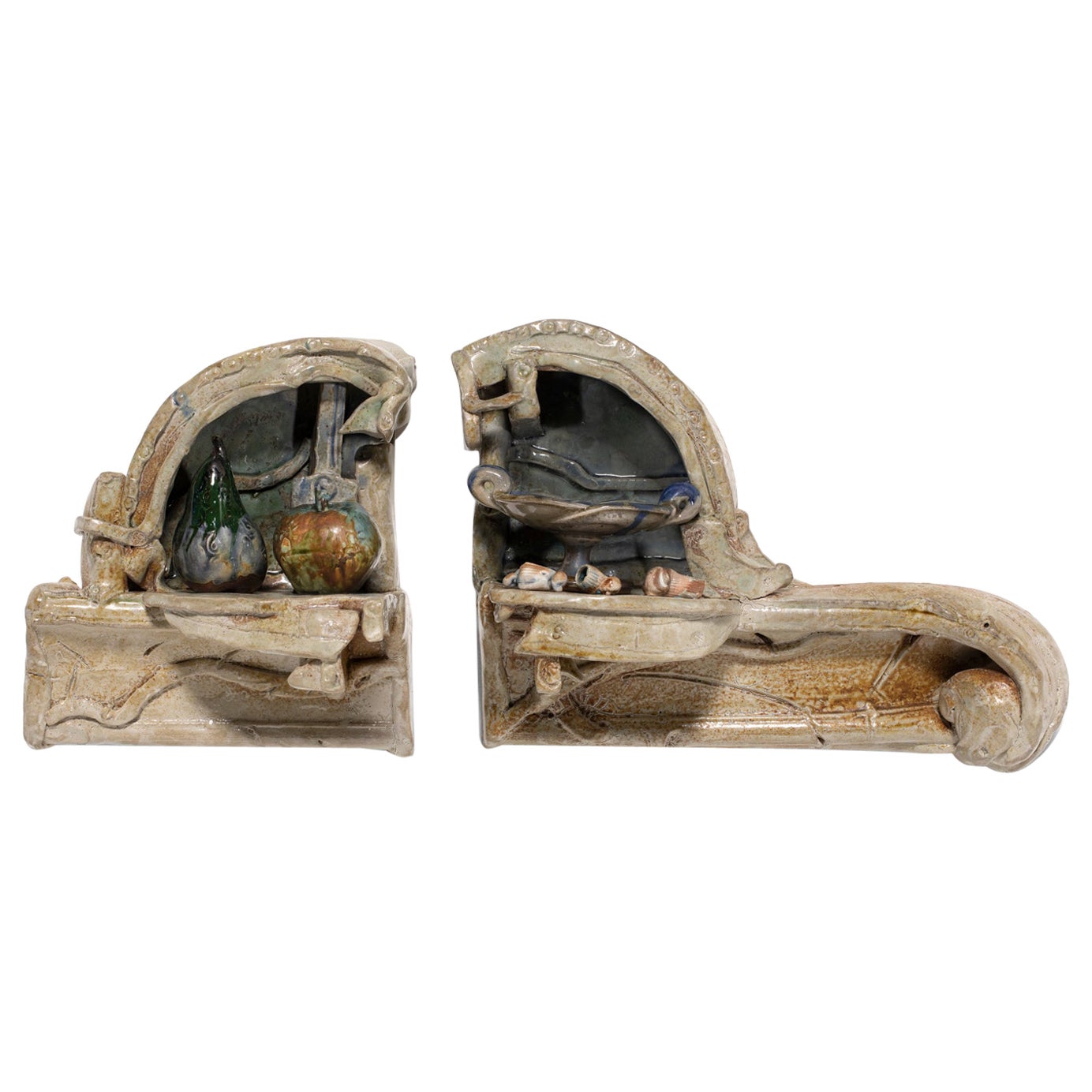
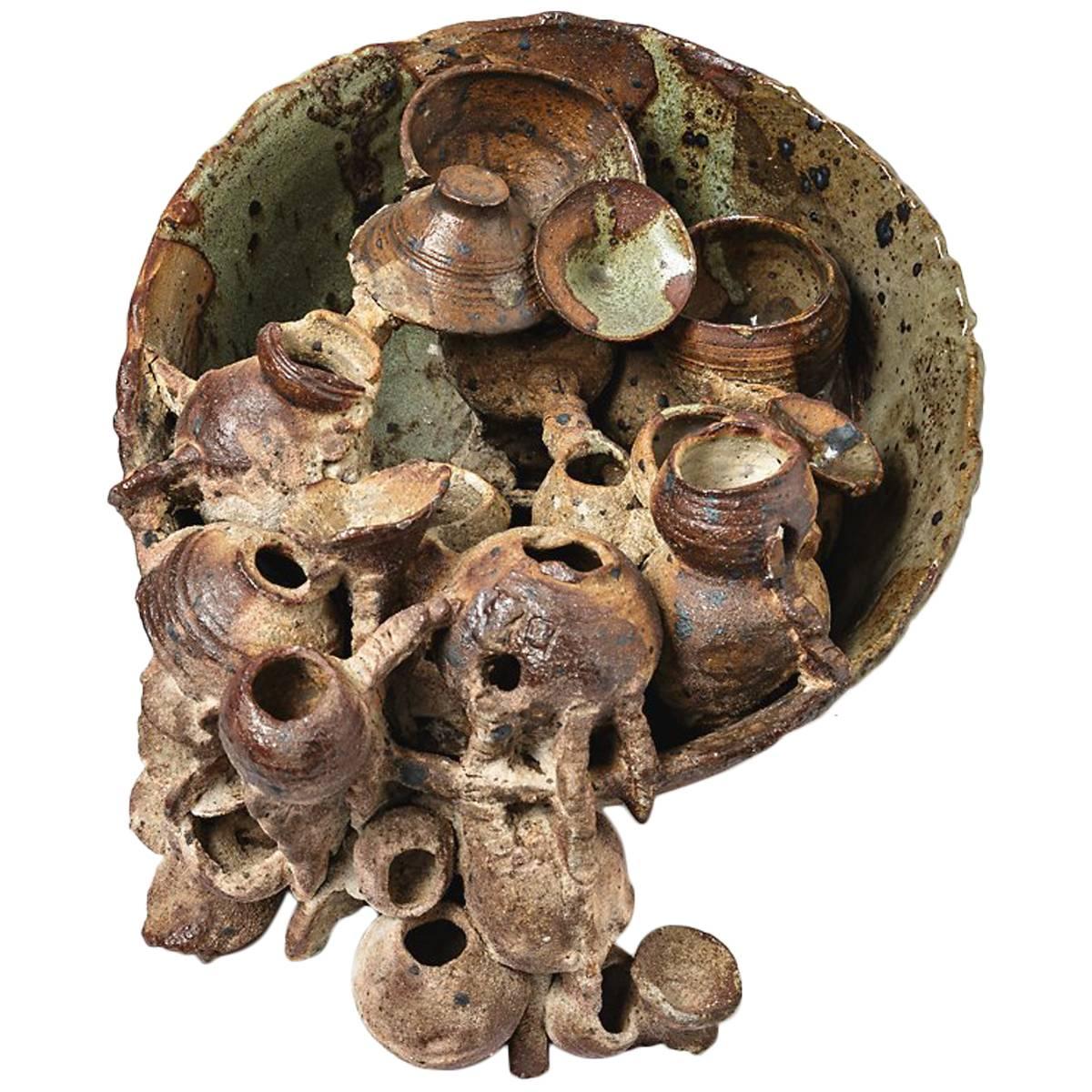
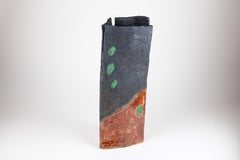
John Glick is well-known for his beautifully rendered functional pieces of art. His decorative pieces, especially his large pots, are breathtakingly powerful objects. Glick's creative genius, however, is most exquisitely shown in this unique grouping of objets d'art. The Wall Hanging has a lovely classical scroll shelf. The objets on the shelf include an apple and pear - both fruits frequently rendered by artists from the Dutch Masters to Cezanne because of their perfectly balanced shape and rich colors. In addition is a small Greek or Roman styled dish used as an oil lamp. The other three objets are mysterious twisted tube-like organic shapes. John Glick, at one of his richest, creative bests. The objets are of various sizes, movable and can be displayed as desired. The size given is the overall size of both pieces and the objets d'art.
"The works in John Glick’s “Mantel Series” are still life tableaux comprised of ordinary, yet intriguing objects that imply a history of people interacting with objects and each other over time. Imagine a lettr or poem from a loved one, once read, tucked among other fabourite things for safekeeping. Or a salty treasure carried in a dampened pocket and later deposited on a cottage shelf to dry, crackle and change. In essence, the mantels hold suggestive collections in which most people can find a part of themselves a link to a personal memory and a connection to a lost moment in time.
His body of work, The Mantel Series, was partially inspired by a memory of a salt box that hung near his grandmother’s kitchen wood stove. For Glick, the unassuming little box, with its pleasing enigmatic shape and wooden lid, conjured pleasant boyhood memories, nostalgia for home and hearth, and vivid awareness of history. Upon his wall-based mantels, the artist placed a well-honed repertoire of distinct objects, all deftly crafted of clay, that become characters in his unspoken drama, each form playing off the others in the ensemble.” Plum Tree Pottery
John was an American Abstract Expressionist ceramicist born in Detroit, MI. Though open to artistic experimentation, Glick was most influenced by the styles and aesthetics of Asian pottery—an inspiration that shows in his use of decorative patterns and glaze choices. He has said that he is attracted to simplicity, as well as complexity: my work continually reflects my re-examination that these two poles can coexist… or not, in a given series. Glick also took influences from master potters of Japan, notably Shoji Hamada and Kanjrio Kawai, blending their gestural embellishments of simple forms with attitudes of Abstract Expressionism. He was particularly drown to the work of Helen Frankenthaler whose soak-stain style resonated with Glick’s multi-layered glaze surfaces, which juxtaposed veils of atmospheric color with gestural marks and pattern. He spent countless hours developing and making his own tools in order to achieve previously unseen results in his work with clay and glaze.
Glick’s “Plum Tree Pottery” (now a designated historic landmark in Farmington Hills, Michigan) studio opened around 1965 and closed in the summer of 2016. It was a private studio space for John and a number of his students and assistants. He believed his shapes evolved guided by forces apparently outside his control. This was instinctual, intellectual and due to his openness to change, fusing into what he thought was the most positive force behind a potter’s approach: evolution and growth. Some have called it inspiration.
John was not only a major figure in the Detroit creative community, but in the ceramics world at large. According to Shelley Selim in her book on John, “John Glick: A Legacy in Clay” John remains: “one of the most recognizable names in the field of studio pottery – known for lecturing, publishing, and offering workshops widely – and his work has been featured in well over a hundred local, national and international exhibitions since he was a college student in the late 1950s.” Along with this John has mentored over thirty studio apprentices over five and a half decades, received numerous grants and awards for his work, and has been prolific, with an estimated 300,000 ceramic wares throughout the world.
He received his Masters from Cranbrook Academy of Art in Bloomfield Hills, Michigan, working with Maija Grotell, a legendary and influential teacher. Grotell was noted for her deep interest in the human connection to nature’s rhythms and patters. These ideas often grounded her dialog with her students including Glick, affecting, a profund and lasting influence on his future work. This famous Art Academy was designed by architect and faculty member, Eliel Saarinen who collaborated with Charles and Ray Eames on chair and furniture design. Numerous creative artists who are alumni of Cranbrook include: Harry Bertoia, Florence Knoll, Jack Lenor Larsen, Donald Lipski, Duane Hanson, Nick Cave, Hani Rashid, George Nelson, Urban Jupena (Nationally recognized fiber artist), Artis Lane (the first African-American artist to have her sculpture, "Sojourner Truth," commissioned for the Emancipation Hall in the Capital Visitor Center in Washington DC), Cory Puhlman (televised Pastry Chef extraordinaire), Thom O’Connor (Lithographs), Paul Evans (Brutalist-inspired sculpted metal furnishings), Eugene Caples (small bronze images/abstract), Morris Brose (Bronze Sculptures), Herb Babcock (blown glass), Larry Butcher (mixed media) and Lauren Anais Hussey (Abstract).
Glick’s work can be found in private and public collections in Michigan at The Cranbrook Museum of Art, The Detroit Institute of Arts, The Flint Institute of Arts, Wayne State University and University of Michigan, in addition to major museums across the U.S. and Internationally.
- Creator:John Glick
- Creation Year:1998
- Dimensions:Height: 15.5 in (39.37 cm)Width: 20.5 in (52.07 cm)Depth: 6.5 in (16.51 cm)
- Medium:
- Movement Style:
- Period:
- Condition:
- Gallery Location:Detroit, MI
- Reference Number:1stDibs: LU1286111208862
About the Seller
5.0
Vetted Professional Seller
Every seller passes strict standards for authenticity and reliability
Established in 2014
1stDibs seller since 2019
111 sales on 1stDibs
Typical response time: 2 hours
- ShippingRetrieving quote...Shipping from: Detroit, MI
- Return Policy
More From This Seller
View AllBreathtaking John Glick "Scalloped Basket" Glazed Stoneware Reduction Fired
Located in Detroit, MI
"Scalloped Basket" is a stoneware piece with the decorative layer of the rich toned glazes and markings that John was so well-known for. He was, also, known for the undulating lip lines on his exquisite pieces. The basket portion is shaped with gentle curves and a sculptural handle. Each piece that John produced was unique. He was seduced by the effects of the reduction kiln, which decreased the levels of oxygen during firing, inducing the flame to pull oxygen out of the clay and glazes changing the colors of the glazes depending on their iron and copper content. In this way he achieved the rich gradients of ochre and umber and variations in stippling and opacity. This particular "basket" also has the cool blues and grays that contrast with the umber. It is signed and stamped on the bottom.
John was an American Abstract Expressionist ceramicist born in Detroit, MI. Though open to artistic experimentation, Glick was most influenced by the styles and aesthetics of Asian pottery—an inspiration that shows in his use of decorative patterns and glaze choices. He has said that he is attracted to simplicity, as well as complexity: my work continually reflects my re-examination that these two poles can coexist… or not, in a given series. Glick also took influences from master potters of Japan, notably Shoji Hamada and Kanjrio Kawai, blending their gestural embellishments of simple forms with attitudes of Abstract Expressionism. He was particularly drown to the work of Helen Frankenthaler whose soak-stain style resonated with Glick’s multi-layered glaze surfaces, which juxtaposed veils of atmospheric color with gestural marks and pattern. He spent countless hours developing and making his own tools in order to achieve previously unseen results in his work with clay and glaze.
Glick’s “Plum Tree Pottery...
Category
1970s American Modern Abstract Sculptures
Materials
Stoneware, Glaze
"Ceramic Box with Lid" Stoneware Cream Glaze w/ Organic Attachments
By Gawaine Dart
Located in Detroit, MI
ONE WEEK ONLY SALE
The rich tones of the stoneware clay come through the soft creamy glaze that drips over the surface like melted vanilla ice cream over red devil cake. There are i...
Category
1980s More Art
Materials
Ceramic, Stoneware, Glaze
"Stoneware Vessel" Cream Glaze with Organic Decorations, Signed
By Gawaine Dart
Located in Detroit, MI
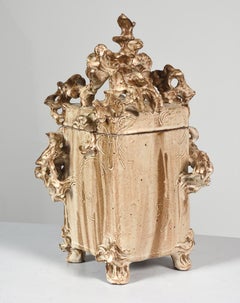
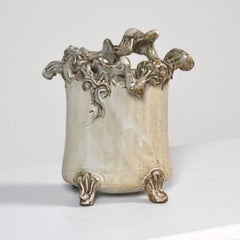
The rich tones of the stoneware clay come through the soft creamy glaze that drips over the surface like melted vanilla ice cream over red devil cake. This beautifully rendered ceramic vessel is perched on little decorative feet that poke out of the body of the piece. Of particular interest and commanding presence are the decorative forms attached to the top and sides. They twisted shapes of bent organic growth and provide endless entertainment for the creative imagination.
American Post War and Contemporary Artist, Gawaine Dart...
Category
1980s More Art
Materials
Stoneware, Glaze
Magnificent John Glick Plum Street Pottery "Scalloped Box" Glazed Stoneware
Located in Detroit, MI
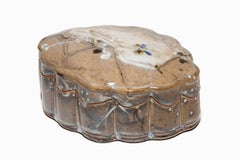
This magnificent "Scalloped Box" is a stoneware piece with decorative layers of rich toned glazes and markings that John was so well-known for. He was, also, known for the undulating lip lines on his exquisite boxes that fit together like a puzzle. Each piece that John produced was unique. He was seduced by the effects of the reduction kiln, which decreased the levels of oxygen during firing, inducing the flame to pull oxygen out of the clay and glazes thereby changing the colors of the glazes depending on their iron and copper content. In this way he achieved the rich gradients of ochre and umber and variations in stippling and opacity. This piece is signed and stamped on the bottom.
John was an American Abstract Expressionist ceramicist born in Detroit, MI. Though open to artistic experimentation, Glick was most influenced by the styles and aesthetics of Asian pottery—an inspiration that shows in his use of decorative patterns and glaze choices. He has said that he is attracted to simplicity, as well as complexity: my work continually reflects my re-examination that these two poles can coexist… or not, in a given series. Glick also took influences from master potters of Japan, notably Shoji Hamada and Kanjrio Kawai, blending their gestural embellishments of simple forms with attitudes of Abstract Expressionism. He was particularly drown to the work of Helen Frankenthaler whose soak-stain style resonated with Glick’s multi-layered glaze surfaces, which juxtaposed veils of atmospheric color with gestural marks and pattern. He spent countless hours developing and making his own tools in order to achieve previously unseen results in his work with clay and glaze.
Glick’s “Plum Tree Pottery...
Category
Late 20th Century American Modern Abstract Sculptures
Materials
Stoneware, Glaze
Eugene Caples "Bronze Sculpture II" Abstract Bronze Sculpture
By Eugene Caples
Located in Detroit, MI
This small exquisite "Bronze Sculpture II" is in excellent condition and a perfect example of Eugene Caples craftsmanship. This is mainly abstract with some graphic or architectural elements and is so delightful that mythical creatures demand to be considered. It cries out to be touched and held, looked at and caressed. The beautiful patina on the surface gives voice to the many hands that have done these things.
Eugene Caples is a designer and craftsman who worked in Kansas City in the 1960s and later through the early 21st century. He attended the Kansas City Art Institute, earning his Bachelors of Fine Arts in Industrial Design in 1959. In 1963 he was accepted to Cranbrook Academy of Art, Bloomfield Hills, Michigan. The Cranbrook Academy of Art was designed by architect and faculty member, Eliel Saarinen who collaborated with Charles and Ray Eames on chair and furniture design. Numerous creative artists are alumni of Cranbrook and include: Harry Bertoia, Florence Knoll, Jack Lenor Larsen, Donald...
Category
Late 20th Century American Modern Abstract Sculptures
Materials
Bronze

John Glick Plum Street Pottery Glazed Bowl Reduction Fired
Located in Detroit, MI
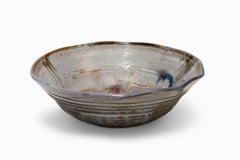
"Untitled" is a stoneware piece with the decorative layer of the rich toned glazes and markings that John was so well-known for. Each piece that John produced was unique. The lip on this piece is slightly scalloped and the shape is removed from the boring circular to mimic a gentle geometric design. He was seduced by the effects of the reduction kiln, which decreased the levels of oxygen during firing, inducing the flame to pull oxygen out of the clay and glazes changing the colors of the glazes depending on their iron and copper content. In this way he achieved the rich gradients of ochre and umber and variations in stippling and opacity. This piece is signed and stamped on the bottom.
John was an American Abstract Expressionist ceramicist born in Detroit, MI. Though open to artistic experimentation, Glick was most influenced by the styles and aesthetics of Asian pottery—an inspiration that shows in his use of decorative patterns and glaze choices. He has said that he is attracted to simplicity, as well as complexity: my work continually reflects my re-examination that these two poles can coexist… or not, in a given series. Glick also took influences from master potters of Japan, notably Shoji Hamada and Kanjrio Kawai, blending their gestural embellishments of simple forms with attitudes of Abstract Expressionism. He was particularly drown to the work of Helen Frankenthaler whose soak-stain style resonated with Glick’s multi-layered glaze surfaces, which juxtaposed veils of atmospheric color with gestural marks and pattern. He spent countless hours developing and making his own tools in order to achieve previously unseen results in his work with clay and glaze.
Glick’s “Plum Tree Pottery...
Category
1970s American Modern Abstract Sculptures
Materials
Stoneware, Glaze
You May Also Like
John Glick Plum Tree Pottery "Wall Mantel Series"
By John Glick
Located in Bloomfield Hills, MI
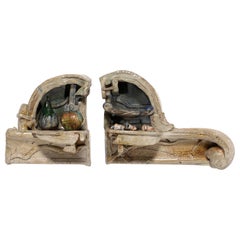
John Glick is well-known for his beautifully rendered functional pieces of art. His decorative pieces, especially his large pots, are breathtakingly powerful objects. Glick's creative genius, however, is most exquisitely shown in this unique grouping of objets d'art. The Wall Hanging has a lovely classical scroll shelf. The objets on the shelf include an apple and pear - both fruits frequently rendered by artists from the Dutch Masters to Cezanne because of their perfectly balanced shape and rich colors. In addition is a small Greek or Roman styled dish used as an oil lamp. The other three objets are mysterious twisted tube-like organic shapes. John Glick, at one of his richest, creative bests. The objets are of various sizes, movable and can be displayed as desired. The size given is the overall size of both pieces and the objets d'art.
John was an American Abstract Expressionist ceramicist born in Detroit, MI. Though open to artistic experimentation, Glick was most influenced by the styles and aesthetics of Asian pottery—an inspiration that shows in his use of decorative patterns and glaze choices. He has said that he is attracted to simplicity, as well as complexity: my work continually reflects my re-examination that these two poles can coexist… or not, in a given series. Glick also took influences from master potters of Japan, notably Shoji Hamada and Kanjrio Kawai, blending their gestural embellishments of simple forms with attitudes of Abstract Expressionism. He was particularly drown to the work of Helen Frankenthaler whose soak-stain style resonated with Glick’s multi-layered glaze surfaces, which juxtaposed veils of atmospheric color with gestural marks and pattern. He spent countless hours developing and making his own tools in order to achieve previously unseen results in his work with clay and glaze.
Glick’s “Plum Tree Pottery” (now a designated historic landmark in Farmington Hills, Michigan) studio opened around 1965 and closed in the summer of 2016. It was a private studio space for John and a number of his students and assistants. He believed his shapes evolved guided by forces apparently outside his control. This was instinctual, intellectual and due to his openness to change, fusing into what he thought was the most positive force behind a potter’s approach: evolution and growth. Some have called it inspiration.
John was not only a major figure in the Detroit creative community, but in the ceramics world at large. According to Shelley Selim in her book on John, “John Glick: A Legacy in Clay” John remains: “one of the most recognizable names in the field of studio pottery – known for lecturing, publishing, and offering workshops widely – and his work has been featured in well over a hundred local, national and international exhibitions since he was a college student in the late 1950s.” Along with this John has mentored over thirty studio apprentices over five and a half decades, received numerous grants and awards for his work, and has been prolific, with an estimated 300,000 ceramic wares throughout the world.
He received his Masters from Cranbrook Academy of Art in Bloomfield Hills, Michigan, working with Maija Grotell, a legendary and influential teacher. Grotell was noted for her deep interest in the human connection to nature’s rhythms and patters. These ideas often grounded her dialog with her students including Glick, affecting, a profund and lasting influence on his future work. This famous Art Academy was designed by architect and faculty member, Eliel Saarinen who collaborated with Charles and Ray Eames on chair and furniture design. Numerous creative artists who are alumni of Cranbrook include: Harry Bertoia, Florence Knoll, Jack Lenor Larsen, Donald Lipski, Duane Hanson, Nick Cave, Hani Rashid, George Nelson, Urban Jupena (Nationally recognized fiber artist), Artis Lane (the first African-American artist to have her sculpture, "Sojourner Truth," commissioned for the Emancipation Hall in the Capital Visitor Center in Washington DC), Cory Puhlman (televised Pastry Chef extraordinaire), Thom O’Connor (Lithographs), Paul Evans (Brutalist-inspired sculpted metal furnishings), Eugene Caples (small bronze images/abstract), Morris Brose (Bronze Sculptures), Herb Babcock (blown glass), Larry Butcher (mixed media) and Lauren Anais Hussey...
Category
Late 20th Century American American Craftsman Mounted Objects
Materials
Ceramic
Ceramic Sculpture by Marcello Fantoni
By Marcello Fantoni
Located in Milan, Italy
Ceramic sculpture by Marcello Fantoni, 1950.
Glazed ceramic. Single piece. Original signature. Cooking defect.
Biography
Marcello Fantoni was born in Florence on October 1, 1915. Gr...
Category
Vintage 1950s Italian Modern Abstract Sculptures
Materials
Ceramic
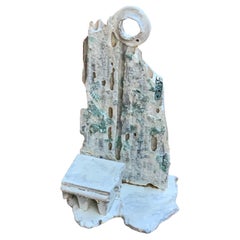
Important sculpture in glazed stoneware by Philippe Lambercy, circa 1980-1990.
Located in Saint-Ouen, FR
Important sculpture in glazed stoneware by Philippe Lambercy.
Artist monogram on the base.
Circa 1980-1990.
H : 16.5’ x 30.7’ x 7’ inches.
Category
20th Century French Beaux Arts Abstract Sculptures
Materials
Ceramic
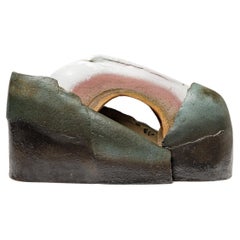
Currentbodies in Stoneware by Malcolm Mobutu Smith
By Malcolm Mobutu Smith
Located in Philadelphia, PA
MALCOLM MOBUTU SMITH
Currentbodies, 2013
Stoneware, slip and glaze
5 x 5 x 8 in
Category
21st Century and Contemporary American Abstract Sculptures
Materials
Stoneware
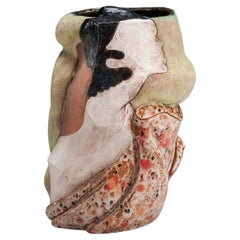
Rare Stoneware Sculpture Attributed to Jöelle de Roubaix, circa 1960-1970
By Joelle Deroubaix
Located in Neuilly-en- sancerre, FR
A rare stoneware sculpture attributed to Jöelle de Roubaix, La Borne.
Perfect original conditions.
Unique piece.
circa 1960-1970.
Category
20th Century French Beaux Arts Ceramics
Materials
Ceramic
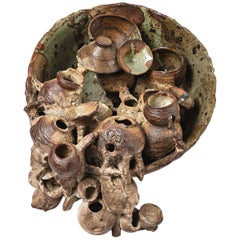
Charred, Abstract ceramic sculpture
By Rachelle Krieger
Located in New York, NY
Artist Statement by Rachelle Krieger:
These new ceramic sculptural works are a reflection of biodiversity and vitality, capturing natural elements in various stages of life. During ...
Category
2010s Contemporary Still-life Sculptures
Materials
Wire
$1,400 Sale Price
20% Off