Want more images or videos?
Request additional images or videos from the seller
1 of 9

Takashi Murakami
Takashi Murakami Supreme Skateboard Decks 2007 (complete set of 3)

2007

On Hold
$4,400
On Hold
£3,373.16
On Hold
€3,859.84
On Hold
CA$6,218.19
On Hold
A$6,758.93
On Hold
CHF 3,618.16
On Hold
MX$81,699.77
On Hold
NOK 45,595.90
On Hold
SEK 42,051.26
On Hold
DKK 28,826.85

About the Item

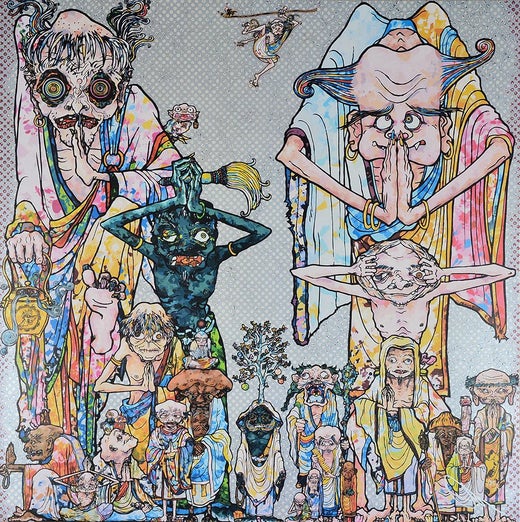
Takashi Murakami Supreme Skateboard Decks 2007: set of 3 works (Takashi Murakami Skateboards): A complete set of 3 Takashi Murakami skateboards published in 2007 as part of a much heralded collaboration between Takashi Murakami the world famous pop cultural fashion, lifestyle brand, Supreme New York. This super decorative, highly collectible Takashi Murakami skateboard set/triptych makes for vibrant one of a kind wall-art that hangs with ease. A sought after Takashi Murakami series sure to continue to increase in significance over time. The set collectively features Murakami’s much iconic charming: Bunbu-kun, Ponchi-ku Shimon-kun characters. Medium: Screen-print on 3 individual Maplewood skateboard decks. Dimensions: 8.0 x 31 inches (20.5 x 79 cm; applies to each individual work individually). Condition: Each in their original shrink wrapping. Excellent overall condition. Never displayed. Shrink wrap is opening at edge of one of the decks. May contain minor imperfections as consistent with any skateboard deck(s). Murakami printed signature front-side base of each followed by artist’s copyright below; reverse of each features a printed signature alongside the famed Supreme box logo; from a limited edition of unknown; scarce. Published by Supreme New York 2007. More on Takashi Murakami: One of the most acclaimed artists to emerge from postwar Asia, Takashi Murakami—“the Warhol of Japan”—is known for his contemporary Pop synthesis of fine art and popular culture, particularly his use of a boldly graphic and colorful anime and manga cartoon style. Supreme New York: ‘Founded by James Jebbia in 1994, Supreme first opened its doors as a skate shop on Lafayette Street in New York City.   The brand humbly built a cult following through their non-compromising NY attitude, pop culture referencing designs, and simple branding such as the now iconic Supreme Box Logo. Emphasizing authenticity and quality, Supreme quickly became the epicenter of the downtown skate community and a clubhouse for like-minded creative individuals.   Supreme furthered its authority in fashion through an eclectic mix of collaborations and limited drops, ultimately developing a devoted fan base. Over 25 years later, with 13 locations spanning three continents, the once underground skate brand has become the pinnacle of streetwear, and a globally recognized institution in the fashion industry.  As a core element of the Supreme brand, it was natural for skate decks to become their form of canvas. Over the years, Supreme skateboards have showcased the work of many pre-eminent photographers, visual artists and musicians. Reminiscent of a time capsule for the brand, the boards have become a highly coveted focal point for collectors.’ (Source: Sotheby’s) Related Categories Pop Art, Tokyo Artists, Comic/Cartoon, Japan, Contemporary Pop, Contemporary Graphic Realism, Popular Culture, Contemporary Asian Art, Takashi Murakami Skate Deck. Takashi Murakami Supreme. Takashi Murakami skateboard decks.
  • Creator:
    Takashi Murakami (1963, Japanese)
  • Creation Year:
    2007
  • Dimensions:
    Height: 31 in (78.74 cm)Width: 8 in (20.32 cm)
  • Medium:
  • Movement Style:
  • Period:
  • Condition:
  • Gallery Location:
    NEW YORK, NY
  • Reference Number:
    1stDibs: LU354312325602

More From This Seller

View All
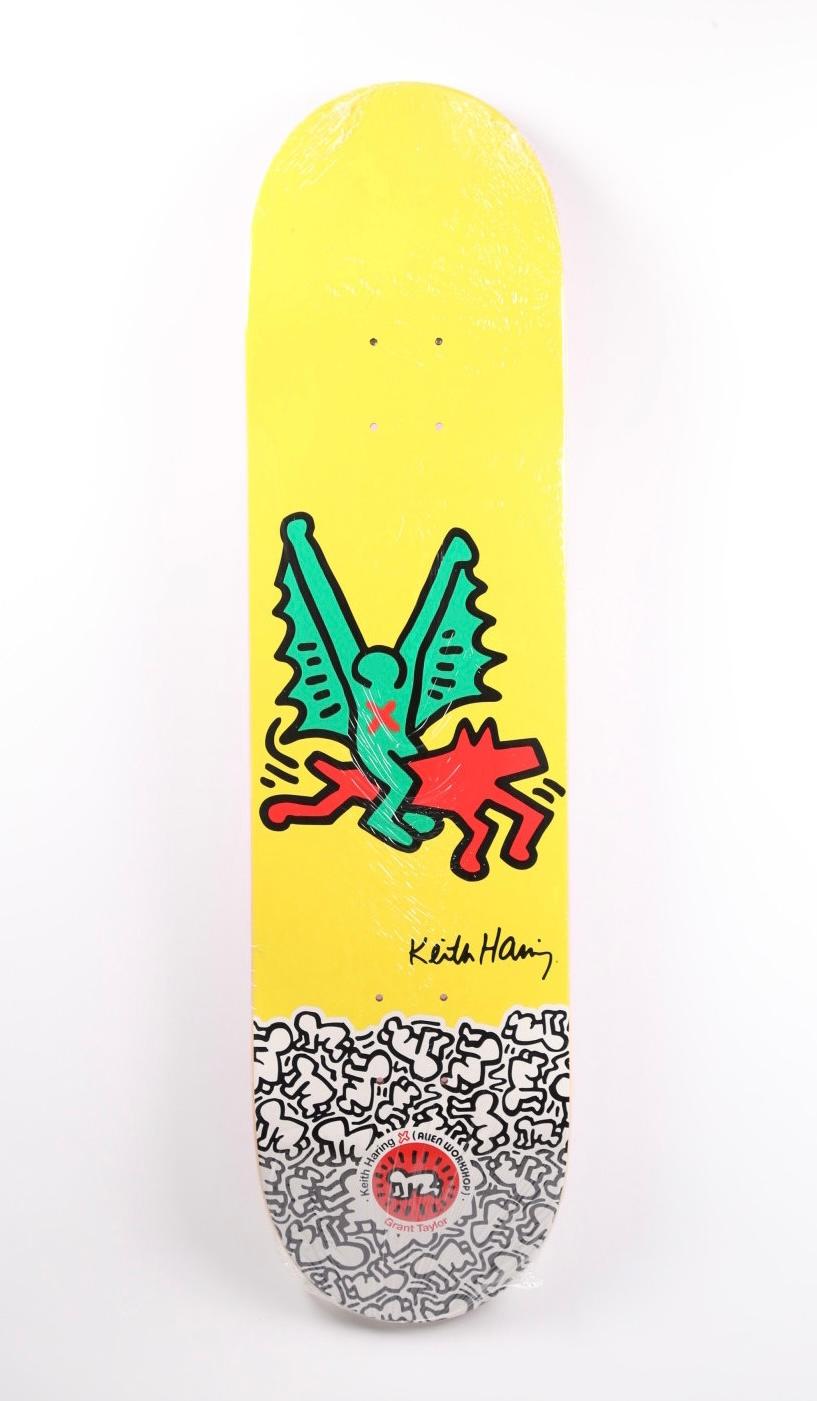
Keith Haring Skateboard Deck (Keith Haring dragon)
By (after) Keith Haring
Located in NEW YORK, NY
Keith Haring Skateboard Deck c.2012: Rare, out of print Keith Haring skate deck featuring one of the artist's iconic dragon images, set amidst a vibrant array of colors that really p...
Category

1980s Pop Art Sculptures

Materials

Wood, Screen, Lithograph

Takashi Murakami Skateboard Decks set of 2 (Murakami Flowers)
By Takashi Murakami
Located in NEW YORK, NY
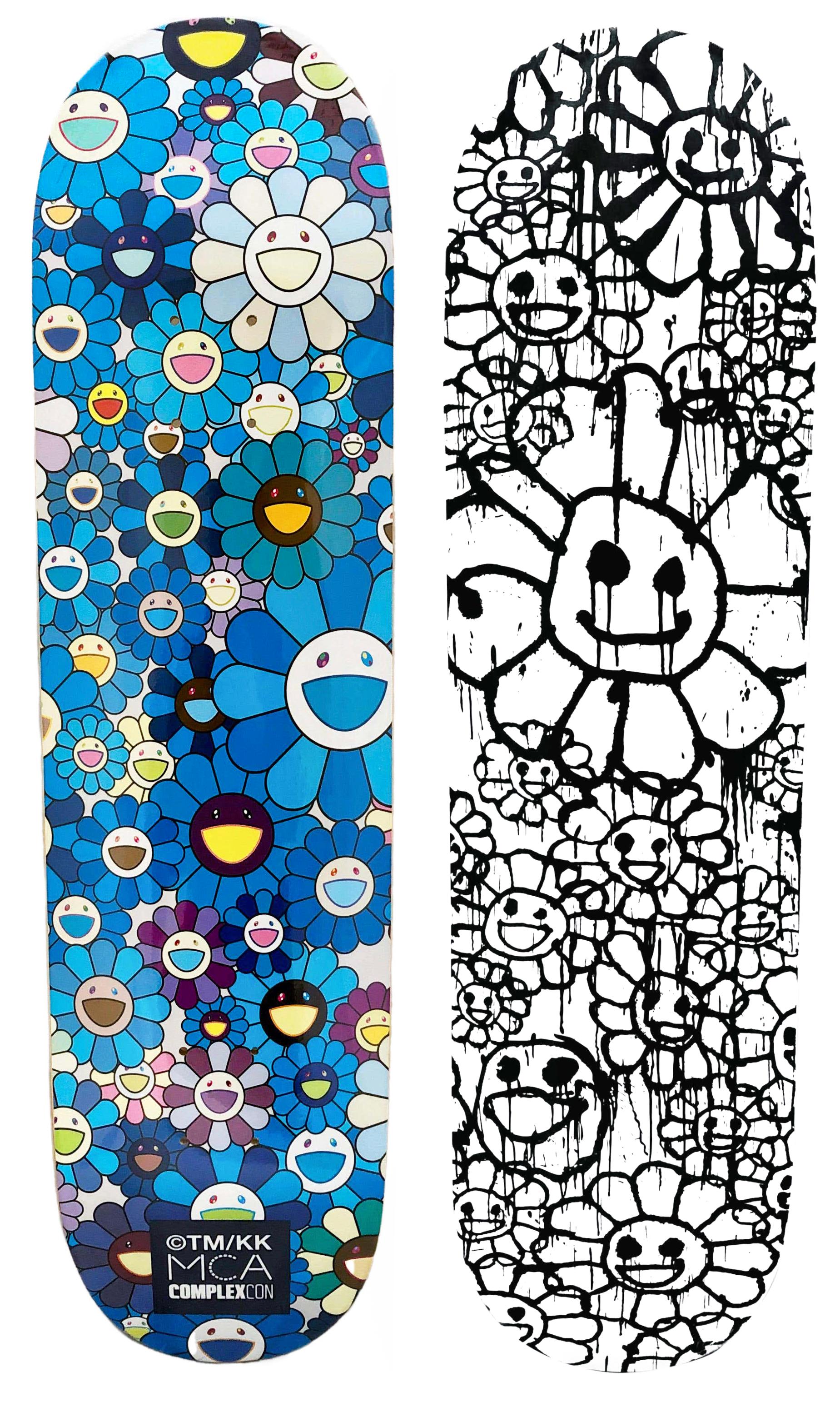
Takashi Murakami Flowers Skateboard Decks (set of 2 works): The black & white deck marks a collaboration between Takashi Murakami and his friend, the rising Japanese artist 'Madsaki' (bio below). The impression is an urban twist on Takashi Murakami’s otherwise highly polished flowers motif - a beautiful juxtaposition between two very different styles from two masters of their craft. This limited work was published by Murakami’s Kaikai Kiki Gallery Japan in 2017. The blue was published circa 2017 in conjunction with the Murakami exhibit: The Octopus Eats Its Own Leg, MCA Chicago. A brilliant set that makes for vibrant, one of a kind wall-art that hangs with ease. Medium: Silkscreen on 2 individual Maple Wood skateboard decks. Crisp colors. Dimensions: 8.0 x 31 inches (20.5 x 79 cm) Condition: each housed in its original packaging; excellent overall condition. Each from a sold out limited edition of unknown; stamped by the artist on the reverse of each. Perhaps Murakami's most iconic motif, these candy-colored, smiling flowers came into the artist's work when he was preparing for his entrance exams for the Tokyo National University of Fine Arts, and he embraced the form over nine years teaching prep-school students to draw flowers. One of the most acclaimed artists to emerge from postwar Asia, Takashi Murakami—“the Warhol of Japan”—is known for his contemporary Pop synthesis of fine art and popular culture, particularly his use of a boldly graphic and colorful anime and manga cartoon style. MADSAKI (b. Japan 1974) Joining Murakami has led to a rapid evolution of Madsaki. Now with three Kaikai exhibitions under his belt––Hickory Dickory Dock; Here Today, Gone Tomorrow; and MADSAKI Says “Yo! snipe1 & UFO907, Get Your Asses Over Here!” Madsaki has made a firm imprint on the Murakami canon. In his introduction to Madsaki’s second solo exhibit, Here Today, Gone Tomorrow from 2017, Murakami jokingly points out how his direction and guidance successfully shaped Madsaki’s work. While the debt Madsaki owes to Murakami is patently clear, in an abrupt turnabout it appears that the apprentice guides the master in some ways as well...
Category

21st Century and Contemporary Pop Art Sculptures

Materials

Wood, Lithograph, Screen

Takashi Murakami Skateboard Deck (Murakami Flowers)
By Takashi Murakami
Located in NEW YORK, NY
Takashi Murakami Flowers Skateboard Deck: A collaboration between Takashi Murakami and his friend, the rising Japanese artist 'Madsaki' (bio below). The impression is an urban twist...
Category

21st Century and Contemporary Pop Art Animal Prints

Materials

Wood, Lithograph, Screen

Takashi Murakami Flowers Skateboard Decks (Set of 2)
By Takashi Murakami
Located in NEW YORK, NY
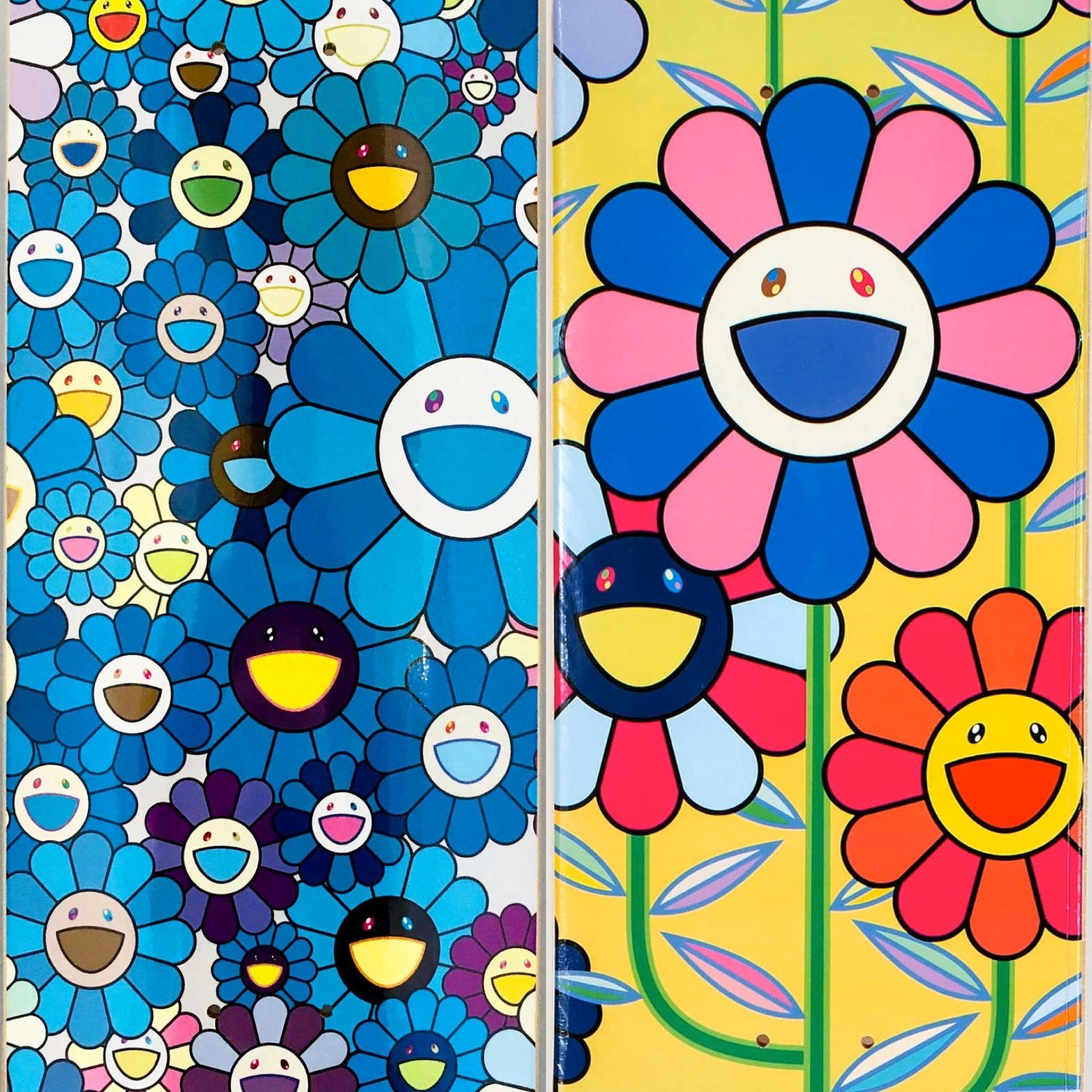
Takashi Murakami Flowers Skateboard Decks 2017 & 2019: set of 2 works: A vibrant set of Takashi Murakami wall art produced as a limited series in conjunction with the 2017 Murakami ...
Category

1980s Pop Art Prints and Multiples

Materials

Wood, Screen, Mixed Media, Lithograph
Andy Warhol The Souper Dress (Andy Warhol Campbells)
By Andy Warhol
Located in NEW YORK, NY
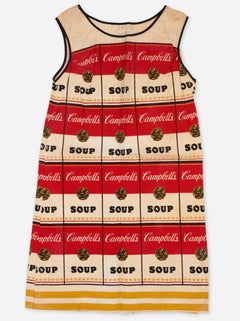
Andy Warhol The Souper Dress c. 1965-1967: Inspired by Andy Warhol’s Campbell’s Soup Cans, this dress was sold by the Campbell’s Soup Company in the late 19...
Category

1960s Pop Art Prints and Multiples

Materials

Lithograph, Paper, Screen

Futura 2000 Lee Quinones Dondi White Celebrating 15 Years Above Ground (7 works)
By Futura
Located in NEW YORK, NY
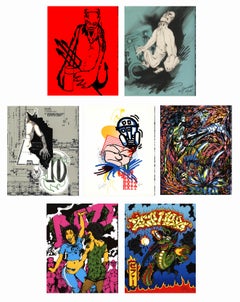
Dondi White, Futura, Lee Quinones, Crash, Daze, Lady Pink & Zephyr: Celebrating 15 Years Above Ground (1995): This rare, complete portfolio of 7 hand-signed limited edition screen-prints, was published on the occasion of the 1995 exhibition, Celebrating 15 Years Above Ground: a historic event exploring the evolution of 1980’s New York graffiti legends: Crash, Daze, Dondi, Futura, Lee Quinones, Lady Pink, and Zephyr. The seldom seen complete set of 7 works accompanied by both original portfolio covers, makes for a standout addition to any 1980’s New York graffiti collection. Medium: 7 individual screen-prints in colors on fine, deckle-edged Stonehenge paper; plus a screen-printed portfolio cover on heavy matte paper. 1995. Each work individually measures: 14 x 11 inches (35.6 x 27.9 cm). Each hand-signed & numbered in pencil by the respective artists from an edition of 100 (5 works signed & numbered frontside; with Futura & Lady Pink signed & numbered on the reverse). Condition: Prints: Some very minor signs of handling; rubbing on the right lower edge of Zephyr; in otherwise very good overall vintage condition as pictured. Superb overall print quality & color separation. Fine archival paper. Portfolio casing (last image) contains some minor signs of aging & handling. Collections: The Smithsonian National Museum of African American History and Culture. Dondi White: Dondi was an American graffiti artist best known for his dynamic lettering and stick figures. His work, whether painted on canvas or on walls, is characterized by a dynamic energy and explosive use of color. Dondi became associated with a group of legendary artists working in the East Village, including Futura, Keith Haring, and Jean-Michel Basquiat. His canvas works reiterated the lettering, symbolic icons, and stick figures that were his signature marks on the streets, while his later work from the 1990s included collages that juxtaposed pencil drawings with blueprints of the subway system—which had previously served as his canvas. Futura: Futura 2000 is a contemporary American graffiti artist. Over the course of his career, he transitioned from making New York-based subway graffiti in the early 1970s, to exhibiting at Fun Gallery in the 1980s alongside major artists such as Jean-Michel Basquiat, Keith Haring, and Kenny Scharf. He went on to collaborate with the punk band The Clash, designing their album art and performing live graffiti during their concerts. Today, McGurr’s work can be found in the collections of the Museo de Arte Moderna di Bologna, the Musée de Vire in France, and the Museum of the City of New York. Lee Quinones: Lee Quinones is an American-Puerto Rican artist known for the graffiti he made on New York subway cars during the 1970s and 1980s. Quinones addressed political and cultural issues through his graffiti, with quotes such as “Earth is Hell...
Category

1990s Pop Art Abstract Prints

Materials

Screen, Lithograph

You May Also Like

Fin DAC Quansho Redux Screenprint Edition of only 2 Signed and Numbered Street
Located in Draper, UT
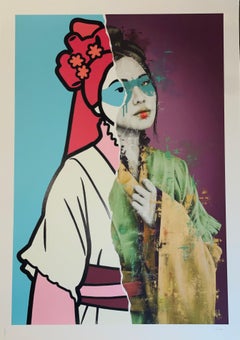
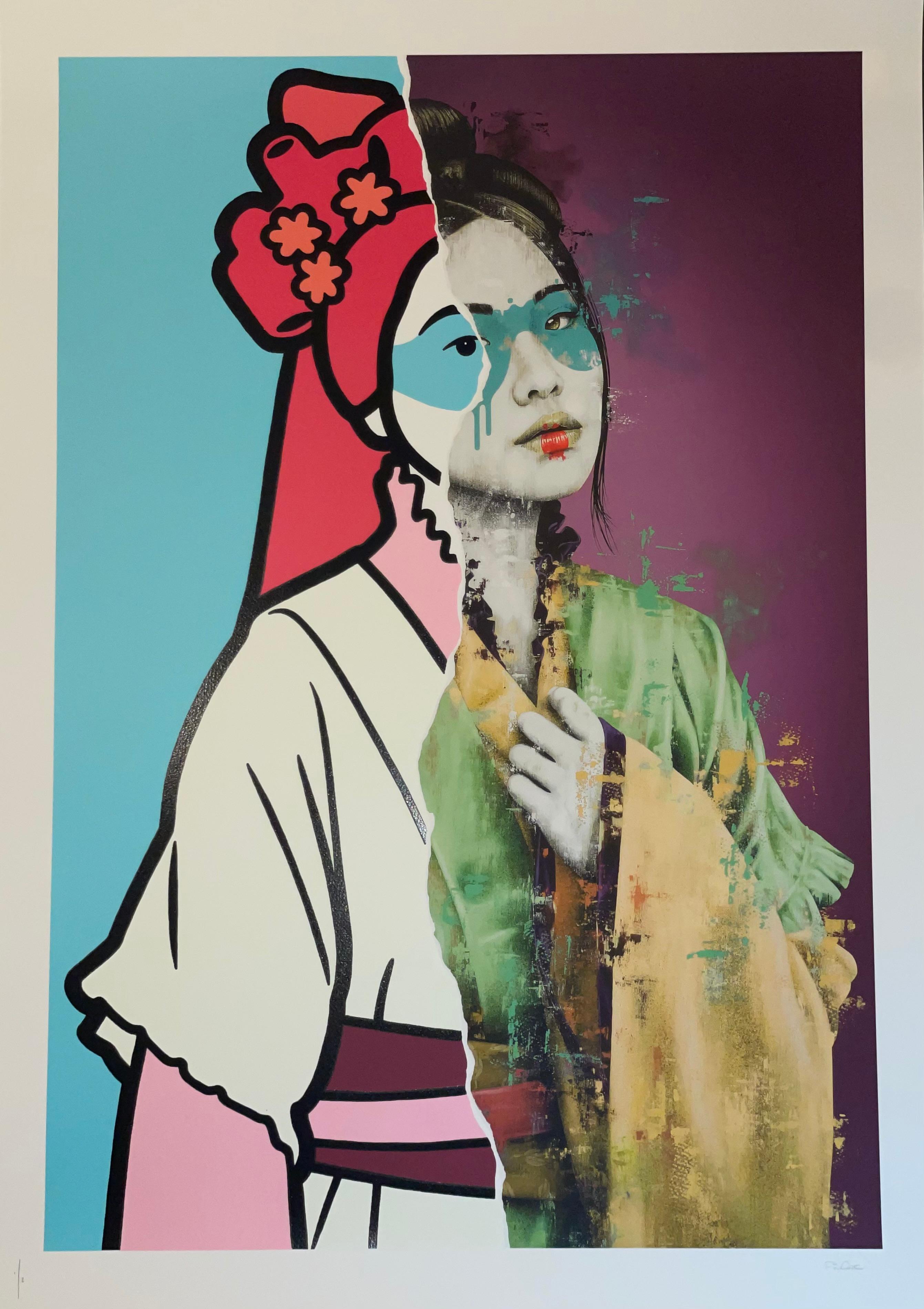
Born in Ireland and now based between Dublin and London, Fin DAC spends much of the time on the road, actively working throughout the world. Through his work, which he describes as “...
Category

2010s Pop Art Portrait Prints

Materials

Lithograph, Screen

Blue Face
By Roy Lichtenstein
Located in New York, NY
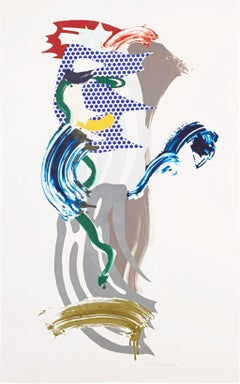
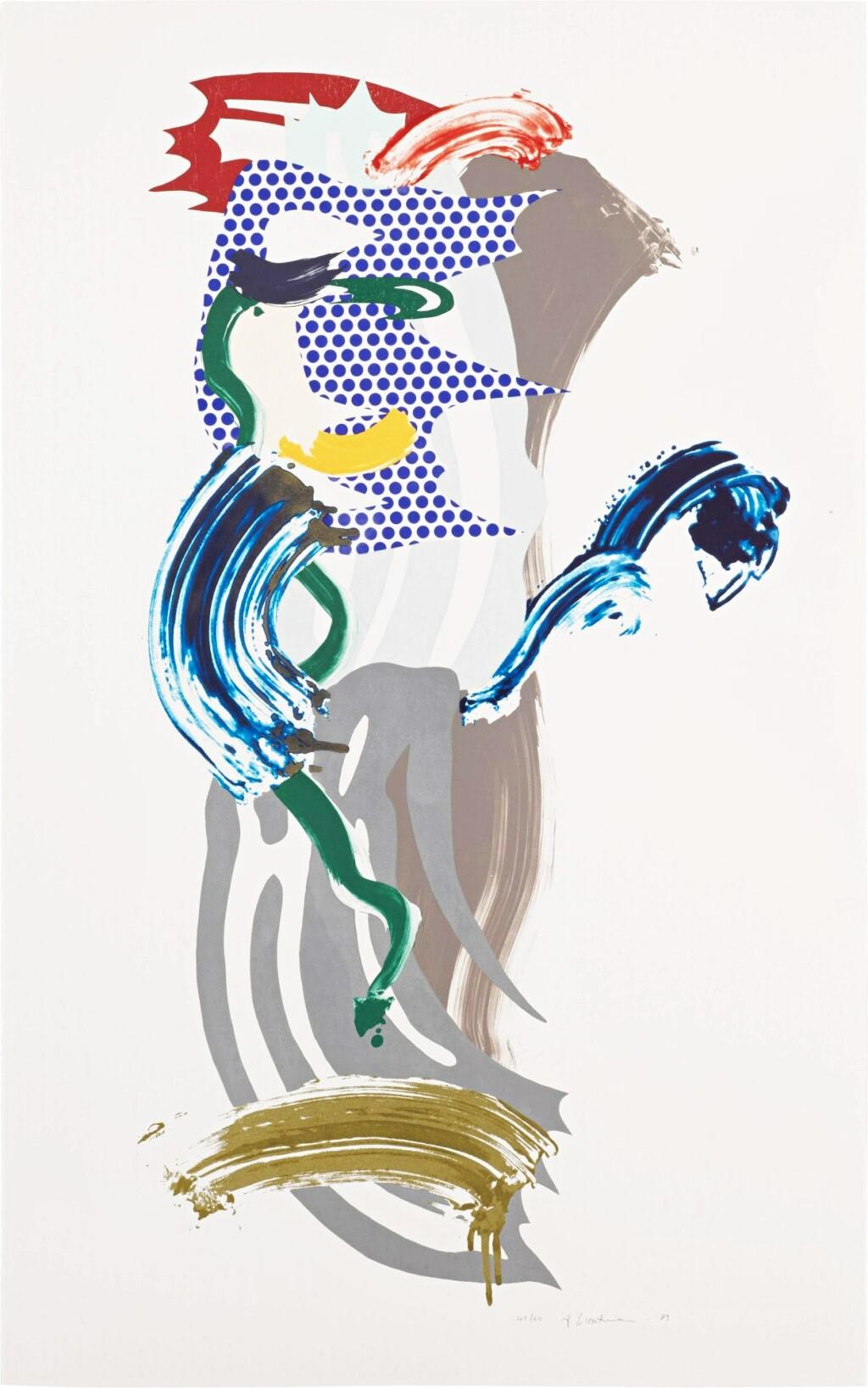
A stunning example of abstracted imagery easily identifiable as the work of Roy Lichtenstein, Blue Face was created by the artist in 1989 as a truly mixed me...
Category

20th Century Pop Art Abstract Prints

Materials

Lithograph, Screen, Woodcut

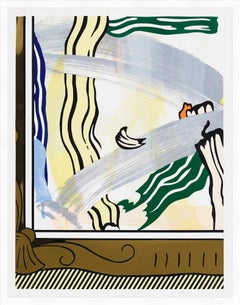
Painting in Gold Frame
By Roy Lichtenstein
Located in Aventura, FL
From the Paintings series. Woodcut, Lithograph, screen print and collage on Arches 88 paper. Hand signed, dated and numbered by Roy Lichtenst...
Category

1980s Pop Art Portrait Prints

Materials

Lithograph, Screen, Woodcut, Paper

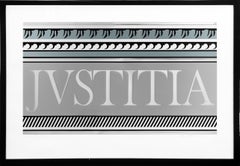
ENTABLATURE XA
By Roy Lichtenstein
Located in Aventura, FL
From the Entablature series. Screenprint, lithograph, and collage with embossing on Rives BFK paper. Hand signed and dated in pencil, lower right by Roy Lichtenstein. Numbered 17/1...
Category

1970s Pop Art Portrait Prints

Materials

Paper, Lithograph, Screen

Joe Tilson British Pop Art Screenprint, Color Lithograph 4 Seasons 4 Elements
By Joe Tilson
Located in Surfside, FL
Silkscreen screenprint or Lithograph Hand signed and numbered. An esoteric, mystical, Kabbala inspired print with Hebrew as well as other languages. Joseph Charles Tilson RA (born 2...
Category

1970s Pop Art Abstract Prints

Materials

Screen, Lithograph

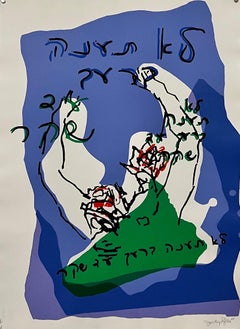
Judy Rifka Abstract Expressionist Contemporary Lithograph Hebrew 10 Commandment
By Judy Rifka
Located in Surfside, FL
Judy Rifka (American, b. 1945) 44/84 Lithograph on paper titled "Thou Shalt Not Bear False Witness against Thy Neighbor"; Depicting an abstract composition in blue, green, red and black tones with Hebrew script. Judaica interest. (I have seen this print described as a screenprint and as a lithograph) Hand signed in pencil and dated alongside an embossed pictorial blindstamp of a closed hand with one raised index finger. Solo Press. From The Ten Commandments Kenny Scharf; Joseph Nechvatal; Gretchen Bender; April Gornik; Robert Kushner; Nancy Spero; Vito Acconci; Jane Dickson; Judy Rifka; Richard Bosman and Lisa Liebmann. Judy Rifka (born 1945) is an American woman artist active since the 1970s as a painter and video artist. She works heavily in New York City's Tribeca and Lower East Side and has associated with movements coming out of the area in the 1970s and 1980s such as Colab and the East Village, Manhattan art scene. A video artist, book artist and abstract painter, Rifka is a multi-faceted artist who has worked in a variety of media in addition to her painting and printmaking. She was born in 1945 in New York City and studied art at Hunter College, the New York Studio School and the Skowhegan School of Painting and Sculpture in Maine. Rifka took part in the 1980 Times Square Show, (Organized by Collaborative Projects, Inc. in 1980 at what was once a massage parlor, with now-famous participants such as Jenny Holzer, Nan Goldin, Keith Haring, Kenny Scharf, Jean-Michel Basquiat, and Kiki Smith, the roster of the exhibition reads like a who’s who of the art world), two Whitney Museum Biennials (1975, 1983), Documenta 7, Just Another Asshole (1981), curated by Carlo McCormick and received the cover of Art in America in 1984 for her series, "Architecture," which employed the three-dimensional stretchers that she adopted in exhibitions dating to 1982; in a 1985 review in the New York Times, Vivien Raynor noted Rifka's shift to large paintings of the female nude, which also employed the three-dimensional stretchers. In a 1985 episode of Miami Vice, Bianca Jagger played a character attacked in front of Rifka's three-dimensional nude still-life, "Bacchanaal", which was on display at the Museum of Art Fort Lauderdale. Rene Ricard wrote about Rifka in his influential December 1987 Art Forum article about the iconic identity of artists from Van Gogh to Jean-Michel Basquiat and Keith Haring, The Radiant Child.The untitled acrylic painting on plywood, in the collection of the Honolulu Museum of Art, demonstrates the artist's use of plywood as a substrate for painting. Artist and writer Mark Bloch called her work "imaginative surfaces that support experimental laboratories for interferences in sensuous pigment." According to artist and curator Greg de la Haba, Judy Rifka's irregular polygons on plywood "are among the most important paintings of the decade". In 2013, Rifka's daily posts on Facebook garnered a large social media audience for her imaginative "selfies," erudite friendly comments, and widely attended solo and group exhibitions, Judy Rifka's pop art figuration is noted for its nervous line and frenetic pace. In the January 1998 issue of Art in America, Vincent Carducci echoed Masheck, “Rifka reworks the neo-classical and the pop, setting all sources in quotation for today’s art-world cognoscenti.” Rifka, along with artists like David Wojnarowicz, helped to take Pop sensibility into a milieu that incorporated politics and high art into Postmodernism; Robert Pincus-Witten stated in his 1988 essay, Corinthian Crackerjacks & Passing Go that "Rifka’s commitment to process and discovery, doctrine with Abstract Expressionist practice, is of paramount concern though there is nothing dogmatic or pious about Rifka’s use of method. Playful rapidity and delight in discovery is everywhere evident in her painting." In 2016, a large retrospective of Rifka's art was shown at the Jean-Paul Najar Foundation in Dubai. In 2017, Gregory de la Haba presented a Rifka retrospective at the Amstel Gallery in The Yard, a section of Manhattan described as "a labyrinth of small cubicles, conference rooms and small office spaces that are rented out to young entrepreneurs, professionals and hipsters". In 2019 her video Bubble Dancers New Space Ritual was selected for the International Istanbul Bienali. Alexandra Goldman Talks To Judy Rifka About Ionic Ironic: Mythos from the '80s at CORE:Club and the Inexistence of "Feminist Art" Whitehot Magazine of Contemporary Art. She was included in "50 Contemporary Women Artists", a book comprising a refined selection of current and impactful artists. The foreword is by Elizabeth Sackler of the Brooklyn Museum’s Sackler Center for Feminist Art. Additional names in the book include sculptor and carver Barbara Segal...
Category

1980s Pop Art Abstract Prints

Materials

Lithograph, Screen