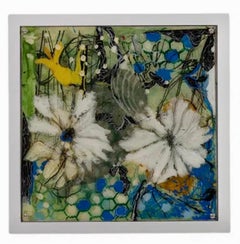
Want more images or videos?
Request additional images or videos from the seller
1 of 8
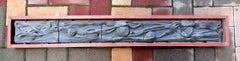
UnknownArchitectural Ceramic Relief Frieze1975
1975
$850List Price
About the Item
- Creation Year:1975
- Dimensions:Height: 5.52 in (14 cm)Width: 38.59 in (98 cm)
- Medium:
- Movement Style:
- Period:
- Condition:
- Gallery Location:Surfside, FL
- Reference Number:1stDibs: LU38210704892
About the Seller
4.9
Platinum Seller
Premium sellers with a 4.7+ rating and 24-hour response times
Established in 1995
1stDibs seller since 2014
1,858 sales on 1stDibs
Authenticity Guarantee
In the unlikely event there’s an issue with an item’s authenticity, contact us within 1 year for a full refund. DetailsMoney-Back Guarantee
If your item is not as described, is damaged in transit, or does not arrive, contact us within 7 days for a full refund. Details24-Hour Cancellation
You have a 24-hour grace period in which to reconsider your purchase, with no questions asked.Vetted Professional Sellers
Our world-class sellers must adhere to strict standards for service and quality, maintaining the integrity of our listings.Price-Match Guarantee
If you find that a seller listed the same item for a lower price elsewhere, we’ll match it.Trusted Global Delivery
Our best-in-class carrier network provides specialized shipping options worldwide, including custom delivery.You May Also Like
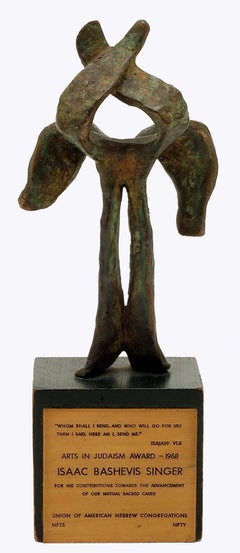
Bronze Sculpture to Isaac Bashevis Singer, Arts in Judaism Award signed Judaica
By Nathaniel Kaz
Located in New York, NY
Nathaniel Kaz
Bronze Sculpture to Isaac Bashevis Singer for Arts in Judaism Award, 1966
Bronze, Square wooden base, Metal tag
Signed and dated "66" to back of bronze portion of the w...
Category
1960s Abstract Expressionist Abstract Sculptures
Materials
Metal, Bronze
$10,000
H 8.75 in W 6 in D 6 in
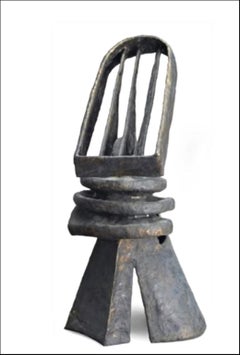
Maquette for Laureate (unique sculpture)
By Seymour Lipton
Located in New York, NY
Seymour Lipton
Maquette for Laureate, ca. 1968-1969
Nickel silver on monel metal
Unique
18 × 8 1/2 × 7 inches
Marlborough-Gerson Gallery, New York
Acquired from the above by the previous owner, 1969
thence by descent
Christie's New York: Monday, June 30, 2008 [Lot 00199]
Acquired from the above Christie's sale This unique sculpture by important Abstract Expressionist sculptor Seymour Lipton is a maquette of the monumental sculpture "Laureate" - one of Lipton's most iconic and influential works located on the Riverwalk in downtown Milwaukee, Wisconsin. Laureate is a masterpiece that was commissioned by the Allen-Bradley Company in memory of Harry Lynde Bradley and as an enhancement for the newly constructed Performing Arts Center. It is located on the east bank of the Milwaukee River at 929 North Water Street. The Bradley family in Milwaukee were renowned patrons of modernist sculpture, known for their excellent taste who also founded an eponymous sculpture park. For reference only is an image of the monumental "Laureate" one of Milwaukee's most beloved public sculptures. According to the Smithsonian, which owns a different unique variation of this work, "The full-size sculpture Laureate was commissioned by the Marcus Center for the Performing Arts in Milwaukee. In the initial drawings, Seymour Lipton combined details from the architectural plan with a wide variety of images, ranging from musical instruments to a lighthouse on the island of Tobago. He transformed the basic shapes from these sketches into a welded sculpture, which evokes a figure composed of columns, harp strings, and coiled rope. Lipton created this piece to celebrate achievement in the arts. The dramatic silhouette commands your attention, reflecting the title Laureate, which means worthy of honor and distinction. The final version of the piece is over twelve feet high and stands out against the pale, flat buildings of the arts center.,,"
Provenance
Marlborough-Gerson Gallery, New York
Acquired from the above by the previous owner, 1969
thence by descent
Christie's New York: Monday, June 30, 2008 [Lot 00199]
Acquired from the above Christie's sale
About Seymour Lipton:
Born in New York City in 1903, Seymour Lipton (1903-1986) grew up in a Bronx tenement at a time when much of the borough was still farmland. These rural surroundings enabled Lipton to explore the botanical and animal forms that would later become sources for his work. Lipton’s interest in the dialogue between artistic creation and natural phenomena was nurtured by a supportive family and cultivated through numerous visits to New York’s Museum of Natural History as well as its many botanical gardens and its zoos. In the early 1920s, with the encouragement of his family, Lipton studied electrical engineering at Brooklyn Polytechnic Institute and pursued a liberal arts education at City College. Ultimately, like fellow sculptor Herbert Ferber, Lipton became a dentist, receiving his degree from Columbia University in 1927. In the late 1920s, he began to explore sculpture, creating clay portraits of family members and friends.
In addition to providing him with financial security, dentistry gave Lipton a foundation in working with metal, a material he would later use in his artwork. In the early 1930s, though, Lipton’s primary sculptural medium was wood. Lipton led a comfortable life, but he was also aware of the economic and psychological devastation the Depression had caused New York. In response, he generally worked using direct carving techniques—a form of sculpting where the artist “finds” the sculpture within the wood in the process of carving it and without the use of models and maquettes. The immediacy of this practice enabled Lipton to create a rich, emotional and visual language with which to articulate the desperation of the downtrodden and the unwavering strength of the disenfranchised. In 1935, he exhibited one such early sculpture at the John Reed Club Gallery in New York, and three years later, ACA Gallery mounted Lipton’s first solo show, which featured these social-realist-inspired wooden works. In 1940, this largely self-taught artist began teaching sculpture at the New School for Social Research, a position he held until 1965.
In the 1940s, Lipton began to devote an increasing amount of time to his art, deviating from wood and working with brass, lead, and bronze. Choosing these metals for their visual simplicity, which he believed exemplified the universal heroism of the “everyman,” Lipton could also now explore various forms of abstraction. Lipton’s turn towards increasing abstraction in the 1940s allowed him to fully develop his metaphorical style, which in turn gave him a stronger lexicon for representing the horrors of World War II and questioning the ambiguities of human experience. He began his metal work with cast bronze sculptures, but, in 1946, he started welding sheet metal and lead. Lipton preferred welding because, as direct carving did with wood, this approach allowed “a more direct contact with the metal.”[ii] From this, Lipton developed the technique he would use for the remainder of his career: “He cut sheet metal, manipulated it to the desired shapes, then joined, soldered, or welded the pieces together. Next, he brazed a metal coating to the outside to produce a uniform texture.”[iii]
In 1950, Lipton arrived at his mature style of brazing on Monel metal. He also began to draw extensively, exploring the automatism that abstract expressionist painters were boasting at the time. Like contemporaries such as Jackson Pollock, Lipton was strongly influenced by Carl Jung’s work on the unconscious mind and the regenerative forces of nature. He translated these two-dimensional drawings into three-dimensional maquettes that enabled him to revise his ideas before creating the final sculpture.The forms that Lipton produced during this period were often zoomorphic, exemplifying the tension between the souls of nature and the automatism of the machine.
In the years following the 1950s, Lipton’s optimism began to rise, and the size of his work grew in proportion. The oxyacetylene torch—invented during the Second World War—allowed him to rework the surfaces of metal sculptures, thus eliminating some of the risks involved with producing large-scale finished works. In 1958, Lipton was awarded a solo exhibition at the Venice Biennale and was thus internationally recognized as part of a small group of highly regarded avant-garde constructivist sculptors. In 1960, he received a prestigious Guggenheim Award, which was followed by several prominent public commissions, including his heroic Archangel, currently residing in Lincoln Center’s David Geffen Hall.
A number of important solo exhibitions of his work followed at The Phillips Collection in Washington, DC (1964); the Milwaukee Art Center and University of Wisconsin, Milwaukee (1969); the Virginia Museum of Fine Arts in Richmond (1972); the Everson Museum in Syracuse, NY (1973); the Herbert E. Johnson Museum of Art of Cornell University in Ithaca, NY (1973); the National Collection of Fine Arts, Smithsonian Institution (now the Smithsonian American Art Museum) in Washington, DC (1978); and a retrospective in 1979 at The Jewish Museum in New York. In 1982 and 1984 alone, two exhibitions of his sculpture, organized respectively by the Mint Museum (Charlotte, NC) and the Hillwood Art Gallery of Long Island University (Greenvale, NY), traveled extensively across museums and university galleries around the nation. In 2000, the traveling exhibition An American Sculptor: Seymour Lipton was first presented by the Palmer Museum of Art of Pennsylvania State University in University Park. Most recently, in 2009, the Ackland Art Museum in Chapel Hill, NC mounted The Guardian and the Avant-Garde: Seymour Lipton’s Sentinel II in Context.
Since 2004, Michael Rosenfeld Gallery has been the exclusive representative of the Estate of Seymour Lipton and has presented two solo exhibitions of his work—Seymour Lipton: Abstract Expressionist Sculptor (2005) and Seymour Lipton: Metal (2008). In 2013, Michael Rosenfeld Gallery presented Abstract Expressionism, In Context: Seymour Lipton, which included twelve major sculptures by the artist, along with works by Charles Alston, Norman Bluhm, Beauford Delaney, Willem de Kooning, Jay DeFeo, Michael Goldberg, Adolph Gottlieb, Hans Hofmann, Lee Krasner, Norman Lewis, Conrad Marca-Relli, Boris Margo, Alfonso Ossorio, Richard Pousette-Dart, Milton Resnick, Charles Seliger...
Category
1960s Abstract Expressionist Abstract Sculptures
Materials
Metal, Silver
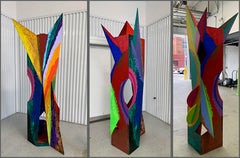
STOI V, unique dazzling large indoor painted wood sculpture by important artist
By Alexander Liberman
Located in New York, NY
Alexander Liberman
STOI V, 1986
Wood with paper and paint
97 1/2 × 28 × 37 inches
This work is hand signed twice by Alexander Liberman:
Signed on the side as well as the underside an...
Category
1980s Abstract Expressionist Abstract Sculptures
Materials
Wood, Oil, Laid Paper, Mixed Media
$45,000
H 97.5 in W 28 in D 37 in
Voulkos, Ceramic Sculptural bowl hand signed by renowned sculptor and ceramicist
By Peter Voulkos
Located in New York, NY
Peter Voulkos
Ceramic Sculptural Dish, ca. 1985
Sculpted ceramic
Hand-signed by artist, Incised signature on the base.
1.5 x 11.5 inches
This charger plate by Voulkos features a Gree...
Category
1980s Abstract Expressionist Abstract Sculptures
Materials
Ceramic, Glaze, Mixed Media
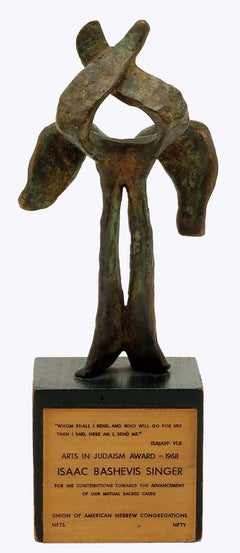
Nathaniel Kaz - Sculpture for Isaac Bashevis Singer Arts in Judaism Award Signed
By Nathaniel Kaz
Located in New York, NY
Nathaniel Kaz
Bronze Sculpture to Isaac Bashevis Singer for Arts in Judaism Award, 1966
Bronze, Square wooden base, Metal tag
Signed and dated "66" to back of bronze portion of the w...
Category
1960s Abstract Expressionist Abstract Sculptures
Materials
Metal, Bronze
$10,000
H 8.75 in W 6 in D 6 in
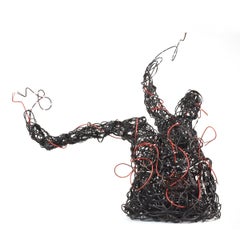
Danielle Bodine "Medusa Tree" Mixed Media, Abstract Free Form Signed
Located in Detroit, MI
SALE ONE WEEK ONLY
"Medusa Tree" is a free-flowing sculpture of cane that suggests a figure either emerging from or descending into a tangle of twisting lines. Several parts are painted red or blue or stripped that gives a contrast to the black structure and a spark of energy shooting forth. This piece seems experimental from her more conservative pieces that can be easily identified as basketry, paper forms and shaped objects.
Danielle Bodine...
Category
1990s Abstract Expressionist Abstract Sculptures
Materials
Mixed Media
$3,500
H 34 in W 34 in D 24 in
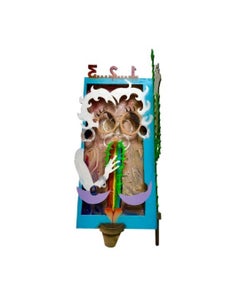
How Many Licks Betty?
Located in West Hollywood, CA
Betty Boop is a cheeky one-of-a-kind mixed media artwork that reimagines the classic pop culture icon through a contemporary and surrealist lens. Inspired by a vintage Betty Boop com...
Category
21st Century and Contemporary Abstract Expressionist Abstract Sculptures
Materials
Wood, Mixed Media
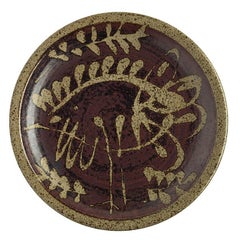
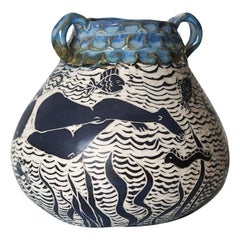
Creation Myth, Hand made Ceramic Vase Sculpture
Located in Miami Beach, FL
This vessel was built using the traditional and ancient methods of coil building. Through this meditative process, ancestral connections are drawn. The composition wraps around the f...
Category
2010s Abstract Expressionist Sculptures
Materials
Porcelain, Paint
Modernist Abstract Sculpture
Located in Milford, NH
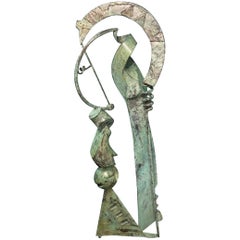
A wonderful large modernist abstract bronze sculpture with geometric shapes by American artist Rodger Allen Mack (1938-2002). Mack was born in Barberton, Ohio, graduated from the Cle...
Category
20th Century Abstract Expressionist Abstract Sculptures
Materials
Bronze
Union Leader
By Varujan Boghosian
Located in Milford, NH
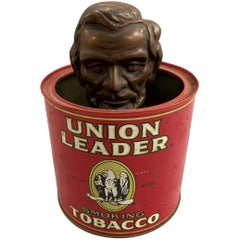
A fine abstract expressionist assemblage by American artist Varujan Boghosian (1926-2020). Boghosian was born in New Britain, CT and after serving in the United States Navy, he attended Central Connecticut Teachers College and the Vesper George School of Art in Boston. In 1953, he had a Fulbright grant to paint in Italy, and from 1956 to 1959, he worked with Josef Albers, geometric abstractionist, at Yale University where he earned both his BFA and MFA. Boghosian became a professor of sculpture at Dartmouth College in New Hampshire, and became primarily known for his assemblages in which he uses a variety of incongruous objects such as parts of weathered barn doors, antique dolls' heads, old leather, marbles, and ping-pong balls.
This three piece assemblage includes a Union Leader tobacco can...
Category
Late 20th Century Abstract Expressionist Mixed Media
Materials
Found Objects
More From This Seller
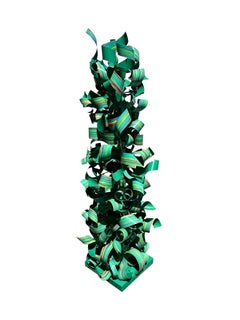
View AllHuge Dorothy Gillespie Colorful Abstract Expressionist Enamel Painted Sculpture
By Dorothy Gillespie
Located in Surfside, FL
Dorothy Gillespie (1920 – 2012)
Ribboned Image X
2001
Metal Ribbon Sculpture, Enamel on Aluminum with colorful striped green ribbons.
Dimensions...
Category
Early 2000s Abstract Expressionist Abstract Sculptures
Materials
Metal, Enamel
Architectural Ceramic Relief Frieze
Located in Surfside, FL
This is a very rare piece of Israeli Studio Ceramics art from the 70s. it has a patina of dust on it but I have left it as is. it is signed Sharir and dated 1975.
Studio pottery is ...
Category
1970s Abstract Expressionist Sculptures
Materials
Mixed Media
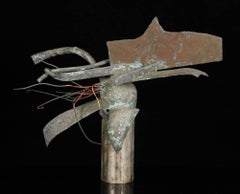
Brutalist Bronze Abstract Modernist Sculpture
Located in Surfside, FL
In the manner of Julio Gonzalez, mixed metal sculpture.
Neo-Dada Abstract Sculpture: Assemblages
Abstract sculpture followed a slightly different course. Rather than focusing on no...
Category
20th Century Abstract Expressionist Abstract Sculptures
Materials
Bronze, Copper
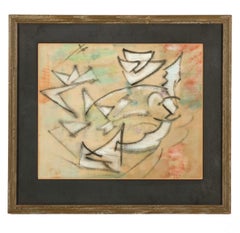
Ukrainian Expressionist Abstract Mixed Media Futurist Painting Ivan Kurach
By Ivan Kurach
Located in Surfside, FL
Ivan Kurach (Ukrainian, 1909-1968)
Genre: Expressionist
Subject: Geometric shapes
Medium: Mixed Media
Surface: Canvas
Signed bottom right
Frame: 17" X 19" Image: 11.5" X 14"
An ori...
Category
Mid-20th Century Abstract Expressionist Abstract Paintings
Materials
Canvas, Mixed Media
Large Calman Shemi Art Textile Stendhal #2 Israeli Soft Tapestry Wall Hanging
By Calman Shemi
Located in Surfside, FL
this is a bright vibrant abstract wall hanging tapestry by Calman Shemi. I believe the material is wool with a linen backing but i am not positive. it can also be used as a floor rug...
Category
1980s Abstract Expressionist Mixed Media
Materials
Mixed Media
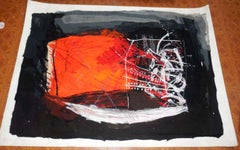
Eco Feminist Mixed Media Botanic Painting Mira Lehr Miami Abstract Expressionist
By Mira Lehr
Located in Surfside, FL
Mira Tager Lehr (American, 1936-2023),
Acrylic on canvas painting
Interrupted Cell Formation series
Circa 2008-2009.
Mixed media technique incorporating organic forms, floral motifs...
Category
Early 2000s Abstract Expressionist Abstract Paintings
Materials
Canvas, Mixed Media, Acrylic