Items Similar to "Moche Owl Pot, " Animalic Ceramic Vessel created in Pre-Columbian Peru
Want more images or videos?
Request additional images or videos from the seller
1 of 9
Unknown"Moche Owl Pot, " Animalic Ceramic Vessel created in Pre-Columbian PeruUnknown
Unknown
$8,750
£6,611.11
€7,579.94
CA$12,211.63
A$13,287.18
CHF 7,035.40
MX$159,853.89
NOK 89,333.90
SEK 81,734.26
DKK 56,632.70
About the Item
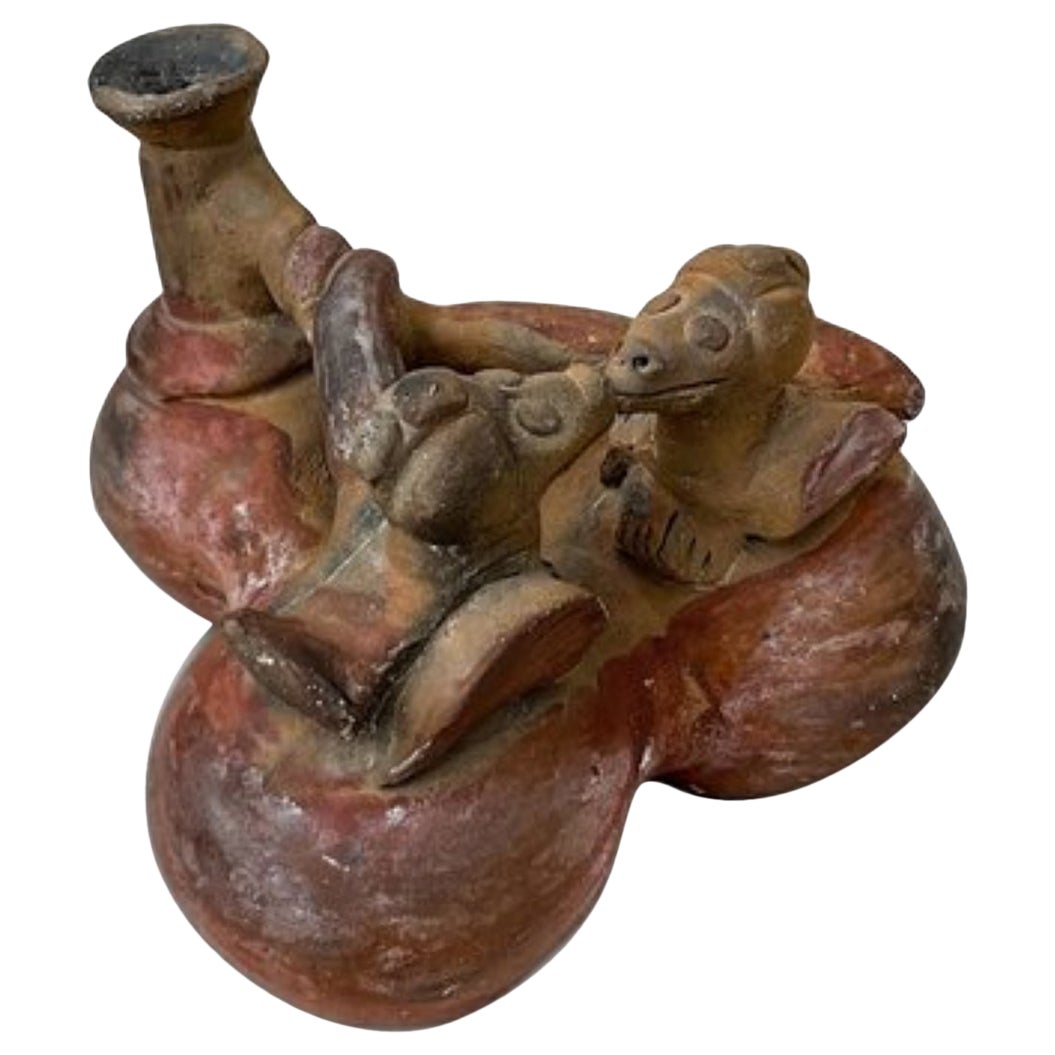
This piece is a pot made by an unknown artist in Pre-Columbian Peru. It takes the shape of an owl and has a circular handle with the opening on its back. This pot is a light beige and red ocher color.
8" x 6" x 4 3/4"
Essay from Helene Bernier: "Moche society flourished on the north Peruvian coastal desert between the first and the eighth centuries A.D., in valleys irrigated by rivers flowing westward from the Andes to the Pacific Ocean. The Moche were innovators on many political, ideological, and artistic levels. They developed a powerful elite and specialized craft production, and instituted labor tribute payments. They elaborated new technologies in metallurgy, pottery, and textile production, and finally, they created an elaborate ideological system and a complex religious iconography.
Moche skilled ceramists produced a great variety of exquisitely decorated vessels. The decoration is sometimes painted on the smooth surface of vessels; other times it is tridimensional, forming the vessel shape itself. Occasionally, the message takes both a painted and sculpted form, one completing the other . Nearly all decorated vessels are slip-painted and bichrome, with red decoration on a white/cream background. White on red and black postfire paint are also present to a lesser extent. While painted motifs are generally simple on three-dimensional vessels, two-dimensional decoration sometimes takes the shape of finely painted, highly complex narrative scenes.
Moche decorated vessels were mold-made and, despite their diversity, reveal standardized shapes and decoration. Nine basic shapes are reported in the literature. Stirrup-spout bottles and flaring bowls are the privileged supports on which artists expressed figurative, complex painted scenes. Other shapes are neck and neckless jars, dippers, bowls, neck bowls, cups, and crucibles.
Moche ceramic art represents an infinite variety of subjects. Common zoomorphic figures include camelids, deer, felines, foxes, rodents, monkeys, bats, sea lions, as well as a wide array of birds, fish, shells, arachnids, and reptiles. These animals are represented realistically, hybridized, or anthropomorphized. Corn, squash, tubers, and beans are common among a great diversity of plants. Among human and anthropomorphic figures, rulers, warriors, prisoners, priests, healers, and fanged deities are recognizable, as well as deformed and skeletal individuals. Historical individuals are also represented in realistic, three-dimensional portrait vessels . While animals are often anthropomorphized or hybridized, humans often have supernatural attributes.
All these figures are either represented alone or interacting in a variety of actions in diverse narrative scenes. Although the possibilities of creating different scenes from all existing Moche figures are almost limitless, major trends can be recognized in narrative art and representations are limited to a small number of recurring and interrelated themes. For example, deer and seal hunts, sacrifice ceremonies, warriors in battle or moving in processions, and messengers running in line are common themes in Moche ceramic art.
Scholars do not agree about the various functions of Moche decorated ceramics. Until recently, these works of art were thought to be essentially funerary offerings, as they were documented in a great number of burials. Indeed, fineware is the offering par excellence in burials of any social status as a marker of Moche social identity. Decorated vessels were imbued with a strong funerary dimension. However, many vessels uncovered in Moche burials show traces of abrasion, chipping, or repairs.
Recent excavations in residential areas, notably in the Moche and Santa Valleys in projects carried out by Universidad Nacional de Trujillo and Université de Montréal, revealed that finely decorated pottery is not only present but abundant in Moche domestic compounds. Many decorated vessels were not produced exclusively for a funerary purpose. Whereas many of them were ultimately placed in burials or made especially for the dead, most were produced to be used by the living in everyday life. The access to decorated vessels by the living was not unrestricted; some categories of vessels, as well as depictions of some religious themes, were exclusively destined for burial with the dead or for use in elite ritual performances. However, a great variety of vessels, many of them identical to those found in graves, were destined for domestic use.
Vessels decorated with religious themes were not merely indicators of social status at the site of Moche. They were strategically used at a household level, as tools to further political ambitions and communicate membership within groups. As evidenced by their iconographic content and the location in which they were abandoned, decorated vessels were an integral part of household-level rituals, meetings, and other status-building activities like feasts, where they were displayed, used, accidentally broken, and in some cases given away along with food and corn beer."
- Creation Year:Unknown
- Dimensions:Height: 8 in (20.32 cm)Width: 6 in (15.24 cm)Depth: 4.75 in (12.07 cm)
- Medium:
- Period:
- Condition:item in excellent condition for its age, small holes on face of owl, some fading, chipping, and discoloration of slip coloring.
- Gallery Location:Milwaukee, WI
- Reference Number:Seller: 2117d1stDibs: LU60532342931
About the Seller
4.9
Gold Seller
Premium sellers maintaining a 4.3+ rating and 24-hour response times
Established in 1966
1stDibs seller since 2017
453 sales on 1stDibs
Typical response time: 1 hour
- ShippingRetrieving quote...Shipping from: Milwaukee, WI
- Return Policy
More From This Seller
View All"Pre-Columbian Bowl (repaired), " Red
Brown Painted Ceramic
Located in Milwaukee, WI
This Pre-Columbian bowl featuers red marks on a light orange ground. It is 9" in diameter and has been previously repaired.
Category
15th Century and Earlier Tribal Sculptures
Materials
Ceramic
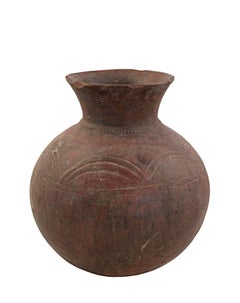
"Ceramic Pot - Mossi, Burkina Fasso (Farmer
s Water Jug), " created in Africa
Located in Milwaukee, WI
This ceramic pot was made by an unknown Mossi artist in Burkina Fasso. It was used as a farmer's water jug. The Mossi are a people in central Burkina Faso, living mostly in the villa...
Category
1930s Folk Art Sculptures
Materials
Ceramic
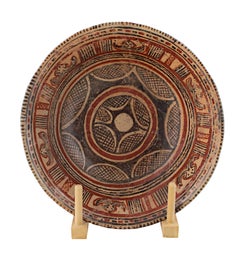
"Pre-Columbian Chinesco Bowl, " Glazed Ceramic circa 300 B.C.
Located in Milwaukee, WI
This Chinesco bowl was from a pre-Columbian society from around 300 BCE. It features abstract, geometric designs in red and black. The diameter is 8".
Category
15th Century and Earlier Abstract Geometric Abstract Sculptures
Materials
Ceramic, Glaze
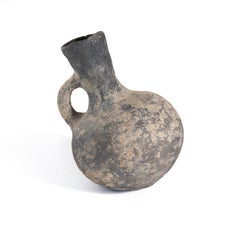
Jerusalem, Perfume Vessel, Iron Age
Located in Milwaukee, WI
4x3
Ceramic
Ancient clay perfume jug from the Iron Age discovered in Jerusalem.
Category
15th Century and Earlier Sculptures
Materials
Ceramic
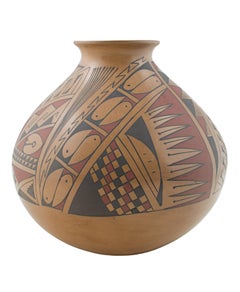
"Casas Grandes Pottery, " a Ceramic Pot signed with Benito Morass
By Benito Morass
Located in Milwaukee, WI
"Casas Grandes Pottery" is a signed hand-built ceramic vessel with slip glaze created by Benito Morass. It features an abstract geometric design ...
Category
1990s Abstract Geometric Sculptures
Materials
Ceramic, Slip, Glaze
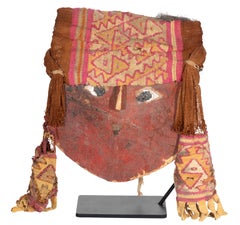
"Chancay" (Pre-Columbian) Mummy Mask wood face peruvian folk red human folk art
Located in Milwaukee, WI
The Peruvian Chancay (pre-Columbian) Mummy Bundle mask, from around 1600 is made of painted wood, textiles, and human hair. According to the Walters Art Museum:
Andean cultures are ...
Category
Early 1600s Folk Art More Art
Materials
Textile, Wood
You May Also Like
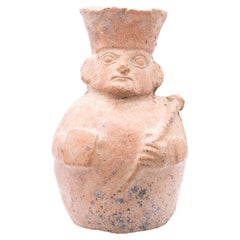
Peru Pre Inca 100-700 Ad Moche Pre Columbian Personified Vessel in Earthenware
Located in Miami, FL
Rare pre Hispanic Moche culture, pre-Inca earthenware vessel.
A beautiful interesting piece, created in the southern Peru region around the 100-700 AD by the Moche culture. This rare early period...
Category
Antique 15th Century and Earlier Peruvian Pre-Columbian Antiquities
Materials
Earthenware, Pottery
$1,645 Sale Price
30% Off
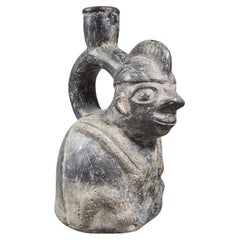
Pre-Columbian Chimu Terracotta Figural Vessel with Stirrup Spout, Peru
Located in West Hollywood, CA
This remarkable Pre-Columbian Chimu terracotta vessel is a striking example of ancient Andean ceramic artistry, originating from coastal Peru and dating to approximately 900–1470 AD. The vessel features a distinctive multi-chambered form with a traditional stirrup spout, a hallmark of Chimu pottery...
Category
Antique 15th Century and Earlier Peruvian Pre-Columbian Vases
Materials
Terracotta, Pottery

Pre-Columbian Chavín vessel, 900 BC – 300 BC.
Located in Madrid, ES
Pre-Columbian vessel from the Chavín culture in the form of a seated man, probably a hunter, with an animal on his back.
Chavín art is known for its complex iconography and mythical ...
Category
Antique 15th Century and Earlier South American Tribal Ceramics
Materials
Earthenware
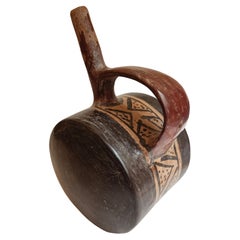
Rare Pre-Columbian Nasca Ceramic Drum Vessel South American art
Located in London, GB
Rare Pre-Columbian Nasca Ceramic Drum Vessel
Culture: Nasca (Nazca), South Coast of Peru
Period: ca. 200–600 CE (Early Intermediate Period)
Material: Burnished ceramic with painted ...
Category
Antique 15th Century and Earlier Peruvian Antiquities
Materials
Ceramic
Peru Pre-Inca 900 / 1470 AD Chimu Pre Columbian Vessel In Earthenware Pottery
Located in Miami, FL
A pre-Inca Chimu culture, pre Columbian vase in earth ware.
This beautiful little vessel vase, was created in the northern Peruvian region by the Chimu culture between the 900 / 1...
Category
Antique 15th Century and Earlier Peruvian Pre-Columbian Antiquities
Materials
Earthenware, Pottery
$416 Sale Price
30% Off
Moche Red Ware Pottery Vessel
Located in Coeur d
Alene, ID
Moche Red Ware Pottery Vessel with man figure. Moche Horizon of Peru, Circa 450 - 550 CE. In overall good condition, some chipping around the mouth of the narrow spout, and there’s a small spiderweb push on the back of the jar that appears to have resulted from a probe that penetrated the left side just below the figure (two small holes, one on the front upper left corner of the throne, and the other just around to the side, have been repaired). 6” x 4” x 6”. Ex. Hank Johnson Collection.
Hank Johnson was a geologist, and passionate collector of historical and ancient artifacts. Starting with relics and bottles from ghost towns, he later focused on Anasazi pottery...
Category
Antique 15th Century and Earlier Peruvian Native American Objects
Materials
Pottery