Items Similar to Moroccan, Fez or Meknes: Tall bowl (Jobbana) with geometric designs
Want more images or videos?
Request additional images or videos from the seller
1 of 4
UnknownMoroccan, Fez or Meknes: Tall bowl (Jobbana) with geometric designs
$5,750
£4,365.29
€5,032.47
CA$8,134.17
A$8,757.17
CHF 4,689.64
MX$105,520.81
NOK 59,170.21
SEK 54,150.30
DKK 37,604.62
About the Item
Provenance:
Collection of Emily Johnston De Forest and Robert Weeks De Forest, New York, by 1911-until 1942; thence by descent until 2018.
Literature:
Edwin Atlee Barber, Catalogue of the Mexican Maiolica Belonging to Mrs. Robert W. De Forest by The Hispanic Society of America, New York, 1911, p. 64, cat. no. 66 (no 1. only).
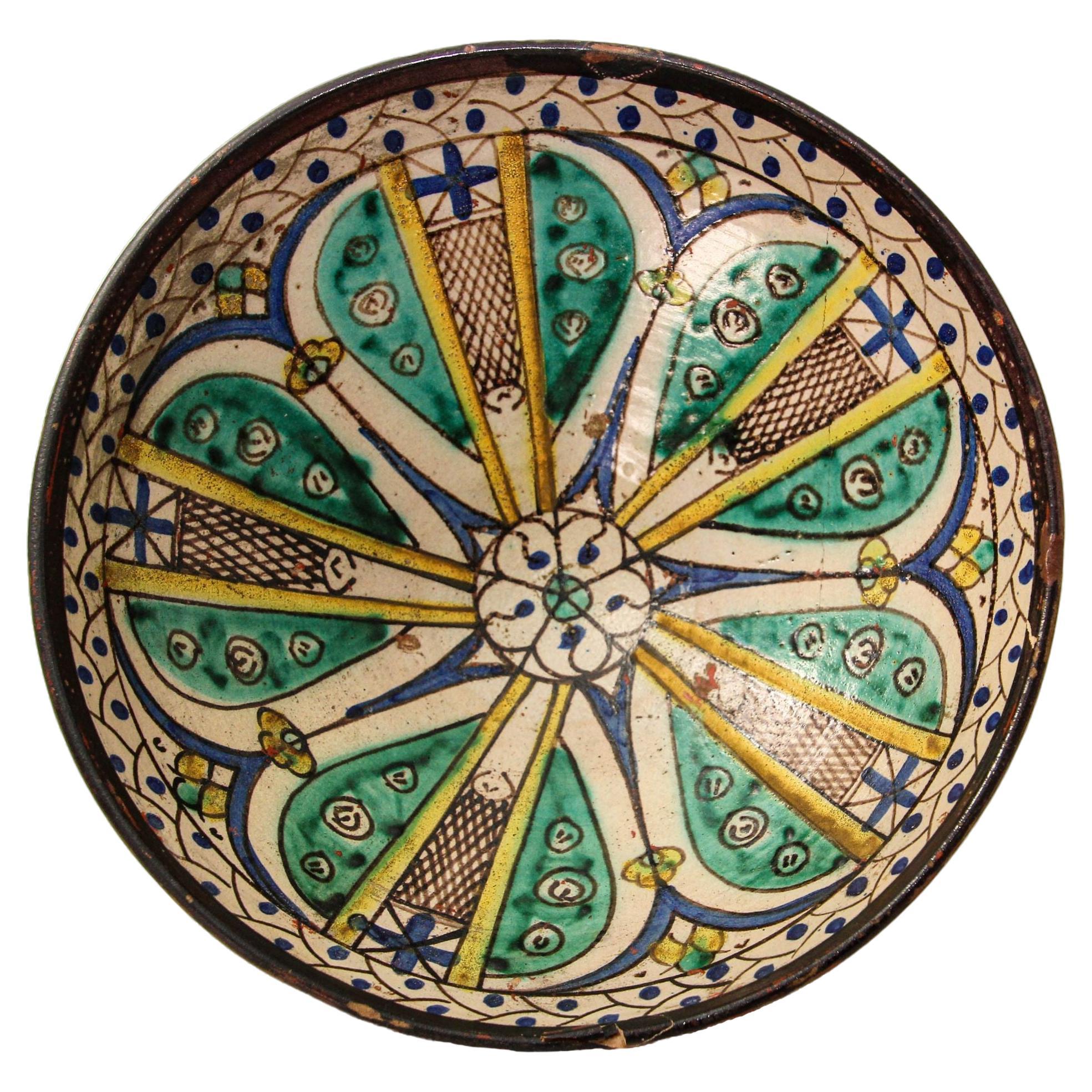
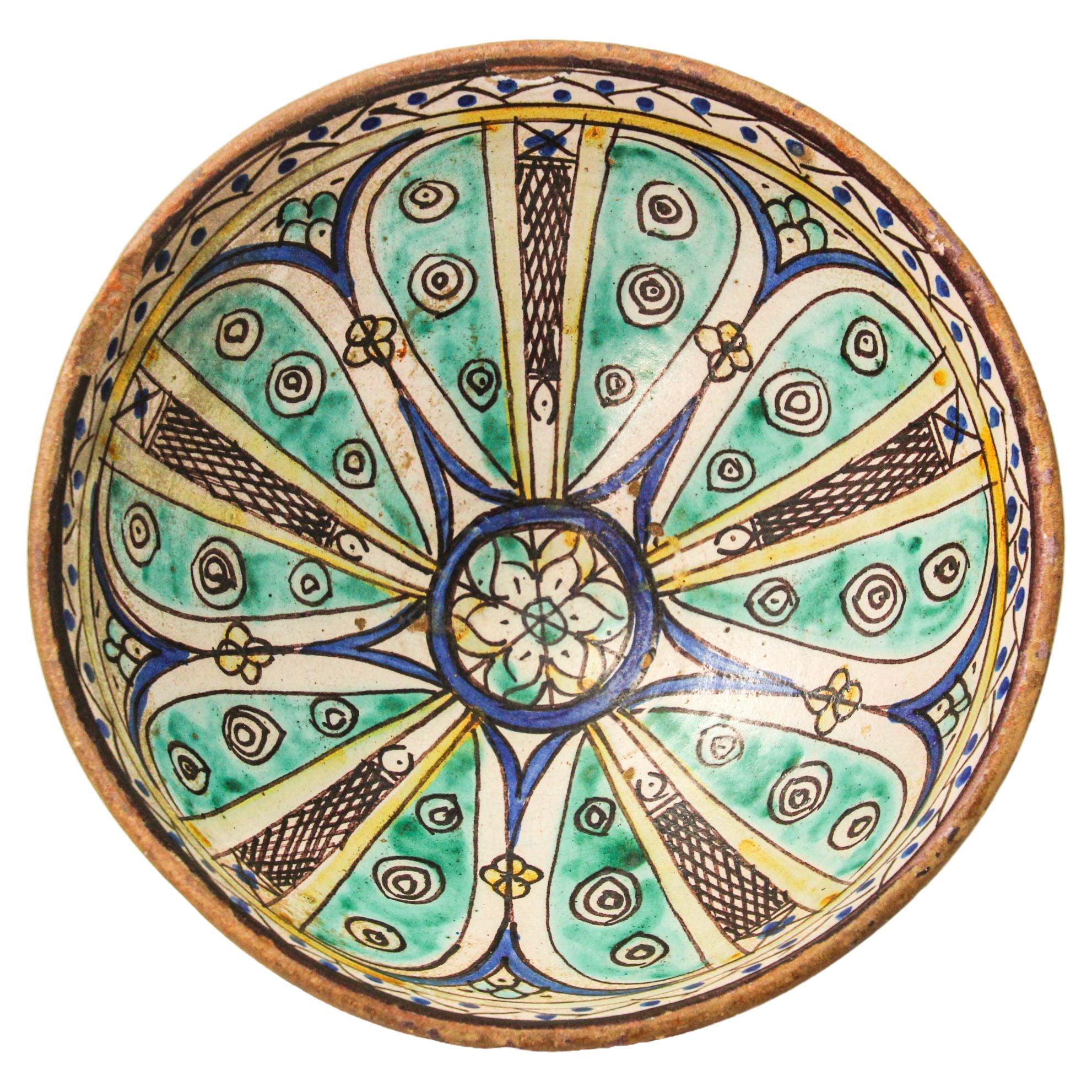
This beautifully decorated earthenware pot is a striking example of a 19th-century Moroccan jobbana. Traditionally accompanied by a domed or bell-shaped lid with a finial top, these vessels originally were used to store butter and cheese or to churn milk. The name, jobbana, derives from the Arabic word for cheese—jubna. The exterior of the bowl is decorated with ornamental motifs in bright blue applied over a yellow under-glaze. The organic diamond shapes separated by bands of intricate filigree and geometric patterns mirrored top and bottom are characteristic of ceramicware from Fez and Meknes, as is the reddish color of the clay visible beneath the yellow glaze and in the few areas of small losses. The blue oxide used on vessels of this type allow us to date our jobbana to the middle of the 19th century. An example executed on a similar scale and retaining its original lid is in the Brooklyn Museum (Fig. 1).
This beautifully decorated earthenware pot is a striking example of a 19th-century Moroccan jobbana. Traditionally accompanied by a domed or bell-shaped lid with a finial top, these vessels originally were used to store butter and cheese or to churn milk. The name, jobbana, derives from the Arabic word for cheese—jubna. The exterior of the bowl is decorated with ornamental motifs in bright blue applied over a yellow under-glaze. The organic diamond shapes separated by bands of intricate filigree and geometric patterns mirrored top and bottom are characteristic of ceramicware from Fez and Meknes, as is the reddish color of the clay visible beneath the yellow glaze and in the few areas of small losses. The blue oxide used on vessels of this type allow us to date our jobbana to the middle of the 19th century. An example executed on a similar scale and retaining its original lid is in the Brooklyn Museum (Fig. 1).
- Dimensions:Height: 7.875 in (20.01 cm)Width: 10.5 in (26.67 cm)
- Medium:
- Period:
- Condition:
- Gallery Location:New York, NY
- Reference Number:1stDibs: LU1025777991
About the Seller
5.0
Recognized Seller
These prestigious sellers are industry leaders and represent the highest echelon for item quality and design.
Established in 1997
1stDibs seller since 2012
24 sales on 1stDibs
Typical response time: 9 hours
- ShippingRetrieving quote...Shipping from: New York, NY
- Return Policy
More From This Seller
View AllCuzco School Baptismal Dish
By Spanish Colonial (Peruvian)
Located in New York, NY
Provenance:
Manuel Ortíz de Zevallos y García, Peru; and by descent in the family to:
Private Collection, New York.
This impressive baptismal dish is an example of eighteenth-cent...
Category
18th Century Old Masters Sculptures
Materials
Silver
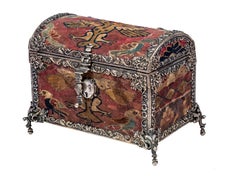
Silver and Transitional Andean Textile Casket
By Spanish Colonial (Peruvian)
Located in New York, NY
Silver was the material of choice for both ecclesiastical and domestic vessels in the New World, not only for its status as a precious metal, but also because of its abundance and du...
Category
Early 18th Century Sculptures
Materials
Silver
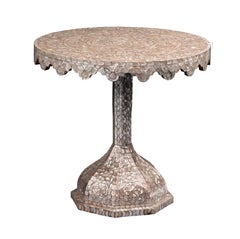
Mother of Pearl Inlaid Wooden Occasional Table
Located in New York, NY
This occasional table is a remarkable example of the luxurious furniture popular during the 17th and 18th centuries in Colonial Latin America. The decorative technique that creates s...
Category
18th Century More Art
Materials
Wood
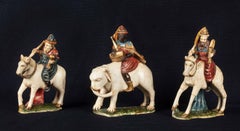
The Three Magi
Located in New York, NY
Provenance: Private Collection, Spain.
Known as Peruvian alabaster for its translucency and workability, Piedra de Huamanga is a highly prized material from the province of Ayacucho in Peru. In the 17th and 18th centuries, local craftsman in the town of Huamanga began to specialize in the production of small-scale, polychrome religious sculptures made from this distinctive stone. Huamanga sculptures are among the most accomplished examples of carving from the Spanish Americas, where polychrome wood sculpture was a far more common sculptural medium. These works, which were created as independent sculptures or as sculptural groups—such as our three Magi—were intended for ecclesiastical as well as domestics settings.
Our three figures likely formed part of a larger Nativity group—a New World variant of the tradition of the Neapolitan Crèche...
Category
Late 18th Century Figurative Sculptures
Materials
Alabaster
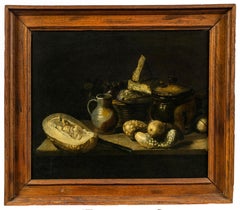
Still Life with Squash, Gourds, Stoneware, and a Basket with Fruit and Cheese
Located in New York, NY
Provenance:
Selma Herringman, New York, ca. 1955-2013; thence by descent to:
Private Collection, New York, 2013-2020
This seventeenth century Spanish still-life of a laden table, known as a bodegón, stands out for its dramatic lighting and for the detailed description of each object. The artist’s confident use of chiaroscuro enables the sliced-open squash in the left foreground to appear as if emerging out of the darkness and projecting towards the viewer. The light source emanates from the upper left, illuminating the array, and its strength is made apparent by the reflections on the pitcher, pot, and the fruit in the basket. Visible brush strokes accentuate the vegetables’ rough surfaces and delicate interiors. Although the painter of this striking work remains unknown, it is a characteristic example of the pioneering Spanish still-lifes of the baroque period, which brought inanimate objects alive on canvas.
In our painting, the knife and the large yellow squash boldly protrude off the table. Balancing objects on the edge of a table was a clever way for still-life painters to emphasize the three-dimensionality of the objects depicted, as well a way to lend a sense of drama to an otherwise static image. The knife here teeters on the edge, appearing as if it might fall off the table and out of the painting at any moment. The shape and consistency of the squash at left is brilliantly conveyed through the light brush strokes that define the vegetable’s fleshy and feathery interior. The smaller gourds—gathered together in a pile—are shrouded partly in darkness and stand out for their rugged, bumpy exterior. The stoneware has a brassy glaze, and the earthy tones of the vessels are carefully modulated by their interaction with the light and shadow that falls across them. The artist has cleverly arranged the still-life in a V-shaped composition, with a triangular slice of cheese standing upright, serving as its pinnacle.
Independent still-lifes only became an important pictorial genre in the first years of the seventeenth century. In Italy, and particularly through the revolutionary works of Caravaggio, painted objects became carriers of meaning, and their depiction and arrangement the province of serious artistic scrutiny. Caravaggio famously asserted that it was equally difficult to paint a still-life as it was to paint figures, and the elevation of this new art form would have profound consequences to the present day. In Spain Juan Sanchez Cotan...
Category
17th Century Old Masters Still-life Paintings
Materials
Canvas, Oil
First Journey
Located in New York, NY
Provenance: Sables de Fontainbleau, Seine-et-Marne, France
“Gogottes” are natural creations formed out of sands deposited in Northern France during the Oligocene Period, approximately 30 million years ago. Much later, in a process that has only recently become understood, groundwater rich in silica flowed through the sands...
Category
15th Century and Earlier Naturalistic Abstract Sculptures
Materials
Sandstone
You May Also Like
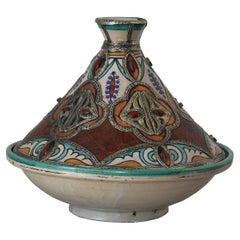
Moroccan Moorish Ceramic Bowl with Lid, Tajine from Fez
By Berber Tribes of Morocco
Located in Moreno Valley, CA
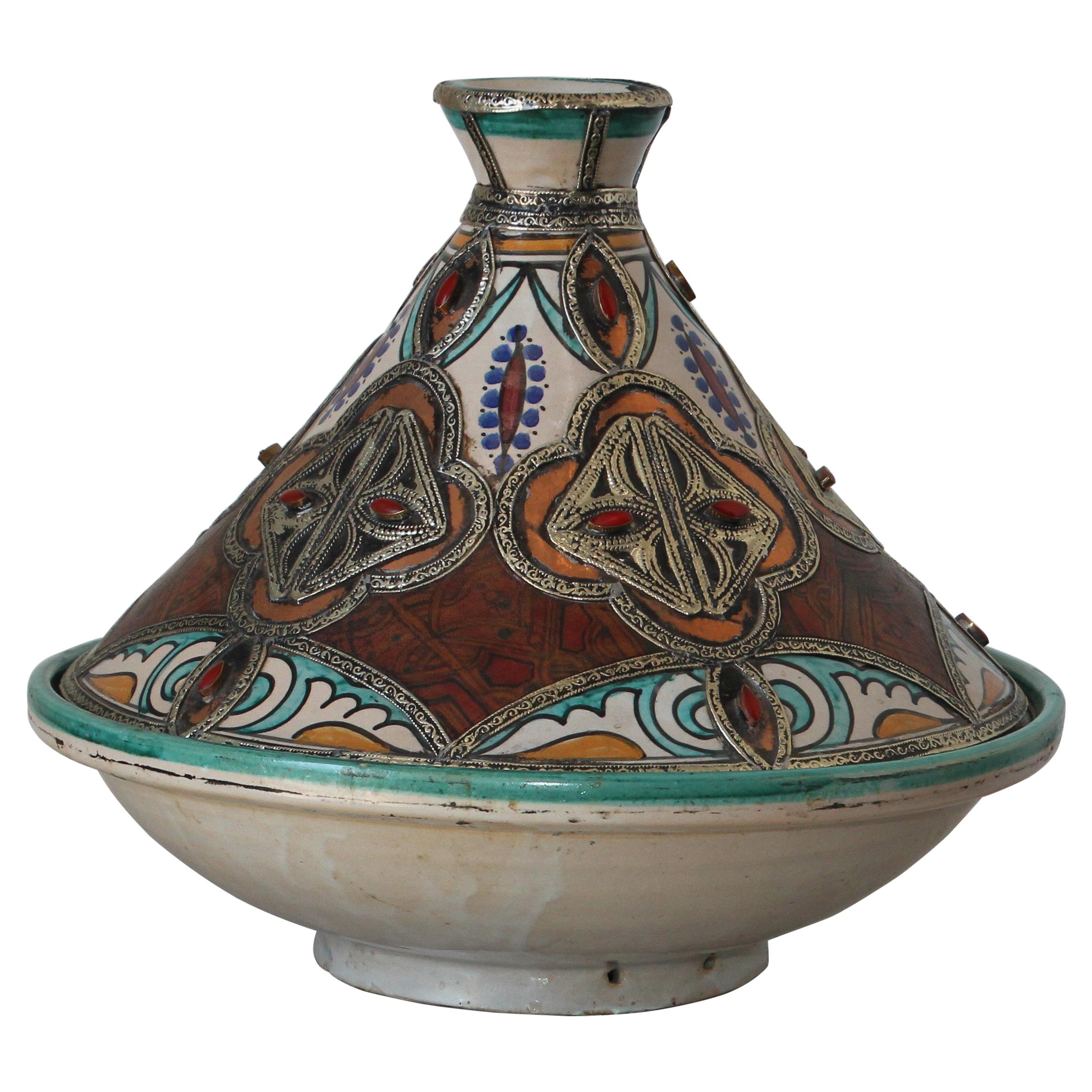
Large Moroccan ceramic decorative serving tajine polychrome with leather, stones and metal overlay with conical overlay lid.
The bottom is a circular ceramic bowl and the top of the tagine is distinctively shaped into a cone.
Handcrafted and hand painted with Moorish designs by artisans in Fez Morocco.
Great decorative Moroccan Folk ceramic...
Category
Mid-20th Century Moroccan Moorish Decorative Bowls
Materials
Ceramic
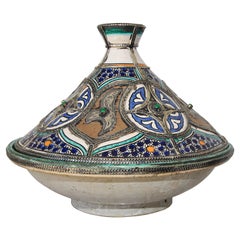
Moroccan Ceramic Bowl with Lid Tajine from Fez Polychrome
By Berber Tribes of Morocco
Located in Moreno Valley, CA
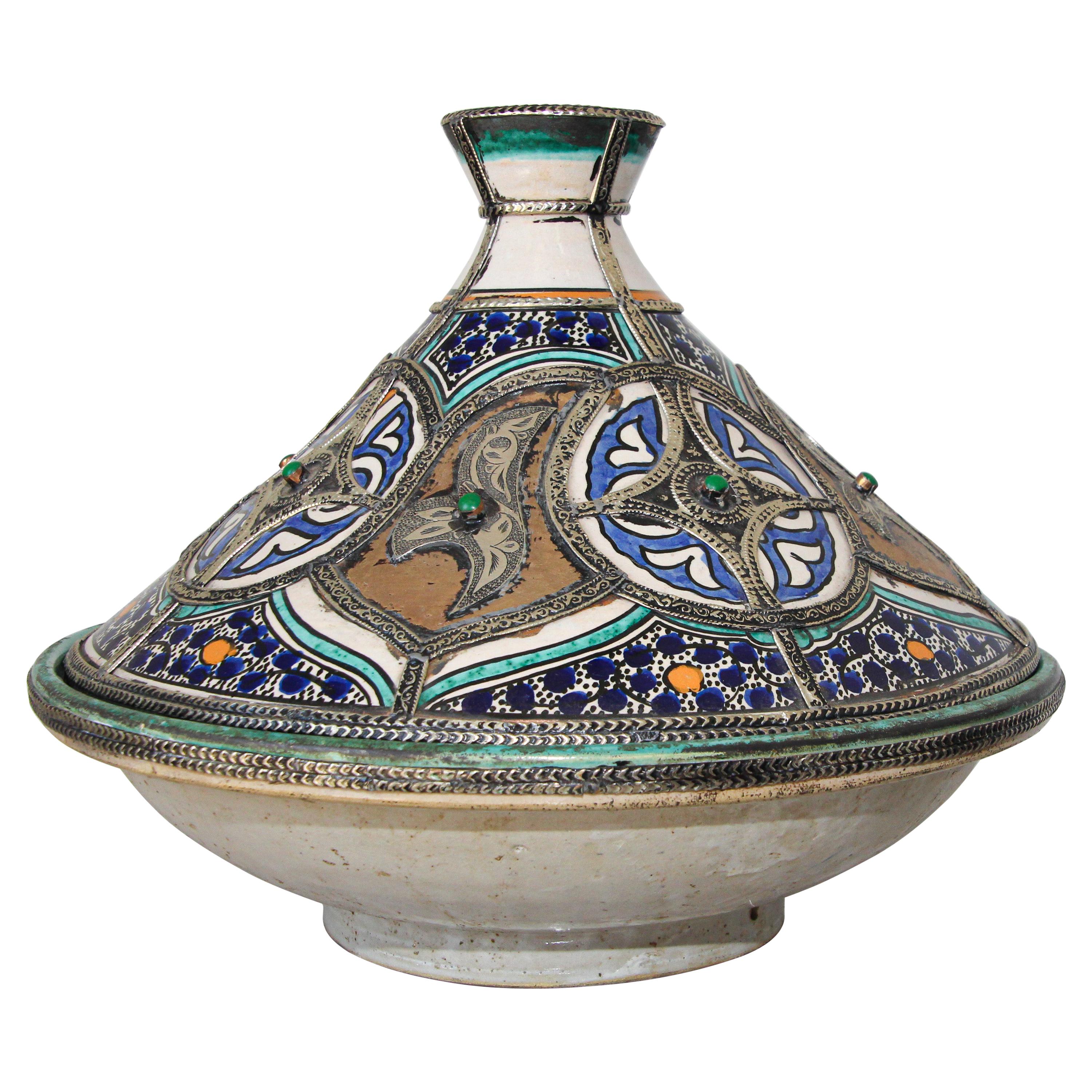
Moroccan large ceramic decorative serving bowl tajine polychrome with leather, stones and metal overlay with conical overlay lid.
The bottom is a circular ceramic bowl and the top of the tagine is distinctively shaped into a cone.
Handcrafted and hand painted with Moorish designs by artisans in Fez Morocco.
Great decorative Moroccan Folk ceramic...
Category
Mid-20th Century Moroccan Moorish Decorative Bowls
Materials
Ceramic
Antique Moroccan Moorish Handcrafted Ceramic Bowl Dish from Fez
By Berber Tribes of Morocco
Located in Moreno Valley, CA
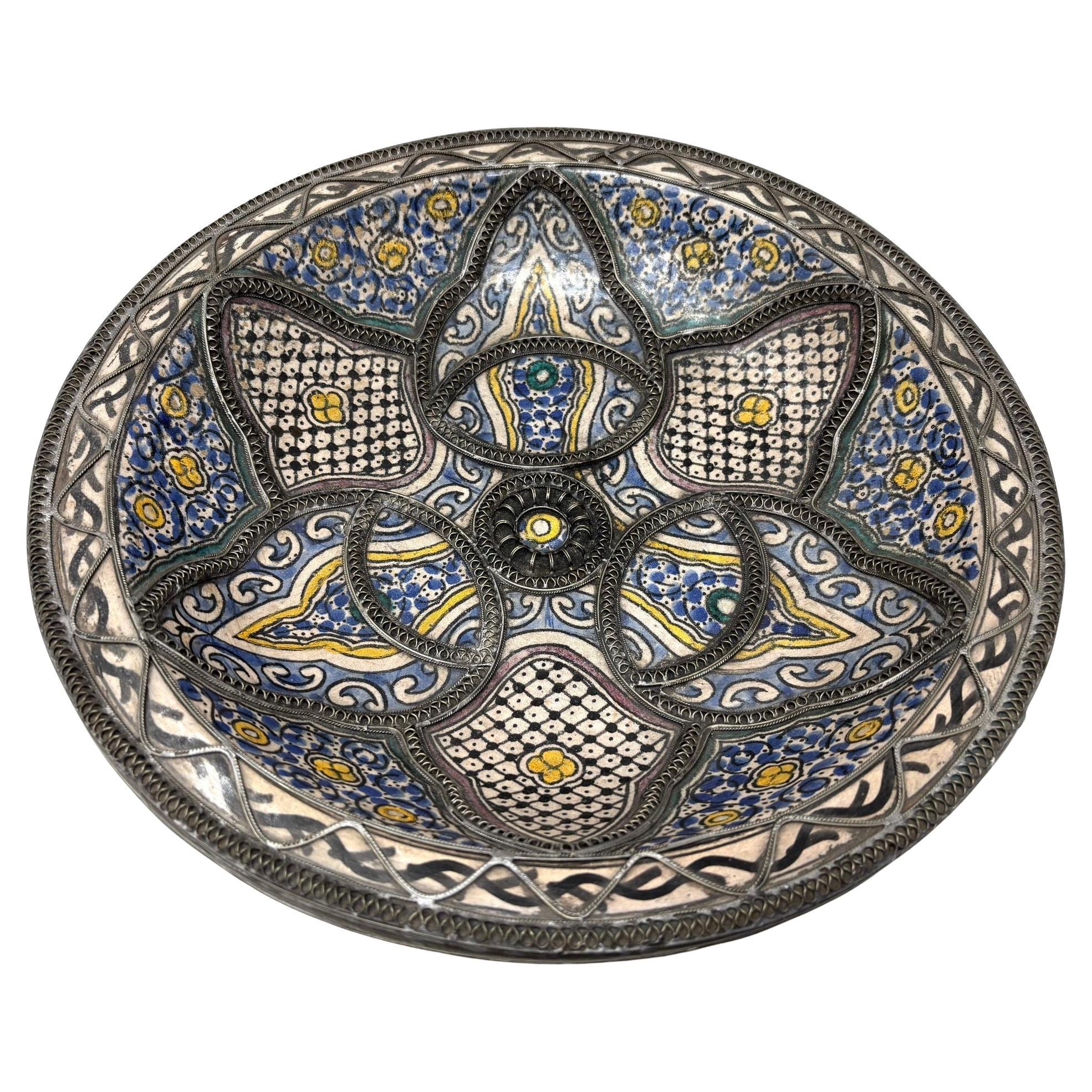
Antique handcrafted large Moroccan Moorish polychrome decorative ceramic bowl from Fez.
Bleu de Fez, very nice designs hand painted by artist in Fez.
Antique ceramic handcrafted bowl...
Category
Early 20th Century Moroccan Moorish Decorative Bowls
Materials
Ceramic
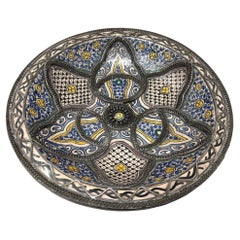
Antique Moroccan Ceramic Glazed Bowl Handcrafted in Fez Meknes Jobbana 1900
By Berber Tribes of Morocco
Located in Moreno Valley, CA
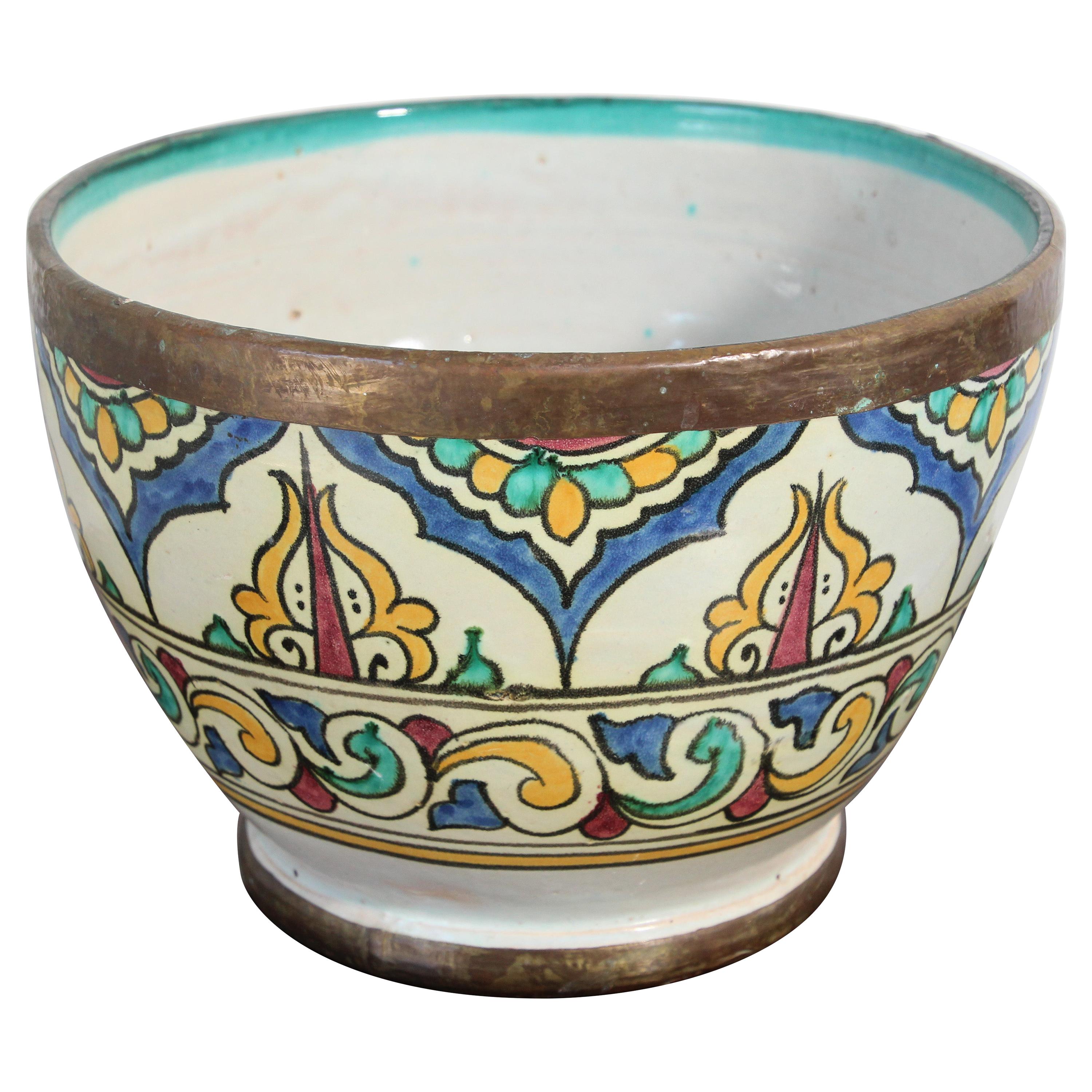
Antique large Moroccan handcrafted glazed polychrome ceramic bowl.
Moroccan, Fez or Meknes bowl Jobbana with geometric Moorish designs.
Hand painted ceramic Jubbana bowl, handcrafted by skilled Moroccan artisans in Fez Morocco...
Category
Mid-20th Century Moroccan Moorish Ceramics
Materials
Ceramic
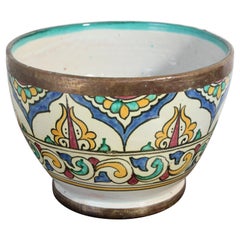
19th C. Moroccan Ceramic Bowl Polychrome Footed Dish Fez
By Berber Tribes of Morocco
Located in Moreno Valley, CA
Antique 19th C. Moroccan Ceramic Bowl Polychrome Footed Dish Fez.
A 19th-century antique ceramic footed bowl from Morocco, Fez, showcases the exquisite artistry of Mokhfia polychrome...
Category
Late 20th Century Moroccan Moorish Decorative Bowls
Materials
Ceramic
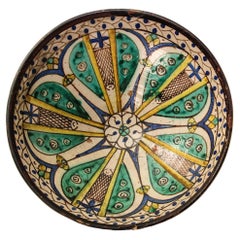
Antique 19th C. Moroccan Ceramic Bowl Polychrome Footed Dish Fez
By Berber Tribes of Morocco
Located in Moreno Valley, CA
A 19th-century antique ceramic footed bowl from Morocco, Fez, showcases the exquisite artistry of Mokhfia polychrome pottery.
The bowl boasts a deep rounded form with a flattened rim...
Category
Antique Late 19th Century Moroccan Moorish Decorative Bowls
Materials
Ceramic, Pottery
More Ways To Browse
Antique Earthenware Pot
Antique Earthenware Pots
Filigree Mirror
Antique Milk Churns
Robert Weeks
Joe Suzuki
Man Ray Cadeau
Micah Evans
Mushroom Wall Sculpture
Nina Abney
Nude Couple Sculpture
Outdoor Ceramic Sculpture
Paper Cast Relief Art
Porn Star
R Macdonald
Riccardo And Pietro Ferro Glass
Sgraffito Plates
Starbucks Art