Art Nouveau
to
138
735
221
154
93
171
Overall Width
to
Overall Height
to
1
542
726
105
205
93
103
73
9
9
17
9
12
17
114,513
65,081
54,922
27,053
14,930
9,364
6,540
5,777
4,190
3,059
2,585
2,329
2,252
720
916
246
18
934
642
329
300
284
187
185
178
160
124
114
92
77
70
56
56
51
49
47
42
687
212
191
142
120
89
35
34
31
31
268
217
640
631
Style: Art Nouveau
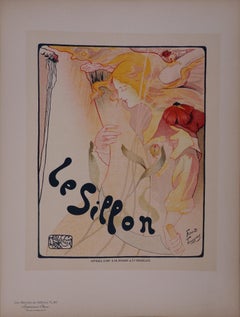
Nymph collecting the flowers - Lithograph, 1897
Located in Paris, IDF
Fernand Toussaint
Nymph collecting the flowers, 1897
Original lithograph
Printed signature in the plate
Printed on paper vélin
Size 40 x 29 cm (c....
Category
1890s Art Nouveau
Materials
Lithograph

$466 Sale Price
22% Off
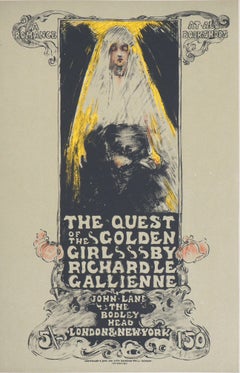
The Quest of the Golden Girl - Lithograph (Les Maîtres de l
Affiche), 1897
By Ethel Reed
Located in Paris, IDF
Ethel REED (1874-1912)
The Quest of the Golden Girl, 1897
Stone lithograph
Printed signature in the plate
On vellum
Size 39 x 29 cm (c. 15.3 x 11.4"...
Category
1890s Art Nouveau
Materials
Lithograph
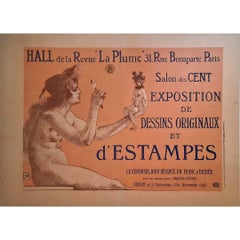
1896 original poster by Armand Rassenfosse Salon des cent
Located in PARIS, FR
In the heart of 19th-century Paris, the art scene flourished with an unparalleled vibrancy, attracting connoisseurs and creators from around the globe. One pivotal event that capture...
Category
1890s Art Nouveau
Materials
Linen, Paper, Lithograph
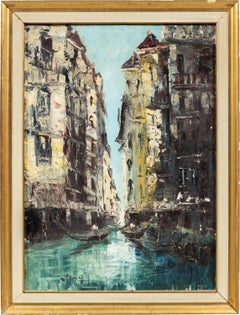
Vedutist Venetian painter - early 20th landscape painting - View of Venice
Located in Varmo, IT
Venetian painter (early 20th century) - View of Venice with canal and gondolas.
70 x 50 cm unframed, 81 x 61 cm with frame.
Oil on canvas, in a gilded wooden frame (minor marks and...
Category
Early 20th Century Art Nouveau
Materials
Canvas, Oil
$1,196 Sale Price
44% Off
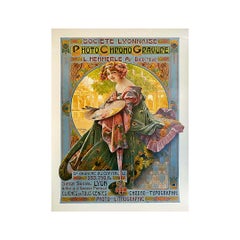
Circa 1905 Société Lyonnaise - Photo Chromo Gravure by Gaspar Camps
By Gaspar Camps
Located in PARIS, FR
This absolute showstopper by Gaspar Camps is an early example of photo-offset printing, here referred to as "photo-lithographie." The printing technique involved transferring an inke...
Category
Early 1900s Art Nouveau
Materials
Paper, Lithograph
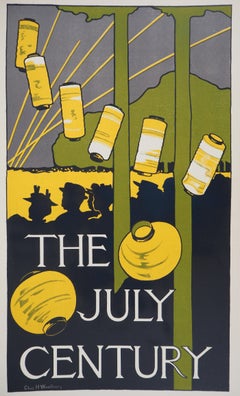
The July Century - Original Lithograph (Les Maîtres de l
Affiche), 1895
Located in Paris, IDF
Charles Herbert WOODBURY
The July Century, 1895
Lithograph
Printed signature in the plate
On vellum
Size 39 x 29 cm (c. 15.3 x 11.4")
INFORMATION : Plate 32 of "Les Maîtres de l'A...
Category
1890s Art Nouveau
Materials
Lithograph
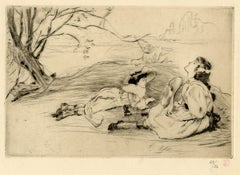
A L
Ombre (In Shadow)
Located in Fairlawn, OH
A L'Ombre (In Shadow)
Etching & drypoint, 1905
Signed with the red stamp of the publisher Pellet (see photo)
Edition: 50 on velin paper, signed and numbered
Publisher: Gustav Pellet, Paris (his red stamp lower right, recto; Lugt 1193)
Condition: Excellent
Image/Plate size: 5-7/8 x 8-5/8" (14.8 x 21.8 cm.)
Sheet size: 11 5/8 x 17 1/8"
Reference: IFF 119
Exteens 229
Arwas 256 v/V
Louis Auguste Mathieu Legrand (29 September 1863 – 1951) was a French artist, known especially for his aquatint engravings, which were sometimes erotic. He was awarded the Légion d'honneur for his work in 1906.
Life
Legrand was born in the city of Dijon in the east of France. He worked as a bank clerk before deciding to study art part-time at Dijon's Ecole des Beaux-Arts. He won the Devosge prize at the school in 1883.[2] In 1884 Legrand studied engraving under the Belgian printmaker Félicien Rops.
Legrand's artworks include etchings, graphic art and paintings. His paintings featured Parisian social life. Many were of prostitutes, dancers and bar scenes, which featured a sense of eroticism. According to the Hope Gallery, "Louis Legrand is simply one of France's finest early twentieth century masters of etching." His black and white etchings especially provide a sense of decadence; they have been compared to those of Henri de Toulouse-Lautrec, though his drawings of the Moulin Rouge, the can-can dance and the young women of Montmartre preceded Toulouse-Lautrec's paintings of similar scenes. He made over three hundred prints of the night life of Paris. They demonstrate "his remarkable powers of observation and are executed with great skill, delicacy, and an ironic sense of humor that pervades them all."
Two of his satirical artworks caused him to be tried for obscenity. The first, "Prostitution" was a symbolic drawing which depicted a naked girl being grasped by a dark monster which had the face of an old woman and claws on its hands; the second, "Naturalism", showed the French novelist Émile Zola minutely studying the thighs of a woman with a magnifying glass. Defended by his friend the lawyer Eugène Rodrigues-Henriques (1853–1928), he was found not guilty in the lower court, but was convicted in the appeal court and then given a short prison sentence for refusing to pay his fine.
Legrand was made famous by his colour illustrations for Gil Blas magazine's coverage of the can-can, with text by Rodrigues (who wrote under the pseudonym Erastene Ramiro). It was a tremendous success, with the exceptional quantity of 60,000 copies of the magazine being printed and instantly sold out in 1891.
In 1892, at the instigation of the publishing house Dentu, Legrand made a set of etchings of his Gil Blas illustrations. The etchings were published in a book, Le Cours de Danse Fin de Siecle (The End of the Century Dance Classes).
Legrand took a holiday in Brittany, which inspired him to engrave a set of fourteen lithographs of simple country life called Au Cap de la Chevre (On Goat Promontory). It was published by Gustave Pellet who became a close friend of Legrand's. Pellet eventually published a total of 300 etchings by Legrand, who was his first artist; he also published Toulouse-Lautrec and Félicien Rops among others.
He did not only work in graphics; he exhibited paintings at the Paris salon of the Société Nationale des Beaux-Arts starting in 1902. In 1906 he was made a chevalier of the Légion d'honneur.
Legrand died in obscurity in 1951. A retrospective exhibition was held at the Félicien Rops museum in Namur, Belgium in 2006 to celebrate his graphic art. The art collector Victor Arwas published a catalogue raisonné for the occasion.
Books illustrated
de Maupassant, Guy: Cinq Contes Parisiens, 1905.
Poe, Edgar Alan: Quinze Histoires d'Edgar Poe...
Category
Early 1900s Art Nouveau
Materials
Etching
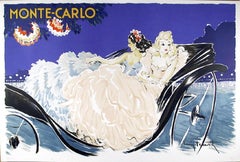
Monte Carlo, Art Nouveau Poster after Louis Icart
By Louis Icart
Located in Long Island City, NY
Louis Icart, After, French (1888 - 1950) - Monte Carlo, Medium: Poster, Size: 24 x 36 in. (60.96 x 91.44 cm), Description: A modern reprinting of the classic Louis Icart print, fe...
Category
Early 20th Century Art Nouveau
Materials
Offset
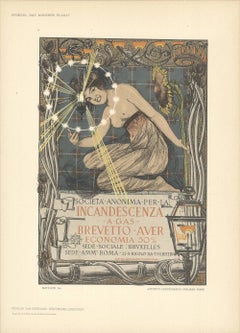
1897 After Giovanni Mataloni
Gas Lamps
Stone Lithograph
Located in Brooklyn, NY
Paper Size: 11.5 x 8.25 inches ( 29.21 x 20.955 cm )
Image Size: 8.5 x 5.75 inches ( 21.59 x 14.605 cm )
Framed: No
Condition: A: Mint
Additional Details: First printing Litho...
Category
19th Century Art Nouveau
Materials
Lithograph
$220 Sale Price
20% Off
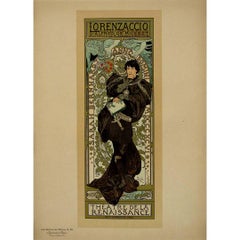
1898 poster Mucha Lorenzaccio - Les Maîtres de l
affiche Pl.114
Located in PARIS, FR
Alphonse Mucha's "Lorenzaccio" poster, featured as Plate 114 in "Les Maîtres de l'Affiche," encapsulates the Art Nouveau spirit and the enchanting collaboration between the iconic ar...
Category
1890s Art Nouveau
Materials
Paper, Lithograph
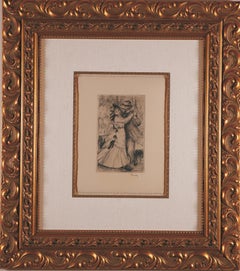
"La Danse à la Campagne", 2nd plate by Pierre-Auguste Renoir
Located in Hinsdale, IL
RENOIR, PIERRE AUGUSTE
(1841 -1919)
"La Danse à la Campagne", 2nd plate
(The Country Dance (second plate))
Delteil 2, Stella 2
Soft-ground Etching in black ink, c. 1890
Only State on smooth wove paper
With the stamped signature, as issued
Image Size: 8 5/8” x 5 1/3”
Fine strong and tonal impression with full margins
The most famous etching...
Category
1890s Art Nouveau
Materials
Etching
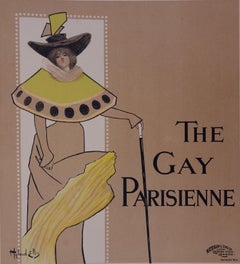
The Gay Parisienne - Lithograph (Les Maîtres de l
Affiche), 1897
By Hyland Ellis
Located in Paris, IDF
Hyland Ellis
The Gay Parisienne, 1897
Stone ithograph
Printed signature in the plate
On vellum
Size 39 x 29 cm (c. 15.3 x 11.4")
INFORMATION : Plate 123 of "Les Maîtres de l'Affic...
Category
1890s Art Nouveau
Materials
Lithograph
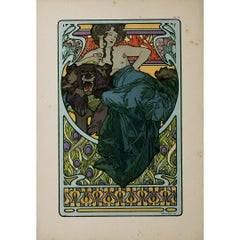
Alphonse Mucha
s 1902 Documents décoratifs - Planche 22
Located in PARIS, FR
Alphonse Mucha's name shines like that of a visionary artist who left an indelible mark on the aesthetics of the early 20th century. The year 1902 saw the publication of "Documents d...
Category
Early 1900s Art Nouveau
Materials
Paper, Lithograph
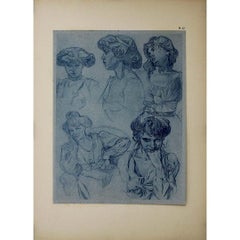
Alphonse Mucha
s 1902 Documents décoratifs - Planche 47
Located in PARIS, FR
Alphonse Mucha's name shines like that of a visionary artist who left an indelible mark on the aesthetics of the early 20th century. The year 1902 saw the publication of "Documents d...
Category
Early 1900s Art Nouveau
Materials
Paper, Lithograph
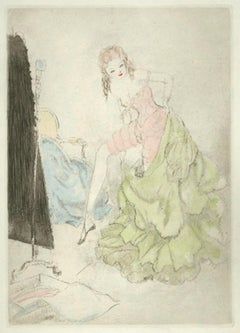
Undressing from La Dame aux Camelias, Art Nouveau Etching after Louis Icart
By Louis Icart
Located in Long Island City, NY
Louis Icart, After, French (1888 - 1950) - Undressing from La Dame aux Camelias, Year: 1938, Medium: Hand-colored Etching, Image Size: 7.5 x 5.25 inches, Size: 11 x 8.75 in. (27...
Category
1930s Art Nouveau
Materials
Etching
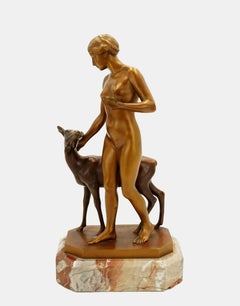
Forest idyll / - Soulmate -
Located in Berlin, DE
Rudolf Kaesbach (1873 Gladbach - 1955 Berlin), Forest idyll, around 1915. Bronze, gold and golden brown patina, with cast plinth, mounted on a marble base (5 cm high), total height 36 cm, dimensions of the bronze: 31 cm (height) x 17 cm (length) x 12 cm (width). Weight 4,6 kg, signed on the plinth "R.[udolf] KAESBACH".
- a few rubbed areas, overall in excellent condition for its age
- Soulmate -
The bronze sculpture depicts a young woman in an intimate exchange with a deer that accompanies her. The animal pauses to turn toward her, while the nude beauty slows her pace to look into the deer's eyes and tenderly caress it with her hand. The woman and the deer are in inner harmony. Even though her lips remain motionless, she speaks the language of the animal with which she is deeply connected.
The golden patina, which contrasts with the more naturalistic coloring of the deer, gives the young woman the appearance of a saint, even if she cannot be identified as such. At the same time, she evokes memories of Diana, the goddess of the hunt, or a nymph. But she lacks the ferocity. In her innocent naivety, she is more like a vestal virgin, who is not at home in the solitude of the forest. And yet, the young beauty, moving unclothed in the heart of nature, looks like a priestess with her hair tied up and a carefully carried bowl on her way to a sacred grove.
In order to open up the above-mentioned associations, Kaesbach deliberately designed the female figure in such a way that she cannot be identified as a specific person. He has created an allegory of natural femininity, characteristic of Art Nouveau, in which the deer is far more than a companion animal. It displays the same gracefulness as the young woman, and the inner resemblance between the two makes the deer appear as her other self. In animal terms, it embodies her inner being, which also gives the deer an allegorical character.
About the artist
Rudolf Kaesbach studied sculpture at the Hanau Academy and worked in a bronze foundry in Paris in 1900. In order to work as an independent artist, he opened a workshop in Düsseldorf, where he cast bronzes from models he designed. In 1902 he made his debut at the German National Art Exhibition in Düsseldorf. The following year Kaesbach went to the academy in Brussels. There he was inspired by contemporary Belgian sculpture, especially the work of Constantin Meunier. He moved to Berlin, where he opened a studio in the villa district of Grunewald and devoted himself to life-size marble sculptures and the design of bronzes. From 1911, he regularly presented his works at the major art exhibitions in Berlin, as well as in Düsseldorf and Malmö. Between 1936 and 1939, he also created models for the Rosenthal porcelain factory. From 1939 to 1944, Kaesbach was represented at the major German art exhibitions in Munich.
GERMAN VERSION
Rudolf Kaesbach (1873 Gladbach - 1955 Berlin), Waldidyll, um 1915. Gold und goldbraun patinierte Bronze mit gegossener Plinthe, auf einem Marmorsockel montiert (5 cm Höhe), Gesamthöhe 36 cm, Maße der Bronze: 31 cm (Höhe) x 17 cm (Länge) x 12 cm (Breite). Gewicht 4,6 kg, auf der Plinthe mit „R.[udolf] KAESBACH“ signiert.
- vereinzele beriebene Stellen, insgesamt in einem altersgemäß ausgezeichneten Zustand
- Seelenverwandtschaft -
Die Bronzeplastik veranschaulicht eine junge Frau im innigen Austausch mit einem sie begleitenden Reh. Das Tier hält inne, um sich zu ihr hochzuwenden, während die nackte Schönheit ihren Schritt verlangsamt, um dem Reh ebenfalls in die Augen zu schauen und es zärtlich mit der Hand zu liebkosen. Die Frau und das Reh sind in einem inneren Gleichklang. Auch wenn ihre Lippen unbewegt bleiben, spricht sie die Sprache des Tieres, mit dem sie auf eine tief empfundene Weise verbunden ist.
Die im Kontrast zur naturalistischeren Einfärbung des Rehs aufstrahlende goldfarbene Patina lässt die junge Frau wie eine Heilige erscheinen, auch wenn sich nicht als Heilige identifizierbar ist. Zugleich ruft sie Erinnerungen an die Jagdgöttin Diana oder eine Nymphe hervor. Dafür fehlt ihr allerdings die Wildheit. In ihrer unschuldigen Naivität gemahnt sie vielmehr an eine Vestalin, die freilich nicht in der Waldeinsamkeit zu Hause ist. Und doch wirkt die sich unbekleidet im Herzen der Natur bewegende junge Schönheit wie eine Priesterin, die sich mit hochgebundenem Haar und der vorsichtig getragenen Schale und dem Wege zu einem Heiligen Hain befindet.
Um die gennannten Assoziationen zu eröffnen, hat Kaesbach die Frauenfigur bewusst so gestaltet, dass sie nicht als konkrete Person identifizierbar ist. Damit hat er eine für den Jugendstil charakteristische Allegorie natürlicher Weiblichkeit geschaffen, bei der das Reh weit mehr als ein Begleittier ist. Es weist dieselbe grazile Anmut wie die junge Frau auf und der innere Gleichklag der beiden lässt das Reh als ihr anderen Ich erscheinen. Es verkörpert – ins Animalische übertragen - ihr inneres Wesen, wodurch auch dem Reh ein allegorischer Charakter zukommt.
zum Künstler
Rudolf Kaesbach studierte an der Akademie Hanau Bildhauerei und war im Jahr 1900 in einer Pariser Bronzegießerei tätig. Um sich als eigenständiger Künstler betätigen zu können, eröffnete er in Düsseldorf eine Werkstatt, in der er Bronzen nach selbstentworfenen Modellen goss. 1902 debütierte er auf der Deutschen Nationalen Kunstaustellung in Düsseldorf. Im Folgejahr ging Kaesbach an die Akademie nach Brüssel. Dort wurde er von der zeitgenössischen belgischen Bildhauerei, insbesondere vom Werk Constantin Meuniers, inspiriert. Zurückgekehrt zog er nach Berlin, wo er im Villenviertel Grunewald ein Atelier eröffnete und sich neben dem Entwurf für Bronzen der lebensgroßen Marmorbildhauerei widmete. Ab 1911 präsentierte er seine Werke regelmäßig auf den Großen Berliner Kunstausstellungen, aber auch in Düsseldorf und Malmö. Zwischen 1936 und 1939 fertigte er zudem Modelle für die Porzellan-Manufaktur Rosenthal an. Von 1939 bis 1944 war...
Category
1910s Art Nouveau
Materials
Bronze
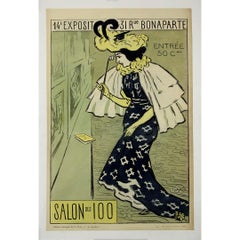
1895 original poster by Fernand Fau for the Salon des 100 14th Exhibition
Located in PARIS, FR
The 1895 original poster by Fernand Fau for the Salon des 100 14th Exhibition is a fascinating piece of art that captures the spirit of the Belle Époque in France. The Salon des 100 ...
Category
1890s Art Nouveau
Materials
Linen, Paper, Lithograph
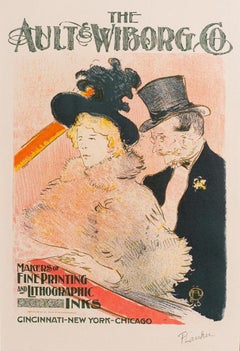
Au Concert
Located in Palm Beach, FL
Commissioned by The Ault & Wiborg Co., USA. Color Zincograph on wove paper, 1896. Hand-signed in black crayon. Wittrock C (of C) edition.
Reference: Wittrock; P28, vol. 2 pg 810.
...
Category
1890s Art Nouveau
Materials
Paper
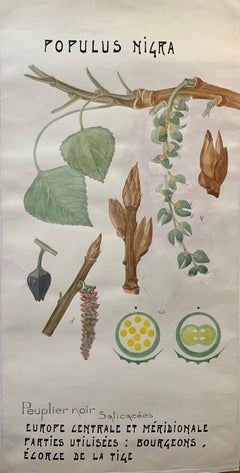
Early 20th C French Watercolor, botanical flowers from an University collection
Located in Woodbury, CT
Wonderful watercolor depicting a plant/flower. These were used at a Belgium University to teach the students about botany. Dating from the early 20th century. They are watercolor on ...
Category
Early 1900s Art Nouveau
Materials
Watercolor
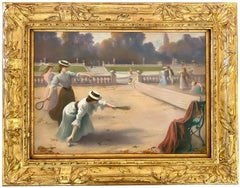
Lawn Tennis at the Castle Park
by Henri Pasquier ( XIX – XX ) French Painter
Located in Knokke, BE
Henri Pasquier
XIX – XX
French Painter
'Lawn Tennis at the Castle Park'
Signature: signed lower left and dated 1906 'H Pasquier 06'
Medium: pastel on paper
Dimensions: image size 3...
Category
20th Century Art Nouveau
Materials
Pastel, Handmade Paper
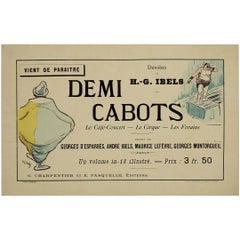
1896 poster by H. G. Ibels "Demi Cabots le café-concert le cirque les forains"
Located in PARIS, FR
The original 1896 poster by H. G. Ibels, titled "Demi Cabots le café-concert le cirque les forains," offers a vivid glimpse into the colorful world of Parisian café-concerts and circ...
Category
1890s Art Nouveau
Materials
Linen, Paper, Lithograph
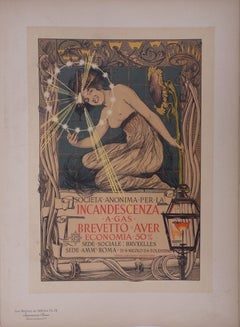
Incandescence - Lithograph, 1897
Located in Paris, IDF
Giovanni Mataloni
Incandescence, 1897
Original lithograph
Printed signature in the plate
Printed on paper vélin
Size 40 x 29 cm (c. 15.7 x 11.4")
INFORMATION : Plate 72 of "Les Maîtres de l'Affiche", Paris, 1897, printed by l'Imprimerie Chaix. Bears the blind stamp of the editor bottom right.
This image was created for an Italian advertisement...
Category
1890s Art Nouveau
Materials
Lithograph
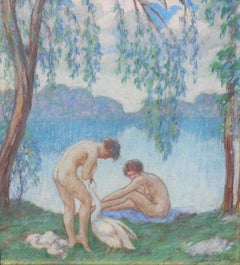
Impressionist Painting Nude Bathers by David Humphrey
Located in Rochester, NY
Nude bathers, fine early 20th century impressionist painting by David Humphrey (American 1872-1950.) Pastel on paper.
Humphrey was born in Elkhorn, Wiscons...
Category
Early 20th Century Art Nouveau
Materials
Pastel
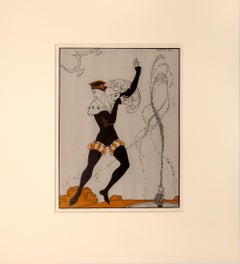
Vaslav Nijinsky as Siegfried in Swan Lake.
Located in London, GB
BARBIER, George.
Vaslav Nijinsky as Siegfried in Swan Lake.
London, C. W. Beaumont, 1913.
‘The designs, although somewhat fantastic in treatment, do convey the impression produced...
Category
1910s Art Nouveau
Materials
Lithograph
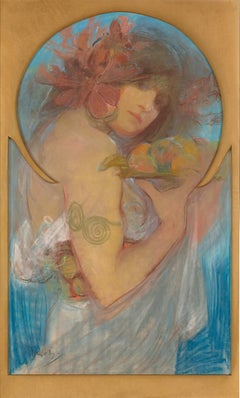
Fruit by Alphonse Mucha
Located in New Orleans, LA
Alphonse Mucha
1860-1939 Czech
Fruit
Signed "Mucha" (lower left)
Pastel on paper
"Art only exists to communicate a spiritual message." —Alphonse Mucha
Alphonse Mucha's distincti...
Category
19th Century Art Nouveau
Materials
Paper, Pastel
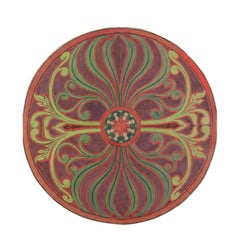
Untitled Art Nouveau Rondelle
Located in Fairlawn, OH
Unknown Artist, France, late 19th century
Anonymous c. 1900 Rondelle on antique laid paper
Ink, Watercolor and or Gouache
Unsigned
An Art Nouveau preliminary design for a decorative ...
Category
Early 1900s Art Nouveau
Materials
Ink, Watercolor, Pigment
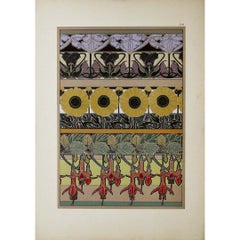
Alphonse Mucha
s 1902 Documents décoratifs - Planche 40
Located in PARIS, FR
Alphonse Mucha's name shines like that of a visionary artist who left an indelible mark on the aesthetics of the early 20th century. The year 1902 saw the publication of "Documents d...
Category
Early 1900s Art Nouveau
Materials
Paper, Lithograph
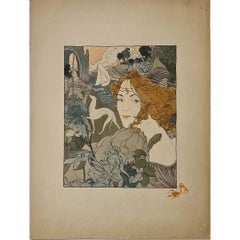
1897 Georges de Feure
s original lithograph "Retour" - Art Nouveau - Hand-signed
Located in PARIS, FR
Georges de Feure's original lithograph "Retour", created in 1897, is an iconic work of art that reflects the artist's characteristic Symbolist aesthetic and Art Nouveau style. This l...
Category
1890s Art Nouveau
Materials
Paper, Lithograph
Vase "Erable plane"
By Émile Gallé
Located in PARIS, FR
"Norway maple" Vase
by Émile GALLE (1846-1904)
Rare baluster-shaped vase,
multi-layered glass with powder and gold foil inclusions.
Wheel-carved cameo decoration,
ornated with mapl...
Category
Early 1900s Art Nouveau
Materials
Blown Glass
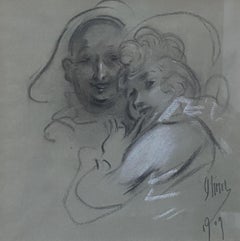
Jules Cheret (1836-1932) A couple, 1909, drawing signed
By Jules Chéret
Located in Paris, FR
Jules Cheret (1836-1932)
A couple, 1909
signed and dated in the lower right
Charcoal and heightenings of white chalk
23 x 23 cm
Framed under glass : 33.8 x 33.8 cm
This work is hi...
Category
Early 1900s Art Nouveau
Materials
Chalk, Charcoal
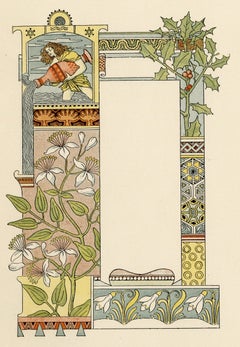
Aquarius-The Water Bearer
Located in Fairlawn, OH
Aquarius-The Water Bearer
From: Les Douze Mois de 1889
As published in Vol. 9, No. 425 of Les Hommes d'Aujourd'hui.
Published by Sagot, Paris
Proof before letters without the calend...
Category
1890s Art Nouveau
Materials
Lithograph
Paul Berthon - Sarah Bernhardt La Princesse Lointaine " The Faraway Princess "
By Paul Berthon
Located in PARIS, FR
Paul Emile Berthon ( 1872- 1909 ), was a French decorative artist.
He began studying painting in Villefranche. From 1893, he moved to Paris, where he attended the École normale d'enseignement du dessin. Among the courses taken at the time, those of the professor of decorative art Eugène Grasset had the greatest impact on him.
The first works of Paul Berthon (around 1896) show a style close to that of Grasset. By freeing himself from the style of his master, his own style develops based on a palette of autumnal pastels with sharp lines and contours.
This is his most famous lithograph, a portrait of Sarah Bernhardt in the title role of "La Princesse Lointaine...
Category
Early 1900s Art Nouveau
Materials
Linen, Paper, Lithograph
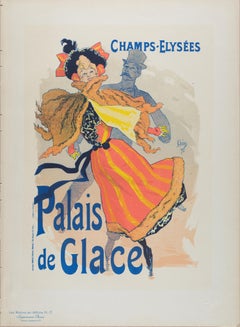
Palais de Glace: A 19th C. Lithograph from Maitres de l
Affiche by Jules Cheret
By Jules Chéret
Located in Alamo, CA
This is a 19th century color lithograph entitled "Palais de Glace, Champs-Elysees" (Ice Palace, Champs-Elysees) created by Jules Cheret and published in 1896 in Paris, France by Cher...
Category
Late 19th Century Art Nouveau
Materials
Lithograph
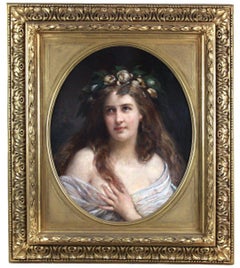
Oil On Canvas, Art Nouveau XIX century Portrait Lady With Oval Frame
Located in Gavere, BE
"Oil On Canvas, Art Nouveau XIX Portrait Lady With Oval Frame"
Oil on canvas Portrait of a lady, Art Nouveau style, signed Gustav Julius GRÜN (1823-1896)
German school of the 19th c...
Category
1880s Art Nouveau
Materials
Gold Leaf
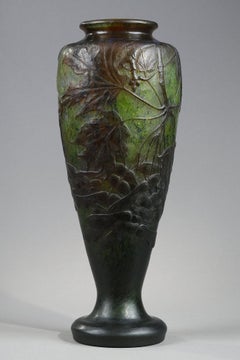
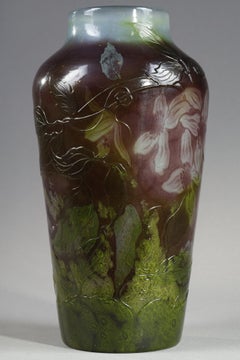
Vase with Clematis
By Émile Gallé
Located in PARIS, FR
Vase with Clematis
by Émile GALLE (1846-1904)
A baluster-shaped vase ornated with clematis.
Green, purple and opalescent multi-layered glass.
The fine floral decoration was made bo...
Category
Early 20th Century Art Nouveau
Materials
Blown Glass
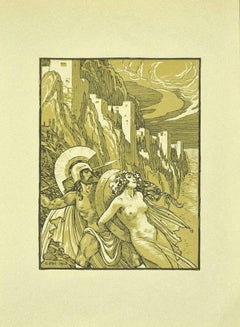
The Greek Soldier and the Bacchant - Lithograph by F. Bac - 1922
Located in Roma, IT
The Greek Soldier and the Bacchant is an original modern artwork realized by Ferdinand Bac (1859 - 1952) in 1922.
Signed and dated on plate on the lowe...
Category
1920s Art Nouveau
Materials
Lithograph
Alphonse Mucha
s 1902 Documents décoratifs - Planche 30
Located in PARIS, FR
Alphonse Mucha's name shines like that of a visionary artist who left an indelible mark on the aesthetics of the early 20th century. The year 1902 saw the publication of "Documents d...
Category
Early 1900s Art Nouveau
Materials
Paper, Lithograph
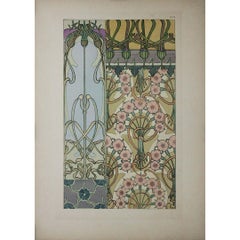
Double sided crayon drawing in colors: Study for "The Shoe" (recto)
Located in Fairlawn, OH
Double sided crayon drawing:
Front: Study for "The Shoe"
Reverse: Studies of Figures
Blue crayon, red and black crayons
Image size: 19.25 x 15.375 inches
Frame size: 30 x 25 1/2 inch...
Category
1890s Art Nouveau
Materials
Crayon
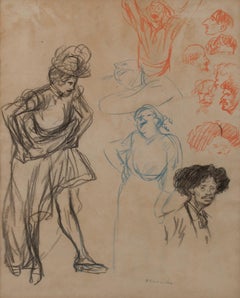
A "Moonlight" Cristallerie Vase with Damselfly
By Émile Gallé
Located in PARIS, FR
A "Moonlight" Cristallerie Vase with Damselfly
by Emile GALLE (1846-1904)
Vase called "Cristallerie de Gallé"
Vase with rounded body and squared collar,
Ornated with a damselfly an...
Category
Late 19th Century Art Nouveau
Materials
Blown Glass
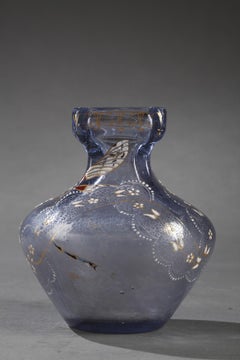
The Siren - Lithograph by Ferdinand Bac - 1922
Located in Roma, IT
The Siren is an original modern artwork realized by Ferdinand Bac (1859 - 1952) in 1922.
Signed and dated on plate on the lower central margin: F. Bac 1...
Category
1920s Art Nouveau
Materials
Lithograph
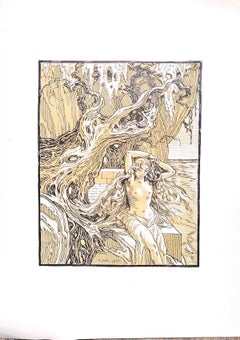
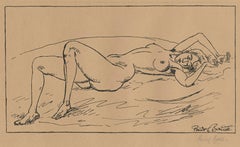
Reclining Nude on Bed
By Rudolf Bauer
Located in Fairlawn, OH
Reclining Nude on Bed
Lithograph, c. 1910
Signed in pencil lower right and in the plate, lower right
Image size: 7-1/4 x 13"
Sheet size: 12 1/2 x 19 inches
Condition: very good
Some aging to the tan paper
Provenance: Estate of the Artist
Borghi & Company, New York
Rudolph Bauer
1889-1953
Rudolf Bauer was born in Lindenwald near Bromberg, Silesia, in 1889 but his family moved only a few years later to Berlin. In 1905 Bauer began his studies at the Berlin Academy of Art but left the Academy only a few months later to educate himself. The upshot was paintings, caricatures and comical drawings which were published in 'Berliner Tageblatt', 'Ulk' and 'Le Figaro'.
From 1912 Bauer contributed to the magazine and Gallery 'Der Sturm' founded by Herwarth Walden and pivotal to German Expressionism and the international avant-garde. In 1915 Rudolf Bauer participated for the first time in a group show at Walden's gallery. There he met Hilla von Rebay, with whom he began a relationship of many years that was crucial to Bauer's later work. By 1922 Bauer had shown work at about eight exhibitions mounted by 'Der Sturm'. From 1918 he also taught at the 'Der Sturm' art school, where Georg Muche was the director. After the war ended, Bauer was a founding member of the 'November Group' although he did not collaborate closely with the group. In 1919 Bauer joined forces with the painter and architect Otto Nebel and with Hilla von Rebay to found the artists' association 'Die Krater'. Impressionist at the outset, Bauer's early work reveals Cubist and Expressionist influences. By 1915/16 Bauer had switched to an abstract pictorial idiom, which is markedly influenced by Kandinsky. In the early 1920s Bauer was also preoccupied with Russian Constructivism as well as the Dutch de Stijl group. Bauer's decided preference for non-representational painting culminated in 1929 with the foundation of a private museum, 'Das Geistreich', which he directed as a salon for abstract art.
Political developments in Germany forced Bauer to sell some of his work in America from 1932. His agent in America was Hilla von Rebay, who was by now director of the Guggenheim Collection. In 1936 she organized a touring exhibition of non-representational European art that included sixty Rudolf Bauer oil...
Category
1910s Art Nouveau
Materials
Lithograph
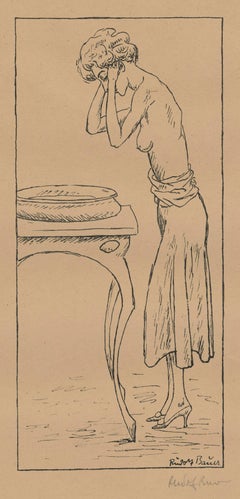
untitled (Young Woman Washing)
By Rudolf Bauer
Located in Fairlawn, OH
untitled (Young Woman Washing)
Lithograph, c. 1910
Signed in pencil lower right; signed in the plate lower right (see photo)
Image size: 11 x 5-1/8"
Sheet size: 18 7/8 x 12 5/8 inches
Condition: Very good
Aging to the tan paper it is printed on
Provenance: Estate of the Artist
Borghi & Company, NYC
Rudolph Bauer
1889-1953
Rudolf Bauer was born in Lindenwald near Bromberg, Silesia, in 1889 but his family moved only a few years later to Berlin. In 1905 Bauer began his studies at the Berlin Academy of Art but left the Academy only a few months later to educate himself. The upshot was paintings, caricatures and comical drawings which were published in 'Berliner Tageblatt', 'Ulk' and 'Le Figaro'.
From 1912 Bauer contributed to the magazine and Gallery 'Der Sturm' founded by Herwarth Walden and pivotal to German Expressionism and the international avant-garde. In 1915 Rudolf Bauer participated for the first time in a group show at Walden's gallery. There he met Hilla von Rebay, with whom he began a relationship of many years that was crucial to Bauer's later work. By 1922 Bauer had shown work at about eight exhibitions mounted by 'Der Sturm'. From 1918 he also taught at the 'Der Sturm' art school, where Georg Muche was the director. After the war ended, Bauer was a founding member of the 'November Group' although he did not collaborate closely with the group. In 1919 Bauer joined forces with the painter and architect Otto Nebel and with Hilla von Rebay to found the artists' association 'Die Krater'. Impressionist at the outset, Bauer's early work reveals Cubist and Expressionist influences. By 1915/16 Bauer had switched to an abstract pictorial idiom, which is markedly influenced by Kandinsky. In the early 1920s Bauer was also preoccupied with Russian Constructivism as well as the Dutch de Stijl group. Bauer's decided preference for non-representational painting culminated in 1929 with the foundation of a private museum, 'Das Geistreich', which he directed as a salon for abstract art.
Political developments in Germany forced Bauer to sell some of his work in America from 1932. His agent in America was Hilla von Rebay, who was by now director of the Guggenheim Collection. In 1936 she organized a touring exhibition of non-representational European art that included sixty Rudolf Bauer oil...
Category
1910s Art Nouveau
Materials
Lithograph
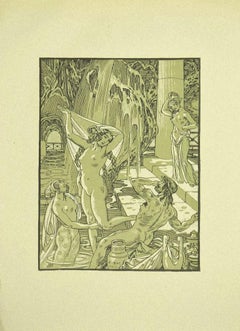
Allegory of Water - Original Lithograph by Ferdinand Bac - 1922
Located in Roma, IT
Allegory of Water is an original modern artwork realized by Ferdinand Bac (1859 - 1952) in 1922.
Signed and dated on plate on the lower central margin (...
Category
1920s Art Nouveau
Materials
Lithograph
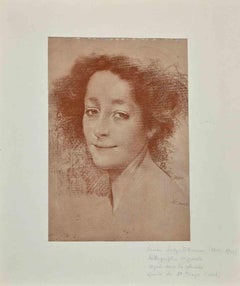
The Portrait - Lithograph by L. Levy-Dhurmer - 1909 ca.
Located in Roma, IT
The Portrait is an Original lithograph on paper realized by Lucien Lévy-Dhurmer (1865-1953) in 1909 ca.
Signed in the plate.
Good conditions.
Included a Passepartout: 42 x 35 cm
Category
1890s Art Nouveau
Materials
Lithograph
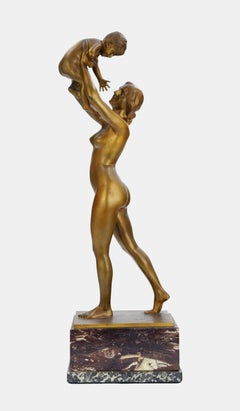
Mother Happiness / - The ecstasy of maternal joy -
Located in Berlin, DE
Johannes Boese (1856 Ostrog - 1917 Berlin), Mutterglück, um 1910. Goldbraun patinierte Bronze auf gegossener rechteckiger Plinthe, montiert auf zweifarbigem Marmorsockel (9,5 cm Höhe...
Category
1910s Art Nouveau
Materials
Bronze
"La Vache Enragee" iconic vintage poster by Toulouse-Lautrec
Located in Hinsdale, IL
TOULOUSE-LAUTREC, HENRI DE
(1864-1901)
"LA VACHE ENRAGÉE"
Wittrock P27B, Adhemar 197
Original color lithograph
Wittrock’s State III of III with letters
Printed on buff wove paper, c. 1896
Bears artist stamp “TL” upper right, dated 96
Image size: 22 1/2” x 23 5/8”
Several examples are known where Lautrec drew on work by other artists whom he admired. In this poster there are clear references to Adolphe Willette's humorous themes and rococo style of illustration. Willette was the founder and illustrator of the short-lived monthly “La Vache Enragee”(the angry cow) edited by the cartoonist Adolphe Roedel. This colored poster of the same title was commissioned for the appearance of the magazine March 1896. As a reference to the wretched financial state of most artists, the term “manger de la vache enrage” (meaning roughly, “meaning not having enough to eat”) was adopted as the motto for the “Vachalcade”which was held on Montmarte annually from 1896. This was an artists' procession, with fanfares and allegories on fame and the muses; it also included a furious cow and a troupe of pretty girls as a satire on Europa with the bull. The event was organized by Roedel"(Adriani p.217) Toulouse-Lautrec took up lithography at a high point in its history, when technical advances in color printing and new possibilities for large scale led to a proliferation of posters as well as prints for the new bourgeois collector. In his short career, he created more than three hundred fifty prints and thirty posters, as well as lithographed theater programs...
Category
1890s Art Nouveau
Materials
Lithograph

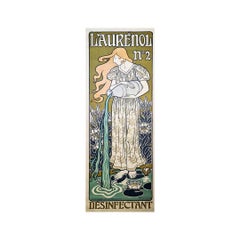
1898 Original Poster - Laurénol N°2 Désinfectant - Art Nouveau - Advertising
By Maurice Pillard Verneuil
Located in PARIS, FR
Very nice original poster from 1898 by Maurice Pillard Verneuil.
Standing on dark blue water lilies, a pretty woman with flowing orange hair pours water from a gray jug. The essence ...
Category
1890s Art Nouveau
Materials
Linen, Paper, Lithograph
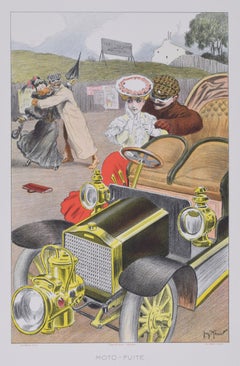
Moto-Fuite
Located in Fairlawn, OH
Moto-Fuite
Color lithograph, c. 1902
Signed in the stone lower right (see photo)
Published by Edmund Sagot (1857-1917), Paris
Printed by Atelier Chaix, Paris
Large edition with titl...
Category
Early 1900s Art Nouveau
Materials
Lithograph
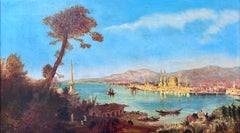
View of Istanbul – Golden Horn and Süleymaniye Mosque
Located in Paris, Île-de-France
Orientalist School
Attributed to Émile Willaey (1880-1963)
Title View of Istanbul – Golden Horn and Süleymaniye Mosque
Date 1910
Medium Oil on canvas
Dimensions 50 × 89 cm (canvas)...
Category
1910s Art Nouveau
Materials
Oil
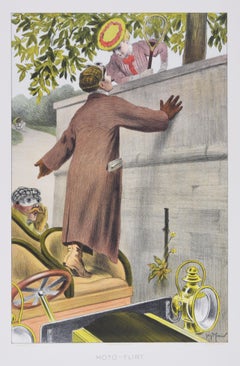
Moto-Flirt
Located in Fairlawn, OH
Moto-Flirt
Color lithograph, c. 1902
Signed in the stone lower right (see photo)
Published by Edmund Sagot (1857-1917), Paris
Printed by Atelier Chaix, Paris
Large edition with title...
Category
Early 1900s Art Nouveau
Materials
Lithograph
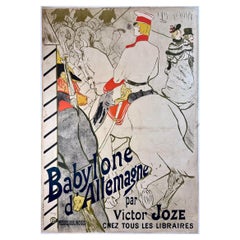
Henri De Toulouse Lautrec Babylone D’Allemagne 1894
Located in Dallas, TX
Henri De Toulouse-Lautrec (French 1864 - 1901)
BABYLONE D'ALLEMAGNE Printed in 1894
Lithograph printed in colors, 1894, on linen-backed wove paper, printed by Chaix, Paris, tasteful...
Category
1890s Art Nouveau
Materials
Paper
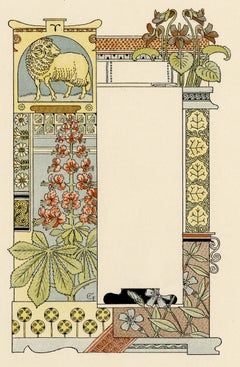
Aries-The Ram
Located in Fairlawn, OH
Signed with the artist's initials lower left
From: Les Douze Mois de 1889
As published in Vol. 9, No. 425 of Les Hommes d'Aujourd'hui.
Published by Sagot, Paris
Proof before letters...
Category
1880s Art Nouveau
Materials
Lithograph
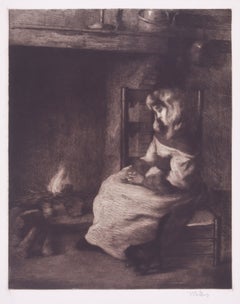
L
Angellus
Located in Fairlawn, OH
L'Angellus
Etching, engraving and acquatint on Arches paper, 1902
Signed lower right by the artist (see photo)
This is a first state impression printed in a brown/black ink, one of ...
Category
Early 1900s Art Nouveau
Materials
Etching
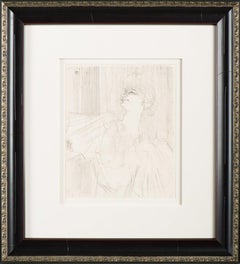
"Yvette Guilbert" by Toulouse-Lautrec
Located in Hinsdale, IL
TOULOUSE-LAUTREC, HENRI DE
(1864-1901)
"Yvette Guilbert – A Menilmontant de Bruant"
Delteil 255, Adhemar 311
Lithograph printed in black with beige t...
Category
1990s Art Nouveau
Materials
Lithograph
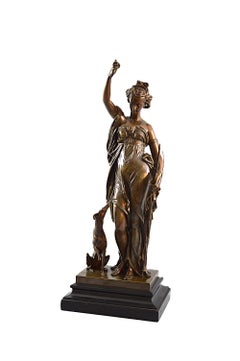
Eugene Laurent (French, 1832-1898) Diana the Huntress
Located in Berlin, DE
LAURENT, Eugene, (French, 1832-1898): Diana the Huntress, bronze,
64 cm high,
signed, resting on a black marble base, in an antique dress with her hunting dog.
Patinated bronze....
Category
Late 19th Century Art Nouveau
Materials
Bronze
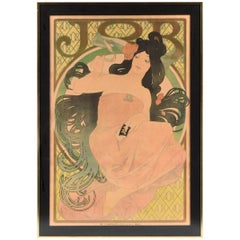
Alphonse Mucha JOB Original Poster, 1898
Located in Dallas, TX
Alphonse Mucha 1898 "JOB" poster. Printed by: “Imp. F Champenois 66 Boul, St Michel, Paris” in 1898
Very good (A-) condition with toning throughout and less under matting.
Linen b...
Category
1890s Art Nouveau
Materials
Paper
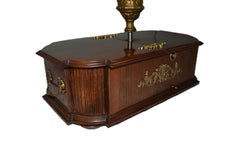
Polyphon Automat
Located in Berlin, DE
Polyphon Perforated Plate Christmas Tree Stand
Completely overhauled.
Approx.
Width 46 cm
Depth 27 cm
Height 31 cm
The automaton has been completely overhauled and tuned.
Spri...
Category
Late 19th Century Art Nouveau
Materials
Metal
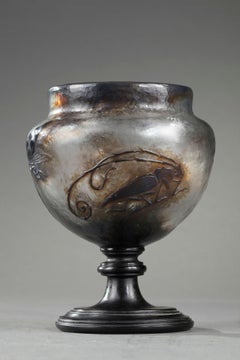
A "Tristesse" vase
By Émile Gallé
Located in PARIS, FR
A "Tristesse" vase
by Émile Gallé (1846-1904)
An exceptional and extremely rare vase known as "Vase de tristesse" ("Vase of Sadness"),
raised on a molded foot.
Made of double-layere...
Category
1880s Art Nouveau
Materials
Blown Glass
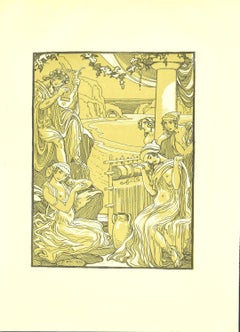
The Weaving - Original Lithograph by F. Bac - 1922
Located in Roma, IT
The Weaving is an original modern artwork realized by Ferdinand Bac (1859 - 1952) in 1922.
Original Lithograph on ivory paper.
Perfect conditions.
The Weaving is an very beautiful Liberty Style lithograph realized by the French artist Ferdinand Bac in the Second decade of the XX Century. The work depicts Penelope with the maids who sing and play ancient instruments. The background is characterized by a very calm sea and a cliff, in the central part we see the shaft of a column full of leaves and curtains.
This work has been realized the French artist Ferdinand Bac (1859 - 1952). Ferdinand-Sigismond Bach, known as Ferdinand Bac was a French cartoonist, artist and writer, son of an illegitimate nephew of the Emperor Napoleon. As a young man, he mixed in the fashionable world of Paris of the Belle Époque, and was known for his caricatures, which appeared in popular journals. He also traveled widely in Europe and the Mediterranean. In his fifties, he began a career as a landscape gardener. He attended Adolphe Thiers, Gambetta, Richard Wagner, Victor Hugo, Taine, Villiers de L'Isle-Adam, Paul Verlaine, Maurice Barrès, Barbey d'Aurevilly, Alphonse Daudet, Guy de Maupassant, Verdi, Gounod, Pierre de Nolhac, and many more other famous people of the time. He established himself as one of the first cartoonists and caricaturists of his time, as famous as Albert Robida...
Category
1920s Art Nouveau
Materials
Lithograph
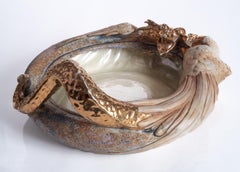
Golden Dragon Bowl by Amphora, Art Nouveau c. 1900
Located in Chicago, IL
A golden serpentine dragon with feathered wings encircles a shallow bowl with mottled blue, pink, and orange glazing. Polished gold glaze on head and tail. This form was part of the ...
Category
Early 1900s Art Nouveau
Materials
Ceramic
Art Nouveau art for sale on 1stDibs.
Find a wide variety of authentic art Nouveau available for sale on 1stDibs. Works in this style were very popular during the 21st Century and Contemporary, but contemporary artists have continued to produce works inspired by this movement. If you’re looking to add art created in this style to introduce contrast in an otherwise neutral space in your home, the works available on 1stDibs include elements of yellow, orange, blue, green and other colors. Many Pop art paintings were created by popular artists on 1stDibs, including Alphonse Mucha, Jules Chéret, Henri de Toulouse-Lautrec, and Adolphe Willette. Frequently made by artists working with Lithograph, and Paper and other materials, all of these pieces for sale are unique and have attracted attention over the years. Not every interior allows for large Art Nouveau, so small editions measuring 1.58 inches across are also available. Prices for art made by famous or emerging artists can differ depending on medium, time period and other attributes. On 1stDibs, the price for these items starts at $1 and tops out at $198,500, while the average work sells for $1,683.
Still Thinking About These?
All Recently ViewedMore Ways To Browse
Maggie Siner
Maplethorpe Calla
Marble Woman Head
Marcel Leprin
Mark Stock
Martin Hardie
Mauritz Lindstrom
Maximillien Luce
Michael Budden Central Park
Midcentury Matador Paintings
Mike Wright
Miracle On Ice
Mississippi River Painting
Monarch Of The Glen Painting
Moroccan Paintings Essaouira
Morpho Butterfly Art
Mount Tamalpais
Murray Dessner