Pop Art

POP ART STYLE

Perhaps one of the most influential contemporary art movements, Pop art emerged in the 1950s. In stark contrast to traditional artistic practice, its practitioners drew on imagery from popular culture — comic books, advertising, product packaging and other commercial media — to create original Pop art paintings, prints and sculptures that celebrated ordinary life in the most literal way.

ORIGINS OF POP ART

CHARACTERISTICS OF POP ART 

  • Bold imagery
  • Bright, vivid colors
  • Straightforward concepts
  • Engagement with popular culture 
  • Incorporation of everyday objects from advertisements, cartoons, comic books and other popular mass media

POP ARTISTS TO KNOW

ORIGINAL POP ART ON 1STDIBS

The Pop art movement started in the United Kingdom as a reaction, both positive and critical, to the period’s consumerism. Its goal was to put popular culture on the same level as so-called high culture.

Richard Hamilton’s 1956 collage Just what is it that makes today’s homes so different, so appealing? is widely believed to have kickstarted this unconventional new style.

Pop art works are distinguished by their bold imagery, bright colors and seemingly commonplace subject matter. Practitioners sought to challenge the status quo, breaking with the perceived elitism of the previously dominant Abstract Expressionism and making statements about current events. Other key characteristics of Pop art include appropriation of imagery and techniques from popular and commercial culture; use of different media and formats; repetition in imagery and iconography; incorporation of mundane objects from advertisements, cartoons and other popular media; hard edges; and ironic and witty treatment of subject matter.

Although British artists launched the movement, they were soon overshadowed by their American counterparts. Pop art is perhaps most closely identified with American Pop artist Andy Warhol, whose clever appropriation of motifs and images helped to transform the artistic style into a lifestyle. Most of the best-known American artists associated with Pop art started in commercial art (Warhol made whimsical drawings as a hobby during his early years as a commercial illustrator), a background that helped them in merging high and popular culture.

Roy Lichtenstein was another prominent Pop artist that was active in the United States. Much like Warhol, Lichtenstein drew his subjects from print media, particularly comic strips, producing paintings and sculptures characterized by primary colors, bold outlines and halftone dots, elements appropriated from commercial printing. Recontextualizing a lowbrow image by importing it into a fine-art context was a trademark of his style. Neo-Pop artists like Jeff Koons and Takashi Murakami further blurred the line between art and popular culture.

Pop art rose to prominence largely through the work of a handful of men creating works that were unemotional and distanced — in other words, stereotypically masculine. However, there were many important female Pop artists, such as Rosalyn Drexler, whose significant contributions to the movement are recognized today. Best known for her work as a playwright and novelist, Drexler also created paintings and collages embodying Pop art themes and stylistic features.

Read more about the history of Pop art and the style’s famous artists, and browse the collection of original Pop art paintings, prints, photography and other works for sale on 1stDibs.

to
2,959
5,281
1,879
2,555
2,493
2,448
Overall Width
to
Overall Height
to
4
3
6,817
7,832
1
3
13
10
64
832
1,680
1,796
1,937
113,873
64,929
54,984
27,143
14,656
9,483
6,540
5,762
4,190
3,066
2,577
2,334
2,233
655
7,245
3,944
2,295
5,161
2,526
2,312
1,953
1,518
1,342
1,097
972
851
511
501
494
427
394
328
324
284
284
271
263
5,072
3,332
2,898
2,574
2,099
1,122
522
441
423
239
2,569
2,447
11,199
2,661
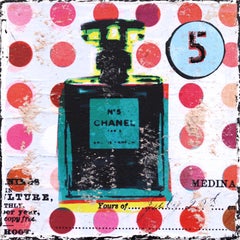
Style: Pop Art
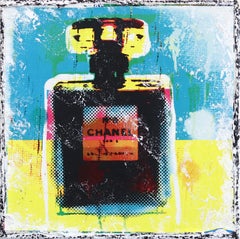
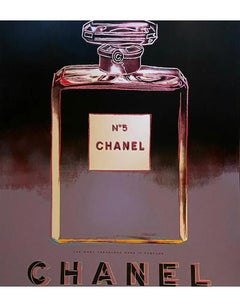
Chanel No5, Working Trial Proof
Located in Toronto, ON
Working Trial Proof Silkscreen Serigraph Includes Documentation and Official Stamps Please note this artwork is not hand signed or editioned
Category

1980s Pop Art

Materials

Screen

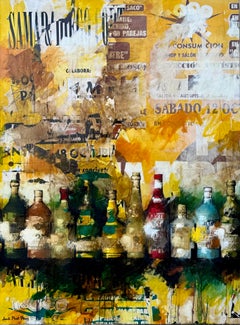
Large Spanish Pop Art Catalan Mixed Media Collage Painting Jordi Prat Pons
Located in Surfside, FL
Jordi Prat Pons (Spanish, 1965) Mixed media painting on canvas. Torn paper collage A group of liquor bottles or a bar scene Hand signed lower left Provenance: Commenoz Gallery, Flo...
Category

Late 20th Century Pop Art

Materials

Canvas, Paint, Paper

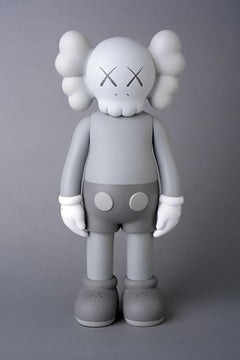
KAWS Companion 2016 (KAWS grey companion)
By KAWS
Located in NEW YORK, NY
KAWS Grey Companion, 2016. New and sealed in its original packaging. Published by Medicom Japan in conjunction with the exhibition, KAWS: Where The...
Category

21st Century and Contemporary Pop Art

Materials

Resin, Vinyl

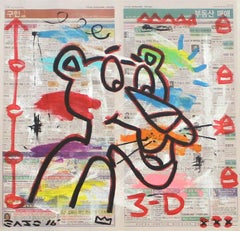
"Curious Cat in 3D" - Pink Panther Pop Street Art on Newspaper by Gary John
Located in Los Angeles, CA
Los Angeles street artist Gary John exploded onto the international art scene first during Art Basel Miami in 2013. John’s playfully bold work quickly gained attention and he was nam...
Category

21st Century and Contemporary Pop Art

Materials

Mixed Media, Acrylic, Newsprint

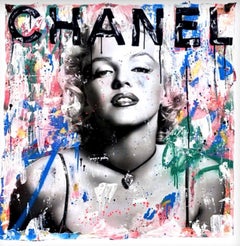
Monroe X Chanel - Mixed Media on Paper - Framed
Located in New York, NY
Marilyn Monroe with a nod to Chanel. Mixed media on paper. White Frame with museum quality glass. Vibrant colors. About the Artist: "Seek One, a native of Philadelphia, Penn...
Category

2010s Pop Art

Materials

Mixed Media, Archival Paper

Tape Collection, Tinted Oval Window Cassette - Contemporary Pop Art Color Photo
Located in Cambridge, GB
Tinted Oval Window Cassette from the Heidler & Heeps Tape Collection. The Heidler & Heeps collaborations are creative representations of Natasha Heidler and Richard Heeps’, personal ...
Category

2010s Pop Art

Materials

Photographic Paper, C Print, Color, Silver Gelatin

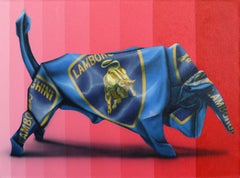
Honor and Lambo - Vibrant Origami Inspired Lamborghini Blue Painting on Canvas
Located in Los Angeles, CA
Emilio Rama's captivating pop art-inspired paintings featuring origami animal figures are a distinctive and original contribution to the realm of contempor...
Category

2010s Pop Art

Materials

Canvas, Acrylic

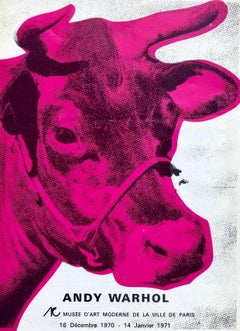
Andy Warhol Musee d’Art Moderne catalog (Warhol Cow)
Located in NEW YORK, NY
Andy Warhol Paris, Musee d’Art Moderne de la Ville de Paris, 1970: Rare original Andy Warhol exhibition catalog featuring a Warhol Pink Cow cover. Published on the occasion of the Warhol solo show at the MAM, Paris, Dec. 16, 1970 - Jan. 14, 1971. A must have rare vintage Andy Warhol Cows collectible. 1st edition; 1970. Single sheet folded, twelve-page accordion style booklet. Text by Alfred Pacquement (French). Exhibition checklist found within. Reverse features a candid, black and white portrait of Warhol. Medium: Offset printed Exhibition Catalog. Dimensions: Folded 7.75 × 10.5 inches; Unfolded: 7.75 x 47 inches. Condition: Very good overall vintage condition; hand written notations to interior first page. Unsigned from edition of unknown. Further Background: Andy Warhol was inspired to by art dealer Ivan Karp to create his Cows in the 1960s. Warhol’s printer Gerard Malanga chose the photograph of the cow, however it was Warhol’s unique pop art style that made the final product so interested. He chose a bold color scheme of bright pink on yellow, which turned the pastoral animal into an amusing and oddly exciting subject matter. Warhol then printed the electrifying Cow image on wallpaper, introducing this process to his creative production. In Warhol’s classic mode of repetition, every inch of the walls were covered with hot pink and yellow Cows. Castelli was so moved by the show, that he had professionals install the wallpaper so that the guests could experience Andy Warhol’s vision. _ Obsessed with celebrity, consumer culture, and mechanical reproduction, Pop Art king, Andy Warhol created some of the 20th century’s most iconic images. Warhol was widely influenced by popular & consumer culture, with this being evident in some of his most famous works: 32 Campbell's soup cans, Brillo pad box sculptures, and portraits of Marilyn Monroe & Mick Jagger, for example. Rejecting the standard painting and sculpting modes of his era, Warhol embraced silk-screen printmaking to achieve his characteristic hard edges and flat areas of color. The artist mentored Keith Haring and Jean-Michel Basquiat and continues to influence contemporary art around the world: His most bold successors include Richard Prince, Takashi Murakami, and Jeff Koons. Warhol has been the subject of exhibitions at the Whitney Museum of American Art, Museum of Modern Art, Tate Modern, and Centre Pompidou, among other institutions. Related Categories Warhol prints. Warhol prints. Warhol screen print...
Category

1970s Pop Art

Materials

Paper, Offset

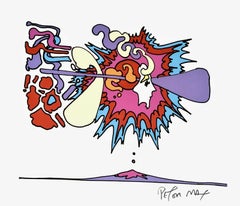
Winter Sunshine, Peter Max
Located in Fairfield, CT
Artist: Peter Max (1937) Title: Winter Sunshine Year: 1970 Edition: A.P.; 300, plus proofs Medium: Silkscreen on wove paper Size: 16 x 18.5 inches Condition: Good Inscription: Signed...
Category

1970s Pop Art

Materials

Screen

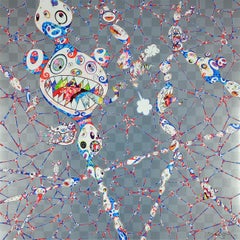
TAKASHI MURAKAMI: We Are Destined To Meet Someday! Superflat, Japanese Pop Art
Located in Madrid, Madrid
WE ARE DESTINED TO MEET SOMEDAY! BUT FOR NOW, WE WANDER IN DIFFERENT DIMENSIONS Date of creation: 2017 Medium: Offset lithograph with cold stamp on paper Edition: 300 Size: 68 x 68 c...
Category

2010s Pop Art

Materials

Varnish, Lithograph, Offset

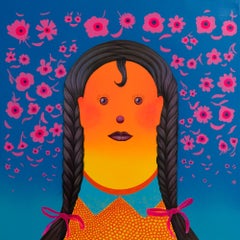
Bright Orange Figurative Portrait in Vivid Acrylic With Floral Emoji Motifs
Located in FISTERRA, ES
This vivid acrylic portrait uses saturated color, stylized features and floral emoji-like motifs to explore how identity is shaped in contemporary visual culture. Part of the ongoing...
Category

2010s Pop Art

Materials

Spray Paint, Canvas, Acrylic

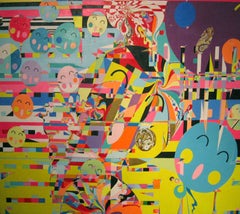
Zing Wreck, Large Pop Art Painting by Muffinhead
Located in Long Island City, NY
Zing Wreck by Muffinhead, American (1975) Date: 2003 Acrylic on Canvas, signed, titled and dated verso Size: 54 x 63 in. (137.16 x 160.02 cm)
Category

Early 2000s Pop Art

Materials

Canvas, Acrylic

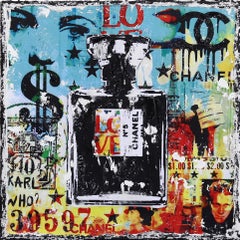
Chanel Who - Layered Contemporary Abstract Pop Art
Located in Los Angeles, CA
Swiss artist Marion Duschletta transforms luxury objects and urban landscapes from around the world into unique layered artworks. She combines an intriguing mixture of urban photogra...
Category

21st Century and Contemporary Pop Art

Materials

Canvas, Mixed Media

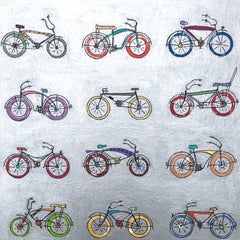
These Years, Original Painting
Located in San Francisco, CA

Artist Comments
Artist John McCabe depicts twelve colorful bicycles in a grid. The solid silver background allows the bikes to pop with vibrant col...

Category

21st Century and Contemporary Pop Art

Materials

Acrylic

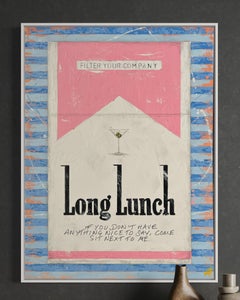
Fabulous Long Lunch, Original painting, Pop art
Located in Deddington, GB
'If you don't have anything nice to say, come sit next to me' Acrylic on Canvas 100 H x 76 W x 5 D cm (39.37 x 29.92 x 1.97 in) Sold unframed Image size: Height: 100cm (39.37 in) W...
Category

2010s Pop Art

Materials

Canvas, Acrylic

Marilyn in Korea
Located in PARIS, FR
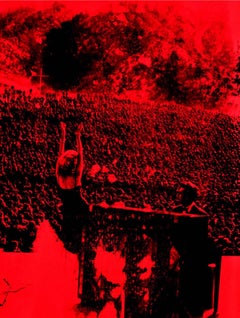
Original and unique artwork by Russell Young. Acrylic paint and enamel screen print on linen, unframed dimensions 62 x 48 inches, 2008, from the series "Fame + Shame". Red and dark c...
Category

Early 2000s Pop Art

Materials

Enamel

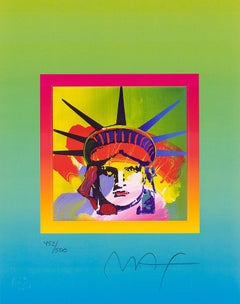
Liberty Head on Blends, Peter Max
Located in Fairfield, CT
Artist: Peter Max (1937) Title: Liberty Head on Blends Year: 2005 Edition: 452/500, plus proofs Medium: Lithograph on Lustro Saxony paper Size: 12.75 x 10 inches Condition: Excellent...
Category

Early 2000s Pop Art

Materials

Lithograph

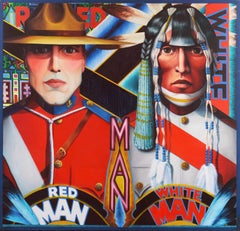
Red Man/White Man , Large Pop Art Figural, First Nation, Native American, RCMP
By James Scott
Located in Santa Cruz, CA
'Red Man/White Man' by James Scott, 1979. Large Pop Art Figural, First Nation, Native American, RCMP ------ A substantial figurative oil painting showing two figures, a Royal Canadi...
Category

1970s Pop Art

Materials

Canvas, Oil

Kaleidoscope III, Pop Art Screenprint by John Grillo
Located in Long Island City, NY
Artist: John Grillo, American (1917 - 2014) Title: Kaleidoscope III Year: 1980 Medium: Screenprint, signed and numbered in pencil Edition: 200 Image Size: 22 x 30 inches Size: ...
Category

1980s Pop Art

Materials

Screen

Sunshine Chanel
Located in Los Angeles, CA
Swiss artist Marion Duschletta transforms luxury objects and urban landscapes from around the world into unique layered artworks. She combines an intriguing mixture of urban photogra...
Category

21st Century and Contemporary Pop Art

Materials

Mixed Media, Canvas

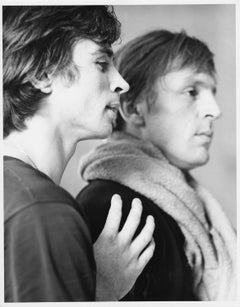
Rudolf Nureyev and Erik Bruhn photographed rehearsing, January 20, 1962
Located in Senoia, GA
11 x 14" vintage silver gelatin photograph of Rudolf Nureyev and Erik Bruhn photographed during a break in dance class, January 20, 1962. Comes directly fro...
Category

1960s Pop Art

Materials

Silver Gelatin

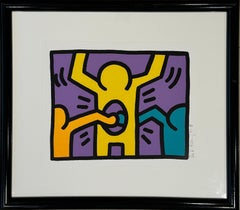
Pop Shop I (3)
Located in Hollywood, FL
Artist: Keith Haring Title: Pop Shop I (3) Size: 12 × 15 in (30.5 × 38.1 cm) Medium: Silkscreen in colors on wove paper Edition: 151 of 200 Year: 1987 Notes: Hand signed, numbered, a...
Category

1980s Pop Art

Materials

Screen

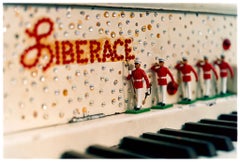
Liberace s Piano, Las Vegas - American Pop Art Color Photography
Located in Cambridge, GB
'Liberace's Piano' from Richard Heeps 'Dream in Colour' Series. Richard captured one of Liberace's piano's in a private home, it has a an archetypal fun, kitsch, Las Vegas feel. Th...
Category

Early 2000s Pop Art

Materials

Photographic Paper, C Print, Color, Silver Gelatin

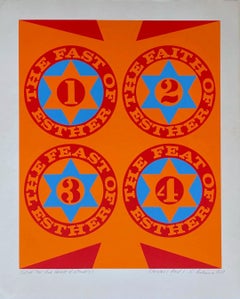
The Four Facets of Esther (I) Silkscreen Rare signed Printers Proof, Judaica
Located in New York, NY
Robert Indiana Purim: The Four Facets of Esther (I) Sheehan, 36, 1966 Color silkscreen on off white wove paper Printed by Stephen Poleskie, Chiro...
Category

1960s Pop Art

Materials

Screen

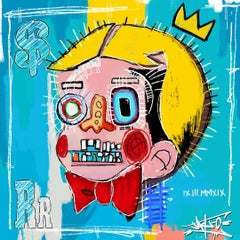
King Richie, Street Art, Pop Art,
Located in München, BY
Edition 5 Richie Rich as King JAY-C – the pseudonym of this innovative young artist known for his subversive use of familiar figures and symbols. Using a distinct and fine British s...
Category

2010s Pop Art

Materials

Mixed Media, Pigment, Archival Pigment

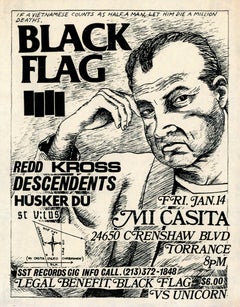
Raymond Pettibon Black Flag 1983 (Raymond Pettibon punk flyer)
Located in NEW YORK, NY
Raymond Pettibon Black Flag 1983 (punk flyer): Black Flag at Mi Casita, Jan. 14, 1983: Offset-printed, 11 x 8.5 in. (28 x 21.6 cm). Black & white. Handbill / flyer for performance by...
Category

1980s Pop Art

Materials

Offset

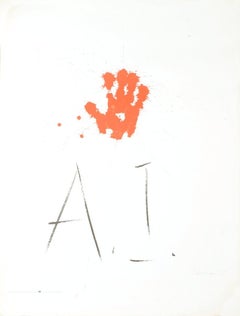
Liberman 1977 Amnesty International Vintage
Located in Brooklyn, NY
First edition advertising poster by Alexander Liberman for Amnesty International in 1977. " Artists for Amnesty, a series of art posters creat...
Category

1970s Pop Art

Materials

Lithograph

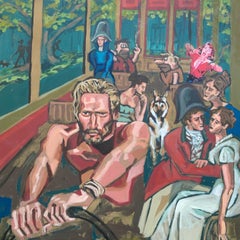
"New Orleans Streetcar" - Large Contemporary Mixed Media Collage Painting
Located in New Orleans, LA
Anyone who has visited New Orleans knows it's crammed with characters of every description. Important emerging artist Gunner Dongieux (New Orleans, San Francisco) grew up in the Big Easy, and here has captured the eccentricity which characterizes the city. You can see all sorts of characters here - even Fred Flintstone...
Category

2010s Pop Art

Materials

Mixed Media, Acrylic

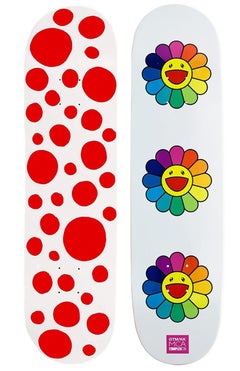
Yayoi Kusama Takashi Murakami Skateboard decks (2 works)
Located in NEW YORK, NY
Yayoi Kusama & Takashi Murakami Skateboard Decks (2 works): A set of two individual skateboard decks featuring Kusama's dots obsession imagery & Murakami’s iconic flowers. Makes f...
Category

21st Century and Contemporary Pop Art

Materials

Wood, Lithograph, Offset

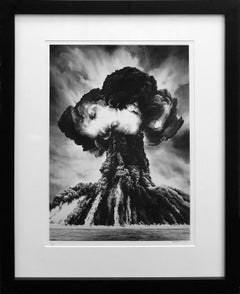
RUSSIAN BOMB (SEMIPALATINSK)
Located in Aventura, FL
Hand signed, dated and numbered by the artist. Published by Hatje Cantz Verlag, Berlin. Image: 21.75 x 15.75 in. Sheet: 23.875 x 17.875 in. Frame: 32.5 x 26.5 in. Artwork is in exce...
Category

2010s Pop Art

Materials

Digital, Paper

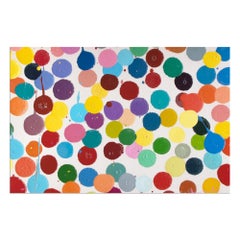
Damien Hirst, The Currency Unique Print (H11) - Signed Print, Abstract Art
Located in Hamburg, DE
Damien Hirst (British, born 1965) The Currency Unique Print (H11), 2022 Medium: Archival giclée print on paper Dimensions: 100 × 150 cm (39 2/5 × 59 1/10 in) Edition of 1000 unique p...
Category

21st Century and Contemporary Pop Art

Materials

Giclée

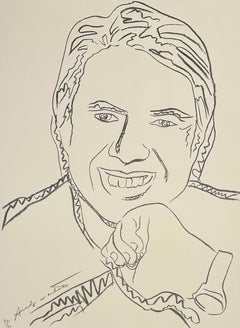
Jimmy Carter III, from Inaugural Impressions
Located in Washington, DC
Artist: Andy Warhol Title: Jimmy Carter III Portfolio: Inaugural Impressions Medium: Screenprint on J. Green paper Date: 1977 Edition: 80/100 Frame Size: 36 1/2" x 29 1/2" Sheet Size...
Category

1970s Pop Art

Materials

Screen

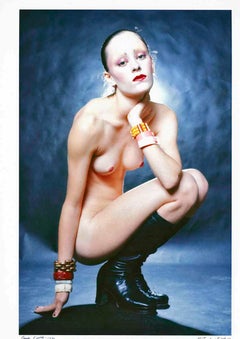
Warhol Superstar Jane Forth, signed by Jack Mitchell
Located in Senoia, GA
13 x 19" lifetime vintage color photograph of Warhol Superstar Jane Forth nude, this is the only copy of this color photograph ever signed by Jack Mitchell....
Category

1970s Pop Art

Materials

Digital Pigment

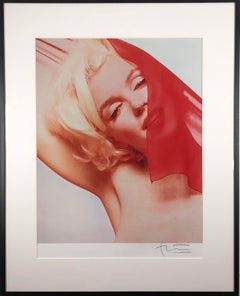
Bert Stern, "Red Scarf", unique photograph
Located in Chatsworth, CA
Original color photograph, from the original transparency, by Bert Stern taken six weeks before Marilyn Monroe’s death in 1962. The sitting took p...
Category

1960s Pop Art

Materials

Photographic Paper, C Print

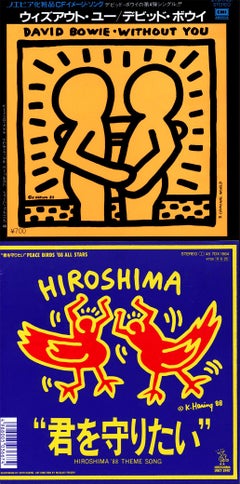
Rare 1980s Keith Haring Record Art (Keith Haring David Bowie)
Located in NEW YORK, NY
Keith Haring record art 1983 & 1988: A set of 2 rare 1980s Japanese vinyl records featuring original artwork by Keith Haring: David BOWIE "Without You" & Hiroshima All Stars. Truly vibrant colors that make for stand-out wall art and unique vintage Keith Haring collectibles. *1st Pressings 1983 & 1988 (not re-issues). Medium: Off-Set Lithograph on vinyl record covers. Dimensions: 7 x 7 inches. Printed signatures on lower right & left dated - 1983 & 1988 respectively. Light signs of handling; otherwise good to very overall vintage condition. Includes the original records (very good condition). Literature/References: Taschen: Art Record Covers. _ Keith Haring Album Art: a brief history:  Whether collaborating with Grace Jones, Andy Warhol, and Jean-Michel Basquiat, regularly frequenting clubs like Paradise Garage alongside close friend Larry Levan, or sketching DJ robots, New York artist and activist Keith Haring’s work was deeply entwined with the music world lending his vision to sounds by everyone from David Bowie to Run DMC. Looking for something cool to complement this work? Please feel free to browse additional items like this from Jean Michel Basquiat, Andy Warhol, Damien Hirst, Keith Haring & more on our 1stDibs gallery page.  Related Categories Keith Haring prints. Keith Haring figurative. East Village art...
Category

1980s Pop Art

Materials

Offset

Yours Truly - Pop Art Perfume Colorful Original
Located in Los Angeles, CA
Swiss artist Marion Duschletta transforms luxury objects and urban landscapes from around the world into unique layered artworks. She combines an intriguing mixture of urban photogra...
Category

21st Century and Contemporary Pop Art

Materials

Mixed Media, Canvas

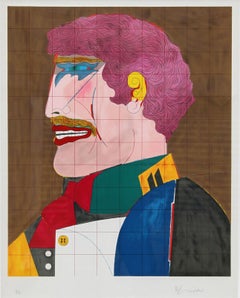
Profile, Pop Art Lithograph by Richard Lindner
Located in Long Island City, NY
Richard Lindner, German/American (1901 - 1978) - Profile, Portfolio: After Noon Portfolio, Year: 1969, Medium: Lithograph on Arches, Signed and numbered in pencil, Edition: 250, ...
Category

1960s Pop Art

Materials

Lithograph

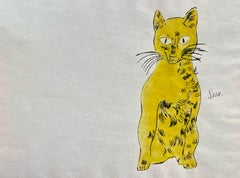
Sam the Cat Prototype Study
Located in Fredericksburg, VA
"Sam the Cat" is a notable piece from Andy Warhol's early explorations in art, representing his fascination with everyday subjects and his distinctive appr...
Category

Mid-20th Century Pop Art

Materials

Paper, Watercolor, Lithograph

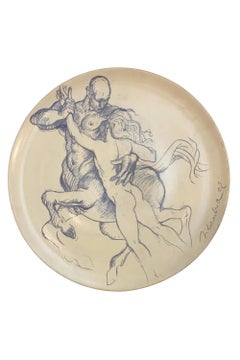
Italian Pop-Art ceramic "Dancing with Centaur”. Unique piece
Located in Firenze, IT
Dancing with Centaur or Achilles and Centaur Chiron. Hand signed Silombria 2002 Created in 2002. Unique piece. Ceramic, Made in Albissola ( Savona), atelier Ernan. Unique hand painted large charger , 50 cm (approximately 20 inch). Created by Italian Pop - Art artist Marco Silombria ( Savona, 1936-Albissola, 2017): Italian painter , sculptor and PAINTER and advertising graphic designer appreciated and esteemed, who had established in Turin starting from the end of the 1960’s. Arrived in Turin in 1950’s, after taking his first steps with famous artists such as Emilio Scavanino and Lucio Fontana. He signed several successful advertising campaigns: from the one for Gallo rice to the Fiat 127, to the posters for the Gruppo Finanziario Tessile. In the 1980’s he became a painter, and devoted to an openly and decidedly homoerotic art...
Category

Early 2000s Pop Art

Materials

Ceramic

C.O. Paeffgen, Queen - Signed Print, 1992, Pop Art, Contemporary Portrait
Located in Hamburg, DE
C.O. Paeffgen (German, 1933-2019) Queen, 1992 Medium: Offset lithograph on card stock Dimensions: 49.5 x 50 cm Edition of 100: Monogrammed, numbered and dated Condition: Very good
Category

20th Century Pop Art

Materials

Offset

Lover Man Oh Where Can You Be and Crazy. Large limited edition color photograph
Located in Miami Beach, FL
Zupan combines images from old masters, alchemical prints, contemporary artists, and bits from magazines and newspapers to create overlapping, intersecting worlds of transparencies a...
Category

2010s Pop Art

Materials

Archival Pigment

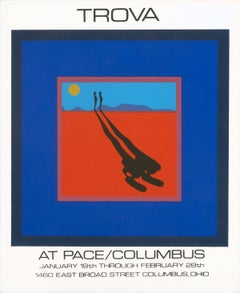
Ernst Trova, Falling Man, 1972, Screenprint
Located in Brooklyn, NY
Paper Size: 31.25 x 25.75 inches ( 79.375 x 65.405 cm ) Image Size: 24.5 x 24.5 inches ( 62.23 x 62.23 cm ) Framed: No Condition: A: Mint Additional Details: This poster by Ernest T...
Category

1970s Pop Art

Materials

Screen

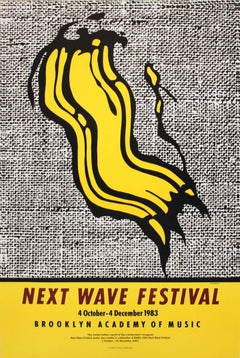
Next Wave Festival -FIRST EDITION
Located in Brooklyn, NY
This limited-edition reproduction features the 1983 motif created by Roy Lichtenstein for the Brooklyn Academy of Music (B.A.M.), a testament to his signature Pop Art style that blen...
Category

Early 2000s Pop Art

Materials

Offset

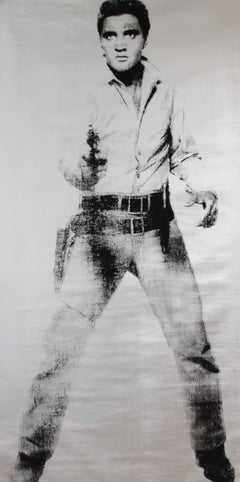
"Elvis", Denied Andy Warhol Silver Black Pop Art Painting by Charles Lutz
Located in Brooklyn, NY
Elvis, Metallic Silver and Black Full Length Silkscreen Painting by Charles Lutz Silkscreen and silver enamel painted on vintage 1960's era linen with Artist's Denied stamp of the Andy Warhol Art Authentication Board. 82" x 40" inches 2010 Lutz's 2007 ''Warhol Denied'' series gained international attention by calling into question the importance of originality or lack thereof in the work of Andy Warhol. The authentication/denial process of the [[Andy Warhol Art Authentication Board]] was used to create value by submitting recreations of Warhol works for judgment with the full intention for the works to be formally marked "DENIED". The final product of the conceptual project being "officially denied" "Warhol" paintings authored by Lutz. Based on the full-length Elvis Presley paintings by Pop Artist Andy Warhol in 1964, this is likely one of his most iconic images, next to Campbell's Soup Cans and portraits of Jackie Kennedy, Marilyn Monroe, Liz Taylor, and Marlon Brando. This is the rarest of the Elvis works from the series, as Lutz sourced a vintage roll of 1960's primed artist linen which was used for this one Elvis. The silkscreen, like Warhol's embraced imperfections, like the slight double image printing of the Elvis image. Lutz received his BFA in Painting and Art History from Pratt Institute and studied Human Dissection and Anatomy at Columbia University, New York. Lutz's work deals with perceptions and value structures, specifically the idea of the transference of values. Lutz's most recently presented an installation of new sculptures dealing with consumerism at Frank Lloyd Wright's Fallingwater House in 2022. Lutz's 2007 Warhol Denied series received international attention calling into question the importance of originality in a work of art. The valuation process (authentication or denial) of the Andy Warhol Art Authentication Board was used by the artist to create value by submitting recreations of Warhol works for judgment, with the full intention for the works to be formally marked "DENIED" of their authenticity. The final product of this conceptual project is "Officially DENIED" "Warhol" paintings authored by Lutz. Later in 2013, Lutz went on to do one of his largest public installations to date. At the 100th Anniversary of Marcel Duchamp's groundbreaking and controversial Armory Show, Lutz was asked by the curator of Armory Focus: USA and former Director of The Andy Warhol Museum, Eric Shiner to create a site-specific installation representing the US. The installation "Babel" (based on Pieter Bruegel's famous painting) consisted of 1500 cardboard replicas of Warhol's Brillo Box (Stockholm Type) stacked 20 ft tall. All 1500 boxes were then given to the public freely, debasing the Brillo Box as an art commodity by removing its value, in addition to debasing its willing consumers. Elvis was "the greatest cultural force in the Twentieth Century. He introduced the beat to everything, and he changed everything - music, language, clothes, it's a whole new social revolution." Leonard Bernstein in: Exh. Cat., Boston, The Institute of Contemporary Art and traveling, Elvis + Marilyn 2 x Immortal, 1994-97, p. 9. Andy Warhol "quite simply changed how we all see the world around us." Kynaston McShine in: Exh. Cat., New York, Museum of Modern Art (and traveling), Andy Warhol: Retrospective, 1996, p. 13. In the summer of 1963 Elvis Presley was just twenty-eight years old but already a legend of his time. During the preceding seven years - since Heartbreak Hotel became the biggest-selling record of 1956 - he had recorded seventeen number-one singles and seven number-one albums; starred in eleven films, countless national TV appearances, tours, and live performances; earned tens of millions of dollars; and was instantly recognized across the globe. The undisputed King of Rock and Roll, Elvis was the biggest star alive: a cultural phenomenon of mythic proportions apparently no longer confined to the man alone. As the eminent composer Leonard Bernstein put it, Elvis was "the greatest cultural force in the Twentieth Century. He introduced the beat to everything, and he changed everything - music, language, clothes, it's a whole new social revolution." (Exh. Cat., Boston, The Institute of Contemporary Art (and traveling), Elvis + Marilyn 2 x Immortal, 1994, p. 9). In the summer of 1963 Andy Warhol was thirty-four years old and transforming the parameters of visual culture in America. The focus of his signature silkscreen was leveled at subjects he brilliantly perceived as the most important concerns of day to day contemporary life. By appropriating the visual vernacular of consumer culture and multiplying readymade images gleaned from newspapers, magazines and advertising, he turned a mirror onto the contradictions behind quotidian existence. Above all else he was obsessed with themes of celebrity and death, executing intensely multifaceted and complex works in series that continue to resound with universal relevance. His unprecedented practice re-presented how society viewed itself, simultaneously reinforcing and radically undermining the collective psychology of popular culture. He epitomized the tide of change that swept through the 1960s and, as Kynaston McShine has concisely stated, "He quite simply changed how we all see the world around us." (Exh. Cat., New York, Museum of Modern Art (and traveling), Andy Warhol: Retrospective, 1996, p. 13). Thus in the summer of 1963 there could not have been a more perfect alignment of artist and subject than Warhol and Elvis. Perhaps the most famous depiction of the biggest superstar by the original superstar artist, Double Elvis is a historic paradigm of Pop Art from a breath-taking moment in Art History. With devastating immediacy and efficiency, Warhol's canvas seduces our view with a stunning aesthetic and confronts our experience with a sophisticated array of thematic content. Not only is there all of Elvis, man and legend, but we are also presented with the specter of death, staring at us down the barrel of a gun; and the lone cowboy, confronting the great frontier and the American dream. The spray painted silver screen denotes the glamour and glory of cinema, the artificiality of fantasy, and the idea of a mirror that reveals our own reality back to us. At the same time, Warhol's replication of Elvis' image as a double stands as metaphor for the means and effects of mass-media and its inherent potential to manipulate and condition. These thematic strata function in simultaneous concert to deliver a work of phenomenal conceptual brilliance. The portrait of a man, the portrait of a country, and the portrait of a time, Double Elvis is an indisputable icon for our age. The source image was a publicity still for the movie Flaming Star, starring Presley as the character Pacer Burton and directed by Don Siegel in 1960. The film was originally intended as a vehicle for Marlon Brando and produced by David Weisbart, who had made James Dean's Rebel Without a Cause in 1955. It was the first of two Twentieth Century Fox productions Presley was contracted to by his manager Colonel Tom Parker, determined to make the singer a movie star. For the compulsive movie-fan Warhol, the sheer power of Elvis wielding a revolver as the reluctant gunslinger presented the zenith of subject matter: ultimate celebrity invested with the ultimate power to issue death. Warhol's Elvis is physically larger than life and wears the expression that catapulted him into a million hearts: inexplicably and all at once fearful and resolute; vulnerable and predatory; innocent and explicit. It is the look of David Halberstam's observation that "Elvis Presley was an American original, the rebel as mother's boy, alternately sweet and sullen, ready on demand to be either respectable or rebellious." (Exh. Cat., Boston, Op. Cit.). Indeed, amidst Warhol's art there is only one other subject whose character so ethereally defies categorization and who so acutely conflated total fame with the inevitability of mortality. In Warhol's work, only Elvis and Marilyn harness a pictorial magnetism of mythic proportions. With Marilyn Monroe, whom Warhol depicted immediately after her premature death in August 1962, he discovered a memento mori to unite the obsessions driving his career: glamour, beauty, fame, and death. As a star of the silver screen and the definitive international sex symbol, Marilyn epitomized the unattainable essence of superstardom that Warhol craved. Just as there was no question in 1963, there remains still none today that the male equivalent to Marilyn is Elvis. However, despite his famous 1968 adage, "If you want to know all about Andy Warhol, just look at the surface of my paintings" Warhol's fascination held purpose far beyond mere idolization. As Rainer Crone explained in 1970, Warhol was interested in movie stars above all else because they were "people who could justifiably be seen as the nearest thing to representatives of mass culture." (Rainer Crone, Andy Warhol, New York, 1970, p. 22). Warhol was singularly drawn to the idols of Elvis and Marilyn, as he was to Marlon Brando and Liz Taylor, because he implicitly understood the concurrence between the projection of their image and the projection of their brand. Some years after the present work he wrote, "In the early days of film, fans used to idolize a whole star - they would take one star and love everything about that star...So you should always have a product that's not just 'you.' An actress should count up her plays and movies and a model should count up her photographs and a writer should count up his words and an artist should count up his pictures so you always know exactly what you're worth, and you don't get stuck thinking your product is you and your fame, and your aura." (Andy Warhol, The Philosophy of Andy Warhol (From A to B and Back Again), San Diego, New York and London, 1977, p. 86). The film stars of the late 1950s and early 1960s that most obsessed Warhol embodied tectonic shifts in wider cultural and societal values. In 1971 John Coplans argued that Warhol was transfixed by the subject of Elvis, and to a lesser degree by Marlon Brando and James Dean, because they were "authentically creative, and not merely products of Hollywood's fantasy or commercialism. All three had originative lives, and therefore are strong personalities; all three raised - at one level or another - important questions as to the quality of life in America and the nature of its freedoms. Implicit in their attitude is a condemnation of society and its ways; they project an image of the necessity for the individual to search for his own future, not passively, but aggressively, with commitment and passion." (John Coplans, "Andy Warhol and Elvis Presley," Studio International, vol. 181, no. 930, February 1971, pp. 51-52). However, while Warhol unquestionably adored these idols as transformative heralds, the suggestion that his paintings of Elvis are uncritical of a generated public image issued for mass consumption fails to appreciate the acuity of his specific re-presentation of the King. As with Marilyn, Liz and Marlon, Warhol instinctively understood the Elvis brand as an industrialized construct, designed for mass consumption like a Coca-Cola bottle or Campbell's Soup Can, and radically revealed it as a precisely composed non-reality. Of course Elvis offered Warhol the biggest brand of all, and he accentuates this by choosing a manifestly contrived version of Elvis-the-film-star, rather than the raw genius of Elvis as performing Rock n' Roll pioneer. A few months prior to the present work he had silkscreened Elvis' brooding visage in a small cycle of works based on a simple headshot, including Red Elvis, but the absence of context in these works minimizes the critical potency that is so present in Double Elvis. With Double Elvis we are confronted by a figure so familiar to us, yet playing a role relating to violence and death that is entirely at odds with the associations entrenched with the singer's renowned love songs. Although we may think this version of Elvis makes sense, it is the overwhelming power of the totemic cipher of the Elvis legend that means we might not even question why he is pointing a gun rather than a guitar. Thus Warhol interrogates the limits of the popular visual vernacular, posing vital questions of collective perception and cognition in contemporary society. The notion that this self-determinedly iconic painting shows an artificial paradigm is compounded by Warhol's enlistment of a reflective metallic surface, a treatment he reserved for his most important portraits of Elvis, Marilyn, Marlon and Liz. Here the synthetic chemical silver paint becomes allegory for the manufacture of the Elvis product, and directly anticipates the artist's 1968 statement: "Everything is sort of artificial. I don't know where the artificial stops and the real starts. The artificial fascinates me, the bright and shiny..." (Artist quoted in Exh. Cat., Stockholm, Moderna Museet and traveling, Andy Warhol, 1968, n.p.). At the same time, the shiny silver paint of Double Elvis unquestionably denotes the glamour of the silver screen and the attractive fantasies of cinema. At exactly this time in the summer of 1963 Warhol bought his first movie camera and produced his first films such as Sleep, Kiss and Tarzan and Jane Regained. Although the absence of plot or narrative convention in these movies was a purposely anti-Hollywood gesture, the unattainability of classic movie stardom still held profound allure and resonance for Warhol. He remained a celebrity and film fanatic, and it was exactly this addiction that so qualifies his sensational critique of the industry machinations behind the stars he adored. Double Elvis was executed less than eighteen months after he had created 32 Campbell's Soup Cans for his immortal show at the Ferus Gallery, Los Angeles in July and August 1962, and which is famously housed in the Museum of Modern Art, New York. In the intervening period he had produced the series Dollar Bills, Coca-Cola Bottles, Suicides, Disasters, and Silver Electric Chairs, all in addition to the portrait cycles of Marilyn and Liz. This explosive outpouring of astonishing artistic invention stands as definitive testament to Warhol's aptitude to seize the most potent images of his time. He recognized that not only the product itself, but also the means of consumption - in this case society's abandoned deification of Elvis - was symptomatic of a new mode of existence. As Heiner Bastian has precisely summated: "the aura of utterly affirmative idolization already stands as a stereotype of a 'consumer-goods style' expression of an American way of life and of the mass-media culture of a nation." (Exh. Cat., Berlin, Neue Nationalgalerie (and traveling), Andy Warhol: Retrospective, 2001, p. 28). For Warhol, the act of image replication and multiplication anaesthetized the effect of the subject, and while he had undermined the potency of wealth in 200 One Dollar Bills, and cheated the terror of death by electric chair in Silver Disaster # 6, the proliferation of Elvis here emasculates a prefabricated version of character authenticity. Here the cinematic quality of variety within unity is apparent in the degrees to which Presley's arm and gun become less visible to the left of the canvas. The sense of movement is further enhanced by a sense of receding depth as the viewer is presented with the ghost like repetition of the figure in the left of the canvas, a 'jump effect' in the screening process that would be replicated in the multiple Elvis paintings. The seriality of the image heightens the sense of a moving image, displayed for us like the unwinding of a reel of film. Elvis was central to Warhol's legendary solo exhibition organized by Irving Blum at the Ferus Gallery in the Fall of 1963 - the show having been conceived around the Elvis paintings since at least May of that year. A well-known installation photograph shows the present work prominently presented among the constant reel of canvases, designed to fill the space as a filmic diorama. While the Elvis canvases...
Category

21st Century and Contemporary Pop Art

Materials

Enamel

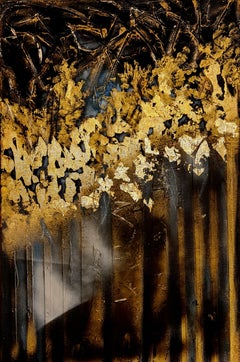
The Magic forest of Harry Potter.interior landscape textured painting by Lilya V
Located in Zofingen, AG
The Magic forest of Harry Potter"interior landscape textured painting by Lilia Volskaya. I hope you remember how you felt about the book you read. or a watched movie. Everything secr...
Category

2010s Pop Art

Materials

Gold Leaf

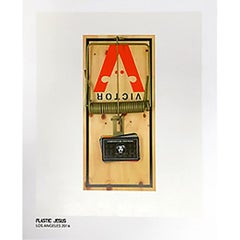
"Credit Trap" - Acrylic Stencii on Paper
Located in West Hollywood, CA
Plastic Jesus is a Los Angeles based street artist that specializes in bold stencil and installation work, inspired by world news events, society, the urban environment, culture and ...
Category

2010s Pop Art

Materials

Acrylic, Stencil, Archival Paper

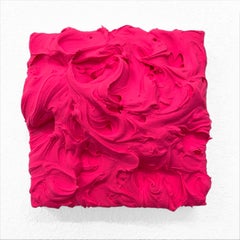
Hot Pink Excess (thick pastel impasto painting square monochrome pop design)
Located in Quebec, Quebec
Hot Pink Excess from Chloe Hedden’s Excess series embodies the tension between material opulence and emotional intensity through thick, sculptural ...
Category

2010s Pop Art

Materials

Wood, Acrylic

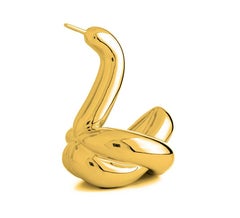
Balloon Swan ( After ) - Golden
By After Jeff Koons
Located in Pampilhosa da Serra, PT
A one time exclusive re-edition of 500 pcs from the highly popular "Balloon Swan". Cold cast resin, comes with its original box and certificate of authenticity. From a Limited Editi...
Category

21st Century and Contemporary Pop Art

Materials

Metal

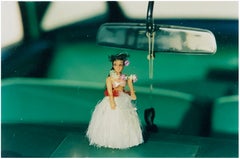
Hula Doll, Las Vegas - American Pop Art Color Photography
Located in Cambridge, GB
'Hula Doll', from Richard Heeps 'Man's Ruin' Series, captured at Viva Las Vegas, this fun artwork has a cool kitsch vibe. The photograph itself has a lo-fi effect. This artwork is a...
Category

Early 2000s Pop Art

Materials

Photographic Paper, C Print, Color, Silver Gelatin

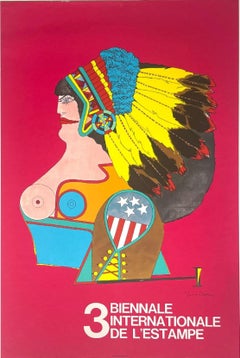
3 Biennale Internationale de L estampe, France 1968 Miss American Indiana poster
Located in New York, NY
Richard Lindner 3 Biennale Internationale de L'estampe (International Biennale of Graphic Arts), Miss American Indian, 1968 Silkscreen on wove paper Unnumbered 35 1/2 × 23 1/2 inches...
Category

1960s Pop Art

Materials

Screen

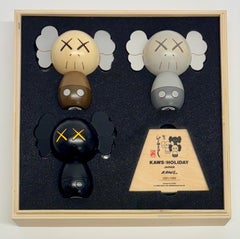
KAWS Holiday Japan Kokeshi wood (set of 3 works)
By KAWS
Located in NEW YORK, NY
KAWS: Holiday Japan Kokeshi Dolls: A set of three wood sculptures with original wood presentation box. With each measuring approximately: 4 x 4 inches (10 x 10 x 5.5 cm) Published i...
Category

21st Century and Contemporary Pop Art

Materials

Resin, Vinyl

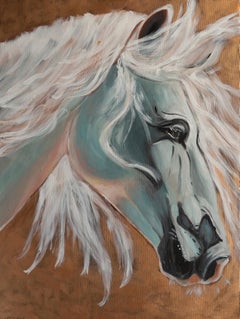
Horse . original painting
Located in Zofingen, AG
In this portrait, a white horse commands attention with its serene and kind eyes, embodying gentleness. Inspired by the renowned Lipizzan breed, those horse's coat reflects the br...
Category

2010s Pop Art

Materials

Canvas, Acrylic

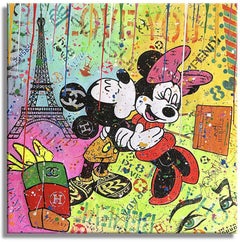
Mickey Paris is calling, Painting, Acrylic on Canvas
Located in Yardley, PA
Medium: Mix media, hand painted with Oil and Acrylics, finished with Spray paint, stencils on Canvas Size: 39 x 39 in Movement & Style: Pop Art, Urban Art, Contemporary Art ...
Category

2010s Pop Art

Materials

Acrylic

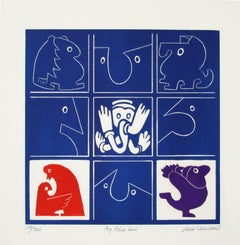
By Blue Law, Pop Art Intaglio Etching by Jean Sariano
Located in Long Island City, NY
Jean Sariano, Algerian/American (1943 - ) - By Blue Law, Year: 1979, Medium: Intaglio Etching, signed and numbered in pencil, Edition: 300, Size: 18 x 18 in. (45.72 x 45.72 cm)
Category

1970s Pop Art

Materials

Etching, Intaglio

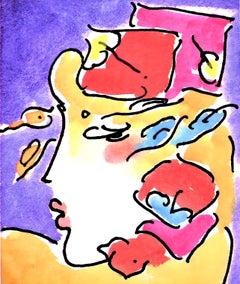
Profile Series I, Peter Max
Located in Fairfield, CT
Artist: Peter Max (1937) Title: Profile Series I Year: 1998 Edition: 140/300, plus proofs Medium: Lithograph on Coventry Smooth paper Size: 9 x 7.5 inches Condition: Excellent Inscri...
Category

1990s Pop Art

Materials

Lithograph

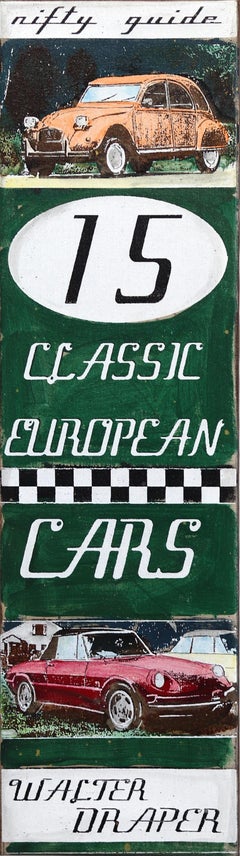
Classic European Cars - Original Colorful Book Art Painting on Canvas
Located in Los Angeles, CA
Carl Smith is an American artist who has been living in Berlin, Germany, since 2001. He works with a combination of silkscreen printing, collage, and painting to create his urban ins...
Category

21st Century and Contemporary Pop Art

Materials

Canvas, Linen, Acrylic, Screen

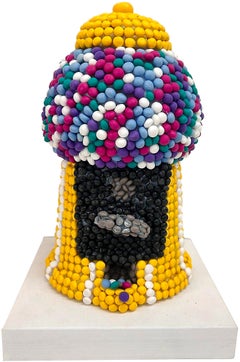
Hand-Sculpted 3D Candy Mosaic Sculpture – Retro Gumball Machine in Yellow Clay
Located in FISTERRA, ES
This playful and nostalgic piece from the Fake Candies series captures the spirit of mid-century joy through a hand-modeled 3D gumball machine, composed entirely of colorful clay “ca...
Category

2010s Pop Art

Materials

Clay

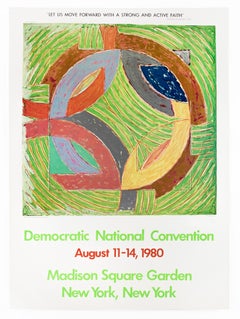
Vintage Frank Stella poster Democratic Convention 1980 colorful Pop political
Located in New York, NY
Colorful vintage poster for the 1980 Democratic National Convention, held in Madison Square Garden in New York.Concentric lines of orange and bright green interweave with strokes of pink, yellow, red, turquoise, silver, and gold. Printed with metallic ink that catches light differently from each angle, complementing the poster’s lime green and red text. The top of the poster reads “Let us move forward with a strong and active faith.” It was at this 1980 convention that Jimmy Carter was nominated for reelection. This large poster was printed by Petersburg Press in 1980, and features Frank Stella’s Polar...
Category

1980s Pop Art

Materials

Lithograph

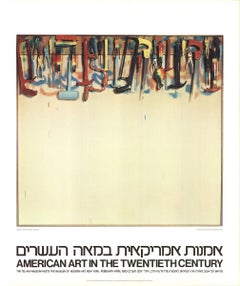
Jim Dine- Five Feet of Colorful Tools
Located in Brooklyn, NY
"The Tel-Avic Museum hosts the Museum Modern Art Museum of NY February April 1980 in a retrospective of American Art in the 20th Century" Poster created for a retrospective exhibitio...
Category

20th Century Pop Art

Materials

Offset

Social Status in Corona times I, Marilyn Monroe, Street Art, Pop Art,
Located in München, BY
Edition 5 print with Diamond Dust - Price on request Marilyn Monroe with face mask. JAY-C – the pseudonym of this innovative young artist known for his subversive use of familiar fi...
Category

2010s Pop Art

Materials

Mixed Media, Pigment, Archival Pigment

Pop Art art for sale on 1stDibs.

Find a wide variety of authentic Pop art available for sale on 1stDibs. Works in this style were very popular during the 21st Century and Contemporary, but contemporary artists have continued to produce works inspired by this movement. If you’re looking to add art created in this style to introduce contrast in an otherwise neutral space in your home, the works available on 1stDibs include elements of blue, orange, red, purple and other colors. Many Pop art paintings were created by popular artists on 1stDibs, including Jack Mitchell, Andy Warhol, Peter Max, and Heidler Heeps. Frequently made by artists working with Paint, and Paper and other materials, all of these pieces for sale are unique and have attracted attention over the years. Not every interior allows for large Pop Art, so small editions measuring 0.4 inches across are also available.

Still Thinking About These?

All Recently Viewed