Victorian Art
to
226
887
397
349
212
180
Overall Width
to
Overall Height
to
33
1,338
635
19
46
19
12
1
2
1
10
8
1
32
114,484
65,062
54,911
27,042
14,912
9,359
6,542
5,786
4,191
3,059
2,586
2,329
2,251
720
1,209
765
21
961
306
270
250
243
207
158
151
147
133
130
130
128
126
125
95
91
86
83
79
1,566
1,238
484
478
331
51
27
26
22
16
1,139
52
1,294
418
Style: Victorian
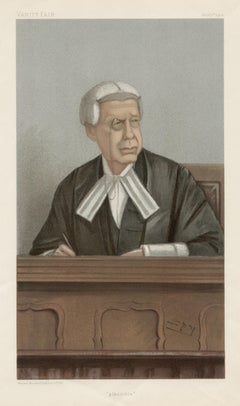
Hon. Mr Justice Swinfen Eady, Vanity Fair legal chromolithograph, 1902
Located in Melbourne, Victoria
'Plausible'
Vanity Fair legal portrait of The Hon. Mr Justice Swinfen Eady.
Accompanied by original descriptive text pasted onto a separate sheet.
380mm by 260mm (sheet)
Category
Late 19th Century Victorian Art
Materials
Lithograph
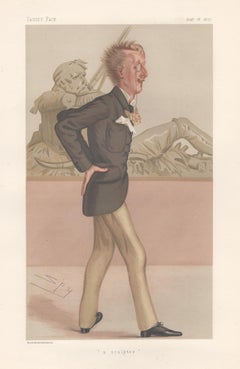
Lord Sutherland-Leveson-Gower, Vanity Fair portrait chromolithograph, 1877
Located in Melbourne, Victoria
'a sculptor'
Vanity Fair portrait of Lord Ronald Charles Sutherland-Leveson-Gower. He was a connoisseur and collector. He practised as a sculpto...
Category
Late 19th Century Victorian Art
Materials
Lithograph
Early 19th Century French Oil Cattle being Driven through Old Village Street
Located in Cirencester, Gloucestershire
Artist/ School: French School, early 19th century
Title: Cattle being Driven through the town.
Medium: oil painting on canvas, unframed
Size: canvas: 21 x 25.5 inches
Provenanc...
Category
Early 19th Century Victorian Art
Materials
Oil
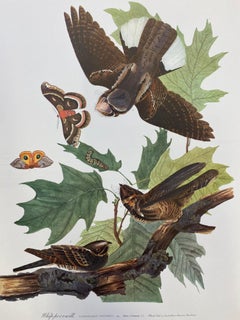
Large Classical Bird Color Print after John James Audubon - Brown Pelican
Located in Cirencester, Gloucestershire
Classical Bird print,
after John James Audubon,
printed by Harry N. Abrams, Publishers, New York
unframed, 17 x 14 inches color print on pap...
Category
20th Century Victorian Art
Materials
Color
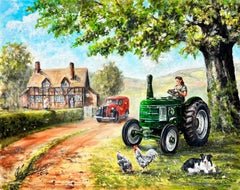
Vintage Tractor with Lady Driver Post Office Van
Farmhouse Rural English Oil
Located in Cirencester, Gloucestershire
The Post Office deliver
Colin Impey (20th Century), British
signed oil on canvas, unframed
dated 2018
canvas: 16 x 20.5
the painting is in overall very good and sound condition
Category
2010s Victorian Art
Materials
Oil
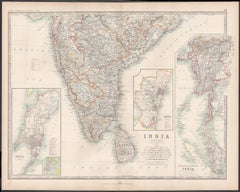
India (Southern Sheet), English antique map by Alexander Keith Johnston, 1901
Located in Melbourne, Victoria
'India (Southern Sheet)', antique lithographic map by Keith Johnston.
Inset maps of 'Bombay Island & Town', 'Madras & Environs', and 'South-Eastern Provinces of India'.
Central vertical fold as issued.
495mm by 625mm (sheet)
Alexander Keith...
Category
Early 20th Century Victorian Art
Materials
Lithograph
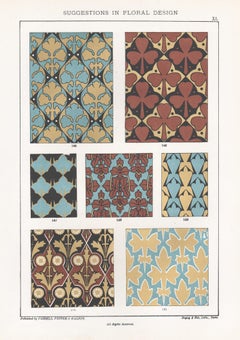
Suggestions in Floral Design, Frederick Hulme, 19th century chromolithograph
By Frederick William Hulme
Located in Melbourne, Victoria
Chromolithograph, 1878. The gold colour is actually metallic and shiny.
From Frederick William Hulme's 'Suggestions in Floral Design', a late Victorian pattern book for interior des...
Category
19th Century Victorian Art
Materials
Lithograph
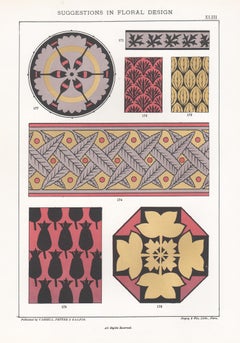
Suggestions in Floral Design, Frederick Hulme, 19th century chromolithograph
By Frederick William Hulme
Located in Melbourne, Victoria
Chromolithograph, 1878. The gold colour is actually metallic and shiny.
From Frederick William Hulme's 'Suggestions in Floral Design', a late Victorian pattern book for interior des...
Category
19th Century Victorian Art
Materials
Lithograph
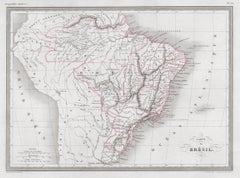
Carte du Bresil, antique 1860s engraved map of Brazil
Located in Melbourne, Victoria
'Carte du Bresil'
Engraving with original outline colouring, circa 1860, by Alexandre Vuillemin, published in Paris.
31cm by 41cm (sheet)
21.5cm by 31.5cm (image)
Category
Late 19th Century Victorian Art
Materials
Lithograph
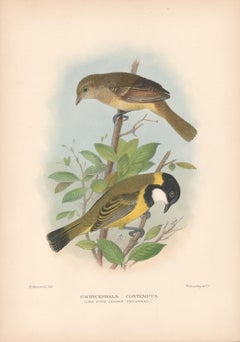
Lord Howe Island Thickhead, Bird lithograph with hand-colouring, 1928
Located in Melbourne, Victoria
'Pachycephala Contempta - Lord Howe Island Thickhead'
Limited edition lithograph with original hand colouring by Henrik Gronvold. From Mathews 'The Birds of...
Category
Early 20th Century Victorian Art
Materials
Lithograph
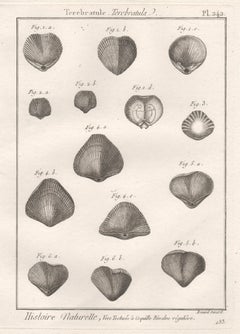
Shells, French 18th century natural history marine sea shell engraving
Located in Melbourne, Victoria
18th century natural history engraving depicting shells by Robert Benard after Henry Joseph Redoute.
Henry Redoute was the bro...
Category
Late 18th Century Victorian Art
Materials
Engraving
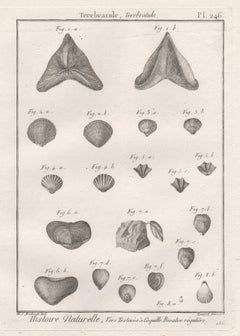
Shells, French 18th century natural history marine sea shell engraving
Located in Melbourne, Victoria
18th century natural history engraving depicting shells by Robert Benard after Henry Joseph Redoute.
Henry Redoute was the bro...
Category
Late 18th Century Victorian Art
Materials
Engraving
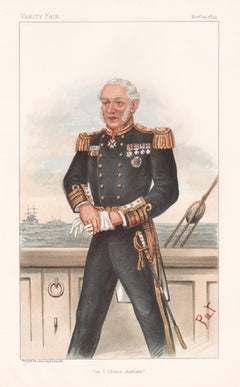
on 1 China station
, Vanity Fair naval portrait chromolithograph, 1894
Located in Melbourne, Victoria
'on 1 China station'
Vanity Fair portrait of Admiral Sir Edmund Robert Fremantle GCB CMG (1836 –1929).
400mm by 270mm (sheet)
Category
Late 19th Century Victorian Art
Materials
Lithograph
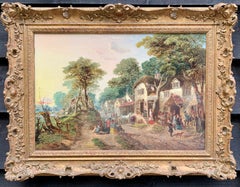
Antique Oil of an English Village landscape, with horses, people, a pub.
Located in Woodbury, CT
Wonderful and very unique English Victorian Village scene, with figures, animals, a Pub, and lots more
.
John Holland Senior was a painter of landscapes and coastal scenes who was bo...
Category
1880s Victorian Art
Materials
Canvas, Oil
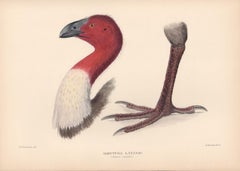
Brush-Turkey, Bird lithograph with hand-colouring, 1928
Located in Melbourne, Victoria
'Pterodroma Brevirostris (Kerguelen Pulmar)'
Limited edition lithograph with original hand colouring by Henrik Gronvold. From Mathews 'The Birds of Norfolk and Lord Howe...
Category
Early 20th Century Victorian Art
Materials
Lithograph
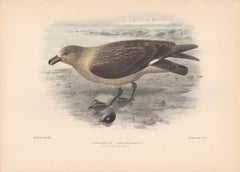
South Polar Skua, Sea Bird lithograph with hand-colouring, 1928
Located in Melbourne, Victoria
'Catharacta Maccormicki (South Polar Skua)'
Limited edition lithograph with original hand colouring by Henrik Gronvold. From Mathews 'The Birds of Norfolk and Lord Howe...
Category
Early 20th Century Victorian Art
Materials
Lithograph
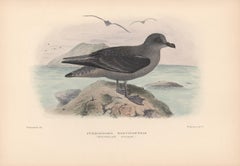
Kerguelen Pulmar, Bird lithograph with hand-colouring, 1928
Located in Melbourne, Victoria
'Pterodroma Brevirostris (Kerguelen Pulmar)'
Limited edition lithograph with original hand colouring by Henrik Gronvold. From Mathews 'The Birds of Norfolk and Lord Howe...
Category
Early 20th Century Victorian Art
Materials
Lithograph
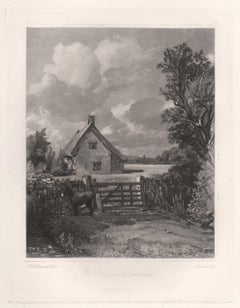
A Cottage in a Cornfield. Mezzotint by David Lucas after John Constable, 1855
By David Lucas
Located in Melbourne, Victoria
'A Cottage in a Cornfield'
Mezzotint on steel by David Lucas (1802-1881) after John Constable (1776–1836).
From 'English Landscape Scenery', 1855. John Constable RA was an English Romantic...
Category
Mid-19th Century Victorian Art
Materials
Mezzotint
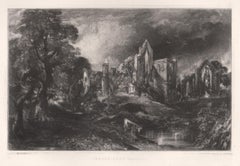
Castle Acre Priory, Norfolk. Mezzotint by David Lucas after John Constable, 1855
By David Lucas
Located in Melbourne, Victoria
'Castle Acre Priory'
Mezzotint on steel by David Lucas (1802-1881) after John Constable (1776–1836).
From 'English Landscape Scenery', 1855. John Constable RA was an English Romantic landscape...
Category
Mid-19th Century Victorian Art
Materials
Mezzotint
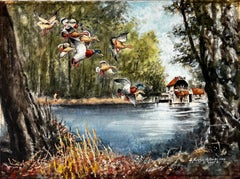
Flapping Mallard Ducks Dropping Onto The Mill Stream
Located in Cirencester, Gloucestershire
Artist/ School: Norman A.Olley (British, 20th century) dated 1995 and inscribed verso
Title - Mallards Dropping On The Mill Stream
Medium: gouache/water...
Category
19th Century Victorian Art
Materials
Ink, Watercolor, Gouache, Pencil
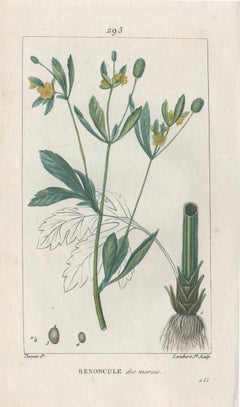
Renoncule des marais (Buttercup), French botanical flower engraving, 1818
Located in Melbourne, Victoria
French botanical flower engraving, 1818.
Colour-printed stipple engraving by J Lambert after Pierre Turpin (1775-1840)
From Francois Pierre Chaumeton's 'Flore Medicale' which portrayed a variety of flowers, trees and herbs which could be used for treating illnesses. The engravings were produced during the great period of French colour printing using the stipple-engraving process pioneered by the great botanical artist Pierre-Jospeh Redoute. The artist is the celebrated Pierre Jean Francois Turpin...
Category
Early 19th Century Victorian Art
Materials
Engraving
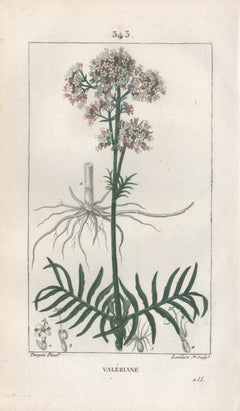
Valeriane (Valerian), French botanical medicinal herbal flower engraving, 1818
Located in Melbourne, Victoria
French botanical flower engraving, 1818.
Colour-printed stipple engraving by J Lambert after Pierre Turpin (1775-1840)
From Francois Pierre Chaumeton's 'Flore Medicale' which portrayed a variety of flowers, trees and herbs which could be used for treating illnesses. The engravings were produced during the great period of French colour printing using the stipple-engraving process pioneered by the great botanical artist Pierre-Jospeh Redoute. The artist is the celebrated Pierre Jean Francois Turpin...
Category
Early 19th Century Victorian Art
Materials
Engraving
Scottish Highlands Loch Scene with Cattle Watering Fading Sunset Light - Signed
Located in Cirencester, Gloucestershire
The Close of the Day
by Spencer Coleman, British b. 1952
signed oil on canvas, unframed
canvas: 20 x 30 inches
condition: very good
provenance: private...
Category
20th Century Victorian Art
Materials
Canvas, Oil

Hindoo No 2, Grammar of Ornament, Owen Jones, late 19th century, 1868
By Owen Jones
Located in Melbourne, Victoria
Chromolithograph, 1868.
From Owen Jones' 'Grammar of Ornament', 1868. Welshman Owen Jones first published his monument to design, the Grammar of O...
Category
19th Century Victorian Art
Materials
Lithograph
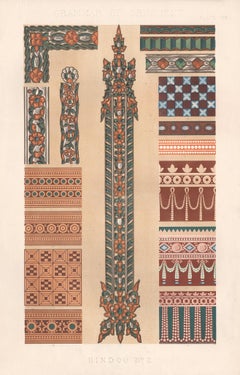
Italian No 5, Grammar of Ornament, Owen Jones, late 19th century, 1868
By Owen Jones
Located in Melbourne, Victoria
Chromolithograph, 1868.
From Owen Jones' 'Grammar of Ornament', 1868. Welshman Owen Jones first published his monument to design, the Grammar of O...
Category
19th Century Victorian Art
Materials
Lithograph
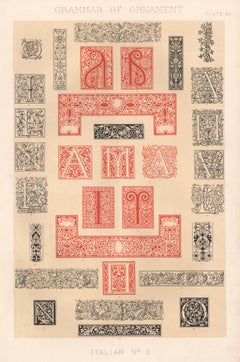
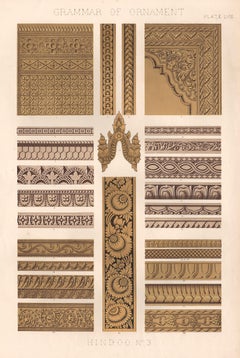
Hindoo No 3, Grammar of Ornament, Owen Jones, late 19th century, 1868
By Owen Jones
Located in Melbourne, Victoria
Chromolithograph, 1868.
From Owen Jones' 'Grammar of Ornament', 1868. Welshman Owen Jones first published his monument to design, the Grammar of Ornament, in instalments for subscri...
Category
19th Century Victorian Art
Materials
Lithograph
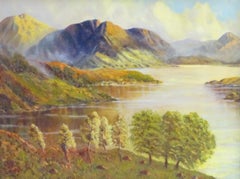
Scottish Highland Loch in the Summer signed oil painting
Located in Cirencester, Gloucestershire
The Highland Loch
British School, circa 1949
signed with monogram lower left corner
oil painting on board, 12 x 16 inches
framed: 15 x 19 inches
Lovely depiction of this Scottish hi...
Category
Mid-20th Century Victorian Art
Materials
Oil
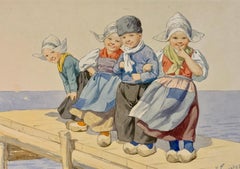
Early 20th century Dutch looking children having fun by Austrian painter
Located in Woodbury, CT
Karl Feiertag (c.1874-1944) was an Austrian painter. He studied painting at the Academy of Fine Arts Vienna with Franz Rumpler, Kasimir Pochwalski, and J...
Category
Early 1900s Victorian Art
Materials
Watercolor, Handmade Paper
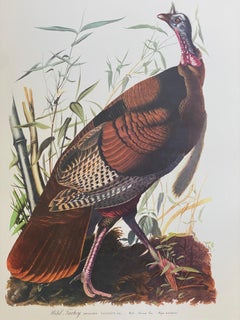
Large Classical Bird Color Print after John James Audubon - Wild Turkey
Located in Cirencester, Gloucestershire
Classical Bird print,
after John James Audubon,
printed by Harry N. Abrams, Publishers, New York
unframed, 17 x 14 inches color print on pap...
Category
20th Century Victorian Art
Materials
Color
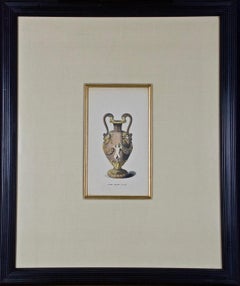
A Set of Two Hand-Colored Engravings of an Ancient Roman Vase and a Tazza (Cup)
Located in Alamo, CA
This is a pair of framed hand-colored engravings of an ancient vase in the Palizzy Wares style and a silver gilt tazza (cup) with a cover, both from the 16th century. These were engraved under the supervision of Philip De La Motte...
Category
Mid-19th Century Victorian Art
Materials
Engraving
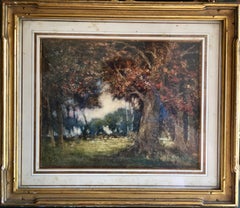
Extensive English wooded landscape
By Beatrice Lawrence Smith
Located in Woodbury, CT
A very unusual English watercolor depicting an extensive landscape with trees, and fields in a explosion of color. The artist painted in the early part of the 20th century and it is ...
Category
Early 1900s Victorian Art
Materials
Watercolor

$1,560 Sale Price
20% Off
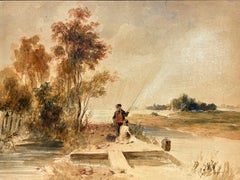
Early 19th Century Watercolour, Young Anglers on River Lea, Fine Landscape
Located in Cirencester, Gloucestershire
On the Lea River
attributed to Peter de Wint (British 1784-1849)
signed lower right corner, titled verso
original watercolour painting on paper, unframed
painting: 11 x 14 inches
C...
Category
Early 19th Century Victorian Art
Materials
Watercolor
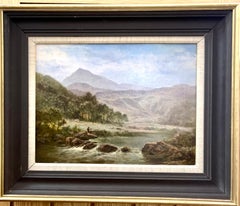
Antique British river landscape in oils with two figures fished in North Wales
Located in Woodbury, CT
H.East was a painter in oils of landscapes and rural scenes, who was active at the turn of the 19th to 20th century.
He did not exhibit his work in the normal exhibition galleries bu...
Category
1890s Victorian Art
Materials
Canvas, Oil
$2,360 Sale Price
20% Off
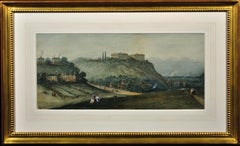
Framed Victorian Watercolor Painting Prospect Of Nottingham Castle
The Park
Located in Sutton Poyntz, Dorset
Thomas Cooper Moore.
English ( b.1827 - d.1901 ).
Prospect Of Nottingham Castle And The Park.
Watercolor.
Signed Lower Left.
Image size 12 inches x 17.3 inches ( 30.5cm x 44cm ).
Fr...
Category
Late 19th Century Victorian Art
Materials
Paper, Watercolor
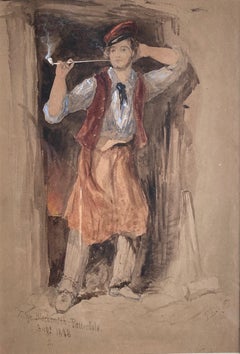
Thomas Leeson Rowbotham, Victorian blacksmith
Located in Harkstead, GB
A really charming study of a blacksmith puffing on a clay pipe at the forge door.
Thomas Charles Leeson Rowbotham Junr (1823-1875)
Village Blacksmith Patterdale, Aug 1848
Signed, in...
Category
Mid-19th Century Victorian Art
Materials
Paper, Watercolor
$454 Sale Price
42% Off
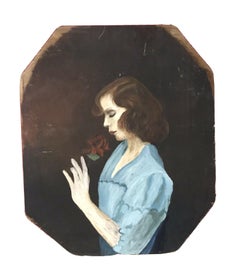
1950
s FRENCH PORTRAIT OF YOUNG LADY SMELLING A RED ROSE - OIL ON PANEL
Located in Cirencester, Gloucestershire
"The Red Rose"
French School, Mid 20th Century
oil painting on octagonal shaped wooden panel, unframed
panel: 25 x 21.25 inches
Beautifully spontaneous painting depicting this por...
Category
Late 20th Century Victorian Art
Materials
Oil
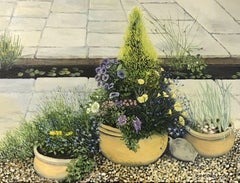
ROY MERRINGTON - FINE ENGLISH LARGE OIL - FLOWERS IN GARDEN POTS
Located in Cirencester, Gloucestershire
"Garden Flowers"
by Roy Merrington, British contemporary
oil painting on canvas, unframed
framed size: 18 x 24 inches
Elegant still life painting of garden...
Category
Late 20th Century Victorian Art
Materials
Oil
English Mid 19th Century Shooting Watercolour with Historical Notes
Located in Cirencester, Gloucestershire
English School Mid 19th Century Watercolour
The Shooting Party
unsigned but usefully inscribed verso, by the artist
watercolour painting
on stiff paper, unframed
sheet: 7.2 x 10 i...
Category
Mid-19th Century Victorian Art
Materials
Watercolor
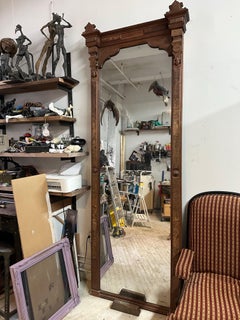
Antique American Victorian Eastlake Hall Mirror – Late 19th / Early 20th Century
Located in Brooklyn, NY
Elegant American Victorian Eastlake-style hall mirror with a solid wood frame, geometric fluting, and warm antique patina. This very heavy mirror is a striking statement piece, perfe...
Category
Late 19th Century Victorian Art
Materials
Mirror, Wood
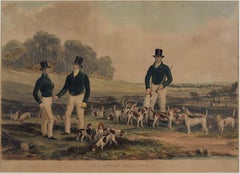
The Merry Beaglers engraving by John Harris after Harry Hall
s 1845 painting
Located in London, GB
John Harris after Harry Hall
The Merry Beaglers
c. 1845
48x65cm
Aquatint with hand colouring
The most famous beagling print there is, after the 1845 pa...
Category
1840s Victorian Art
Materials
Aquatint
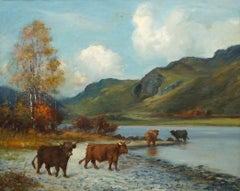
Catte Watering from the Loch
s Waters, signed oil
By Jameson Lainge
Located in Cirencester, Gloucestershire
Watering from the Loch's Waters
Scottish School, late 19th/ early 20th century
signed, "Jamieson Lainge"
oil painting on canvas
painting: 20 x 24 inches
provenance: private collecti...
Category
Late 19th Century Victorian Art
Materials
Oil
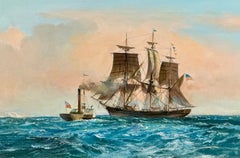
An American Clipper Ship
Located in Wiscasett, ME
Oil on canvas signed in the lower right corner. This painting depicts an American clipper ship with a pilot in the English Channel. The dimensi...
Category
20th Century Victorian Art
Materials
Oil
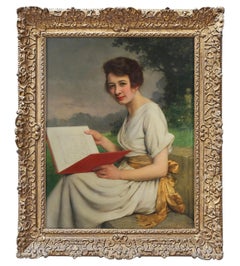
Portrait of a woman in a garden oil painting on panel by Jan Van Beers
Located in Gavere, BE
Info artist :
Van Beers studied at the Academy in Antwerp. In 1873, he undertook a trip to London with Alexandre Struys. In 1878, Van Beers went to Paris where he worked in the stud...
Category
Early 1900s Victorian Art
Materials
Oil, Wood Panel
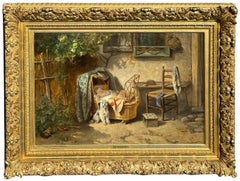
The Faithful Companion
By Mari ten Kate
Located in Wiscasett, ME
This wonderful painting features a loyal dog watching over a napping baby in a sunny courtyard. It is an oil on board and features a period, possibly original, frame and is signed in...
Category
19th Century Victorian Art
Materials
Oil
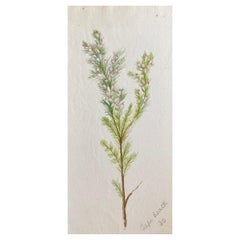
Fine Antique British Botannical Watercolour Painting, circa 1900
s
Located in Cirencester, Gloucestershire
A very fine original antique English botanical watercolour painting depicting this beautiful depiction of a flower/ plant. The work came to us from a private collection in Surrey, En...
Category
Early 20th Century Victorian Art
Materials
Acrylic
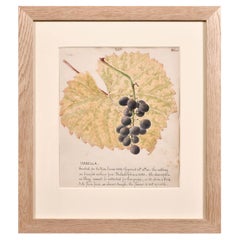
Fine 1860
s Botannical Watercolour Drawing - Isabella Grapes on the Vine
Located in Cirencester, Gloucestershire
Artist/ School: English/ American School, 19th century, circa 1860's.
Title: Isabella Grapes on the vine. Interesting inscription telling the history of the drawing and how the orig...
Category
Mid-19th Century Victorian Art
Materials
Acrylic
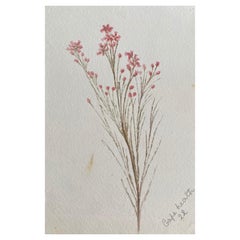
Fine Antique British Botannical Watercolour Painting, circa 1900
s
Located in Cirencester, Gloucestershire
A very fine original antique English botanical watercolour painting depicting this beautiful depiction of a flower/ plant. The work came to us from a private collection in Surrey, En...
Category
Early 20th Century Victorian Art
Materials
Acrylic
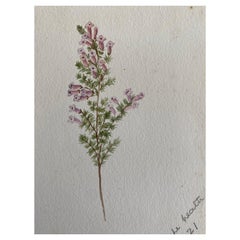
Fine Antique British Botannical Watercolour Painting, circa 1900
s
Located in Cirencester, Gloucestershire
A very fine original antique English botanical watercolour painting depicting this beautiful depiction of a flower/ plant. The work came to us from a private collection in Surrey, En...
Category
Early 20th Century Victorian Art
Materials
Acrylic
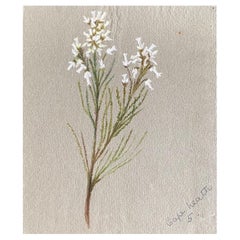
Fine Antique British Botannical Watercolour Painting, circa 1900
s
Located in Cirencester, Gloucestershire
A very fine original antique English botanical watercolour painting depicting this beautiful depiction of a flower/ plant. The work came to us from a private collection in Surrey, En...
Category
Early 20th Century Victorian Art
Materials
Acrylic
Fine Antique British Botannical Watercolour Painting, circa 1900
s
Located in Cirencester, Gloucestershire
A very fine original antique English botanical watercolour painting depicting this beautiful depiction of a flower/ plant. The work came to us from a private collection in Surrey, En...
Category
Early 20th Century Victorian Art
Materials
Acrylic
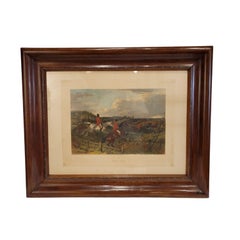
Victorian engraving of horses “Full cry”, J. Harris and William J. Shayer, Engla
Located in Valladolid, ES
Amazing print on paper by the artist William J. Shayer, engraved by J. Harris, created in 1864, belonging to the Realist movement, entitled “Full Cry”.
The work depicts a typical Vi...
Category
1860s Victorian Art
Materials
Paper
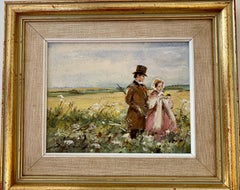
Courtship, British Couple walking in a landscape in Edwardian dress
Located in Woodbury, CT
John Strickland Goodall
John Strickland Goodall was born in Heacham, Norfolk on 7 June 1908. He was the son of a famous heart specialist whose boasted seven generations of medics, a...
Category
1980s Victorian Art
Materials
Paper, Gouache
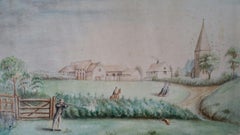
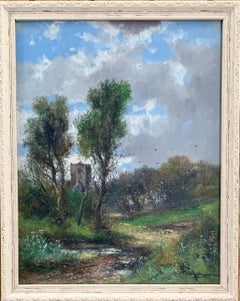
Early 20th Century English Autumn river landscape with a Norman Church
Located in Woodbury, CT
Early 20th Century English Autumn river landscape with a Norman Church.
Abraham Hulk Junior was born in the Netherlands in 1851 to renowned Dutch ...
Category
1890s Victorian Art
Materials
Canvas, Oil
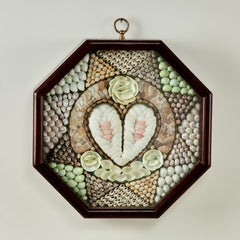
Vintage Sailors Valentine
Located in Palm Beach, FL
Charming vintage sailors valentine ambitiously handcrafted in exotic organic seashells with a center heart motif surrounded by star form compartments. Presented under glass in an oct...
Category
20th Century Victorian Art
Materials
Organic Material
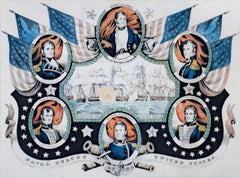
19th century color lithograph portraits ship seascape patriotic flags military
Located in Milwaukee, WI
The present hand-colored lithograph is an excellent example of patriotic mid-nineteenth century American imagery. The print shows the battle and several of the major figures involved in the Battle of Lake Erie: At the center is a view of several frigates on the lake, embroiled in conflict. Above the battle is the quotation: "We have met the enemy and they are ours." Surrounding are laurel-lined roundels with portraits of Oliver Hazard Perry (1785-1819), Stephen Dicateur (1779-1820), Johnston Blakeley (1871-1814), William Bainbridge (1774-1833), David Porter (1780-1843), and James Lawrence (1781-1813) - all of these framed by American flags, banners and cannons. This print shows that the Battle of Lake Erie, part of the War of 1812, still held resonance for American audiences several decades later and was part of the larger narrative of the founding of the country.
9.5 x 13.5 inches, artwork
20 x 23.38 inches, frame
Entitled in the image
Signed in the stone, lower left "Lith. and Pub. by N. Currier"
Inscribed lower right "2 Spruce N.Y." and "No. 1"
Copyrighted lower center "Entered according to Act of Congress in the year 1846 by N. Currier in the Clerk's office of the Southern District of N.Y."
Framed to conservation standards using 100 percent rag matting and housed in a gold gilded moulding.
Nathaniel Currier was a tall introspective man with a melancholy nature. He could captivate people with his piercing stare or charm them with his sparkling blue eyes. Nathaniel was born in Roxbury, Massachusetts on March 27th, 1813, the second of four children. His parents, Nathaniel and Hannah Currier, were distant cousins who lived a humble yet spartan life. When Nathaniel was eight years old, tragedy struck. Nathaniel’s father unexpectedly passed away leaving Nathaniel and his eleven-year-old brother Lorenzo to provide for the family. In addition to their mother, Nathaniel and Lorenzo had to care for six-year-old sister Elizabeth and two-year-old brother Charles. Nathaniel worked a series of odd jobs to support the family, and at fifteen, he started what would become a life-long career when he apprenticed in the Boston lithography shop of William and John Pendleton.
A Bavarian gentleman named Alois Senefelder invented lithography just 30 years prior to young Nat Currier’s apprenticeship. While under the employ of the brothers Pendleton, Nat was taught the art of lithography by the firm’s chief printer, a French national named Dubois, who brought the lithography trade to America.
Lithography involves grinding a piece of limestone flat and smooth then drawing in mirror image on the stone with a special grease pencil. After the image is completed, the stone is etched with a solution of aqua fortis leaving the greased areas in slight relief. Water is then used to wet the stone and greased-ink is rolled onto the raised areas. Since grease and water do not mix, the greased-ink is repelled by the moisture on the stone and clings to the original grease pencil lines. The stone is then placed in a press and used as a printing block to impart black on white images to paper.
In 1833, now twenty-years old and an accomplished lithographer, Nat Currier left Boston and moved to Philadelphia to do contract work for M.E.D. Brown, a noted engraver and printer. With the promise of good money, Currier hired on to help Brown prepare lithographic stones of scientific images for the American Journal of Sciences and Arts. When Nat completed the contract work in 1834, he traveled to New York City to work once again for his mentor John Pendleton, who was now operating his own shop located at 137 Broadway. Soon after the reunion, Pendleton expressed an interest in returning to Boston and offered to sell his print shop to Currier. Young Nat did not have the financial resources to buy the shop, but being the resourceful type he found another local printer by the name of Stodart. Together they bought Pendleton’s business.
The firm ‘Currier & Stodart’ specialized in "job" printing. They produced many different types of printed items, most notably music manuscripts for local publishers. By 1835, Stodart was frustrated that the business was not making enough money and he ended the partnership, taking his investment with him. With little more than some lithographic stones, and a talent for his trade, twenty-two year old Nat Currier set up shop in a temporary office at 1 Wall Street in New York City. He named his new enterprise ‘N. Currier, Lithographer’
Nathaniel continued as a job printer and duplicated everything from music sheets to architectural plans. He experimented with portraits, disaster scenes and memorial prints, and any thing that he could sell to the public from tables in front of his shop. During 1835 he produced a disaster print Ruins of the Planter's Hotel, New Orleans, which fell at two O’clock on the Morning of the 15th of May 1835, burying 50 persons, 40 of whom Escaped with their Lives. The public had a thirst for newsworthy events, and newspapers of the day did not include pictures. By producing this print, Nat gave the public a new way to “see” the news. The print sold reasonably well, an important fact that was not lost on Currier.
Nat met and married Eliza Farnsworth in 1840. He also produced a print that same year titled Awful Conflagration of the Steamboat Lexington in Long Island Sound on Monday Evening, January 18, 1840, by which melancholy occurrence over One Hundred Persons Perished. This print sold out very quickly, and Currier was approached by an enterprising publication who contracted him to print a single sheet addition of their paper, the New York Sun. This single page paper is presumed to be the first illustrated newspaper ever published.
The success of the Lexington print launched his career nationally and put him in a position to finally lift his family up. In 1841, Nat and Eliza had their first child, a son they named Edward West Currier. That same year Nat hired his twenty-one year old brother Charles and taught him the lithography trade, he also hired his artistically inclined brother Lorenzo to travel out west and make sketches of the new frontier as material for future prints. Charles worked for the firm on and off over the years, and invented a new type of lithographic crayon which he patented and named the Crayola. Lorenzo continued selling sketches to Nat for the next few years.
In 1843, Nat and Eliza had a daughter, Eliza West Currier, but tragedy struck in early 1847 when their young daughter died from a prolonged illness. Nat and Eliza were grief stricken, and Eliza, driven by despair, gave up on life and passed away just four months after her daughter’s death.
The subject of Nat Currier’s artwork changed following the death of his wife and daughter, and he produced many memorial prints and sentimental prints during the late 1840s. The memorial prints generally depicted grief stricken families posed by gravestones (the stones were left blank so the purchasers could fill in the names of the dearly departed). The sentimental prints usually depicted idealized portraits of women and children, titled with popular Christian names of the day.
Late in 1847, Nat Currier married Lura Ormsbee, a friend of the family. Lura was a self-sufficient woman, and she immediately set out to help Nat raise six-year-old Edward and get their house in order. In 1849, Lura delivered a son, Walter Black Currier, but fate dealt them a blow when young Walter died one year later. While Nat and Lura were grieving the loss of their new son, word came from San Francisco that Nat’s brother Lorenzo had also passed away from a brief illness. Nat sank deeper into his natural quiet melancholy. Friends stopped by to console the couple, and Lura began to set an extra place at their table for these unexpected guests. She continued this tradition throughout their lives.
In 1852, Charles introduced a friend, James Merritt Ives, to Nat and suggested he hire him as a bookkeeper. Jim Ives was a native New Yorker born in 1824 and raised on the grounds of Bellevue Hospital where his father was employed as superintendent. Jim was a self-trained artist and professional bookkeeper. He was also a plump and jovial man, presenting the exact opposite image of his new boss.
Jim Ives met Charles Currier through Caroline Clark, the object of Jim’s affection. Caroline’s sister Elizabeth was married to Charles, and Caroline was a close friend of the Currier family. Jim eventually proposed marriage to Caroline and solicited an introduction to Nat Currier, through Charles, in hopes of securing a more stable income to support his future wife.
Ives quickly set out to improve and modernize his new employer’s bookkeeping methods. He reorganized the firm’s sizable inventory, and used his artistic skills to streamline the firm’s production methods. By 1857, Nathaniel had become so dependent on Jims’ skills and initiative that he offered him a full partnership in the firm and appointed him general manager. The two men chose the name ‘Currier & Ives’ for the new partnership, and became close friends.
Currier & Ives produced their prints in a building at 33 Spruce Street where they occupied the third, fourth and fifth floors. The third floor was devoted to the hand operated printing presses that were built by Nat's cousin, Cyrus Currier, at his shop Cyrus Currier & Sons in Newark, NJ. The fourth floor found the artists, lithographers and the stone grinders at work. The fifth floor housed the coloring department, and was one of the earliest production lines in the country. The colorists were generally immigrant girls, mostly German, who came to America with some formal artistic training. Each colorist was responsible for adding a single color to a print. As a colorist finished applying their color, the print was passed down the line to the next colorist to add their color. The colorists worked from a master print displayed above their table, which showed where the proper colors were to be placed. At the end of the table was a touch up artist who checked the prints for quality, touching-in areas that may have been missed as it passed down the line. During the Civil War, demand for prints became so great that coloring stencils were developed to speed up production.
Although most Currier & Ives prints were colored in house, some were sent out to contract artists. The rate Currier & Ives paid these artists for coloring work was one dollar per one hundred small folios (a penny a print) and one dollar per one dozen large folios. Currier & Ives also offered uncolored prints to dealers, with instructions (included on the price list) on how to 'prepare the prints for coloring.' In addition, schools could order uncolored prints from the firm’s catalogue to use in their painting classes.
Nathaniel Currier and James Merritt Ives attracted a wide circle of friends during their years in business. Some of their more famous acquaintances included Horace Greeley, Phineas T. Barnum, and the outspoken abolitionists Rev. Henry Ward, and John Greenleaf Whittier (the latter being a cousin of Mr. Currier).
Nat Currier and Jim Ives described their business as "Publishers of Cheap and Popular Pictures" and produced many categories of prints. These included Disaster Scenes, Sentimental Images, Sports, Humor, Hunting Scenes, Politics, Religion, City and Rural Scenes, Trains, Ships, Fire Fighters, Famous Race Horses, Historical Portraits, and just about any other topic that satisfied the general public's taste. In all, the firm produced in excess of 7500 different titles, totaling over one million prints produced from 1835 to 1907.
Nat Currier retired in 1880, and signed over his share of the firm to his son Edward. Nat died eight years later at his summer home 'Lion’s Gate' in Amesbury, Massachusetts. Jim Ives remained active in the firm until his death in 1895, when his share of the firm passed to his eldest son, Chauncey.
In 1902, faced will failing health from the ravages of Tuberculosis, Edward Currier sold his share of the firm to Chauncey Ives...
Category
1850s Victorian Art
Materials
Watercolor, Lithograph
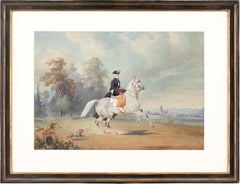
C.1860 Austrian School Lady Riding A Grey Horse In Landscape, Watercolour
Located in Cheltenham, GB
This charming mid-19th-century European watercolour depicts a young lady riding a grey mare before a view of Berg Perchtoldsdorf, Austria.
During the 19th century, aristocratic wome...
Category
1860s Victorian Art
Materials
Paper, Watercolor, Gouache
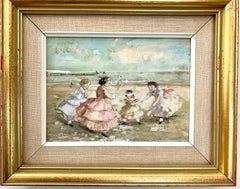
Blind Mans Buff, British Couple walking in a landscape in Edwardian dress
Located in Woodbury, CT
John Strickland Goodall
John Strickland Goodall was born in Heacham, Norfolk on 7 June 1908. He was the son of a famous heart specialist who boasted seven generations of medics, and...
Category
1980s Victorian Art
Materials
Paper, Gouache
Antique English river landscape with figures, boats, swans, London , brown gray
Located in Woodbury, CT
An English river landscape with Swans, boats, barges on the banks of the Thames.
A very interesting river landscape composition of figures working on a boat, near a barge on the River Thames, London, circa 1885.
Robert Hamilton...
Category
1880s Victorian Art
Materials
Oil

!9th century oil of Children in a landscape by a stream with a cottage in The UK
By John Stewart
Located in Woodbury, CT
John Stewart was a Scottish painter of rustic subjects and landscapes. HE exhibited 20 works at the Suffolk Street Exhibition location in London and 4 wor...
Category
1850s Victorian Art
Materials
Oil
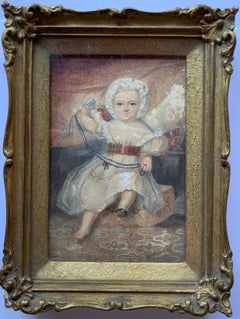
Victorian Portrait of little baby Girl or Child playing with her toys
Located in Woodbury, CT
Wonderful Early Victorian English watercolor of a little girl. The piece is full of quality and precise brushwork giving the painting a great feeling. I think the frame is later poss...
Category
1830s Victorian Art
Materials
Watercolor
$1,160 Sale Price
20% Off
Victorian art for sale on 1stDibs.
Find a wide variety of authentic Victorian art available for sale on 1stDibs. Works in this style were very popular during the 21st Century and Contemporary, but contemporary artists have continued to produce works inspired by this movement. If you’re looking to add art created in this style to introduce contrast in an otherwise neutral space in your home, the works available on 1stDibs include elements of blue, orange, purple, yellow and other colors. Many Pop art paintings were created by popular artists on 1stDibs, including Francis E. Jamieson, Sir Leslie Ward, John James Audubon, and George Cruikshank. Frequently made by artists working with Paint, and Oil Paint and other materials, all of these pieces for sale are unique and have attracted attention over the years. Not every interior allows for large Victorian art, so small editions measuring 1.5 inches across are also available. Prices for art made by famous or emerging artists can differ depending on medium, time period and other attributes. On 1stDibs, the price for these items starts at $49 and tops out at $153,923, while the average work sells for $2,035.
Still Thinking About These?
All Recently ViewedMore Ways To Browse
Mauritz Lindstrom
Maximillien Luce
Michael Budden Central Park
Midcentury Matador Paintings
Mike Wright
Miracle On Ice
Mississippi River Painting
Monarch Of The Glen Painting
Moroccan Paintings Essaouira
Morpho Butterfly Art
Mount Tamalpais
Murray Dessner
Native American Oklahoma
New England Barn
New Orleans Jazz Poster
Niagara Falls Oil
Oil Painting By Alice
Oil Painting Willow Tree