Victorian Art
to
715
884
389
349
211
182
Overall Width
to
Overall Height
to
33
1,329
634
19
47
17
12
2
2
1
10
8
1
32
114,396
65,080
54,860
27,053
14,944
9,339
6,499
5,768
4,199
3,053
2,593
2,320
2,255
722
1,203
762
20
954
307
273
249
243
207
156
150
147
133
131
129
129
127
125
95
91
86
84
78
1,557
1,229
480
474
332
51
27
26
22
16
1,135
52
1,286
416
Style: Victorian
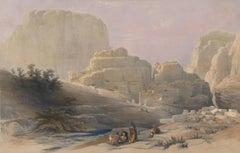
The Acropolis, Lower End of the Valley
Located in London, GB
David Roberts RA
The Acropolis, Lower End of the Valley
1796 - 1864
Subscription and first edition lithographs in stock
Full plate: 102
Presented in a acid free mount
Category
19th Century Victorian Art
Materials
Lithograph
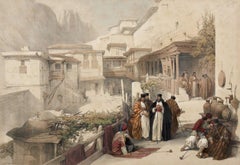
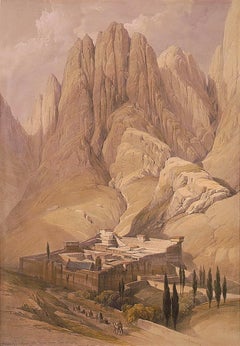
Principal Court of the Convent of St. Catherine
Located in London, GB
First Edition lithograph
Full plate: 120
Presented in a acid free mount
Category
19th Century Victorian Art
Materials
Lithograph
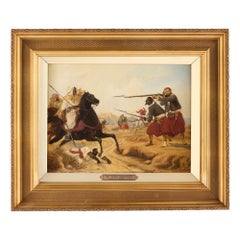
Antique Danish Orientalist Oil Painting of a Military Scene by Niels Simonsen
Located in London, GB
Antique Danish Orientalist oil painting of a military scene by Niels Simonsen
Danish, 1860
Canvas: Height 27cm, width 35cm
Frame: Height 43cm, width 52cm, depth 4cm
This very fine O...
Category
1860s Victorian Art
Materials
Oil, Canvas
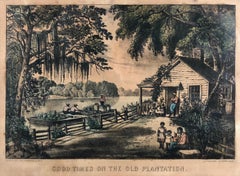
Good Times on the Old Plantation
By Currier
Ives
Located in Missouri, MO
Currier & Ives (Publishers)
"Good times on the Old Plantation" 1872
Handcolored Lithograph
Size Height 10 in.; Width 13.9 in.
Framed Size: approx 16 x 19.5
Category
1870s Victorian Art
Materials
Lithograph
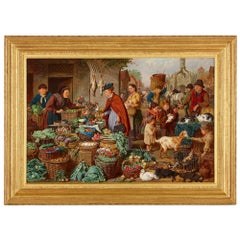
19th Century Oil Painting of a Market Scene by H. C. Bryant
By Henry Charles Bryant
Located in London, GB
19th century oil painting of a market scene by H. C. Bryant
English, 1877
Canvas: Height 51cm, width 76.5cm
Frame: Height 68cm, width 93.5cm, depth 5cm
Painted by the English artist Henry Charles Bryant, this lively scene is typical of Bryant’s oeuvre. Bryant specialised in market and farmyard scenes, inspired by 17th century Dutch genre painting which similarly depicted vignettes of everyday life. Bryant’s realistic painterly style also recalls these Dutch genre scenes, which in turn were inspired by the form and content of Early Netherlandish...
Category
Late 19th Century Victorian Art
Materials
Canvas, Oil
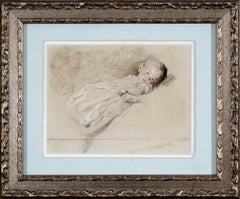
Watercolour study of a resting infant, possibly the artist
s daughter
Located in Henley-on-Thames, England
William Henry Hunt OWS (1790-1864) (attrib.)
Study of a resting infant
Watercolour and graphite heightened with zinc oxide on paper
13.9 x 18.5 cm.; (within frame) 31.1 x 25.6 cm.
Un...
Category
Mid-19th Century Victorian Art
Materials
Watercolor
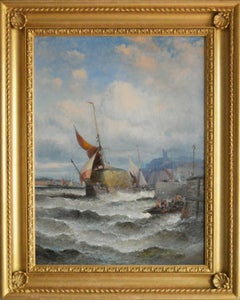
19th Century seascape oil painting of a hay barge on the Medway
Located in Nr Broadway, Worcestershire
Hubert Thornley
British, (exh. 1858 -1898)
Hay Barge on the Medway
Oil on canvas, signed
Image size: 23.5 inches x 17.5 inches
Size including frame: 30.5 inches x 24.5 inches
A fine...
Category
19th Century Victorian Art
Materials
Canvas, Oil
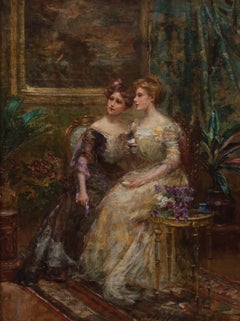
Victorian Ladies, by female artist Letitia Bonnet Hart
By Letitia Bonnet Hart
Located in Philadelphia, PA
Letitia Bonnet Hart
(American, 1867-1953)
Victorian Ladies
Oil on canvas, 21 x 16 1/4 inches
FRAMED: 28 x 23 inches (approx.)
Signed at lower right: "Letitia B. Hart"
Label on stretcher: "Marbella Gallery, New York"
Daughter of the Hudson River School painter James McDougal Hart, Letitia was born into an extended family of accomplished artists. After preliminary study with her father and mother, she attended the Brooklyn Academy of Design and the National Academy of Design. She began exhibiting at the age of eighteen, and continued to exhibit in Brooklyn, Philadelphia, Massachusetts, Louisiana Purchase Exhibition, and the 1893 World’s Columbian Exposition...
Category
Late 19th Century Victorian Art
Materials
Canvas, Oil
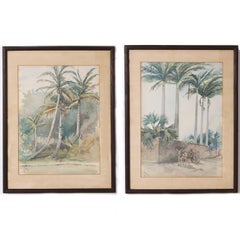
Pair of Antique Tropical Watercolor Paintings
Located in Palm Beach, FL
Rare pair of 19th Century watercolors on paper painted in tropical settings both signed MWW 87 and presented in wood frames under glass.
Category
Late 19th Century Victorian Art
Materials
Watercolor
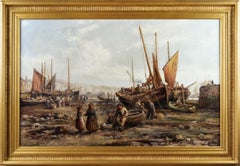
19th Century seascape oil painting of Penzance harbour, Cornwall
Located in Nr Broadway, Worcestershire
William Edward Webb
British, (1862-1903)
Penzance Harbour
Oil on canvas, signed
Image size: 29 inches x 45.5 inches
Size including frame: 38 inches x 54.5 inches
A pleasing coastal painting of Penzance Harbour at low tide by William Edward Webb. In the foreground, a fisherman sells his catch to a woman and her daughter, whilst figures in horses and carts wait for others to unload their boats.
William Edward Webb was born in Cheltenham, Gloucestershire in 1862 to William Benjamin Webb and Ellen Butler. His father was a printer and an artist and it is highly likely he received tuition from him. Following the death of his mother, his father remarried and moved the family to Manchester sometime after 1871.
By the 1880’s, Webb had started working as an artist and later set up a studio at 30 Exchange Buildings in Manchester. He began exhibiting at the Manchester City Art Gallery from 1890, where he showed more than 60 paintings during his lifetime. He also exhibited at the Royal Academy and Walker Art Gallery Liverpool from 1892. He married Clara Foster in 1899 and the couple lived at 1 Sylvan Grove, Chorlton Upon Medlock in South Manchester with their daughter Florrie. He became friends with the artist Walter Emsley (1860-1938) who also lived in Manchester.
Although he spent the rest of his life in Manchester, Webb travelled throughout the UK painting coastal and marine scenes around the main ports and harbours. He spent a great deal of time in the Isle of Mann painting numerous scenes along the coast including views of Peel and Douglas Harbour, subjects he frequently returned to. Webb painted in a highly distinctive style; loose and informal but which manages to retain the sense of perspective. He struggled with ill health and depression throughout his life which sadly led to his suicide 9 November, 1903. In 1974, a retrospective exhibition was held at The Old Customs House and Old Solent House in Lymington, which brought a new found interest in his work.
His paintings are now highly sought after and are represented in many collections and Museums including the Astley Hall...
Category
19th Century Victorian Art
Materials
Canvas, Oil
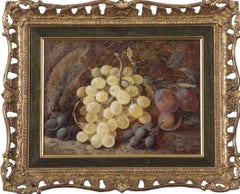
Victorian vintage fine art painting by Clare Vincent - fruits and grapes
Located in PARIS, FR
Conditions ; Excellent condition, original canvas frame, no prior retouching or restauration, and no future restauration necessary. Original Victorian gilet frame in perfect conditio...
Category
Late 19th Century Victorian Art
Materials
Oil
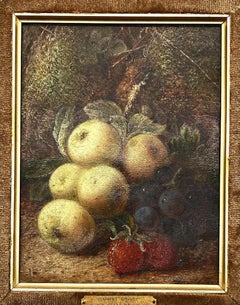
Vintage oil painting by Vincent Clare - fruit and apples oil signed
By George Clare
Located in PARIS, FR
Condition: Excellent overall Condition. Original canvas and frame. No restauration necessary. No retouching under UV light. Dimensions with frame 28 x 34 cm.
Free US CONTINENTAL Shi...
Category
Late 19th Century Victorian Art
Materials
Oil
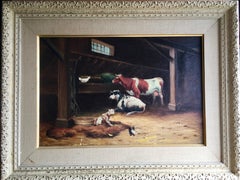
19th century American cattle/cows and chickens in a stable with calves
Located in Woodbury, CT
Interesting and well-painted American turn of the 19th-century animal scene of an interior of a barn with cows, calves, and chickens
The piece has a great deal of charm and is very ...
Category
1890s Victorian Art
Materials
Oil, Canvas

$1,400 Sale Price
20% Off
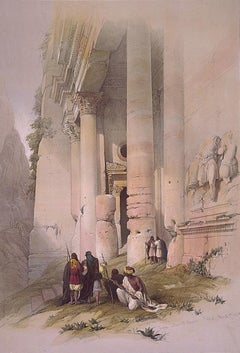
Lower Portion of El Khasne, Petra
Located in London, GB
Subscription and first edition lithograph in stock
Full plate: 94
Presented in a acid free mount
Category
19th Century Victorian Art
Materials
Lithograph
Oil Painting
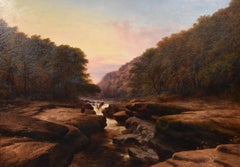
The Strid, near Bolton Abbey Wharfedale
by Walter Williams
Located in Mere, GB
Oil Painting 'The Strid, near Bolton Abbey Wharfedale' by Walter Williams. Walter Williams 1835-1906 was a painter of the highly popular Williams family o...
Category
19th Century Victorian Art
Materials
Oil
$5,454 Sale Price
24% Off
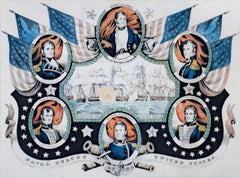
19th century color lithograph portraits ship seascape patriotic flags military
Located in Milwaukee, WI
The present hand-colored lithograph is an excellent example of patriotic mid-nineteenth century American imagery. The print shows the battle and several of the major figures involved in the Battle of Lake Erie: At the center is a view of several frigates on the lake, embroiled in conflict. Above the battle is the quotation: "We have met the enemy and they are ours." Surrounding are laurel-lined roundels with portraits of Oliver Hazard Perry (1785-1819), Stephen Dicateur (1779-1820), Johnston Blakeley (1871-1814), William Bainbridge (1774-1833), David Porter (1780-1843), and James Lawrence (1781-1813) - all of these framed by American flags, banners and cannons. This print shows that the Battle of Lake Erie, part of the War of 1812, still held resonance for American audiences several decades later and was part of the larger narrative of the founding of the country.
9.5 x 13.5 inches, artwork
20 x 23.38 inches, frame
Entitled in the image
Signed in the stone, lower left "Lith. and Pub. by N. Currier"
Inscribed lower right "2 Spruce N.Y." and "No. 1"
Copyrighted lower center "Entered according to Act of Congress in the year 1846 by N. Currier in the Clerk's office of the Southern District of N.Y."
Framed to conservation standards using 100 percent rag matting and housed in a gold gilded moulding.
Nathaniel Currier was a tall introspective man with a melancholy nature. He could captivate people with his piercing stare or charm them with his sparkling blue eyes. Nathaniel was born in Roxbury, Massachusetts on March 27th, 1813, the second of four children. His parents, Nathaniel and Hannah Currier, were distant cousins who lived a humble yet spartan life. When Nathaniel was eight years old, tragedy struck. Nathaniel’s father unexpectedly passed away leaving Nathaniel and his eleven-year-old brother Lorenzo to provide for the family. In addition to their mother, Nathaniel and Lorenzo had to care for six-year-old sister Elizabeth and two-year-old brother Charles. Nathaniel worked a series of odd jobs to support the family, and at fifteen, he started what would become a life-long career when he apprenticed in the Boston lithography shop of William and John Pendleton.
A Bavarian gentleman named Alois Senefelder invented lithography just 30 years prior to young Nat Currier’s apprenticeship. While under the employ of the brothers Pendleton, Nat was taught the art of lithography by the firm’s chief printer, a French national named Dubois, who brought the lithography trade to America.
Lithography involves grinding a piece of limestone flat and smooth then drawing in mirror image on the stone with a special grease pencil. After the image is completed, the stone is etched with a solution of aqua fortis leaving the greased areas in slight relief. Water is then used to wet the stone and greased-ink is rolled onto the raised areas. Since grease and water do not mix, the greased-ink is repelled by the moisture on the stone and clings to the original grease pencil lines. The stone is then placed in a press and used as a printing block to impart black on white images to paper.
In 1833, now twenty-years old and an accomplished lithographer, Nat Currier left Boston and moved to Philadelphia to do contract work for M.E.D. Brown, a noted engraver and printer. With the promise of good money, Currier hired on to help Brown prepare lithographic stones of scientific images for the American Journal of Sciences and Arts. When Nat completed the contract work in 1834, he traveled to New York City to work once again for his mentor John Pendleton, who was now operating his own shop located at 137 Broadway. Soon after the reunion, Pendleton expressed an interest in returning to Boston and offered to sell his print shop to Currier. Young Nat did not have the financial resources to buy the shop, but being the resourceful type he found another local printer by the name of Stodart. Together they bought Pendleton’s business.
The firm ‘Currier & Stodart’ specialized in "job" printing. They produced many different types of printed items, most notably music manuscripts for local publishers. By 1835, Stodart was frustrated that the business was not making enough money and he ended the partnership, taking his investment with him. With little more than some lithographic stones, and a talent for his trade, twenty-two year old Nat Currier set up shop in a temporary office at 1 Wall Street in New York City. He named his new enterprise ‘N. Currier, Lithographer’
Nathaniel continued as a job printer and duplicated everything from music sheets to architectural plans. He experimented with portraits, disaster scenes and memorial prints, and any thing that he could sell to the public from tables in front of his shop. During 1835 he produced a disaster print Ruins of the Planter's Hotel, New Orleans, which fell at two O’clock on the Morning of the 15th of May 1835, burying 50 persons, 40 of whom Escaped with their Lives. The public had a thirst for newsworthy events, and newspapers of the day did not include pictures. By producing this print, Nat gave the public a new way to “see” the news. The print sold reasonably well, an important fact that was not lost on Currier.
Nat met and married Eliza Farnsworth in 1840. He also produced a print that same year titled Awful Conflagration of the Steamboat Lexington in Long Island Sound on Monday Evening, January 18, 1840, by which melancholy occurrence over One Hundred Persons Perished. This print sold out very quickly, and Currier was approached by an enterprising publication who contracted him to print a single sheet addition of their paper, the New York Sun. This single page paper is presumed to be the first illustrated newspaper ever published.
The success of the Lexington print launched his career nationally and put him in a position to finally lift his family up. In 1841, Nat and Eliza had their first child, a son they named Edward West Currier. That same year Nat hired his twenty-one year old brother Charles and taught him the lithography trade, he also hired his artistically inclined brother Lorenzo to travel out west and make sketches of the new frontier as material for future prints. Charles worked for the firm on and off over the years, and invented a new type of lithographic crayon which he patented and named the Crayola. Lorenzo continued selling sketches to Nat for the next few years.
In 1843, Nat and Eliza had a daughter, Eliza West Currier, but tragedy struck in early 1847 when their young daughter died from a prolonged illness. Nat and Eliza were grief stricken, and Eliza, driven by despair, gave up on life and passed away just four months after her daughter’s death.
The subject of Nat Currier’s artwork changed following the death of his wife and daughter, and he produced many memorial prints and sentimental prints during the late 1840s. The memorial prints generally depicted grief stricken families posed by gravestones (the stones were left blank so the purchasers could fill in the names of the dearly departed). The sentimental prints usually depicted idealized portraits of women and children, titled with popular Christian names of the day.
Late in 1847, Nat Currier married Lura Ormsbee, a friend of the family. Lura was a self-sufficient woman, and she immediately set out to help Nat raise six-year-old Edward and get their house in order. In 1849, Lura delivered a son, Walter Black Currier, but fate dealt them a blow when young Walter died one year later. While Nat and Lura were grieving the loss of their new son, word came from San Francisco that Nat’s brother Lorenzo had also passed away from a brief illness. Nat sank deeper into his natural quiet melancholy. Friends stopped by to console the couple, and Lura began to set an extra place at their table for these unexpected guests. She continued this tradition throughout their lives.
In 1852, Charles introduced a friend, James Merritt Ives, to Nat and suggested he hire him as a bookkeeper. Jim Ives was a native New Yorker born in 1824 and raised on the grounds of Bellevue Hospital where his father was employed as superintendent. Jim was a self-trained artist and professional bookkeeper. He was also a plump and jovial man, presenting the exact opposite image of his new boss.
Jim Ives met Charles Currier through Caroline Clark, the object of Jim’s affection. Caroline’s sister Elizabeth was married to Charles, and Caroline was a close friend of the Currier family. Jim eventually proposed marriage to Caroline and solicited an introduction to Nat Currier, through Charles, in hopes of securing a more stable income to support his future wife.
Ives quickly set out to improve and modernize his new employer’s bookkeeping methods. He reorganized the firm’s sizable inventory, and used his artistic skills to streamline the firm’s production methods. By 1857, Nathaniel had become so dependent on Jims’ skills and initiative that he offered him a full partnership in the firm and appointed him general manager. The two men chose the name ‘Currier & Ives’ for the new partnership, and became close friends.
Currier & Ives produced their prints in a building at 33 Spruce Street where they occupied the third, fourth and fifth floors. The third floor was devoted to the hand operated printing presses that were built by Nat's cousin, Cyrus Currier, at his shop Cyrus Currier & Sons in Newark, NJ. The fourth floor found the artists, lithographers and the stone grinders at work. The fifth floor housed the coloring department, and was one of the earliest production lines in the country. The colorists were generally immigrant girls, mostly German, who came to America with some formal artistic training. Each colorist was responsible for adding a single color to a print. As a colorist finished applying their color, the print was passed down the line to the next colorist to add their color. The colorists worked from a master print displayed above their table, which showed where the proper colors were to be placed. At the end of the table was a touch up artist who checked the prints for quality, touching-in areas that may have been missed as it passed down the line. During the Civil War, demand for prints became so great that coloring stencils were developed to speed up production.
Although most Currier & Ives prints were colored in house, some were sent out to contract artists. The rate Currier & Ives paid these artists for coloring work was one dollar per one hundred small folios (a penny a print) and one dollar per one dozen large folios. Currier & Ives also offered uncolored prints to dealers, with instructions (included on the price list) on how to 'prepare the prints for coloring.' In addition, schools could order uncolored prints from the firm’s catalogue to use in their painting classes.
Nathaniel Currier and James Merritt Ives attracted a wide circle of friends during their years in business. Some of their more famous acquaintances included Horace Greeley, Phineas T. Barnum, and the outspoken abolitionists Rev. Henry Ward, and John Greenleaf Whittier (the latter being a cousin of Mr. Currier).
Nat Currier and Jim Ives described their business as "Publishers of Cheap and Popular Pictures" and produced many categories of prints. These included Disaster Scenes, Sentimental Images, Sports, Humor, Hunting Scenes, Politics, Religion, City and Rural Scenes, Trains, Ships, Fire Fighters, Famous Race Horses, Historical Portraits, and just about any other topic that satisfied the general public's taste. In all, the firm produced in excess of 7500 different titles, totaling over one million prints produced from 1835 to 1907.
Nat Currier retired in 1880, and signed over his share of the firm to his son Edward. Nat died eight years later at his summer home 'Lion’s Gate' in Amesbury, Massachusetts. Jim Ives remained active in the firm until his death in 1895, when his share of the firm passed to his eldest son, Chauncey.
In 1902, faced will failing health from the ravages of Tuberculosis, Edward Currier sold his share of the firm to Chauncey Ives...
Category
1850s Victorian Art
Materials
Watercolor, Lithograph
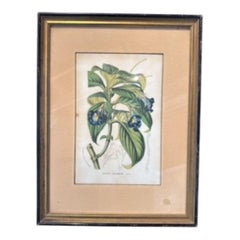
19th Century Botanical Engraving of Chirita Walkeria. Hand-Colored Print by Gar
Located in Jacksonville, FL
A captivating 19th-century botanical engraving depicting Chirita walkeria, a delicate flowering plant named in honor of Anna Maria Walker, a noted naturalist. This hand-colored print...
Category
Early 19th Century Victorian Art
Materials
Engraving
"Winter Landscape with Sheep and Shepherd", original water colour on paper
Located in Naples, Florida
This is an original unique watercolour by the artist. Florence Emily Lumb lived and exhibited her work between 1897 – 1901 in Liverpool at the Walker Art Gallery.
Category
20th Century Victorian Art
Materials
Watercolor

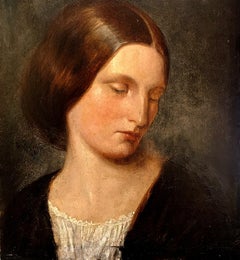
Portrait of a Mary Hardy (nee Sulman), Late 19th Century Victorian Oil
Located in London, GB
Slade School
Late 19th Century
Portrait of a Mary Hardy (nee Sulman)
Oil on panel
Image size: 8 x 7 inches
Contemporary frame
Provenance
Lady Town (Grandda...
Category
Late 19th Century Victorian Art
Materials
Panel, Oil
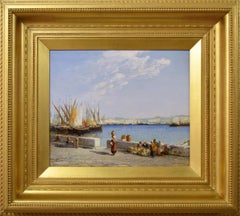
19th Century Italian townscape coastal oil painting of Livorno, Gulf of Genoa
Located in Nr Broadway, Worcestershire
Arthur Joseph Meadows
British, (1843-1907)
Livorno, Gulf of Genoa
Oil on panel, signed & dated (18)98, with signed & inscribed label on reverse
Image size: 9.75 inches x 11.75 inches
Size including frame: 17.75 inches x 19.75 inches
An attractive townscape depicting fruit sellers at the port of Livorno, Italy by Arthur Joseph Meadows. The scene shows the view looking across from the harbour wall to the church of Santa Caterina...
Category
19th Century Victorian Art
Materials
Oil, Panel
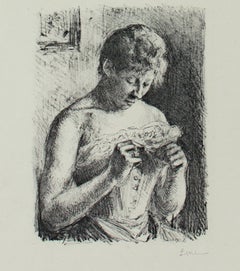
20th century lithograph realism figurative female print female subject signed
Located in Milwaukee, WI
"Woman Manicuring Her Nails" is an original lithograph by Maximilien Luce. The artist signed the piece lower right and it is numbered (#7). It features a woman seated in an interior taking care of her nails.
8 1/4" x 5 3/4" image
14 1/8" x 10 3/4" paper
19 1/4" x 16 1/2" frame
Maximilien Luce (1858 – 1941) was a prolific French Neo-impressionist artist, known for his paintings, illustrations, engravings, and graphic art, and also for his anarchist activism. Starting as an engraver, he then concentrated on painting, first as an Impressionist, then as a Pointillist, and finally returning to Impressionism.
Gausson and Cavallo-Péduzzi introduced Luce in about 1884 to the Divisionist technique developed by Georges Seurat. This influenced Luce to begin painting in the Pointillist style. In contrast to Seurat's detached manner, Luce's paintings were passionate portrayals of contemporary subjects, depicting the "violent effects of light". In addition to Pissarro and Signac, he met many of the other Neo-impressionists, including Seurat, Henri-Edmond Cross, Charles Angrand, Armand Guillaumin, Hippolyte Petitjean, Albert Dubois...
Category
Early 1900s Victorian Art
Materials
Lithograph
Convent of St. Catherine, Mt. Horeb
Located in London, GB
First edition lithographs in stock
Full plate: 118
Presented in a acid free mount
Category
19th Century Victorian Art
Materials
Lithograph
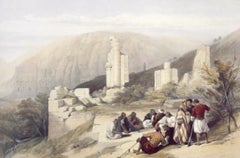
Remains of the Triumphal Arch, Petra
Located in London, GB
David Roberts RA
Remains of the Triumphal Arch, Petra
1796 - 1864
Subscription and First Edition lithographs
Full plate: 100
Presented in a acid free mount
Category
19th Century Victorian Art
Materials
Lithograph
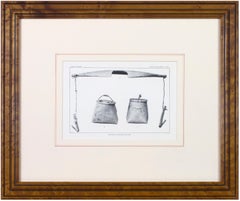
Birchbark Sap Buckets and Yoke
original halftone print, Bureau of Ethnology
Located in Milwaukee, WI
This halftone print was included in the 1898 report of the Bureau of Ethnology to the Smithsonain Institution. The sap buckets and yoke are from the Menomin...
Category
1890s Victorian Art
Materials
Lithograph
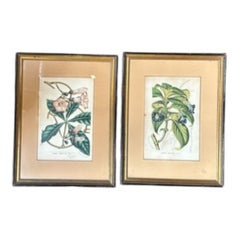
Pair of 19th Century Framed Botanical Prints Hooker
Gardner
Located in Jacksonville, FL
A stunning pair of original 19th-century hand-colored botanical engravings featuring Ipomoea horsfalliae and Chirita walkeria, attributed to renowned British botanists William Jackso...
Category
1830s Victorian Art
Materials
Engraving
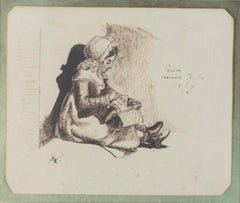
19th century ink drawing seated female figure with book sketch signed
By Hannah de Rothschild
Located in Milwaukee, WI
"The New Year" is a pen and ink on paper portrait signed by Hannah de Rothschild. A girl sits quietly in a corner with a cap. Her focus is on a book in her lap, she is about to rip a...
Category
1860s Victorian Art
Materials
Paper, Ink, Pen
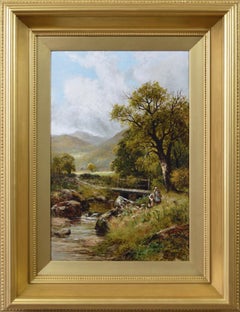
19th Century landscape oil painting of figures picking flowers at a river bank
Located in Nr Broadway, Worcestershire
Robert John Hammond
British, (1853-1911)
Picking Flowers
Oil on canvas, signed & dated 1900
Image size: 20.75 inches x 13.75 inches
Size including frame: 30.5 inches x 23.5 inches
A charming landscape painting of figures picking flowers next to a river by Robert John Hammond. The scene is set against the backdrop of mountains and was most likely painted in summer. The landscape appears similar to that of North Wales, an area the artist visited a number of times.
Robert John Hammond was a landscape painter born in Blackfriars, London in 1853. By the time he was 18 he had moved to Sutton Coldfield where he initially became an apprentice watchmaker before becoming a full time artist. In 1871, he married Lucy Banner, the sister of the artist Alfred Banner...
Category
19th Century Victorian Art
Materials
Canvas, Oil
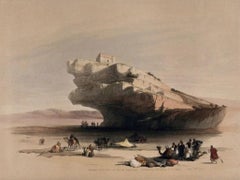
Ancient Watch Tower
Located in London, GB
David Roberts RA
Ancient Watch Tower
1796 - 1864
Subscription and first edition lithograph in stock
Half plate: 93
Presented in a acid free mount
Category
19th Century Victorian Art
Materials
Lithograph
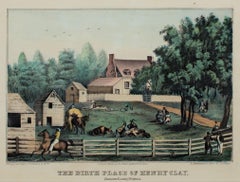
"Birthplace of Henry Clay, Hanover County, VA, " Lithograph by Kelloggs
Thayer
Located in Milwaukee, WI
"Birthplace of Henry Clay, Hanover County, Virginia" is an original hand-colored lithograph by Kelloggs & Thayer. The piece features a homestead and farm anima...
Category
1870s Victorian Art
Materials
Lithograph
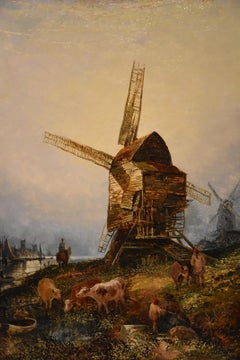
"Windmills by a Dutch Waterway" by Joseph Paul
Located in Mere, GB
"Windmills by a Dutch Waterway" by Joseph Paul. Joseph Paul was a Norwich landscape painter in the Dutch tradition. Regular local Exhibitor. Oil on canvas.
Dimensions unframed
heig...
Category
19th Century Victorian Art
Materials
Oil
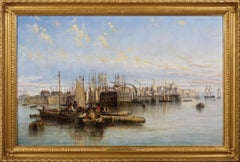
$4,431 Sale Price
34% Off
19th Century seascape oil painting of ships
boats at the port of Hull
Located in Nr Broadway, Worcestershire
Francis Moltino
Italian, (1818-1888)
The Port of Hull
Oil on canvas
Image size: 22 inches x 35 inches
Size including frame: 27.25 inches x 40.25 inches
Provenance: Stacy-Marks
A wo...
Category
19th Century Victorian Art
Materials
Canvas, Oil
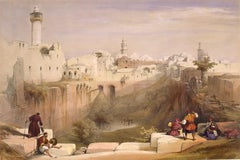
The Pool of Bethesda- Jerusalem
Located in London, GB
THE POOL OF BETHESDA- JERUSALEM
Subscription and first edition lithographs in stock
Full plate: 12
Presented in a acid free mount
£1,200
Published by F.G. Moon & Son, London 1842-49.
Subscription edition were coloured during production and First edition are modern hand-coloured lithograph, that was printed a few years after the subscription edition David Roberts.
We have both Subscription and First Edition lithographs in stock. The subscription edition was printed on a fine paper, hand coloured and then stuck on card. The first edition was printed on a more coarse paper and not coloured by hand. These ones we colour to match the subscription colouring. Each lithograph is sold in mint condition and in an acid free mount.
Please do not hesitate to contact us for more information, or if you are looking for another David Roberts lithograph...
Category
19th Century Victorian Art
Materials
Lithograph
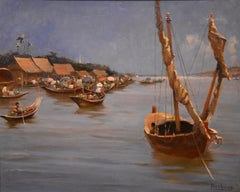
"A Siamese Water Market" by Edwin Norbury
Located in Mere, GB
"A Siamese Water Market" by Edwin Norbury. Edwin Arthur Norbury. R.C.A 1849- 1918 was a founder member of the royal Cambrian academy visited Siam in 1892 to...
Category
19th Century Victorian Art
Materials
Oil
$3,000 Sale Price
21% Off
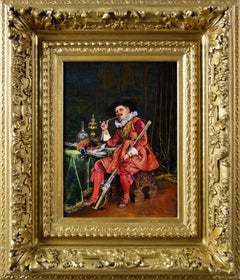
Historical genre sporting oil painting of a gentleman holding a gun
Located in Nr Broadway, Worcestershire
Adolphe-Alexandre Lesrel
French, (1839-1929)
The Sportsman
Oil on panel, signed & dated 1905
Image size: 10.75 inches x 7.75 inches
Size including frame: 19.5 inches x 16.5 inches
A beautifully detailed genre painting of a gentleman with a hunting rifle and smoking a clay pipe by Adolphe Alexandre Lesrel. The man, who is dressed in 17th century costume is seated next to a table containing game, a wine decanter and silver gilt standing cup with cover. All of the props including the 17th century wheel lock...
Category
19th Century Victorian Art
Materials
Oil, Panel
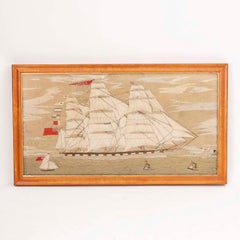
Wool Work
Woolie
Needlepoint Embroidery of the British Ship Amelia
Located in Palm Beach, FL
Large antique needlepoint of the British sailing ship Amelia hand crafted in wool, popularly known as woolies, crafted with ambitious detail. Pres...
Category
Late 19th Century Victorian Art
Materials
Wool
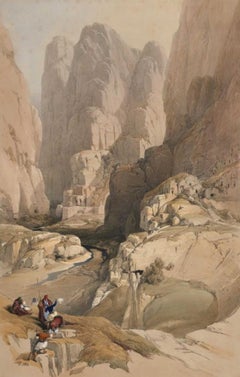
The Theatre, Petra
Located in London, GB
First Edition lithograph
Full plate: 98
Presented in a acid free mount
Category
19th Century Victorian Art
Materials
Lithograph
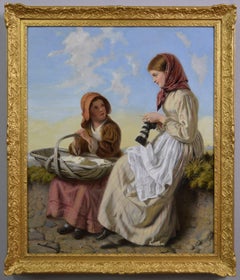
19th Century genre oil painting of a young woman knitting beside a girl
Located in Nr Broadway, Worcestershire
John William Haynes
British, (1831-1924)
Knitting
Oil on canvas, signed
Image size: 29.5 inches x 24.5 inches
Size including frame: 35 inches x 3...
Category
19th Century Victorian Art
Materials
Canvas, Oil
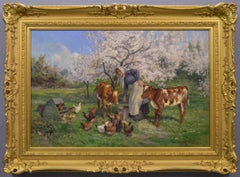
Animal oil painting of a woman feeding calves
chickens
Located in Nr Broadway, Worcestershire
Claude Cardon
British, (1864-1937)
Feeding Time in the Orchard
Oil on canvas, signed & dated 1918
Image size: 19.25 inches x 29.25 inches
Size including frame: 27.5 inches x 37.5 in...
Category
Early 20th Century Victorian Art
Materials
Canvas, Oil
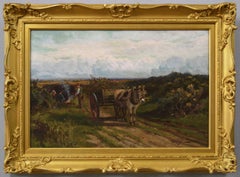
19th Century landscape oil painting of figures with a donkey
cart
Located in Nr Broadway, Worcestershire
Arthur Walker Redgate
British, (1860-1906)
A Wayside Chat
Oil on canvas, signed
Image size: 13.5 inches x 20.5 inches
Size including frame: 19.5...
Category
19th Century Victorian Art
Materials
Canvas, Oil
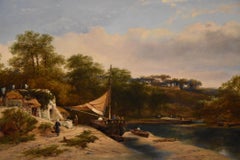
"Near Tamerton Devon" by William Pitt
Located in Mere, GB
"Near Tamerton Devon" by William Pitt. William Pitt 1818-1900 was a fine midlands landscape painter of local scenes and south west views. A regular exhibitor at London and Birmingham...
Category
19th Century Victorian Art
Materials
Oil
$6,136 Sale Price
23% Off
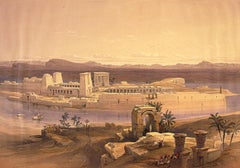
General View of the Island of Philae, Nubia
Located in London, GB
General View of the Island of Philae, Nubia
Subscription and first edition lithographs in stock
Full plate: 151
Presented in a acid free mount
£2080
Scroll down for more information....
Category
19th Century Victorian Art
Materials
Lithograph
19th Century genre oil painting of man preparing fishing tackle
Located in Nr Broadway, Worcestershire
John Arthur Lomax
British, (1857-1923)
Preparing his Tackle
Oil on panel, signed
Image size: 11.75 inches x 9.75 inches
Size including frame: 21 inches x 19 inches
A fabulous genr...
Category
19th Century Victorian Art
Materials
Oil, Panel
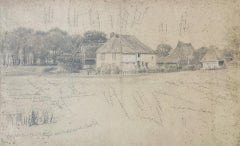
Sketch-book Page, Shoreham, Samuel Palmer, Late 19th Century
Located in London, GB
Graphite on paper, numerous pencil inscriptions
Image size: 5 1/2 x 21 1/2 inches (14 x 55 cm)
Period style hand made gilt frame
Provenance
The collection of Ernest Pearce (1930-20...
Category
Late 19th Century Victorian Art
Materials
Paper, Graphite
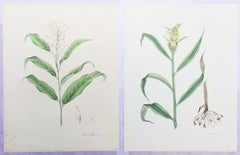
Set of Two Hand-Colored Lithographs from Roscoe
s "Monandrian Plants" /// Botany
Located in Saint Augustine, FL
Artist: William Roscoe (English, 1753-1831)
Titles: "Hedychium Glaucum" and "Zingiber Elatum"
Portfolio: Monandrian Plants of the order Scitamineae, Chiefly Drawn from Living Specime...
Category
1820s Victorian Art
Materials
Watercolor, Lithograph
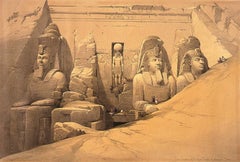
Front Elevation of The Great Temple of Aboo Simbel
Located in London, GB
Front Elevation of The Great Temple of Aboo Simbel
First edition lithograph
Full plate: 169
Presented in a acid free mount
£2,600
Scroll down for more information.
Roberts reached A...
Category
19th Century Victorian Art
Materials
Lithograph
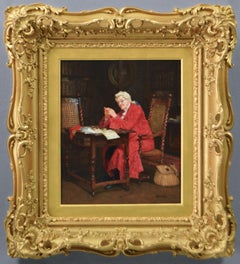
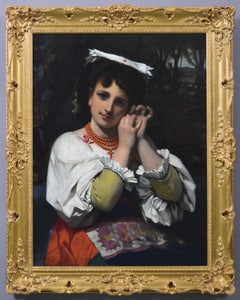
19th Century genre portrait of an Italian woman
By Pierre-Louis-Joseph de Coninck
Located in Nr Broadway, Worcestershire
Pierre Louis Joseph De Coninck
French, (1828-1910)
Italian Beauty
Oil on canvas, signed
Image size: 31 inches x 23 inches
Size including frame: 38 inches x 30 inches
A lovely three...
Category
19th Century Victorian Art
Materials
Canvas, Oil
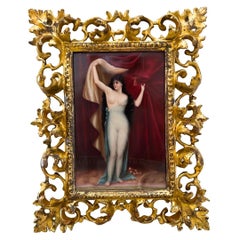
Ethereal Beauty: 19th Century Berlin KPM Porcelain Nude Woman
Located in Jacksonville, FL
19th Century Berlin KPM Porcelain " Nude Woman
Frame Size: Hight: 15.50" x Width:14.75"
Picture Size: Hight: 11.75" x Width:9.25 "
Capture the elegance and beauty of the 19th Cen...
Category
19th Century Victorian Art
Materials
Porcelain
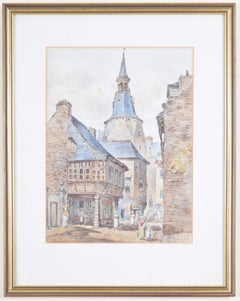
Dinan, Brittany clock tower watercolour attr Anthony Vandyke Copley Fielding
Located in London, GB
Attributed to Antony Vandyke Copley Fielding (1787 - 1855)
Dinan Tour de l’Horloge (Dinan Clock Tower)
Watercolour
28 x 21 cm
A spirited watercolour of Dinan, Brittany. Dinan's famo...
Category
Early 19th Century Victorian Art
Materials
Watercolor
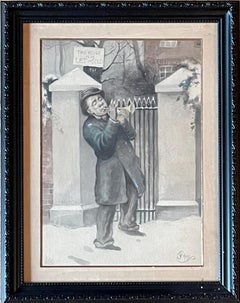
English Caricature Watercolour Painting, Victorian, 1902
Located in Hoddesdon, GB
An English Caricature Watercolour painting signed with the artists monogram & dated 1902 .
A beautiful painting of a tamp playing a trumpet on a winters day , outside a house that is for sale or to let .
( It makes me wonder if the tramp portrayed in the painting was once the owner of the property but has fallen on hard times...
Category
Early 1900s Victorian Art
Materials
Watercolor
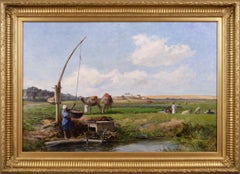
19th Century North African river landscape oil painting of a man using a Shadoof
Located in Nr Broadway, Worcestershire
David Bates
British, (1840-1921)
The Shadoof
Oil on canvas, signed, further inscribed verso
Image size: 19.75 inches x 29.75 inches
Size including fram...
Category
19th Century Victorian Art
Materials
Canvas, Oil
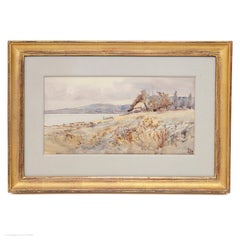
Watercolour Estuary Landscape Victorian
Located in Eversholt, Bedfordshire
just purchased more information to follow
Cypher lower right
Within a grey mount, 14cm high, 28cm long
The gilded cavetto moulded frame 28 cm high, 41 cm long, 3.5cm deep
Category
1850s Victorian Art
Materials
Watercolor
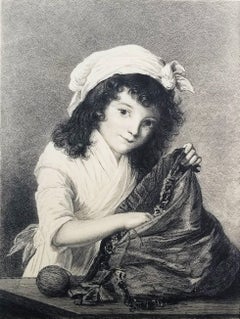
Melle Brongniart, Baronne Pichon (Miss Brongniart, Baroness Pichon) /// Antique
Located in Saint Augustine, FL
Artist: Eugène Marie Louis Chiquet (French, 1863-1942)
Title: "Melle Brongniart, Baronne Pichon (Miss Brongniart, Baroness Pichon)"
Portfolio: Gazette des Beaux-Arts
Year: 1901
Mediu...
Category
Early 1900s Victorian Art
Materials
Etching, Intaglio
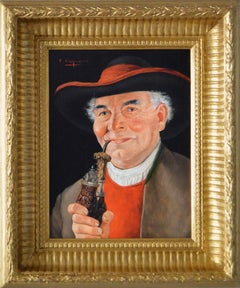
Portrait oil painting of an Austrian Gentleman with a Pipe
Located in Nr Broadway, Worcestershire
Erwin Eichinger
Austrian, (1892-1950)
The Pipe
Oil on board, signed
Image size: 10 inches x 7.5 inches
Size including frame: 15.25 inches x 12.75 inches
A finely painted portrait ...
Category
Early 20th Century Victorian Art
Materials
Oil, Board
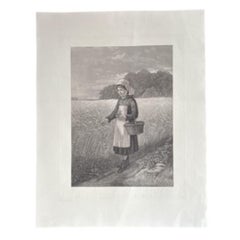
1877 Engraving – “The Little Gleaner” by C. Klackner, New York
Located in Jacksonville, FL
A charming 19th-century engraving titled “The Little Gleaner”, published in 1877 by C. Klackner in New York. The piece depicts a young girl walking through a wheat field, holding a b...
Category
1870s Victorian Art
Materials
Engraving
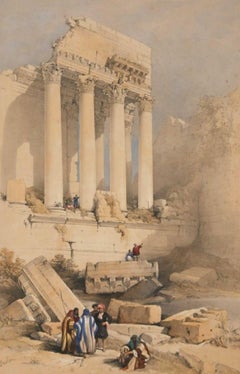
Baalbec, Western Portico
Located in London, GB
First edition lithograph in stock
Full plate: 79
Presented in a acid free mount
Modern hand-coloured lithograph for the first edition of David Roberts’ The Holy Land available.
Pub...
Category
19th Century Victorian Art
Materials
Lithograph
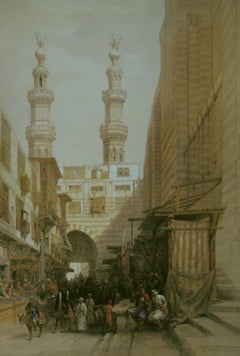
Minaret
Grand Entrance of the Metwaleys, Cairo
Located in London, GB
Subscription and first edition lithograph in stock
Full plate: 218
Presented in an acid free mount
Category
19th Century Victorian Art
Materials
Lithograph
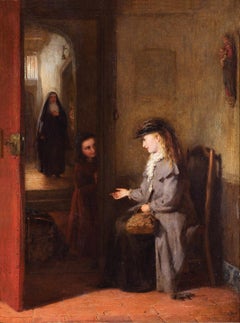
The New Teacher, 19th Century Victorian Interior Oil
Located in London, GB
George Bernard ONeil
1828-1917
Oil on canvas, signed & dated (18)76 lower right
Image size: 22 ½ x 17 inches
Original frame
The painting depicts the arrival of the new teacher, a curious pupil peeps around a door to see her, while her friends look through the open door to the classroom to catch a glimpse.
The artist has gone to great lengths with the painting, such as the highly detailed Dutch tiles on the bottom right of the picture or the window above the door in the background. O'Neil often painted works with several doorways leading off and giving a sense of depth to the work. The use of light and shadow is also cleverly depicted across the work, one light source arrives from where the viewer stands filling the room and the new teacher with light, while the other window above the door in the background also gives a warm glow.
George Bernard O'Neill was born on 17th July 1828 in Dublin the ninth of fifteen children of Bernard and Sarah O...
Category
1870s Victorian Art
Materials
Oil
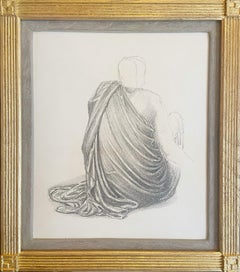
Study for Last Sleep of Arthur in Avalon
Located in London, GB
Graphite on paper
Image size: 7 1/2 x 9 inches (19 x 23 cm)
Carved gilt frame
Literature
Illustrated in Malcolm Bell's 'Sir Edward Burne-Jones, A Record and Review', London, 1899, p.127.
Provenance
Major Charles Sydney Goldman 1958
By descent to his Sons
John and Margaret Monck (John Goldman Monck) 1958-1963
Commander Victor Robert Penryn Monck (Victor Robert Penryn Monk Goldman) 1958-1963
Christie's London (Christie, Manson and Woods) 1963, John Monck and Cmdr Penryn Monck sale 26 April 1963 part lot 71
Sir John Richardson, 2019
Burne-Jones decided that the folds in the drapery in this study were too complex for the final painting and fairly soon after he simplified the draperies.
The work is a drapery study for the seated figures at the centre of Sir Edward Coley Burne-Jones monumental The Sleep of Arthur in Avalon (Museo de Arte de Ponce, Puerto Rico). The artist spent seventeen years working on the complex narrative, even moving his studio to a larger space to accommodate the canvas. Born as a commission from his patron George Howard, 9th Earl of Carlisle, to decorate a wall in his library at Naworth Castle, The Sleep of Arthur in Avalon was left unfinished in Burne-Jones’ studio upon his death. The work was bequeathed to a studio neighbour whose descendants sold it at auction in 1963, where it was purchased by Luis A. Ferré, politician and founder of the Museo de Arte de Ponce.
To his friends and family, Burne-Jones was known for his 'unpainted masterpieces'. Indeed, from his youth he made swift sketches, such as this study, that appeared effortless in contrast to his carefully crafted paintings and allowed him to work out ideas and refine details. He also drew outside of the studio, and his contemporaries remarked at his uncanny ability to do so while fully engaged in other activities. The painter W. Graham...
Category
19th Century Victorian Art
Materials
Graphite
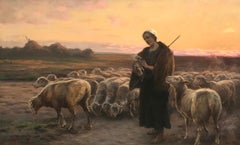
The Shepherdess With Her Flock, Original Oil on Canvas Painting
Located in Naples, Florida
Gustav Doring (1864-1938)
Gustav Döring studied at the Academy of Fine Art in Berlin where Gustaf Hellqvist , Paul Meyerheim and Hans Meyer were among h...
Category
Early 20th Century Victorian Art
Materials
Oil
$12,640 Sale Price
20% Off
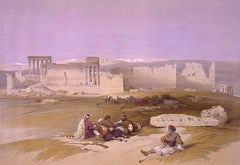
Baalbec, General View
Located in London, GB
Subscription and first Edition lithographs
Full plate: 77
Presented in an acid free mount
Original hand coloured subscription edition and modern hand-coloured lithograph for the fir...
Category
19th Century Victorian Art
Materials
Lithograph
Victorian art for sale on 1stDibs.
Find a wide variety of authentic Victorian art available for sale on 1stDibs. Works in this style were very popular during the 21st Century and Contemporary, but contemporary artists have continued to produce works inspired by this movement. If you’re looking to add art created in this style to introduce contrast in an otherwise neutral space in your home, the works available on 1stDibs include elements of blue, orange, purple, yellow and other colors. Many Pop art paintings were created by popular artists on 1stDibs, including Francis E. Jamieson, Sir Leslie Ward, John James Audubon, and George Cruikshank. Frequently made by artists working with Paint, and Oil Paint and other materials, all of these pieces for sale are unique and have attracted attention over the years. Not every interior allows for large Victorian art, so small editions measuring 1.5 inches across are also available. Prices for art made by famous or emerging artists can differ depending on medium, time period and other attributes. On 1stDibs, the price for these items starts at $49 and tops out at $153,923, while the average work sells for $2,035.
Still Thinking About These?
All Recently ViewedMore Ways To Browse
Mauritz Lindstrom
Maximillien Luce
Michael Budden Central Park
Midcentury Matador Paintings
Mike Wright
Miracle On Ice
Mississippi River Painting
Monarch Of The Glen Painting
Moroccan Paintings Essaouira
Morpho Butterfly Art
Mount Tamalpais
Murray Dessner
Native American Oklahoma
New England Barn
New Orleans Jazz Poster
Niagara Falls Oil
Oil Painting By Alice
Oil Painting Willow Tree