Drawing Art

to
4,932
15,952
4,420
3,342
953
850
Overall Width
to
Overall Height
to
884
2,730
17,055
4,959
184
406
1,170
1,095
997
1,730
1,918
2,765
1,162
539
703
9,034
4,641
1,490
852
746
485
475
419
390
191
77
55
50
34
16,066
8,605
775
149,010
77,464
49,353
41,407
36,213
34,553
29,710
25,965
25,635
23,254
20,268
16,513
15,227
14,443
13,633
12,933
11,037
10,289
10,142
8,359
5,674
5,584
5,551
3,793
3,600
876
400
326
317
155
2,498
10,712
12,464
9,791
Art Subject: Drawing
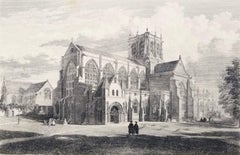
Southwest View of Sherborne Abbey Church /// History of Dorset English Engraving
Located in Saint Augustine, FL
Artist: John Hutchins (English, 1698-1773) Title: "Southwest View of Sherborne Abbey Church" (Plate 15) Portfolio: The History and Antiquities of the County of Dorset Year: 1861-1870...
Category

1860s Victorian Landscape Prints

Materials

Engraving

Notre-Dame Cathedral from the Seine
Located in Middletown, NY
Etching with drypoint on cream wove paper, 7 x 8 3/4 inches (177 x 223 mm); sheet 10 1/2 x 11 3/4 inches (267 x 300 mm), full margins. Signed V. E. Chapel and numbered 62/250 in penc...
Category

Early 20th Century French School Landscape Prints

Materials

Etching, Drypoint

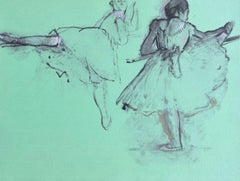
Edgar Degas, Dancer at the Barre, 1945 (after)
Located in Southampton, NY
This exquisite lithograph after Edgar Degas (1834–1917), titled Danseur au bar (Dancer at the Barre), originates from the 1945 folio Degas, Ten Ballet Sketches. Published by The Studio Publications, Inc., New York, rendered and printed by Albert Carman, City Island, 1945, this work reflects Degas’s sensitive mastery of line, movement, and the intimate psychological nuances of the ballet studio. Executed as a lithograph and pochoir on velin paper, this work measures 13 x 17 inches (33.02 x 43.18 cm). Signed in the plate and unnumbered as issued. Rendered and printed by Albert Carman, City Island. Artwork Details: Artist: After Edgar Degas (1834–1917) Title: Danseur au bar (Dancer at the Barre), from Degas, Ten Ballet Sketches, 1945 Medium: Lithograph and pochoir on velin paper Dimensions: 13 x 17 inches (33.02 x 43.18 cm) Inscription: Signed in the plate and unnumbered as issued Date: 1945 Publisher: The Studio Publications, Inc., New York Printer: Albert Carman, City Island Condition: Well preserved, consistent with age and medium Provenance: From the 1945 folio Degas, Ten Ballet Sketches, published by The Studio Publications, Inc., New York Notes: Excerpted from the album, Born in Paris in 1834, Edgar Degas lived, and surely loved the life of that city during most of his years. These continued somewhat sadly beyond those of most of his friends— into the debacle of the first World War, during which he died in 1917. Judging by the frequency with which he used them as models, he must have had an especial admiration for the ballet girls who followed a profession that at the time brought none of the glory and prosperity which attend it today. New aspects of the human body, revealed in movement, fascinated him. But his occupation with the simply anatomical side of his subjects never resulted in a cold interpretation. On the contrary there is a warmth and sympathy that pervades all of his work. The drawings here represent the painter in one important phase of his multi-sensitive view of life; and permit an insight which a more ambitious work might not do-into the operation of the creative process, the artist's transformation of reality as it passes through the mesh of his sensibilities. The Edition of this Portfolio is limited to MMMD examples. Rendered by Albert Carman. About the Publication: Degas, Ten Ballet Sketches (1945) is one of the earliest and most significant American postwar fine art portfolios devoted to Edgar Degas’s intimate works on paper. Published by The Studio Publications, Inc., New York, and rendered and printed by Albert Carman at City Island, the album sought to faithfully reproduce a group of Degas’s ballet-related drawings through a combination of lithography and hand-applied pochoir coloring. This hybrid technique allowed the edition to preserve the immediacy, tonal subtlety, and gestural delicacy central to Degas’s draftsmanship. Conceived as a fine art publication rather than a commercial book, the portfolio provided American audiences unprecedented access to Degas’s private, spontaneous studies—images that reveal the artist’s fascination with movement, anatomy, and the psychological atmosphere of the rehearsal studio. The album exemplifies the mid-20th-century revival of pochoir as a means of recreating the texture and coloristic nuance of original works on paper, and it remains an important document of how Degas’s legacy was translated into high-quality printed form for collectors, museums, and connoisseurs. About the Artist: Edgar Degas (1834–1917) was a French painter, draughtsman, printmaker, and sculptor whose groundbreaking fusion of classical draftsmanship, modern experimentation, and psychological depth helped define the trajectory of Western art, positioning him as one of the most influential figures of the nineteenth and early twentieth centuries; renowned for his depictions of ballet dancers, racehorses, theater scenes, cafe life, domestic interiors, milliners, laundresses, and women at their toilette, Degas reimagined observational realism through radical compositional innovation—employing extreme cropping, asymmetrical framing, oblique viewpoints, and dramatic lighting that anticipated photographic and cinematic language long before these technologies shaped visual culture, and although associated with Impressionism, he rejected plein-air spontaneity in favor of studio-based discipline rooted in the linear precision of Jean-Auguste-Dominique Ingres, the expressive chromaticism of Eugene Delacroix, and the modernity of Edouard Manet while also drawing inspiration from Japanese ukiyo-e prints, classical sculpture, and early photography; his independent artistic philosophy resonated with and helped shape the innovations of Pablo Picasso, Alexander Calder, Alberto Giacometti, Salvador Dali, Joan Miro, Wassily Kandinsky, Marcel Duchamp, and Man Ray, whose explorations of movement, form, dream logic, abstraction, and conceptualism all find antecedents in Degas’s investigations into seriality, temporality, and the fragmented figure, and his pioneering use of pastel, monotype, and wax sculpture fundamentally transformed each medium, influencing artists from Henri Matisse, Francis Bacon, Lucian Freud, and Giacomo Manzu to Paula Rego, contemporary realists, experimental photographers, and choreographers; his works are held in nearly every major museum collection worldwide—including the Musee dOrsay, the Louvre, the Metropolitan Museum of Art, the National Gallery of Art, the Art Institute of Chicago, the Courtauld Institute, and the National Gallery, London—affirming his central place in the history of art, and the highest auction record for Degas was achieved at Sothebys London on February 3, 2015, when Danseuses en Bleu sold for 37,033,000 GBP, cementing his status as one of the most sought-after and enduringly significant artists of the Western canon. Degas pochoir, Degas lithograph...
Category

1940s Impressionist Figurative Prints

Materials

Lithograph

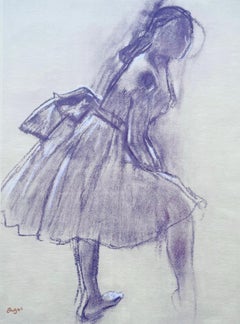
Edgar Degas, Dancer Standing in Profile, 1945 (after)
Located in Southampton, NY
This exquisite lithograph after Edgar Degas (1834–1917), titled Danseur debout de profil (Dancer Standing in Profile), originates from the 1945 folio Degas, Ten Ballet Sketches. Published by The Studio Publications, Inc., New York, rendered and printed by Albert Carman, City Island, 1945, this work reflects Degas’s sensitive mastery of line, movement, and intimate observation, capturing the grace, poise, and psychological immediacy that define his iconic ballet imagery. In Danseur debout de profil (Dancer Standing in Profile), Degas reveals gesture and inner emotion through economical contour and lyrical nuance. Executed as a lithograph and pochoir on velin paper, this work measures 17 x 13 inches (43.18 x 33.02 cm). Signed in the plate and unnumbered as issued. Rendered and printed by Albert Carman, City Island, one of the notable American ateliers specializing in fine art lithography during the mid-20th century. Artwork Details: Artist: After Edgar Degas (1834–1917) Title: Danseur debout de profil (Dancer Standing in Profile), from Degas, Ten Ballet Sketches, 1945 Medium: Lithograph and pochoir on velin paper Dimensions: 17 x 13 inches (43.18 x 33.02 cm) Inscription: Signed in the plate and unnumbered as issued Date: 1945 Publisher: The Studio Publications, Inc., New York Printer: Albert Carman, City Island, 1945 Condition: Well preserved, consistent with age and medium Provenance: From the 1945 folio Degas, Ten Ballet Sketches, published by The Studio Publications, Inc., New York Notes: Excerpted from the album, Born in Paris in 1834, Edgar Degas lived, and surely loved the life of that city during most of his years. These continued somewhat sadly beyond those of most of his friends— into the debacle of the first World War, during which he died in 1917. Judging by the frequency with which he used them as models, he must have had an especial admiration for the ballet girls who followed a profession that at the time brought none of the glory and prosperity which attend it today. New aspects of the human body, revealed in movement, fascinated him. But his occupation with the simply anatomical side of his subjects never resulted in a cold interpretation. On the contrary there is a warmth and sympathy that pervades all of his work. The drawings here represent the painter in one important phase of his multi-sensitive view of life; and permit an insight which a more ambitious work might not do-into the operation of the creative process, the artist's transformation of reality as it passes through the mesh of his sensibilities. The Edition of this Portfolio is limited to MMMD examples. Rendered by Albert Carman. About the Publication: Degas, Ten Ballet Sketches, published in 1945 by The Studio Publications, Inc., New York, stands as one of the most elegant and scholarly mid-century American fine art folios devoted to the ballet imagery of Edgar Degas. Conceived as a high-quality interpretive portfolio, the album presents a series of lithograph-and-pochoir renderings based on Degas’s original drawings, executed with exceptional attention to tonal subtlety, contour fidelity, and the emotional interiority that defines the artist’s draftsmanship. Rendered and printed by Albert Carman on City Island, the publication embodies an American postwar effort to restore and celebrate European masterworks through meticulous handcraft and artisanal color application, honoring Degas’s distinctive line and the atmospheric delicacy of his studio-based studies. Produced in a substantial edition of MMMD examples, the portfolio offered audiences rare access to Degas’s private working drawings—images rarely seen outside institutional collections—while exemplifying the technical refinement and interpretive care characteristic of Carman’s workshop. Today, Degas, Ten Ballet Sketches remains a sought-after historical publication, valued for its craft, fidelity to Degas’s aesthetic, and its role in preserving and disseminating the artist’s intimate ballet imagery in a beautifully executed mid-century fine art format. About the Artist: Edgar Degas (1834–1917) was a French painter, draughtsman, printmaker, and sculptor whose groundbreaking fusion of classical draftsmanship, modern experimentation, and psychological depth helped define the trajectory of Western art, positioning him as one of the most influential figures of the nineteenth and early twentieth centuries; renowned for his depictions of ballet dancers, racehorses, theater scenes, cafe life, domestic interiors, milliners, laundresses, and women at their toilette, Degas reimagined observational realism through radical compositional innovation—employing extreme cropping, asymmetrical framing, oblique viewpoints, and dramatic lighting that anticipated photographic and cinematic language long before these technologies shaped visual culture, and although associated with Impressionism, he rejected plein-air spontaneity in favor of studio-based discipline rooted in the linear precision of Jean-Auguste-Dominique Ingres, the expressive chromaticism of Eugene Delacroix, and the modernity of Edouard Manet while also drawing inspiration from Japanese ukiyo-e prints, classical sculpture, and early photography; his independent artistic philosophy resonated with and helped shape the innovations of Pablo Picasso, Alexander Calder, Alberto Giacometti, Salvador Dali, Joan Miro, Wassily Kandinsky, Marcel Duchamp, and Man Ray, whose explorations of movement, form, dream logic, abstraction, and conceptualism all find antecedents in Degas’s investigations into seriality, temporality, and the fragmented figure, and his pioneering use of pastel, monotype, and wax sculpture fundamentally transformed each medium, influencing artists from Henri Matisse, Francis Bacon, Lucian Freud, and Giacomo Manzu to Paula Rego, contemporary realists, experimental photographers, and choreographers; his works are held in nearly every major museum collection worldwide—including the Musee dOrsay, the Louvre, the Metropolitan Museum of Art, the National Gallery of Art, the Art Institute of Chicago, the Courtauld Institute, and the National Gallery, London—affirming his central place in the history of art, and the highest auction record for Degas was achieved at Sothebys London on February 3, 2015, when Danseuses en Bleu sold for 37,033,000 GBP, cementing his status as one of the most sought-after and enduringly significant artists of the Western canon. Edgar Degas lithograph...
Category

1940s Impressionist Figurative Prints

Materials

Lithograph

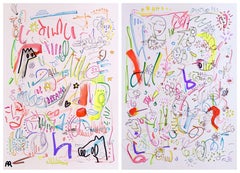
2 DRAWINGS
Located in CÓRDOBA, ES
2 DRAWINGS of 21x30cm each Markers on paper Unframed
Category

2010s Neo-Expressionist Animal Paintings

Materials

Acrylic, Permanent Marker

2 DRAWINGS
2 DRAWINGS
$89 Sale Price
50% Off
Authentic Japanese Woodblock Print-White Cat-Hanabusa Itchō-Edo-Re-carved 1920s
Located in London, GB
This rare Original 1920s authentic print is a Taisho Period Woodblock print published from the Japan 1920's The Nippon Mokuhan Gasui, Masterpieces Series.; it is authentically hand ...
Category

1920s Edo Landscape Paintings

Materials

Ink, Handmade Paper

(after) Marcel Gromaire - lithograph
Located in Henderson, NV
Medium: lithograph (after the drawing). Marcel Gromaire was one of the artists who contributed compositions to Marcelle Oury's "Lettre à mon peintre" in homage to Raoul Dufy. This li...
Category

1960s Prints and Multiples

Materials

Lithograph

Gold Unicorn
Located in Douglas Manor, NY
6095 Gold unicorn gold pen painting Signed Paul Breeden Wood frame image size 19.5x15.5"
Category

1970s Animal Paintings

Materials

Oil

Gold Unicorn
Gold Unicorn
$450 Sale Price
40% Off
Elwood W. Bartlett, Wisconsin Farm, about 1945, mid-century wood engraving
Located in New York, NY
Elwood Warren Bartlett is a Wisconsin native who also worked in Indiana. Largely self taught as a printmaker, Bartlett worked in a style that once identified as his, immediately t...
Category

1940s American Modern Landscape Prints

Materials

Woodcut

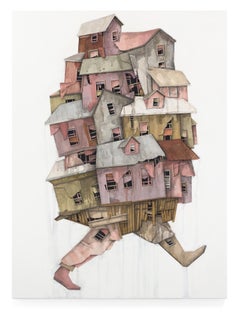
"Wanderer 10" Architectural Assemblage in Collage Paper Textures and Paint Drips
Located in Philadelphia, PA
This piece, titled "Wanderer 10" is an original artwork by Seth Clark as part of his newest solo exhibition, "Passing Through" is made of collage, charcoal, pastel, acrylic, and gra...
Category

21st Century and Contemporary Contemporary Figurative Drawings and Water...

Materials

Wood, Paper, Charcoal, Pastel, Acrylic, Graphite
Pablo Picasso ( Spanish, 1881 -1973 ) Cubism Limited Edition Etching
Located in New York, NY
Medium: Limited Edition 31/250 Lithograph Style: Cubism Painting Size: 8 x 12 inches Frame Size: 5.25 x 7 inches Condition: This artwork is in great condition for its age. Signatu...
Category

21st Century and Contemporary Nude Prints

Materials

Etching, Canvas

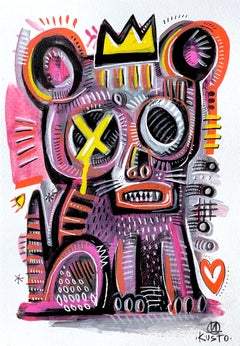
SKULL TIGER
Located in CÓRDOBA, ES
Original painting by Daria Kusto. Acrylic markers on paper. The magic flow reality... Shipping from Spain, safely and promptly.
Category

2010s Pop Art Portrait Paintings

Materials

Permanent Marker

SKULL TIGER
SKULL TIGER
$151 Sale Price
20% Off
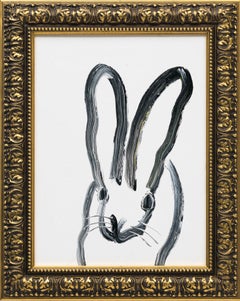
Hunt Slonem "White Bunny" Bunny
Located in Boston, MA
Artist: Slonem, Hunt Title: White Bunny Date: 2025 Medium: Oil on wood Unframed Dimensions: 16" x 12" Framed Dimensions: 20.5" x 16.5" Signature: Signed by Artist on Verso Edi...
Category

2010s Contemporary Paintings

Materials

Oil

British Chalk Pencil Sketch of Small White Sheep Lying Down
Located in Cirencester, Gloucestershire
John Rabone Harvey ( 1966 - 1922) graphic and chalk deep green artist paper , unframed artist paper : 5.5 x 7 inches Provenance: private collection Condition: very good condition Ha...
Category

Mid-19th Century Realist Animal Paintings

Materials

Chalk, Graphite

British Chalk Pencil Sketch of a Horse Patiently Waiting at The Wooden Fence
Located in Cirencester, Gloucestershire
John Rabone Harvey ( 1966 - 1922) graphic and chalk deep green artist paper , unframed artist paper : 5.5 x 7 inches Provenance: private collection Condition: very good condition Ha...
Category

Mid-19th Century Realist Figurative Paintings

Materials

Chalk, Graphite

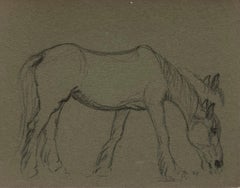
British Chalk Pencil Sketch of a Horse Munching On Grass
Located in Cirencester, Gloucestershire
John Rabone Harvey ( 1966 - 1922) graphic and chalk deep green artist paper , unframed artist paper : 5.5 x 7 inches Provenance: private collection Condition: very good condition Ha...
Category

Mid-19th Century Realist Figurative Paintings

Materials

Chalk, Graphite

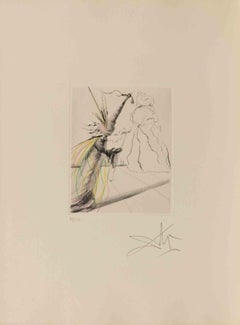
L Illusioniste - Etching - 1960s
Located in Roma, IT
Etching on chamois-colored laid paper, realized by Dalì in 1968/69. Plate from "Faust (La Nuit de Walpurgis), published by Argillet, Paris. Edition of 49/150, hand colored. Hand s...
Category

1960s Surrealist Figurative Prints

Materials

Etching

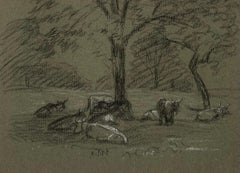
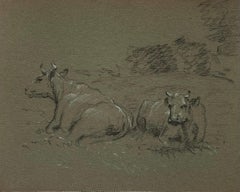
British Chalk Pencil Sketch of Cows Resting In the Meadow
Located in Cirencester, Gloucestershire
John Rabone Harvey ( 1966 - 1922) graphic and chalk deep green artist paper , unframed artist paper : 5.5 x 7 inches Provenance: private collection Condition: very good condition Ha...
Category

Mid-19th Century Realist Animal Paintings

Materials

Chalk, Graphite

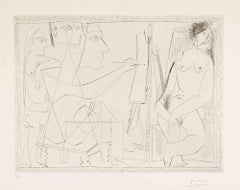
Peintre et Modèle, avec une Spectatrice - Etching by Pablo Picasso - 1963
Located in Roma, IT
Etching on wove paper, realized in 1962/63. Image dimension: 31.6x41.7; Sheet dimension 45.4x55.4. Hand signed in pencil lower right. Edition of 2/50, hand numbered. Very good co...
Category

1960s Cubist Figurative Prints

Materials

Etching

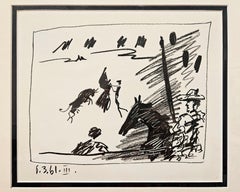
Picasso "Jeu de la Cape" Lithograph
Located in Boston, MA
Artist: Picasso, Pablo Title: Jeu de la Cape Series: A Los Toros Date: 1961 Medium: Lithograph Unframed Dimensions: 9" x 12" Framed Dimensions: 17" x 19" Signature: Unsigned ...
Category

1960s Modern Prints and Multiples

Materials

Lithograph

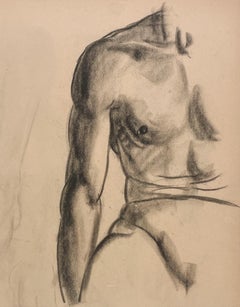
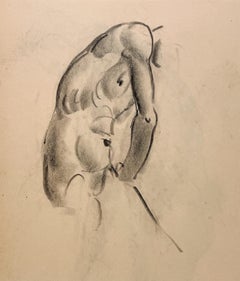
A Fine, Modern 1930s Academic Anatomical Figure Study (Seated Male Model, Torso)
Located in Chicago, IL
A Fine, 1930s Modern Academic Anatomical Figure Study Drawing of a Seated Male Nude Model (Torso) by Notable Chicago Artist, Harold Haydon (Am. 1909-1994). An exceptionally well exe...
Category

1930s American Modern Nude Drawings and Watercolors

Materials

Paper, Charcoal

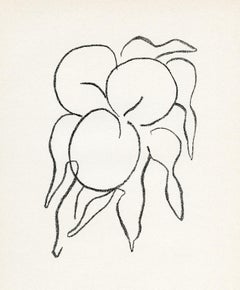
"Fruits" original lithograph
Located in Henderson, NV
Medium: original lithograph. Printed in Paris in 1964 by Mourlot Frères and published in an edition of 2000 on Arches wove paper. Image size: 6 x 4 1/2 inches (150 x 110 mm). Sheet s...
Category

1960s Abstract Prints and Multiples

Materials

Lithograph

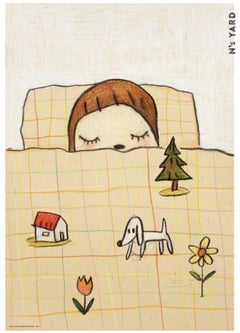
Yoshitomo Nara - Dream Time
Located in Central, HK
Yoshitomo Nara Dream Time, 2021 Print on paper 20 3/10 × 14 3/10 in 51.5 × 36.4 cm
Category

2010s Figurative Prints

Materials

Paper

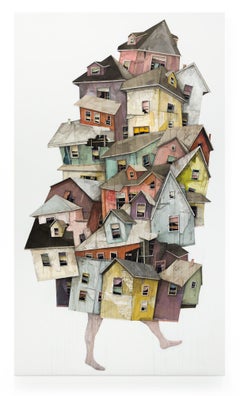
"Wanderer 17" Collaged Papers with Pastel, Acrylic and Graphite on Wood
Located in Philadelphia, PA
This piece, titled "Wanderer 17" is an original artwork by Seth Clark as part of his newest solo exhibition, "Passing Through". made of collage, charcoal, pastel, acrylic, and graphi...
Category

21st Century and Contemporary Contemporary Figurative Drawings and Water...

Materials

Wood, Paper, Charcoal, Pastel, Acrylic, Graphite
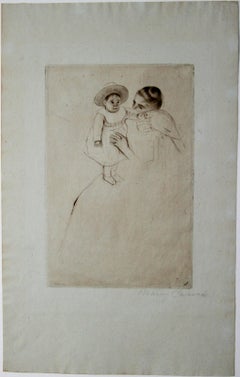
Hélène of Septeuil (enfant au perroquet) (child with a parakeet).
Located in Storrs, CT
Hélène of Septeuil (enfant au perroquet) (child with a parakeet). c. 1889-1890. Drypoint. Breeskin, 134.v. 9 3/8 x 6 1/4 (sheet 15 3/4 x 9 7/8). A rich impression with burr and plate...
Category

19th Century Impressionist Portrait Prints

Materials

Watercolor, Drypoint

British Chalk Pencil Sketch of Cows Resting In The Grass Meadows
Located in Cirencester, Gloucestershire
John Rabone Harvey ( 1966 - 1922) graphic and chalk deep green artist paper , unframed artist paper : 5.5 x 7 inches Provenance: private collection Condition: very good condition Dou...
Category

Mid-19th Century Realist Figurative Paintings

Materials

Chalk, Graphite

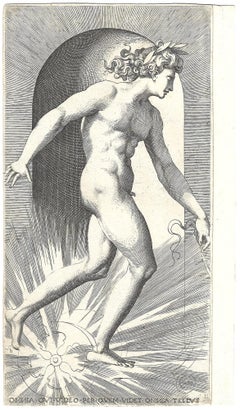
Apollo, plate 11 from the series of The Gods in Niches
Located in Middletown, NY
by Jacopo Caraglio (after Rosso Fiorentino) Rome: Carlo Losi, 1526. Engraving on cream laid paper, 8 1/2 x 4 3/8 inches, 215 x 110 mm), thread margins. In very good condition with a...
Category

17th Century Old Masters Figurative Prints

Materials

Laid Paper, Handmade Paper, Engraving
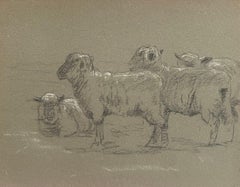
British Chalk Pencil Sketches Of A Flock Of Sheep Standing and Lying Down
Located in Cirencester, Gloucestershire
John Rabone Harvey ( 1966 - 1922) graphic and chalk deep green artist paper , unframed artist paper : 5.5 x 7 inches Provenance: private collection Condition: very good condition Ha...
Category

Mid-19th Century Realist Animal Paintings

Materials

Chalk, Graphite

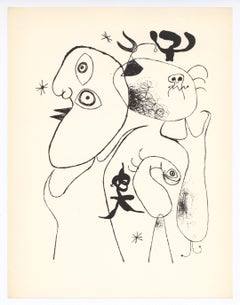
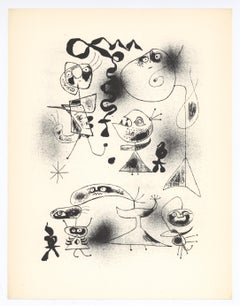
Surrealist composition
Located in Henderson, NV
Medium: collotype (after the Miro lithograph). Printed in 1947 in an edition of 1500 by Meriden Gravure and published by Curt Valentin for "The Prints of Joan Miro" portfolio. Size: ...
Category

1940s Surrealist Prints and Multiples

Materials

Photogravure

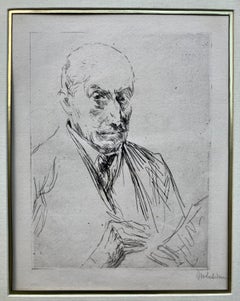
SELF PORTRAIT DRAWING
Located in Santa Monica, CA
MAX LIEBERMANN (1847 1935) SELF PORTRAIT DRAWING (Selbstportrat) c. 1922 (Schiefler, 341, III b) Etching, signed in pencil, Scarce signed example found in Max Liebermann “Sein Leb...
Category

1920s Impressionist Portrait Prints

Materials

Etching

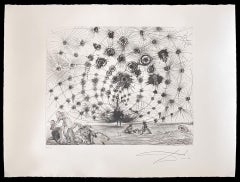
Mythology: Argus in Black
Located in Santa Monica, CA
Salvador Dali Mythology: Argus in Black, Published 1963-1965 Medium: Copper and Drypoint Etching on Arches Paper Edition: 106/150 Artwork Size: 22 x 30 in Framed Size: 28.50 x ...
Category

1960s Surrealist Figurative Prints

Materials

Etching

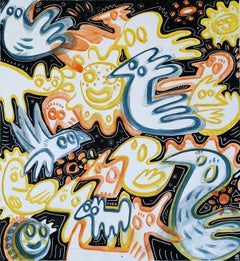
ANIMAL PARADISE
Located in CÓRDOBA, ES
Shipped rolled in a tube, without frame! 5cm/2" extra of white edge around the painting surface Can make commissioned works_ -Specialist in large painting___ _intuitive painting, ...
Category

2010s Post-Modern Figurative Paintings

Materials

Oil, Acrylic, Permanent Marker

ANIMAL PARADISE
ANIMAL PARADISE
$398 Sale Price
20% Off
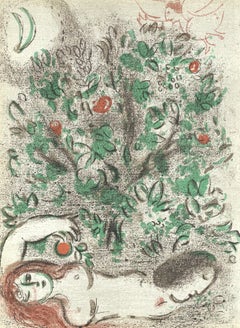
Marc Chagall, Paradise I, from Drawings for the Bible, 1956
Located in Southampton, NY
This exquisite lithograph by Marc Chagall (1887–1985), titled Paradis I (Paradise I), from Marc Chagall, Dessins Pour La Bible (Drawings for the Bible), Verve: Revue Artistique et Litteraire, Vol. VIII, No. 33–34, originates from the September 1956 issue published by Editions de la revue Verve, Paris, under the direction of Teriade, Editeur, Paris, and printed by Mourlot Freres, Paris, 1956. This radiant and dreamlike composition envisions the Garden of Eden as a symbol of divine harmony and innocence, where life, color, and spirit coexist in perfect unity. Through lyrical forms and glowing tonal contrasts, Chagall expresses a vision of creation that transcends narrative, merging spiritual wonder with emotional warmth. Paradis I embodies the artist’s enduring fascination with the sacred origins of life and the poetic balance between the earthly and the eternal. The piece forms part of Chagall’s celebrated series of lithographs and drawings created for Dessins Pour La Bible, a monumental project uniting art, scripture, and mysticism in one of the artist’s most important achievements. Executed as a lithograph on velin du Marais paper, this work measures 14 x 10.5 inches (35.56 x 26.67 cm). Unsigned and unnumbered as issued. The edition exemplifies the superb craftsmanship of the Mourlot Freres atelier, renowned for its collaborations with the greatest modern masters of the 20th century. Artwork Details: Artist: Marc Chagall (1887–1985) Title: Paradis I (Paradise I), from Marc Chagall, Dessins Pour La Bible (Drawings for the Bible), Verve: Revue Artistique et Litteraire, Vol. VIII, No. 33–34, September 1956 Medium: Lithograph on velin du Marais paper Dimensions: 14 x 10.5 inches (35.56 x 26.67 cm) Inscription: Unsigned and unnumbered as issued Date: 1956 Publisher: Editions de la revue Verve, Paris, under the direction of Teriade, Editeur, Paris Printer: Mourlot Freres, Paris Catalogue raisonne references: Cain, Julien, and Fernand Mourlot. Chagall Lithographe. Andre Sauret, Editeur, 1960, illustrations 117–46. Cramer, Patrick, and Meret Meyer. Marc Chagall: Catalogue Raisonne Des Livres Illustrés. P. Cramer ed., 1995, illustration 25. Condition: Well preserved, consistent with age and medium Provenance: From Marc Chagall, Dessins Pour La Bible (Drawings for the Bible), Verve: Revue Artistique et Litteraire, Vol. VIII, No. 33–34, published by Editions de la revue Verve, Paris, 1956 Notes: Excerpted from the album (translated from French), This double issue of Verve is dedicated to the full reproduction in heliogravure of the one hundred-five plates etched by Marc Chagall, between 1930 and 1955, for the illustration of the Bible. The artist composed especially for the present work, sixteen lithographs in color and twelve in black, as well as the cover and the title page. This volume was completed and printed on September 10, 1956, by the Master Printers Draeger Freres for heliogravure, and by Mourlot Freres for lithography. About the Publication: Marc Chagall, Dessins Pour La Bible (Drawings for the Bible), published as Verve Vol. VIII, No. 33–34 in September 1956, represents one of the crowning achievements of Chagall’s lifelong dialogue with the sacred. Conceived and directed by the visionary publisher Teriade and printed by the master lithographers Mourlot Freres, the issue features thirty-four color lithographs and numerous black-and-white drawings inspired by biblical figures and stories. Chagall’s works for this edition unite text and image in a luminous meditation on divine creation, moral struggle, and spiritual renewal, imbued with his signature dreamlike symbolism and radiant color. Produced in postwar Paris, this landmark publication reaffirmed the enduring union of art and faith, establishing Dessins Pour La Bible as one of the most important illustrated works of the 20th century. About the Artist: Marc Chagall (1887–1985) was a Belarus-born French painter, printmaker, and designer whose visionary imagination, radiant color, and deeply poetic symbolism made him one of the most beloved and influential artists of the 20th century. Rooted in the imagery of his Jewish heritage and the memories of his childhood in Vitebsk, Chagall’s art wove together themes of faith, love, folklore, and fantasy with a dreamlike modern sensibility. His unique style—merging elements of Cubism, Fauvism, Expressionism, and Surrealism—defied categorization, transforming ordinary scenes into lyrical meditations on memory and emotion. Influenced by Russian icon painting, medieval religious art, and the modern innovations of artists such as Pablo Picasso, Henri Matisse, and Georges Braque, Chagall developed a profoundly personal visual language filled with floating figures, vibrant animals, musicians, and lovers that symbolized the transcendent power of imagination and love. During his early years in Paris, he became an integral part of the Ecole de Paris circle, forming friendships with Amedeo Modigliani, Fernand Leger, and Sonia Delaunay, and his creative spirit resonated with that of his peers and successors—Alexander Calder, Alberto Giacometti, Salvador Dali, Joan Miro, Wassily Kandinsky, Marcel Duchamp, and Man Ray—artists who, like Chagall, sought to push the boundaries of perception, emotion, and form. Over a prolific career that spanned painting, printmaking, stained glass, ceramics, and stage design, Chagall brought an unparalleled poetic sensibility to modern art, infusing even the most abstract subjects with human warmth and spiritual depth. His works are held in the most prestigious museums around the world, including the Museum of Modern Art, the Centre Pompidou, the Tate, and the Guggenheim, where they continue to inspire generations of artists and collectors. The highest price ever paid for a Marc Chagall artwork is approximately $28.5 million USD, achieved in 2017 at Sotheby’s New York for Les Amoureux (1928). Marc Chagall Paradis...
Category

1950s Expressionist Figurative Prints

Materials

Lithograph

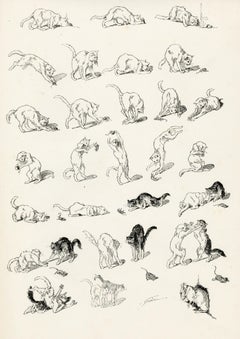
A black and white cat play with a mouse, from Le Chat Noir
Located in Fairlawn, OH
A black and white cat play with a mouse, from Le Chat Noir Gillotage chromotype, 1898 Signed in the image lower right (see photo) An impression of this image is in the collection of ...
Category

1890s Impressionist Animal Prints

Materials

Other Medium

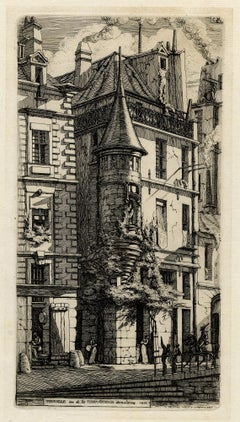
Tourelle, Rue de la Tixéranderie démolie en 1851
Located in Middletown, NY
Etching and drypoint on watermarked Hudelist laid paper, 9 5/8 x 5 inches (245 x 129mm) full margins. Second state (of five) after lettering. A superb condition with a pencil inscrip...
Category

Mid-19th Century French School Landscape Prints

Materials

Laid Paper, Etching, Drypoint

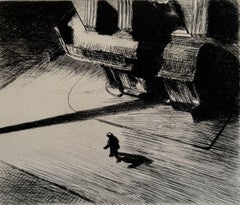
Night Shadows
By Edward Hopper
Located in Storrs, CT
Night Shadows. 1921. Etching. Levin 82. 7 x 8 3/8 (sheet 10 x 13 7 1/16).s Series: Six American Etchings: The New Republic Portfolio, 1924. Edition approximately 500-600. Illustrate...
Category

1920s American Modern Landscape Prints

Materials

Etching

Night Shadows
Night Shadows
$48,000 Sale Price
20% Off
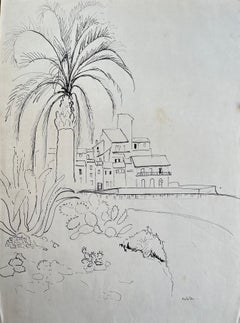
Mid-20th Century Post-Impressionist Drawing of Antibes with Palm Tree and Cacti
Located in Cirencester, Gloucestershire
Title: Mid-20th Century Post-Impressionist Drawing of Antibes with Palm Tree and Cacti by Anne Marie Migette Perard (French 1902-1977) Medium...
Category

Mid-20th Century Post-Impressionist Landscape Paintings

Materials

Ink, Pen

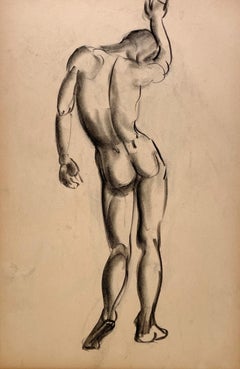
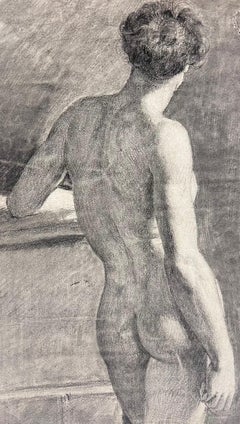
A Fine 1930s, Modern Academic Figure Study Drawing, Standing Male Nude (Back)
Located in Chicago, IL
A Fine 1930s, Modern Academic Figure Study Drawing of a Standing Male Nude Model (Back) by Notable Chicago Artist, Harold Haydon (Am. 1909-1994). An exceptionally well executed, ear...
Category

1930s American Modern Nude Drawings and Watercolors

Materials

Paper, Charcoal

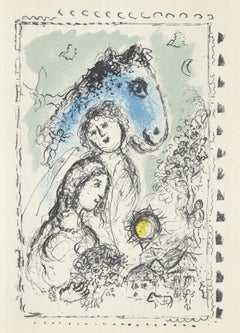
Marc Chagall, Blue Horse with Couple, from Derriere le Miroir, 1982
Located in Southampton, NY
This exquisite lithograph by Marc Chagall (1887–1985), titled Cheval bleu au couple (Blue Horse with Couple), originates from the historic 1982 folio Derriere le Miroir, No. 250, Hommage a Aime et Marguerite Maeght (Tribute to Aime and Marguerite Maeght). Published by Maeght Editeur, Paris, under the direction of Aime Maeght, and printed by Imprimerie Moderne du Lion, Paris, this vibrant composition reflects Chagall’s lyrical fusion of color, dream, and devotion. In Cheval bleu au couple, ethereal figures and a radiant blue horse float within a luminous space of poetic imagination, evoking love, memory, and transcendence. The image captures the artist’s timeless ability to unite fantasy and emotion within the expressive language of modernism. Executed on velin paper, this lithograph measures 15 x 11 inches (38.1 x 27.9 cm). As issued, it is unsigned and unnumbered, consistent with the authorized publication format. The edition exemplifies Chagall’s mastery of color lithography and his lifelong exploration of faith, folklore, and the human spirit. Artwork Details: Artist: Marc Chagall (1887–1985) Title: Cheval bleu au couple (Blue Horse with Couple), from Derriere le Miroir, No. 250, Hommage a Aime et Marguerite Maeght (Tribute to Aime and Marguerite Maeght), 1982 Medium: Lithograph on velin paper Dimensions: 15 x 11 inches (38.1 x 27.9 cm) Inscription: Unsigned and unnumbered, as issued Date: 1982 Publisher: Maeght Editeur, Paris Printer: Imprimerie Moderne du Lion, Paris Catalogue raisonne references: Chagall, Marc, et al. Chagall Lithographe VI, 1980–1985. Andre Sauret, Editeur, 1986, illustration 993. Cramer, Patrick, and Meret Meyer. Marc Chagall: Catalogue Raisonne Des Livres Illustres. P. Cramer ed., 1995, illustration 113. Condition: Well preserved, consistent with age and medium Provenance: From the 1982 folio Derriere le Miroir, No. 250, published by Maeght Editeur, Paris Notes: Excerpted from the folio (translated from French), This special issue of Derriere le Miroir was designed and defined by Aime Maeght in the fall of 1980. He envisioned its publication as a celebration with which artists and writers published since 1946 were to be associated. He also chose Francois Chapon, president of the Reverdy Committee, to write the presentation. This Derriere le Miroir number 250 took the form, after its disappearance on September 5, 1981, of a tribute to Aime Maeght and his wife Marguerite Maeght who died four years earlier. 24 artists agreed to create an original graphic work for this issue which includes the general table of all issues as well as excerpts from texts by 32 writers. Finished printing on June 2, 1982 on the presses of the l'Imprimerie moderne du Lion in Paris. CL examples were printed on velin d'Arches, numbered from I to CL, and some non-commercial examples constituting the original edition. About the Publication: Derriere le Miroir (translated as "Behind the Mirror") was an iconic French art periodical published from 1946 to 1982 by Maeght Editeur, one of the most influential art publishers of the 20th century. Founded by Aime Maeght in Paris, the publication was conceived as a visual and literary collaboration between leading modern artists, poets, and critics. Each issue functioned as both an exhibition catalogue and a work of art in itself—featuring original lithographs printed directly from the artists' stones or plates, alongside essays, poems, and critical commentary. Over the course of 36 years, Derriere le Miroir produced more than 250 issues and showcased an extraordinary roster of artists including Henri Matisse, Marc Chagall, Joan Miro, Georges Braque, Alexander Calder, Fernand Leger, Pierre Bonnard, Alberto Giacometti, Eduardo Chillida, Ellsworth Kelly, Francis Bacon, Paul Rebeyrolle, Claude Garache, Antoni Tapies, Bram van Velde, Pierre Alechinsky, Pol Bury, Shusaku Arakawa, and Gerard Titus-Carmel. Printed in the ateliers of Mourlot, Arte, and Imprimerie Moderne du Lion, the periodical set new standards for quality in color lithography, combining fine art printing with elegant typography and poetic text. Beyond its visual brilliance, Derriere le Miroir also became a cultural chronicle of postwar European modernism. Each issue coincided with exhibitions held at Galerie Maeght, providing a collectible and widely accessible record of groundbreaking shows. Its integration of image, text, and philosophy created a dialogue between art and literature that elevated the modern art book to new aesthetic heights. Today, Derriere le Miroir remains one of the most sought-after and historically significant art publications, prized by collectors and scholars alike for its craftsmanship, influence, and its role in defining the visual language of 20th-century modernism. The Maeght Foundation in Saint-Paul-de-Vence continues to honor this legacy through exhibitions and archival preservation of the series, affirming Derriere le Miroir's enduring place in the history of modern art and fine art publishing. About the Artist: Marc Chagall (1887–1985) was a Belarus-born French painter, printmaker, and designer whose visionary use of color and poetic symbolism made him one of the most beloved and influential artists of the 20th century. Rooted in the rich imagery of his Jewish heritage and childhood in Vitebsk, Chagall’s dreamlike compositions fused memory, folklore, faith, and romance with the expressive innovations of modern art. His work evolved alongside and in dialogue with the great modern masters—Pablo Picasso, Henri Matisse, Alexander Calder, Salvador Dali, Joan Miro, Georges Braque, Wassily Kandinsky, Marcel Duchamp, and Man Ray—artists who, like Chagall, redefined artistic language for a new century. Spanning painting, printmaking, stained glass, ceramics, stage design, and illustration, Chagall’s career reflected both his deep spirituality and his boundless imagination. His works are held in major museum collections worldwide, including the Museum of Modern Art, the Guggenheim, the Tate, and the Centre Pompidou. The highest price ever paid for a Marc Chagall artwork is approximately $28.5 million USD, achieved in 2017 at Sotheby’s New York for Les Amoureux (1928). Marc Chagall Cheval bleu au couple, Marc Chagall lithograph, Chagall Derriere le Miroir, Chagall Maeght...
Category

1980s Expressionist Figurative Prints

Materials

Lithograph

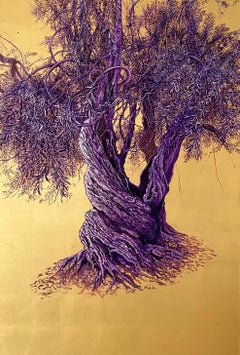
Grandiose - Realist purple lavender Olive Tree, golden background, nature
Located in Dallas, TX
"Grandiose", Purple Olive Tree with Golden Background. Oil and gold leaf on canvas, black and gold silhouette frame 150h × 100w × 4d cm 59.06h × 39.37w × 1.57d inches Anastasia Gkl...
Category

2010s Contemporary Landscape Paintings

Materials

Gold Leaf

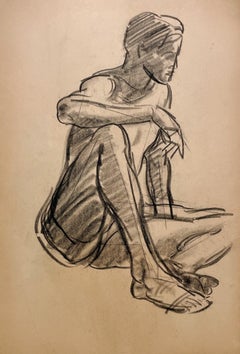
A Fine 1930s, Modern Academic Figure Study Drawing, Seated Male Model, Young Man
Located in Chicago, IL
A Fine 1930s Modern Academic Figure Study Drawing, Seated Male Nude Model (Back) by Notable Chicago Artist, Harold Haydon (Am. 1909-1994). An exceptionally well executed early 1930s...
Category

1930s American Modern Nude Drawings and Watercolors

Materials

Paper, Charcoal

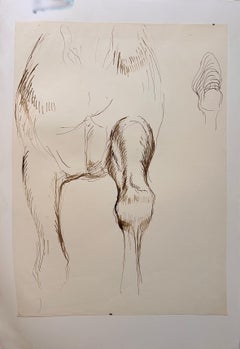
Original French Anatomical Study of a Horse s Stride
Located in Cirencester, Gloucestershire
Title: Original French Anatomical Study of a Horse's Stride Artist: Robert Ladou (French, 1929-2014) Medium: Pen on paper Size: 20 (Height) x 13.75 (Width) Signed: No Condition: Good...
Category

20th Century Academic Animal Paintings

Materials

Pen

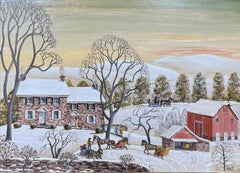
Bucks Count Farm in Winter, Landscape by Pennsylvania Folk Art Painter
Located in Doylestown, PA
Bucks County Farm in Winter is a figurative landscape by Pennsylvania Folk Art painter, Jean Halter. The 12" x 16" oil on board painting is framed and signed "Jean Halter" in the lower right. Jean Harris Halter was born in 1916 and spent her youth between Thornburg, Pennsylvania where her father oversaw Harris plumbing, and Camden, South Carolina, where they also had a home. She studied art, among other things, in Converse College. In 1939 she married Robert Halter, a musician with a traveling big band, which he quit soon after marrying. While he was gone for three years with the Signal Corps in the South Pacific, Jean took care of their two little daughters, their kennel of Pulis, and began to paint antique chairs...
Category

1950s Folk Art Landscape Paintings

Materials

Oil, Board

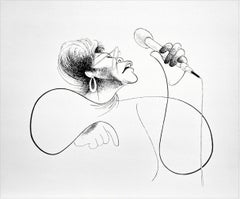
ELLA FITZGERALD Lithograph, Celebrity Caricature Portrait, Female Jazz Vocalist
Located in Union City, NJ
ELLA FITZGERALD is a limited edition lithograph by the renowned artist/caricaturist Al Hirschfeld (1903-2003) printed using traditional lithography techniques on archival printmaking...
Category

1990s Contemporary Portrait Prints

Materials

Lithograph

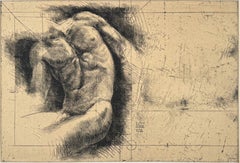
Heart Cry, male nude lithograph by Trevor Southey
Located in Palm Springs, CA
Medium: Etching Year: 1985 Edition of 60 Image Size: 16 x 24 inches A powerful, intimate etching/drypoint of a nude male by Trevor Southey titled "Heartcry." Rendered with lively, e...
Category

1980s Contemporary Nude Prints

Materials

Lithograph

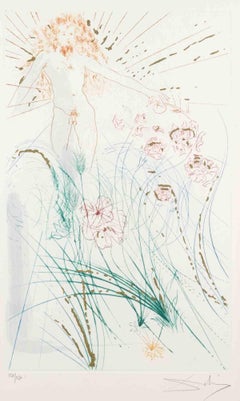
The Beloved Feeds Between the Lilies - Lithograph - 1971
Located in Roma, IT
Etching with pochoir and gold overlay. Edition of 121/250. Hand signed and numbered in pencil. Ref. Michler-Lopsinger 477c. Very good condition. The artwork is from the series So...
Category

1970s Surrealist Figurative Prints

Materials

Lithograph

Andrew Wyeth, New Leaves, from The Four Seasons (after)
Located in Southampton, NY
This exquisite lithograph after Andrew Wyeth (1917–2009), titled New Leaves, originates from the distinguished 1962 folio The Four Seasons: Paintings and Drawings by Andrew Wyeth. Published and printed by Art in America Company, Inc., New York, the edition exemplifies Wyeth’s quiet observation of nature and the passage of time. New Leaves captures the delicate stir of spring renewal—the subtle emergence of life in the landscape—rendered with Wyeth’s hallmark balance of precision, restraint, and emotional depth. Executed on velin paper, this lithograph measures 17 x 13 inches (43.2 x 33 cm). As issued, it is unsigned and unnumbered, representing the folio’s authentic format. The Four Seasons series was conceived by the editors of Art in America in collaboration with Andrew and Betsy Wyeth, who selected drawings from the artist’s studio and personal archive to embody the poetic rhythm of the changing seasons. Each composition reveals Wyeth’s mastery of atmosphere, mood, and the quiet intensity of natural experience. Artwork Details: Artist: After Andrew Wyeth (1917–2009) Title: New Leaves, from The Four Seasons, Paintings and Drawings by Andrew Wyeth, 1962 Medium: Lithograph on velin paper Dimensions: 17 x 13 inches (43.2 x 33 cm) Inscription: Unsigned and unnumbered, as issued Date: 1962 Publisher: Art in America Company, Inc., New York Printer: Art in America Company, Inc., New York Condition: Well preserved, consistent with age and medium Provenance: From the 1962 folio The Four Seasons, Paintings and Drawings by Andrew Wyeth, published and printed by Art in America Company, Inc., New York Notes: Excerpted from the 1962 folio: "In 1962 the editors of Art in America proposed to Wyeth a portfolio of images of his recent dry-brush drawings. The artist and his wife suggested the theme, 'The Four Seasons,' because of the essential role played in his work by the cycle of the seasons. The drawings were selected by Andrew and Betsy Wyeth from works in the house and studio at Chadds Ford, supplemented by some owned by friends. With a few exceptions they had never been exhibited or reproduced. The plates were made directly from the originals. In these drawings Wyeth's loving concentration on the object is fully revealed. But as always in his work, this concern with the tangible is balanced by sensibility to mood, to the emotion arising from the actual. They are pervaded with a sense of the season—the exact time of year, the hour of the day, the quality of the light. To the truth and subtlety with which he captures these intangible factors, these drawings owe their poignant poetry." About the Artist: Andrew Wyeth (1917–2009) was an American visual artist and one of the best-known painters of the mid-20th century. Although he considered himself an abstractionist, Wyeth’s work is characterized by a meticulous realism imbued with psychological depth and atmosphere. He often painted the landscapes and people surrounding his homes in Chadds Ford, Pennsylvania, and Cushing, Maine, creating an intimate record of American rural life. The son of the celebrated illustrator N. C. Wyeth, Andrew trained under his father before developing his own deeply personal visual language inspired by Winslow Homer, Henry David Thoreau, and King Vidor. His wife, Betsy Wyeth, was both his muse and career manager, while his son Jamie Wyeth continued the family’s artistic legacy. Among Wyeth’s best-known works is Christina’s World (1948), housed in the Museum of Modern Art, New York—a quintessential image of 20th-century American art. His other notable series include The Helga Pictures and his window studies, each reflecting a profound meditation on solitude, memory, and perception. Wyeth was the first painter to receive both the Presidential Medal of Freedom and the Congressional Gold Medal, and was elected to the French Académie des Beaux-Arts in 1980. In 2022, Andrew Wyeth's painting Day Dream sold for USD 23.29 million at Christie’s New York, setting a world record for the artist. Andrew Wyeth lithograph...
Category

1960s American Realist Landscape Prints

Materials

Lithograph

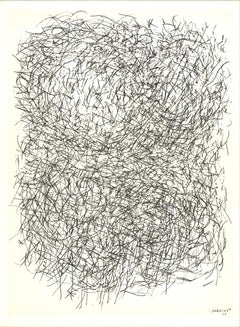
Jean Rene Bazaine Composition VIII 1968- Lithograph Vintage
Located in Brooklyn, NY
This lithograph page titled Composition VIII is part of the Derrière le Miroir (DLM) No. 170 series, showcasing the work of the French artist René Bazaine. Known for his contribution...
Category

1960s Contemporary Prints and Multiples

Materials

Lithograph

Circa 1800 French Neo-Classical Study of Male Nude Standing Academic Pose
Located in Cirencester, Gloucestershire
Nude Male Study French, circa 1800 Neo-Classical School, circle of Jacques Louis David (French 1748-1825) Pencil drawing on paper, unframed drawing: 14 x 8 inches double sided with ...
Category

Early 19th Century French School Nude Paintings

Materials

Charcoal, Pencil

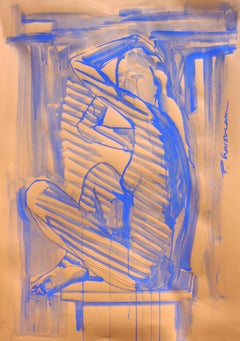
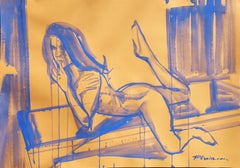
Sensory Experience - original large nude art by Paula Craioveanu 39x27.5in
Located in Forest Hills, NY
"Sensory Experience", pencil and ultramarine tempera on paper, inspired by Matisse. Part of Nude in Interior series. Large drawing. Shipped rolled in a tube, from Florida, US. See 1stDibs free shipping offer FREESHIP Artist Statement "I started by painting interiors, being interested in space and perspective through my studies. These scenes evolved, when I added the human figure. I focused more on the human figure and its relation to the background. The human figure is more present than ever in my paintings now. As a woman artist I’ve been preoccupied with the female form and its imagery. One of my goals was to capture the solitary moments and the nude’s relation to the surrounding space. My interest turned from depicting the space to rendering the atmosphere and the scene as a whole, the feeling a woman adds to the environment: warmth, desire, joy, a feeling of power and control, or the opposite – sadness, despair. Here is a collection of figurative paintings, exploring the nudes in interior spaces, seeing the nudes from my perspective, as a woman artist, considering the physical and spiritual realities of a woman’s body, in a new level of intimacy. My paintings are the opposite of objectifying a woman’s or a man’s anatomy. Painted works, featuring female nudes and a also men nudes...
Category

2010s Contemporary Nude Drawings and Watercolors

Materials

Tempera, Pencil, Paper

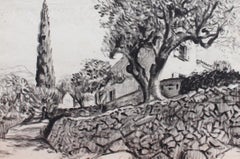
The Olive Tree Behind the Stone Wall
Located in London, GB
'The Olive Tree Behind the Stone Wall', ink on art paper, by Pierre Dionisi (circa 1930s). Sepia-toned, original drawing in a compelling style depicts a...
Category

1930s Modern Landscape Drawings and Watercolors

Materials

Paper, Ink

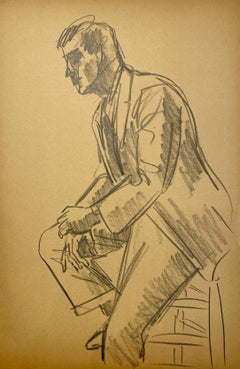
A Fine 1946 Modern Figure Study of a Handsome Young Male Model Wearing a Suit
Located in Chicago, IL
A Fine 1940s, Mid-Century Modern Academic Figure Study Portrait of a Handsome, Seated Male Model Wearing a Suit by Notable Chicago Artist, Harold Haydon (Am. 1909-1994). An exceptionally well executed early 1940s charcoal...
Category

Mid-20th Century American Modern Portrait Drawings and Watercolors

Materials

Paper, Charcoal

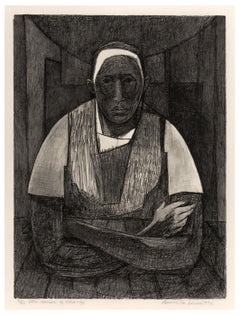
The House of Shango — African American artist
Located in Myrtle Beach, SC
Samella Sanders Lewis, 'The House of Shango', lithograph, 1992, edition 60. Signed, dated, titled, and numbered '31/60' in pencil. A superb, richly-inked impression, on Arches cream wove paper; the full sheet with margins (1 1/4 to 3 1/2 inches), in excellent condition. Image size 24 x 18 inches (610 x 457 mm); sheet size 30 inches x 22 1/4 inches (762 x 565 mm). Archivally matted to museum standards, unframed. ABOUT THIS WORK “The title of this piece is an unmistakable harkening to African roots. Shango is a religious practice with origins in Yoruba (Nigerian) belief, deifying a god of thunder by the same name. Shango has been adopted in the Caribbean, most notably in Trinidad and Tobago, a fact that underscores the importance of transnationalism to Samella Lewis’s piece. Her work often grapples with issues of race in the U.S., and The House of Shango is no exception. Through a reliance on the gradual transformation of Shango—one that took place across continents and time—Lewis’s piece forms a powerful link between black Americans and their African and Caribbean counterparts. The figure depicted in the piece appears to emerge, quite literally, from the house of Shango. Given the roots and transformative process of the religion, The House of Shango can draw attention to the historical intersections to which black American culture is indebted.” —Laura Woods, Scripps College, Ruth Chander Williamson Gallery, Collection Highlights, 2018 ABOUT THE ARTIST Samella Lewis’ lifelong career as an artist, art historian, critic, curator, collector, and advocate of African American art has helped empower generations of artists in the United States and worldwide, earning her the designation “the Godmother of African American art.” Born and raised in Jim Crow era New Orleans, Lewis began her art education at Dillard University in 1941, transferring to Hampton University in Virginia, where she earned her B. A. and master's degrees. She completed her master's and a doctorate in art history and cultural anthropology at Ohio State University in 1951, becoming the first female African American to earn a doctorate in fine art and art history. Lewis taught art at Morgan State University while completing her doctorate. She became the first Chair of the Fine Arts Department at Florida A&M University in 1953. That same year Lewis also became the first African American to convene the National Conference of African American artists held at Florida A&M University. She was a professor at the State University of New York, California State University, Long Beach, and at Scripps College in Claremont, California. Lewis co-founded, with Bernie Casey, the Contemporary Crafts Gallery in Los Angeles in 1970. In 1973, she served on the selection committee for the exhibition BLACKS: USA: 1973 held at the New York Cultural Center. Samella Lewis's 1969 catalog 'Black Artists on Art', featured accomplished black artists typically overlooked in mainstream art galleries. She said of the book, "I wanted to make a chronology of African American artists, and artists of African descent, to document our history. The historians weren't doing it. It was really about the movement." From the 1960s through the 1970s, her work, which included lithographs, linocuts, and serigraphs, reflected her concerns with the values of human dignity, democracy, and freedom of expression. Between 1969 and 70, Lewis and E.J. Montgomery were consultants for a groundbreaking exhibition at the Oakland Public L designed to create greater awareness of African American history and art. Lewis was the founder of the International Review of African American Art in 1975. In 1976, she founded the Museum of African-American Art with a group of artistic, academic, business, and community leaders in Los Angeles, California. Lewis, the museum’s senior curator, organized exhibitions and developed new ways of educating the public about African American art. She celebrated African American art as an 'art of experience’ inspired by the artists’ lives. And she espoused the concept of African American art as an 'art of tradition', urging museums to explore the African roots of African American art. In 1984, Lewis produced an extensive monograph on Elizabeth Catlett, her beloved mentor at Dillard University. Lewis has been collecting art since 1942, focusing primarily on the WPA era and work created during the Harlem Renaissance. Pieces from her collection were acquired by the Hampton University Museum in Virginia, the world’s earliest collection of African American fine art...
Category

1990s Realist Figurative Prints

Materials

Lithograph

A Fine, Modern 1930s Academic Anatomical Figure Study (Seated Male, Torso)
Located in Chicago, IL
A Fine, 1930s Modern Academic Anatomical Figure Study Drawing of a Seated Male Nude Model (Torso) by Notable Chicago Artist, Harold Haydon (Am. 1909-1994). An exceptionally well exe...
Category

1930s American Modern Nude Drawings and Watercolors

Materials

Paper, Charcoal

END OF INNOCENCE by Paula Craioveanu Large Blue Nude inspired by Matisse
Located in Forest Hills, NY
"End of Innocence" Part of "Blue Nude" series, inspired by Matisse, works on paper. Female nude seen by a female artist - female gaze. Original large...
Category

2010s Contemporary Drawings and Watercolor Paintings

Materials

Tempera, Paper

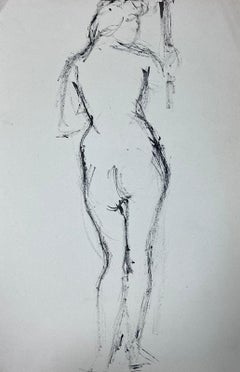
French Expressive Charcoal Sketch of a Standing Nude Figure
Located in Cirencester, Gloucestershire
Standing Nude Figure black pen drawing on artist paper painting: 13.75 x 9 inches provenance: private collection, England condition: very good and sound condition
Category

20th Century Impressionist Nude Drawings and Watercolors

Materials

Ballpoint Pen

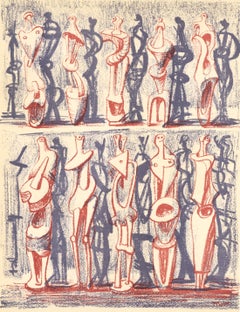
Henry Moore, Red and Blue Standing Figures, from XXe Siecle, 1951
Located in Southampton, NY
This exquisite lithograph by Henry Moore (1898–1986), titled Red and Blue Standing Figures, from the album XXe Siecle, Nouvelle serie, No. 1, 1951, originates from the 1951 edition p...
Category

1950s Modern Landscape Prints

Materials

Lithograph

Surrealist composition
Located in Henderson, NV
Medium: collotype (after the Miro lithograph). Printed in 1947 in an edition of 1500 by Meriden Gravure and published by Curt Valentin for "The Prints of Joan Miro" portfolio. Size: ...
Category

1940s Surrealist Prints and Multiples

Materials

Photogravure

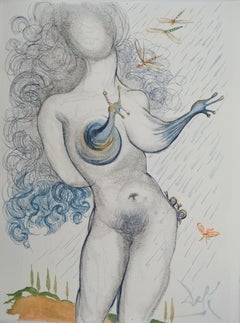
Casanova : Snail Lady - Original etching (Field #67-4 K)
Located in Paris, IDF
Salvador DALI (1904-1969) Casanova : Snail lady, 1967 Original etching Signed in the plate On vellum Rives 38 x 28 cm (c. 14.9 x 11 inch) REFERENCES : - Catalog raisonné Field #67-...
Category

1960s Surrealist Nude Prints

Materials

Etching

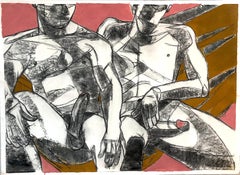
Two male Nudes. Painting.Pastel, carbon pencil, ink on archival paper mounted
Located in Miami Beach, FL
Drawing on paper is his basic work tool, some are sketches of his surviving works, others are sketches of moments he documents. Undefined by medium, Celso Castro’s works each carry the presence of the artist’s hand through the transparency of their process. Castro’s oeuvre is strongly divided between his photomontage assemblies and watercolor paintings: the prior is marked by the labor-intensive deconstruction of portrait photographs and the latter, by the seemingly frenzied recreation of a past encounter rendered in the drips and scribbles of paint and ink. Both discriminating in what they reveal of the subject, his photomontage and watercolor portraits exude raw sexuality through the combination of Castro’s mark-making and gaze. Celso Castro’s work is a bare-bulb erotic photo foray into the underbelly of Colombia’s drug world. Castro’s labor-intensive, photo-collage works of drug kingpins, smugglers, hitmen, countrymen, street vendors, soldiers, paramilitaries, kidnappers, and pimps pose showing with pride their erect penises...
Category

2010s Contemporary Nude Paintings

Materials

Carbon Pencil, Paper, Pastel, Ink

Still Thinking About These?

All Recently Viewed