It’s not often that the release of latest kids’ movie falls within the purview of The Study. But Gabby’s Dollhouse: The Movie, a combination live-action and animated offering from Dreamworks, grabbed the 1stDibs team with its presentation of the home of its “crazy cat lady” villain, Vera, played by Kristen Wiig. The character’s outfits are sculptural and eccentric — the one she’s first seen in verging on Mugler-esque — and her residence is just as audacious. With glass blocks aplenty and loads of steel and chrome, it’s a delicious morsel of eye candy for the grownups in the audience. The actual location, we learned from the film’s production designer, Justin Ludwig, is architect Arthur Erickson’s 1988 Hugo Eppich House, in West Vancouver, Canada.
The film crew had originally scouted boxy modern structures for Vera’s home, but one look at the Eppich House, and they changed direction. “It was really a space like I’d never seen before, and it felt like a work of art unto itself,” Ludwig says. “The house was an incredible display of ’80s luxury design, which meant that it was spacious and splashy but also somewhat bizarre to contemporary tastes — perfect for Vera!”

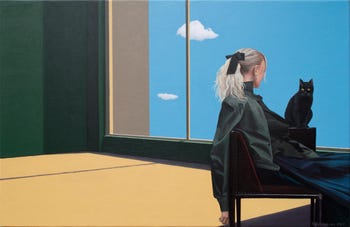
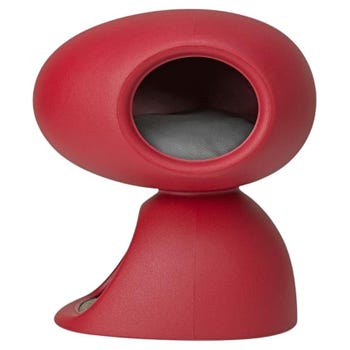
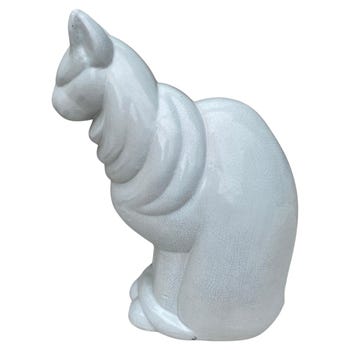
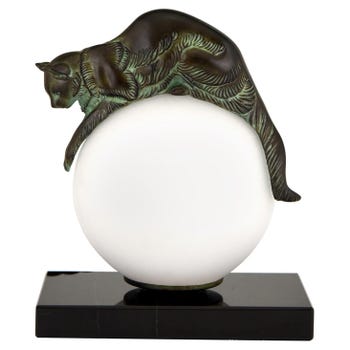
Although the home already had plenty of personality, Vera is a kitty-litter tycoon with a penchant for all things feline, so Ludwig and his team filled the space with cat-themed art they created themselves. Inspired by the work of KAWS, Shepard Fairey, Andy Warhol and Jeff Koons, the pieces are colorful and eye-catching, like a large painting of a black cat with red paint dripping off of the canvas and onto the walls.
In terms of furniture, many of the most memorable pieces were custom designed for the home when it was built. According to an Architectural Digest tour of the house, its wavy structure influenced the design of the living room furniture and the dining set, whose chrome chairs were inspired by Biedermeier curved-back seating. Ludwig let the house’s in-your-face ’80s attitude guide the rest of the pieces, which were either made or sourced for the film.

Still, as fantastic as the house and its furnishings are, Ludwig needed to put a kitty-friendly spin on it all. “Because we were also playing with scale, given that the animated characters that were navigating the space are only a few inches tall, making the ground-level interesting was a unique consideration,” he says. “We built chrome kitty feet that we put on couch legs, which were quite imposing when sharing the frame with the tiny characters.” From the artworks to these ornamental details added to the furniture, you could say they injected a good deal of cattitude into Erickson’s design.