18th Century French Rug
Antique 18th Century and Earlier French Western European Rugs
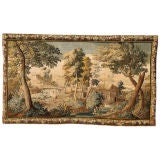

Antique 18th Century and Earlier French Western European Rugs
Tapestry
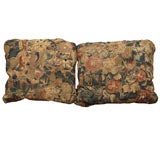
Antique 18th Century French Baroque Revival More Carpets
Wool
- 1
18th Century French Rug For Sale on 1stDibs
How Much is a 18th Century French Rug?
Finding the Right Rugs And Carpets for You
Good antique rugs and vintage rugs have made their way into homes across the globe, becoming fixtures used for comfort, prayer and self-expression, so choosing the right area rug is officially a universal endeavor.
In modern usage, “carpet” typically denotes a wall-to-wall floor cushioning that is fixed to the floor. Rugs, on the other hand, are designed to cover a specific area and can easily be moved to new locations. However, the terms are interchangeable in many parts of the world, and, in the end, it won’t matter what you decide to call it.
It’s well known that a timeless Persian rug or vintage Turkish rug can warm any interior, but there are lots of other styles of antique rugs to choose from when you're endeavoring to introduce fresh colors and textures to a bedroom or living room.
Moroccan Berber rugs are not all about pattern. In fact, some of the most striking examples are nearly monochrome. But what these rugs lack in complexity, they make up for in brilliant color and subtle variation. Moroccan-style interiors can be mesmerizing — a sitting room of this type might feature a Moroccan rug, carved wooden screens and a tapestry hung behind the sofa.
Handwoven kilim rugs, known for their wealth of rich colors and unique weaving tradition, are pileless: Whereas the Beni Ourain rugs of Morocco can be described as dense with a thick surface or pile, an authentic kilim rug is thin and flat. (The term “kilim” is Turkish in origin, but this type of textile artistry is practiced all across the Balkans, throughout the Arab world and elsewhere.)
When it comes to eye-catching floor coverings, the distinctive “medallion” pattern of Oushak rugs has two types of rounded shapes alternating against a rich red or blue background created with natural dyes, while the elaborate “star” pattern involves large eight-pointed shapes in diagonal rows alternating with diamonds.
If you’re looking for something unexpected, find a runner rug that pops in your hallway or on your stairs. Dig for dazzling geometric patterns in our inventory of mid-century modern rugs and carpets, which includes works designed by the likes of Swedish textile masters Märta Måås-Fjetterström, Marianne Richter and other artisans.
Carpets and rugs have been around for thousands of years. Prehistoric humans turned to animal skin, wool and fur to craft simple fabrics to soften hard terrain. A 2016 study suggests that "cave lions" were hunted for exactly this purpose, and that decorating your cave with their pelts may have conferred strength and prestige. Although many of these early textiles are still in existence, tracing their precise origins is difficult. Carpets quickly became such a valuable trade commodity that the weavings could easily travel far from their places of origin.
The oldest known carpet was found in southern Siberia. (It may have traveled there from Persepolis in Iran.) For the flat-weave floor rugs crafted by Native Americans, cotton was the primary material before sheep’s wool was introduced in the 16th century. In Europe, carpet-making was fundamental to folk art, and Asian carpets imported to European countries were at one time considered a precious luxury and not intended to remain permanently on the floor.
With the variety of area rugs and carpets rolled out for you on 1stDibs — a collection that includes traditional, modern, minimalist rugs and other coverings of all kinds — things will be looking up whenever you’re looking down.
- 1stDibs ExpertApril 5, 2022Yes, wedding rings have a long history, stretching back to ancient Egypt. The first diamond engagement ring was created in 1477 by Archduke Maximillian of Austria. Browse a wide array of vintage and contemporary wedding rings on 1stDibs.
- 1stDibs ExpertApril 5, 2022In the 18th century, art changed in style from Baroque to Rococo and Neoclassicism. Art became more ornamented and idealized during the Rococo period and then shifted toward a style that emulated the artwork of ancient Greece and Rome near the end of the century. You’ll find a variety of fine art on 1stDibs.
- 1stDibs ExpertNovember 13, 2024To identify 18th-century furniture, you can research your piece in the context of the prevailing styles of the period or consult a certified appraiser or experienced antique dealer. To identify your item on your own, look over it for maker's marks, such as carvings, stamps, brands and labels. Researching the marking can help you determine the maker of your piece, and from there, you can search further to learn more about your particular item. Without a maker's mark, the best approach is to consider the characteristics of the dominant furniture styles during the 18th century. In England, these included William and Mary, Queen Anne, Georgian, Chippendale, Hepplewhite and Sheraton. Some French furniture styles of the 1700s include Louis XV, Louis XVI and Régence. Find a diverse assortment of 18th-century furniture on 1stDibs.
- 1stDibs ExpertApril 5, 2022One way to check if your brass candlesticks are from the 18th century is to look for the two seams running lengthwise on either side. This is from when the candlestick was molded in two halves and then soldered together. You’ll find a variety of candlesticks of all shapes and sizes from some of the top sellers on 1stDibs.
- 1stDibs ExpertJanuary 10, 2025The individuals considered the Big Three of 18th-century cartoons are William Hogarth, James Gillray and George Cruikshank. Although the 18th century saw a widespread increase in illustrations in newspapers, these three illustrators were particularly well-known for their work. Hogarth's work was extremely diverse, ranging from serious, realistic paintings and portraits to satirical and moralistic illustrations filled with symbolism. A British caricaturist, Gillray is remembered today for his artworks representing political and social satires, like his political cartoons against George III of England. Despite being a prolific caricaturist, Cruikshank is now most famous for illustrating the works of Charles Dickens. On 1stDibs, find a wide variety of illustrations.
- 1stDibs ExpertApril 5, 2022The French painters of the 19th century worked in two styles. Neoclassicism dominated the first half of the century, and Impressionism was the most common style during the second half. On 1stDibs, you can find a variety of French paintings.
- 1stDibs ExpertApril 5, 2022At the end of the 17th century, Europe went into a frenzy over porcelain. Asian porcelain was highly sought after, and spurred the foundation of the Meissen factory in France, where hard porcelain went on to be made. You’ll find a large collection of porcelain pieces from many of the world’s top sellers on 1stDibs.
Read More
Hechizoo’s Original Sin Rug Tempts with Shimmering Copper, Tin and Bronze
Embroidered with snakes, turtles, birds and vines, it celebrates a dazzling natural world before the arrival of Adam and Eve.
Splashy Blooms Bud and Wilt in Artist Santi Moix’s Floral Rug
The colorful design captures the natural splendor of a backyard garden.
In South Africa, Rich Mnisi Is Taking Biomorphic Design to the Next Level
The rising fashion star is having his first solo show of furniture designs, at Southern Guild in Cape Town, and his far-out, snaking forms are like nothing you've ever seen.
The Artists and Designers behind Today’s Coolest Rug Collaborations
Top carpet companies are expanding the arena of artful floor coverings, seeking out creatives from other media and marrying their talents to textiles.
Tantuvi’s New Rugs Were Inspired by the Travertine Quarries of India and the Spanish Steps of Rome
The New York–based rug designers employ earthy colors and time-honored artistry in their creations.
We’re Going Gaga for the New Sasha Bikoff Rugs
The New York interior designer found inspiration in disco culture and astrology for her debut home collection.
Paradise Is Found Underfoot in These Majestic Persian Textiles
Persian garden carpets, with their timeless beauty and unmatched craftsmanship, have an enduring appeal.
12 Mesmerizing Moroccan-Style Interiors
With their rich layers, intricate patterns and elaborate lighting, rooms with a Moroccan influence are easy to spot.