1930s Radio Cabinet
Recent Sales
Vintage 1930s French Art Deco Dry Bars
Brass, Nickel
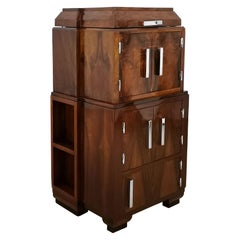

Vintage 1930s American Art Deco Dry Bars
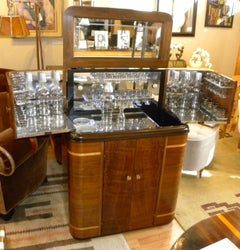
1930s Radio Cabinet For Sale on 1stDibs
How Much is a 1930s Radio Cabinet?
A Close Look at Art-deco Furniture
Art Deco furniture is characterized by its celebration of modern life. More than its emphasis on natural wood grains and focus on traditional craftsmanship, vintage Art Deco dining chairs, tables, desks, cabinets and other furniture — which typically refers to pieces produced during the 1920s and 1930s — is an ode to the glamour of the “Roaring Twenties.”
ORIGINS OF ART DECO FURNITURE DESIGN
- Emerged in the 1920s
- Flourished while the popularity of Art Nouveau declined
- Term derives from 1925’s Exposition Internationale des Arts Décoratifs et Industriels Modernes (International Exhibition of Modern Decorative and Industrial Arts) in Paris, France
- Informed by Ancient Egypt, Cubism, Futurism, Louis XVI, De Stijl, modernism and the Vienna Secession; influenced Streamline Moderne and mid-century modernism
CHARACTERISTICS OF ART DECO FURNITURE DESIGN
- Bold geometric lines and forms, floral motifs
- Use of expensive materials such as shagreen or marble as well as exotic woods such as mahogany, ebony and zebra wood
- Metal accents, shimmering mirrored finishes
- Embellishments made from exotic animal hides, inlays of mother-of-pearl or ivory
ART DECO FURNITURE DESIGNERS TO KNOW
VINTAGE ART DECO FURNITURE ON 1STDIBS
Few design styles are as universally recognized and appreciated as Art Deco. The term alone conjures visions of the Roaring Twenties, Machine Age metropolises, vast ocean liners, sleek typography and Prohibition-era hedonism. The iconic movement made an indelible mark on all fields of design throughout the 1920s and ’30s, celebrating society’s growing industrialization with refined elegance and stunning craftsmanship.
Widely known designers associated with the Art Deco style include Émile-Jacques Ruhlmann, Eileen Gray, Maurice Dufrêne, Paul Follot and Jules Leleu.
The term Art Deco derives from the name of a large decorative arts exhibition held in Paris in 1925. “Art Deco design” is often used broadly, to describe the work of creators in associated or ancillary styles. This is particularly true of American Art Deco, which is also called Streamline Moderne or Machine Age design. (Streamline Moderne, sometimes known as Art Moderne, was a phenomenon largely of the 1930s, post–Art Nouveau.)
Art Deco textile designers employed dazzling floral motifs and vivid colors, and while Art Deco furniture makers respected the dark woods and modern metals with which they worked, they frequently incorporated decorative embellishments such as exotic animal hides as well as veneers in their seating, case pieces, living room sets and bedroom furniture.
From mother-of-pearl inlaid vitrines to chrome aviator chairs, bold and inventive works in the Art Deco style include chaise longues (also known as chaise lounges) and curved armchairs. Today, the style is still favored by interior designers looking to infuse a home with an air of luxury and sophistication.
The vintage Art Deco furniture for sale on 1stDibs includes dressers, coffee tables, decorative objects and more.
Finding the Right Dry-bars for You
The name “dry bar” can be a bit of a misnomer. After all, the last thing you would want a bar to do is run dry. In this case, the “dry” descriptor in your antique or vintage dry bar doesn’t refer to a lack of drinks. Instead, it serves to differentiate dry-bar furniture from wet-bar installations. The latter is typically a permanent fixture in a home, requiring plumbing to support a built-in sink.
In short, a dry bar is a piece of furniture or tabletop area that you’ve built into your space for mixing cocktails and storing everything needed —bottles, barware and other accessories — for the intoxicating in-home bar you’ve designed.
Some dry bars were built with minimalism in mind. Those crafted by designers associated with mid-century modernism or Scandinvanian modern, for example, likely looked to these as practical furnishings to serve as a cabinet or case piece. But there have been decorative and even outwardly sculptural interpretations by Art Deco furniture makers and those working in the Hollywood Regency style over the years.
No matter what kind of antique, new or vintage dry bar fits your space, these versatile furnishings can definitely elevate your home bar area as well as your hosting. We’ll toast to that!
Find your dry bar as well as all the barware you need on 1stDibs.
- 1stDibs ExpertJune 30, 2023What brides wore in the 1930s varied. Some wore long flowing dresses made of satin or silk. Long sleeves were popular and designs often featured only minimal embellishments like appliqués and beading. Because many people faced difficult financial situations due to the Great Depression, brides also sometimes simply wore their best dresses on their wedding days. On 1stDibs, shop a collection of vintage wedding dresses.
- 1stDibs ExpertNovember 26, 2024To identify 1930s furniture, first see if you can spot a maker's mark in hidden areas, such as the back, base, inside of drawers or under tabletops and seats. Trusted online resources can help you determine who produced your furniture based on these markings, and from there, you can research more to get a rough idea of how old your item is. A piece's characteristics can also be helpful when dating furniture. Many items made during the 1930s are examples of Art Deco furniture. Art Deco furniture is characterized by geometric patterns and luxurious materials, such as shagreen, marble, mother of pearl, mirrored glass, exotic animal hides and rare woods like mahogany, ebony and zebra wood. A certified appraiser or experienced antique dealer can provide an expert opinion on when your piece was likely made. On 1stDibs, explore a range of 1930s furniture.
- 1stDibs ExpertMay 5, 2023Yes, people had record players in the 1930s. In fact, record players began to become more common during the decade and continued to grow in popularity throughout the 1940s, 50s and 60s. Thomas Edison made the first phonograph record player in 1877. Shop a variety of record players on 1stDibs.
- 1stDibs ExpertMarch 31, 2023In the 1930s, phones typically looked like rotary telephones. They had either a round or square base with a numbered dial that spun when you dialed and a handset receiver with both an earpiece and a mouthpiece. A cord connected the handset to the base. Find a variety of rotary phones on 1stDibs.