1930s Vintage Sunglasses
Recent Sales
1930s 1930s Vintage Sunglasses
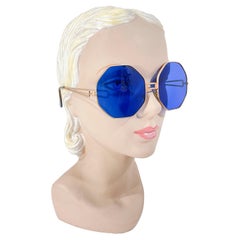
1930s 1930s Vintage Sunglasses
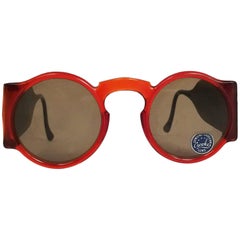
1930s American 1930s Vintage Sunglasses
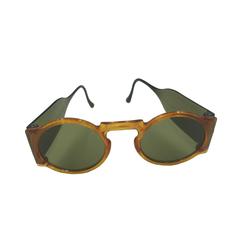

1930s French 1930s Vintage Sunglasses
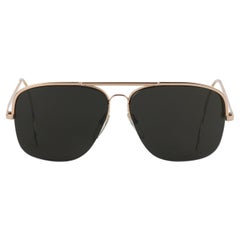
1930s 1930s Vintage Sunglasses
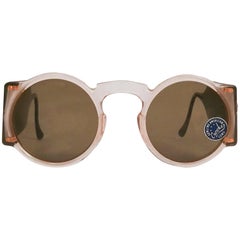
1930s 1930s Vintage Sunglasses
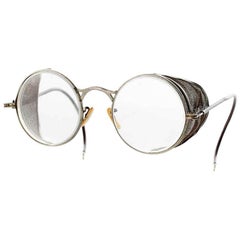
Finding the Right Sunglasses for You
A pair of vintage designer sunglasses can be a game-changing finishing touch to your ensemble.
No matter your age or general fashion sensibility, wearing sunglasses may already be part of your regular outdoor routine owing to their practicality. Most sunglasses protect the eyes from harmful UV (ultraviolet) rays — and not merely on sunny days. Glasses that utilize color-enhancing lenses, which feature specific coatings or filter tints, can limit the amount of light coming through, while polarized lenses substantially reduce glare.
So while their usefulness is well known, let’s face it, a good pair of sunglasses can be stylish too.
People have been making a statement with iconic eyewear for a while — sunglasses garnered popularity with the Hollywood set in the early 1900s, when it wasn’t uncommon for a hip actress to be photographed in a pair of her sharpest shades.
Today, we’re still talking about the sunglasses that Audrey Hepburn — the original trendsetter — donned in the opening scene of 1961’s Breakfast at Tiffany’s. She emerges from the flagship store of the legendary luxury house referenced in the film’s title in a pair of glamorous dark tortoiseshell frames designed by London eyewear firm Oliver Goldsmith Sunglasses. The brand was a keeper for Hepburn — in 1967, she famously wore a pair of Goldsmith’s Yuhu wraparound frames in the poster for Stanley Donen’s film Two for the Road.
Indeed, celebrities have long held sway in the sunglasses realm — perhaps you’ve opted for vintage Ray-Ban sunglasses because you’re enamored with Marilyn Monroe’s celebrated Wayfarers or you’ve taken to classic Aviators because actor Jon Hamm wore them in the nostalgic TV smash hit Mad Men. Good frames are a surefire way to take your style to the next level.
When shopping for the right pair of sunglasses, consider the color and shape of the frames (as well as the shape of your face), how dark or light the lenses are — or tint, if you’re leaning toward a chic gradient lens. Take your time, spring for more than one pair because different moods call for different shades and, while you’re at it, make sure you know how to spot a pair of fake Ray-Ban sunglasses before you make that purchase.
On 1stDibs, our collection of vintage designer sunglasses features classics from Gucci, Cartier, Chanel and other brands as well as a wide range that can be sorted by color — find sleek black sunglasses, brown pairs and a whole lot of other eye-catching options, whether it’s sunny outside or not.
- 1stDibs ExpertAugust 17, 2021The sunglasses that were popular in the 70s were those that were large and often square in shape. A popular 70s style was the aviator style. Many of the 70s style glasses were characterized by colored lenses and funky frames. Shop 1970s sunglasses and other vintage sunglasses on 1stDibs.
- 1stDibs ExpertMay 5, 2023Yes, people had record players in the 1930s. In fact, record players began to become more common during the decade and continued to grow in popularity throughout the 1940s, 50s and 60s. Thomas Edison made the first phonograph record player in 1877. Shop a variety of record players on 1stDibs.
- 1stDibs ExpertJune 30, 2023What brides wore in the 1930s varied. Some wore long flowing dresses made of satin or silk. Long sleeves were popular and designs often featured only minimal embellishments like appliqués and beading. Because many people faced difficult financial situations due to the Great Depression, brides also sometimes simply wore their best dresses on their wedding days. On 1stDibs, shop a collection of vintage wedding dresses.
- 1stDibs ExpertNovember 26, 2024To identify 1930s furniture, first see if you can spot a maker's mark in hidden areas, such as the back, base, inside of drawers or under tabletops and seats. Trusted online resources can help you determine who produced your furniture based on these markings, and from there, you can research more to get a rough idea of how old your item is. A piece's characteristics can also be helpful when dating furniture. Many items made during the 1930s are examples of Art Deco furniture. Art Deco furniture is characterized by geometric patterns and luxurious materials, such as shagreen, marble, mother of pearl, mirrored glass, exotic animal hides and rare woods like mahogany, ebony and zebra wood. A certified appraiser or experienced antique dealer can provide an expert opinion on when your piece was likely made. On 1stDibs, explore a range of 1930s furniture.
- 1stDibs ExpertMarch 31, 2023In the 1930s, phones typically looked like rotary telephones. They had either a round or square base with a numbered dial that spun when you dialed and a handset receiver with both an earpiece and a mouthpiece. A cord connected the handset to the base. Find a variety of rotary phones on 1stDibs.
Read More
Scarves Are an Unexpectedly Fresh Accessory This Summer
This simple move can jazz up any outfit without bringing on the heat.
These Bob Dylan Sunglasses Dazzle in ‘A Complete Unknown’
Sunglasses were a constant for Bob Dylan in real life and in the film.
Steal Audrey Hepburn’s Summer Road-Trip Style with These Chic Sunglasses
The actress and style icon wore the 1960s frames while shooting on location in the French Riviera.
A Short History of the World’s Most Iconic Designs
Of the million-plus items on 1stdibs, some seem to have transcended time, looking as fresh today as when they were first produced. The pieces highlighted on our new Iconic Designs page stand out for longevity, functionality and quality of design and manufacture — just the tonic for the present unsettled moment.