1960s Expressionist Paintings
1960s Abstract Expressionist Abstract Paintings
Paint, Paper
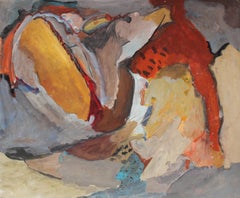
1960s Abstract Expressionist Abstract Paintings
Paper, Acrylic
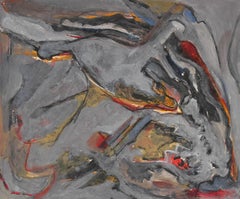
1960s Expressionist Portrait Paintings
Masonite, Oil
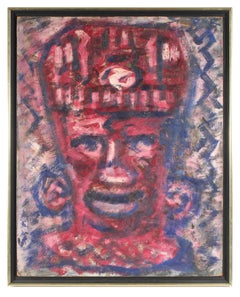

1960s American Modern Landscape Paintings
Oil, Canvas
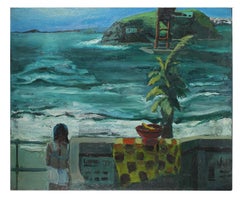
1960s Expressionist Portrait Paintings
Paint, Paper
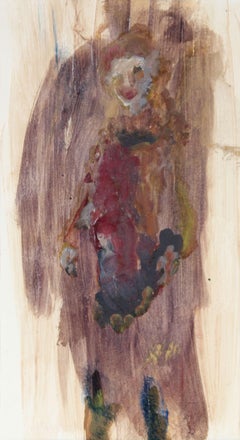
1960s Expressionist Portrait Paintings
Canvas, Oil
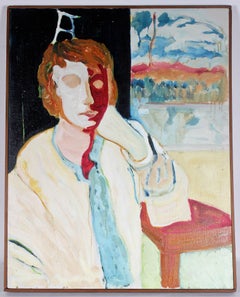
1960s Abstract Abstract Paintings
Paint, Paper
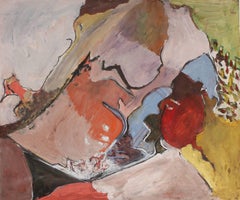
1960s Abstract Expressionist Abstract Drawings and Watercolors
Paper, Acrylic, Illustration Board
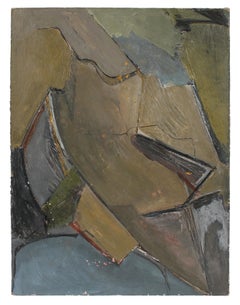
1960s Abstract Expressionist Abstract Paintings
Ink
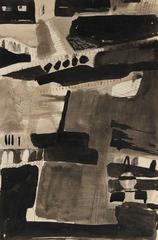
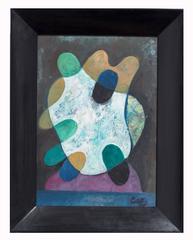
20th Century Abstract Expressionist Abstract Paintings
Cardboard, Oil
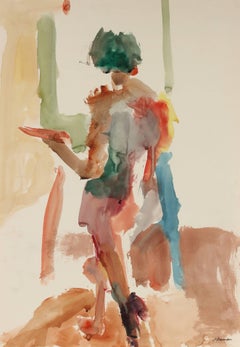
1960s Expressionist Figurative Drawings and Watercolors
Paper, Watercolor
- 1
1960s Expressionist Paintings For Sale on 1stDibs
How Much are 1960s Expressionist Paintings?
Finding the Right Abstract-paintings for You
Bring audacious experiments with color and textures to your living room, dining room or home office. Abstract paintings, large or small, will stand out in your space, encouraging conversation and introducing a museum-like atmosphere that’s welcoming and conducive to creating memorable gatherings.
Abstract art has origins in 19th-century Europe, but it came into its own as a significant movement during the 20th century. Early practitioners of abstraction included Wassily Kandinsky, although painters were exploring nonfigurative art prior to the influential Russian artist’s efforts, which were inspired by music and religion. Abstract painters endeavored to create works that didn’t focus on the outside world’s conventional subjects, and even when artists depicted realistic subjects, they worked in an abstract mode to do so.
In 1940s-era New York City, a group of painters working in the abstract mode created radical work that looked to European avant-garde artists as well as to the art of ancient cultures, prioritizing improvisation, immediacy and direct personal expression. While they were never formally affiliated with one another, we know them today as Abstract Expressionists.
The male contingent of the Abstract Expressionists, which includes Jackson Pollock, Willem de Kooning and Robert Motherwell, is frequently cited in discussing leading figures of this internationally influential postwar art movement. However, the women of Abstract Expressionism, such as Helen Frankenthaler, Lee Krasner, Joan Mitchell and others, were equally involved in the art world of the time. Sexism, family obligations and societal pressures contributed to a long history of their being overlooked, but the female Abstract Expressionists experimented vigorously, developed their own style and produced significant bodies of work.
Draw your guests into abstract oil paintings across different eras and countries of origin. On 1stDibs, you’ll find an expansive range of abstract paintings along with a guide on how to arrange your wonderful new wall art.
If you’re working with a small living space, a colorful, oversize work can create depth in a given room, but there isn’t any need to overwhelm your interior with a sprawling pièce de résistance. Colorful abstractions of any size can pop against a white wall in your living room, but if you’re working with a colored backdrop, you may wish to stick to colors that complement the decor that is already in the space. Alternatively, let your painting make a statement on its own, regardless of its surroundings, or group it, gallery-style, with other works.
- Were there watches in the 1960s?1 Answer1stDibs ExpertFebruary 13, 2023Yes, there were watches in the 1960s. The first recorded wristwatch dates back to 1868, when Patek Philippe, a watchmaker founded in Geneva in 1839 by Polish expats Antoni Patek and Franciszek Czapek, designed a timepiece for Countess Koscowicz of Hungary. Shop a collection of vintage watches from some of the world’s top sellers on 1stDibs.
- What is a caftan from the 1960s?1 Answer1stDibs ExpertFebruary 13, 2023A caftan from the 1960s or any other era refers to a long ankle-length variation on a robe or a tunic. Caftans, which are sometimes referred to as kaftans, feature full sleeves and usually have a deep, open neck. While these garments can be made from any fabric, most caftans are made of wool, silk or cotton. Find a selection of caftans from top fashion boutiques around the world on 1stDibs.
- What was worn in the 1960s?1 Answer1stDibs ExpertFebruary 22, 2021Fashion in the 1960s progressed toward a more casual look for men and for women during the decade. For women, the skirt suits of the 1950s prevailed during the early ‘60s and eventually miniskirts came along. Late-1960s fashion included ponchos, peace signs, chain belts, puffed “bubble” sleeves, frayed bell-bottom jeans for men and women, tie-dyed shirts, work shirts, sandals, headbands and moccasins.
- 1stDibs ExpertFebruary 13, 2023Furniture from the 1960s is often called mid-century modern. This style emphasizes the importance of good design that looks attractive and performs its function well. Notable mid-century modern designers include Eero Saarinen, George Nelson, Florence Knoll and Charles and Ray Eames. On 1stDibs, shop a selection of mid-century modern furniture.
- 1stDibs ExpertFebruary 21, 2024The dresses they wore in the 1960s varied depending on the time of day and the occasion. For everyday wear, many women opted for simply tailored frocks called shift dresses. They often featured bold geometric prints in eye-catching colors. In the evening, women tended to opt for gowns with plunging necklines, fitted waists and flowing full skirts. On 1stDibs, shop a diverse assortment of vintage dresses from the 1960s.
- What did men wear in the 1960s?1 Answer1stDibs ExpertApril 26, 2024What men wore in the 1960s varied over the course of the decade. At the start of the ’60s, when the Mod style was all the rage, men often sported boxy Italian-style suits with tight-fitting trousers for work and dressier occasions and polo shirts and turtlenecks paired with fitted trousers for casual dress. As the decade progressed, the Peacock Revolution occurred, with menswear becoming flashier with bright colors and bold prints. Fedoras and trilby hats were common in the early ’60s, but by the start of the 1970s, hats for men were much less common, marking a major departure from the style conventions of the 1930s, ’40s and ’50s. Explore an assortment of 1960s men's apparel and accessories on 1stDibs.
- 1stDibs ExpertApril 5, 2022To tell if a dress is from the 1960s or 1970s, first look for a label. You may be able to determine the approximate date of the dress simply by researching the designer using reputable online sources. Also, check the zippers. Dresses from the 1960s will usually have metal or nylon zippers. Ones from the 1970s are more likely to be plastic. You'll find a large selection of vintage dresses on 1stDibs.
- 1stDibs ExpertApril 5, 2022Go-go boots were fashionable in the late 1960s through the 1970s. A calf-length to knee-length boot became synonymous with 1960s and 1970s fashion and is still highly coveted today by fashion enthusiasts. Shop a wide range of vintage go-go boots on 1stDibs.
- 1stDibs ExpertFebruary 21, 2024Who the most famous fashion designer of the 1960s was is open to debate. Many designers helped define the looks of the decade, each influencing style in their own way. Among these notable designers were Mary Quant, André Courrèges, Pierre Cardin, Yves Saint Laurent, Bonnie Cashin, Hubert de Givenchy, Emilio Pucci, Paco Rabanne and Ossie Clark. On 1stDibs, shop a variety of vintage apparel and accessories from the 1960s.
- 1stDibs ExpertFebruary 1, 2024Generally, 1960s-style furniture is called mid-century modern. The style, which emerged primarily in the years following World War II, is characterized by pieces that were conceived and made in an energetic, optimistic spirit by creators who believed that good design was an essential part of good living. Some of the most notable furniture designers of the time include Charles and Ray Eames, Arne Jacobsen, Eero Saarinen and Hans J. Wegner. On 1stDibs, shop a variety of mid-century modern furniture.
- 1stDibs ExpertSeptember 27, 2024What the dress style was called in the 1960s varied, as there were several types of dresses that were fashionable during the decade. At the start of the 1960s, many women wore swing dresses featuring fitted bodices and full skirts. Collared, button-up belted dresses called shirtwaist dresses were also popular, as were loose-fitting, flowy shift dresses. By the late 1960s, new styles emerged, such as flared, flowing tent dresses, sleeveless jumpers usually styled over sweaters and blouses and drop-waist dresses, which had their waist seams at the hips rather than the natural waist. Find a variety of 1960s dresses and other vintage dresses on 1stDibs.
- Which artist became famous for his series of black paintings in the late 1950s and early 1960s?1 Answer1stDibs ExpertJanuary 27, 2025Frank Stella is the artist who became famous for his series of black paintings in the late 1950s and early 1960s. These works featured bands of black paint separated by thin, precise stripes of bare canvas. At a time when contemporary painting was all about wild gestures, thick paint and formal abandon, the “Black Paintings” created a sensation. Explore a range of Frank Stella art on 1stDibs.
- 1stDibs ExpertJanuary 10, 2025The artist George Catlin's paintings from the 1800s are considered a form of artistic documentation because he depicted what he saw during his travels across North America. Catlin produced many images of Native Americans living their daily lives. In so doing, he provided a glimpse of what life was like for Indigenous people before the rapid westward expansion of settlers forcibly disrupted their traditions and culture. On 1stDibs, shop a variety of George Catlin art.
Read More
At 89, Artist Lucio Pozzi Is Reaching New Career Heights
The Italian-American’s 2020 abstract painting “The Hoe” personifies his “art of not knowing.”
Brooklyn Artist Angel Otero’s Abstract Works Tell a Unique Story about Art and Heritage
In his current show at New York's Lehmann Maupin gallery, the Puerto Rican–born talent reveals new paintings with a semiautobiographical aspect.