1970s Acrylic Benches
Recent Sales
Vintage 1970s American Mid-Century Modern Benches
Lucite
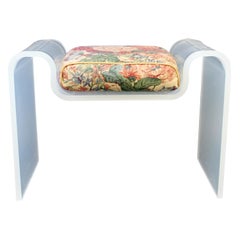

Vintage 1970s American Benches
Brass
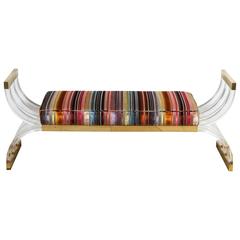
Vintage 1970s American Modern Benches
Lucite
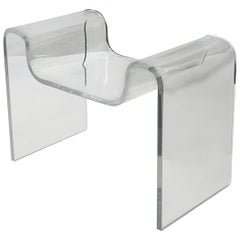
Mid-20th Century American Mid-Century Modern Benches
Acrylic, Velvet
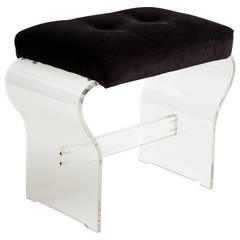
Vintage 1970s American Modern Benches
Lucite
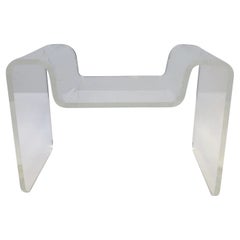
1970s Acrylic Benches For Sale on 1stDibs
How Much are 1970s Acrylic Benches?
Materials: Plastic Furniture
Arguably the world’s most ubiquitous man-made material, plastic has impacted nearly every industry. In contemporary spaces, new and vintage plastic furniture is quite popular and its use pairs well with a range of design styles.
From the Italian lighting artisans at Fontana Arte to venturesome Scandinavian modernists such as Verner Panton, who created groundbreaking interiors as much as he did seating — see his revolutionary Panton chair — to contemporary multidisciplinary artists like Faye Toogood, furniture designers have been pushing the boundaries of plastic forever.
When The Graduate's Mr. McGuire proclaimed, “There’s a great future in plastics,” it was more than a laugh line. The iconic quote is an allusion both to society’s reliance on and its love affair with plastic. Before the material became an integral part of our lives — used in everything from clothing to storage to beauty and beyond — people relied on earthly elements for manufacturing, a process as time-consuming as it was costly.
Soon after American inventor John Wesley Hyatt created celluloid, which could mimic luxury products like tortoiseshell and ivory, production hit fever pitch, and the floodgates opened for others to explore plastic’s full potential. The material altered the history of design — mid-century modern legends Charles and Ray Eames, Joe Colombo and Eero Saarinen regularly experimented with plastics in the development of tables and chairs, and today plastic furnishings and decorative objects are seen as often indoors as they are outside.
Find vintage plastic lounge chairs, outdoor furniture, lighting and more on 1stDibs.
Finding the Right Benches for You
Don’t underestimate a good bench — antique and vintage benches are storage pieces, stylish accents and statement-making additional seating.
Today, benches are a great option to maximize seating in your house and outdoor space. The perfect option to create a warm, welcoming atmosphere in foyers and entryways, benches can also transform dining areas, making it possible to host a hungry family with limited space. Whether you’re sprucing up your entertaining with upholstered Empire-style benches or adding more options to a dining room that’s seen a farmhouse makeover, this humble furnishing has only become more versatile over the years. Designers have recognized the demand for a good bench, crafting the convenient seating alternative from a range of materials, including wood, iron and even concrete.
Mid-century modern benches from George Nakashima, Charlotte Perriand and the pared-down Platform bench by George Nelson for Herman Miller are classics of innovation, but maybe you’re looking for an unconventional design approach to your home's seating. Opt for something totally outside the box — an antique pine church-pew bench paired with a vintage wool throw and stationed under the mounted coatrack in your mudroom is a distinctive touch.
For your outdoor oasis, a wrought-iron patio bench is the obvious choice but not the only option. An enclosed back patio would do well to inherit a rattan bench with cushions, but it can be susceptible to weathering and should be covered or moved indoors when not in use.
Whatever your seating arrangement needs are, find vintage, new and antique benches for every space on 1stDibs.
- What was worn in the 1970s?1 Answer1stDibs ExpertFebruary 22, 2021Fashion during the 1970s included lots of T-shirts, cardigans, kimonos, graphic tees, jeans, khakis, and vintage clothes. In the mid-1970s, other fashion highlights included puffy skirts and shirts with flowy sleeves.
- Are the 1970s mid-century?1 Answer1stDibs ExpertFebruary 17, 2023No, the 1970s are generally not considered to fall within the era identified as mid-century. With respect to mid-century modern design, while there is some debate between collectors and design experts about the specific time period that saw the emergence of the style, most furniture enthusiasts agree that by the late 1960s, interest in MCM had largely declined. Writer Cara Greenberg, who coined the term “mid-century modernism,” suggests that “the period from the end of World War II to 1960 – from V-J Day to JFK – was the heyday of innovative furniture design in America.” Mid-century modern furniture is characterized by clean lines and inviting, organic shapes. Furniture makers of the era believed that good design was an essential part of good living. Find a variety of vintage mid-century modern furniture and decorative objects on 1stDibs.
- 1stDibs ExpertApril 5, 2022Yes, sequins were indeed popular in the 1970s and could be seen on the dancefloors and discos of the time, along with other popular fabrics like velvet and satin. Sequins and hot pants were the go-to outfit of the disco-glam decade. Shop iconic vintage and contemporary sequin clothing from some of the world’s top boutiques on 1stDibs.
- Was velvet used in the 1970s?1 Answer1stDibs ExpertJune 15, 2023Yes, velvet was used in the 1970s. Fashion designers used the fabric to produce dresses, bell bottoms, flowy kimonos and other pieces. Furniture makers often used it as the upholstery on sofas and armchairs. On 1stDibs, shop a variety of pieces from the 1970s.
- What is 1970s furniture called?1 Answer1stDibs ExpertMarch 15, 2024What 1970s furniture is called varies. Generally, you may see pieces produced during the decade classified as "vintage" or "retro" furniture. During the 1970s, some makers continued to produce furniture that boasted the characteristics of mid-century modern works. The disco era yielded furnishings with organic, often rounded shapes, unadorned silhouettes, clean lines and a mix of materials. The showy leather furniture of the 1970s, which was both sexy and comfortable, is seeing a resurgence in today’s homes. Shop a wide variety of vintage 1970s furniture on 1stDibs.
- 1stDibs ExpertApril 5, 2022To tell if a dress is from the 1960s or 1970s, first look for a label. You may be able to determine the approximate date of the dress simply by researching the designer using reputable online sources. Also, check the zippers. Dresses from the 1960s will usually have metal or nylon zippers. Ones from the 1970s are more likely to be plastic. You'll find a large selection of vintage dresses on 1stDibs.
- 1stDibs ExpertApril 5, 2022Go-go boots were fashionable in the late 1960s through the 1970s. A calf-length to knee-length boot became synonymous with 1960s and 1970s fashion and is still highly coveted today by fashion enthusiasts. Shop a wide range of vintage go-go boots on 1stDibs.
- 1stDibs ExpertMay 5, 2023Which clothing style was most popular in the discos in the 1970s is open to debate. Some of the trends of the discotheque scene included sleeveless, sequined tops paired with bell bottoms and knee-length halter dresses topped off with tall go-go boots. For men, jumpsuits and leisure suits were the favorite looks. Both men and women often wore shoes with chunky heels and thick platforms. On 1stDibs, find an assortment of 1970s vintage clothing and accessories.
- 1stDibs ExpertJanuary 27, 2025The designer who became famous with her wrap dresses in the 1970s is Diane von Furstenberg. She debuted her first example in 1974. When creating the Wrap dress, von Furstenberg drew inspiration from the skirts worn by ballerinas. In celebration of the 40th anniversary of the now-iconic dress, an exhibit called Diane von Furstenberg: Journey of a Dress was held at museums in the United States and abroad. On 1stDibs, explore a range of Diane von Furstenberg apparel and accessories.
- 1stDibs ExpertApril 5, 2022After the success of his “Sol” series in the 1960s, Richard Anuszkiewicz began to focus on his “Centered Square” designs in the mid-1970s. He used interacting colors to change the perception of the art in the eye of the viewer. You can shop a selection of Richard Anuszkiewicz pieces from some of the world’s top art dealers on 1stDibs.
Read More
All the Furniture in This Organic Modern Soho Loft Can Be Yours
Andrianna Shamaris has filled her epic new home with pieces of her own design.
20 Inviting Dining Rooms Perfectly Arranged for Entertaining
Top interior designers show — and tell — us how to create delectable spaces for hosting dinner parties.
Nobody Puts This Sunny Sofa in a Corner
With its plush cushions, cane details and dazzlingly colorful back, it’s inviting from every angle.
The 21 Most Popular Mid-Century Modern Chairs
You know the designs, now get the stories about how they came to be.
Fred Rigby’s Modular Seating Can Be Configured in So Many Handy Ways
The plush Cove Slipper 2.5 Seater sofa is just one of many convenient combinations from the London-based maker.
This Chubby-Chic Quilted Stool Stands on Its Own Two Feet
Sam Klemick's cool stool is edgy, cozy and environmentally sustainable all at once.
Is Lionel Jadot the Willy Wonka of Upcycled Belgian Design?
From his massive collaborative workshop in a former paper factory, the designer concocts funky furniture from disused materials, as well as luxe hotel interiors like the new Mix Brussels.
Rock Your Cares Away on This Sunny Hand-Crocheted Swing
The boho-chic Enchanted Forest Swing, handmade by marginalized women from Turkey and Syria, is uplifting in every way.