1983 Missoni
Late 20th Century Italian Western European Rugs
Wool
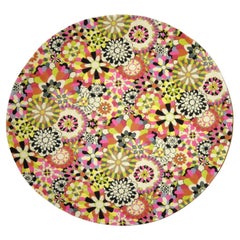

Late 20th Century Italian Western European Rugs
Wool
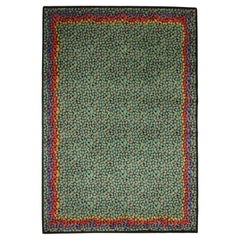
Recent Sales
Late 20th Century Italian Western European Rugs
Wool
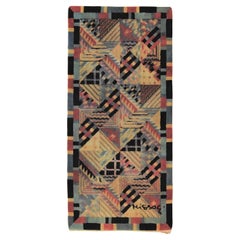
Late 20th Century Italian Western European Rugs
Wool
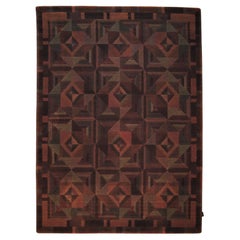
Late 20th Century Italian Western European Rugs
Wool
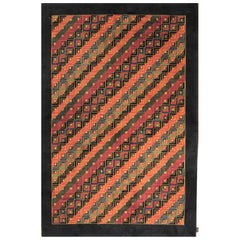
Late 20th Century Italian Western European Rugs
Wool
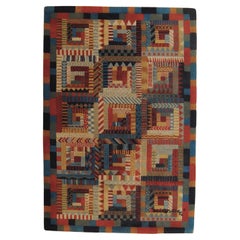
Late 20th Century Italian Western European Rugs
Wool
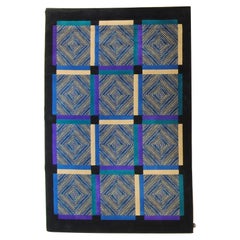
People Also Browsed
Vintage 1960s Italian Mid-Century Modern Chandeliers and Pendants
Blown Glass
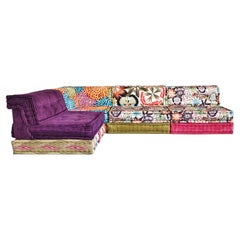
Late 20th Century Italian Post-Modern Sectional Sofas
Cotton, Satin, Velvet
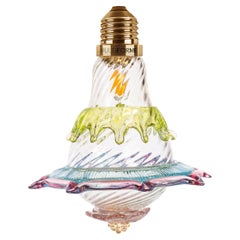
2010s Italian Modern Chandeliers and Pendants
Murano Glass, Art Glass, Blown Glass
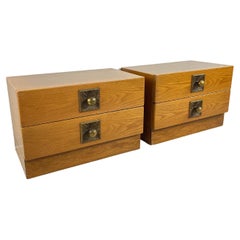
Vintage 1960s Scandinavian Commodes and Chests of Drawers
Brass
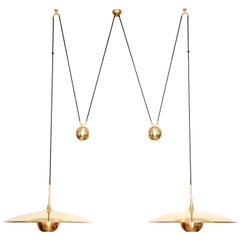
2010s German Mid-Century Modern Chandeliers and Pendants
Brass
Mid-20th Century French Mid-Century Modern Sofas
Fabric
Mid-20th Century Swedish Scandinavian Modern Tapestries
Wool
21st Century and Contemporary Italian Mid-Century Modern Armchairs
Velvet, Beech
21st Century and Contemporary Italian Organic Modern Chandeliers and Pen...
Brass
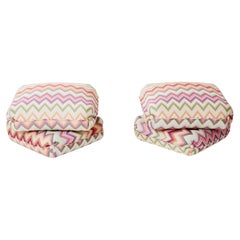
Vintage 1970s French Mid-Century Modern Ottomans and Poufs
Fabric
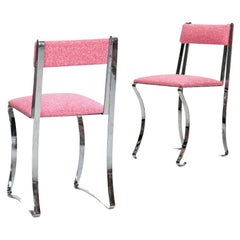
Vintage 1970s Post-Modern Chairs
Stainless Steel
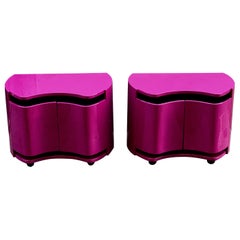
Vintage 1960s Italian Mid-Century Modern Night Stands
Wood
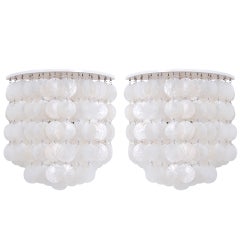
Vintage 1960s Danish Scandinavian Modern Wall Lights and Sconces
Steel
21st Century and Contemporary Indian Modern Chairs
Oak
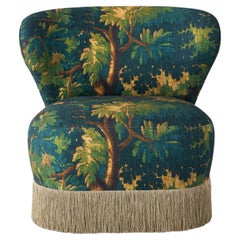
21st Century and Contemporary French Other Sofas
Fabric
2010s Italian Mid-Century Modern Desks and Writing Tables
Plywood, Lacquer
Missoni Home for sale on 1stDibs
Missoni Home is an offshoot of the celebrated Italian fashion label Missoni. The company's home collection was introduced in the early 1980s.
In 1953, Ottavio “Tai” Missoni (1921–2013) and Rosita Missoni (b. 1931) opened a small knitwear shop in Gallarate, Italy, paving the way for what would become an iconic style of colorful chevron knit.
Missoni began with a tracksuit, which featured zippers down the legs because, as Rosita recalls it, “Tai was too lazy to take off his shoes when putting them on.” The couple’s fashion really took off, though, once they discovered the Raschel knitting machine on a trip to a shawl factory. The machine enabled the Missonis to knit multiple colors in a zigzag pattern, a motif that would go on to become synonymous with the Missoni brand across everything from its alluring vintage day dresses and sweaters to its purses, seating and rugs.
Missoni held its first fashion show in Florence in 1967 and caused a bit of a sensation when the models’ Lurex dresses proved translucent under the lights at the Pitti Palace. Scandal aside, the show went down in history as a hit, and the Missonis soon made their debut in the United States with the help of legendary fashion editor Diana Vreeland, who gave the variegated Missoni stripe the Vogue seal of approval, saying, “Who says a rainbow has seven colors? It has many shades.” (It was also Vreeland who reportedly introduced the Missonis to Neiman Marcus president Stanley Marcus, effectively shepherding the brand to the American market.)
Missoni’s many-shaded rainbow would soon become an emblem of the 1970s fashion scene, earning the brand a permanent place in the fashion canon. In 1973, the New York Times proclaimed: “Missoni’s weaved garments have ended up universal materialistic trifles, as Vuitton sacks and Gucci shoes.” By then, Ottavio had been creating tapestries, and some of his knitted fabrics were shown in an exhibition at Galleria Il Naviglio in Venice in 1975.
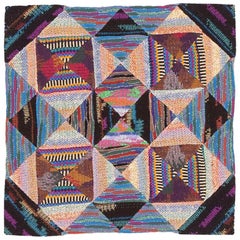
The brand branched into the home market in 1983, with Rosita overseeing this new venture, Missoni Home, which included furniture, textiles and accessories.
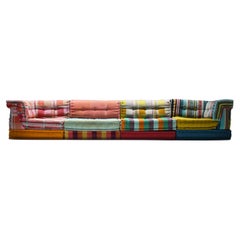
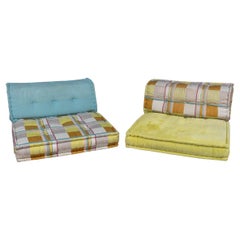
For its popular seating and other furniture, Missoni's partners have included Paolo Stella, Piero Lissoni, Kartell and Roche Bobois. One of the latter's best-selling furniture designs has been the modular Mah Jong sofa, designed by Hans Hopfer in 1971, and editions upholstered with Missoni fabric are dazzling in any interior.
Daughter Angela succeeded her mother at the helm of the brand, where she still serves as president and creative director today; her brother Luca is CEO, while her daughter Margherita is creative director of offshoot M Missoni.
Find Missoni Home furniture on 1stDibs.
Finding the Right Rugs-carpets for You
Good antique rugs and vintage rugs have made their way into homes across the globe, becoming fixtures used for comfort, prayer and self-expression, so choosing the right area rug is officially a universal endeavor.
In modern usage, “carpet” typically denotes a wall-to-wall floor cushioning that is fixed to the floor. Rugs, on the other hand, are designed to cover a specific area and can easily be moved to new locations. However, the terms are interchangeable in many parts of the world, and, in the end, it won’t matter what you decide to call it.
It’s well known that a timeless Persian rug or vintage Turkish rug can warm any interior, but there are lots of other styles of antique rugs to choose from when you're endeavoring to introduce fresh colors and textures to a bedroom or living room.
Moroccan Berber rugs are not all about pattern. In fact, some of the most striking examples are nearly monochrome. But what these rugs lack in complexity, they make up for in brilliant color and subtle variation. Moroccan-style interiors can be mesmerizing — a sitting room of this type might feature a Moroccan rug, carved wooden screens and a tapestry hung behind the sofa.
Handwoven kilim rugs, known for their wealth of rich colors and unique weaving tradition, are pileless: Whereas the Beni Ourain rugs of Morocco can be described as dense with a thick surface or pile, an authentic kilim rug is thin and flat. (The term “kilim” is Turkish in origin, but this type of textile artistry is practiced all across the Balkans, throughout the Arab world and elsewhere.)
When it comes to eye-catching floor coverings, the distinctive “medallion” pattern of Oushak rugs has two types of rounded shapes alternating against a rich red or blue background created with natural dyes, while the elaborate “star” pattern involves large eight-pointed shapes in diagonal rows alternating with diamonds.
If you’re looking for something unexpected, find a runner rug that pops in your hallway or on your stairs. Dig for dazzling geometric patterns in our inventory of mid-century modern rugs and carpets, which includes works designed by the likes of Swedish textile masters Märta Måås-Fjetterström, Marianne Richter and other artisans.
Carpets and rugs have been around for thousands of years. Prehistoric humans turned to animal skin, wool and fur to craft simple fabrics to soften hard terrain. A 2016 study suggests that "cave lions" were hunted for exactly this purpose, and that decorating your cave with their pelts may have conferred strength and prestige. Although many of these early textiles are still in existence, tracing their precise origins is difficult. Carpets quickly became such a valuable trade commodity that the weavings could easily travel far from their places of origin.
The oldest known carpet was found in southern Siberia. (It may have traveled there from Persepolis in Iran.) For the flat-weave floor rugs crafted by Native Americans, cotton was the primary material before sheep’s wool was introduced in the 16th century. In Europe, carpet-making was fundamental to folk art, and Asian carpets imported to European countries were at one time considered a precious luxury and not intended to remain permanently on the floor.
With the variety of area rugs and carpets rolled out for you on 1stDibs — a collection that includes traditional, modern, minimalist rugs and other coverings of all kinds — things will be looking up whenever you’re looking down.