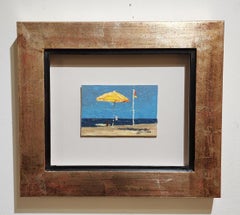
4x6 Small Painting
2010s Impressionist Landscape Paintings
Oil, Wood Panel

People Also Browsed
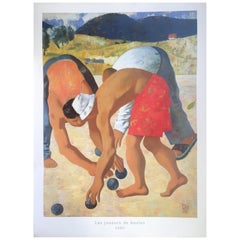
20th Century French Posters
Paper
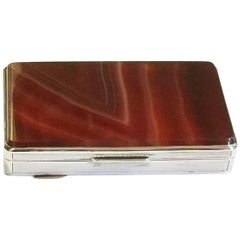
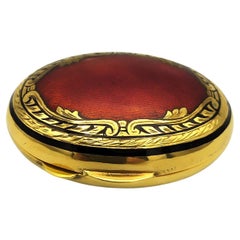
Early 20th Century Austrian Decorative Boxes
Agate, Silver
21st Century and Contemporary Italian Convex Mirrors
Gold
2010s Contemporary Paintings
Oil
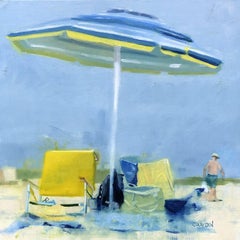
20th Century Italian Mid-Century Modern Decorative Boxes
Alabaster, Metal
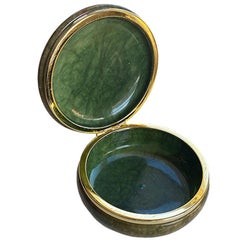
20th Century Italian Bohemian Decorative Boxes
Alabaster, Metal
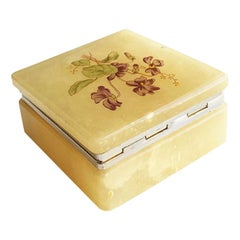
2010s Italian Decorative Boxes
Multi-gemstone, Onyx, Serpentine
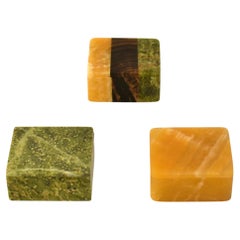
Vintage 1970s Italian Art Nouveau Decorative Boxes
Sterling Silver, Gold Plate, Enamel

Antique 18th Century French Snuff Boxes and Tobacco Boxes
Porphyry, Silver
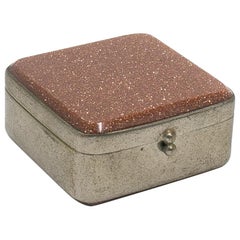
Vintage 1970s Italian Art Nouveau Decorative Boxes
Gold Plate, Enamel, Sterling Silver
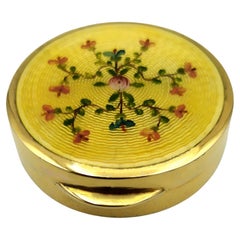
Vintage 1970s Italian George IV Decorative Boxes
Gold Plate, Sterling Silver, Enamel
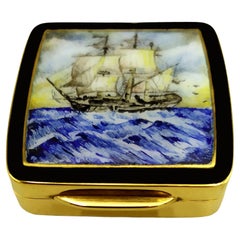
2010s Impressionist Landscape Paintings
Oil, Wood Panel
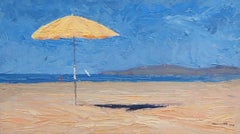
Early 2000s Italian Louis XVI Decorative Boxes
Gold Plate, Enamel, Sterling Silver
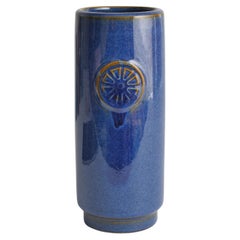
Vintage 1960s Danish Scandinavian Modern Vases
Stoneware
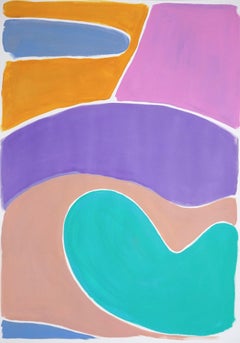
2010s Abstract Abstract Paintings
Acrylic, Handmade Paper
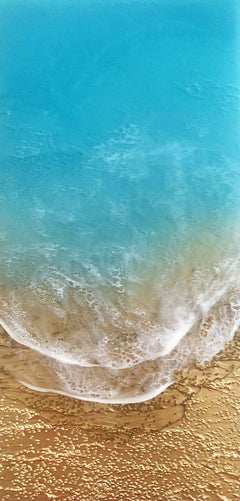
21st Century and Contemporary Photorealist Paintings
Acrylic
4x6 Small Painting For Sale on 1stDibs
How Much is a 4x6 Small Painting?
Nelson H. White for sale on 1stDibs
Nelson H. White was born in New London, Connecticut, in 1932. White has been surrounded by art and artists from the time he was born. He received his earliest art instruction from his grandfather, Henry Cooke White (1861–1952) and his father Nelson Cooke White (1900–89), both important American artists. The family lived in Waterford, Connecticut, and the elder White had been an early member of the art colony in Old Lyme, Connecticut. Known for his paintings of the Connecticut landscape and shoreline, Henry became a teacher to his son, Nelson. Living with his parents at the Florence Griswold House in Old Lyme, he met some of the most important and influential artists of the day, Childe Hassam, Will Howe Foote and Harry Hoffman. Later, Nelson White's father began to take his family to summer on Shelter Island and became friendly with many of the artists of the Peconic Colony such as Irving R. Wiles, an important American Impressionist. After graduating from the Tabor Academy in Marion, Massachusetts, in 1951, Nelson H. White began to study at Mitchell College in Connecticut but left to pursue studies in the violin, musical theory and composition. At this time, he began to spend more time studying art with his father and grandfather. By 1955, White had decided to devote himself to a career as a painter and traveled to Florence, Italy, to become an apprentice to Pietro Annigoni, the world-renowned Florentine master. Within two years, the young White had won two awards for his work. While in Florence, he also studied with the great Italian teacher, Nerina Simi. Today, White divides his time between the United States and Florence. Although he has received instruction from some very important artists, White's work is highly individual. He paints with great spirit. Upon seeing his work one quickly senses White’s great love for nature and the outdoors. Through his eyes, we can view and interpret nature in an intimate manner. Whether White is painting the Connecticut shore, a beach in Italy, a pond on Shelter Island or the hills of Vermont, he allows the observer to view a soft, yet dramatic side of nature. His ability to use color, coupled with rich brushwork and graduation of light, air and atmosphere allows one to enjoy a certain mood which is conveyed in White's paintings. It is a mood that leaves us with a lasting impression. White has shown his work in numerous galleries across the globe since the 1950s, from the United States to Italy and Russia. White's first museum retrospective was in the New Britain Museum of American Art in July 2012. His work can be found in many private and public collections, as well as several museums.
A Close Look at Impressionist Art
Emerging in 19th-century France, Impressionist art embraced loose brushwork and plein-air painting to respond to the movement of daily life. Although the pioneers of the Impressionist movement — Claude Monet, Edgar Degas, Paul Cézanne, Berthe Morisot, Camille Pissarro, and Pierre-Auguste Renoir — are now household names, their work was a radical break with an art scene led and shaped by academic traditions for around two centuries. These academies had oversight of a curriculum that emphasized formal drawing, painting and sculpting techniques and historical themes.
The French Impressionists were influenced by a group of artists known as the Barbizon School, who painted what they witnessed in nature. The rejection of pieces by these artists and the later Impressionists from the salons culminated in a watershed 1874 exhibition in Paris that was staged outside of the juried systems. After a work of Monet’s was derided by a critic as an unfinished “impression,” the term was taken as a celebration of their shared interest in capturing fleeting moments as subject matter, whether the shifting weather on rural landscapes or the frenzy of an urban crowd. Rather than the exacting realism of the academic tradition, Impressionist paintings, sculptures, prints and drawings represented how an artist saw a world in motion.
Many Impressionist painters were inspired by the perspectives in imported Japanese prints alongside these shifts in European painting — Édouard Manet drew on ukiyo-e woodblock prints and depicted Japanese design in his Portrait of Émile Zola, for example. American artists such as Mary Cassatt and William Merritt Chase, who studied abroad, were impacted by the work of the French artists, and by the late 19th century American Impressionism had its own distinct aesthetics with painters responding to the rapid modernization of cities through quickly created works that were vivid with color and light.
Find a collection of authentic Impressionist art on 1stDibs.
Finding the Right Landscape-paintings for You
It could be argued that cave walls were the canvases for the world’s first landscape paintings, which depict and elevate natural scenery through art, but there is a richer history to consider.
The Netherlands was home to landscapes as a major theme in painting as early as the 1500s, and ink-on-silk paintings in China featured mountains and large bodies of water as far back as the third century. Greeks created vast wall paintings that depicted landscapes and grandiose garden scenes, while in the late 15th century and early 16th century, landscapes were increasingly the subject of watercolor works by the likes of Leonardo da Vinci and Fra Bartolomeo.
The popularity of religious paintings eventually declined altogether, and by the early 19th century, painters of classical landscapes took to painting out-of-doors (plein-air painting). Paintings of natural scenery were increasingly realistic but romanticized too. Into the 20th century, landscapes remained a major theme for many artists, and while the term “landscape painting” may call to mind images of lush, grassy fields and open seascapes, the genre is characterized by more variety, colors and diverse styles than you may think. Painters working in the photorealist style of landscape painting, for example, seek to create works so lifelike that you may confuse their paint for camera pixels. But if you’re shopping for art to outfit an important room, the work needs to be something with a bit of gravitas (and the right frame is important, too).
Adding a landscape painting to your home can introduce peace and serenity within the confines of your own space. (Some may think of it as an aspirational window of sorts rather than a canvas.) Abstract landscape paintings by the likes of Korean painter Seungyoon Choi or Georgia-based artist Katherine Sandoz, on the other hand, bring pops of color and movement into a room. These landscapes refuse to serve as a background. Elsewhere, Adam Straus’s technology-inspired paintings highlight how our extreme involvement with our devices has removed us from the glory of the world around us. Influenced by modern life and steeped in social commentary, Straus’s landscape paintings make us see our surroundings anew.
Whether you’re seeking works by the world’s most notable names or those authored by underground legends, find a vast collection of landscape paintings on 1stDibs.