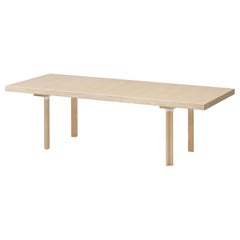
Aalto H92
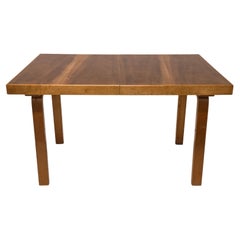
Vintage 1950s Finnish Scandinavian Modern Dining Room Tables
Birch, Mahogany

Recent Sales
Vintage 1970s Finnish Mid-Century Modern Dining Room Tables
Elm
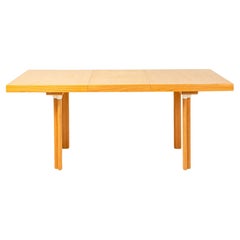
Late 20th Century Finnish Mid-Century Modern Dining Room Tables
Wood
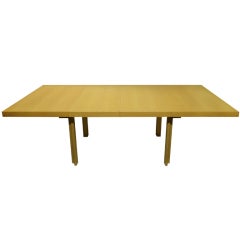
Vintage 1960s Finnish Scandinavian Modern Tables
Ash
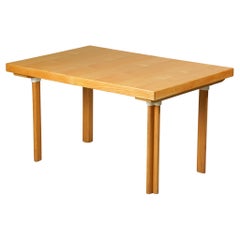
20th Century Finnish Modern Dining Room Sets
Birch
Alvar Aalto for sale on 1stDibs
An architect and designer, Alvar Aalto deserves an immense share of the credit for bringing Scandinavian modernism and Nordic design to a prominent place in the global arena. In both his buildings and his vintage furniture — which ranges from chairs, stools, tables and lighting to table- and glassware — Aalto’s sensitivity to the natural world and to organic forms and materials tempered the hardness of rationalist design.
Relatively few Aalto buildings exist outside Finland. (Just four exist in the United States, and only one — the sinuous 1945 Baker House dormitory at M.I.T. — is easily visited.) International attention came to Aalto, whose surname translates to English as “wave,” primarily through his furnishings.
Instead of the tubular metal framing favored by the Bauhaus designers and Le Corbusier, Aalto insisted on wood. His aesthetic is best represented by the Paimio armchair, developed with his wife, Aino Aalto, in 1930 as part of the overall design of a Finnish tuberculosis sanatorium.
Comfortable, yet light enough to be easily moved by patients, the Paimio chair’s frame is composed of two laminated birch loops; the seat and back are formed from a single sheet of plywood that scrolls under the headrest and beneath the knees, creating a sort of pillow effect. Aalto’s use of plywood had an enormous influence on Charles and Ray Eames, Arne Jacobsen, Marcel Breuer and others who later came to the material.
Concerned with keeping up standards of quality in the production of his designs, Aalto formed the still-extant company Artek in 1935, along with Aino, whose glass designs were made by the firm. In the latter medium, in 1936 the Aaltos together created the iconic, undulating Savoy vase, so-called for the luxe Helsinki restaurant for which the piece was designed.
Artek also produced Aalto pendants and other lighting designs, many of which — such as the Angel’s Wing floor lamp and the Beehive pendant — incorporate a signature Aalto detail: shades made of concentric enameled-metal rings graduated down in diameter. The effect of the technique is essential Alvar Aalto: at once precise, simple, and somehow poetic.
Find a collection of vintage Alvar Aalto stools, vases, dining tables and other furniture on 1stDibs.
Finding the Right Dining-room-tables for You
No matter your furniture style of choice, a shared meal is one of life’s true rewards. Why not treat your family and friends to a luxurious dining experience? Browse our top picks to find the perfect antique, new or vintage dining room table for this important occasion.
Modern furniture design borrows significantly from the trends of yore, and this is especially apparent in dining tables. Ancient Egyptians made practical use of the earliest four-legged tables of wood and rock — their models bear striking similarity to the dining tables of today — while common large medieval dining room tables in England were made of oak or elm. Romans and Greeks, renowned for big banquets that involved entertainment as well as good food, used early dining room tables made of marble or wood and metals such as bronze for meals.
On 1stDibs, find a range of dining room tables that offers no shortage of options to accommodate modest interiors, midsize family homes and even lavish banquets (entertainment not included).
Beginning in the mid-19th century, more American homes featured dining rooms, where families could gather specifically for a meal together. In the States, upper-class families were the first to enjoy dining room tables, which were the centerpiece of the dining room.
Dining room tables of the Victorian era were created in a range of revivalist styles inspired by neoclassical, Renaissance, Gothic and other traditions. Furnishings of the period were made of various woods, including oak, rosewood and mahogany, and referenced a variety of decorative arts and architectural motifs. Some dining room tables finished in the Rococo style feature gorgeous inlaid marble tabletops or other ornamental flourishes handcrafted by Parisian furniture makers of the 18th century.
In many modern spaces, there often isn’t a dining room separate from the kitchen — instead, they frequently share real estate in a single area. Mid-century modern dining room tables, specifically those created by designers such as Osvaldo Borsani, Edward Wormley and Alvar Aalto, are typically clean and uncomplicated designs for a dining area that’s adjacent to where the cooking is done. Furniture of this era hasn’t lost its allure for those who opt for a casual and contemporary aesthetic.
If you’re of the modern mindset that making and sharing meals should be one in the same — and perhaps large antique dining tables don’t mesh well with your style — consider a popular alternative. Working with a tighter space may mean that a round or oval dining room table, a design that references the festive meals of the medieval era, may be a better fit. Round dining room tables, particularly those that originated in the Art Deco period, still endure as a popular contemporary substitute for traditional rectangular dining tables. Giovanni Offredi’s Paracarro table for Saporiti Italia is a striking round table option that showcases the magnificent Italian industrial design of the 1970s.
Find a collection of antique, new and vintage dining tables on 1stDibs.