Abram Lerner
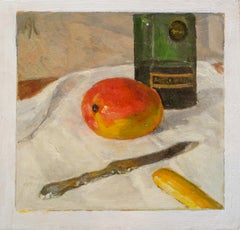
1990s Contemporary Still-life Paintings
Oil, Wood Panel

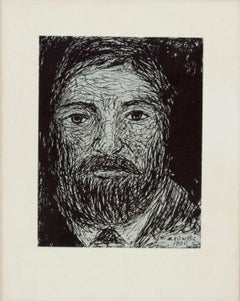
Early 20th Century Modern Figurative Drawings and Watercolors
Paper, Ink
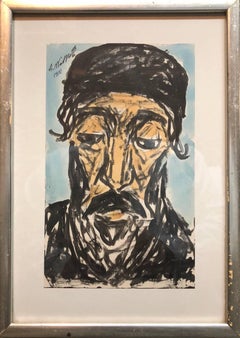
Early 20th Century Modern Figurative Drawings and Watercolors
Paper, Watercolor
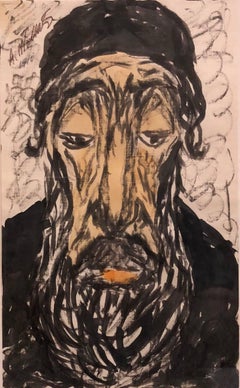
Early 20th Century Modern Figurative Drawings and Watercolors
Paper, Watercolor
Recent Sales
20th Century American Modern Paintings
Canvas, Wood, Paint
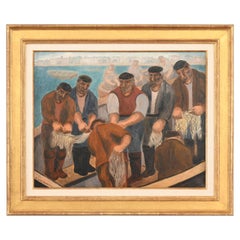
Early 20th Century Modern Figurative Drawings and Watercolors
Paper, Ink
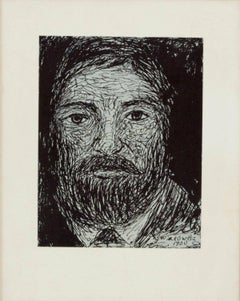
Early 20th Century Modern Figurative Drawings and Watercolors
Paper, Watercolor
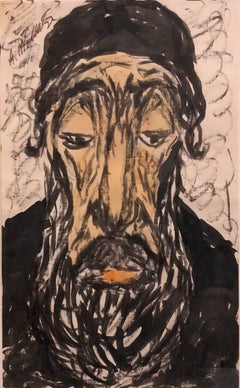
Early 20th Century Modern Figurative Drawings and Watercolors
Paper, Watercolor
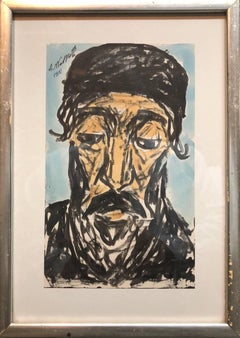
Early 20th Century Modern Figurative Drawings and Watercolors
Paper, Ink
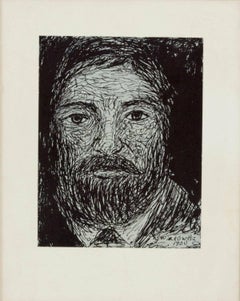
1970s Modern Still-life Prints
Lithograph, Offset
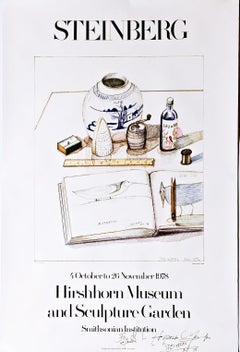
People Also Browsed
2010s Photorealist Nude Paintings
Canvas, Oil
Vintage 1950s Italian Wall Mirrors
Mirror
2010s Canadian Brutalist Chairs
Wood, Walnut
1990s Impressionist Nude Drawings and Watercolors
Paper, Graphite
Antique Late 19th Century Russian Religious Items
Silver, Enamel
Mid-20th Century Italian Mid-Century Modern Vases
Murano Glass
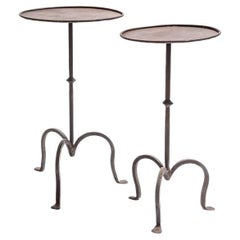
21st Century and Contemporary English Folk Art Side Tables
Iron
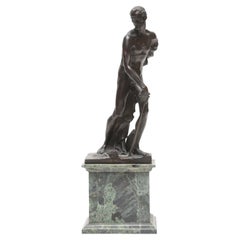
Antique 18th Century Italian Baroque Figurative Sculptures
Marble, Bronze
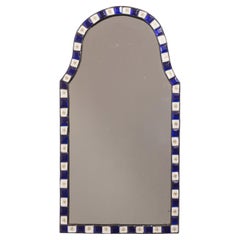
Antique Early 19th Century Irish George III Wall Mirrors
Mercury Glass, Mirror
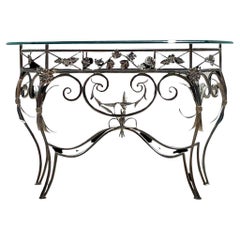
Late 20th Century American Regency Console Tables
Wrought Iron
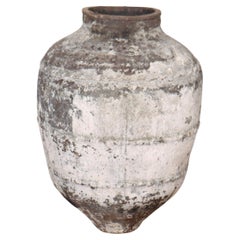
Early 20th Century Jars
Terracotta
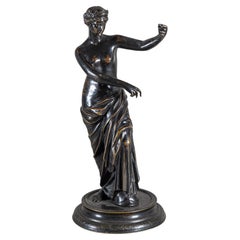
Antique Mid-19th Century European Grand Tour Figurative Sculptures
Bronze
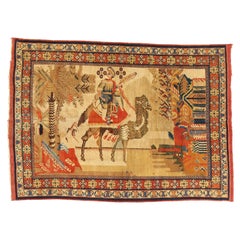
Antique Late 19th Century Persian Persian Rugs
Wool
Vintage 1960s Japanese Mid-Century Modern Table Lamps
Metal

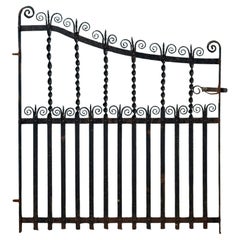
Early 20th Century English Arts and Crafts Doors and Gates
Wrought Iron
Antique Early 1900s French Neoclassical Revival Centerpieces
Bronze
Abraham Walkowitz for sale on 1stDibs
Abraham Walkowitz is perhaps best known for his watercolor studies of Isadora Duncan and the dance. However, Walkowitz laid claim to being the first to exhibit truly modernist paintings in the United States. After 1909, he became an intimate of Alfred Stieglitz's 291 Gallery, and while there became a participant in the debate over modern art in America. Walkowitz was an outspoken proponent of the continuous experimentation in the arts, which was his definition of modernism. As an artist, Walkowitz embodied the changing role of the modernist painter in the United States, as modernism moved from an avant-garde protest against established modes to become an accepted style and tradition.
Abraham Walkowitz was a Russian born, turn-of-the-century immigrant to the United States, who grew up in New York's Lower East Side. He first studied art at the Educational Alliance, the Cooper Union and the National Academy of Design. In 1906, he journeyed to Europe where he studied at the Académie Julian in Paris. Upon his return to the United States in 1907, he became a fully-fledged convert to modernism, and his first exhibit, at the Haas Gallery in that year, brought him a measure of notoriety as well as the attention of Stieglitz and other pioneers of non-objective art. In subsequent years, he became one of the most exhibited painters shown at the 291 Gallery, a fact which was also reflected in the pages of Stieglitz's polemical journal of modernism, camera work. As a result of this early attention, by the time of the Armory Show of 1913, to which Walkowitz contributed several paintings, his work was widely known to both fellow modernists as well as their opponents.
Walkowitz was clearly part of the new vocabulary of American art and criticism. During the 1920s and 1930s, as the first-generation modernists lost their revolutionary cast, and as American realism gained in favor, Walkowitz continued his experiments with form and line, especially in his series of Duncan studies. Although his paintings received less critical attention than they once had, Walkowitz was clearly one of the grand old folk of American modernism. During the depression, Walkowitz was politically active on behalf of unemployed artists supporting various new-deal initiatives in the arts. In the 1940s, Walkowitz gained national attention when he explored the varieties of the modernist vision in the form of an exhibit of 100 portraits of him by 100 artists. The result was widely discussed and was featured in Life magazine in 1944.
In 1945, Walkowitz traveled to Kansas, where he painted landscapes made up largely of strip mines and barns. This was his last venture in active painting — by 1946, glaucoma, which led to his eventual blindness, began to impair his vision and limit his ability to work. Walkowitz then turned to the preparation of a series of volumes of his drawings, designed to illustrate the development of modernism in the 20th century, and in so doing, established his role as a pioneer American modernist.
A Close Look at Modern Art
The first decades of the 20th century were a period of artistic upheaval, with modern art movements including Cubism, Surrealism, Futurism and Dadaism questioning centuries of traditional views of what art should be. Using abstraction, experimental forms and interdisciplinary techniques, painters, sculptors, photographers, printmakers and performance artists all pushed the boundaries of creative expression.
Major exhibitions, like the 1913 Armory Show in New York City — also known as the “International Exhibition of Modern Art,” in which works like the radically angular Nude Descending a Staircase by Marcel Duchamp caused a sensation — challenged the perspective of viewers and critics and heralded the arrival of modern art in the United States. But the movement’s revolutionary spirit took shape in the 19th century.
The Industrial Revolution, which ushered in new technology and cultural conditions across the world, transformed art from something mostly commissioned by the wealthy or the church to work that responded to personal experiences. The Impressionist style emerged in 1860s France with artists like Claude Monet, Paul Cézanne and Edgar Degas quickly painting works that captured moments of light and urban life. Around the same time in England, the Pre-Raphaelites, like Edward Burne-Jones and Dante Gabriel Rossetti, borrowed from late medieval and early Renaissance art to imbue their art with symbolism and modern ideas of beauty.
Emerging from this disruption of the artistic status quo, modern art went further in rejecting conventions and embracing innovation. The bold legacy of leading modern artists Georges Braque, Pablo Picasso, Frida Kahlo, Salvador Dalí, Henri Matisse, Joan Miró, Marc Chagall, Piet Mondrian and many others continues to inform visual culture today.
Find a collection of modern paintings, sculptures, prints and other fine art on 1stDibs.