Antique Clock Feet
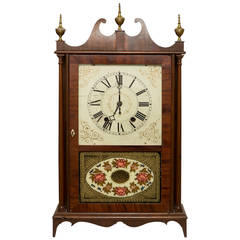
19th Century American Antique Clock Feet
Mahogany

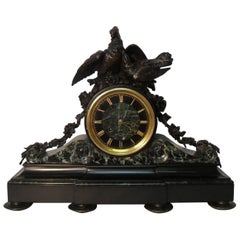
Late 19th Century French Belle Époque Antique Clock Feet
Marble, Bronze
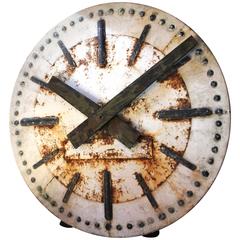
1920s Great Britain (UK) Art Deco Antique Clock Feet
Iron, Zinc
- 1
Antique Clock Feet For Sale on 1stDibs
How Much is a Antique Clock Feet?
Finding the Right Clocks for You
A sophisticated clock design, whether it’s a desk clock, mantel clock or large wall clock for your living room, is a decorative object to be admired in your home as much as it is a necessary functional element. This is part of the reason clocks make such superb collectibles. Given the versatility of these treasured fixtures — they’ve long been made in a range of shapes, sizes and styles — a clock can prove integral to your own particular interior decor.
Antique and vintage clocks can whisk us back to the 18th and 19th centuries. When most people think of antique clocks, they imagine an Art Deco Bakelite tabletop clock or wall clock, named for the revolutionary synthetic plastic, Bakelite, of which they’re made, or a stately antique grandfather clock. But the art of clock-making goes way back, transcending continents and encompassing an entire range of design styles and technologies. In short, there are many kinds of clocks depending on your needs.
A variety of wall clocks can be found on 1stDibs. A large antique hand-carved walnut wall clock is best suited to a big room and a flat background given what will likely be outwardly sculptural features, while Georgian grandfather clocks, or longcase clocks, will help welcome rainswept guests into your entryway or foyer. An interactive cuckoo clock, large or small, is guaranteed to bring outsize personality to your living room or dining room. For conversation pieces of a similar breed, mid-century modern enthusiasts go for the curious Ball clock, the first of more than 150 clock models conceived in the studio of legendary architect and designer George Nelson.
Minimalist contemporary clocks and books pair nicely on a shelf, but an eye-catching vintage mantel clock can add balance to your home library while drawing attention to your art and design books and other decorative objects. Ormolu clocks dating from the Louis XVI period, designed in the neoclassical style, are often profusely ornate, featuring architectural flourishes and rich naturalistic details. Rococo-style mantel clocks of Meissen porcelain or porcelain originating from manufacturers in cities such as Limoges, France, during the 18th and 19th centuries, exude an air of imperial elegance on your shelves or side tables and can help give your desk a 19th-century upgrade.
On 1stDibs, find a range of extraordinary antique and vintage clocks today.
- 1stDibs ExpertApril 5, 2022Most historians believe that early grandfather clocks were 6 feet tall because the long case was required to hold a pendulum of adequate length to power their movement. Some clocks are even larger, though this is likely to give them a more substantial, decorative look. On 1stDibs, shop a collection of grandfather clocks.
- 1stDibs ExpertApril 5, 2022Check the clock for a manufacturer’s mark or label. Once you have this, you should be able to look up the clock’s brand to see if it is French in origin. A clock is considered antique once it is 100 years old. A professional can also help verify the origin of your clock. Shop an array of expertly vetted antique clocks on 1stDibs.
- 1stDibs ExpertFebruary 27, 2024To identify your antique clock, search for markings on the back of its movement or case. Once you have located these marks, use trusted online resources to determine who the maker is. From there, you can continue your research to learn more about your clock's age, style and other characteristics. An expert appraiser or antiques dealer can also assist you with identification. Find a wide range of antique clocks on 1stDibs.
- How can I spot an antique clock?1 Answer1stDibs ExpertApril 5, 2022To spot whether or not a clock is antique, note if the clockmaker’s name or company is engraved near the center face of the dial. A paper label may also be pasted on the back of the clock. You can shop a collection of expertly vetted antique clocks from some of the world’s top sellers on 1stDibs.
- 1stDibs ExpertOctober 26, 2021An antique bracket clock refers to a portable spring-driven pendulum table clock created in the 17th and 18th centuries. These clocks were equipped with convenient carrying handles and were housed usually in rectangular cases. Shop a collection of antique and vintage bracket clocks from some of the world’s top dealers on 1stDibs.
- 1stDibs ExpertFebruary 17, 2023To know if an antique clock is valuable, you'll typically need to have the piece assessed by a certified appraiser or an experienced antiques dealer. The maker and style of the clock will help determine its value (an early American clockmaker’s antique grandfather model, featuring an oak case and decorative carvings, may be very interesting to collectors, for example). Overall condition of your clock also plays a role. Generally, clocks that still work are worth more than those that require repairs. On 1stDibs, find a selection of antique, vintage and modern clocks.
- 1stDibs ExpertSeptember 16, 2024Yes, some old antique clocks may be worth something. Many collectors look for clocks produced by certain manufacturers, such as the Ansonia Clock Company, the Seth Thomas Clock Company, Jaeger-LeCoultre and the Chelsea Clock Company. In addition to the maker, the type, materials, style and condition of the clock influence its value. Generally, clocks that remain in good working order are worth more than those in need of repairs and restorations. To find out how much your clock may be worth, consult a certified appraiser or experienced antique dealer. On 1stDibs, explore a large collection of antique clocks.
Read More
How a Craving for Color Revolutionized Glass
After synthetic dyes changed fashion, home goods and printed matter, it was only a matter of time till glass caught up.
Kazuyo Sejima’s Flowering Tree Blooms Year-Round
The brilliantly simple design turns a modest bouquet into a major statement.
He Wrote ‘Oedipus Rex,’ but Do You Know What He Looked Like?
The Greek tragedian is said to have been handsome in his day.
Cigar Culture Was Once the Peak of Masculinity. Now, It’s a Compelling Curiosity
Even for those who don’t indulge, elegant smoking accessories and audacious art portraying cigar enthusiasts hold a nostalgic allure.
African Travel Plans on Hold? This Ardmore Leopard Vase Brings the Beauty of the Savanna to You
It’s an excellent example of the sought-after ceramics coming out of South Africa’s KwaZulu-Natal province.
With a High-Tech Flagship and Cool Collabs, Lladró Is Breaking the Mold for Porcelain Production
Thanks to its new leadership, the Spanish maker of figurines, busts and lighting is on a mission to update the art of porcelain for the 21st century.
Zoë Powell’s Magnolia 05 Vessel Is Handmade from Clay She Unearthed Herself
The free-form stoneware piece is inspired by the magnolia tree and its associations with home.
8 Ways to Breathe New Life into a Space with Plants
The pair behind the Instagram account @houseplantclub share their tips for making any room of the house gloriously green.