Antique Japanese Screens

to
279
1,660
465
1,358
712
712
396
352
233
180
164
77
76
62
50
42
38
30
28
24
24
14
14
11
11
9
8
8
6
6
6
5
5
4
4
4
4
2
1
1
1
48
12
9
6
4
Sort By
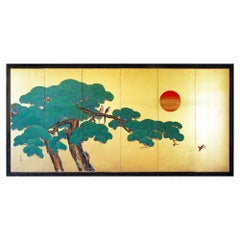
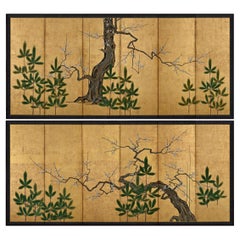
Byobu - Japanese Screen Gold Leaf Kano School Pine Sun
By Japanese Studio
Located in Brescia, IT
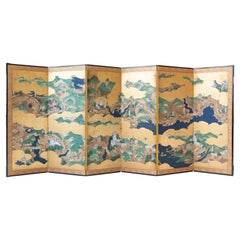
Japanese Screen of Kano school six panels hand painted with mineral pigments on gold leaf. A very
Category

Late 19th Century Meiji Antique Japanese Screens

Materials

Gold Leaf

Japanese Screen mid Edo gold leaf
By Japanese Studio
Located in Brescia, IT
This 18th century six-panel screen is truly special. The author is unknown, but his singular genius
Category

Mid-18th Century Japanese Edo Antique Japanese Screens

Materials

Gold Leaf

Japanese Screen: Spring Offering
Located in Fukuoka, JP
Spring Offering is a small yet exquisitely refined Edo-period screen originally created as a
Category

18th Century Japanese Edo Antique Japanese Screens

Materials

Paper, Wood

Antique Japanese Screen: Spring Offering
Japanese Screen: Spring Offering
$1,250 Sale Price
56% Off
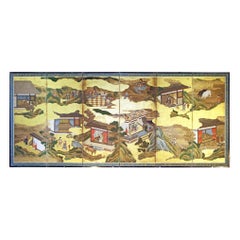
19th Century Japanese Screen with Sumiyoshi Shrine on Gold Leaf
Located in New York, NY
This is a beautiful antique six-fold Japanese screen. The design is beautifully detailed with
Category

Late 18th Century Japanese Antique Japanese Screens
Materials

Gold Leaf

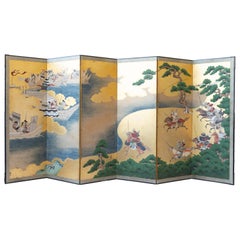
18th Century Six Panel japanese Screen with Samurai on Horses
Located in New York, NY
A spectacular six-panel Japanese screen dating to the 18th century. The screen depicts samurai
Category

Late 18th Century Japanese Antique Japanese Screens

Materials

Gold Leaf

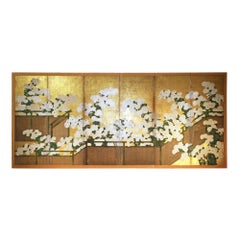
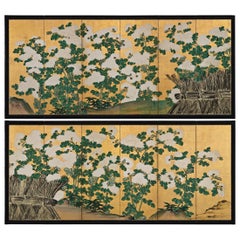
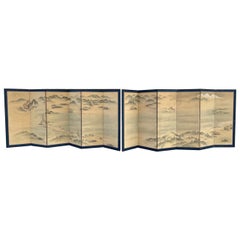
Mid-18th Century Japanese Screen Pair, One Hundred Flowers, Chrysanthemums
Located in Kyoto, JP
Omori Soun (b. 1704) Chrysanthemums - One Hundred Flowers A Pair of Six-fold Japanese Screens
Category

Mid-18th Century Japanese Edo Antique Japanese Screens

Materials

Gold Leaf

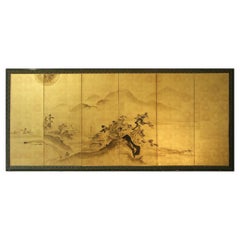
Japanese Screen Landscape on Gold Leaf with Inks
By Japanese Studio
Located in Brescia, IT
Six-panel screen from the Tosa school painted with ink on gold leaf depicting a relaxing oriental
Category

Late 19th Century Japanese Meiji Antique Japanese Screens

Materials

Gold Leaf

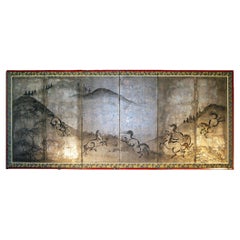
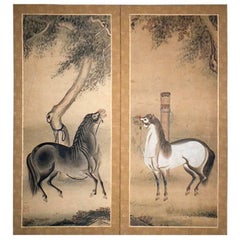
Japanese Screen Painting of Stallions
Located in Hudson, NY
Japanese two panel screen: Painting of stallions. Kano school of painting. Mineral pigments on
Category

19th Century Japanese Antique Japanese Screens

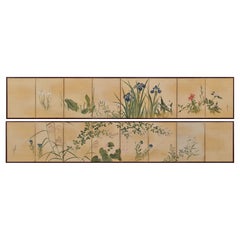
1838 Japanese Screen Pair. Flowers Grasses of the Four Seasons.
Located in Kyoto, JP
Japanese screens; ink, color and gold leaf on silk Dimensions: each (2) H. 38.5 cm x W. 218.5 cm (15” x 86
Category

1830s Japanese Edo Antique Japanese Screens

Materials

Silk

Japanese Screens: Echo of Chrysanthemums
Located in Fukuoka, JP
gold. This Edo-period screen reveals the artist’s refined mastery of balance, texture, and perception
Category

19th Century Japanese Edo Antique Japanese Screens

Materials

Gold Leaf

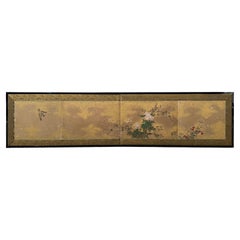
Early 20th Century Japanese Screen. Flowers of the Four Seasons.
Located in Kyoto, JP
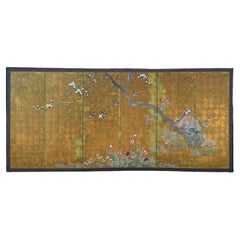
Anonymous Flowers of the Four Seasons A four-panel Japanese screen. Ink, gofun and pigments on gold
Category

Early 20th Century Japanese Taisho Antique Japanese Screens

Materials

Gold Leaf

Japanese Screen Pair, Tigers by Kishi Renzan, Late Edo Period
Located in Kyoto, JP
Kishi Renzan (1804-1859) Tigers Pair of six-panel Japanese screens. Ink and gold-leaf on
Category

Mid-19th Century Asian Edo Antique Japanese Screens

Materials

Gold Leaf

Early 19th century Japanese Screen with Village Scenes, on Gold Leaf
Located in New York, NY
A striking antique six-fold Japanese screen. This is one of a pair. See other listing. The
Category

Early 19th Century Japanese Antique Japanese Screens

Materials

Gold Leaf

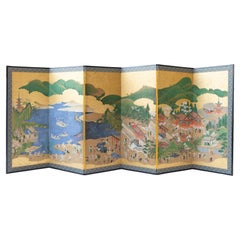
Early 19th century Japanese Screen with Village Scenes on Gold Leaf
Located in New York, NY
A striking antique six-fold Japanese screen. This is one of a pair. The subject is "Tokaido
Category

Early 19th Century Japanese Antique Japanese Screens

Materials

Gold Leaf

17th Century Japanese Screen Pair. Tiger Dragon by Kaiho Yusetsu
Located in Kyoto, JP
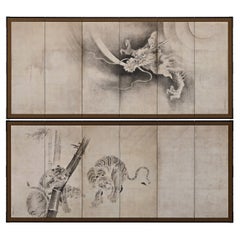
Japanese Screens. Ink and slight color on paper. Dimensions: Each screen: H. 171 cm x W. 380 cm (67.5
Category

Mid-17th Century Japanese Edo Antique Japanese Screens

Materials

Silk, Wood, Paper

Late 17th Century Japanese Screen. Puppy and Kittens on Gold Leaf.
Located in Kyoto, JP
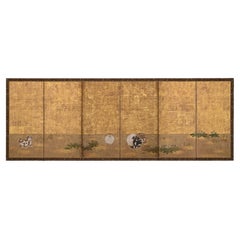
Anonymous Late 17th century Puppy & Kittens A six-panel Japanese screen. Ink, color, gofun, gold
Category

Late 17th Century Japanese Edo Antique Japanese Screens

Materials

Gold Leaf

Japanese screen: Melody of Magnolia Blossoms
Located in Fukuoka, JP
. This six-panel screen embodies the lyrical sensitivity of early Edo art, where every brushstroke
Category

Early 17th Century Japanese Edo Antique Japanese Screens

Materials

Paper, Wood

Japanese screen: Summer Breeze on Gold
Located in Fukuoka, JP
between the golden expanse and the delicate greenery reflects the Japanese reverence for balance between
Category

Early 20th Century Asian Showa Antique Japanese Screens

Materials

Wood, Paper

Japanese screen: Summer Breeze on Gold
Located in Fukuoka, JP
between the golden expanse and the delicate greenery reflects the Japanese reverence for balance between
Category

Early 20th Century Asian Showa Antique Japanese Screens

Materials

Paper, Wood

Japanese Screen: Flow of Time in Gold
Located in Fukuoka, JP
tranquil scene. This Edo-period screen embodies harmony between nature and time — a visual journey from
Category

Early 19th Century Japanese Edo Antique Japanese Screens

Materials

Paper, Wood

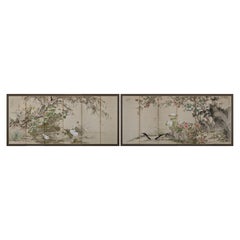
Mid 19th Century Japanese Screen Pair. Flowers Birds of the Four Seasons.
Located in Kyoto, JP
Shioka Sorin (1781-1850) Flowers & Birds of the Four Seasons Pair of six-panel Japanese Screens
Category

Mid-19th Century Japanese Edo Antique Japanese Screens

Materials

Silk

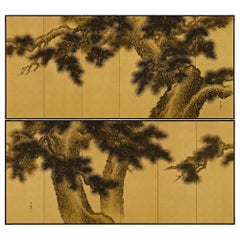
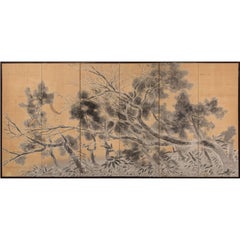
Early 20th Century Japanese Screen Pair - Ink Pine Trees on Gold
Located in Kyoto, JP
monumental six-panel Japanese pine screens by the renowned Nihonga artist Imao Keisho. Here Keisho entirely
Category

Early 20th Century Japanese Showa Antique Japanese Screens

Materials

Gold Leaf

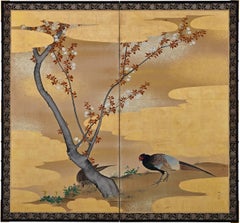
Early 19th Century Japanese Screen. Cherry Blossom Pheasants by Mori Tetsuzan
Located in Kyoto, JP
Mori Tetsuzan (1775-1841) Pheasants and Cherry Blossoms Two-fold Japanese screen. Ink, color
Category

Early 19th Century Japanese Edo Antique Japanese Screens

Materials

Gold Leaf

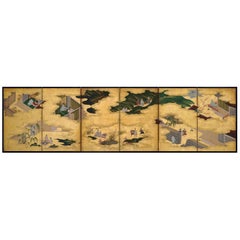
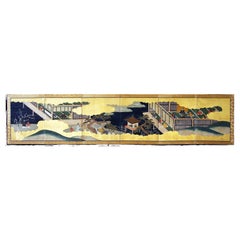
Japanese Screen Painting, Circa 1700 Tales of Ise by Tosa Mitsusuke
By Tosa Mitsusuke 1
Located in Kyoto, JP
A six-fold Japanese screen by Tosa Mitsusuke (1675-1710), Japan 17th-18th century, Edo period. The
Category

Late 17th Century Japanese Edo Antique Japanese Screens

Materials

Gold Leaf

Circa 1920 Japanese Screen. Cat Mouse Harvest Scene on Gold Silk.
Located in Kyoto, JP
The narrative playfulness of the scene depicted on this Japanese screen sets alight what is at its
Category

Early 20th Century Japanese Taisho Antique Japanese Screens

Materials

Gold

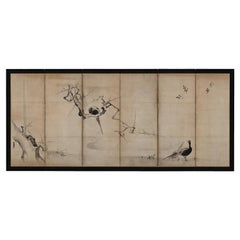
17th Century Japanese Screen. Ink Plum Tree Birds by Kano Naonobu.
Located in Kyoto, JP
Kano Naonobu (1607-1650) Plum Tree and Birds Six-fold Japanese Screen. Ink and slight color on
Category

17th Century Japanese Edo Antique Japanese Screens

Materials

Wood, Paper

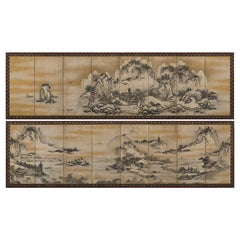
17th Century Japanese Screen. View of West Lake by Unkoku Toyo.
Located in Kyoto, JP
Unkoku Toyo (1612-1668) View of West Lake Pair of eight-panel Japanese Screens. Ink and gold wash
Category

Mid-17th Century Japanese Edo Antique Japanese Screens

Materials

Paper

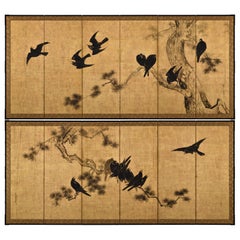
Mid 18th Century Japanese Screen Pair. Crows Pines by Unkoku Toshuku.
Located in Kyoto, JP
Unkoku Toshuku (1722-1779) Crows and Pines A pair of six-panel Japanese Screens. Ink and gold
Category

Mid-18th Century Japanese Edo Antique Japanese Screens

Materials

Gold Leaf

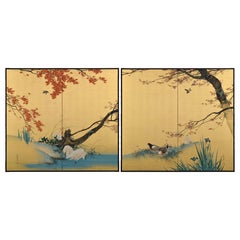
Meiji era Japanese Screen Pair, Two-panel. Spring Autumn Birds Flowers.
Located in Kyoto, JP
pair of two-panel Japanese screens, painted around 1900 by Hasegawa Gyokujun, presents a richly
Category

Early 20th Century Japanese Meiji Antique Japanese Screens

Materials

Gold Leaf

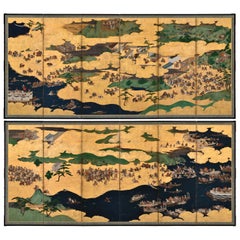
Late 17th Century Japanese Screen Pair. Battle of Ichi-no-tani and Yashima.
Located in Kyoto, JP
x W. 385 cm (69” x 151.5”) This pair of Japanese screens depict two significant battles from the
Category

Late 17th Century Japanese Edo Antique Japanese Screens

Materials

Gold Leaf

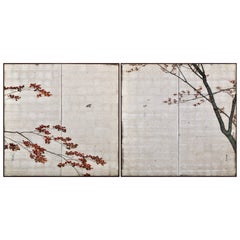
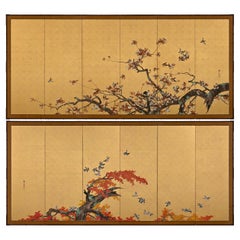
1895 Meiji Japanese Screen Pair. Cherry Blossoms Autumn Maples on Silver Leaf
Located in Kyoto, JP
two-panel Japanese screens; ink and pigments on silver leaf This refined pair of screens by Isobe
Category

Late 19th Century Japanese Meiji Antique Japanese Screens

Materials

Silver Leaf

Japanese Screen Painting, Early 19th Century, Autumn Flowers by Sakai Hoitsu
Located in Kyoto, JP
A two-fold Japanese screen by the Rimpa school artist Sakai Hoitsu (1761-1828), Japan, 19th century
Category

Early 19th Century Japanese Edo Antique Japanese Screens

Materials

Wood, Silk

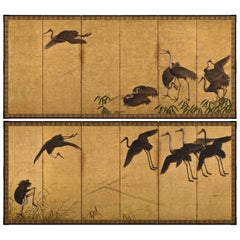
17th Century Japanese Screen Pair. Flock of Cranes. Ink and color on gold leaf.
Located in Kyoto, JP
A pair of six-fold Japanese screens from the 17th century depicting a flock of cranes arriving at
Category

17th Century Japanese Edo Antique Japanese Screens

Materials

Gold Leaf

18th Century Japanese Screen Pair. Plum Young Pines. Kano School.
Located in Kyoto, JP
Dimensions (Each screen): H. 176 cm x W. 378 cm (69’’ x 149’’) This pair of Japanese folding
Category

Late 18th Century Japanese Edo Antique Japanese Screens

Materials

Gold Leaf

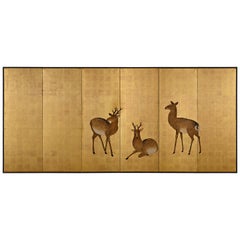
19th Century Japanese Screen, Deer in Spring, Maruyama Shijo School
Located in Kyoto, JP
A six-panel Japanese folding screen from the leading Maruyama-Shijo artist Okamoto Toyohiko (1773
Category

Early 19th Century Japanese Edo Antique Japanese Screens

Materials

Gold Leaf

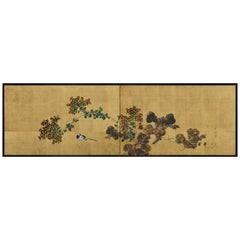
Japanese Screen, Early 20th Century Wagtail Chrysanthemum by Ishizaki Koyo
Located in Kyoto, JP
screen (furosaki byobu), was made for use during the Japanese tea-ceremony. In keeping with the seasonal
Category

Early 20th Century Japanese Taisho Antique Japanese Screens

Materials

Gold Leaf

19th Century Japanese Screen Pair - Birds Flowers of the Four Seasons
Located in Kyoto, JP
magnificent pair of six-panel Japanese folding screens by Yamamoto Baitsu, representing a lush landscape that
Category

Mid-19th Century Japanese Edo Antique Japanese Screens

Materials

Wood, Paper

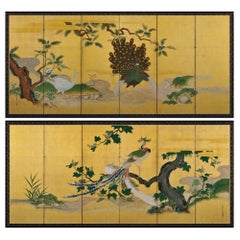
Japanese Screen Pair, circa 1730, Peacocks and Phoenix, Kano School
Located in Kyoto, JP
Phoenix and Peacocks. A pair of six-panel Japanese folding screens by Tsunetake Yotei (n.d
Category

Early 18th Century Asian Edo Antique Japanese Screens

Materials

Gold Leaf

Six Panel Japanese Screen: Winter Scene of Pine, Plum, and Bamboo
Located in Hudson, NY
Japanese Six Panel Screen: Winter Scene of Pine, Plum, and Bamboo Under Crescent Moon. Pine, plum
Category

Early 20th Century Japanese Taisho Antique Japanese Screens

Materials

Paper, Wood

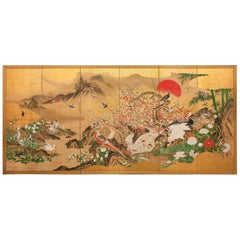
Japanese Screen: Animals and Flowers in a Landscape with Rising Sun
Located in Hudson, NY
Edo period (c. 1800) screen, beautifully painted with excellent details. Kano School painting at
Category

Early 19th Century Japanese Edo Antique Japanese Screens

Materials

Gold Leaf

Meiji Era, Circa 1900 Japanese Screen Pair, Flowers Birds of Spring Autumn
Located in Kyoto, JP
) A pair of six-fold Japanese flower and bird screens from the late Meiji period. The cherry blossom
Category

1890s Japanese Meiji Antique Japanese Screens

Materials

Gold Leaf

Japanese Folding Screens Gold Leaf
By Japanese Studio
Located in Brescia, IT
This Japanese six-panel Byobu screen, used for tea ceremonies, is a unique size and depicts scenes
Category

Mid-19th Century Japanese Edo Antique Japanese Screens

Materials

Gold Leaf

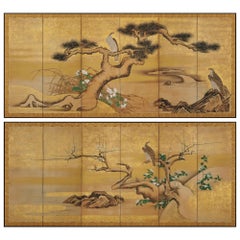
17th Century Japanese Screen Pair by Soga Nichokuan, Hawks on Pine Plum Trees
Located in Kyoto, JP
Hawks on plum and pine Soga Nichokuan (active circa 1625-1660) Pair of six-fold screens
Category

1640s Japanese Edo Antique Japanese Screens

Materials

Wood, Paper

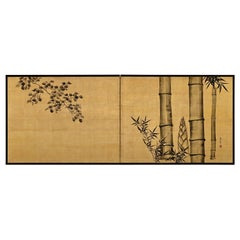
19th Century Japanese Screen for Tea-Ceremony, Ink Bamboo and Plum on Gold Leaf
Located in Kyoto, JP
gold leaf on paper. This is a double-sided Japanese Furosaki or tea-ceremony screen from the mid
Category

Mid-19th Century Japanese Edo Antique Japanese Screens

Materials

Gold Leaf

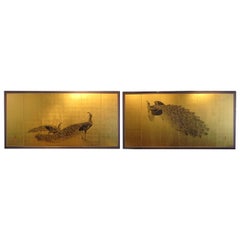
Pair of Japanese Screens: Ink paintings of peacocks on gold leaf by Imao Keinen
By Imao Keinen
Located in Prahran, Victoria
A pair of screens by Imao Keinen featuring peacocks painted in ink on gold leaf. Lacquered wood
Category

Late 19th Century Japanese Meiji Antique Japanese Screens

Materials

Gold Leaf

Chinese Horses - Japanese Folding Screen Silver Leaf
By Japanese Studio
Located in Brescia, IT
petal hooks to attach the screen to the wall. Lucio Morini has been a specialist in Japanese screens for
Category

Early 20th Century Japanese Taisho Antique Japanese Screens

Materials

Silver Leaf

Japanese Tosa School Framed Six Panel Screen Gold Leaf
By Japanese Studio
Located in Brescia, IT
Japanese six-panel screen of the famous "Tosa school" made by an anonymous artist of the mid-18th
Category

Mid-18th Century Japanese Edo Antique Japanese Screens

Materials

Gold Leaf

Pair of 19th Century Japanese Screens
Located in Bagshot, GB
A pair of large 19th century Japanses Screens of Japanese scenery. The screens also come with a
Category

19th Century Asian Other Antique Japanese Screens

Materials

Paper

Pair of 19th Century Japanese Screens
$3,652 Sale Price / set
30% Off
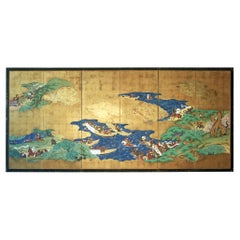
Edo 19th Century Japanese Folding Screen Six Panels Battle of Menpei
By Japanese Studio
Located in Brescia, IT
Samurai on horseback and by boat from the famous battle of Menpei Japanese folding screen six-panel
Category

Early 19th Century Japanese Edo Antique Japanese Screens

Materials

Gold Leaf

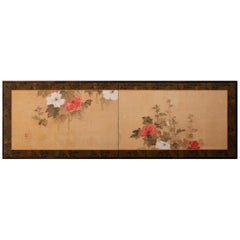
Japanese Two Panel Screen, Hollyhocks
Located in Hudson, NY
for comparison). Illustrated in Masterpieces of Japanese Screens, Muromachi through Edo Periods, Japan
Category

18th Century Japanese Edo Antique Japanese Screens

Materials

Silk, Paper, Wood

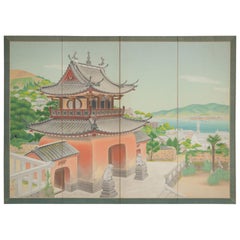
Japanese Four Panel Screen, Okinawa Painting of a Temple Scene
Located in Hudson, NY
Japanese screens. Vibrant mineral pigments on a soft ground of mulberry paper, signature and seal read
Category

1920s Japanese Antique Japanese Screens
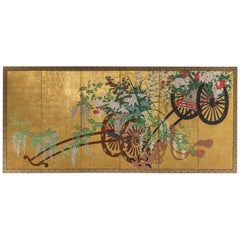
Japanese Six Panel Screens: Pair of Festival Carts
Located in Hudson, NY
Antique Japanese screen with Festival Cart design. Edo period painting (First half of the 19th
Category

Early 19th Century Japanese Edo Antique Japanese Screens

Materials

Gold Leaf

18th Century Japanese Two-Panel Screen Collection of Fans on Gold
Located in Hudson, NY
18th century Japanese Screen of a Collection of Fans. Paintings on fans depict famous Japanese
Category

18th Century Japanese Edo Antique Japanese Screens

Materials

Gold Leaf

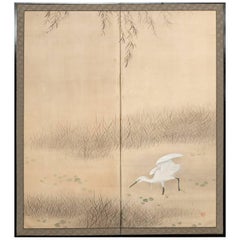
Japanese Two Panel Screen, Heron In Water Lily Pond Under Willow
Located in Hudson, NY
Japanese Screen painted with Heron In Water Lily Pond Under Willow. Meiji period (1868 - 1912
Category

Early 20th Century Japanese Meiji Antique Japanese Screens

Materials

Wood, Paper

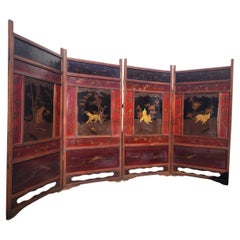
Screen With Lacquer Panels, Meiji Japan, Late 19th Century
Located in MARSEILLE, FR
Large Japanese screen with 4 leaves composed of lacquer panels with naturalistic decoration, of
Category

19th Century Japanese Meiji Antique Japanese Screens

Materials

Lacquer

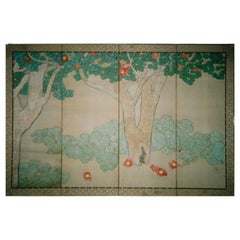
Antique Japanese Camellia Tree 4 Panel Folding Screen ~ Naga Gallery Provenance
Located in New York, NY
Antique four-panel Japanese screen featuring a painting of a Camellia tree dating to the Taisho
Category

1920s Japanese Antique Japanese Screens

Materials

Wood, Paper

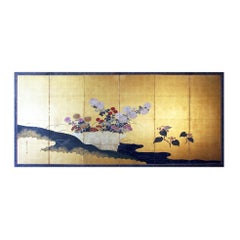
Japanese Byobu - Japanese Folding Screen Gold Leaf
By Japanese Studio
Located in Brescia, IT
Floral scene of a "Rimpa School" garden with polychrome chrysanthemum flowers. Six-panel screen
Category

Early 19th Century Japanese Edo Antique Japanese Screens

Materials

Gold Leaf

  • 1
  • ...
Get Updated with New Arrivals
Save "Antique Japanese Screens", and we’ll notify you when there are new listings in this category.

Antique Japanese Screens For Sale on 1stDibs

An assortment of antique Japanese screens is available at 1stDibs. Each of these unique antique Japanese screens was constructed with extraordinary care, often using paper, fabric and wood. Antique Japanese screens have been produced for many years, with earlier versions available from the 18th Century and newer variations made as recently as the 20th Century. Antique Japanese screens bearing Art Deco or Art Nouveau hallmarks are very popular at 1stDibs. Japanese School, Takakura Zaiko and Mitani Toshuku each produced beautiful antique Japanese screens that are worth considering.

How Much are Antique Japanese Screens?

Prices for antique Japanese screens can differ depending upon size, time period and other attributes — at 1stDibs, antique Japanese screens begin at $129 and can go as high as $397,909, while the average can fetch as much as $7,501.

Finding the Right Paintings-screens for You

Traditional Asian paintings were often created on scrolls and folding screens. Artisans made screens that could be folded up or spread out by connecting several panels using hinges. Today, antique Asian folding screens and paintings are sophisticated decorative accents that can serve as makeshift partitions to ensure privacy.

The original folding screens were created by Chinese artists. The earliest record of screens comes from the 2nd century B.C., and surviving examples date back to the Ming dynasty. Chinese painting utilizes many of the same tools as calligraphy — these screens were crafted from wood with painted panels featuring striking art or calligraphy that told cultural stories or represented nature and life in the area.

The practice was introduced to Japan, where paintings for screens were made on paper and silk, in the 8th century. These paintings frequently feature subjects such as landscapes, animals, flowers and Buddhist religious themes. Along with screens for tea ceremonies and dance backgrounds, there were screens for use in Shinto and Buddhist temples.

In the 17th century, screens began to be imported to Europe where their popularity grew. Coco Chanel famously collected Coromandel folding screens.

Traditional Asian paintings can make a tasteful addition to any wall, and screens can be used as decoration or, in the case of larger iterations, as an aesthetic way to divide a large room. Browse the selection of antique Asian paintings and screens from a variety of styles and eras on 1stDibs.

Questions About Antique Japanese Screens
  • 1stDibs ExpertMarch 22, 2022
    Japanese panels are components of large decorative folding screens called byōbu, which translates to “wind wall.” The screens traditionally function as room dividers and feature calligraphy and decorative painting. On 1stDibs, you can shop a range of decorative Japanese panels.
  • 1stDibs ExpertAugust 17, 2021
    Japanese screens are called Byōbu and are made from many panels with beautiful calligraphy and paintings. These folding screens can be a decorative and interesting way to separate rooms in a living space. Find a collection of Japanese screens for sale on 1stDibs.
  • 1stDibs ExpertApril 5, 2022
    A Japanese byōbu, also known as a wind wall, is a collection of joined folding panels, which feature intricate designs and calligraphy. A byōbu’s function is to separate a room or space. On 1stDibs, find a collection of authentic byōbus from some of the world’s top sellers.
  • 1stDibs ExpertApril 5, 2022
    Japanese screen painting is the art of creating byōbu, or Japanese screens. Byōbu vary in subject matter and style. The screens are free-standing, portable and decorated with symbolic images or calligraphy. It is common to find byōbu in pairs with at least two panels. Shop a selection of byōbu on 1stDibs.

  • Lotus Gallery
    Lotus GalleryMarch 17, 2021
    A Japanese low screen was traditionally used while seated upon the floor. The low screen would block wind and drafts, provide limited privacy, and are often decorated with seasonal themes.
  • 1stDibs ExpertAugust 8, 2024
    To tell if your Japanese pottery is antique, look for markings, which usually appear on the bottoms of pieces. If you see the word "Nippon," your piece was likely produced between 1891 and 1921, making it an antique. Pieces marked with the words "made in occupied Japan" originated between 1945 and 1952 and are vintage, based on their age. A "made in Japan" marking may indicate a vintage or contemporary piece. If you don't see any of these markings, consult trusted online resources to get a rough idea of when your pottery was produced. Any piece that dates back 100 years or more is antique. Should you encounter difficulty with the dating process, a certified appraiser or knowledgeable antique dealer can assist you. On 1stDibs, shop a variety of Japanese pottery.