Antique Japanese Screens

to
279
1,662
464
1,357
715
715
396
351
233
180
164
77
76
62
50
42
38
30
28
24
24
14
14
11
11
9
8
8
6
6
6
5
5
4
4
4
4
2
1
1
1
48
12
10
6
4
Sort By
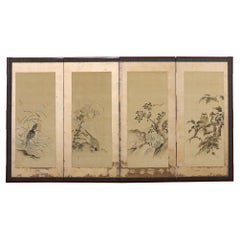
Japanese Kano School Four Panel Screen Birds and Owl
Located in Rio Vista, CA
Amazing 19th century Japanese Meiji period four-panel byobu screen featuring painted panels
Category

19th Century Japanese Meiji Antique Japanese Screens

Materials

Gold Leaf

Japanese Two Panel Screen: Plum Blossom in the Mist
Located in Hudson, NY
Plum blossom, baby pine and bamboo painted in mineral pigments on heavy gold leaf on paper. Silk brocade border with black lacquer trim and bronze hardware.
Category

Early 1800s Japanese Antique Japanese Screens

Materials

Bronze, Gold Leaf

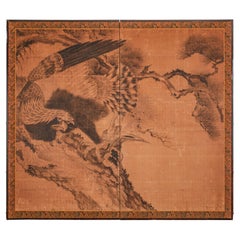
Japanese Two Panel Screen: Hawk Perched in Pine Tree
Located in Hudson, NY
Hawks were a popular motif in artwork because Japanese falconry, or takagari, was a sport of
Category

17th Century Japanese Antique Japanese Screens
Materials

Brocade, Silk, Paper

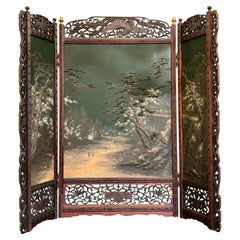
Signed Japanese Meiji Period Table Top Screen, circa 1890
Located in San Francisco, CA
Meiji period Japanese lacquered and hand painted folding table top screen. The bas relief (heavily
Category

Late 19th Century Japanese Meiji Antique Japanese Screens

Materials

Wood, Lacquer, Paint

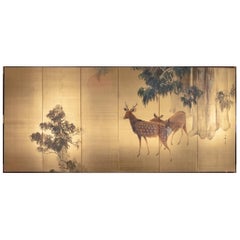
Japanese Six-Panel Screen Buck and Doe at Dawn
Located in Hudson, NY
Japanese six-panel screen: Buck and doe at dawn. Showa period (1926-1989) painting of a rising sun
Category

Early 20th Century Japanese Showa Antique Japanese Screens

Materials

Bronze

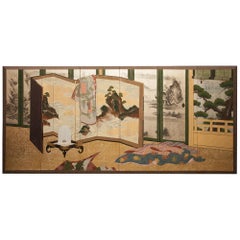
Japanese Antique Six Panel Screen: Inside the Imperial Household
Located in Hudson, NY
, folded "Rocks and Waves" screen in the room is signed: Sanraku. A ladies kimono hangs on the screen.
Category

1890s Japanese Antique Japanese Screens

Materials

Gold Leaf

17th Century Japanese Two-Panel Screen, Gibbons of Folklore
Located in Hudson, NY
Japanese two-panel screen: Gibbons of Folklore, Edo period (17th century) Kano School painting of
Category

Late 17th Century Japanese Edo Antique Japanese Screens

Materials

Silk, Wood, Paper

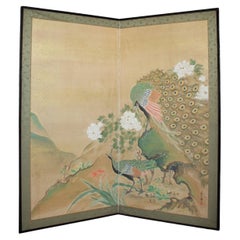
B50 Old Japanese Antiques a folding screen, Byobu 2panel, Peacock
Located in Niiza, JP
the connections of the folding screens are prone to weakening. They are connected with paper, not
Category

19th Century Japanese Antique Japanese Screens

Materials

Wood, Paper

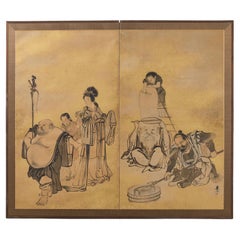
Japanese Edo Two Panel Screen Deities by Yokoyama Kazan
Located in Rio Vista, CA
Whimsical Japanese late Edo period two-panel screen circa 1800 by Yokoyama Kazan (Japanese 1784
Category

19th Century Japanese Edo Antique Japanese Screens

Materials

Brass, Gold Leaf

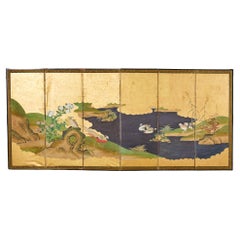
Japanese Meiji Six Panel Screen Kano School Bird Waterscape
Located in Rio Vista, CA
Stunning late 19th century Japanese Meiji period six panel byobu screen featuring a deep blue
Category

19th Century Japanese Meiji Antique Japanese Screens

Materials

Brass, Gold Leaf

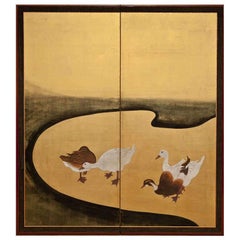
Japanese Two Panel Screen: Water Fowl by River s Edge
Located in Hudson, NY
Japanese Two Panel Screen: Water Fowl by River's Edge, Showa period (1926 - 1989) painting of fowl
Category

Early 20th Century Japanese Showa Antique Japanese Screens

Materials

Silk, Wood, Paper

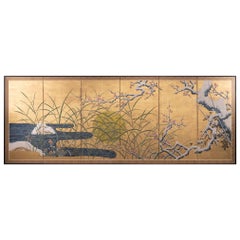
Japanese Six-Panel Screen, Winter Landscape with Flowering Plum
Located in Hudson, NY
Japanese six-panel screen: Winter landscape with flowering plum, Meiji period (1868-1912) painting
Category

Early 20th Century Japanese Meiji Antique Japanese Screens

Materials

Gold Leaf

Japanese Edo Six Panel Table Screen After Maruyama Okyo
Located in Rio Vista, CA
Fantastic diminutive Japanese Edo period table top screen depicting a lively water landscape with
Category

19th Century Japanese Edo Antique Japanese Screens

Materials

Brass, Gold Leaf

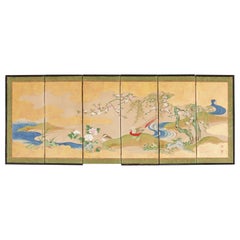
Japanese Six-Panel Screen Late Winter into Early Spring
Located in Hudson, NY
Japanese six-panel screen: Late winter into early spring, Rimpa style painting of a garden scene
Category

Early 19th Century Japanese Edo Antique Japanese Screens

Materials

Gold Leaf

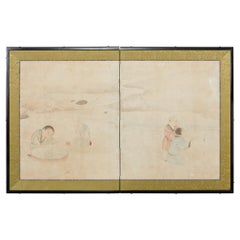
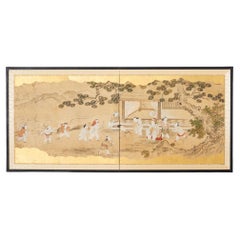
Japanese Edo Two Panel Screen Children Playing Catching Fish
Located in Rio Vista, CA
Delightful late 18th century/early 19th century Japanese Edo period two panel byobu screen
Category

18th Century Japanese Edo Antique Japanese Screens

Materials

Silk, Wood, Paper

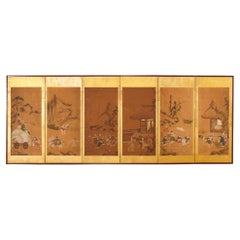
Japanese Edo Six Panel Screen Chinese Children at Play
Located in Rio Vista, CA
Amazing 19th century Japanese Edo period six panel folding byobu screen depicting Chinese children
Category

19th Century Japanese Edo Antique Japanese Screens

Materials

Gold Leaf

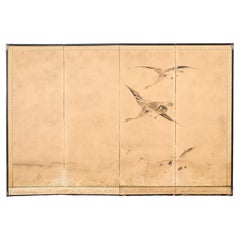
Japanese Meiji Four Panel Screen Wild Geese Over Reeds
Located in Rio Vista, CA
Muromachi period inspired Japanese four panel byobu screen depicting wild geese in flight over
Category

19th Century Japanese Meiji Antique Japanese Screens

Materials

Brass

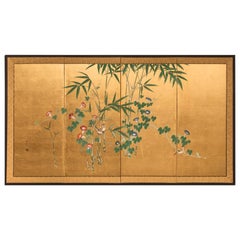
Japanese Four-Panel Screen, Young Bamboo and Morning Glory
Located in Hudson, NY
Mineral pigments on gold, signature reads: Okyo.
Category

Early 20th Century Japanese Antique Japanese Screens

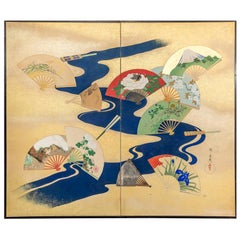
Japanese Two-Panel Screen, Deco Landscape with River Fans
Located in Hudson, NY
Japanese two-panel screen, deco landscape with river fans. Modern scene of a 12th century festival
Category

Early 20th Century Japanese Taisho Antique Japanese Screens
Materials

Gold Leaf

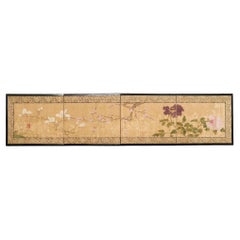
Japanese Edo Four Panel Screen Flowering Peony Prunus Magnolia
Located in Rio Vista, CA
Early 19th century Japanese Edo/Tokugawa period four panel folding byobu table screen featuring
Category

19th Century Japanese Edo Antique Japanese Screens

Materials

Brass

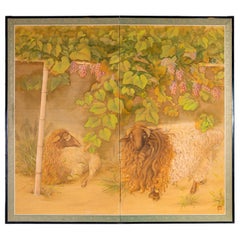
Japanese Two Panel Screen: Sheep Resting under Grape Arbor
Located in Hudson, NY
Soft mineral pigments on silk with brocade border. Signature and seal read: Jyogyu
Category

Early 1900s Japanese Antique Japanese Screens

Materials

Brocade, Silk

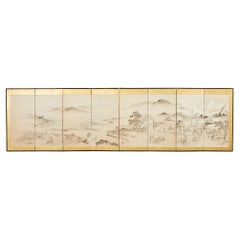
Japanese Meiji Eight Panel Screen Village Landscape with Figures
Located in Rio Vista, CA
Large 19th century Japanese Meiji period eight panel byobu screen featuring a panoramic village
Category

19th Century Japanese Meiji Antique Japanese Screens

Materials

Gold Leaf

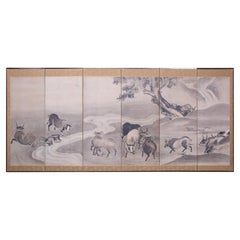
Japanese Six Panel Screen Bulls in a Gentle Landscape
Located in Hudson, NY
Sumi (ink) painting of bulls next to a stream with minimal colors on mulberry paper with silk brocade border.  
Category

19th Century Japanese Antique Japanese Screens

Materials

Silk, Paper

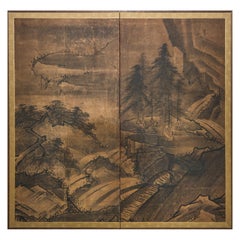
Japanese Two Panel Screen Suiboku Landscape in Sesshu Style
Located in Hudson, NY
Suiboku is a style of ink painting that is reminicent of the way calligraphers paint. Masterfully painted Muromachi Period (1336-1573) painting, unique in style and strength for the ...
Category

16th Century Japanese Antique Japanese Screens

Materials

Silk, Paper

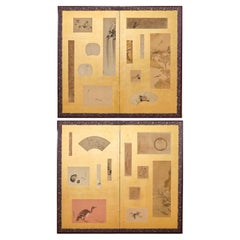
Pair of Japanese Two Panel Screens Edo Period Vignettes
Located in Rio Vista, CA
Impressive pair of Japanese two-panel byobu screens featuring late 18th-century edo period applied
Category

18th Century Japanese Edo Antique Japanese Screens

Materials

Gold Leaf

19th Century Japanese Edo Screen Kano School Garden Terrace
Located in Rio Vista, CA
Fantastic 19th century Japanese Edo/Tokugawa period two-panel byobu screen featuring Chinese
Category

19th Century Japanese Edo Antique Japanese Screens

Materials

Brass, Gold Leaf

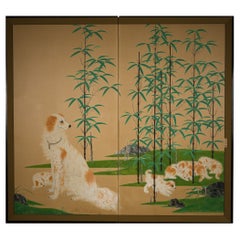
Japanese Two Panel Screen Mother and Puppies Under Bamboo
Located in Hudson, NY
Mineral pigments on paper. Signature and seal read: Shigehiro.
Category

Early 20th Century Japanese Antique Japanese Screens

Materials

Paper

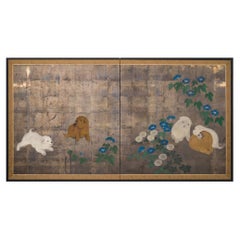
Japanese Two Panel Screen Akita Puppies and Morning Glories
Located in Hudson, NY
On gold leaf.
Category

Late 19th Century Japanese Antique Japanese Screens

Materials

Paper

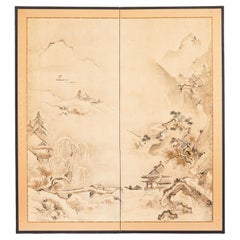
Japanese Meiji Two-Panel Screen Chinese Country Winter Landscape
Located in Rio Vista, CA
Late 19th / early 20th century Japanese Meiji period two-panel folding byobu screen featuring a
Category

19th Century Japanese Meiji Antique Japanese Screens

Materials

Brass

Japanese Six Panel Screen, Snow Scene at Water’s Edge
Located in Hudson, NY
Japanese Six Panel Screen: Snow Scene at Water's Edge with Flowers and Waterfowl. Edo period
Category

Mid-19th Century Japanese Edo Antique Japanese Screens

Materials

Gold Leaf

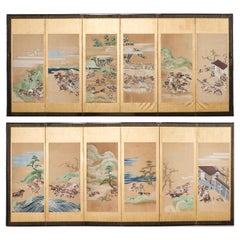
Pair of Japanese Edo/Tokugawa Screens Tale of Heiki
Located in Rio Vista, CA
Monumental pair of late 18th century Japanese Edo/Tokugawa period byobu screens depicting the
Category

19th Century Japanese Edo Antique Japanese Screens

Materials

Brass, Gold Leaf

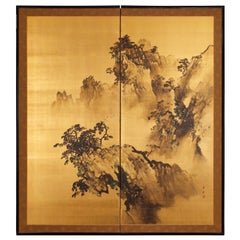
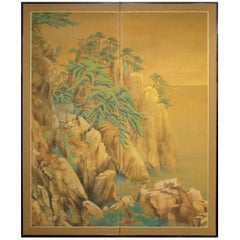
Japanese Two Panel Screen: Craggy Landscape on Gold Sil
Located in Hudson, NY
Dramatic Mountain landscape with gnarled pines. Signature reads: Shunsen. Ink painting on gold silk with silk brocade border.
Category

Early 20th Century Japanese Antique Japanese Screens

Materials

Brocade, Silk

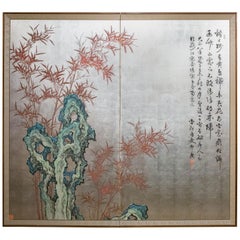
Japanese Two-Panel Screen Chinese Style Painting with Calligraphy
Located in Hudson, NY
, "Returning home to my grass hut on a spring evening," by the Tang-poet Qian Qi. Screen is signed: Riken isshi
Category

Early 20th Century Japanese Taisho Antique Japanese Screens

Materials

Silk, Paper, Wood

Antique Japanese Kachoga Kano School 2-Panel Screen, Edo Period
Located in Point Richmond, CA
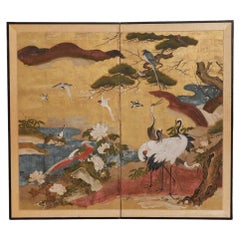
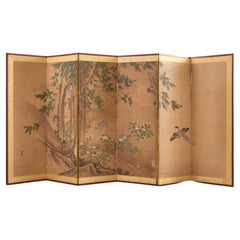
Antique Japanese 2-panel Screen of Birds Flowers in a Landscape Setting, Kano School, Edo
Category

18th Century Japanese Edo Antique Japanese Screens

Materials

Gold Leaf

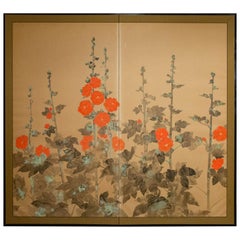
Japanese Two-Panel Screen, Rimpa Style Painting of Hollyhocks
Located in Hudson, NY
With the vibrant colors, and fine attention to detail and surface typical of a Rimpa painting. Using Rimpa style tarashikomi painting technique with mineral pigments on mulberry pape...
Category

Early 20th Century Japanese Antique Japanese Screens

Materials

Paper

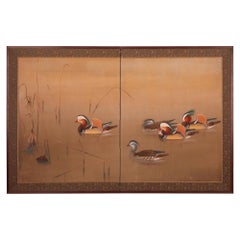
Japanese Two Panel Screen: Mandarin Ducks Among Dry Lotus
Located in Hudson, NY
Natural scene of Mandarin ducks gliding gracefully amongst the water. Mineral pigments on silk with silk brocade border and natural wood trim. Seal reads: Kei.
Category

Early 20th Century Japanese Antique Japanese Screens

Materials

Silk, Wood

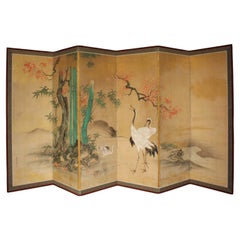
B1 Japanese Antiques Kano School, 6panel folding screen, crane&plants
Located in Niiza, JP
with care as the connections of the folding screens are prone to weakening. They are connected with
Category

19th Century Japanese Antique Japanese Screens

Materials

Paper

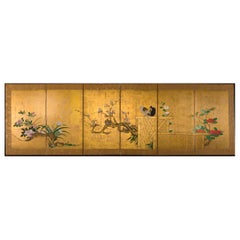
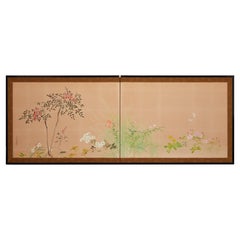
Japanese Two Panel Screen: Winter into Spring Floral Landscape
Located in Hudson, NY
With nandin, narcissus and chrysanthemums. Signature and seal read: Koun. Mineral pigments on mulberry paper with a silk brocade border.
Category

Early 20th Century Japanese Antique Japanese Screens

Materials

Brocade, Silk, Paper

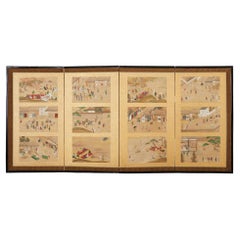
19th Century Japanese Meiji Four Panel Screen Festival Scenes
Located in Rio Vista, CA
Colorful late 19th century late Meiji period four-panel byobu screen featuring 12 scenes of a
Category

19th Century Japanese Meiji Antique Japanese Screens

Materials

Brass

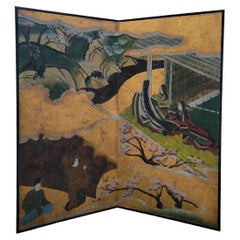
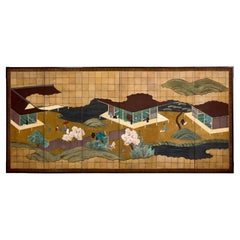
Japanese Two-Panel Kanō Screen -Tale of Genji Cherry Blossoms
Located in Greenwich, CT
Japanese Two-Panel Screen Kanō school, depicting a scene from the Tale of Genji , with various
Category

Late 19th Century Japanese Meiji Antique Japanese Screens

Materials

Wood, Paper

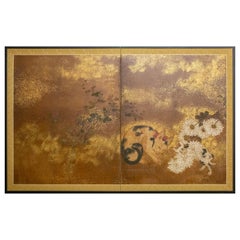
Japanese Two-Panel Screen, Mother and Kitten with Chrysanthemums
Located in Hudson, NY
Delicate painting of garden chrysanthemums with a fine gold mist. A cat grooms herself while a kitten plays with a chrysanthemum. Mineral pigments, go fun, and gold dust on mulberry ...
Category

Mid-19th Century Japanese Antique Japanese Screens

Materials

Gold

Japanese Six Panel Screen: Plain Silver Leaf on Paper
Located in Hudson, NY
(no image) With beautiful oxblood color lacquer frame with 19th century bronze mounts.
Category

Early 20th Century Japanese Antique Japanese Screens

Materials

Bronze, Silver Leaf

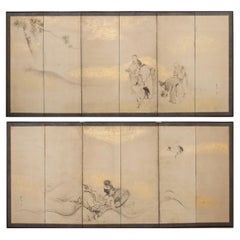
Pair of 18th Century Japanese Edo Screens of Chinese Immortals
Located in Rio Vista, CA
Mesmerizing pair of late 18th/early 19th century Japanese Edo period byobu screens by Shibata Gito
Category

18th Century Japanese Edo Antique Japanese Screens

Materials

Silk, Wood, Paper

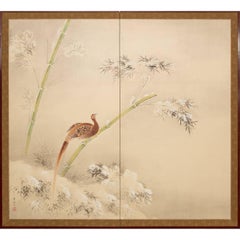
Japanese Two Panel Screen: Pheasant and Snow Covered Bamboo
Located in Hudson, NY
Early Taisho period painting (1912 - 1926) in mineral pigments on mulberry paper with a silk brocade border. Artist signature reads: Kisho saku.  Kisho Shibahara (1885-1954).
Category

Early 20th Century Japanese Taisho Antique Japanese Screens

Materials

Paper

19th Century Japanese Edo Six Panel Kano School Landscape Screen
Located in Rio Vista, CA
Late Edo period 19th century Japanese six-panel landscape screen featuring a cypress tree over a
Category

19th Century Japanese Edo Antique Japanese Screens

Materials

Silk, Wood, Paper

Japanese Four Panel Taisho Period Screen Bamboo Blossom, circa 1920
Located in London, GB
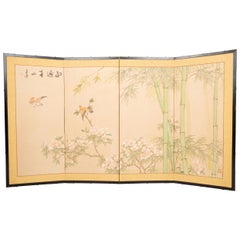
Japanese four panel Taisho Period (1912-1926) screen. Depicting bamboo, blossom and birds in flight
Category

1920s Japanese Taisho Antique Japanese Screens

Materials

Silk, Paper

Antique Photographic Prop Screen, Japanese, Silk Cotton, Room Divider, Victorian
Located in Hele, Devon, GB
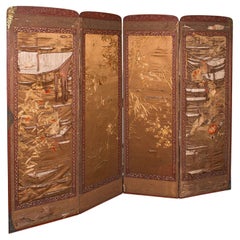
This is an antique photographic prop screen. A Japanese, silk cotton embroidered 4-fold room
Category

Late 19th Century Japanese Late Victorian Antique Japanese Screens

Materials

Silk

Japanese Fine Antique Pair Gilt Bronze Mandarin Duck Screen Holders
Located in South Burlington, VT
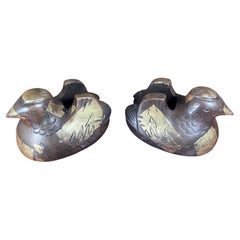
Japanese antique hand cast gilt bronze Mandarin Duck screen holders with highly detailed plumage, late
Category

Late 19th Century Japanese Meiji Antique Japanese Screens

Materials

Bronze

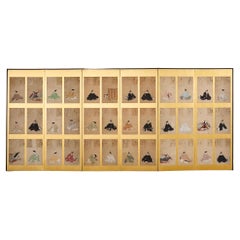
Japanese Edo Screen Portraits of the Thirty Six Immortal Poets
Located in Rio Vista, CA
Interesting 19th century Japanese Edo period six-panel byobu screen depicting the thirty six
Category

19th Century Japanese Edo Antique Japanese Screens

Materials

Wood, Paper

Vintage Japanese Two-Panel Screen, Taisho Period, Early 20th Century
Located in Prahran, Victoria
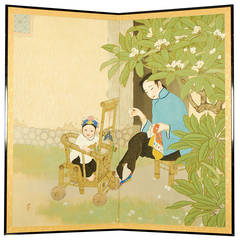
Japanese two-panel screen, study of an Okinawan mother and child, Taisho period early 20th century
Category

Early 20th Century Japanese Taisho Antique Japanese Screens

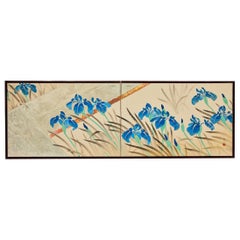
Japanese Two Panel Screen: Irises Along a Raised Garden Walkway
Located in Hudson, NY
Furosaki (tea ceremony screen) Mineral pigments on mulberry paper with oxblood lacquer trim
Category

Early 20th Century Japanese Antique Japanese Screens

Materials

Lacquer, Paper

Japanese Two-Panel Screen Mountain Shrine on Craggy Ledge
Located in Hudson, NY
Nicely painted mineral pigments on silk with a silk brocade border. Signature reads: Kosho.
Category

Early 20th Century Japanese Taisho Antique Japanese Screens

Materials

Silk, Wood

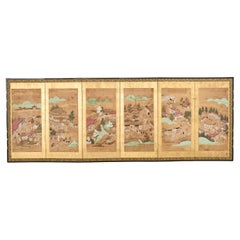
19th Century Japanese Edo Six Panel Screen Scenes of Kyoto
Located in Rio Vista, CA
Fascinating Japanese 19th century Edo period six-panel Rakuchu Rakugai folding byobu screen
Category

19th Century Japanese Edo Antique Japanese Screens

Materials

Brass, Gold Leaf

Antique Japanese Six-Panel Screen by Kano Chikanobu "Shushin"
Located in Prahran, Victoria
Late 17th century Kano school peony landscape screens. Both screens signed: Hogan Josen Fujiwara
Category

Early 18th Century Japanese Edo Antique Japanese Screens

Materials

Gold Leaf

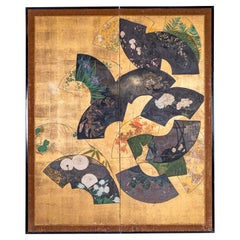
Japanese Two Panel Screen: Painted Fans on Gold Leaf
Located in Hudson, NY
Mineral pigments on gold leaf with brocade border. Calligraphy and sketching on back paper.
Category

Late 19th Century Japanese Antique Japanese Screens

Materials

Gold Leaf

Japanese Two-Panel Screen with Chrysanthemums Morning Glory Flowers, Ca. 1900
Located in New York, NY
Japanese Two-Panel Screen with Chrysanthemums & Morning Glory Flowers, Ca. 1900 PERIOD Meiji
Category

Early 1900s Japanese Japonisme Antique Japanese Screens

Materials

Wood

Japanese Byobu six panels screen on paper Edo Period 19th century
Located in Paris, IDF
Beautiful Edo period Japanese Byobu six panel screen from the early 19th century depicting scenes
Category

19th Century Japanese Japonisme Antique Japanese Screens

Materials

Paper

  • 1
  • ...
Get Updated with New Arrivals
Save "Antique Japanese Screens", and we’ll notify you when there are new listings in this category.

Antique Japanese Screens For Sale on 1stDibs

An assortment of antique Japanese screens is available at 1stDibs. Each of these unique antique Japanese screens was constructed with extraordinary care, often using paper, fabric and wood. Antique Japanese screens have been produced for many years, with earlier versions available from the 18th Century and newer variations made as recently as the 20th Century. Antique Japanese screens bearing Art Deco or Art Nouveau hallmarks are very popular at 1stDibs. Japanese School, Takakura Zaiko and Mitani Toshuku each produced beautiful antique Japanese screens that are worth considering.

How Much are Antique Japanese Screens?

Prices for antique Japanese screens can differ depending upon size, time period and other attributes — at 1stDibs, antique Japanese screens begin at $129 and can go as high as $397,909, while the average can fetch as much as $7,501.

Finding the Right Paintings-screens for You

Traditional Asian paintings were often created on scrolls and folding screens. Artisans made screens that could be folded up or spread out by connecting several panels using hinges. Today, antique Asian folding screens and paintings are sophisticated decorative accents that can serve as makeshift partitions to ensure privacy.

The original folding screens were created by Chinese artists. The earliest record of screens comes from the 2nd century B.C., and surviving examples date back to the Ming dynasty. Chinese painting utilizes many of the same tools as calligraphy — these screens were crafted from wood with painted panels featuring striking art or calligraphy that told cultural stories or represented nature and life in the area.

The practice was introduced to Japan, where paintings for screens were made on paper and silk, in the 8th century. These paintings frequently feature subjects such as landscapes, animals, flowers and Buddhist religious themes. Along with screens for tea ceremonies and dance backgrounds, there were screens for use in Shinto and Buddhist temples.

In the 17th century, screens began to be imported to Europe where their popularity grew. Coco Chanel famously collected Coromandel folding screens.

Traditional Asian paintings can make a tasteful addition to any wall, and screens can be used as decoration or, in the case of larger iterations, as an aesthetic way to divide a large room. Browse the selection of antique Asian paintings and screens from a variety of styles and eras on 1stDibs.

Questions About Antique Japanese Screens
  • 1stDibs ExpertMarch 22, 2022
    Japanese panels are components of large decorative folding screens called byōbu, which translates to “wind wall.” The screens traditionally function as room dividers and feature calligraphy and decorative painting. On 1stDibs, you can shop a range of decorative Japanese panels.
  • 1stDibs ExpertAugust 17, 2021
    Japanese screens are called Byōbu and are made from many panels with beautiful calligraphy and paintings. These folding screens can be a decorative and interesting way to separate rooms in a living space. Find a collection of Japanese screens for sale on 1stDibs.
  • 1stDibs ExpertApril 5, 2022
    A Japanese byōbu, also known as a wind wall, is a collection of joined folding panels, which feature intricate designs and calligraphy. A byōbu’s function is to separate a room or space. On 1stDibs, find a collection of authentic byōbus from some of the world’s top sellers.
  • 1stDibs ExpertApril 5, 2022
    Japanese screen painting is the art of creating byōbu, or Japanese screens. Byōbu vary in subject matter and style. The screens are free-standing, portable and decorated with symbolic images or calligraphy. It is common to find byōbu in pairs with at least two panels. Shop a selection of byōbu on 1stDibs.

  • Lotus Gallery
    Lotus GalleryMarch 17, 2021
    A Japanese low screen was traditionally used while seated upon the floor. The low screen would block wind and drafts, provide limited privacy, and are often decorated with seasonal themes.
  • 1stDibs ExpertAugust 8, 2024
    To tell if your Japanese pottery is antique, look for markings, which usually appear on the bottoms of pieces. If you see the word "Nippon," your piece was likely produced between 1891 and 1921, making it an antique. Pieces marked with the words "made in occupied Japan" originated between 1945 and 1952 and are vintage, based on their age. A "made in Japan" marking may indicate a vintage or contemporary piece. If you don't see any of these markings, consult trusted online resources to get a rough idea of when your pottery was produced. Any piece that dates back 100 years or more is antique. Should you encounter difficulty with the dating process, a certified appraiser or knowledgeable antique dealer can assist you. On 1stDibs, shop a variety of Japanese pottery.