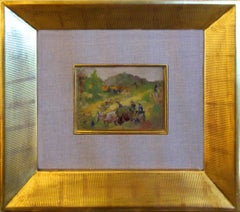
Antique Peddlers Cart
1920s Modern Antique Peddlers Cart
Oil, Board

People Also Browsed
21st Century and Contemporary French Art Deco Antique Peddlers Cart
Bronze
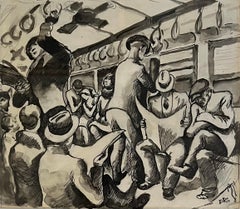
1930s American Realist Antique Peddlers Cart
Paper, Ink, Gouache
1970s Italian Baroque Antique Peddlers Cart
Sterling Silver, Enamel, Gold Plate
21st Century and Contemporary French Art Deco Antique Peddlers Cart
Bronze
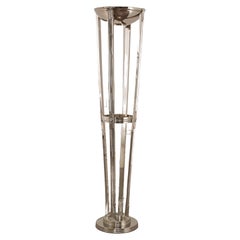
Early 1900s American Realist Antique Peddlers Cart
Paper, Watercolor
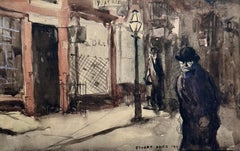
1910s American Realist Antique Peddlers Cart
Paper, Watercolor
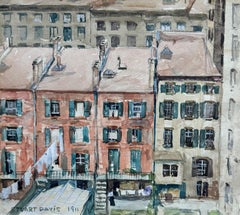
1890s Post-Impressionist Antique Peddlers Cart
Paper
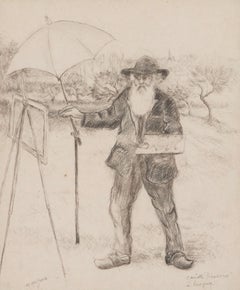
2010s Expressionist Antique Peddlers Cart
Acrylic
1930s Expressionist Antique Peddlers Cart
Paper, Watercolor
1920s Realist Antique Peddlers Cart
Drypoint
1920s American Modern Antique Peddlers Cart
Drypoint
1910s Cubist Antique Peddlers Cart
Etching
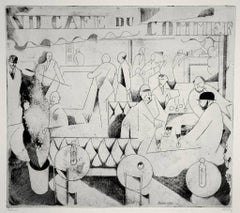
1910s Expressionist Antique Peddlers Cart
Drypoint
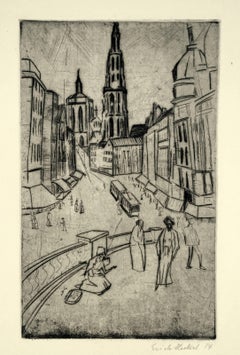
1910s Expressionist Antique Peddlers Cart
Etching
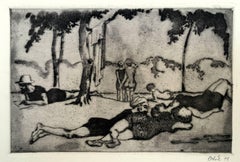
Early 1900s Impressionist Antique Peddlers Cart
Etching, Aquatint
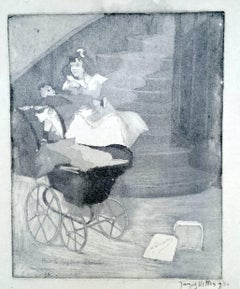
1910s Cubist Antique Peddlers Cart
Etching
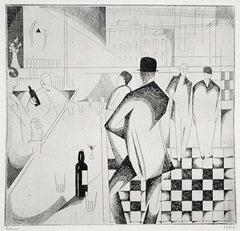
Gershon Benjamin for sale on 1stDibs
In a body of work that spans seven decades, obscure American modernist artist Gershon Benjamin explored a varied range of tone, style and subject matter in watercolor, oil and charcoal. Not one to resign himself to a single trademark theme, Benjamin focused on an eclectic array of subjects. His paintings included landscapes, portraits, still lifes and urban scenes.
Benjamin was born in Romania just before the turn of the 20th century. His family moved to Montreal in 1901 to escape ethnic persecution. At 10, Benjamin began studying art at the Canadian Council of Arts and Manufacturers, in Quebec. When he was 12, the Royal Canadian Academy admitted Benjamin.
In 1923, Benjamin moved to New York City, where he secured a night job in the art department of The Sun newspaper. He also enrolled in the Art Students League, where he learned engraving from the notable lithographer Joseph Pennell and drawing from illustrator John Sloan.
Benjamin found inspiration in the work of Pablo Picasso and Paul Cézanne. He depicted urban life in meditative Expressionist paintings that later drew comparisons to the Ashcan School — Benjamin painted scenes of New York City’s blocky skyline, elevated subway trains, empty streets at dawn and the Brooklyn Bridge as he saw them on his way home from his night shift at the newspaper.
In New York, Benjamin forged friendships with creative people who were as in love with art as he was and painted with them in Gloucester, Massachusetts, during the city’s hot summers. A number of his acquaintances found a fair amount of fame — including artists Mark Rothko, Raphael Soyer and Milton Avery — whereas Benjamin sought none. And when artists of the era in Manhattan and elsewhere began to work in the style that would become known as Abstract Expressionism, Benjamin continued to create representational art. He remained largely obscure throughout his career, declining to promote or market his still lifes, landscapes and portraiture.
Benjamin's works are held in a number of private and public collections including the Pennsylvania Academy of Fine Arts and the Ulrich Museum of Art.
Find original Gershon Benjamin paintings on 1stDibs.
A Close Look at Modern Art
The first decades of the 20th century were a period of artistic upheaval, with modern art movements including Cubism, Surrealism, Futurism and Dadaism questioning centuries of traditional views of what art should be. Using abstraction, experimental forms and interdisciplinary techniques, painters, sculptors, photographers, printmakers and performance artists all pushed the boundaries of creative expression.
Major exhibitions, like the 1913 Armory Show in New York City — also known as the “International Exhibition of Modern Art,” in which works like the radically angular Nude Descending a Staircase by Marcel Duchamp caused a sensation — challenged the perspective of viewers and critics and heralded the arrival of modern art in the United States. But the movement’s revolutionary spirit took shape in the 19th century.
The Industrial Revolution, which ushered in new technology and cultural conditions across the world, transformed art from something mostly commissioned by the wealthy or the church to work that responded to personal experiences. The Impressionist style emerged in 1860s France with artists like Claude Monet, Paul Cézanne and Edgar Degas quickly painting works that captured moments of light and urban life. Around the same time in England, the Pre-Raphaelites, like Edward Burne-Jones and Dante Gabriel Rossetti, borrowed from late medieval and early Renaissance art to imbue their art with symbolism and modern ideas of beauty.
Emerging from this disruption of the artistic status quo, modern art went further in rejecting conventions and embracing innovation. The bold legacy of leading modern artists Georges Braque, Pablo Picasso, Frida Kahlo, Salvador Dalí, Henri Matisse, Joan Miró, Marc Chagall, Piet Mondrian and many others continues to inform visual culture today.
Find a collection of modern paintings, sculptures, prints and other fine art on 1stDibs.
Finding the Right Landscape-paintings for You
It could be argued that cave walls were the canvases for the world’s first landscape paintings, which depict and elevate natural scenery through art, but there is a richer history to consider.
The Netherlands was home to landscapes as a major theme in painting as early as the 1500s, and ink-on-silk paintings in China featured mountains and large bodies of water as far back as the third century. Greeks created vast wall paintings that depicted landscapes and grandiose garden scenes, while in the late 15th century and early 16th century, landscapes were increasingly the subject of watercolor works by the likes of Leonardo da Vinci and Fra Bartolomeo.
The popularity of religious paintings eventually declined altogether, and by the early 19th century, painters of classical landscapes took to painting out-of-doors (plein-air painting). Paintings of natural scenery were increasingly realistic but romanticized too. Into the 20th century, landscapes remained a major theme for many artists, and while the term “landscape painting” may call to mind images of lush, grassy fields and open seascapes, the genre is characterized by more variety, colors and diverse styles than you may think. Painters working in the photorealist style of landscape painting, for example, seek to create works so lifelike that you may confuse their paint for camera pixels. But if you’re shopping for art to outfit an important room, the work needs to be something with a bit of gravitas (and the right frame is important, too).
Adding a landscape painting to your home can introduce peace and serenity within the confines of your own space. (Some may think of it as an aspirational window of sorts rather than a canvas.) Abstract landscape paintings by the likes of Korean painter Seungyoon Choi or Georgia-based artist Katherine Sandoz, on the other hand, bring pops of color and movement into a room. These landscapes refuse to serve as a background. Elsewhere, Adam Straus’s technology-inspired paintings highlight how our extreme involvement with our devices has removed us from the glory of the world around us. Influenced by modern life and steeped in social commentary, Straus’s landscape paintings make us see our surroundings anew.
Whether you’re seeking works by the world’s most notable names or those authored by underground legends, find a vast collection of landscape paintings on 1stDibs.