Antique Persian Prayer Rugs
Antique Early 1900s Afghan Tribal Persian Rugs
Wool
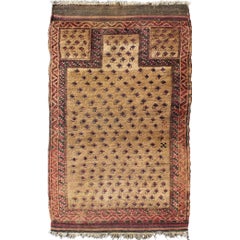

Antique Early 1900s Afghan Tribal Persian Rugs
Wool

Antique Early 1900s Persian Medieval More Carpets
Wool
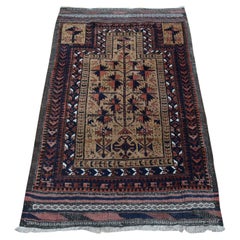
Early 20th Century Persian Art Nouveau Persian Rugs
Wool, Cotton
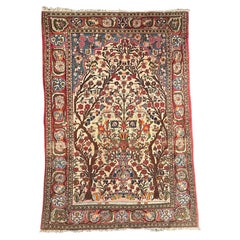
- 1
Antique Persian Prayer Rugs For Sale on 1stDibs
How Much are Antique Persian Prayer Rugs?
Finding the Right Persian-rugs for You
Make a bold statement in a living room or bedroom by incorporating vintage Persian rugs in your home decor.
A Persian carpet lends an aura of prestige to any room, even today. The fascination with Persian rugs dates at least as far back as the 4th century B.C., when historian Xenophon referred to the “soft rugs on which the Persians sit.” For centuries, Iran (modern-day Persia) has been known for the craftsmanship, intricate patterns and artistry of its carpets, which have found their way into households and museums around the world.
Although they have many imitators, real Persian rugs are made only in Iran and are easily recognized by their vibrant colors and elegant patterns.
Traditional, or antique, Persian rugs are what most people identify as “authentic.” Hand-made, they are very durable and, if properly cared for, can be passed down from generation to generation. Modern Persians, on the other hand, are often machine-made. Today’s carpets, Iranian or otherwise, can’t possibly match the level of craftsmanship that prevailed centuries ago, so historical Persian carpets will always be admired and highly valued.
Although the machine-aided production process is much faster and cheaper, the resulting rugs typically do not have the same quality or lifespan as handwoven ones, so traditional options are considered better investments.
To distinguish between the two, look for imperfections. Because traditional Persian rugs are handwoven, you will likely see small flaws on the front and back. With a machine-made imitation, on the other hand, you will probably not find stitching glitches, and the back will have a mesh or plastic covering.
Antique rugs are handmade from the finest materials, including wool, silk or cotton — never synthetic fibers. The fibers used in antique rugs are colored using natural dyes derived from insects and plants and woven into bold designs that reflect Iran’s culture and history. Since Persian tribes traditionally raised and herded sheep, wool was the most common material. The fiber has many advantages: It is fire-resistant and dries much more quickly than cotton. Also, because of its natural elasticity, it is more durable than cotton or silk. Regarded as works of art, Persian rugs can take months or years to complete.
The different types of Persian rugs are named for the cities, villages and regions where they’re made. Kashan rugs, for example, woven in the north-central Iranian city of Kashan, are considered among the finest city rugs, distinguished by curvilinear motifs like palmettos, leaves and arabesques. Nains have high knot counts, an indication of high quality, and generally employ pink, blue and ivory hues, while Tabriz rugs — created by weavers in the northwestern Iranian city of Tabrīz (or Tabriz) — mostly have floral and garden patterns.
When shopping for vintage Persian rugs, you'll want to consider color, size and more — for a history of these rugs and tips on how to style yours, visit our guide to these woven creations today.
Find Tabriz rugs, handmade silk Persian rugs, Persian tribal rugs and other antique and vintage rugs from the world's best furniture dealers on 1stDibs.
- 1stDibs ExpertApril 5, 2022There are a few red flags you should look for in determining if you have an antique Persian rug. Firstly, check the fringe. Fringes on a Persian rug form from the end of warp yarns, and won’t be sewn on the back. Also check the colors. They should be crisp, with no bleeding of the dyes. Shop a collection of authentic Persian rugs from some of the world’s top sellers on 1stDibs.
 NazmiyalMarch 23, 2021The most expensive antique Persian rug ever sold in auction (so far) is $34,000,000. But the vast majority will cost under $100,000.
Read More
Hechizoo’s Original Sin Rug Tempts with Shimmering Copper, Tin and Bronze
Embroidered with snakes, turtles, birds and vines, it celebrates a dazzling natural world before the arrival of Adam and Eve.
Splashy Blooms Bud and Wilt in Artist Santi Moix’s Floral Rug
The colorful design captures the natural splendor of a backyard garden.
In South Africa, Rich Mnisi Is Taking Biomorphic Design to the Next Level
The rising fashion star is having his first solo show of furniture designs, at Southern Guild in Cape Town, and his far-out, snaking forms are like nothing you've ever seen.
The Artists and Designers behind Today’s Coolest Rug Collaborations
Top carpet companies are expanding the arena of artful floor coverings, seeking out creatives from other media and marrying their talents to textiles.
Tantuvi’s New Rugs Were Inspired by the Travertine Quarries of India and the Spanish Steps of Rome
The New York–based rug designers employ earthy colors and time-honored artistry in their creations.
We’re Going Gaga for the New Sasha Bikoff Rugs
The New York interior designer found inspiration in disco culture and astrology for her debut home collection.
Paradise Is Found Underfoot in These Majestic Persian Textiles
Persian garden carpets, with their timeless beauty and unmatched craftsmanship, have an enduring appeal.
12 Mesmerizing Moroccan-Style Interiors
With their rich layers, intricate patterns and elaborate lighting, rooms with a Moroccan influence are easy to spot.