Antique Pottery Marks
to
20
132
90
113
90
90
42
37
24
21
21
16
14
8
8
7
6
6
5
5
4
4
3
3
2
2
2
2
1
18
15
14
10
7
Sort By
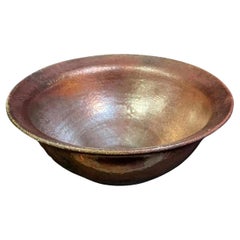
Antique Pottery Bowl with Iridescent Copper Glaze, Stamped
Located in Nova Scotia, NS
Phillips (1894), A Manual of Marks on Pottery and Porcelain, this mark suggests the bowl was made in
Category
18th Century Italian Folk Art Antique Pottery Marks
Materials
Copper

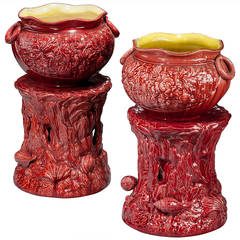
Pair of Bretby Pottery Bowls on Plinths
Located in Peterborough, Northamptonshire
Art Pottery. Marks include the familiar rising sun over the name BRETBY, a stylized HT for Henry Tooth
Category
19th Century British Antique Pottery Marks
Materials
Pottery
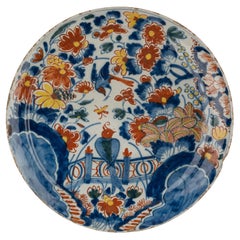
Polychrome Plate with Flowers Delft, 1713-1740 the Porcelain Claw Pottery
By Delft
Located in ROSSUM, GE
Polychrome plate with flowers. Delft, 1713-1740.
The porcelain claw pottery.
Mark: IVL and 5
Category
Early 18th Century Dutch Baroque Antique Pottery Marks
Materials
Ceramic, Faience
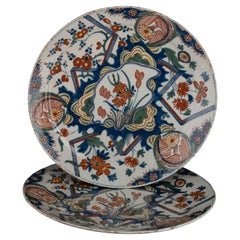
Two polychrome lightning plates Delft, 1700-1730 The Peacock pottery
By Delft
Located in ROSSUM, GE
Two polychrome lightning plates Delft, 1700-1730
The Peacock pottery
Mark: D(P)AW 9
The dish has
Category
Early 18th Century Dutch Baroque Antique Pottery Marks
Materials
Ceramic, Faience
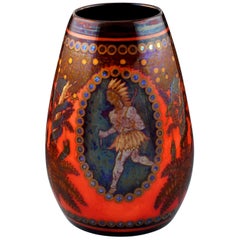
Zsolnay Pecs Raised Mark Art Pottery Eosin Glaze Vase with American Indian
By Zsolnay
Located in Newport, NH
European art pottery vase of nice form, decorated with oval views of American Indian and deer
Category
Early 20th Century European Antique Pottery Marks
Materials
Pottery
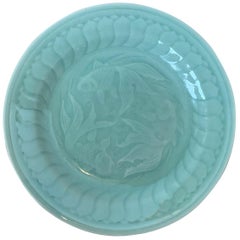
Early 20th Century Chinese Celadon Pottery Koi Fish Plate 4 Character Reign Mark
Located in Atlanta, GA
Early 20th century Chinese celadon round pottery plate with koi fish. Four character underglazed
Category
Early 20th Century Chinese Antique Pottery Marks
Materials
Celadon, Porcelain
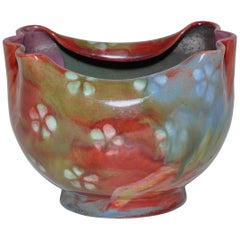
Art Nouveau Multicolored Pottery Bowl
Located in Great Britain, Northern Ireland
other where the red merges into the green which in mixes into the blue. The piece of earthenware pottery
Category
Early 20th Century European Art Nouveau Antique Pottery Marks
Materials
Ceramic
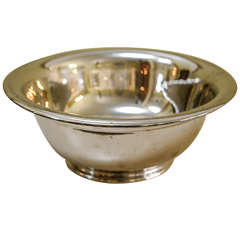
Large Silver Luster Bowl, circa 1825
Located in Los Angeles, CA
This Large Silver Luster Bowl, bearing the impressed Anchor Mark of Fell Pottery, Newcastle, c
Category
19th Century English Antique Pottery Marks
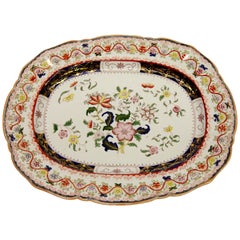
Early 19th Century Mason
s Ironstone Platter
By C.J. Mason 1
Located in Wilson, NC
in Geoffrey Godden's Encyclopedia of British Pottery and Porcelain Marks, page 417, circa 1813-1829.
Category
Early 19th Century English Antique Pottery Marks
Materials
Ceramic
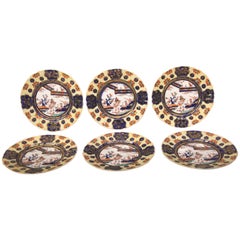
Set of Six Mason
s Ironstone Plates
Located in Wilson, NC
Godden's Encyclopedia of British Pottery and Porcelain Marks, these plates are circa 1850.
Category
Mid-19th Century English Antique Pottery Marks
Materials
Ironstone
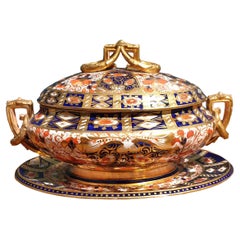
Davenport Longport Imari Hand Painted Tureen
By Davenport Porcelain
Located in London, GB
pieces are marked with the Davenport factory mark.
Davenport Pottery was an English earthenware and
Category
1870s English Anglo-Japanese Antique Pottery Marks
Materials
Porcelain
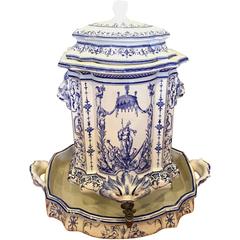
18th Century French Faience Lavabo, Signed Moustiers
By Moustier
Located in Woodbury, CT
of Marks on Pottery
Porcelain by Burton, William, 1863-; Hobson, R. L. (Robert Lockhart), 1872
Category
Late 18th Century French Baroque Antique Pottery Marks
Materials
Faience
- 1
Get Updated with New Arrivals
Save "Antique Pottery Marks", and we’ll notify you when there are new listings in this category.
Antique Pottery Marks For Sale on 1stDibs
At 1stDibs, there are several options of antique pottery marks available for sale. The range of distinct antique pottery marks — often made from ceramic, pottery and porcelain — can elevate any home. There are all kinds of antique pottery marks available, from those produced as long ago as the 18th Century to those made as recently as the 20th Century. There are many kinds of antique pottery marks to choose from, but at 1stDibs, Victorian, Art Deco and Art Nouveau antique pottery marks are of considerable interest. Antique pottery marks have been a part of the life’s work for many furniture makers, but those produced by Belleek Pottery Ltd., Minton and Dudson Pottery are consistently popular.
How Much are Antique Pottery Marks?
The average selling price for at 1stDibs is $1,021, while they’re typically $49 on the low end and $11,500 highest priced.
Questions About Antique Pottery Marks
- Is all Newcomb pottery marked?1 Answer1stDibs ExpertApril 5, 2022Yes, all Newcomb pottery is marked. Each piece of Newcomb pottery has a unique mark that is part of a registration system that dates each piece. Find a selection of authentic Newcomb pottery from some of the world’s top sellers on 1stDibs.
- Is all Teco Pottery marked?1 Answer1stDibs ExpertApril 5, 2022Yes, all Teco pottery is marked. You can usually locate it on the bottom of the pottery. It will either say Gates Potteries or show the Teco logo. On 1stDibs, you’ll find a wide variety of expertly vetted pottery 1stDibs.
- Is all Hull pottery marked?1 Answer1stDibs ExpertMarch 22, 2022Yes, Hull pottery is marked. Pieces made around the turn of the 20th century feature either a wreath with the gallon size or a capital "H" positioned inside of a circle or diamond. In the thirty years that followed, the brand shifted to using "Hull USA," "Hull Art USA," or "Hull." After 1950, all pieces showed the word "Hull" in either script or block lettering. On 1stDibs, find a range of expertly vetted Hull pottery.
- Is Staffordshire pottery marked?1 Answer1stDibs ExpertApril 5, 2022Almost all Staffordshire pottery and porcelain features a potter’s mark or symbol. One of the most common varieties is the Staffordshire knot, which is a three-loop knot sometimes accompanied by initials and a crown. On 1stDibs, you’ll find a collection of vintage and contemporary Staffordshire pottery from some of the world’s top dealers.
- 1stDibs ExpertSeptember 23, 2024To identify Haeger pottery marks, first examine the bottom of a piece. Nearly all Haeger pieces feature markings that say "Haeger USA." Many also have a model number carved into their bottoms. By cross-referencing this number with information found on trusted online resources, you can find information about your piece's age, style name and other characteristics, such as its usual marks. A certified appraiser or experienced antique dealer can further assist you with the identification of Haeger pottery marks. Shop a diverse assortment of Haeger pottery on 1stDibs.
- 1stDibs ExpertApril 16, 2024The markings on West German pottery vary. Nearly all pieces will include the words "West Germany," indicating the place of origin. Some also feature a piece or style number and/or a company logo or marking. You can compare the markings on your pottery to images posted on trusted online resources to identify pieces. On 1stDibs, explore a selection of West German pottery.
- 1stDibs ExpertOctober 30, 2024Pottery marked by certain makers can be worth money. Today, there is a market for pottery produced by many makers, including Wedgwood, Meissen, Moorcroft, Spode, Coalport, Roseville, Weller, Paul Revere, Bauer, Grueby, Teco and Van Briggle. Pieces from certain countries, regions and periods, such as Chinese pottery, Limoges porcelain and Delftware, are also collectible. You can find images of markings associated with these makers and pottery types on trusted online resources. Keep in mind that, in addition to the maker, the age, type, style and condition of pottery also impact its value. On 1stDibs, shop a wide variety of pottery.
- 1stDibs ExpertNovember 4, 2024To identify Satsuma pottery marks, you'll typically need to perform research using trusted online resources. Satsuma is a region in Japan known for its pottery, and many factories and artisans have operated there, including Kinkozan, Taizan, Yasuda, Choshuzan, Fuzan, Gyozan, Koshida and Maruni Kobe. Each maker has its own marks associated with it, and these typically are in Japanese kanji characters. You can compare the characters on your piece to pictures shared online to find a match. Alternatively, a certified appraiser or experienced antique dealer can help you identify your pottery markings. On 1stDibs, shop a selection of Satsuma pottery.
- 1stDibs ExpertSeptember 23, 2024To identify studio pottery marks, you can first try photographing the marking and performing a reverse image search. In some cases, this approach will lead to a quick identification. When it doesn't, you can enter a description of the marking into a search engine or look for images of the marks in trustworthy reference guides. If you need further assistance, seek the advice of a certified appraiser or knowledgeable antique dealer. On 1stDibs, explore a diverse assortment of pottery.
- 1stDibs ExpertFebruary 17, 2023To identify Italian pottery marks, you can try checking trusted online resources and databases. Search for a description of the mark or browse images to look for ones that match. Because it can be difficult to determine the authenticity of pottery, you may wish to seek the help of a certified appraiser who is knowledgeable about Italian makers. With respect to Italian porcelain, major manufacturers include Richard Ginori and Capodimonte (the latter was founded by King Charles VII of Naples). Beginning in the mid-18th century, porcelain made by King Charles VII’s factory was stamped with a fleur-de-lis, usually in underglaze blue. Pieces from Ferdinand’s were stamped with a Neapolitan N topped by a crown. When secondary manufacturers began production, they retained this mark, in multiple variations. Find a collection of Italian pottery on 1stDibs.
- 1stDibs ExpertSeptember 23, 2024To identify your Delft pottery marks, try using the factory mark database on the Delfts Aardewerk platform. Several Dutch museums joined forces to create this site in order to educate the public and collectors about Delftware. On it, you'll find hundreds of pictures of makers’ markings and a handy search feature for browsing the images based on a description of your marking. If you're unable to find your mark on the site, a certified appraiser or knowledgeable antique dealer can aid you with making an identification. Explore a selection of Delft pottery on 1stDibs.
- 1stDibs ExpertMay 5, 2023Pottery marked Germany is likely to have been produced between 1887 and 1949. A certified appraiser can help you determine the exact age of a particular piece. On 1stDibs, find a selection of Germany pottery from some of the world's top sellers.
- 1stDibs ExpertNovember 4, 2024To identify Jasba pottery marks, look for the Jasba name. Most pieces produced by the West German pottery maker will say “JASBA” on the base. The name may appear on its own or be positioned inside a square. Some pieces also read “West Germany.” Pottery from Jasba's N Series will also usually feature a series of numbers preceded by the letter "N." You can use trusted online resources to learn your pottery's style, name and age based on these “N” markings. To get more information about your pottery, use the services of a certified appraiser or experienced antique dealer. On 1stDibs, explore a selection of Jasba pottery.
- 1stDibs ExpertNovember 26, 2024To identify vintage Italian pottery marks, you can research them yourself using trusted online resources or consult a certified appraiser or experienced antique dealer. One way to begin researching pottery marks on your piece is to take a photograph and then perform a reverse image search. If your search yields no results, type a description into a search engine or review image reference guides devoted to Italian pottery. Once you have identified the maker, learn more about the various markings it has used over the years and use this information to get a rough idea of the age of your piece. To be considered vintage, pottery must be between 20 and 99 years old. On 1stDibs, explore a wide range of vintage Italian pottery.
- 1stDibs ExpertNovember 13, 2024To identify antique clockmakers' marks, try taking a photo with your mobile device. A reverse image search may turn up a match that will allow you to make a positive identification. If not, type a description of the marking into a search engine or review image guides and other references published on trusted online resources. Alternatively, you can use the services of a certified appraiser or experienced antique dealer. Find a wide variety of antique clocks on 1stDibs.
- 1stDibs ExpertApril 5, 2022To tell if pottery is antique, first look for any identifying marks. Usually, you will notice them on the bottom of the piece. If you locate one, you can use an authoritative resource to determine the maker. Then, you can research the pattern and shape to determine an approximate date. Pottery made over 100 years ago is generally considered an antique. Find a range of expertly vetted antique pottery on 1stDibs.
- 1stDibs ExpertAugust 8, 2024To tell if your Japanese pottery is antique, look for markings, which usually appear on the bottoms of pieces. If you see the word "Nippon," your piece was likely produced between 1891 and 1921, making it an antique. Pieces marked with the words "made in occupied Japan" originated between 1945 and 1952 and are vintage, based on their age. A "made in Japan" marking may indicate a vintage or contemporary piece. If you don't see any of these markings, consult trusted online resources to get a rough idea of when your pottery was produced. Any piece that dates back 100 years or more is antique. Should you encounter difficulty with the dating process, a certified appraiser or knowledgeable antique dealer can assist you. On 1stDibs, shop a variety of Japanese pottery.
- 1stDibs ExpertAugust 29, 2024To tell an antique Italian pottery apart from other pieces, do some research using trusted online resources. First, identify the maker by looking for marks on the bottom or interior. Once you know who produced your pottery, you can then explore the styles and types of pieces they produced over the years and use this information to estimate your piece's age. For pottery to be antique, it must be at least 100 years old. If you'd like assistance with the dating process, talk to a certified appraiser or knowledgeable antique dealer. Shop a collection of antique Italian pottery on 1stDibs.
More Ways To Browse
Satsuma Teapot Meiji
1920 Bud Vase
1920s Cocktail Shaker
Antique Coalport Cups And Saucers
Antique English Porcelain Marks
Elton Vase
Etienne Vilotte
Gouda Regina
John Henning
Rare Blanc De Chine
Van Duijn
Antique Blackjack
Celadon Ginger Jars And Vases
Cocktail Shaker Cork
Green Chinoiserie Plates
Henry Stacy Marks
Irish Silver Tea Set
Irish Tea Set